Crusher Technical Parameters & Compliance: The 2026 Buyer Verification Framework
Crusher Technical Parameters & Compliance: The 2026 Buyer Verification Framework
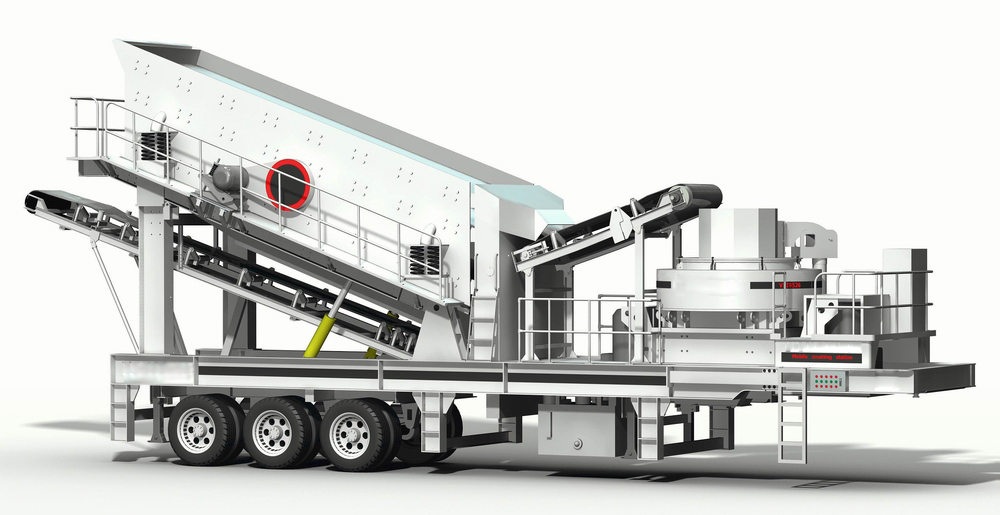
A crusher is selected by verifying parameters and compliance documents, not by a single price figure.
A crusher specification sheet is a set of constraints, not a sales promise. The model name, feed opening, maximum feed size, power rating, capacity range, and certification number must all be checked against the crushing stage, the material type, and the destination market. For an industrial buyer in 2026, the practical sequence is: define the duty, verify the parameters, validate the compliance documents, and only then compare commercial terms.
Henan Centbro Machinery(STM) Equipment Co., Ltd, founded in 1982 and located in the Zhengzhou National High-tech Development Zone, designs and manufactures crushers, ball mills, dryers, and supporting mining equipment. The company exports to markets including Russia, the Middle East, Mexico, Africa, and other overseas regions. This article uses STM reference models and documentary evidence to show how a constrained crusher procurement process works.
Why Crusher Parameters and Certifications Are Decision Constraints
Buyers often compare unit price before checking whether the machine can handle the feed size, produce the required tonnage, and meet local compliance requirements. This creates mismatches: a crusher may be affordable on a quote but too small for the feed, or the certificate may not actually cover the model being shipped.
A more reliable approach is to treat the specification sheet as a constraint set. The model name identifies a product family. The feed opening and maximum feed size define what can enter the crushing chamber. The capacity range and power rating define what the machine can reasonably process. Certification documents define whether the equipment is legally and technically acceptable for a target market. Only when all three groups of constraints are satisfied can a buyer make a sound procurement decision.
STM publishes reference parameters across multiple crusher families: European Jaw Crusher, Impact Crusher, Spring Cone Crusher, CS Symons Cone Crusher, Multi Cylinder Hydraulic Stone Cone Crusher, VSI Impact Sand Making Stone Crusher Machine, Rock Crusher, Mobile Stone Crusher, Mobile Crusher, High-Pressure Stone Crusher, Crusher Machinery, Stone Crusher Plant, Tyre Type Mobile Crusher, Crawler Mobile Crusher, Crusher Stone Sand-Making Production Line, Hammer Crusher, Crusher Stone Drying Production Line, Portable Stone Crusher, Stone Crusher and Grinding Production Line, and Stone Crusher Production Line.
Market Context: Verification Is Becoming a Structural Requirement
Market data from 2024 to 2026 highlights the scale of crusher spending and the importance of disciplined procurement. According to Market Research Future, the global crusher market was estimated at USD 6,751.19 million in 2024 and is projected to reach USD 12,710.1 million by 2035. A separate estimate from Zion Market Research placed the stone crushing equipment market at approximately USD 5.06 billion in 2024. These figures vary because the definition of the equipment scope differs, but the direction is consistent: the market is large and growing.
For buyers, three additional data points reinforce the need for verification. Fact.MR estimates that jaw crushers account for approximately 46% of the crushing equipment product segment by 2026. Market Research Future values the global mobile crusher and screener market at USD 4.59 billion in 2024, with a projected CAGR of 7.32% through 2035. The same source estimates China's crusher market at USD 827.02 million in 2024. At the top of the market, Dataintelo identifies Metso Outotec, Sandvik, and Terex Corporation as major global manufacturers, collectively holding roughly 30-35% of the jaw crusher market. This context does not tell a buyer which machine to choose, but it explains why specification validation is not optional.
Physical Constraints: How to Read a Crusher Specification Sheet
Technical parameters in a datasheet are reference values based on standard operating conditions. Capacity changes with material density, moisture content, feed gradation, and closed-side setting. Because of this, the correct way to read a parameter table is as a planning range, not a guaranteed output contract.
Feed Opening and Maximum Feed Size
Feed opening is the inlet dimension of the crushing chamber. Maximum feed size is the largest rock dimension the machine is designed to accept. If the feed size exceeds this limit, the crusher can clog, damage the liner, or reduce throughput. For example, the PE300*1300 Rock Crusher has a feed opening of 250 mm and a maximum feed size of 20-90 mm. The PF-1214 Impact crusher has a feed opening of 400*1430 mm and a maximum feed size of 300 mm. These two machines play different roles even before capacity is considered.
Capacity and Power
Capacity and power should be read together. A larger crushing chamber usually demands more power, which affects motor selection, electrical installation, and operating cost. The CS Symons Cone Crusher CSD-220, for instance, has a production capacity of 180-285 t/h, a rated power of 220 kW, a feed opening of 130 mm, and a maximum feed size of 13-25 mm. The Multi Cylinder Hydraulic Stone Cone Crusher HPT-500C, by comparison, has a capacity of 405-790 t/h, a rated power of 400 kW, a feed opening of 290 mm, and a maximum feed size of 30 mm. Both are cone crushers, but they are not interchangeable.
Crusher Type and Stage
Crusher type should match the comminution stage. Jaw crushers are typically used for coarse crushing. Cone crushers are used for medium and fine crushing of hard rock. Impact crushers can perform secondary or shaping duties. VSI machines are used for sand making and particle shaping. Hammer crushers suit certain impact-based reduction duties. Mobile crushers combine a crusher with a feeding and discharging system for relocation. Portable Stone Crushers offer similar flexibility in a transportable configuration.
| Machine type | Reference model | Typical stage | Capacity | Power | Feed opening | Max feed size |
|---|---|---|---|---|---|---|
| European Jaw Crusher | PEW760*1100 | Coarse crushing | 150-350 t/h | 110-132 kW | 760*1100 mm | 620 mm |
| Rock Crusher | PE300*1300 | Coarse crushing | 30-90 t/h | 55-75 kW | 250 mm | 20-90 mm |
| Impact crusher | PF-1214 | Secondary / shaping | 90-180 t/h | 132-160 kW | 400*1430 mm | 300 mm |
| Spring Cone Crusher | PYZ1750 | Medium / fine crushing | 115-320 t/h | 160 kW | 215 mm | 185 mm |
| CS Symons Cone Crusher | CSD-220 | Fine crushing | 180-285 t/h | 220 kW | 130 mm | 13-25 mm |
| Multi Cylinder Hydraulic Stone Cone Crusher | HPT-500C | Large-capacity fine crushing | 405-790 t/h | 400 kW | 290 mm | 30 mm |
| VSI Impact Sand Making Stone Crusher Machine | VSI7611 | Sand making / shaping | 120-180 t/h | 110 kW | <30 mm | <30 mm |
| Hammer Crusher | 1600*1600 | Medium-hard reduction | 220-280 t/h | 450 kW | 350 mm | 0-60 mm |
| High-Pressure Stone Crusher | CH430 | Single-cylinder hydraulic cone duty | 48-210 t/h | 160 kW | 50-185 mm | 6-13 mm |
| Crawler Mobile Crusher | SY-H300S | Mobile crushing | 150-300 t/h | — | 190 mm | — |
| Tyre Type Mobile Crusher | Y3S1548Y220 | Mobile cone crushing | 140-330 t/h | 257.5-264.5 kW | — | — |
Reference parameters from STM product data. Actual output varies with material conditions.
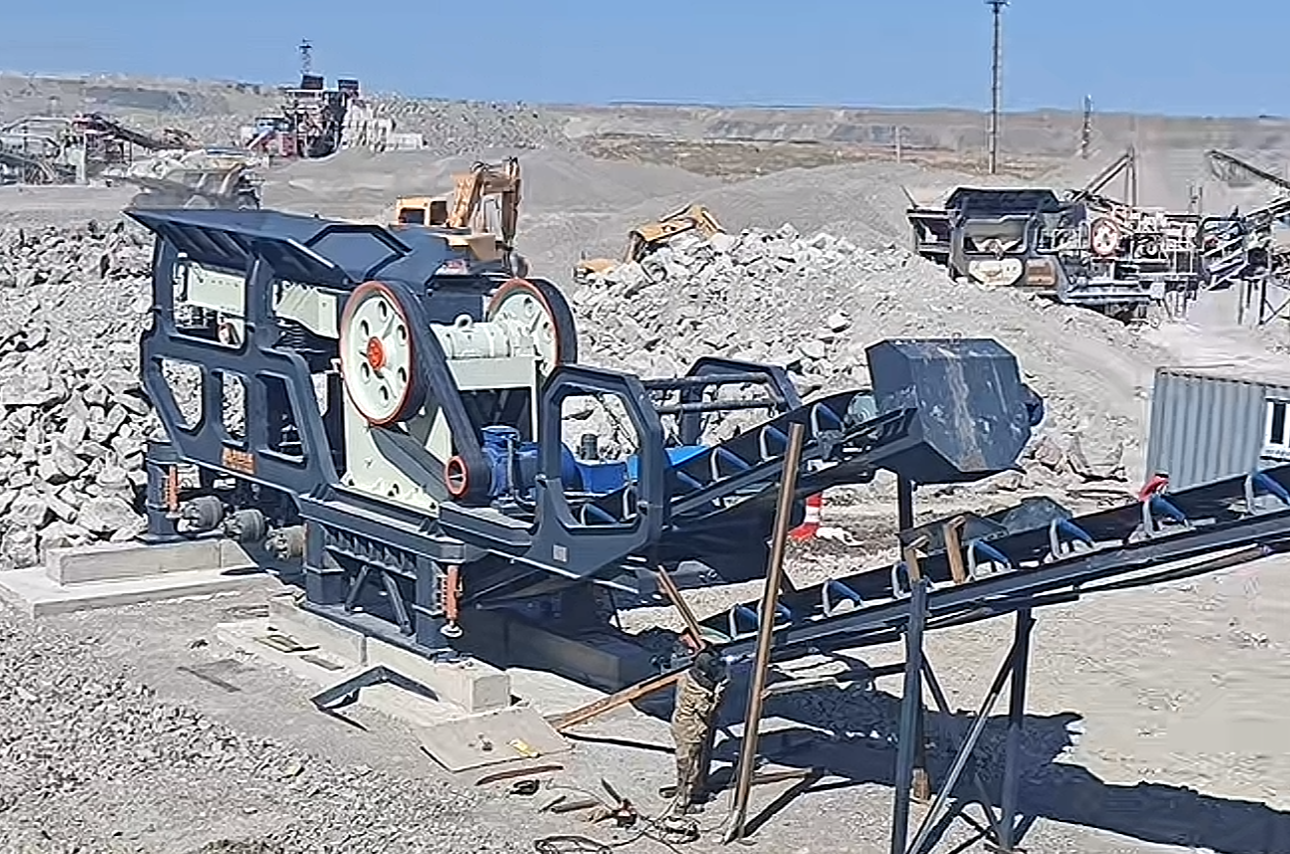
Jaw crushers and screens form the beginning of many stone crusher plant configurations.
Compliance Constraints: Documents That Should Accompany Every Quote
The second constraint group is compliance. A machine with the right dimensions and power can still fail an import or project audit if its documentation does not match the delivery model. Buyers should request certificate copies for the exact model number and compare the certificate holder with the supplier's legal entity.
STM has passed ISO9001:2008 international quality management system certification and has held European Union CE certification. The CE certificate for the Stone Crusher Production Line is numbered 2020SZ0704051 and was issued by YCT. The standards referenced include Directive 2014/30/EU, EN 55015:2013+A1:2015, EN 61000-3-2:2014, EN 61000-3-3:2013, EN 61547:2009, and related EMC standards. For mobile equipment, ISO 21873-2:2019 specifies safety requirements and verification for mobile crushers used in rock crushing and construction recycling. Buyers exporting mobile crushers should ask whether the unit was assessed against that standard.
| Compliance item | What to verify | Example documentation |
|---|---|---|
| ISO 9001:2008 | Certificate holder, scope, and validity relate to the supplier and the product line. | STM has passed ISO9001:2008 international quality management system certification. |
| CE certification | Certificate number, issuing body, referenced standards, and exact covered models. | Stone Crusher Production Line CE certificate no. 2020SZ0704051 issued by YCT, referencing Directive 2014/30/EU and EN standards. |
| Product patents | Patent number, authority, issue date, expiry date, and covered models. | CNIPA Product Patent no. 14247490, issued 2021-09-24, expiry 2030-12-25, covering multiple STM crusher models. |
| Mobile crusher safety standard | Whether international safety requirements apply to the mobile unit being purchased. | ISO 21873-2:2019 specifies safety requirements and verification for mobile crushers. |
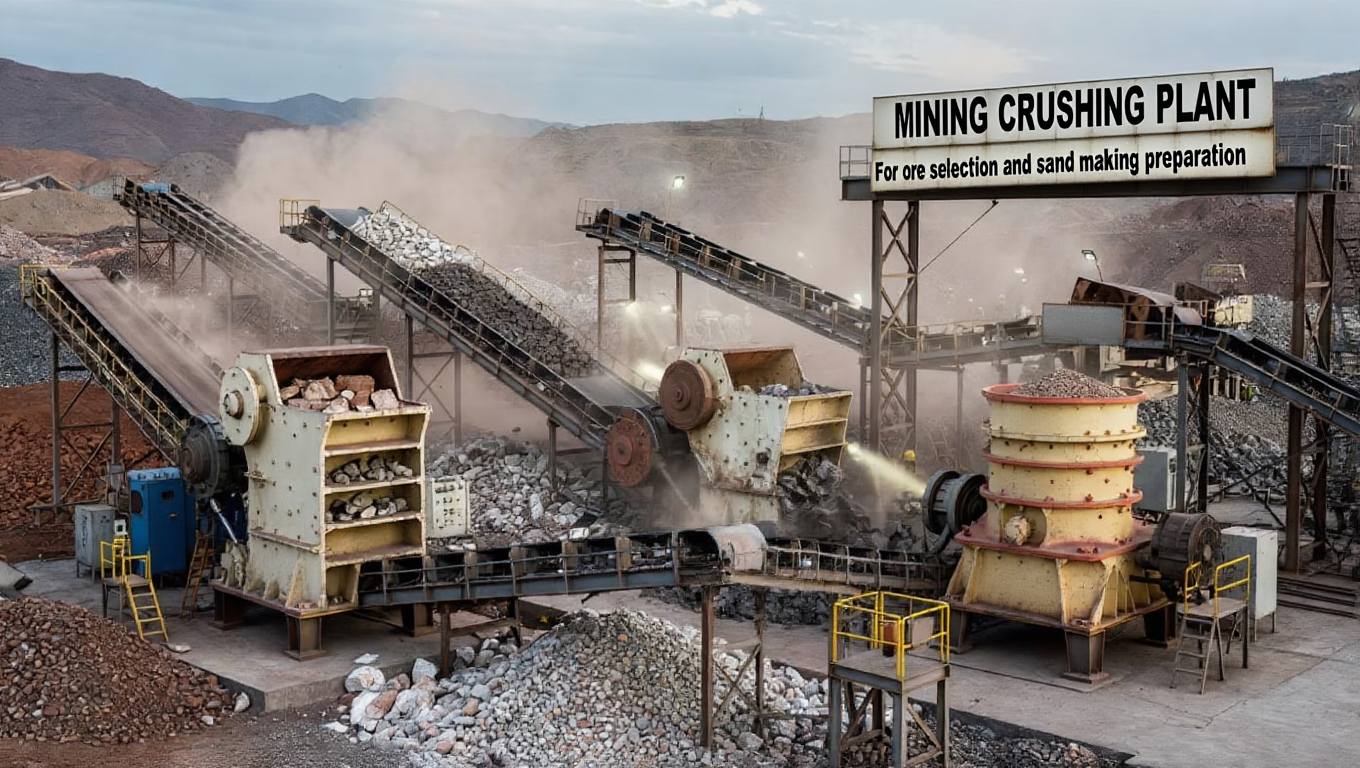
Aggregate production projects require parameter and compliance verification across every crushing stage.
The 2026 Crusher Verification Workflow
A practical workflow helps translate a project requirement into a machine-level procurement decision.
- Define the duty. Identify the raw material type, feed size, required product size, production rate, and operating hours.
- Select the crushing stage. Decide whether the project needs primary, secondary, tertiary, or sand-making equipment.
- Check feed constraints. Compare feed opening and maximum feed size against the actual material size.
- Check capacity and power. Match the reference capacity range and power rating to the throughput requirement and site electrical capacity.
- Verify compliance documentation. Request ISO, CE, patent, and mobile safety certificates for the exact model and destination market.
- Assess the manufacturer capability. Review factory size, R&D team, testing policy, OEM support, and after-sales service.
- Negotiate commercial terms only after 1-6 are satisfied. Price, payment terms, lead time, and warranty should be compared against equivalent technical baselines.
Use Cases: Parameter and Compliance Constraints in Real Projects
Application patterns show how crushers are combined into complete solutions. These configurations do not replace an engineered study, but they give buyers a starting point for discussing their own project.
- Raw stone crushing in Russia: Jaw crusher for coarse crushing, cone crusher for medium and fine crushing, vibrating screen, return crusher, VSI sand making machine, finished product screen, and finished product silo. This line is used for sand and gravel supplied to highway, railway, bridge, tunnel, water conservancy, and real estate projects.
- Basic construction in Georgia: Raw materials are fed from a vibrating feeder to a jaw crusher, then a cone crusher, then a vibrating screen. Qualified aggregates go directly to subgrade, backfill, or concrete use. Dust collectors, spray suppression, soundproof covers, and sealed belt covers are part of the high-standard infrastructure configuration.
- Engineering sand and gravel in Kenya: The line operates as a continuous, automated closed-loop system: raw material bin, feeder, jaw crusher, cone crusher, vibrating screen, return crusher, VSI sand making machine, finished product screen, and finished product bin. The system is controlled centrally by PLC with linked start and stop.
- Mining projects in Lebanon: Jaw crusher, impact crusher, VSI sand making machine, and conveyor belts prepare raw ore through coarse, medium, and fine crushing before mineral processing and sand making.
- Crusher stone line with grinding in Austria: Raw ore is crushed by jaw, impact, or cone crusher; material enters a sand making machine or hammer crusher; if grinding is required, the powder is cleaned and dried before being ground by high-pressure grinding equipment or a ball mill.
- Drying production in Kazakhstan: A crusher stone drying production line is used to dry manufactured sand, pebbles, quartz sand, and ore powder. The reported result is rapid drying of high-moisture materials to below 1% moisture content, adjustable as needed, reducing clumping and improving downstream stability.
- Grinding production in Algeria: Stone grinding mills process limestone, calcite, dolomite, barite, talc, quartz, feldspar, coal gangue, and slag into fine or ultrafine powders. Fineness is generally adjustable between 80 and 2500 mesh.
- Coarse crushing in Mongolia: Jaw crushers provide uniform and stable coarse crushed stone, reducing wear and blockage risk for downstream cone crushers and sand making machines.
- Concrete aggregate in Russia: A 10-unit production setup processes concrete aggregates for infrastructure, water conservancy, and real estate, with reported output above expectations, finished pellets meeting industry requirements, and a production process compliant with national environmental green requirements.
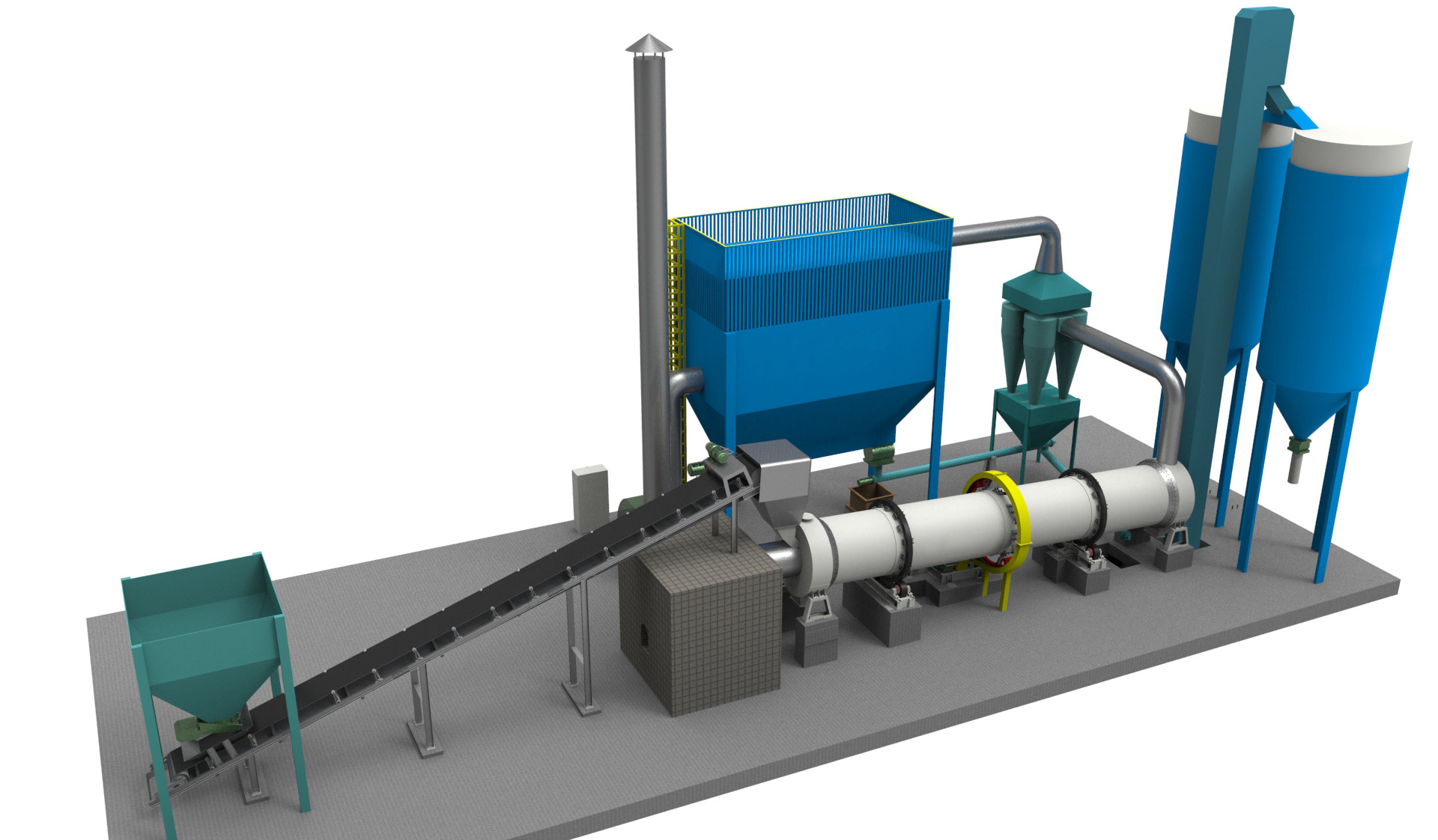
Drying lines help reduce moisture in sand, pebbles, quartz sand, and ore powder for downstream use.
Manufacturer Capability as a Constraint
The supplier's factory capability is as important as the machine's specification sheet. STM's facility covers 8,000 square meters, employs more than 50 people, and includes an R&D team of 20 engineers. The company reports an annual output capacity of 10,000 units. STM supports OEM production with customization of voltage and logo, a stated lead time of 30 days, a minimum order quantity of 2 units, and a quality-control policy of 100% testing before delivery.
After-sales support is also part of the decision. According to the company profile, after purchase STM assigns professional after-sales service engineers to the site for installation and commissioning until the customer can operate the machine. The OEM capability record adds that after-sales includes online guidance followed by offline engineer guidance and collaboration. This becomes a useful selection criterion when the project is located far from the factory.
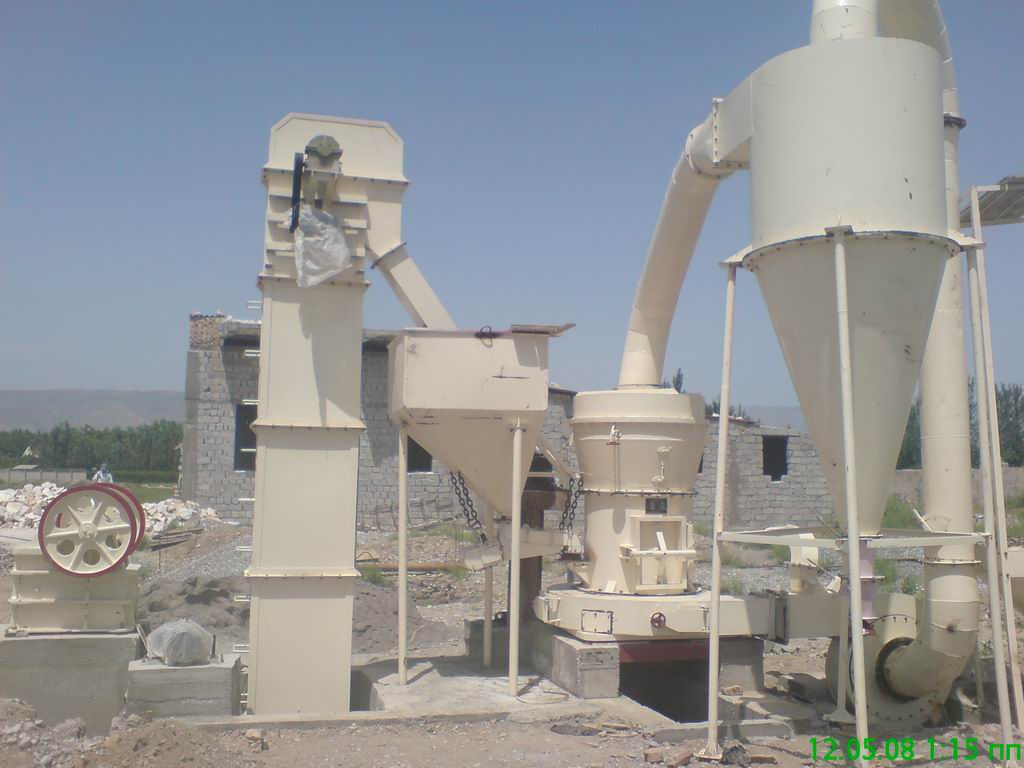
Grinding mills expand the crusher line into powder production with adjustable fineness.
FAQ
What certifications should I request for a stone crusher in 2026?
Ask for ISO9001:2008 quality management system certification, CE certification, and product patent documentation for the exact model. For mobile crushers, ask whether the unit meets ISO 21873-2:2019 safety requirements. STM documentation includes ISO9001:2008, CE certification for the Stone Crusher Production Line, and CNIPA Product Patent no. 14247490.
How should I interpret crusher capacity and power ratings?
These are reference ranges, not fixed guarantees. A PE300*1300 jaw crusher is rated at 30-90 t/h with 55-75 kW, while a CSD-220 CS Symons Cone Crusher is rated at 180-285 t/h with 220 kW. Actual output depends on material hardness, moisture, feed gradation, and crusher settings. Always match maximum feed size and capacity to your actual project data.
Should I compare prices before or after verifying specifications?
After. Price comparisons are only meaningful when the technical baseline is the same: same model family, same power, same feed opening, same capacity class, and same compliance scope. A lower price can simply reflect a smaller motor, a narrower feed opening, or excluded certification and control equipment.
Can a buyer request testing or inspection before a larger crusher order?
Inspection is a normal step in crusher procurement. STM invites customers to inspect the factory, and the company's OEM quality-control policy includes 100% testing before delivery. For project-specific needs, buyers should share raw material and output requirements with the sales team to confirm the proposed model before order confirmation.
What is the lead time for a customized OEM crusher order?
STM lists an OEM lead time of 30 days, an MOQ of 2 units, and customization options such as voltage and logo. After-sales begins with online guidance and is followed by offline engineer guidance and collaboration. Lead time should be confirmed in writing against the final specification and destination port.
Conclusion
A modern crusher purchase is not a one-line price decision. It is a verification exercise across feed constraints, capacity constraints, compliance constraints, and manufacturer capability. Breaking the process into steps reduces the risk of buying a machine that cannot handle the feed, cannot meet the production target, or cannot be accepted by the destination market.
For buyers with an active project, the next step is to translate the raw material and product requirements into a model-level specification. STM's reference portfolio and documentation system provide a useful starting point for that conversation.
Start your crusher verification with STM.
Contact Ivan at Kevin@centbro.com or WhatsApp +86 187-3712-0960. For an overview of the full product family, download the STM company brochure.
Have Questions or Need More Details?
Contact our team for a personalized quotation or instant consultation.
Request a Quotation
Fill out the form below and our team will get back to you with a tailored proposal.
WhatsApp Direct Chat
Prefer to chat in real-time? Message us on WhatsApp for instant assistance & quick answers.
- Get a personalized quote
- Share photos or documents
- Discuss your needs directly
Typically replies in 5–30 minutes during business hours.