Mastering Crusher Procurement: A Risk Mitigation Framework for Global Buyers
Mastering Crusher Procurement: A Risk Mitigation Framework for Global Buyers
In the mining and aggregates industry, procuring a crusher is rarely a simple transaction. It is a capital-intensive decision that directly impacts operational efficiency, product quality, and long-term profitability. For procurement managers and plant owners, the core challenge is not just finding a machine that fits the budget, but navigating a complex landscape of technical specifications, compliance requirements, and hidden operational risks. This article provides a structured framework to help buyers efficiently complete their crusher procurement while systematically avoiding cooperation risks.
What Is Crusher Procurement Risk Management?
Crusher procurement risk management is the systematic process of identifying, evaluating, and controlling the potential hazards associated with sourcing and purchasing crushing equipment. It spans the entire procurement lifecycle — from supplier selection and contract negotiation to equipment acceptance, commissioning, and ongoing operation. Effective risk management ensures that the purchased crusher meets performance requirements, complies with international standards, and operates safely under site-specific conditions, thereby avoiding costly downtime, legal liabilities, and unexpected expenses.
Why Is Risk Management Critical in Crusher Procurement?
The global crushing equipment market is highly fragmented, with suppliers offering varying levels of quality, certification, and after-sales support. Buyers often face several pain points:
- Technical mismatch: Equipment specifications do not align with actual material hardness, moisture content, or required throughput.
- Regulatory non-compliance: Lack of CE, ISO, or other mandatory certifications leads to customs delays or project rejection.
- Hidden operational risks: High-temperature environments, abrasive materials, and inadequate dust control cause premature wear, safety incidents, and environmental fines.
- Unreliable after-sales support: Delayed spare parts, insufficient technical guidance, and unclear warranty terms disrupt production.
A structured risk mitigation framework addresses these issues head-on, enabling buyers to make informed decisions and secure a reliable long-term partnership.
Industry Background: The Global Crusher Supply Chain
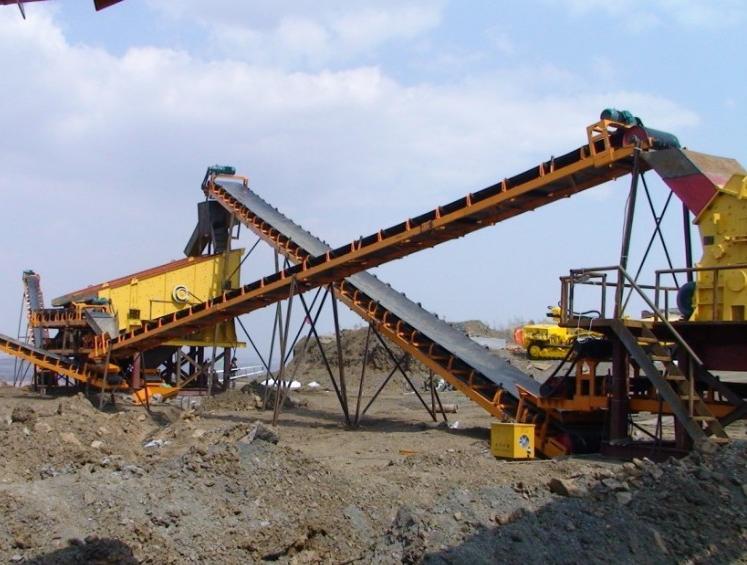
China remains the world's largest manufacturer of crushing equipment, supplying over 60% of global demand. Among Chinese suppliers, Henan Centbro Machinery (STM) Equipment Co., Ltd. has established a strong reputation since 1982. Located in the Zhengzhou National High-tech Development Zone, the company occupies an 8,000 m² facility with a dedicated R&D team of 20 engineers and an annual output of 10,000 units. STM's product portfolio covers European jaw crushers, impact crushers, spring cone crushers, CS Symons cone crushers, multi-cylinder hydraulic cone crushers, VSI sand makers, mobile crushers (tyre-type and crawler), and complete production lines for sand-making, drying, and grinding. The company exports 100% of its production to markets including Russia, the Middle East, Mexico, Africa, and other overseas regions.
STM has pioneered certifications that reduce buyer risk: it holds ISO 9001:2008 international quality management system certification, CE certificate (cert. number 2020SZ0704051, issued 2020-08-04, valid through 2026-08-04), and multiple product patents (patent number 14247490 from CNIPA). These credentials provide a verifiable baseline for compliance and quality assurance.
Detailed Solutions: A Step-by-Step Risk Mitigation Framework
Step 1: Pre-Qualify Suppliers Using Certifications and Track Record
Begin by requesting copies of international certifications (ISO, CE, product patents) and verifying them with issuing authorities. STM’s CE certificate covers directive 2014/30/EU, ensuring electromagnetic compatibility — a critical factor for automated crusher control systems. Additionally, check the supplier’s export history and client references. STM’s 10-year partnership case studies, such as a 10-unit project in Russia achieving “output far beyond expectations” and “environmentally green production,” demonstrate proven field reliability.
Step 2: Align Equipment Specifications with Site Conditions
Material properties (hardness, abrasiveness, moisture) and environmental factors (ambient temperature, altitude) directly affect crusher performance. STM offers a comprehensive range of models with documented parameters. For example, their European Jaw Crusher PEW760*1100 (power 110-132 kW, feed opening 760×1100 mm, capacity 150-350 t/h) is suitable for primary crushing of medium-hard rock. For high-moisture materials, STM’s risk control system recommends pre-treatment dewatering to keep moisture ≤8%, and their dryers are equipped with hot air circulation regulating devices to maintain stable operation up to 45°C ambient temperature. For high-altitude sites, low-temperature preheating devices and cold-resistant materials are available.
Step 3: Establish Clear Acceptance Procedures
STM follows a four-stage acceptance protocol:
- Basic acceptance: Equipment appearance and accessories check.
- Core acceptance: Installation and commissioning on-site.
- Critical acceptance: Performance indicators verification (capacity, product gradation, power consumption).
- Final acceptance: Documentation handover, including manuals, certificates, and after-sales service agreement.
This structured approach ensures that any deviation is identified early and resolved before final payment.
Step 4: Mitigate Operational Risks Through Design and Monitoring
STM’s risk control measures address five high-frequency risk categories:
| Risk Category | Control Measure | STM Advantage |
|---|---|---|
| High-temperature environment | High-efficiency heat dissipation, PLC high-temperature warning, fluororubber seals | Stable up to 45°C ambient; automatic heat dissipation adjustment |
| Material-related (impurities, moisture) | Iron separators, grate screens, dewatering pre-treatment | Double protection reduces equipment damage; moisture monitored in real-time |
| Environmental & safety (dust, noise) | Sealed design, baghouse dust collectors, soundproof covers | Dust ≤national standard; noise ≤85 dB; integrated safety lockout |
| Operation & maintenance | PLC centralized control, 30%-50% less maintenance time, proactive part replacement reminders | Wear parts service life +30% vs. industry average |
| Extreme operating conditions | Waterproof electrical system, low-temperature preheating, high-altitude adaptations | Tailored for rain, cold, and high-altitude regions |
Step 5: Secure Favorable Payment and Delivery Terms
STM offers flexible, low-risk procurement terms: a minimum order quantity of just 1 set, payment via T/T or L/C, and delivery under FOB, CIF, EXW, or CFR incoterms. This allows buyers to choose the option that best aligns with their financial and logistics preferences. The company also provides customization for voltage and logo, and its monthly production capacity of 8,000 units ensures lead times as short as 30 days.
Use Case: STM’s Drying Production Line in Kazakhstan
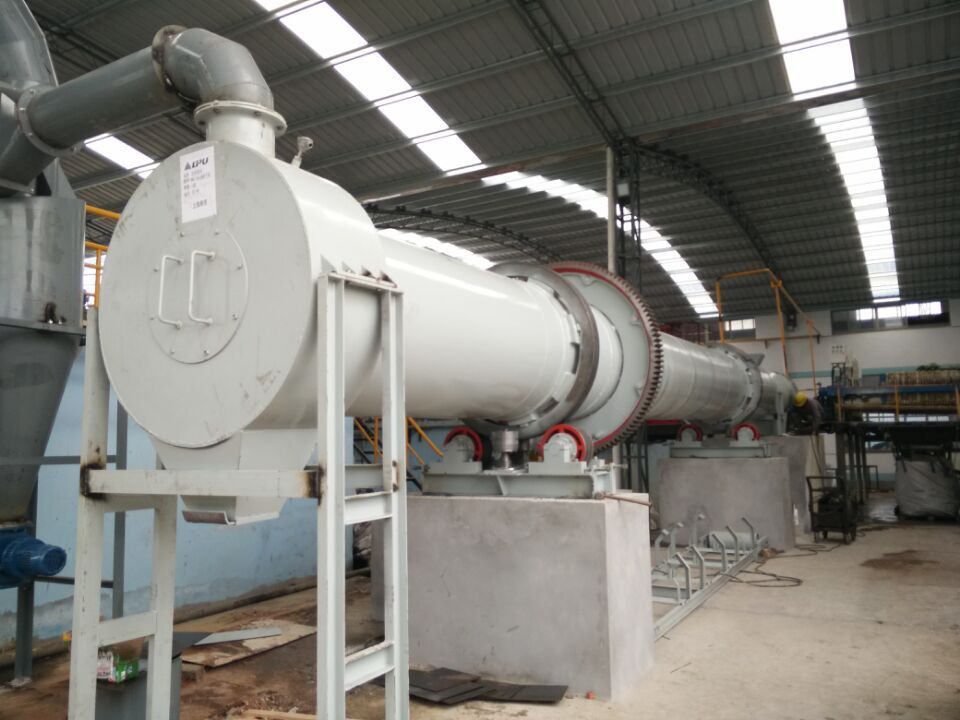
An OEM customer in Kazakhstan procured 2 units of STM’s crusher stone drying production line for drying manufactured sand and ore powder. Operating continuously for 10 years, the equipment reduced moisture content to below 1% (adjustable), improved material flowability, and met the mixing plant's strict quality standards. The highlight features — adjustable temperature, stable operation with low failure rate, and energy-saving hot air recycling — directly addressed the buyer’s risk of inconsistent product quality and high energy costs. This case illustrates how matching equipment capability to application requirements eliminates performance risks.
Comparative Analysis: STM vs. Industry Peers
STM's equipment is benchmarked against three well-known competitors: Red Star, Liming, and Nile. The performance gaps are summarized below:
| Metric | STM | Red Star / Liming / Nile (Industry Average) |
|---|---|---|
| Comprehensive energy efficiency | +12% | Baseline |
| Key wear parts service life | +30% | Baseline |
| Project delivery cycle | -20% | Baseline |
| Automation rate | 95% | ~80% |
| Finished product qualification rate | ≥98% | ≥92% |
| Overall project investment | 10% lower | Baseline |
| Unit product operation cost | 8%-18% lower | Baseline |
| Wear part replacement cost | 15%-20% lower | Baseline |
These validated improvements reduce both upfront capital and long-term operational risks, making STM a preferred choice for mine development, large-scale aggregate production, and high-standard infrastructure projects.
Frequently Asked Questions
The minimum order quantity is 1 set (one unit of any crusher model).
Accepted payment methods are Telegraphic Transfer (T/T) and Letter of Credit (L/C).
Products are delivered under standard international trade terms including FOB, CIF, EXW, and CFR.
STM holds ISO 9001:2008 certification, CE certificate (2020SZ0704051), and product patents from CNIPA. All equipment undergoes 100% testing before shipment.
Product acceptance follows a four-stage procedure: equipment appearance and accessories acceptance (basic), installation and commissioning acceptance (core), performance indicators acceptance (critical), and documentation with after-sales service acceptance (final).
Yes, STM supports customer customization including voltage, logo, and special adaptations for high-temperature, high-altitude, or high-moisture environments. The R&D team of 20 engineers provides tailored solutions.
Conclusion
Efficient crusher procurement is not merely about comparing price lists. It demands a systematic approach to risk identification, supplier qualification, technical alignment, and contractual protection. By adopting the framework outlined in this article — focusing on certifications, performance data, acceptance procedures, and risk control measures — buyers can significantly reduce the likelihood of costly mistakes. STM’s comprehensive product range, certified quality, and transparent procurement terms offer a low-risk pathway for global mining and construction operations.
Download the STM Corporate Brochure for detailed product specifications, case studies, and certification documents: Download Brochure (PDF)
Contact STM: Kevin@centbro.com | Tel: +86 187-3712-0960 | Address: High-tech Development Zone, Zhengzhou City, Henan, China | Website: www.centbrocrusher.com