Portable Crusher Deployment: Application Guide for Remote and Multi-Site Stone Projects
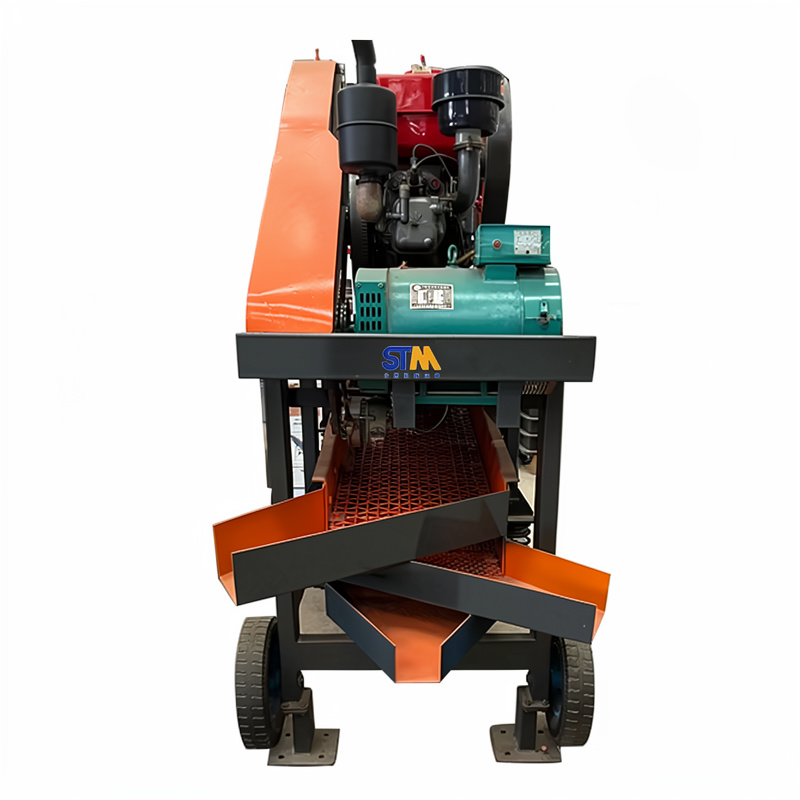
A portable stone crusher earns its place on a project when the plant has to move. Remote quarries, temporary road and railway job sites, and multi-site contracts rarely justify a permanent foundation at every location. This guide maps STM's Portable Stone Crusher to those deployment scenarios: site mobility, setup logic, and integration with additional crushing and sand-making modules.
Problem Definition: Why fixed crushing lines struggle on remote and multi-site projects
A conventional stone crusher production line is engineered to stay in one place. Its material flow is fixed: raw material silo, feeder, jaw crusher for coarse crushing, cone crusher for medium and fine crushing, vibrating screen, return crusher, VSI sand making machine, finished product screen and finished product silo. The system is designed for continuous, automated operation with a closed-loop circulation system, and the entire process is centrally controlled by PLC with synchronized start and stop. When the deposit and the demand sit in the same place for years, that architecture is efficient and predictable.
Remote and multi-site stone projects break that assumption in three concrete ways:
- Dispersed deposits. Aggregate demand is often met from several smaller deposits instead of one large quarry. Hauling raw rock long distances to a single fixed plant adds transport time, fuel and handling cost, and it puts the crushing stage far away from the material.
- Moving work fronts. Subgrade filling, bridge and tunnel works, water conservancy and real estate projects advance along a corridor. A plant anchored to one position is left behind as the work moves forward, and the gap has to be closed with trucking.
- Temporary demand. Some sites need crushed aggregate for a defined window only. Permanent foundations, civil works and a full fixed installation are difficult to justify when the production window is short.
There is also an evaluation problem behind the equipment problem. Buyers in the Research stage often compare crushers by crusher type alone, then discover during Evaluation that the real constraint is deployment: how many sites the plant must serve, how far apart they sit, and how often the circuit has to be rebuilt. The practical question is therefore not simply which crusher produces more, but which deployment can be moved, re-set and re-used as the project footprint changes.
Industry Background: Mobility is now a structural part of the crusher market
The shift toward relocatable crushing is visible in published market data rather than being a niche preference. Several independent estimates point in the same direction.
- The global crusher market was estimated at USD 6,751.19 million in 2024 and is projected to reach USD 12,710.1 million by 2035 (Market Research Future).
- The global mobile crusher and screener segment alone was valued at USD 4.59 billion in 2024, with a projected CAGR of 7.32% through 2035 (Market Research Future).
- Asia Pacific is the largest and fastest-growing region for crushers, with China's market estimated at USD 827.02 million in 2024 (Market Research Future).
- Jaw crushers are estimated to account for approximately 46% of the crushing equipment product segment by 2026 (Fact.MR).
Regulation reinforces the same point. ISO 21873-2:2019 specifies safety requirements and verification for mobile crushers used in rock crushing and construction recycling, which treats mobile crushing as a distinct equipment category with its own compliance expectations rather than a fixed plant placed on a trailer. For buyers, that means mobility and compliance should both be treated as design criteria from the first planning meeting.
Detailed Solution: How the STM Portable Stone Crusher is positioned for deployment
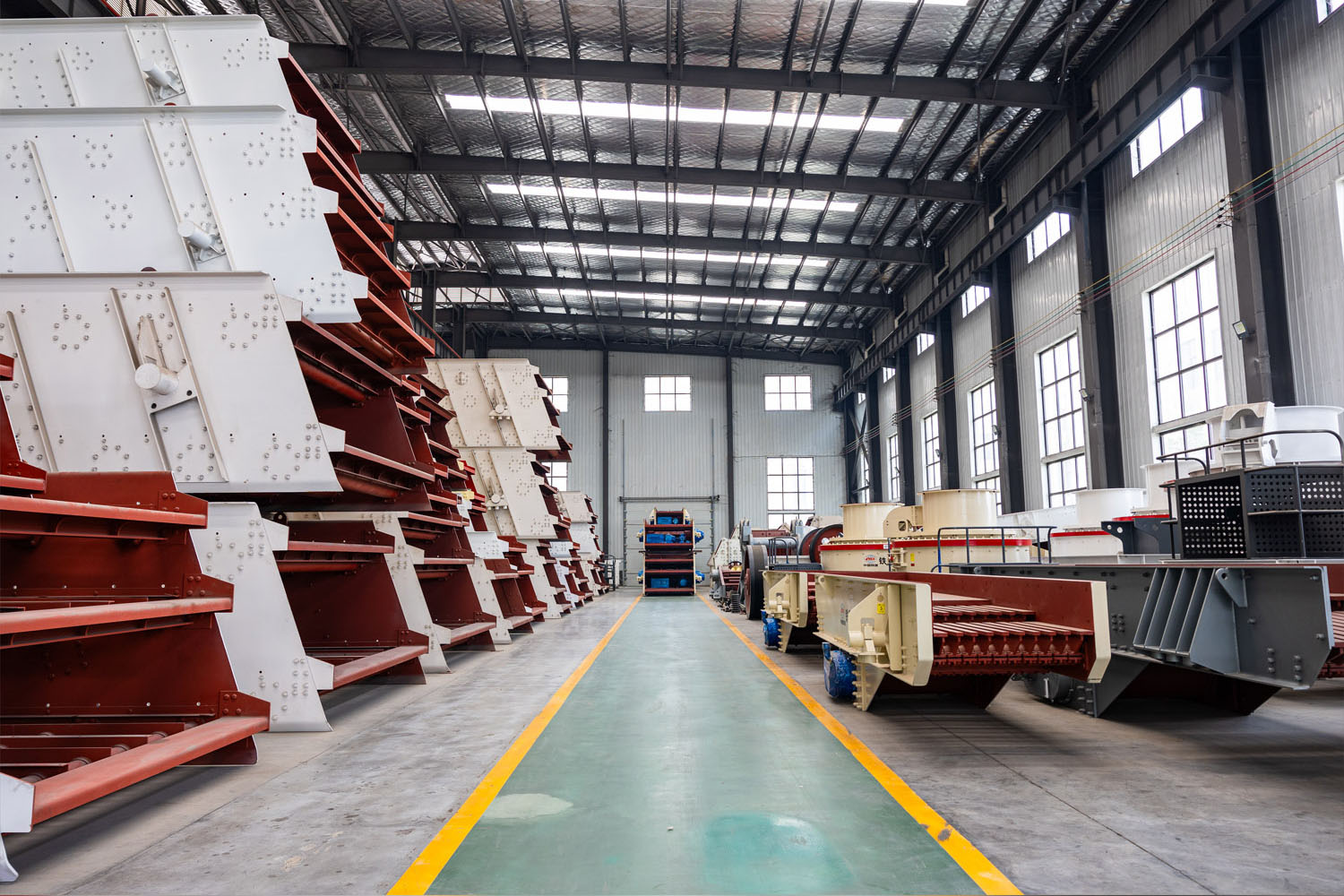
Henan Centbro Machinery (STM) Equipment Co., Ltd is a mining equipment manufacturer founded in 1982 and located in Zhengzhou National High-tech Development Zone, China. The company operates an 8,000 m² facility with a 20-engineer R&D team, and its range covers jaw, cone, impact, VSI, hammer, mobile and full production-line equipment. STM's manufacturing system is certified to ISO9001:2008 and holds the EU CE certificate, and it exports 100% of its output, with established markets that include Russia, the Middle East, Mexico and Africa.
Within that range, the Portable Stone Crusher is positioned as a relocatable crushing platform rather than a single-purpose machine. The same product family can be supplied with different mounted crusher modules, so a deployment can be matched to the crushing stage the project actually needs instead of forcing the project to match one fixed machine.
Module options across the Portable Stone Crusher family

Coarse crushing modules
PE-Jaw Crusher and European Jaw Crusher for first-stage size reduction at the face.
Medium and fine crushing modules
Impact Crusher, Spring Cone Crusher, CS Symons Cone Crusher, Multi Cylinder Hydraulic Cone Crusher and Single Cylinder Hydraulic Cone Crusher.
Sand-making module
VSI Sand Making Machine for manufactured sand and particle shaping.
Compact reduction module
Hammer Crusher for compact secondary crushing circuits.
STM's wider crusher range also includes the Rock Crusher, the High-Pressure Stone Crusher, the Crusher Machinery series, Stone crusher plant configurations and the Stone Crusher Production Line. This matters for deployment planning because it allows a distributor or contractor to standardise on one supplier across fixed and mobile work, and to source replacement modules from the same technical family.
Supporting modules in the deployment chain
A portable unit delivers finished material only as part of a chain, so deployment planning cannot stop at the crusher. The supporting equipment has to be planned as well: raw material silo, feeder, vibrating screen, return crusher, finished product screen and finished product silo. The process progressively reduces particle size via coarse crushing → medium crushing → fine crushing → sand making, runs as closed-loop circulation, and stays under PLC control with synchronized start and stop.

Adjacent mobile lines in the STM range
Alongside the Portable Stone Crusher, STM also offers the Tyre Type Mobile Crusher and the Crawler Mobile Crusher. For buyers, that means the same supplier can cover a mobile deployment whether the project needs a wheeled configuration for road transfer between sites or a different mobility approach for uneven ground. Buyers who expect to move a plant several times during a contract should confirm which of these lines matches the terrain and the transfer distance before locking a configuration.
Step-by-Step Breakdown: Planning a portable crusher deployment
A portable deployment is planned backwards from the project, not forwards from the machine. Working in this order keeps module selection, supporting equipment and relocation logic aligned, and it prevents the common mistake of buying a crusher that fits the material but not the site sequence.
- Map the project footprint. Count how many sites the plant must serve, how far apart they are, and how often the unit is expected to move across the contract.
- Identify the required crushing stage. Decide whether the portable unit must handle coarse crushing, medium and fine crushing, or sand making, because this determines the module family.
- Select the mounted module. Choose from the jaw, impact, cone, VSI or hammer modules within the Portable Stone Crusher range.
- Plan the supporting chain. Define the feeder, vibrating screen, return crusher, finished product screen and finished product silo that travel with or support the deployment.
- Confirm customization. STM supports customer customization including LOGO and colours, and OEM Voltage specifications where a destination market requires them.
- Define relocation logic. Agree which components move with the platform between sites and which are rebuilt locally, so the second deployment is faster than the first.
- Commission on site. STM assigns professional after-sales engineers to the site for installation and commissioning until the customer can operate the machine, with support starting from online guidance and continuing with offline engineer collaboration.

Use Cases: Deployment scenarios where portable crushing fits
The Portable Stone Crusher is relevant wherever the project moves faster than a fixed installation can be justified. Documented STM applications include mine development, large-scale aggregate production, high-standard infrastructure projects, environmental protection solid waste treatment, high-end chemical filler production and ore processing. In deployment terms, those applications map to a smaller set of recurring patterns.
- Decentralized aggregate production. Several small deposits feeding one contract are served by moving the crushing stage to each deposit rather than hauling raw rock to a single plant. The primary module travels; the material stays close to the face.
- Temporary corridor job sites. Highway, expressway and railway subgrade filling, plus bridge, tunnel and water conservancy work, where the plant follows the advancing front instead of waiting for material to arrive.
- Remote quarry and mine development. Primary crushing close to the face, with cone or impact modules producing graded material for the next stage of the operation.
- Multi-site contract rotation. A contractor or distributor uses one relocatable platform across a sequence of sites rather than building a permanent line at each one.
- Manufactured sand for concrete. A VSI sand-making module inside the portable configuration produces sand for concrete aggregate, infrastructure, water conservancy and real estate projects.
- Environmental solid waste treatment. Processing at the source, which reduces the transport of bulky material and keeps the operation closer to the point of generation.

Comparison Table: Portable configuration options
The table below compares the module configurations offered within STM's Portable Stone Crusher family. It uses only the product positioning published for the range.
| Configuration focus | Mounted crusher module | Crushing stage | Deployment use |
|---|---|---|---|
| Portable primary crushing | PE-Jaw Crusher, European Jaw Crusher | Coarse crushing | First-stage reduction at remote deposits and new faces |
| Portable secondary / tertiary crushing | Impact Crusher, Spring Cone Crusher, CS Symons Cone Crusher, Multi Cylinder Hydraulic Cone Crusher, Single Cylinder Hydraulic Cone Crusher | Medium and fine crushing | Graded aggregate production at decentralized sites |
| Portable sand making | VSI Sand Making Machine | Sand making | Manufactured sand for concrete and infrastructure |
| Portable compact reduction | Hammer Crusher | Secondary reduction | Smaller temporary sites and compact circuits |
Scenario-to-configuration fit
| Project scenario | Deployment consideration | Configuration focus |
|---|---|---|
| Decentralized aggregate production | Several smaller deposits instead of one central quarry | Primary jaw module with screening and return circuit |
| Temporary corridor job sites | Plant follows the advancing work front | Mobile crushing and screening, with a VSI module where sand is required |
| Remote quarry and mine development | Hauling raw rock long distances adds cost | Primary jaw or European jaw module feeding cone modules |
| Multi-site contract rotation | One platform serves more than one location | Relocatable platform with a modular, re-usable configuration |
| Manufactured sand for concrete | Consistent sand grading produced on site | VSI sand-making module inside the portable setup |
| Environmental solid waste treatment | Processing at source to avoid transport | Compact primary plus secondary modules |
Frequently Asked Questions
1. What mobile crusher safety standard should buyers verify during evaluation?
ISO 21873-2:2019 specifies safety requirements and verification for mobile crushers used in rock crushing and construction recycling, and it is a common reference point when buyers review a portable unit. STM's manufacturing system is certified to ISO9001:2008 and holds the EU CE certificate for its product range. Buyers should confirm which standards apply in the destination market and match them against the supplier's certification documents.
2. Can one portable stone crusher platform be built with different crusher modules?
Yes. STM's Portable Stone Crusher is offered across a module family: PE-Jaw Crusher and European Jaw Crusher for coarse crushing; Impact Crusher, Spring Cone Crusher, CS Symons Cone Crusher, Multi Cylinder Hydraulic Cone Crusher and Single Cylinder Hydraulic Cone Crusher for medium and fine crushing; VSI Sand Making Machine for sand making; and Hammer Crusher for compact secondary crushing. STM also supports OEM customization including Voltage and Logo, so a distributor can align units with local power requirements and branding.
3. How should a buyer compare the cost of a portable deployment with a fixed plant?
STM does not publish list prices, and a meaningful comparison depends on the project. The structural difference is that a fixed stone crusher production line concentrates investment in one permanent installation and one set of supporting equipment - silo, feeder, screens, return crusher, finished product screen and silo - that stays at that site. A portable deployment uses a relocatable platform that can serve a sequence of sites, so buyers should compare total cost across the whole contract, including the number of sites, the relocation frequency and the required modules, rather than the price of a single machine.
4. Can buyers validate a portable crusher before committing to a full order?
STM's minimum order quantity is 2 units, and every unit passes 100% testing as part of quality control. Buyers can request the product brochure, review the module documentation for the intended configuration, and discuss a pilot or first shipment with the sales team. STM's after-sales process assigns engineers to support installation and commissioning, which gives buyers a validation point at the first deployment.
5. What is the typical lead time, and how much production capacity does STM have?
STM's standard lead time is 30 days, supported by a monthly production capacity of 8,000 units and an annual output of 10,000 units. The company operates with a 20-engineer R&D team and exports 100% of its output, with established markets in Russia, the Middle East, Mexico and Africa. For multi-site contracts that need staggered delivery, the 30-day lead time and the monthly capacity are the two figures to plan around. To confirm the current lead time and request a quotation for a specific portable configuration, contact the STM team directly.
Conclusion: Choose the deployment by how the project moves
For remote and multi-site stone projects, deployment logic matters as much as crushing capability. A fixed production line concentrates output in one place and one permanent installation. A portable stone crusher concentrates flexibility in one platform that can be matched with jaw, cone, impact, VSI or hammer modules and moved with the work front. Buyers in the Research and Evaluation stage should scope the number of sites, the required crushing stage and the supporting chain first, then confirm certifications, customization and lead time with the supplier before locking a configuration.
Plan your next portable crusher deployment with STM
Request the full STM product brochure, or talk to the team about a Portable Stone Crusher configuration matched to your remote or multi-site project. STM supports OEM customization including Voltage and LOGO, a 30-day standard lead time, and on-site installation and commissioning support.
Email: Kevin@centbro.com | Tel / WhatsApp: +86 187-3712-0960 | Website: www.centbrocrusher.com
Download the brochure: STM Crusher Product Brochure (PDF)
This guide describes the published positioning of the Portable Stone Crusher for planning purposes. Final configuration, supporting equipment and compliance requirements should be confirmed with STM against the specific project.
Have Questions or Need More Details?
Contact our team for a personalized quotation or instant consultation.
Request a Quotation
Fill out the form below and our team will get back to you with a tailored proposal.
WhatsApp Direct Chat
Prefer to chat in real-time? Message us on WhatsApp for instant assistance & quick answers.
- Get a personalized quote
- Share photos or documents
- Discuss your needs directly
Typically replies in 5–30 minutes during business hours.