
Continuous vs Start-Stop Refrigeration on Reefer Trucks: A Buyer Comparison Guide
Quick answer: The practical difference between continuous and start-stop refrigeration is what keeps the cargo cold when the truck is not moving. In the reefer guidance supplied by Henan Elorry Industrial Co., LTD. (ELORRY), an independent refrigeration unit carries its own engine or motor and can keep cooling while the vehicle engine is off; a non-independent unit is driven by the vehicle engine or traction battery and stops cooling when vehicle power stops. For buyers, continuous cooling is a cold-chain risk-control decision for loading, traffic and multi-stop work; start-stop cooling is a simpler vehicle-driven configuration whose cooling depends on engine or battery state.
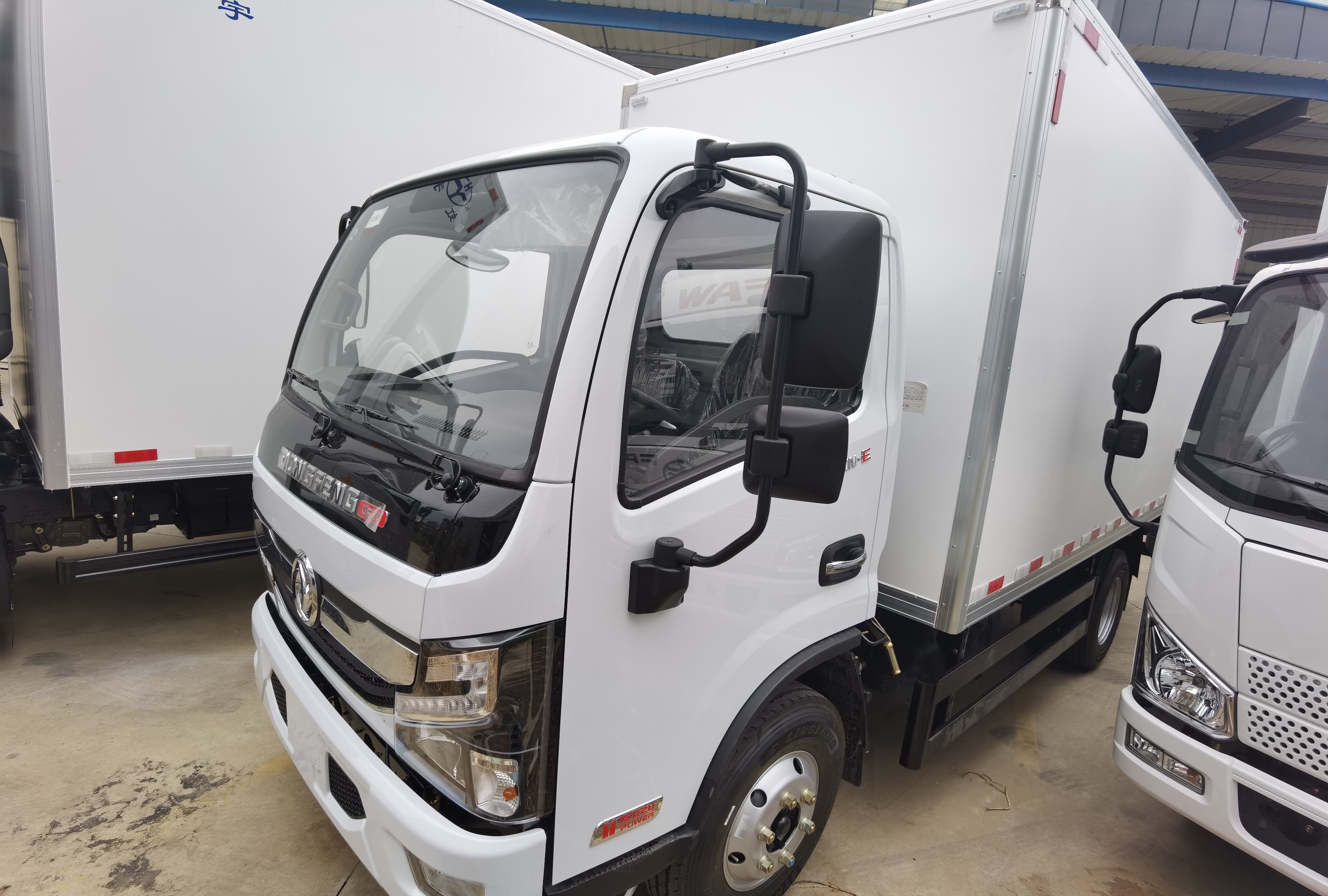
What the comparison actually decides
A reefer truck does not fail only on the road. Temperature risk also appears while the truck waits at a dock, while doors are opened at each stop, while cargo is checked at a security gate, and while a driver waits for a loading bay. The refrigeration strategy decides whether cooling continues during those periods and what evidence the operator can produce afterwards.
The supplied reefer knowledge unit frames the choice by power source. An independent unit has its own prime mover. It behaves as a continuous cooling resource when the truck engine is stopped. A non-independent unit has no separate power source; its compressor is driven from the chassis and stops when vehicle power stops. That distinction matters because a non-independent reefer truck can lose cooling exactly when it is parked for unloading.
This guide uses those terms carefully. Continuous cooling, in this article, means the refrigeration loop can keep running with the vehicle engine off. Start-stop cooling means cooling depends on the vehicle engine or traction battery and therefore follows vehicle operating state. The exact unit supplied for a project still has to be checked against its rated capacity, ambient condition, standby provision and body class.
Why the problem is larger than a compressor choice
Cold-chain buyers often compare refrigeration units by headline capacity, then discover that the weak point is the body, the door seal, the loading practice or the waiting time at the dock. The supplied ATP and K-coefficient knowledge is useful here because it separates the unit from the insulated body.
The K coefficient is the overall heat-transfer coefficient of the refrigerated truck body in W/(m2.K). It states how much heat passes through each square metre of wall, roof and floor for each degree of temperature difference. Under ATP, a normally insulated body (IN) must be at or below 0.70 W/(m2.K), and a heavily insulated body (IR) at or below 0.40 W/(m2.K). The value is measured at an approved testing station, not estimated from panel thickness alone.
That matters when comparing continuous and start-stop refrigeration. A well-insulated body with a moderate unit can hold temperature through a short stop better than a poorly sealed body with a large unit. In the same way, a continuous unit cannot compensate indefinitely for a door left open, warm cargo loaded into a cold box, or an iced evaporator.
The ATP class mark gives buyers a second check. On a refrigerated truck, FRC and FNA are ATP class marks. The first letter indicates a built-in mechanical refrigeration unit, the second shows insulation level (R for heavily insulated, N for normal), and the third is the temperature class. FNA is the normally insulated class holding chilled temperatures down to 0 C. FRC is heavily insulated and can hold down to -20 C. For frozen-food procurement, FRC is therefore a common requirement. These are tested thermal classifications of the body-and-unit combination, not a general food-safety certificate for the cargo.
Continuous vs start-stop refrigeration: comparison table
The table below compares the two buyer-facing operating approaches using the supplied reefer definitions and cold-chain application facts. It avoids price and fuel claims that are not present in the supplied content units.
| Buyer question | Continuous cooling with an independent unit | Start-stop cooling with a vehicle-driven unit |
|---|---|---|
| What powers the refrigeration loop? | The unit carries its own engine or motor and can run with the vehicle engine stopped. | The unit has no power source of its own; it is driven by the vehicle engine or traction battery. |
| Does cooling continue during loading or unloading? | Yes, by design: the cold chain is decoupled from driving state. | Cooling stops when vehicle power stops, so a parked unloading period becomes the exposure window. |
| What work does it fit? | The supplied guidance links independent units to long-haul, multi-stop and pharmaceutical work that depends on cooling with the engine off. | A simpler, lower-complexity configuration whose cooling capacity is tied to engine speed or battery state of charge. |
| What must be checked before order? | Rated capacity at the intended ambient temperature, engine hours, standby provision and service network. | The same capacity and service checks, plus how the body will hold temperature when the vehicle is parked. |
| What body figures support the decision? | K coefficient, ATP class, door seals, air-return path and measured pull-down performance. | K coefficient, ATP class and realistic stop-time assumptions. The unit cannot be assessed without the body. |
| What is the main operational risk? | Higher system complexity and service dependence; the unit must be maintained, and standby or dual-unit provision may be specified. | Loss of cooling when parked for unloading or waiting, especially where door opening time is poorly controlled. |
Where continuous cooling earns its place
Continuous cooling is most defensible where the product risk is high and the route includes predictable non-driving time. The supplied pharmaceutical cold-chain application describes a narrow temperature band, strict traceability, short door-opening tolerance, and urban delivery with multiple drops. Its operating pattern is explicit: pre-cooled body, qualified loading pattern, continuous data logging, and controlled unloading with minimal door time.
That is not a decorative feature list. A pharmaceutical delivery may spend time at a security gate, wait for a hospital receiving bay, or move between several small deliveries. If refrigeration is tied only to the vehicle engine, those periods are exactly when the cold chain depends on body insulation and discipline rather than active cooling. An independent unit reduces that dependence because it can continue running.
Food and fresh-produce cold chain has a different but related pattern. The supplied food cold-chain application covers high ambient temperature, high humidity, frequent door opening and multi-stop delivery. Its operating mode includes pre-cooling the body before loading, keeping air channels clear, running the refrigeration unit in transit, and minimising door opening at discharge. Continuous cooling supports that discipline, but it does not replace it.
Where start-stop cooling can still be rational
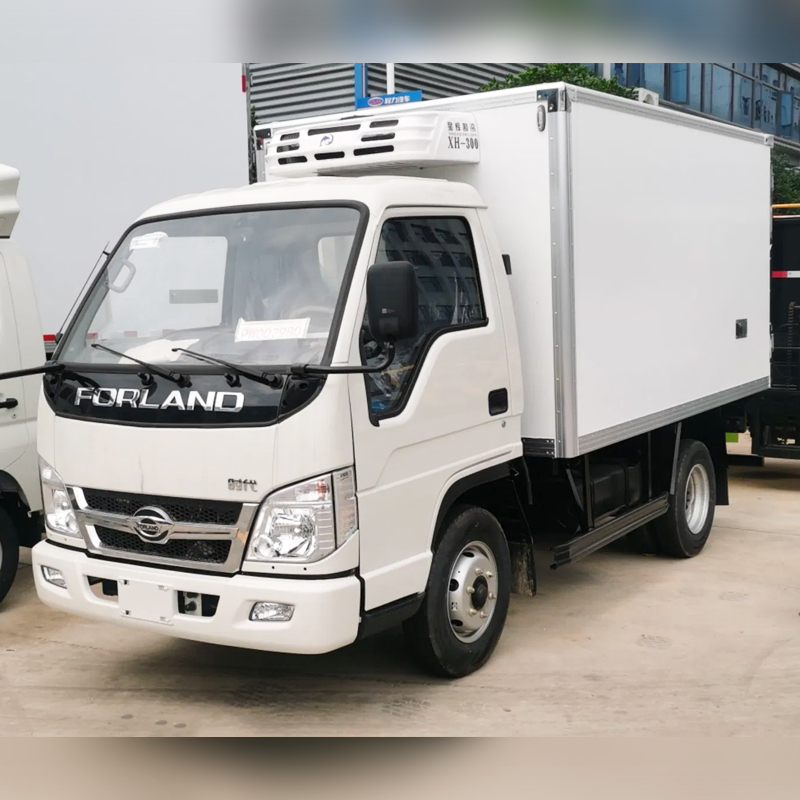
Start-stop cooling is not automatically wrong. The supplied definition says a non-independent unit is simpler and cheaper but ties cooling capacity to engine speed or battery state of charge. For a buyer with short predictable runs, limited door-opening time and a well-insulated body, that trade-off may be acceptable.
The risk is that a start-stop configuration is often selected on the vehicle specification sheet without a stop-time calculation. A buyer should map the real route: how long the truck waits before loading, how long doors are open at each drop, whether the dock has standby power, and whether the driver can keep the body closed between stops. If the route includes a long unloading period in high ambient temperature, the unit cannot cool while the engine is off, and the body has to carry the load.
This is also where ATP class and K coefficient become procurement tools rather than paperwork. A vehicle with a lower K value gains more time before the cargo moves outside its band. A sealed body, good door gaskets and a clear air-return path extend that time. A start-stop unit on a weak body has little margin.
Buyer check: Do not compare continuous and start-stop refrigeration by unit brand alone. Compare the complete system: rated capacity at the intended ambient, body K coefficient, ATP class, door-opening routine, standby power at the dock, and the temperature record the operator can retrieve after delivery.
Step-by-step: how to specify the right strategy
1. Define the temperature band and the consequence of excursion
Start with the cargo, not the truck. A chilled product held near 0 C to +12 C has a different risk profile from a frozen product requiring down to -20 C. The ATP class letters help: FNA is normally insulated for the chilled band, while FRC is heavily insulated for frozen duty. The buyer should write the required band, the allowed door-opening time and the evidence needed after delivery.
2. Map the duty cycle, including non-driving time
List every period when the truck is stationary: loading, customs, weighbridge, driver rest, queueing and unloading. For each, record whether the body door is open or closed and whether an external power point is available. This is the single most useful input for choosing continuous or start-stop cooling. A route with long dock waits and multiple drops is not the same as a depot-to-depot run with one sealed door opening.
3. Choose the refrigeration power strategy
If the cold chain must continue while the engine is off, the independent unit is the configuration supported by the supplied guidance. If the route is short, tightly controlled and the body has enough thermal margin, a vehicle-driven unit may be considered. The decision should be written into the specification as a requirement, not left to a sales description. For pharmaceutical and high-value food loads, the operating procedure should also state what happens during a delay.
4. Specify the body to the same standard as the unit
Require a measured K coefficient and the intended ATP class. Check the door seals, the air-return path, the floor channels and the evaporator defrost routine. In the supplied cold-chain applications, pre-cooling the body, loading with air channels kept clear and minimising door opening are part of the operating method. These practices are not optional extras; they determine whether the chosen refrigeration strategy works in service.
5. Plan pre-cooling, loading and data records
Pre-cool the body before loading. Load according to a qualified pattern so air can circulate. Use a calibrated data logger where the cargo requires traceability. The pharmaceutical application specifically calls for continuous monitoring, a documented excursion record, temperature mapping and alarm thresholds. A reefer truck that cools well but cannot produce a record may still fail a buyer audit.
6. Confirm standby and backup provision
For high-risk routes, ask whether the dock has standby power, whether a backup refrigeration unit is required, and how the unit behaves during engine stop. The supplied pharmaceutical application notes dual unit or backup power as an option and requires applicable national cold-chain requirements to be confirmed per destination. That last point is important: the buyer must verify local rules rather than assume a single global standard.
7. Validate before shipment and after delivery
Check the body and unit together. A pull-down test, door-seal inspection, evaporator defrost check and temperature-record review are more informative than a capacity figure on its own. After delivery, monitor the first routes and compare actual door-open time with the planning assumption. If the route changes, revisit the refrigeration strategy rather than assuming the original choice still fits.
Use cases that clarify the choice
Pharmaceutical and medical cold chain
The supplied pharmaceutical cold-chain scenario is the clearest case for continuous cooling. It involves a narrow temperature band, strict traceability, short door-opening tolerance and urban delivery with multiple drops. The operating method is pre-cooled body, qualified loading pattern, continuous data logging and controlled unloading with minimal door time. In this setting, a refrigeration strategy that stops with the vehicle engine creates an avoidable exposure window at every receiving point.
Food and fresh-produce cold chain
The food cold-chain scenario adds high ambient temperature, high humidity, frequent door opening and multi-stop delivery. The body must be pre-cooled, air channels must stay clear, the unit must run in transit, and discharge must be quick. Continuous cooling gives the operator more control over the waiting periods. Start-stop cooling can be considered only where the route, body and dock practice combine to keep the product inside its band without active cooling at every stop.
Light-duty refrigerated distribution
In the supplied light duty truck specification, a refrigerated body uses PU insulated panels of 60-100 mm and a refrigeration unit for -18 to +5 C. This is a useful reminder that the refrigeration choice sits inside a vehicle specification. The body thickness, the unit capacity and the payload left after body installation all interact. A buyer should not specify a deep-frozen body and then discover that the chassis, body and unit together leave too little payload for the route.
Where ELORRY fits in a reefer truck procurement
Henan Elorry Industrial Co., LTD. (ELORRY) is a Chinese manufacturer and supplier of transport trucks, passenger vehicles, engineering machinery, farm machinery and spare parts. The company was founded in 2016 and is headquartered in Zhengzhou, Henan Province, China. Its stated product range includes dump trucks, cargo trucks, light and heavy-duty trucks, tanker trucks, sanitation trucks, refrigerated trucks, wreckers, crane trucks and aerial platform trucks.
For cold-chain buyers, the relevant point is not a single unit model but the configuration discussion. A reefer truck order has to match the body, the refrigeration unit, the chassis, the destination market and the operating route. ELORRY's one-stop solution description covers needs analysis, solution design, vehicle customisation, production and quality control, export documentation, shipping, logistics, installation, operator training, spare-parts supply and long-term technical support. The company summarises this as professional one-stop service intended to save the buyer money, time and energy.
Company facts provide scale context. ELORRY reports a 10,000+ m2 production base with production workshops, an R&D centre, an installation workshop and a dedicated quality-control team. It reports 200+ employees, 25 engineers, an annual output of 24,000 units and a catalogue of 80+ models. Its export ratio is stated as 100%, with products delivered to 89 countries and regions across six continents according to company records. Core markets include Africa, Asia, North America, South America and Oceania, with named markets such as the Philippines, Indonesia, Jamaica, Ethiopia, DR Congo, Turkiye, Tanzania, Ghana, Algeria, Mexico and Saudi Arabia.
Service coverage includes overseas branches and local teams in the Philippines, Indonesia and Ghana. The company states that it answers within 15 minutes, operates a 24-hour hotline and supports overseas customers with local teams and fast spare-parts supply. For a reefer buyer, those details matter most after the first fault: a temperature-controlled truck cannot wait weeks for a seal kit, a sensor or a service decision.
Quality and market-recognition claims should be read with their source. ELORRY displays five SGS certificates on its website and cites ISO/CE certification for its commercial vehicle lines. It also states Alibaba and Made-in-China audited supplier status and VIP membership. The company reports 500+ clients worldwide and a decade of export experience. These are company-provided records, not an independent market ranking. Buyers should still verify the certificate scope, the destination registration rules and the exact unit specification for their order.
Buyer recommendation: which strategy to shortlist
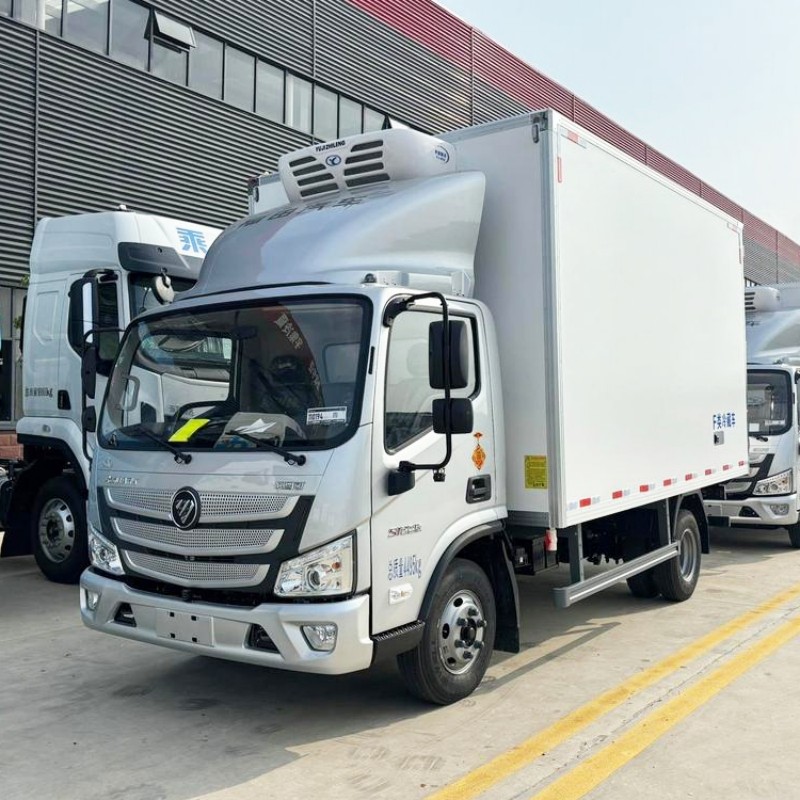
Shortlist continuous cooling with an independent unit when the route includes meaningful non-driving time, multiple door openings, pharmaceutical or high-value food cargo, or a documented requirement to hold temperature while the engine is off. The supplied guidance directly links independent units to long-haul, multi-stop and pharmaceutical work. That is a risk-control choice, not a claim that every reefer truck needs it.
Consider start-stop cooling with a vehicle-driven unit when the route is short and predictable, the body is well insulated and sealed, the dock can support the operation, and the buyer has a realistic plan for unloading time. The supplied definition notes that the non-independent configuration is simpler and cheaper but ties cooling to engine speed or battery state of charge. The buyer should test that assumption against the longest stop on the route, not the average.
In both cases, specify the K coefficient and ATP class, confirm the unit capacity at the intended ambient temperature, plan pre-cooling and loading, and require a temperature record where the cargo demands it. The refrigeration unit is only one part of the cold chain. The body, the door routine and the data record decide whether the chosen strategy survives daily operation.
Frequently asked questions
What is an independent refrigeration unit on a refrigerated truck?
On a refrigerated truck, an independent (self-powered) refrigeration unit carries its own engine or motor, so it keeps cooling when the vehicle engine is off, during loading or in traffic. A non-independent unit has no power source of its own and is driven by the vehicle engine or traction battery. The distinction matters because a non-independent refrigerated truck can lose cooling exactly when it is parked for unloading.
What is the K coefficient of a refrigerated truck insulated body?
The K coefficient is the overall heat-transfer coefficient of a refrigerated truck body, expressed in W/(m2.K). It states how much heat passes through each square metre of wall, roof and floor for each degree of inside-outside temperature difference. Under ATP, a normally insulated body (IN) must be at or below 0.70 W/(m2.K), and a heavily insulated body (IR) at or below 0.40 W/(m2.K). The value is measured at an approved testing station rather than estimated from panel thickness alone.
What does FRC or FNA mean on a refrigerated truck ATP marking?
On a refrigerated truck, FRC and FNA are ATP class marks. The first letter indicates a built-in mechanical refrigeration unit, the second indicates insulation level (R for heavily insulated, N for normal), and the third indicates temperature class. FNA is the normally insulated class holding chilled temperatures down to 0 C. FRC is heavily insulated and can hold down to -20 C, which is why frozen-food buyers usually ask for FRC on a refrigerated truck.
How should a reefer truck body be prepared before loading temperature-sensitive cargo?
The supplied cold-chain operating pattern is to pre-cool the body before loading, load the cargo with air channels kept clear, run the refrigeration unit in transit, and minimise door opening at discharge. For pharmaceutical work, the pattern also includes a qualified loading pattern, continuous data logging and controlled unloading with minimal door time. These practices support the refrigeration unit but do not replace correct unit selection.
What records support pharmaceutical cold-chain transport in a reefer truck?
The supplied pharmaceutical application calls for temperature-controlled transport with continuous monitoring and a documented excursion record. It also lists temperature mapping and alarm threshold, a calibrated data logger, a cold room, a backup refrigeration unit, a loading dock with dock shelter, and dual unit or backup power as an option. Applicable national cold-chain requirements must be confirmed for each destination.
What refrigerated body options are available in ELORRY's light duty truck range?
In the supplied light duty truck specification, the refrigerated body option uses PU insulated panels of 60-100 mm and a refrigeration unit, with a temperature range of -18 to +5 C. The light duty truck range also includes box van, dropside, flatbed, stake, tipper, tank and chassis cab bodies. Buyers should confirm the exact body and unit combination against the payload and route requirements before ordering.
How can a buyer choose between continuous and start-stop cooling?
Start with the longest period when the truck will be stationary with the cargo on board. If cooling must continue while the engine is off, an independent unit is the configuration supported by the supplied guidance. If the route is short, tightly controlled and the body has enough thermal margin, a vehicle-driven unit may be considered. Then check K coefficient, ATP class, unit capacity at ambient, door seals and temperature records. ELORRY can review the route, cargo band and body requirement with the buyer; the company contact is available through Henan Elorry Industrial Co., LTD..
Next step: If you are comparing reefer truck configurations, prepare the temperature band, the longest unloading period, the number of door openings per route and the destination market rules. ELORRY's product catalogue is available for download here: ELORRY Product Catalog.
Conclusion
Continuous and start-stop refrigeration are not competing labels for the same duty. They describe different answers to a simple buyer question: what keeps the cargo cold when the truck is not moving? Independent units support continuous cooling with the vehicle engine off, which is why the supplied guidance links them to long-haul, multi-stop and pharmaceutical work. Vehicle-driven units are simpler and cheaper but tie cooling to engine speed or battery state, so they require a tighter route and body plan.
The right procurement decision combines the refrigeration unit, the insulated body, the ATP class, the door-opening routine and the temperature record. ELORRY's role is to configure the truck and body around that operating reality, supported by its export, production and after-sales capabilities. For buyers in the awareness and research stage, the useful next step is not a unit brand comparison but a written route-and-temperature brief that the supplier can answer against.
Have Questions or Need More Details?
Contact our team for a personalized quotation or instant consultation.
Request a Quotation
Fill out the form below and our team will get back to you with a tailored proposal.
WhatsApp Direct Chat
Prefer to chat in real-time? Message us on WhatsApp for instant assistance & quick answers.
- Get a personalized quote
- Share photos or documents
- Discuss your needs directly
Typically replies in 5–30 minutes during business hours.