
Tipper Truck Comparison: Long Bulk Haul vs Municipal and Utilities Work
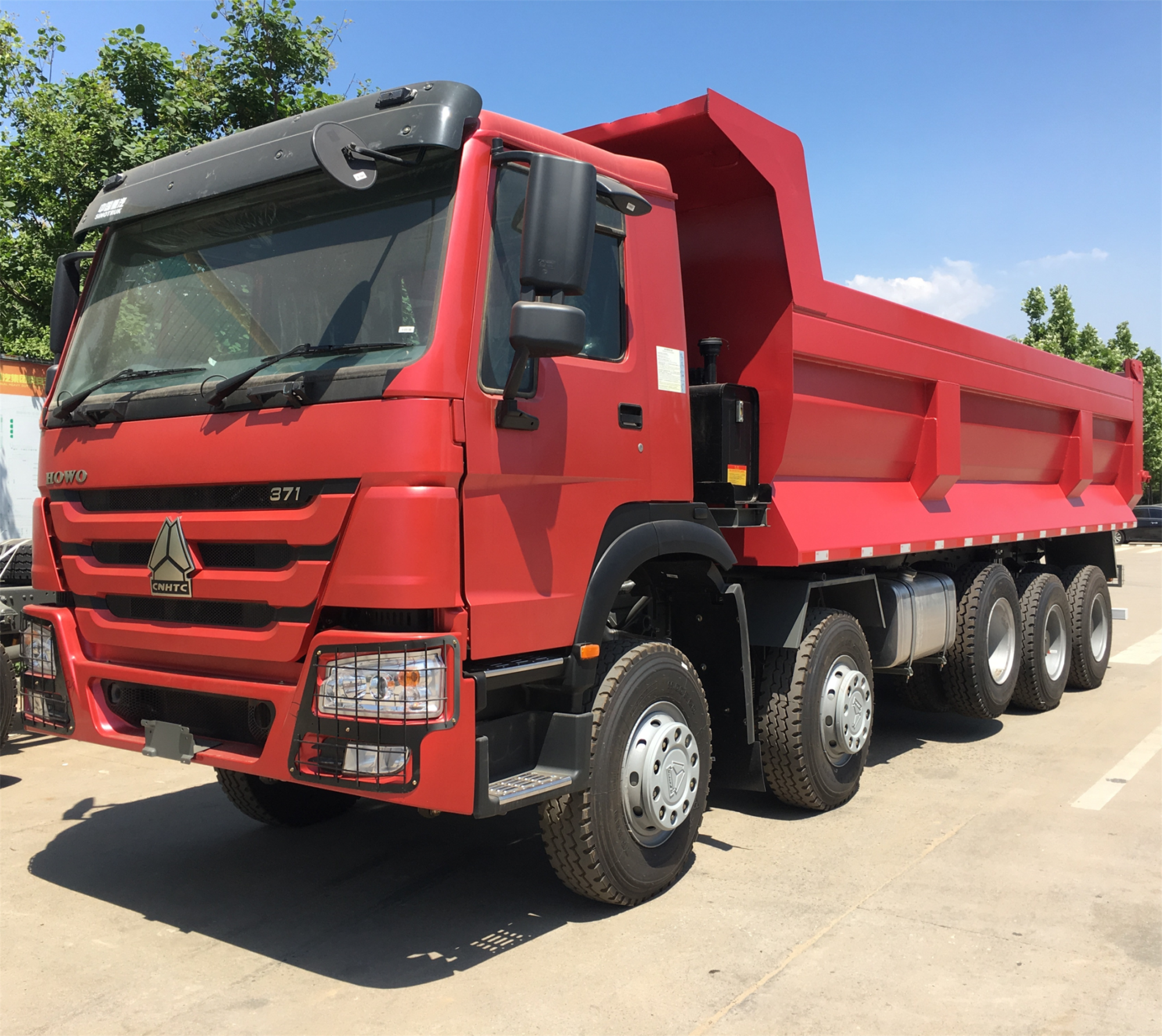
A tipper truck for a long bulk haul and a tipper truck for municipal or utility work should not be specified from the same checklist. On a steady bulk run, the commercial question is tonnes per driver hour and cost per tonne. In municipal and utility work, the practical questions are tipping direction, low body height, safe access, crew loading, and whether the truck can place material beside a trench or kerb rather than behind it. The same cab and chassis family can serve both roles, but the body, tipping system, subframe and operating assumptions are not interchangeable.
This comparison keeps the discussion on three buyer traps: a quoted 20 cube body is volume, not payload; a truck and dog is useful only where its added flexibility pays for its operating pattern; and a tipper body is mounted on a subframe because the hoist and hinge concentrate load in a way the bare chassis rails are not designed to spread. It also shows how to compare a long-haul tipper with a municipal three-way tipper without inventing a payload or a cost figure that the duty cycle does not support.
Problem definition: one tipper label, two different jobs
The central problem is that tipper buyers often compare trucks by cab, GVW, body volume and purchase price, while the actual work is decided by cycle time, site access, tipping direction and how the material behaves when discharged. A long bulk haul moves a large volume of one material between a loading point and a tip, often on repeatable routes. Municipal and utility work moves smaller quantities to many positions: trenches, verges, kerbs, signs, pipes, covers, street furniture, drainage works and maintenance points.
Those two duties pull the specification in different directions. A long bulk haul benefits from payload per driver hour, a body that discharges cleanly, a combination that can be loaded and tipped quickly, and a cost per tonne that reflects trips and turnaround rather than purchase price alone. Municipal and utility work benefits from a body that can tip to the side, a low body height for hand or shovel loading, safe access for crews, and enough crane or lifting provision where the work involves pipes, signs and covers. A tipper that is efficient in one role can be unnecessarily heavy, slow or awkward in the other.
Industry background: why GVW and body volume hide the real specification
The supplied dump truck range shows how broad the tipper category is: drive configurations include 4x2, 6x4, 6x6 and 8x4; GVW spans 8,000 to 50,000 kg, with mining configurations up to 60,000 kg; rated payload spans 5,000 to 40,000 kg; and cargo body volume spans 5 to 40 cubic metres. Within that range, a 4x2 body may be about 5 to 8 cubic metres, a 6x4 about 12 to 20 cubic metres, an 8x4 about 20 to 30 cubic metres, and a mining body 25 to 40 cubic metres. The body volume by drive configuration already shows why a quoted cube figure cannot be read without the chassis and axle context.
The tipper system also changes the duty. Rear tipping is standard, with side tipping optional. Tipping angle is typically 45 to 55 degrees, lifting time 15 to 25 seconds and lowering time 10 to 20 seconds. Body steel may be Q235 or Q345, with NM400 or NM450 wear-resistant steel optional, floor plate 6 to 12 mm and side wall 4 to 8 mm. Hydraulic working pressure is 16 to 20 MPa. These are not decoration details: they determine whether the truck can discharge wet clay, abrasive rock, hot asphalt, grain, sand or utility spoil in the time the site allows.
How to read a quoted 20 cube tipper body
A quoted 20 cube body means 20 cubic metres of body volume. It does not mean 20 tonnes of payload, and it does not prove that the truck can legally carry the material that fills that volume. The supplied tipper guidance gives a practical conversion: 20 cubic metres is about 15 to 16 tonnes of wheat but about 30 tonnes of dry sand. The same body therefore behaves like a volume-limited body on grain and a weight-limited body on sand or aggregate.
The buyer should multiply the usable body volume by the bulk density of the actual material, then check the result against the chassis payload and local axle limits. A 20 cubic metre body at the top of a 6x4 volume range may be a sensible grain or light-spoil body, but it can be an unsuitable aggregate body if the material reaches the axle limit before the body is full. The comparison is not between 20 cube and 20 tonnes; it is between the mass of the intended load and the legal capacity of the truck on the route it will run.
Buyer rule: ask for the body volume, the material density used for the calculation, the rated payload, and the axle-load check. If a quotation gives only the cube figure, the payload question is still unanswered.
When a truck and dog makes sense
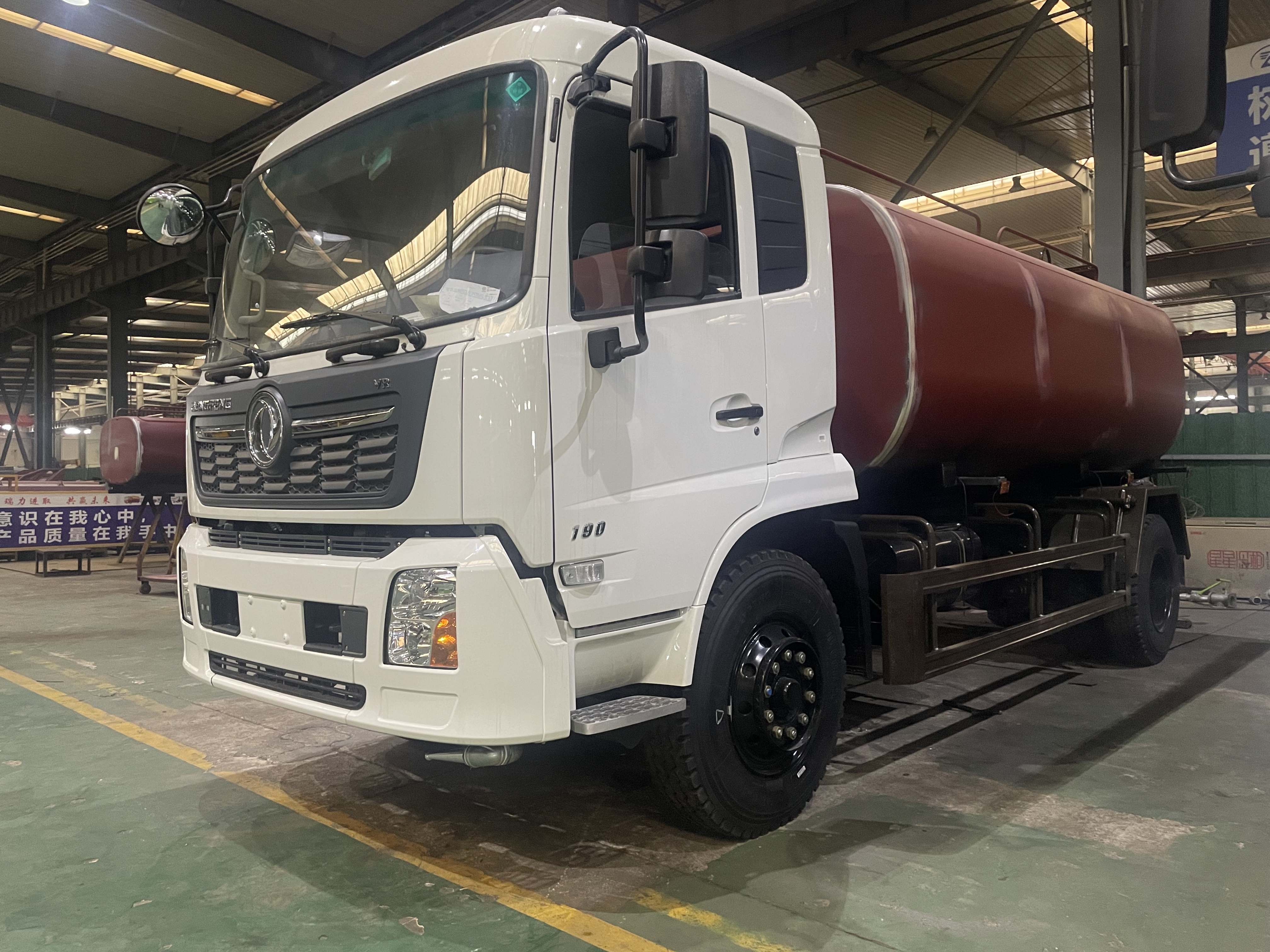
A truck and dog makes sense where the same truck also has to reach sites that a semi-trailer cannot. The supplied tipper guidance puts a truck and dog at about 20 to 40.5 tonnes depending on axles and site conditions. A 40 tonne combination with a tipper semi-trailer carries about 24 to 27 tonnes and gives the most payload per driver hour on a steady long run. The distinction is not that one combination is universally better; it is that they solve different access and turnaround problems.
If the work is quarry-to-plant, plant-to-site or a grain corridor with repeatable loading and tipping points, a tipper semi-trailer behind a tractor unit is the configuration to compare first. If the same truck must leave the main route, enter tighter sites, tip in constrained areas, or handle work where a semi-trailer cannot position, a truck and dog can preserve more operational reach. It is not the right choice for multi-drop urban delivery, where the combination cannot park or turn. The buyer should compare the two on tonnes per driver hour, tare, turnaround at load and tip, site access, and how many trucks one driver can keep moving.
Why a tipper body sits on a subframe instead of the bare chassis rails
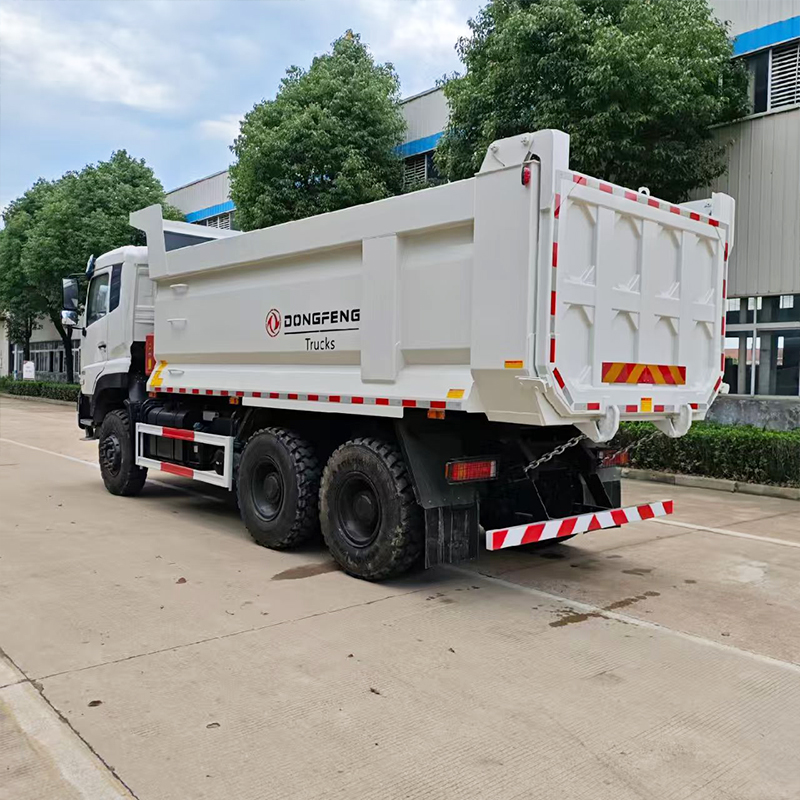
At full lift, the hoist pushes down on one small area while the hinge pulls up at the rear, and the body itself tries to twist. A tipper body is therefore mounted on a steel subframe that is bolted and rubber-mounted to the chassis rails. The subframe spreads those point loads over several cross members, and the rubber mounts absorb small relative movement between the steel body and the steel frame. The arrangement matters most on repeated cycles and rough sites, where the frame twists under the body.
The alternative is not a harmless weight saving. Bolting a tipper body straight to the bare chassis rails concentrates the hoist load and can crack the frame or the body floor within a season. That does not mean every tipper needs the same subframe, but it does mean the mounting arrangement belongs in the technical comparison. A quotation that lists a body volume and a hydraulic cylinder without describing how the body is mounted is incomplete for a working tipper.
Long bulk haul configuration path
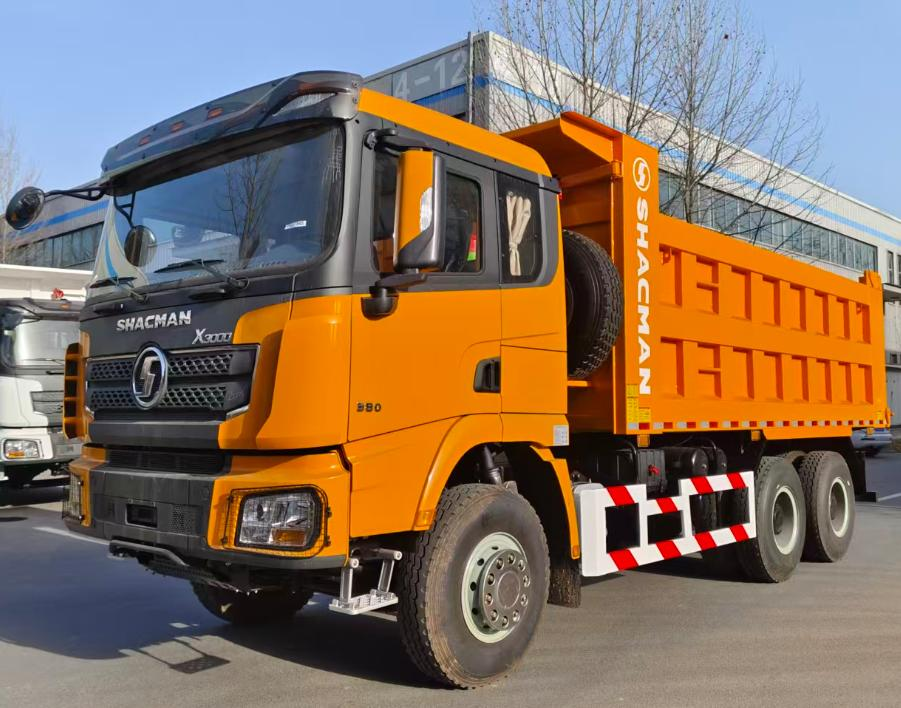
For a long bulk haul, start with the combination and the material, then work back to the body. Confirm the material density, the tonnes required per trip, the loading method, the tip method and the route. If the route is repeatable and the site access allows a semi-trailer, compare a tipper semi-trailer behind a tractor unit first. The supplied guidance places a 40 tonne combination with a tipper semi-trailer at about 24 to 27 tonnes, and its advantage is payload per driver hour rather than a lower purchase price.
Then compare the body against the material. Steel is the default for rock, rubble and scrap; aluminium is used for sand, soil, grain and asphalt where the 25 to 30 percent tare saving becomes payload. A wear-resistant body option is relevant where rock impact and abrasion are the daily conditions. The body floor, side wall, tailgate, hinge and hydraulic system should all be checked against the duty, not only against the cube figure. A clean discharge is part of cycle time: material that hangs up at the tip turns a short turnaround into a delay.
Finally, compare tonnes per driver hour, not purchase price. The cheaper rigid tipper can cost more per tonne once extra trips are counted. The buyer should ask how many trips per shift the configuration can complete, how long loading and tipping take, and whether the truck can keep moving with one driver. That is the practical route to the lowest cost per tonne on a steady bulk run.
Municipal and utilities configuration path
For municipal and utility crews, the supplied tipper guidance points to a 12 to 18 tonne three-way tipper with a low body height, 6 to 11 tonnes of payload and 400 to 800 millimetre sides. Where the crew handles pipes, signs and covers, a 2 to 3 tonne-metre loader crane can be added. The three-way body is the key functional difference: it lets the driver place material beside a trench, verge or kerb instead of reversing into a position the site does not allow.
The trade-off is weight and mechanism. A three-way tipper carries slightly less than a rear tipper of the same size because it needs extra rams with cross joints, releasable hinge sets on both sides and a heavier subframe to carry side loads. On a light chassis, that penalty can be a large share of payload. The municipal buyer should therefore prioritise low body height and safe access over payload, because crews load by hand and climb on the body, and falls are the main injury risk in this work. A three-way mechanism is not suited to bulk aggregate haulage, where it adds weight without benefit.
The municipal specification should also consider what the crew carries and how it is secured. A low body height helps shovel and hand loading; safe steps, handholds and a working platform matter more than a few extra cubic metres. If the truck is also used for winter material, street sweepings or green waste, the body and tailgate seals need to match those materials as well as the primary utility task.
Step-by-step breakdown for a like-for-like quote
- Define the duty cycle. State whether the truck is a long bulk haul unit, a municipal three-way unit, or a mixed-duty compromise. Include the material, density, tonnes per trip, number of trips, loading method, tip method, route and site access.
- Convert volume to mass. Multiply the usable body volume by material density, then compare with rated payload and local axle limits. Do not accept a cube figure as a payload figure.
- Choose the tipping direction. Rear tipping is the default for bulk haul. A three-way body is justified where the truck must discharge beside a trench, kerb or verge and cannot reverse into position.
- Check the body height and access. Municipal crews need a low body height, safe steps and handholds. Long-haul crews need a body that discharges cleanly and does not add unnecessary turnaround time.
- Confirm the body steel and wear package. Match Q235 or Q345 to general duty, and consider NM400 or NM450 wear-resistant steel where rock, rubble or abrasive material is the daily load.
- Review the subframe and mounting. Ask how the body is mounted, how hoist and hinge loads are spread, and whether the subframe is bolted and rubber-mounted to the chassis rails.
- Check the hydraulic and tipping data. Confirm tipping angle, lift and lower time, working pressure, cylinder type and the availability of spare seals and hoses.
- Match the chassis and driveline. Confirm drive configuration, GVW, engine power, emission level, left- or right-hand drive, axle capacity and tyre size against the route and local rules.
- Confirm compliance and documents. For African and Caribbean markets, ask for the exact certificate scope, the emission configuration, the fuel-system match and the export document set. Confirm the destination registration requirement locally.
- Compare on tonnes per driver hour and total duty cost. Use the same duty cycle for every quotation, and compare turnaround, payload, tare, maintenance access and spare-parts support rather than headline price alone.
Use cases
Quarry-to-plant aggregate: compare a tipper semi-trailer combination first where access allows. The supplied guidance places a 40 tonne combination with a tipper semi-trailer at about 24 to 27 tonnes and treats payload per driver hour as the main advantage. Check material density, body wear package and tip turnaround.
Road construction and earthworks: a rigid 6x4 or 8x4 tipper may fit where site access, unloading position or fleet size makes a semi-trailer impractical. Body volume, floor thickness, hydraulic lift and tailgate behaviour matter because the truck may tip into a paver hopper, a fill or a disposal point.
Municipal trench and verge work: use a 12 to 18 tonne three-way tipper with low body height and 400 to 800 millimetre sides. Add a loader crane where pipes, signs and covers are part of the crew task. Compare the three-way weight penalty against the access benefit.
Utility and maintenance fleets: the tipper may carry spoil, sand, aggregate, cold mix, signs or covers. The body should suit the mixed material list, and the crew access should be safe for repeated daily use. A rear tipper may be adequate where the truck always tips on open ground, but it will not replace a three-way body where side placement is the reason for the purchase.
Comparison table
| Configuration | Where it fits | Buyer check |
|---|---|---|
| Tipper semi-trailer behind a tractor unit | Steady long bulk haul with repeatable loading and tipping points; about 24 to 27 tonnes on a 40 tonne combination in the supplied guidance. | Compare tonnes per driver hour, tare, turnaround at load and tip, and site access. Do not assume the lowest purchase price gives the lowest cost per tonne. |
| Truck and dog | Where the same truck also has to reach sites a semi-trailer cannot; about 20 to 40.5 tonnes depending on axles and site conditions in the supplied guidance. | Check the tighter site access, axle configuration and whether the combination can turn and tip where the work actually happens. |
| 12 to 18 tonne three-way tipper | Municipal and utility work with 6 to 11 tonnes of payload and 400 to 800 millimetre sides; optional 2 to 3 tonne-metre loader crane. | Prioritise low body height and safe access. Confirm the three-way weight penalty and do not use this configuration as a bulk aggregate benchmark. |
| Quoted 20 cubic metre body | Volume figure only; about 15 to 16 tonnes of wheat but about 30 tonnes of dry sand in the supplied guidance. | Multiply by material density and check payload and axle limits. A 20 cube body is not a 20 tonne payload claim. |
Compliance and export considerations for African and Caribbean markets
For African and Caribbean buyers, compliance is usually a configuration and documentation question rather than a single regional label. The supplied range lists Euro II to Euro V engines matched to local fuel quality, left-hand and right-hand drive, and export documents including invoice, packing list, bill of lading, certificate of origin and insurance. ELORRY lists African markets including Ghana, Ethiopia, DR Congo, Tanzania and Côte d'Ivoire, and Caribbean markets including Jamaica, Trinidad and Tobago and the Dominican Republic.
Henan Elorry Industrial Co., LTD. (ELORRY) is a Zhengzhou, China-based supplier of transport trucks and related equipment, founded in 2016. The company cites ISO/CE certification for its commercial vehicle lines, but the exact certificate scope should be confirmed against the ordered model and destination. A buyer should not treat a general certification statement as proof that a specific tipper can be registered in a specific country. Ask for the certificate set, the emission configuration, the fuel-system match and the document package for the exact unit, then confirm the local registration rule with the responsible authority.
FAQ
Which truck manufacturers offer models with compliance options for African and Caribbean markets?
Buyers should compare configuration and documentation, not a single regional label. For tipper trucks, confirm left- or right-hand drive, the emission level, the engine fuel system matched to local sulphur, and the export documents. ELORRY lists African markets including Ghana, Ethiopia, DR Congo, Tanzania and Côte d'Ivoire, and Caribbean markets including Jamaica, Trinidad and Tobago and the Dominican Republic. The company cites ISO/CE certification for its commercial vehicle lines, but the exact certificate scope for the ordered model and destination should be confirmed in writing.
What does a quoted 20 cube tipper body actually mean?
It means 20 cubic metres of body volume, not 20 tonnes of payload. Multiply volume by material density and then check the result against the chassis payload and local axle limits. The supplied tipper guidance gives 20 cubic metres as about 15 to 16 tonnes of wheat but about 30 tonnes of dry sand, so the same body can be legal on one material and unsuitable for another.
When does a truck and dog make more sense than a tipper semi-trailer?
A truck and dog makes sense where the same truck also has to reach sites a semi-trailer cannot, such as tighter tips and site access points. The supplied tipper guidance puts a truck and dog at about 20 to 40.5 tonnes depending on axles and site conditions, while a 40 tonne combination with a tipper semi-trailer carries about 24 to 27 tonnes and gives the most payload per driver hour on a steady long run. It is not the right choice for multi-drop urban delivery.
Why does a tipper body sit on a subframe instead of the bare chassis rails?
At full lift the hoist pushes down on one small area while the hinge pulls up at the rear, and the body tries to twist. A steel subframe bolted and rubber-mounted to the rails spreads those point loads over several cross members and absorbs small movement between body and frame. Bolting the body straight to the rails concentrates the hoist load and can crack the frame or body floor within a season, especially on repeated cycles and rough sites.
Which tipper suits municipal or utility crews?
The supplied tipper guidance points to a 12 to 18 tonne three-way tipper with a low body height, 6 to 11 tonnes of payload and 400 to 800 millimetre sides, adding a 2 to 3 tonne-metre loader crane where crews handle pipes, signs and covers. Prioritise low body height and safe access over payload because crews load by hand and climb on the body. A three-way mechanism is not suited to bulk aggregate haulage, where it adds weight without benefit.
How should buyers compare cost per tonne on a long bulk haul?
Work from tonnes per driver hour rather than purchase price. Compare payload per combination, tare, turnaround at load and tip, site access, and how many trucks one driver can keep moving. The cheaper rigid can cost more per tonne once extra trips are counted, so ask for the duty cycle and the proposed combination to be assessed together.
What should be confirmed before ordering an export tipper truck?
Confirm the written specification and drawings, body volume and steel, tipping direction, drive configuration, emission level, left- or right-hand drive, axle limits, hydraulic system, cover or sheeting, and the document set. For orders under 20 units the supplied range quotes a typical lead time of about 30 days and a 12 month warranty on major components. A soft next step is to ask Elorry for a written quotation and pre-shipment inspection record against your actual duty cycle.
Conclusion
Long bulk haul and municipal or utility work are different tipper procurement problems. The long-haul buyer should compare combinations on tonnes per driver hour and cost per tonne, read body volume as volume rather than payload, and use a truck and dog only where its access advantage justifies the operating pattern. The municipal buyer should start with tipping direction, low body height and safe crew access, then decide whether a 12 to 18 tonne three-way tipper is a better fit than a rear tipper. In both cases, the subframe, body mounting, hydraulic system and compliance documents belong in the written quotation.
The most useful next step is to put the real duty cycle on paper: material, density, tonnes per trip, route, tip position, crew task and destination market. That is the basis on which a tipper specification can be compared honestly, without inventing a payload or a cost figure that the evidence does not support.
For buyers comparing configurations, Henan Elorry Industrial Co., LTD. can prepare a written tipper quotation against the duty cycle described above. The public product catalog is available for download: Elorry product catalog PDF.
Have Questions or Need More Details?
Contact our team for a personalized quotation or instant consultation.
Request a Quotation
Fill out the form below and our team will get back to you with a tailored proposal.
WhatsApp Direct Chat
Prefer to chat in real-time? Message us on WhatsApp for instant assistance & quick answers.
- Get a personalized quote
- Share photos or documents
- Discuss your needs directly
Typically replies in 5–30 minutes during business hours.