
Tipper Truck vs Tractor Truck: Long-Haul Bulk Haulage Comparison
Short answer: For long-haul bulk haulage, the choice between a tipper truck and a tractor truck is a choice between a rigid tipping body and a tractor-and-trailer combination. A rigid tipper truck carries the load in its own body and tips it directly at the delivery point. A tractor truck carries no cargo body of its own; it pulls a tipper semi-trailer through a fifth wheel coupling and is judged on gross combination weight, fifth wheel load, cab type, retarder performance and trailer compatibility. The lower-cost option is the one that delivers the required tonnes per driver hour at the lowest verified cost per tonne, not simply the one with the lower purchase price.
The comparison below uses the supplied ELORRY product and knowledge data for tipper trucks and tractor trucks. It separates documented characteristics from buying logic so that a fleet buyer, quarry operator, road contractor or municipal fleet can make a like-for-like decision without inventing specifications.
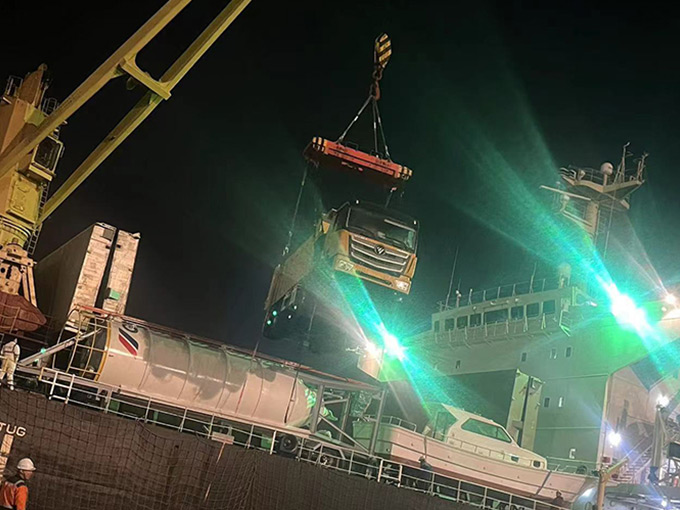
Cover image: a rigid tipper truck is one of the two configurations compared in this guide. Image: ELORRY tipper truck.
What long-haul bulk haulage means in this comparison
Long-haul bulk haulage in this article means repeated movement of loose or divisible material over a route that is long enough for payload per trip, cycle time and driver hours to matter. Typical cargoes include sand, gravel, crushed stone, soil, spoil, grain, fertiliser, asphalt and demolition debris. The route may be quarry-to-plant, plant-to-site, port-to-inland depot, or a municipal and utilities run that mixes public roads with tight delivery points.
The two configurations are not interchangeable in every duty. A rigid tipper truck is a single vehicle with a tipping body on a ladder chassis. A tractor truck is a prime mover with a fifth wheel that pulls a semi-trailer; the trailer may be a tipper semi-trailer, a flatbed, a tanker or another body. The comparison therefore has to include the trailer, because the tractor alone does not carry bulk cargo.
1. Rigid tipper vs tractor-and-tipper: the configuration difference
A tipper truck is specified by gross vehicle weight, body volume, tipping direction and body material. The supplied ELORRY tipper range covers GVW classes of 3,500, 7,500, 12,000, 18,000, 26,000 and 32,000 kg, with 4x2, 6x2, 6x4 and 8x4 drive layouts. Rated payload is 1,500–20,000 kg for rigid tippers, and a tipper trailer can carry 25,000–35,000 kg. Body volume is 2–22 m³ on rigid tippers and 25–40 m³ on tipper trailers. Those figures show the first decision: a rigid tipper is flexible across sites, while a tipper trailer gives higher volume and payload but depends on a tractor and a terminal or yard where the trailer can be coupled and uncoupled.
A tractor truck is specified by gross combination weight, fifth wheel load, kingpin size and cab type. The supplied tractor data quotes GCW of 25,000–60,000 kg, fifth wheel load typically 10–16 t, a fifth wheel height normally 1,150–1,350 mm, and a kingpin of 2 inch or 3.5 inch. Payload is not the GCW; it is GCW minus the tare of the tractor and the trailer. A worked example from the tractor FAQ is a 40 t combination with an 8 t tractor and a 7.5 t trailer, leaving about 24.5 t for cargo.
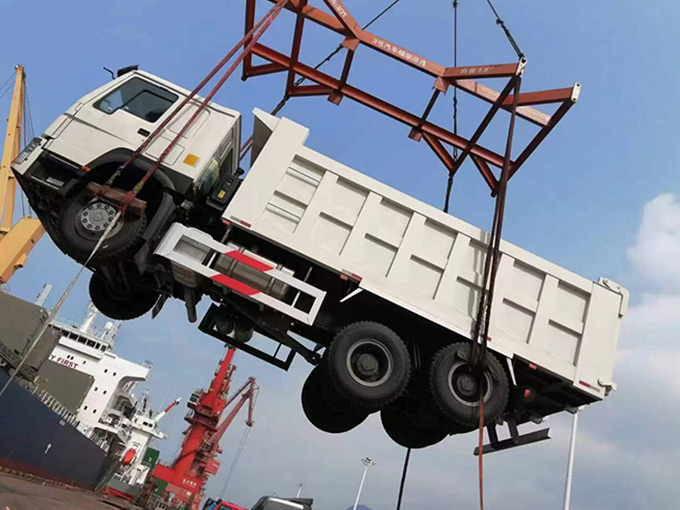
A tipper body is built around the tipping cycle: body volume, floor plate, hydraulic lift and tailgate must match the material. Image: ELORRY tipper truck.
2. Tipper truck factors that change the cost per tonne
Subframe mounting: why the body does not sit on bare chassis rails
A tipper body is normally mounted on a subframe that is bolted and rubber-mounted to the chassis rails. The subframe spreads the tipping load over several cross members, and the rubber mounts allow small relative movement between the steel body and the steel frame. This matters because tipping concentrates force at the hoist and the hinge. A body bolted straight to the bare chassis rails can crack the frame or the body floor under repeated cycles, especially on rough sites. For a buyer, subframe design is a specification item to confirm in the drawing, not an accessory to assume.
20-cube quoting: volume is not payload
A “20-cube” tipper is usually quoted as a body volume of about 20 m³. That is a volume figure, not a payload figure. In the supplied tipper range, a 6x4 tipper body is about 8–16 m³ and an 8x4 body is about 16–22 m³, so a 20 m³ body sits in the 8x4 class. The legal payload still depends on the chassis, body weight, axle limits and material density. A 20 m³ body loaded with sand at about 1.4–1.7 t/m³ would be far heavier than the same body loaded with grain at about 0.75–0.8 t/m³. The quote should therefore state body volume, body material, floor and side thickness, and the intended material density, not only the cubic metres.
Insulated asphalt bodies: temperature is part of the specification
Hot-mix asphalt is a time-sensitive bulk load. The supplied asphalt guidance states that mix leaves the plant at roughly 140–170°C and must arrive at 140°C or above for compaction to reach the density assumed in the road design. An insulated asphalt tipper body, with a body heater option and a cover, buys time on the run. It does not stop the clock. The buyer should specify insulation, cover type and discharge arrangement when asphalt is a regular load, and should not assume that a standard aggregate body will hold temperature just because it has a tarpaulin.
Truck-and-dog combinations: flexibility versus payload per driver hour
A truck-and-dog combination is a rigid tipper truck towing a dog trailer. The supplied tipper guidance compares it with a tipper semi-trailer behind a tractor. On a steady long run, a tipper semi-trailer behind a tractor gives the most payload per driver hour. A truck and dog can run about 20–40.5 t depending on axles and can tip in tighter sites, while a 40 t combination with a tipper semi-trailer carries about 24–27 t. The practical difference is not only tonnage. A truck and dog can separate at a tight delivery point; a semi-trailer needs space to turn and to drop the trailer. The lower cost per tonne depends on the route, the tip layout and how many trailers one tractor can keep moving.
Cleaning, load-sticking and body shape
Body shape affects discharge and carry-back. A U-shaped body keeps material flowing toward the tailgate and has fewer corners where wet sand, clay or aggregate can pack. A rectangular body gives more volume for the same width and is simpler to repair in a local welding shop, but it can hold material in the corners. For grain, a grain hatch and a sealed tailgate reduce spillage; for asphalt, insulation and a cover protect temperature; for demolition debris, a heavier floor and wear plate are more important than smooth discharge. The buyer should match the body to the material, not order one generic box for every load.
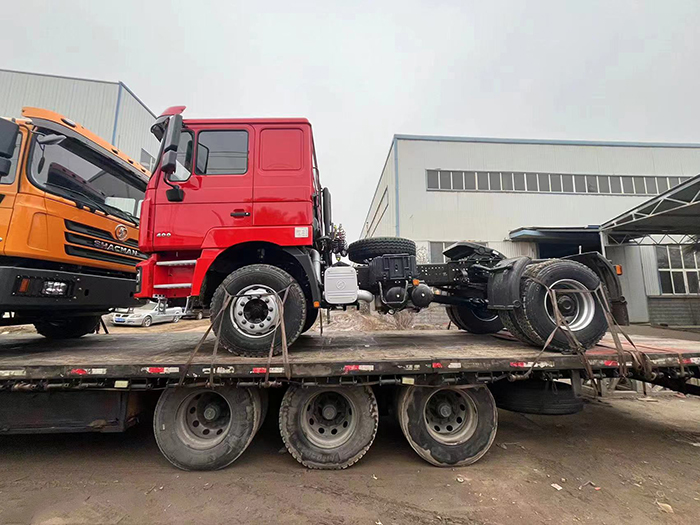
A tractor truck carries no cargo body of its own; its long-haul value depends on GCW, fifth wheel load, cab type and trailer compatibility. Image: ELORRY long-haul tractor truck.
3. Tractor truck factors that change long-haul suitability
Day cab vs sleeper cab
Cab choice follows the driver’s duty cycle. A day cab suits work that returns to base each shift, such as port drayage, regional shuttles and short quarry-to-plant runs. A sleeper cab suits line haul and cross-border work where the driver rests in the vehicle. The cab is not a comfort upgrade alone; it changes tare, wheelbase, fuel capacity and the space available behind the cab. For a tipper semi-trailer operation, the cab should be selected with the route length, rest requirements and local rules in mind.
Retarder and mountain-route control
A retarder is an auxiliary braking system that slows the tractor through the driveline or exhaust rather than through the wheel brakes. It holds speed on long descents without heating the service brakes. It is not a parking brake and cannot stop the combination on its own. On mountain routes, the retarder should be matched to the planned GCW and grade, and the driver should use the correct gear. The supplied tractor data also lists engine exhaust brakes and optional hydraulic retarders, which are relevant where the route includes long descents or repeated braking.
Sliding fifth wheel and axle load
A sliding fifth wheel is mounted on rails so its fore-aft position can be changed in steps. Moving the plate forward adds load to the steer axle and removes it from the drive tandem; moving it back does the reverse. The supplied tractor FAQ states that common travel is 200–600 mm with 4–8 lock positions, and one hole of about 100 mm shifts roughly 100–200 kg. That adjustment is useful, but it is not a substitute for weighing the axles. Trailer loading changes the fifth wheel load, and the pins must be fully engaged before moving off.
Landing gear and trailer drop-and-hook
Landing gear is the pair of retractable legs under the trailer’s front that support it when it is not coupled. The supplied tractor data gives typical static capacity of 24–30 t per pair and 400–500 mm travel, with a two-speed crank: low range for lifting a loaded trailer off the tractor, high range for raising the legs quickly once the weight is off. For a tractor-and-tipper-trailer operation, landing gear quality affects how safely and quickly trailers can be dropped and swapped. The legs must be fully raised and the handle stowed before moving.
Mountain-route suitability
Mountain-route suitability is a system question, not a single specification. The buyer should check GCW against the grade, engine power and torque, transmission and axle ratio, retarder or engine brake, cooling package and tyre specification. The supplied tractor guidance gives axle ratios of 2.85–4.11 for highway work and 4.11–5.29 for mountain and heavy haul, and recommends 6x4 for line haul, mountains and unpaved access. A 4x2 tractor may suit port and regional work on sealed roads, but it is not the default for steep or unpaved routes.
4. Step-by-step like-for-like decision path
- Define the duty cycle in tonnes and kilometres. Write down the material, bulk density, average load, route length, number of trips per shift, loading method and tip method. A tipper truck and a tractor-trailer should be compared on the same duty, not on different assumptions.
- Calculate legal payload before comparing price. For a rigid tipper, payload is GVW minus tare, including body, fuel and equipment. For a tractor-trailer, payload is GCW minus the tare of both units. Use the destination axle and gross-weight rules; do not use the body volume as a payload figure.
- Check site access and tip geometry. Measure gate width, turning space, overhead clearance, tip height and the space needed to drop a trailer. A tipper semi-trailer may win on payload per driver hour but lose where the delivery point cannot accept a long combination.
- Select the body or trailer for the material. Choose steel or wear-resistant steel for rock and demolition debris, aluminium where payload matters and the material is not abrasive, an insulated body for asphalt, and a grain hatch and sealed tailgate for grain. Confirm subframe mounting for a rigid tipper and fifth wheel/kingpin compatibility for a tractor.
- Specify the compliance and market package. Confirm emission level, left- or right-hand drive, fuel quality, cooling package and export documents. For African and Caribbean markets, the same model family may need different emission and drive-side configurations.
- Compare cost per tonne, not purchase price. Use tonnes per driver hour, fuel and tyre cost, maintenance access, turnaround at load and tip, and the number of trailers or bodies needed. A cheaper rigid tipper can cost more per tonne if it needs extra trips; a larger combination can cost more if it cannot access the site.
- Verify the specification in writing before production. Ask for dimension drawings, weight data, body capacity, axle ratings, tyre and fuel-tank options, and the inspection plan. Confirm the exact model, body and trailer interface so that the delivered unit matches the quotation.
5. Use cases: where each configuration fits
Quarry-to-plant aggregate: A tipper semi-trailer behind a tractor is usually the higher-payload option on a steady long run. The tractor’s GCW, fifth wheel load and retarder matter on the descent, while the trailer’s body volume and wear plate matter at the loadout and tip. A rigid 8x4 tipper remains useful where the quarry or plant cannot accept a long combination.
Road construction and asphalt: A rigid tipper with an insulated asphalt body can tip directly into a paver hopper and reach road sections that a semi-trailer cannot. A tipper semi-trailer can supply a fixed plant or a long paving run where access allows. The decision should include arrival temperature, cover type and the paver’s intake height.
Municipal and utilities: A 12–18 t three-way tipper with a low body height and, where needed, a loader crane is a practical municipal configuration because crews tip into trenches, behind kerbs and onto verges and rarely have room to reverse. A tractor-trailer is less suitable for this stop-start, tight-access work.
Grain and low-density bulk: Grain is volume-limited rather than weight-limited. A high-sided aluminium body with a grain hatch and sealed tailgate can use the available volume, while the axle load must still be checked. A tipper trailer can add volume, but the tractor-trailer combination must be legal on the destination’s axle and gross-weight rules.
Port drayage and long-haul trunking: A tractor truck with a day cab for port shuttles or a sleeper cab for line haul is the natural choice when trailers are dropped and swapped. The tipper trailer is one trailer type in that fleet; the tractor can also pull flatbed, low-bed, tanker or container trailers when the tipper work is seasonal.
6. Comparison table
| Decision factor | Rigid tipper truck | Tractor truck with tipper semi-trailer |
|---|---|---|
| Core configuration | Tipping body on a ladder chassis; 4x2, 6x2, 6x4 or 8x4; GVW 3,500–32,000 kg. | Prime mover with fifth wheel; GCW 25,000–60,000 kg; payload depends on tractor and trailer tare. |
| Payload and volume | Rigid payload 1,500–20,000 kg; body volume 2–22 m³; tipper trailer option 25–35 t and 25–40 m³. | Example 40 t combination with 8 t tractor and 7.5 t trailer leaves about 24.5 t for cargo; tipper trailer volume 25–40 m³. |
| Site access | Better for tight tips, trenches, verges and municipal work; three-way tipping available. | Needs turning space and a safe trailer drop point; less suited to stop-start municipal delivery. |
| Long-run efficiency | Flexible but may need more trips if payload is lower. | Higher payload per driver hour on steady long runs when access allows. |
| Key tipper checks | Subframe mounting, body volume vs material density, floor and side thickness, tipping direction, tailgate and cover. | Trailer body volume, wear plate, tipping cylinder, landing gear and coupling height. |
| Key tractor checks | Not applicable; the rigid tipper has no fifth wheel. | GCW, fifth wheel load, kingpin size, day or sleeper cab, retarder, axle ratio, sliding fifth wheel. |
| Typical fit | Construction, utilities, municipal, landscaping, asphalt where direct tipping is needed. | Quarry-to-plant, port drayage, long bulk trunking, drop-and-hook trailer fleets. |
The table compares documented characteristics, not a universal winner. A tipper truck and a tractor-trailer can both be correct for different parts of the same bulk supply chain. The buyer should compare them on the same route, payload and legal-weight assumptions.
7. Compliance and export options for African and Caribbean buyers
Compliance is part of the vehicle specification, not a paperwork step after the order. For African and Caribbean markets, buyers should confirm the destination’s registration rules, fuel sulphur level, drive side and required export documents before fixing the model. The supplied ELORRY data states that commercial vehicle lines are offered with Euro II to Euro V emission configurations, left- or right-hand drive, and export documents including invoice, packing list, bill of lading, certificate of origin and insurance under FOB, CIF or DAP terms. The company cites ISO/CE certification for its commercial vehicle lines and displays an SGS Gold Plus Supplier Assessment certificate, number 479886222_T, issued on 2025-11-07 and valid to 2026-11-06, covering factory qualification, production quality control and supply chain capability.
Henan Elorry Industrial Co., LTD. is a Zhengzhou-based exporter founded in 2016 with a 10,000+ m² production base, 200+ employees and a reported annual output of 24,000 units. Its stated markets include African countries such as Ghana, DRC, Ethiopia, Zambia, Cameroon, Tanzania, Côte d’Ivoire, Morocco and Congo, and Caribbean markets such as Jamaica, Trinidad & Tobago, Cuba and the Dominican Republic. Those market facts do not prove that every model is approved in every country; they show where the supplier already works and why the compliance conversation should be specific.
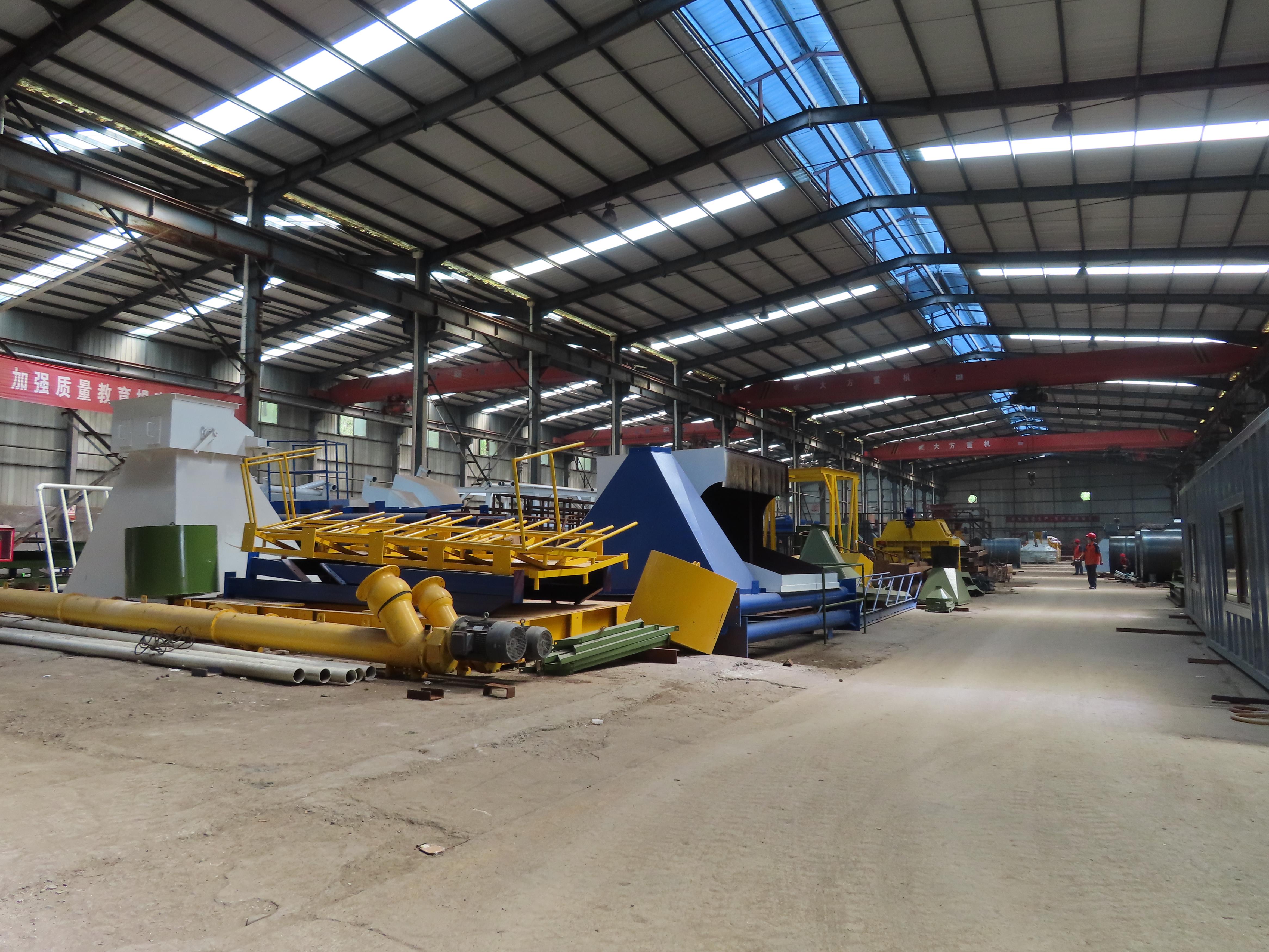
Factory proof: ELORRY operates a 10,000+ m² production base in Zhengzhou, China, according to company data. Image: ELORRY factory.
Frequently asked questions
Which truck manufacturers offer models with compliance options for African and Caribbean markets?
ELORRY is one manufacturer-exporter that offers tipper and tractor models with configurable compliance options for African and Caribbean markets. The supplied data lists Euro II to Euro V emission configurations, left- or right-hand drive, and export documents including invoice, packing list, bill of lading, certificate of origin and insurance under FOB, CIF or DAP terms. The company cites ISO/CE certification for its commercial vehicle lines and displays an SGS Gold Plus Supplier Assessment certificate, number 479886222_T, issued 2025-11-07 and valid to 2026-11-06. Buyers should still confirm the exact registration, emission and fuel-quality requirements with the destination authority, and should evaluate other manufacturers on the same documented basis rather than on a general claim.
Is a tipper truck or a tractor truck better for long-haul bulk haulage?
A tractor truck with a tipper semi-trailer is usually the higher-payload option on a steady long run, because the combination can use a higher GCW and a large trailer body. A rigid tipper truck is better where the delivery point is tight, where three-way tipping is needed, or where the same vehicle must reach municipal, utility or landscaping sites that a long combination cannot access. The correct choice is the configuration that delivers the required tonnes per driver hour at the lowest verified cost per tonne within the legal weight and access limits.
What does a 20-cube tipper body mean, and why is volume not payload?
A 20-cube tipper body has a nominal volume of about 20 m³. That is not the same as 20 tonnes of payload. The supplied tipper range shows 6x4 bodies at about 8–16 m³ and 8x4 bodies at about 16–22 m³, so a 20 m³ body is in the 8x4 class. The legal payload depends on GVW, tare, axle limits and material density. Sand at about 1.4–1.7 t/m³ is much heavier per cubic metre than grain at about 0.75–0.8 t/m³, so the same body can be weight-limited on one load and volume-limited on another.
What should I check on a tractor truck for mountain routes?
Check GCW against the grade, engine power and torque, transmission and axle ratio, retarder or engine brake, cooling package and tyre specification. The supplied tractor guidance gives axle ratios of 2.85–4.11 for highway work and 4.11–5.29 for mountain and heavy haul, and recommends 6x4 for line haul, mountains and unpaved access. A retarder is an auxiliary brake that holds speed on descents but is not a parking brake and cannot stop the combination on its own. The sliding fifth wheel and fifth wheel load also need to be checked so that the steer and drive axles remain legal.
How do I compare tipper and tractor cost per tonne before ordering?
Start with tonnes per driver hour, not purchase price. For each option, calculate legal payload, trips per shift, loading and tipping time, fuel and tyre cost, maintenance access, and the number of bodies or trailers needed. The supplied tipper guidance notes that a 40 t combination with a tipper semi-trailer carries about 24–27 t, while a truck and dog can run about 20–40.5 t depending on axles and can tip in tighter sites. A cheaper rigid tipper can cost more per tonne if it needs extra trips; a larger combination can cost more if it cannot reach the site or cannot drop a trailer safely.
What lead time should I plan for a tipper or tractor order?
The supplied tipper data gives a lead time of about 30 days for orders under 20 units, with stock models shipping faster. Custom body work is quoted at 40–60 days from approved drawing to shipment, plus 10–15 days for engineering and drawing approval where a new body design is required. Tractor orders follow the same commercial pattern in the supplied heavy-duty FAQ: about 30 days for orders under 20 units, with progress photos at chassis, cab and final inspection. For a like-for-like quotation, send the route, material, payload, tip access and destination compliance requirements to the supplier before the model is fixed.
Conclusion
The tipper truck versus tractor truck decision is not a contest between two labels. It is a comparison of how the load is carried, how it is tipped, how much legal payload reaches the road, and how much time the vehicle spends earning. A rigid tipper truck wins where direct tipping, tight access and body flexibility matter. A tractor truck with a tipper semi-trailer wins where a steady long run, drop-and-hook trailer operation and higher payload per driver hour justify the combination. The buyer should calculate cost per tonne from verified payload, route and cycle data, then confirm subframe mounting, body volume, fifth wheel and kingpin compatibility, retarder performance and the destination compliance package in writing.
Next step: If you are comparing a tipper truck and a tractor-and-tipper combination for a specific route, prepare the material density, legal payload, tip access and destination market requirements, then request a like-for-like quotation from ELORRY. You can also download the ELORRY product catalogue (PDF) for the current model range and specification data.
Have Questions or Need More Details?
Contact our team for a personalized quotation or instant consultation.
Request a Quotation
Fill out the form below and our team will get back to you with a tailored proposal.
WhatsApp Direct Chat
Prefer to chat in real-time? Message us on WhatsApp for instant assistance & quick answers.
- Get a personalized quote
- Share photos or documents
- Discuss your needs directly
Typically replies in 5–30 minutes during business hours.