Nonwoven Mesh Belt Application Guide: Hot-Air Airlaid, Spunlace and Spunbond Line Matching
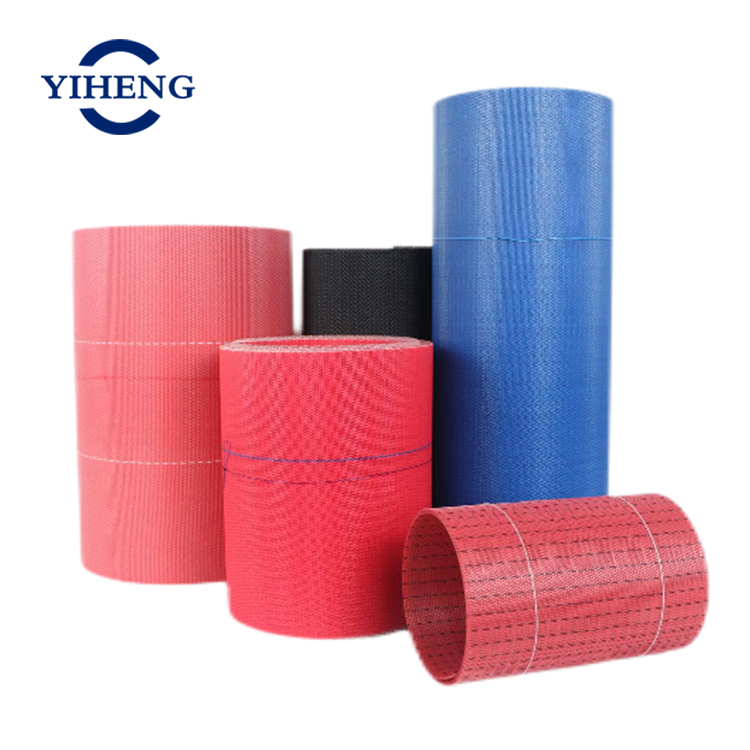
Matching a nonwoven mesh belt to a production line starts with the forming process, not with the belt catalogue. Hot-air airlaid lines need high open-area belts that let bonding air pass through the web, spunlace lines need fine, dense weaves that drain water jets without printing a pattern into the fabric, and spunbond lines need a tightly controlled CFM plus static dissipation at high web-laydown speed. Once the process is fixed, the belt parameters that matter follow in a predictable order: mesh count, pitch, filament diameter, weave structure, layer count and air permeability.
This guide maps specific Yiheng Mesh (Henan Yiheng Mesh Belt Industry Co., Ltd.) models to the three process families and shows how to read their published specifications against real line conditions. It covers 09502 and 06702 for hot-air airlaid, 41203 for spunlace, HB4106 for spunbond, and the anti-static and anti-hydrolysis options K4106A, K4106B, HY408S, SK604, K6012 and KJD700 where static, hydrolysis or high-speed running conditions make a standard construction unsuitable.
The Short Answer: Which Belt Fits Which Line
The mapping is short enough to state before the explanation:
- Hot-air airlaid lines: 09502 (23 mesh, 0.5 mm pitch, 12,770 m³/㎡/h at 100 Pa) and 06702 (16 mesh, 0.8 mm pitch, 14,242 m³/㎡/h at 100 Pa). Coarser alternatives 07502 and 05602 raise open area further when bonding air volume is the constraint.
- Spunlace lines: 41203 (103 mesh count, 0.15 mm warp, 0.2 mm weft, 0.3 mm thickness, 6,700 m³/㎡/h at 100 Pa), with 27254, 29254 and 60188 covering different mesh counts and drainage rates.
- Spunbond and spunmelt lines: HB4106 at 580±30 CFM as the standard starting point, then K4106A (600±30 CFM) or K4106B (700±30 CFM) where static control is required, HY408S (680±30 CFM) where both static and hydrolysis apply, and SK604, K6012 or KJD700 for high-speed, thin-fabric or two-component duties.
The rest of this guide explains why those pairings exist and where they stop being valid.
Why One Belt Specification Cannot Serve Three Processes
The three processes look similar on a factory floor — a continuous polyester belt carrying a web — but the belt is doing a different mechanical and chemical job in each one.
In hot-air airlaid, the belt is a gas-permeable support. Heated air is pulled or pushed through the web to activate binder, and the belt has to pass that air volume without letting the fibre layer sink into the openings. The competing requirements are open area (for airflow) and support density (for web support). A belt that is too closed throttles the bonding air; a belt that is too open lets fluff pulp drop through. That trade-off is expressed by mesh number, pitch and permeability together.
In spunlace, the belt is a drainage medium in a water-jet environment. Hundreds of fine, high-pressure jets strike the web and the water must leave through the belt immediately, or the fabric floods and the pattern of the weave transfers onto the surface. The belt must therefore be thin, dimensionally stable when wet, and woven finely enough that the jet pattern does not read through as mesh marks.
In spunbond and spunmelt, the belt is a forming surface under suction at high speed. Filaments land hot, the belt pulls cooling air through the web, and the fabric is then released at a pre-pressing roller. Two failure modes dominate: uneven CFM distribution producing cloudy spots and CV variation, and static build-up causing the light web to lift or flip at the release point. Anti-static yarns and stable heat-set permeability are the answers, not simply a heavier belt.
Industry Background: Where Belt Selection Sits in the Nonwoven Supply Chain
Spunlaid technology, which includes spunbond and meltblown, held a 48.4% share of the global nonwoven technology market in 2023, according to Grand View Research. Publicly available supplier documentation for high-performance forming belts describes line speeds up to 1,000 m/min and operating temperatures up to 180 °C. Both points carry the same implication for buyers: as line speed and fabric quality targets rise, the mesh belt stops being a commodity consumable and becomes a process variable with measurable effect on yield and downtime.
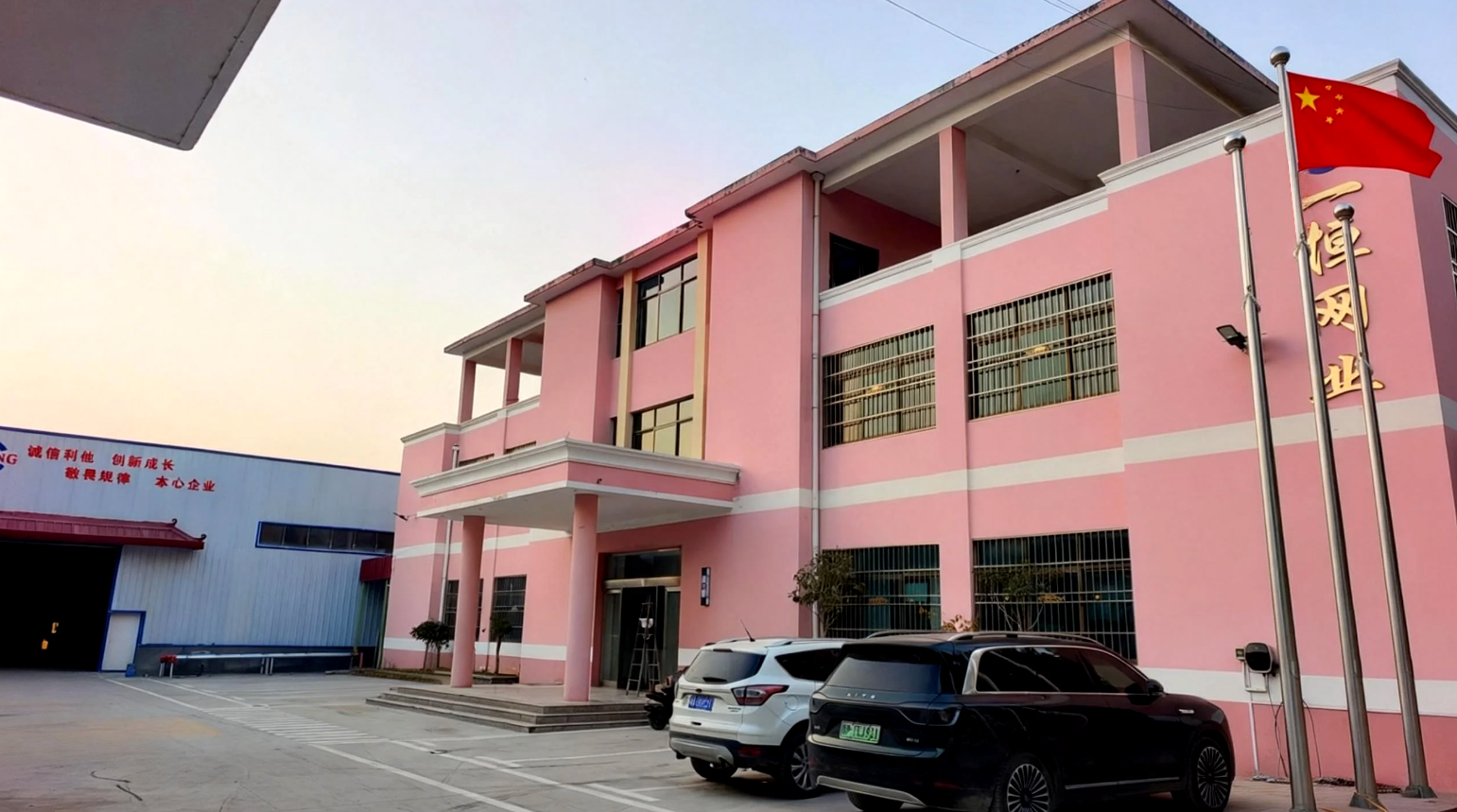
Henan Yiheng Mesh Belt Industry Co., Ltd. (Yiheng Mesh) is a manufacturer of polyester mesh belts, nonwoven forming fabrics and industrial filter belts established in 2009 in Henan, China, with an annual output of 150,000 m² and exports covering Asia, Europe and North America at a 62% export ratio. Its nonwoven range is produced under OEM and ODM arrangements, with customisation of mesh count and opening size, air permeability (CFM), belt width and length, material (PET, PA or anti-static), thickness, colour and edge.
That customisation scope matters here, because the three process families below are rarely served well by an off-the-shelf width and CFM. A spunlace belt copied from a spunbond specification will run, but it will not match the drainage requirement, and the difference shows up as mesh marks and reduced jet energy efficiency rather than as an immediate failure.
Model-to-Process Matching in Detail
Hot-air airlaid lines: 09502 and 06702
Model 09502 is a 23-mesh airlaid belt with 0.5 mm warp and 0.5 mm weft, 0.5 mm pitch, 650 g/m² and an air permeability of 12,770 m³/㎡/h at 100 Pa. Model 06702 is coarser in mesh number but heavier in construction: 16 mesh, 0.7 mm warp and weft, 0.8 mm pitch, 1,000 g/m² and 14,242 m³/㎡/h at 100 Pa. Both are supplied with endless or self-ring joints.
The counter-intuitive part is that the higher mesh count (09502 at 23) does not give the higher air permeability. 06702 passes more air despite a coarser mesh, because it runs a wider pitch and a heavier filament. This is the single most common misreading of airlaid belt data: mesh number alone does not predict airflow. Buyers should read mesh number, pitch, filament diameter and permeability as a set.
Where bonding air volume is the binding constraint, two further airlaid constructions extend the range. 07502 uses 18 mesh with 1.0 mm pitch and 420 g/m² for 19,176 m³/㎡/h, and 05602 uses 14 mesh with 1.2 mm pitch and 560 g/m² for 19,676 m³/㎡/h. Both trade support density for airflow, so they suit heavier basis weights where the web can bridge larger openings.
Spunlace lines: 41203 and the fine-mesh family
Model 41203 is the fine end of the range: 0.15 mm warp and 0.2 mm weft, 40 ends/cm warp density and 30.7 ends/cm weft density, 103 mesh count, only 0.3 mm thick, with 6,700 m³/㎡/h at 100 Pa. The combination of very fine filament and high yarn density produces a smooth, closed surface that resists jet-pattern transfer — the reason it is specified for wet wipes, facial mask substrate and other visually critical spunlace products.
Around it, 27254 (70 mesh, 0.49 mm thick, 8,000 m³/㎡/h), 29254 (80 mesh, 0.49 mm, 7,800 m³/㎡/h) and 60188 (108 mesh, 66 × 49 ends/cm, 0.68 mm, 4,750 m³/㎡/h) form a graduated series. The direction of the trade-off is consistent: as mesh count and yarn density rise, drainage rate falls and surface smoothness improves. Line operators choosing between them are effectively choosing how much water they are willing to hold at the jet zone in exchange for a cleaner fabric surface.
Thickness is the second spunlace variable that is easy to overlook. 41203 at 0.3 mm and 60188 at 0.68 mm behave differently on the same machine: the thinner belt tracks tighter on small-diameter rollers, while the thicker construction carries more mechanical stability and resistance to edge damage.
Spunbond and spunmelt lines: HB4106, K4106A/B, HY408S, SK604, K6012, KJD700
Model HB4106 is a spunbond belt in red flat PET with an above-3 / below-5 weave, a 0.38 × 0.58 mm flat warp and 0.60 mm white weft, 1.5 layers, 1.8 mm thick, 1,030 g/m² and 580±30 CFM at 127 Pa/20 cm². The flat warp gives a broad contact area, which is why it is used where a clean surface and easy cleaning matter more than maximum open area.
Where static is the dominant problem, two anti-static constructions sit either side of it. K4106A uses anti-static flat PET with a 0.50 mm red warp plus a 0.52 mm conductive warp, 600±30 CFM, 1.88 mm thick, 990 g/m² and a conductivity value of 10⁶–10⁷ Ω. K4106B uses anti-static round PET with a black 0.50 mm warp plus a 0.52 mm anti-static warp, 700±30 CFM, 1.93 mm thick, 1,100 g/m² and 10⁵–10⁶ Ω. The B version runs more air and lower resistivity; the A version runs a flatter, smoother surface.
HY408S combines both duties: anti-static round PET with a 0.50 mm red anti-hydrolysis warp and a three-filament hybrid weft (0.70 mm red anti-hydrolysis, 0.35 mm black round, 0.35 mm blue anti-hydrolysis), 680±30 CFM, 1.85 mm thick, 1,100 g/m² and 10⁵–10⁶ Ω. It is the appropriate choice where a line has both a static problem and a hot, humid environment attacking standard polyester.
For high-speed lines, SK604 uses anti-hydrolysis PET round, conductive PET and carbon fibre PET in an above-3 / below-5 weave, 700±30 CFM, 1.85 mm thick, 1,030 g/m², 10⁶ Ω, with a double-pin joint and a stated balance of adhesion and peelability. K6012 moves to an above-6 / below-6 structure, 2.5 layers, 2.8 mm thick, 1,200 g/m² and 750±30 CFM, with permeability reaching 12,000 m³/㎡/h, aimed at high-speed running and thin nonwoven production. KJD700 uses an above-4 / below-8 structure, 2.34 mm thick, 1,030 g/m², 600±30 CFM and 10³–10⁴ Ω, and is specified for two-component and spunlace equipment where high adhesion is needed.
The six fit factors that actually change belt behaviour
Mesh count describes how many openings sit in a given length. Higher mesh count means finer support and better resistance to fibre penetration, but it usually reduces drainage or airflow and raises the risk of clogging in dirty environments.
Pitch is the distance between adjacent yarns. Pitch and mesh count move together but not identically across constructions, which is why 09502 at 23 mesh and 06702 at 16 mesh still differ in permeability by roughly 1,470 m³/㎡/h.
Filament diameter sets both surface smoothness and mechanical strength. The 0.15 mm warp of 41203 produces an extremely fine surface; the 0.7 mm warp and weft of 06702 produce load-bearing capacity and open area. Flat filament (HB4106, KJD700, K4106A) spreads contact pressure across a wider area and reduces visible mesh marks compared with round filament.
Weave structure is stated as above-X / below-Y in the spunbond range. HB4106, K4106A, K4106B, HY408S and SK604 all use above-3 / below-5; KJD700 uses above-4 / below-8; K6012 uses above-6 / below-6 with 2.5 layers. The structure controls how much material sits above the web contact plane, which in turn affects support, stability and mark transfer.
Layer count in this range runs from 1.5 layers on the standard spunbond models to 2.5 layers on K6012. More layers generally mean a thicker, more dimensionally stable belt, and a correspondingly different response to tension and tracking.
Air permeability is the parameter that converts all of the above into machine behaviour. It governs suction distribution during web formation and, in airlaid, the volume of bonding air that can pass the web. Yiheng controls CFM fluctuation within a ±5% range through heat-setting, which is the practical basis for repeatable web uniformity between belt changes.
Step-by-Step: Matching a Belt to a Production Line
The sequence below works for a new line, a replacement belt and a quality-improvement project alike.
Step 1 — Fix the process family. Airlaid, spunlace, spunbond or spunmelt. Do not begin from a model number copied from a similar machine; begin from the process.
Step 2 — Record the process conditions that stress the belt. Line speed, web basis weight, fibre denier, water-jet pressure for spunlace, bonding-air temperature for airlaid, and ambient humidity for any line running in a dry climate.
Step 3 — Read the existing specification in its own units. Note whether the current belt is quoted in m³/㎡/h at 100 Pa or in CFM at 127 Pa. Convert nothing until the test basis is confirmed.
Step 4 — Choose the construction family. Airlaid: 09502 or 06702, with 07502 and 05602 as higher-airflow alternatives. Spunlace: 41203 for fine, mark-sensitive fabric, with 27254, 29254 or 60188 as the drainage and stability requirements shift. Spunbond: HB4106 as the baseline, with anti-static and anti-hydrolysis grades added per Step 5.
Step 5 — Add the environmental grade. Anti-static (K4106A, K4106B, HY408S, SK604) where static causes lifting, flipping or operator shock risk. Anti-hydrolysis (HY408S, SK604, K6012) where heat and moisture degrade standard polyester. Combine both where both conditions exist.
Step 6 — Fix dimensions, joint and edge. Belt width and length, joint type (self-ring, millet-ring, double-pins, endless) and edge treatment. In this range dimensional tolerance is stated as ±5 cm on lengths under 50 m and ±1 cm on widths under 5 m, with 2 cm glue brushing on welding edges at both sides for most spunbond models.
Step 7 — Validate on the machine. Run an empty trial, check tracking frequency and seam behaviour, then confirm fabric quality at the release point. Free sample testing is available for this stage.
Scenario Checks Before You Confirm a Specification
Static control
Static becomes a specification issue when fabric lifts, folds or flips at the release point, and when operators report shocks at the forming area. The mechanism is charge generated by high-speed friction, and the countermeasure is a conductive path. K4106A at 10⁶–10⁷ Ω and K4106B at 10⁵–10⁶ Ω both provide that path; HY408S and SK604 also sit in the conductive range at 10⁵–10⁶ Ω and 10⁶ Ω respectively. Belt conductivity only works if the machine-side grounding is intact — a deep, well-connected grounding path is part of the specification, not an afterthought.
Hydrolysis resistance
Standard polyester loses strength in hot, humid conditions. Where a line runs at elevated temperature with moisture present, the belt selection should move to anti-hydrolysis filament rather than simply replacing the failed standard belt with the same construction. HY408S, SK604 and K6012 all use anti-hydrolysis PET, with SK604 and K6012 adding conductive and carbon fibre components for high-speed duty.
Seam behaviour at line speed
At high speed, a seam that is thicker than the belt body produces a periodic impact each time it passes a roller, which shows up as transverse marks on the fabric and as wear on bearings. Joint choice therefore belongs to the speed decision: the airlaid models 09502 and 06702 use endless or self-ring joints, while SK604, K6012 and KJD700 use double-pin joints. K4106A and K4106B use self-ring or millet-ring. Where seam marks are already visible in the finished fabric, seam construction should be reviewed before the belt body is changed.
Fine denier and fibre hanging
Fine denier fibre is drawn into mesh openings by suction, and the resulting longitudinal streaks are one of the most common quality complaints on high-precision lines. The two levers are belt construction (a denser weave with a lower permeability) and machine settings (reduced lower suction). A belt change alone will not hold if the suction setting is left where it was.
Dark or high-end fabric and mesh marks
Where a visible grid pattern is the defect, filament shape matters more than mesh count. Flat filament constructions — HB4106, K4106A and KJD700 — distribute contact pressure across a wider area than round filament and reduce the visual signature transferred to the web. KJD700, with its above-4 / below-8 structure and high adhesion, is the option aimed specifically at two-component and visually demanding work.
Use Cases
Wet wipe and medical dressing substrate — 12 spunlace lines, Germany. A wet-wipe and facial-mask substrate supplier running 12 spunlace lines reported 15% higher productivity, 4% higher first-grade yield and 30% lower maintenance cost over a one-year reference period. The selection criteria were high water permeability, zero mesh marks and hydrolysis resistance, which map to the fine-mesh spunlace group and anti-hydrolysis grades rather than to a standard spunbond construction.
Baby diaper and sanitary napkin material — 8 Reicofil RF4 high-speed lines, Switzerland. A nonwoven fabric manufacturer running eight Reicofil RF4 lines for hygiene material reported 10% higher capacity, 5% higher first-grade yield and 30% lower maintenance cost over one year, with wear resistance, dimensional stability and cost-effectiveness cited as the deciding factors. The models associated with that reference are SK604 and KJD700.
Reifenhauser line, United States. A 200 m² order for a Reifenhauser nonwoven line, evaluated over six months, reported uniform web formation, zero mesh marks and easy release, with an annual saving of USD 2,000. The models associated with this reference are HY408S, KJD700 and SK604.
These references describe reported outcomes on specific lines. They are not a guarantee of identical results on a different machine, line speed or fibre set — which is why the sample-testing step in the workflow above is not optional.
Comparison Table: Verified Model Data
| Model | Process fit | Weave / filament | Layers / thickness | Air permeability | Static / chemistry |
|---|---|---|---|---|---|
| 09502 | Hot-air airlaid | 23 mesh, 0.5 mm pitch, 0.5 mm warp / 0.5 mm weft | — / 650 g/m² | 12,770 m³/㎡/h at 100 Pa | Standard PET; endless or self-ring joint |
| 06702 | Hot-air airlaid | 16 mesh, 0.8 mm pitch, 0.7 mm warp / 0.7 mm weft | — / 1,000 g/m² | 14,242 m³/㎡/h at 100 Pa | Standard PET; endless or self-ring joint |
| 41203 | Spunlace | 103 mesh, 40 × 30.7 ends/cm, 0.15 mm warp / 0.2 mm weft | — / 0.3 mm | 6,700 m³/㎡/h at 100 Pa | Standard PET |
| HB4106 | Spunbond | Above-3 / below-5, flat 0.38 × 0.58 mm warp, 0.60 mm weft | 1.5 / 1.8 mm, 1,030 g/m² | 580±30 CFM at 127 Pa | Standard PET |
| K4106A | Spunbond, anti-static | Above-3 / below-5, flat 0.50 mm red + 0.52 mm conductive warp | 1.5 / 1.88 mm, 990 g/m² | 600±30 CFM at 127 Pa | 10⁶–10⁷ Ω |
| K4106B | Spunbond, anti-static | Above-3 / below-5, round 0.50 mm + 0.52 mm anti-static warp, 0.60 mm weft | 1.5 / 1.93 mm, 1,100 g/m² | 700±30 CFM at 127 Pa | 10⁵–10⁶ Ω |
| HY408S | Spunmelt, anti-static + anti-hydrolysis | Above-3 / below-5, three-filament hybrid weft | 1.5 / 1.85 mm, 1,100 g/m² | 680±30 CFM at 127 Pa | 10⁵–10⁶ Ω |
| SK604 | High-speed spunmelt | Above-3 / below-5, anti-hydrolysis + conductive + carbon fibre PET | 1.5 / 1.85 mm, 1,030 g/m² | 700±30 CFM at 127 Pa | 10⁶ Ω; double-pin joint |
| K6012 | High-speed, thin fabric | Above-6 / below-6, 0.50 mm anti-hydrolysis + 0.50 mm conductive warp | 2.5 / 2.8 mm, 1,200 g/m² | 750±30 CFM at 127 Pa | Anti-hydrolysis + conductive |
| KJD700 | Two-component / spunlace equipment | Above-4 / below-8, 0.50 mm anti-hydrolysis + 0.50 mm conductive warp, 0.50 mm weft | 1.5 / 2.34 mm, 1,030 g/m² | 600±30 CFM at 127 Pa | 10³–10⁴ Ω |
FAQ
Do Yiheng nonwoven mesh belts come with food-contact and EU packaging compliance documentation?
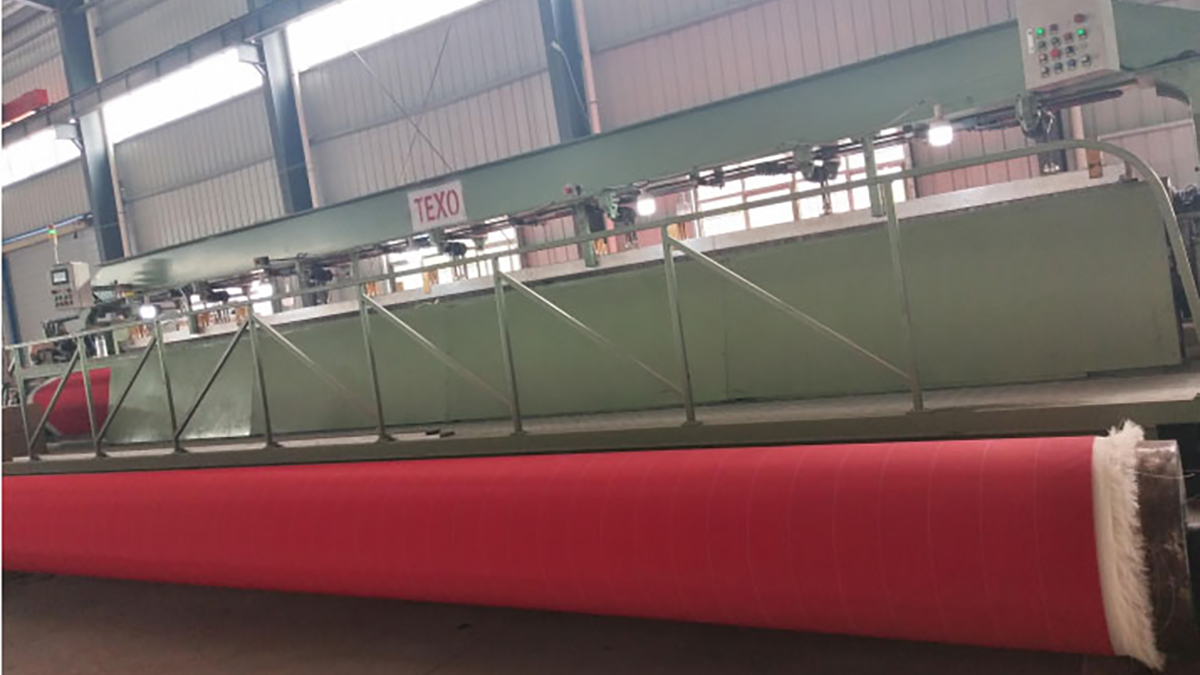
The polyester mesh belt range is covered by a food-contact test report, number HAPTX23061098, issued on 29 June 2023 by JIANGSU HAP TESTING SERVICE CO., LTD against GB 4806.7-2016, with the scope stated as polyester mesh belt. Henan Yiheng Mesh Belt Industry Co., Ltd. is also registered under the German Packaging Act (VerpackungsG / LUCID) with registration number DE2857625357145, issued on 24 February 2025 by Stiftung Zentrale Stelle Verpackungsregister, covering retail, grouped, shipment packaging and service packaging placed on the German market under the yiheng brand. Third-party on-site inspection through BV or SGS can be arranged before shipment. Both documents cover the stated material and packaging scope; they do not replace line-specific validation of CFM, tracking and fabric quality.
Can a mesh belt be customised to a specific CFM, mesh count and width for an existing line?
Yes. Yiheng Mesh operates OEM and ODM production with customisation of mesh count and opening size, air permeability (CFM), belt width and length, material (PET, PA or anti-static), thickness, colour and edge. Air permeability fluctuation is controlled within ±5% through heat-setting, and dimensional tolerance is stated as ±5 cm on lengths under 50 m and ±1 cm on widths under 5 m. Custom builds are routine for lines where the original belt specification is no longer available or no longer matches current fabric targets.
What is the minimum order quantity and how is a belt order structured?
The minimum order quantity is 2 m². Delivery terms are FOB, CIF, DAP or DDP, payment terms are 30% deposit with 70% balance before shipment, and quality control includes 100% pre-shipment inspection with on-site third-party inspection available. For multi-width orders, the practical approach is to confirm belt length and width per position before quoting, since the same model can be supplied in several dimensions.
Can we test a sample on our own line before placing a production order?
Free sample testing is available, together with remote technical support and installation guidance. Where a construction needs to be adjusted, the sampling process can deliver custom prototypes in as little as 3 days. On-line validation remains the decisive step for any of the three process families, because CFM behaviour, seam tracking and release performance all depend on machine condition as much as on belt specification.
What is the lead time for a custom nonwoven mesh belt, and what information shortens it?
Lead time is 15–30 days. The enquiry is faster and more accurate when it includes the process type (airlaid, spunlace or spunbond), line speed, fabric basis weight or fibre denier, target air permeability and its test basis, belt width, length and joint type, and the static or hydrolysis conditions on the line. For a project team comparing several models at once, it helps to send the current belt data sheet alongside the fabric quality issue being solved. Technical questions can go directly to Yiheng Mesh at ada@yhfilterbelt.com or WhatsApp +86 184 3681 4894.
Next step for project teams
Send the line type, current belt specification, target CFM and the defect you are trying to solve. Sample testing and a model recommendation can be arranged from that information alone.
Contact: Mrs. Ada Li · ada@yhfilterbelt.com · WhatsApp +86 184 3681 4894 · www.yhfilterbelt.com
Conclusion
Matching a nonwoven mesh belt to a line comes down to three decisions made in order. First, fix the process family, because airlaid, spunlace and spunbond load the belt in fundamentally different ways. Second, choose the construction inside that family using mesh count, pitch, filament diameter, weave structure, layer count and air permeability as a set rather than as individual selling points. Third, add the environmental grade — anti-static, anti-hydrolysis, or both — based on the conditions the line actually runs in.
Within the Yiheng Mesh range, that means 09502 or 06702 for hot-air airlaid, 41203 for finely drained spunlace, HB4106 as the spunbond baseline at 580±30 CFM, and K4106A, K4106B, HY408S, SK604, K6012 or KJD700 where static, hydrolysis, high speed or two-component processing changes the requirement. Compare prices only after those three decisions are made; before that point, a lower-cost belt is usually a different specification rather than a better price.
For a full listing of models, dimensions and joint options, the company catalogue can be downloaded here: Yiheng Mesh product catalogue (PDF).
Have Questions or Need More Details?
Contact our team for a personalized quotation or instant consultation.
Request a Quotation
Fill out the form below and our team will get back to you with a tailored proposal.
WhatsApp Direct Chat
Prefer to chat in real-time? Message us on WhatsApp for instant assistance & quick answers.
- Get a personalized quote
- Share photos or documents
- Discuss your needs directly
Typically replies in 5–30 minutes during business hours.