Nonwoven Mesh Belt Compliance Checklist: EU, German and Anti-Static Requirements
Most nonwoven mesh belt compliance problems are decided before the purchase order, in the gap between what a buyer asks for and what the supplier actually documents. This checklist covers the regional requirements European buyers raise at RFQ stage, the anti-hydrolysis specification for hot and humid lines, the anti-static construction that governs line safety, and the measured data a buyer can verify without relying on unconfirmed certificate claims.
Where Nonwoven Mesh Belt Compliance Decisions Actually Break Down
Compliance on a forming section is not one question but three, and they fail in different ways.
Documentary compliance is about market access: whether the belt can be imported into an EU member state, whether the packaging is registered in Germany, and whether the product can legally contact hygiene or food-packaging webs. It is settled with paperwork.
Electrical compliance is about static. A dry forming environment at high line speed generates charge through friction between the web and the mesh. If that charge is not dissipated, the web lifts, folds or flies off the belt before the pre-pressing roller — a failure that typically appears as an unexplained quality drop rather than an obvious equipment fault.
Thermal and chemical compliance is about hydrolysis. In through-air dryer sections and hot-air applications, heat and moisture act on polyester together, and a standard PET construction degrades faster than the buyer expects from the original quotation.
Only the first of these is answered by a certificate. The second and third are answered by construction data: which yarn, which resistivity range, which monofilament grade. That is why a buyer who collects documents but not measured specifications is still exposed at installation — and why the RFQ, not the delivery, is the right place to close the gap.
Why EU and German Requirements Now Appear in Belt RFQs
Spunlaid technology — Spunbond, Meltblown and their composites — held a 48.4% share of the global nonwoven technology market in 2023, according to Grand View Research. High-performance nonwoven forming belts operate on lines running up to 1,000 m/min and can withstand temperatures up to 180°C. As those lines move into thinner webs, higher speeds and more demanding hygiene end-uses, the belt stops being a generic consumable and starts being a component that carries documentation.
Two commercial forces push the same requirement. First, EU environmental regulation and German packaging law now require suppliers shipping into the German market to be registered, and buyers pass that expectation back up the chain to component suppliers. Second, customs classification for industrial conveyor belting commonly falls under HS code 39269029 or 59100000 depending on material coating and reinforcement — a detail that has to match the invoice, the technical description and the safety data the importer holds.
The practical result is a short list of questions that appear in European RFQs for polyester forming belts long before price is discussed: food-contact status, German registration, EU environmental compliance, static control, and heat-and-humidity durability. A supplier that can answer all five with named documents and measurable values shortens the RFQ; a supplier that answers with adjectives extends it.
The Compliance Checklist: Four Specifications to Settle Before You Order
1. Regional environmental documentation (EU and German)
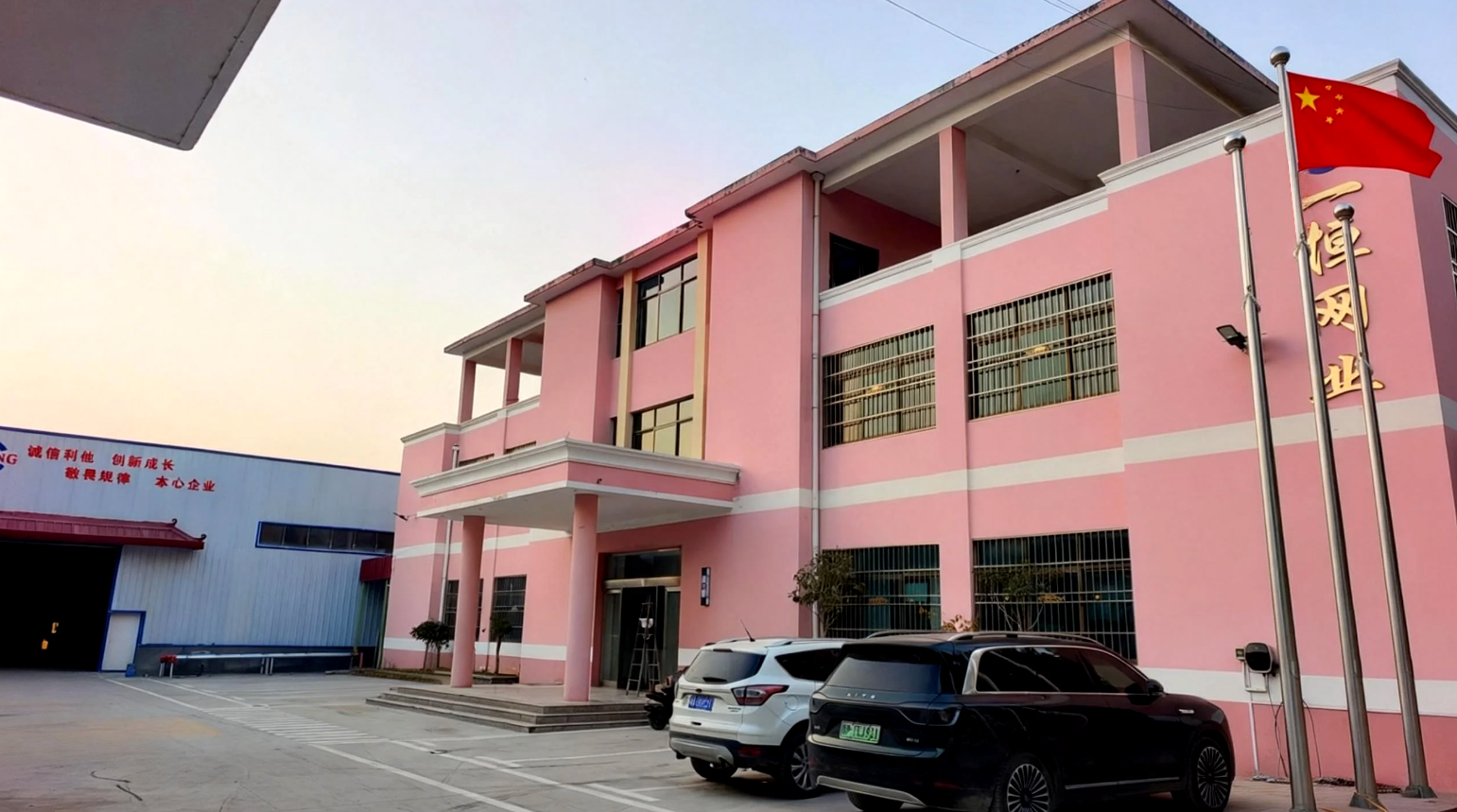
Henan Yiheng Mesh Belt Industry Co., Ltd. (Yiheng Mesh), founded in 2009 and based in Henan, China, manufactures polyester forming fabrics, dryer fabrics and industrial filter belts for nonwoven production, exporting 62% of its output to Asia, Europe and North America. On the documentation side, the company holds a Food Contact Certificate and is fully registered under the German Packaging Law (LUCID), and states compliance with EU environmental regulations.
For a buyer, the correct action is not to accept these as a single assurance but to request each document by name for the specific order: the food-contact certificate where the belt touches hygiene or food-packaging webs, the LUCID registration reference where packaging enters Germany, and a written EU environmental compliance statement to attach to supplier qualification. These are the documents that clear import and audit; they do not, on their own, say anything about how the belt will perform.
2. Anti-hydrolysis construction for high-temperature, high-humidity lines
This is the clearest example of a compliance-driven specification in the whole RFQ. Where a forming or dryer position runs heat and moisture simultaneously, the material question is not "polyester or not" but "which polyester". Yiheng has developed hydrolysis-resistant monofilament applications specifically for high-heat and high-humidity environments, and supplies hydrolysis-resistant dryer fabrics for positions where standard PET would age prematurely.
In practice the buyer should write the requirement into the material line of the RFQ — hydrolysis-resistant monofilament for dryer and hot-air positions — rather than accepting a generic "PET" description and discovering the difference after the first belt change. This is also a specification that must be matched to position: a forming section under quench air and a through-air dryer section do not carry the same heat-and-moisture load, and the belt specification should reflect that difference.
3. Anti-static construction and line safety
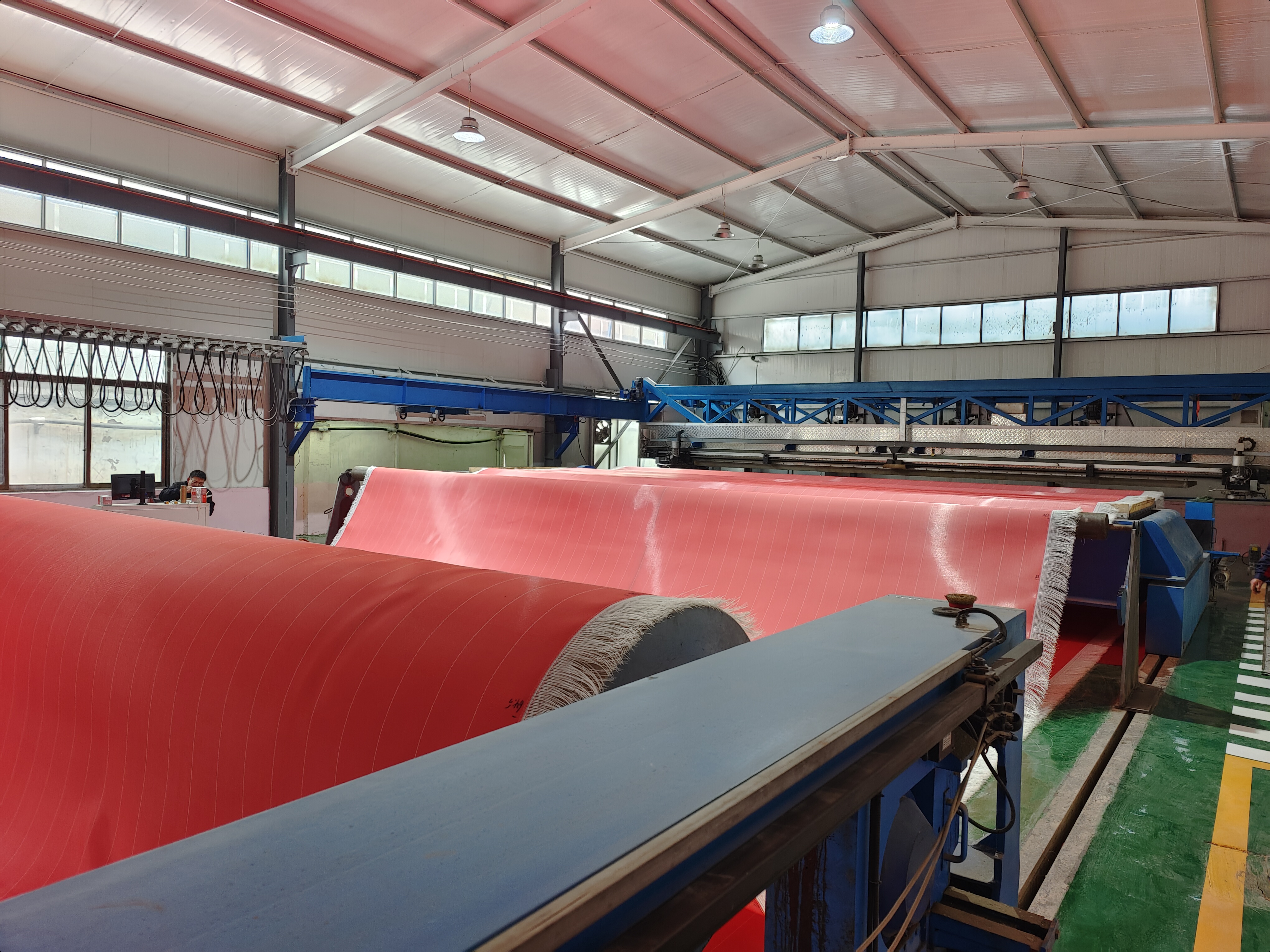
Anti-static mesh is a construction, not a coating. The thin black lines visible in the fabric are conductive yarns doped with carbon fibre, woven into the polyester at a defined ratio. Their function is to move frictional charge away from the web surface and into the machine frame, from where it reaches the grounding system. Yiheng's technical documentation describes this as a change of state: surface resistivity falls from above 10¹² Ω on a standard construction to a range of 10⁶–10⁸ Ω on a conductive build.
That resistivity range is what connects anti-static design to line safety rather than to comfort. In plants handling fine fibre dust, or where dry winter air is a known problem, uncontrolled static is a recognised handling and ignition risk, and buyers increasingly treat a conductive belt as part of the line's static-control plan. Yiheng's anti-static builds include K4106A, K4106B, SK604 and HY408S; the SK604 high-speed series combines conductive yarns with a High-Low Loop seam so that thin fabric does not flip at speed.
One point is consistently missed in RFQs: a conductive belt on an ungrounded frame performs like a standard belt. Yiheng's troubleshooting guidance for web floating and flipping starts with verifying that the grounding rod is properly set — 1 m deep — before any change to suction or cooling air is attempted. Static control is therefore a joint responsibility between the belt specification and the machine installation, and the checklist item should read "conductive construction plus verified grounding", not "anti-static belt".
4. Specification data the buyer can actually verify
Compliance claims are only as good as the data behind them. The verifiable part of a forming-belt quotation is a measured specification sheet with tolerances, and it should cover at minimum:
- Thickness — including how closely the seam thickness matches the belt body, which governs vibration at speed.
- Mass per unit area (g/m²) — a proxy for weave density and mechanical stability.
- Air permeability (CFM) with a stated test condition and tolerance — for example ±30 CFM at 127 Pa over 20 cm². For reference, customisable air permeability across the range spans 186 to 1,200 CFM, and Yiheng controls CFM fluctuation within ±5% through heat-setting.
- Weave structure and yarn profile — round versus flat yarn changes the contact pattern and therefore the mesh-mark risk on the finished web.
- Joint type — spiral seam or High-Low Loop, named explicitly on the order.
- Glue edge specification — the edge treatment that keeps the belt tracking on the frame.
- Seam tensile strength — the weakest point of any seamed belt, at 900 N/cm, against 1,600–2,200 N/cm on the endless surface, a difference of 78–144%.
CFM is the parameter where vague documentation causes the most damage. Air permeability determines the distribution of negative suction pressure during web formation; uneven local permeability draws fibre clusters to high-flow zones and produces cloudy spots and weight variation across the web. A tolerance quoted without a test condition, or a value quoted without a tolerance, cannot be checked on receipt and cannot be compared between suppliers.
RFQ Workflow: Six Steps from Line Data to Verified Belt
- Fix the line data first. Record line speed, surface temperature at the forming and dryer positions, humidity in the dryer section, the end product (hygiene, medical, food packaging, industrial), and any history of static-related defects. Without these, no specification decision is defensible.
- List the documents the destination market requires. Food-contact certificate, German packaging registration reference, EU environmental compliance statement, and the HS code that will appear on the commercial invoice — 39269029 or 59100000 depending on material and coating.
- Convert the static risk into a construction requirement. Specify a conductive yarn build and the target surface resistivity range (10⁶–10⁸ Ω rather than above 10¹² Ω), and add the grounding verification to the installation checklist, not the purchasing checklist.
- Convert heat and humidity into a material requirement. Name hydrolysis-resistant monofilament for dryer and hot-air positions and state which positions in the line it applies to.
- Request a measured specification sheet with tolerances. Thickness, g/m², CFM plus test condition (±30 CFM at 127 Pa over 20 cm² is a workable reference), weave, yarn profile, joint type, glue edge, seam strength.
- Validate with a sample and a physical check. Confirm the actual CFM and thickness on the delivered sample against the sheet, then verify seam thickness against the body and confirm grounding before the belt runs loaded. Yiheng supplies prototypes from a 1 m² minimum order in as little as three days, which makes this step practical rather than theoretical.
Where Each Requirement Bites: Four Line Situations
High-speed spunbond
Above roughly 400 m/min, static attraction and unbalanced air pressure are the dominant causes of web floating and edge folding, and above 600 m/min a small thickness increase at the seam generates periodic impact forces as it passes the pre-pressing rollers. This is the position where anti-static construction and seam flatness must be specified together — a conductive belt with a stepped seam still produces transverse marks.
Spunlace
Spunlace lines combine water with mechanical load, so hydrolysis resistance and permeability uniformity carry more weight than pure tensile figures. Conductivity matters less than on a dry high-speed spunbond position, but moisture management and dimensional stability under load move up the checklist. Endless constructions are specified for Reicofil high-speed spunbond lines and spunlace nonwoven lines precisely because the weakest-point strength and permeability uniformity behave differently from conventional seamed forming mesh.
Meltblown
Meltblown adds a process variable that no belt specification can fix on its own: the die-to-collector distance (DCD) governs fibre cooling and therefore the balance between filtration efficiency and softness. The belt's contribution is a stable, low-CFM surface that holds fine fibre without hanging. Where fibre hanging appears as fixed longitudinal streaks, the usual causes are excessive lower suction, a CFM grade mismatched to fine denier, or polymer burrs on the surface — the belt specification and the suction settings have to be resolved together.
Hygiene, medical and food packaging webs
Here the documentary layer becomes non-negotiable. The Food Contact Certificate is the relevant document, and it should be requested for the specific product rather than referenced in general marketing material. Weave choice also shifts: flat-yarn constructions such as the KJD700 series spread pressure over a larger contact area and reduce visual mesh marks on dark or premium webs.
Compliance Documentation and Specification Matrix
| Requirement | What European buyers typically request | Why it appears in the RFQ | What Yiheng documents |
|---|---|---|---|
| Food-contact suitability | Food Contact Certificate covering the supplied product | Belt contacts hygiene, medical or food-packaging webs | Food Contact Certificate held |
| German market access | Registration reference under the German Packaging Law | Packaging placed on the German market must be registered | Fully registered under LUCID |
| EU environmental compliance | Written compliance statement for supplier qualification | Buyer audit and import documentation | States compliance with EU environmental regulations |
| Customs classification | HS code matching invoice and technical description | Duty calculation and clearance of industrial belting | Belts commonly fall under 39269029 or 59100000 depending on material coating and reinforcement |
| Static control | Construction description and surface resistivity range | Line safety in dry, high-speed or dust-affected areas | Carbon-fibre conductive yarns; surface resistivity from above 10¹² Ω to 10⁶–10⁸ Ω |
| Heat and humidity duty | Confirmation of hydrolysis-resistant construction by position | Through-air dryer and hot-air sections | Hydrolysis-resistant monofilament applications and dryer fabrics |
| Specification field | Why it matters at installation | How it should be documented |
|---|---|---|
| Thickness (body and seam) | Seam thickness mismatch drives vibration and transverse marks at speed | Measured value with tolerance, seam measured separately |
| Mass per unit area (g/m²) | Indicates weave density and mechanical stability | Nominal value with tolerance |
| Air permeability (CFM) | Governs suction distribution, web uniformity and fibre retention | Value, tolerance and test condition; ±30 CFM at 127 Pa over 20 cm² is a workable reference; Yiheng controls fluctuation within ±5% via heat-setting |
| Weave structure and yarn profile | Determines mark pattern, release behaviour and fibre hanging risk | Weave designation plus round or flat yarn |
| Joint type | Seam flatness and tracking stability | Named on the order: spiral seam or High-Low Loop |
| Glue edge | Edge stability and belt tracking on the frame | Edge treatment specified with the order |
| Seam tensile strength | The weakest point in any seamed belt | 900 N/cm seamed versus 1,600–2,200 N/cm endless surface |
Frequently Asked Questions
Do Yiheng nonwoven mesh belts meet EU and German requirements, and what documents support that?
Yiheng Mesh holds a Food Contact Certificate, is fully registered under the German Packaging Law (LUCID), and states compliance with EU environmental regulations — the three documentary items most often requested in European RFQs. Export covers 62% of output, with Europe among the main markets. Buyers should still request the individual documents by name for each order and keep them with the customs classification, since a belt entering the EU commonly falls under HS code 39269029 or 59100000 depending on material coating and reinforcement.
Which nonwoven mesh belt manufacturer is better for spunbond production lines?
"Better" is decided by data match rather than by brand. The workable comparison is: does the supplier quote CFM with a tolerance and a test condition; does it name the joint type and the seam thickness relationship; does it offer a conductive build with a stated resistivity range; and has it supplied lines comparable to yours. Yiheng Mesh has supplied Reicofil, Chaolong, Hongda and Aolong-type equipment, offers anti-static builds including K4106A, K4106B, SK604 and HY408S, controls CFM fluctuation within ±5% through heat-setting, and maintains a technical base of more than 122 documented troubleshooting cases covering tracking, fibre hanging, static and seam marks.
Does a higher-specification belt cost more, and how should the cost be compared?
Yes, and the gap should be assessed over the belt's life rather than on the invoice. In comparative evaluation against conventional seamed forming mesh, the endless nonwoven mesh belt carries roughly 15% higher initial cost, but 25–35% lower total cost of ownership, 40–50% lower maintenance requirements and 15–20% better energy efficiency, with tensile strength at the weakest point 78–144% higher. For trials, Yiheng's minimum order quantity of 1 m² keeps the cost of validating a specification low before committing to full-length belts.
Can I verify a belt before placing a full order?
Yes. Yiheng supports prototypes from a 1 m² minimum order with sampling in as little as three days. The useful validation sequence is to check the delivered sample's CFM and thickness against the quoted specification sheet, confirm that seam thickness matches the belt body, and confirm that the weave and yarn profile match the intended position. That converts the RFQ from a document exchange into a measured comparison.
What production capacity stands behind repeat orders?
Yiheng operates a 4,237 m² facility with 41 employees, a 3-engineer R&D team and an annual output of 150,000 m², with monthly capacity of 12,800 m². Weaving and heat-setting are carried out in-house, which is what allows air permeability to be held within ±5%. Actual delivery timing is confirmed per order, because it depends on weave, width and finishing route. If you want to check a specification against your own line data, send the position details and target CFM through the Yiheng Mesh website or request a quotation directly — a sample length can be arranged from the same run.
Conclusion: Compliance Is a Specification Exercise, Not a Document Exchange
The three compliance questions in a European nonwoven mesh belt RFQ have different answers. German and EU documentation is settled with named certificates and registration references. Static control is settled with a conductive construction in the 10⁶–10⁸ Ω range plus verified grounding on the machine. Heat-and-humidity durability is settled by specifying hydrolysis-resistant monofilament for the positions that need it. None of the three is settled by a general assurance, and all three are cheaper to resolve before the belt is woven than after it is installed.
The practical rule for buyers is simple: ask for the document by name, ask for the measured value with a tolerance and a test condition, and ask which position in the line each specification applies to. A supplier that answers all three in the quotation has removed most of the risk from the purchase.
Next Step
Download the Yiheng Mesh company and product brochure for the full specification range, or send your line data — speed, temperature, humidity and target CFM — for a specification match and a sample quotation.
Download the Yiheng Mesh brochure (PDF)
Contact: Mrs. Ada Li · +86 184 3681 4894 · ada@yhfilterbelt.com · www.yhfilterbelt.com
Have Questions or Need More Details?
Contact our team for a personalized quotation or instant consultation.
Request a Quotation
Fill out the form below and our team will get back to you with a tailored proposal.
WhatsApp Direct Chat
Prefer to chat in real-time? Message us on WhatsApp for instant assistance & quick answers.
- Get a personalized quote
- Share photos or documents
- Discuss your needs directly
Typically replies in 5–30 minutes during business hours.