Nonwoven Mesh Belt Joints: Double-Pins, Glue Edge and Seam Type Guide
Technical Guide · Nonwoven Forming & Conveying Belt Joints
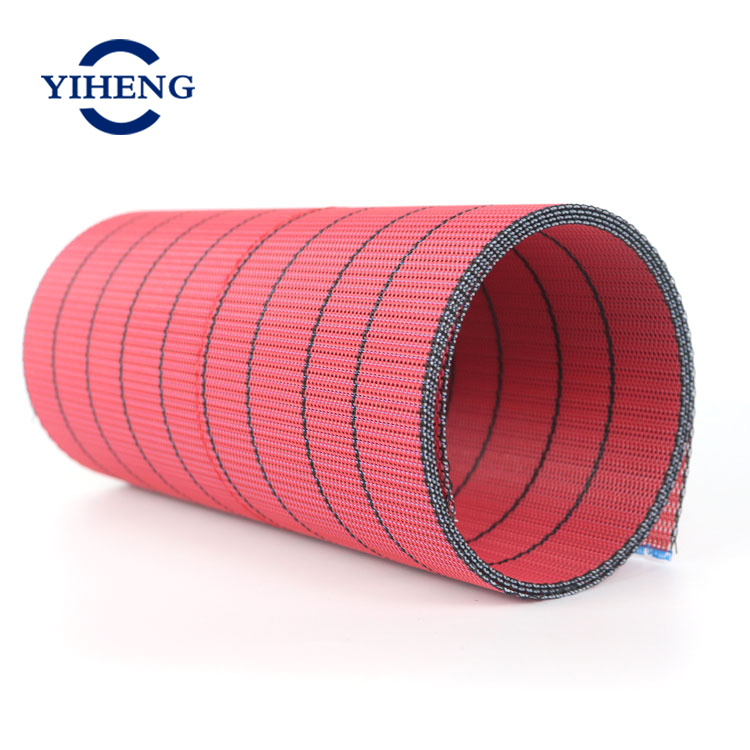
A nonwoven mesh belt joint is the closure that converts an open length of woven polyester into an endless forming or conveying surface. The joint fixes four things at once: seam thickness, seam flatness, edge sealing, and the time a technician needs to thread the belt and re-set tracking. On a spunbond, spunlace, meltblown or airlaid line, those four variables decide whether the belt runs without mesh marks or becomes a recurring source of transverse marks, fiber hanging and unplanned stops.
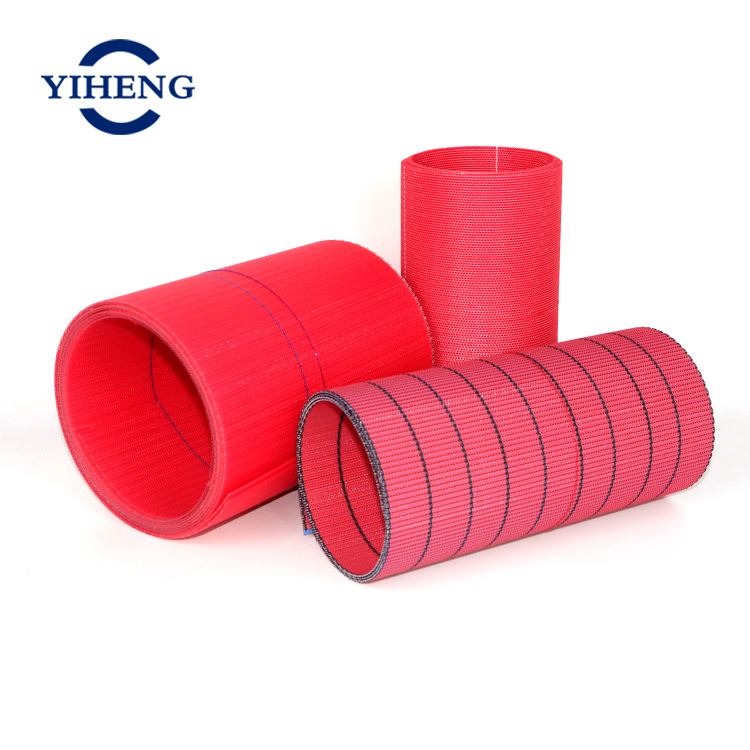
Henan Yiheng Mesh Belt Industry Co., Ltd. (Yiheng Mesh) is a manufacturer of high-precision nonwoven forming belts and industrial filter belts, established in 2009 in Henan, China, and serving markets in Asia, Europe and North America. Its nonwoven mesh belt range is supplied with double-pins, self-ring, millet-ring and endless joints, with 2 cm glue brushing on the welded edges at both sides, or melt glue / AB glue on the SK604 high-speed series. This guide explains how those options differ, and how to match a joint to line speed, mesh-mark risk and maintenance constraints.
Key takeaways
- Joint type is a performance decision, not a finishing detail: it controls seam thickness consistency, fiber snagging and roller jumping.
- Yiheng offers double-pins, self-ring, millet-ring and endless joints across its nonwoven mesh belt models, with 2 cm glue edge brushing as standard on welded edges.
- The SK604 high-speed series is supplied with a double-pins joint plus melt glue or AB glue edge sealing.
- High-Low Loop seams are specified where seam thickness must match the mesh body, while standard spiral seams remain a general-purpose option.
Problem Definition: Why the Joint Limits Line Performance
Weave quality is usually the first thing buyers examine and the last thing that causes a stoppage. The recurring problems on running lines trace back to the joint.
Seam thickness creates periodic impact
According to Yiheng Mesh’s technical knowledge base, at line speeds above 600 m/min a seam that adds even 0.2 mm of thickness generates impulsive forces of thousands of Newtons each time it passes the pre-pressing rollers. The consequence is mechanical and visible at the same time: precision bearings take repeated impact, pressure fluctuates momentarily, and the fabric receives a transverse mark at every revolution of the belt.
Fiber hanging at the seam
A seam that is not level with the mesh body gives fine fibers an anchor point. The symptom is a fixed longitudinal streak in the same position on every roll, with small fiber clusters visible in the mesh gaps. Manufacturers of soft hygiene fabric and other fine-denier products report this as one of the most frequent reasons for stopping a line to clean.
Roller jumping at speed
Roller jumping is the high-speed expression of the same root cause. A belt whose seam is thicker than the body lifts slightly as it passes each roller, then settles. At production speed the cycle repeats fast enough to affect both fabric quality and belt life.
Threading and tracking downtime
Two maintenance tasks sit on the joint: threading the closing wire and re-setting tracking. Both are skill-dependent, and both are frequently longer than the belt swap itself. Yiheng’s troubleshooting documentation treats threading difficulty and tracking adjustment as joint-related procedures rather than as operator error, and provides defined methods for each.
Industry Background: Why Joint Design Moved Up the Specification List
Nonwoven output has grown steadily, and the equipment that produces it has become faster and less tolerant of mechanical variation.
- Spunlaid technology, which includes spunbond and meltblown, held a 48.4% share of the global nonwoven technology market in 2023, as reported by Grand View Research.
- The global nonwoven fabric market is projected to reach USD 90.8 billion by 2030, a CAGR of 6.2% from 2025, according to Smithers.
- Published supplier data for high-performance nonwoven forming belts describes operation at line speeds up to 1,000 m/min and temperatures up to 180°C.
Higher speed raises the mechanical penalty attached to every millimetre of seam irregularity, and higher temperature raises the penalty attached to edge sealing that does not hold. In parallel, the shift toward thinner, lower-GSM and more visually demanding fabrics means a seam mark that was tolerated a decade ago is now a reject. Joint specification has therefore moved from a footnote on a purchase order to a line-performance decision that buyers and process engineers review together.
The same logic applies across belt categories. A spunbond mesh belt running under a quench air stack, a spunlace mesh belt passing a high-pressure water jet, a meltblown mesh belt handling extremely fine fiber, and an airlaid belt in a through-air dryer all rely on a closed loop that runs true. The weave differs; the joint discipline does not.
Detailed Solution: The Five Joint Decisions
A joint specification for a nonwoven forming belt contains five separate decisions. Each one is documented in Yiheng’s product data, so the choice can be confirmed against a model number rather than agreed verbally.
1. Double-pins joint
The double-pins joint is the construction used on Yiheng’s high-speed spunmelt models K6012, KJD700 and SK604, and it is also offered alongside other options on HY4106, HB4106 and HY408S. Its purpose is a flat seam surface.
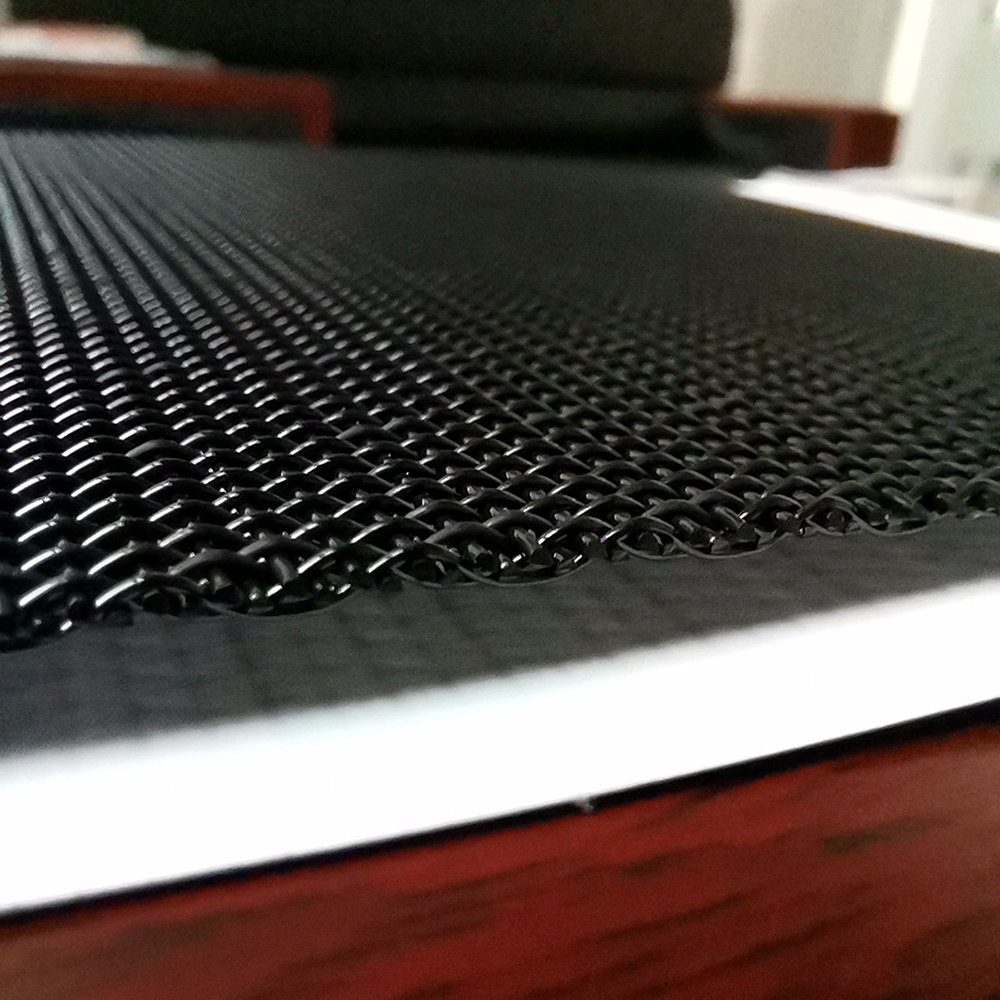
Model KJD700 is described as featuring a precision double-pins joint with a flat surface that prevents fiber snagging, with running characteristics suited to high-speed production lines. On SK604, the double-pins joint is combined with melt glue or AB glue edge sealing, and Yiheng describes the seam as an in-house design with an exceptionally flat surface that leaves no mesh marks on the fabric and prevents fiber snagging.
For buyers, the practical reading is direct: if the line runs thin, low-GSM or visually critical fabric at speed, the double-pins construction is the starting point, and the seam-flatness claim should be checked against the belt’s measured thickness at the seam during a trial.
2. Self-ring and millet-ring joints
Self-ring and millet-ring joints appear across the range where a closed loop is needed but the line does not demand the same seam-thickness control as a high-speed spunmelt line.
- Airlaid models 07502, 05602, 06702 and 09502 are supplied with endless or self-ring joints.
- Spunlace models 41203, 27254, 29254 and 60188 are supplied with endless or self-ring joints.
- Spunbond models HY4106 and HB4106 offer self-ring, millet-ring and double-pins.
- Anti-static models K4106A and K4106B offer self-ring and millet-ring.
- HY408S offers millet-ring or double-pins.
Where cleaning frequency matters as much as seam flatness, the belt body itself influences the choice. HB4106 uses a flat filament warp of 0.38 × 0.58 mm, and Yiheng positions this flat-filament surface as easier to clean because fibers and contaminants do not penetrate deep into the mesh — relevant on lines with frequent product changes or strict hygiene requirements.
3. Endless construction
An endless belt is closed during manufacture rather than on the machine, which removes the threading step from installation. Yiheng lists endless joints on the airlaid and spunlace models above and describes the option as providing flexible installation across different machine configurations. Endless construction is the natural choice where the belt is expected to stay on the machine for months, and where a technician has limited access to the seam area.
4. Glue edge: 2 cm brushing, melt glue and AB glue
The welded edge of a forming belt is a second seam, running along both sides of the loop. Yiheng’s standard treatment is 2 cm glue brushing on the welding edges at both sides, listed on K6012, KJD700, HY408S, HY4106, HB4106, K4106A and K4106B. On the SK604 high-speed series the edge options are melt glue or AB glue.
The edge specification is not cosmetic. It is the part of the belt that meets the machine frame, the edge guides and the tensioning hardware, and it is where a loose or uneven edge treatment will first produce snagging or tracking drift. When a buyer compares quotations, the glue edge line should be compared explicitly — 2 cm brushing, melt glue and AB glue are different specifications and should not be treated as interchangeable.
5. High-Low Loop versus standard spiral seam
The High-Low Loop seam addresses seam thickness at the structural level. Yiheng’s explanation is that special weaving allows the seam loops to interlock without increasing total thickness, embedding the loops into the mesh structure to reach 1:1 thickness matching. That removes the pulse source and restores dynamic balance at speed.
Standard spiral seams remain a general-purpose construction. The difference is not a matter of quality grading but of operating envelope: the faster the line and the thinner the fabric, the more the residual thickness differential of a conventional seam is felt as vibration, pressure fluctuation and transverse marking. Yiheng recommends the SK604 high-speed series with a High-Low Loop seam where line speed exceeds 500 m/min, and lists seam-to-body thickness consistency, carbon fiber conductivity and dimensional stability under high temperature as the three criteria for that decision.
Step-by-Step: Specifying and Installing the Joint
The sequence below follows Yiheng’s product data and published troubleshooting procedures. It is written so that a process engineer and a maintenance technician can work from the same list.
- Define the operating envelope first. Record line speed, fabric GSM and denier, operating temperature and static history before choosing a joint. Speed above 500 m/min and fine, low-GSM fabric move the specification toward SK604 with a High-Low Loop seam; a standard-speed line with frequent belt changes may be better served by self-ring or endless construction.
- Match seam thickness to body thickness. Ask for the seam measurement, not just the model. A 1:1 thickness match between seam and mesh body is the design target of the High-Low Loop construction and the stated basis of the flat-seam claims on HY408S, HY4106, HB4106, K4106A and KJD700.
- Confirm the edge specification in writing. 2 cm glue brushing at both sides, melt glue or AB glue are distinct options. Confirm which one applies to the model, and confirm the dimension tolerances that come with it: Yiheng lists ±5 cm for lengths under 50 m and ±1 cm for widths under 5 m on standard models.
- Thread the seam correctly. Yiheng’s procedure: align both belt ends so the loops interlock correctly; grind the steel wire tip into a smooth cone with sandpaper or a file; insert the wire at a steady speed, using lubricant if needed; then bend and hide the excess wire ends back into the mesh body. Wear protective gloves, and make sure every wire end is fully hidden, because a protruding end will snag during running.
- Re-set tracking with a reference mark. While the original belt is still running stable, mark a baseline on the exposed part of the tension rod with paint. Install the new belt, adjust directly to that baseline, run empty for 5 minutes, make minor adjustments, and resume production. The safety condition is strict: if the new belt’s length differs from the old one, do not use the old baseline, because the belt may break.
- Balance tension on both sides. Without an automatic corrector, measure that both tensioning bolts have identical exposure, run empty for 10–20 minutes and observe tracking. If the belt runs off, tighten the bolt on the side it runs toward. Once stable, make a permanent physical mark on the rod. Never over-tighten one side: it creates large shear force at the seam and increases the risk of bursting or cracking.
- Handle seam-area contamination without heat damage. For polymer drips or lumps, stop the machine and position the lump at a breathable spot, set the heat gun to 150°C and keep it moving 5–10 cm away, vacuum the softened residue, then wipe with a small amount of alcohol and blow dry. Never hold heat on one spot, and keep alcohol away from high-temperature sources.
Use Cases: Matching the Joint to the Duty
The same belt body can be specified with different joints for different duties. These are the four combinations most often requested from Yiheng.
High-speed spunmelt above 500 m/min
SK604 with a double-pins joint and a High-Low Loop seam, edge-sealed with melt glue or AB glue. Supporting data: 1.5 layers, 1.85 mm thickness, 1030 g/m², air permeability 700 ± 30 CFM at 127 Pa/20 cm², surface resistivity 10⁶ Ω, weave structure above-3 below-5. Yiheng positions the model for high-speed lines producing super-soft, super-thin fabrics where surface integrity is critical.
Static-sensitive, low-GSM production
Anti-static models pair a specific conductivity band with a self-ring or millet-ring joint: K4106A at 10⁶–10⁷ Ω, K4106B at 10⁵–10⁶ Ω, HY408S at 10⁵–10⁶ Ω, and KJD700 at 10³–10⁴ Ω. The black filaments in these belts are carbon-fiber conductive yarns that dissipate frictional charge to the grounded rollers, which is why static-driven fabric flipping is addressed at the belt rather than at the machine alone.
Spunlace and airlaid lines with regular belt changes
Endless or self-ring construction on 41203, 27254, 29254, 60188, 07502, 05602, 06702 and 09502. Model 41203 is 0.3 mm thick with 103 mesh and 6,700 m³/m²/h air permeability at 100 Pa; model 60188 is 0.68 mm thick with 108 mesh and 4,750 m³/m²/h; airlaid model 05602 reaches 19,676 m³/m²/h with a 14-mesh open structure. Where the belt is changed often, the joint that shortens installation carries more weight than the joint that minimises seam thickness.
Lines with frequent product changes
HB4106 with a self-ring, millet-ring or double-pins joint. The flat filament warp produces a smoother micro-surface, and Yiheng describes fibers and contaminants as not penetrating deep into the mesh, which reduces cleaning downtime between product runs.
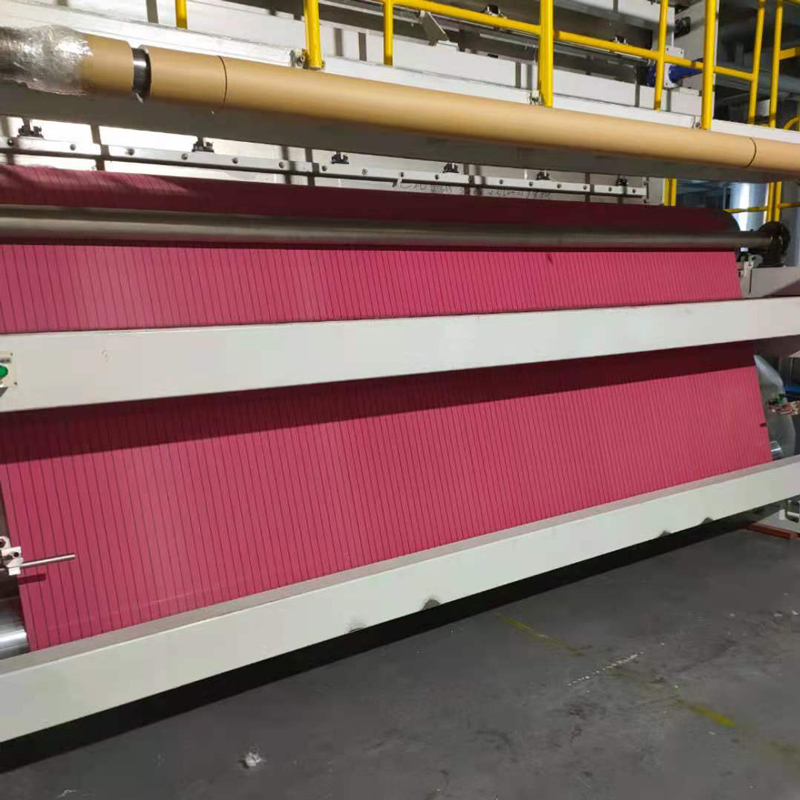
Comparison Table: Joint Types and What They Change
All entries below are drawn from Yiheng Mesh product specifications and published technical notes. No comparative performance claims are made beyond the documented descriptions.
| Joint / seam type | Where Yiheng lists it | Documented characteristic | Edge sealing listed |
|---|---|---|---|
| Double-pins | K6012, KJD700, SK604; also on HY4106, HB4106, HY408S | Flat seam surface intended to prevent fiber snagging; used on high-speed constructions | 2 cm glue brushing at both sides; melt glue or AB glue on SK604 |
| Self-ring | 07502, 05602, 06702, 09502, 41203, 27254, 29254, 60188, HY4106, HB4106, K4106A, K4106B | Closed-loop option supplied for installation flexibility across machine configurations | 2 cm glue brushing at both sides (spunmelt and anti-static models) |
| Millet-ring | HY4106, HB4106, HY408S, K4106A, K4106B | Alternative ring-style closure offered where self-ring or double-pins is not the preference | 2 cm glue brushing at both sides |
| Endless | Airlaid and spunlace models 07502, 05602, 06702, 09502, 41203, 27254, 29254, 60188 | Seamless closed belt; removes on-machine threading | Not separately listed in model data |
| High-Low Loop seam | Recommended with SK604 high-speed series | Loops interlock without increasing total thickness; 1:1 thickness matching; removes the pulse source at speed | Melt glue or AB glue (SK604) |
| Standard spiral seam | General-purpose construction | Carries a residual thickness differential; the impact becomes significant as speed rises above 600 m/min | Per belt specification |
Decision rule. If line speed exceeds 500 m/min or the fabric is thin and low-GSM, specify the High-Low Loop seam with a double-pins joint and confirm edge sealing in writing. If the constraint is installation time or limited seam access, specify endless or self-ring. If the constraint is static, choose the conductivity band first, then the joint.
Frequently Asked Questions
Are Yiheng nonwoven mesh belts compliant for EU-bound production lines?
Yiheng Mesh is certified as a National High-tech Enterprise, its products hold the Food Contact Certificate, and the company is registered under the German Packaging Law (LUCID). The company exports to dozens of countries with an export ratio of 62%, serving markets in Asia, Europe and North America. Buyers should still confirm which specific declaration their end product requires, because belt compliance and finished-fabric compliance are separate documents.
Which joint types can Yiheng supply, and which suits a high-speed line?
Yiheng supplies double-pins, self-ring, millet-ring and endless joints, with 2 cm glue brushing on welded edges at both sides, or melt glue / AB glue on the SK604 series. For lines above 500 m/min, Yiheng recommends the SK604 high-speed series with a High-Low Loop seam and a double-pins joint. The company’s forming fabric range is stated as compatible with machine speeds from 20 m/min to 850 m/min, and its models are used on spunbond, meltblown, spunlace and airlaid equipment, including lines from Chaolong, Hongda and Aolong.
Does the joint type change the cost of ownership?
It changes downtime more than it changes the purchase line. Under standard operating conditions, Yiheng mesh belts typically last 3–6 months, and a joint that produces seam marks, fiber hanging or repeated tracking adjustment consumes that service life in stoppages rather than in production. Because the minimum order quantity is 1 m², a buyer can evaluate a joint configuration on a single belt before standardising it across a line, instead of committing a full set to an untested specification.
Can I test a joint configuration before placing a production order?
Yes. Yiheng supports OEM and ODM work with a minimum order quantity of 1 m², and its rapid sampling process delivers custom prototypes in as little as 3 days. A trial request should state the model, the joint type (double-pins, self-ring, millet-ring or endless), the edge specification, the belt dimensions and the line speed, so the prototype is built to the same specification as the production belt. To start a sample or quotation request, contact the Yiheng team at ada@yhfilterbelt.com or WhatsApp +86 184 3681 4894.
How quickly can a replacement belt with a specific joint be delivered?
Sampling is the fastest committed step, at as little as 3 days for a custom prototype. Production scheduling depends on the joint type, the belt dimensions and the edge specification, so the delivery date should be confirmed against the confirmed drawing rather than assumed from stock. Yiheng operates a monthly production capacity of 12,800 m² and an annual capacity of 150,000 m², with air permeability fluctuation controlled within ±5%. For a dated requirement, send the model, dimensions and joint specification through the Yiheng Mesh website and request a written schedule with the quotation.
Conclusion: Specify the Joint as a Performance Part
A nonwoven mesh belt is only as good as the point where it closes. Seam thickness drives vibration, seam flatness drives fiber hanging and mesh marks, edge sealing protects the welded border, and the joint style decides how long a technician spends threading and re-setting tracking. Treating those four items as a specification — written on the order, matched to line speed and fabric weight, and verified on a sample — is the difference between a belt that runs to the end of its 3–6 month service life and one that is remembered for the marks it left.
Yiheng Mesh has built a technical knowledge base of more than 122 real-world troubleshooting cases covering tracking, fiber hanging, static and seam marks, supported by an R&D team of 3 engineers and a manufacturing facility in Henan, China. That experience is available to buyers before the order, not only after a problem appears.
Next step: match the joint to your line
Send your line speed, fabric GSM, belt dimensions and preferred joint type to receive a specification-matched quotation, or request a 1 m² sample to validate seam flatness on your own machine.
Email: ada@yhfilterbelt.com | WhatsApp: +86 184 3681 4894
Website: www.yhfilterbelt.com | Catalogue: Download the Yiheng Mesh product catalogue (PDF)
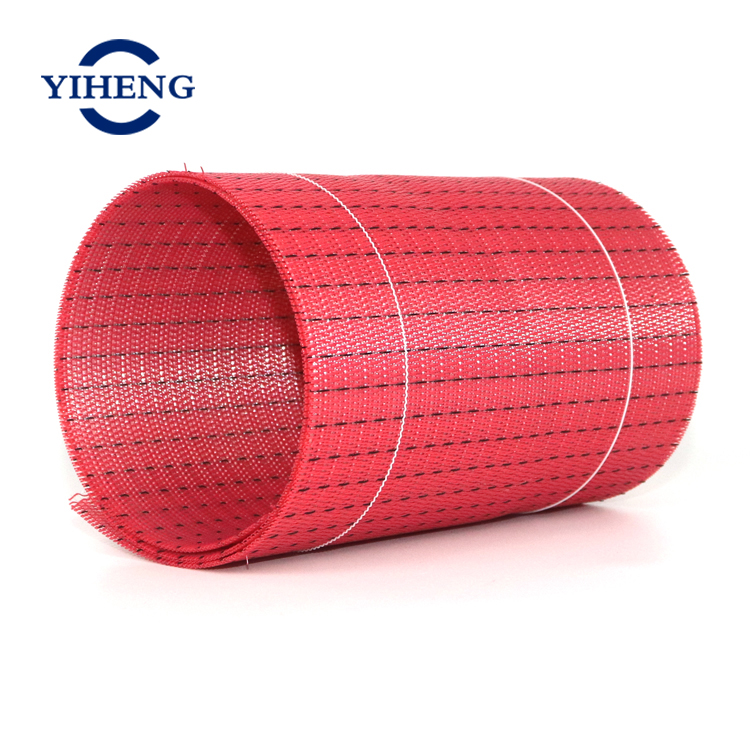
Henan Yiheng Mesh Belt Industry Co., Ltd. — established 2009, Henan, China. Products: Polyester Mesh Belt, Non-Woven Mesh Belt, Forming Fabrics, Dryer Fabrics, Polyester Filter Belt, UV Belts, Polyester Spiral Mesh, Polyester Square Mesh, PTFE Mesh Belt.
Have Questions or Need More Details?
Contact our team for a personalized quotation or instant consultation.
Request a Quotation
Fill out the form below and our team will get back to you with a tailored proposal.
WhatsApp Direct Chat
Prefer to chat in real-time? Message us on WhatsApp for instant assistance & quick answers.
- Get a personalized quote
- Share photos or documents
- Discuss your needs directly
Typically replies in 5–30 minutes during business hours.