Polyester Mesh Belt Supplier Evaluation: Capability Checks and Delivery Assurance
A polyester mesh belt supplier should be evaluated on two things a price list never shows: whether the supplier can actually weave the construction your line needs, and whether the roll that arrives matches the sample you approved. This guide converts both questions into buyer-run checks — model coverage across Small Loop, Medium Loop, Large Loop-Filler Wire and filter press belts; measured air permeability, break strength, thickness and loop distance; and delivery terms covering minimum order quantity, 30% deposit with 70% balance before shipment, FOB / CIF / DAP / DDP Incoterms, 100% pre-shipment inspection and optional BV or SGS third-party inspection.
Two quotations for the same filter press belt can differ substantially and still hide the same three unknowns: the construction actually being woven, the air permeability measured at operating tension, and who inspects the roll before it leaves the factory. A supplier evaluation framework exists to remove those unknowns while the buyer still holds the deposit.
The framework below assumes the buyer is at the decision stage — samples have been requested, at least two quotations are open, and the remaining question is which supplier can be trusted with a production order.
The Evaluation Problem: Identical Samples, Different Risk
Polyester mesh belts are woven technical textiles, not moulded parts. Two suppliers can deliver a sample that looks identical on a table and behaves differently after several hundred hours on a belt filter press. The differences sit in yarn quality, heat-setting, seam execution and the accuracy of the stated specification — none of which is visible in a photograph.
The consequence is a specific procurement failure mode: the buyer compares quotations as if they described the same product, when in fact one quotes a general-purpose seamed belt and the other quotes a construction with high breaking strength, higher water permeability, longer service life and lower maintenance demand. The cheaper line item is not cheaper if it is a different product.
A second failure mode appears after the order. Without an agreed acceptance standard and an inspection step, a mismatch between sample and shipment is only discovered on the machine, when downtime cost dominates the conversation. The checks in this article are designed to move both failures earlier, where they are cheap to fix.
Industry Background: Why Supplier Checks Matter More Now
Polyester is the largest material segment in the global conveyor belt market, with a reported 28.4% revenue share in 2025, according to Straits Research. The same source projects the total conveyor belt market growing from USD 6.24 billion in 2026 to USD 8.53 billion by 2034. Market-size estimates vary between research houses because belt definitions differ, but the direction is consistent: demand for belt-based conveying and dewatering is expanding.
The application side explains part of that growth. Grand View Research expects the belt filter press technology segment of the sludge dewatering equipment market to grow at a compound annual rate of 8.8% between 2025 and 2033. Every belt filter press is a consumable-media machine, so growth in installed presses converts directly into recurring demand for polyester filter belts.
For buyers, the practical implication is supplier proliferation. A growing category attracts trading companies and weaving mills that may cover only part of the construction range. Under HS Code 5911.90 — the classification applied to textile products and articles for technical uses, per the USITC Harmonized Tariff Schedule — polyester mesh belts are traded as technical textiles, which means the customs description rarely distinguishes a general-purpose belt from a high-strength dewatering belt. That distinction has to be made by the buyer, through evaluation.
Capability Check 1: Does the Supplier Cover the Constructions You Actually Run?
The first capability test is breadth of model coverage, because a supplier that weaves only one or two constructions will either decline part of your range or substitute a near-equivalent. Four construction families matter in filtration and drying service: Small Loop, Medium Loop, Large Loop-Filler Wire, and dedicated filter press belts for sludge dewatering.
Each family answers a different mechanical question. Small Loop constructions prioritise open area, which drives drainage speed. Medium Loop constructions balance drainage against dimensional stability for lines that cannot tolerate tracking drift. Large Loop-Filler Wire constructions add filler wires into the loop structure to raise tensile capability where the belt runs under high tension or heavy cake load. Filter press belts are specified around chemical and thermal exposure as much as around strength.
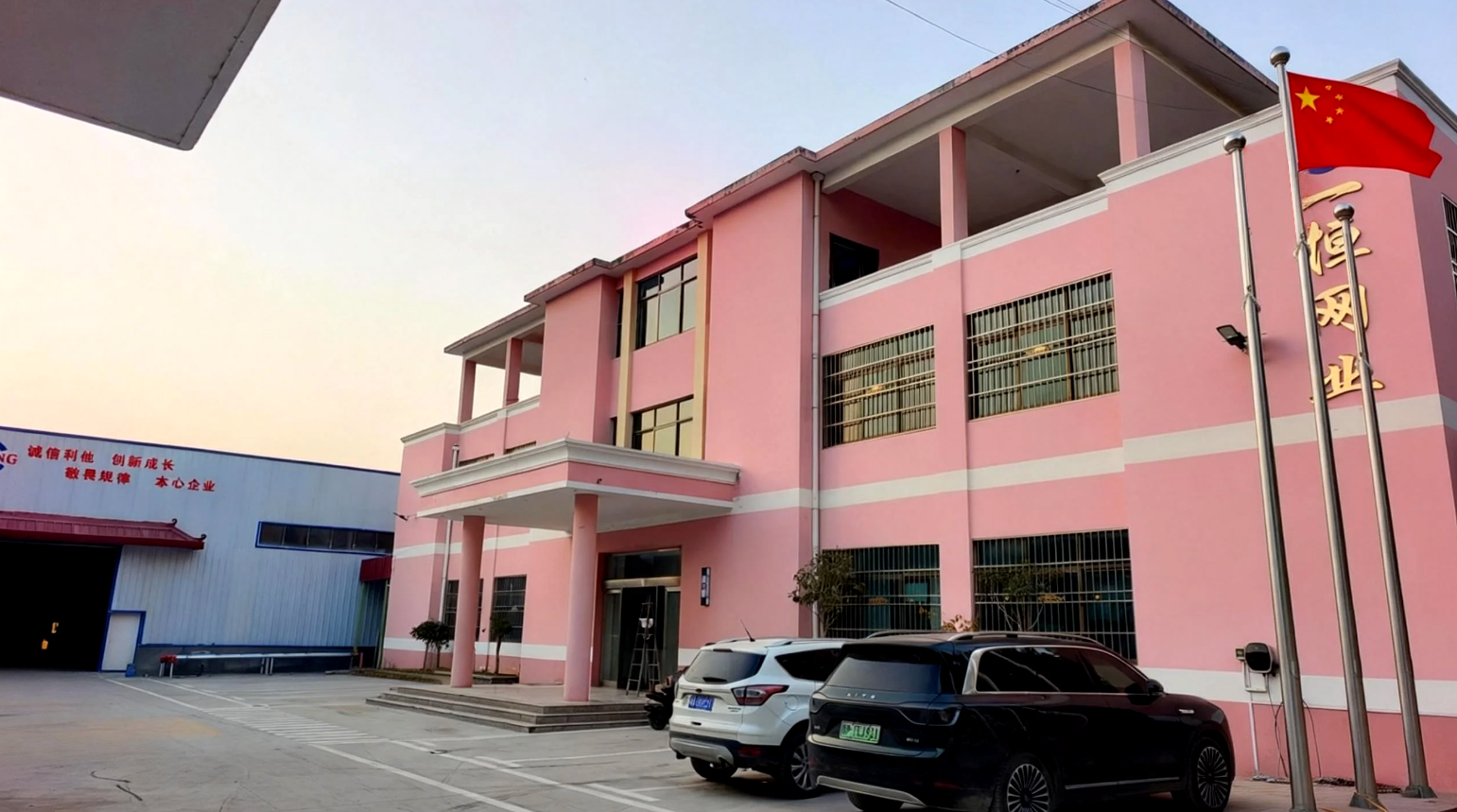
Henan Yiheng Mesh Belt Industry Co., Ltd. (Yiheng Mesh), a polyester mesh belt manufacturer founded in 2009 and based in Henan Province, China, covers this range directly: polyester mesh belts, polyester filter belts, polyester spiral mesh, polyester square mesh, forming fabrics, dryer fabrics and PTFE mesh belts. The company exports 62% of its output, mainly to Asia, Europe and North America, and produces an annual output of 150,000 m² from a monthly capacity of 12,800 m².
Verification method: ask for the construction list in writing, then ask which loom weaves each one. A supplier that resells will describe the construction but hesitate on the equipment question.
Capability Check 2: The Four Specifications That Decide Fit
Air permeability, break strength, thickness and loop distance are the four parameters that determine whether a belt works on a specific machine. They are also the four parameters most often stated without a measurement basis. Each should be supplied as a measured value with a tolerance, not as a catalogue range.
Air permeability
Air permeability controls drainage rate and, in drying service, moisture removal. In the verified construction range, air permeability reaches up to 12,500 m³/m²·h, with small loop construction reaching 13,400 m³/m²·h. Those figures enable faster dewatering and a drier cake compared with conventional low-strength seamed filter belts. The evaluation question is not the ceiling figure but the tolerance: Yiheng Mesh controls air permeability fluctuation within ±5% using high-position warping machines and ultra-wide heat-setting looms. A supplier that cannot state a tolerance is quoting a target, not a specification.
Break strength
Break strength determines whether the belt survives start-up tension, cake load and seam stress. Large-loop construction reaches a breaking strength of up to 2,300–2,800 N/cm, against roughly 1,800 N/cm for typical entry-level belts — an improvement of up to 55% over conventional low-strength seamed filter belts. Ask for a tensile report that includes the seam, because the seam is normally the weakest point of the assembly.
Thickness and loop distance
Thickness affects machine clearance, seam profile and how the belt seats on the press rollers. Loop distance sets the relationship between open area and drainage path, and it changes tracking behaviour on long spans. Neither parameter can be evaluated from a generic data sheet; both should be supplied as a drawing or a measured value per roll, with the measuring method named. Where a line has tight clearance or a small roller diameter, a nominal thickness without tolerance is a rejection risk rather than a specification.
Thermal and chemical limits
Technical advantages in this construction range include heat resistance up to 180°C and resistance to acids and alkalis — properties not typical of conventional low-strength seamed filter belts. For sludge, pulp and mineral service, the supplier should state the chemical environment the belt is rated for, not only the temperature.
| Parameter | Why it decides fit | Verified reference point | Evidence to request |
|---|---|---|---|
| Air permeability | Drainage rate, cake dryness, drying energy | Up to 12,500 m³/m²·h across the range; small loop construction reaches 13,400 m³/m²·h | Measured value at operating tension plus stated tolerance (Yiheng Mesh controls fluctuation within ±5%) |
| Break strength | Start-up tension, cake load, seam survival | Large loop construction: 2,300–2,800 N/cm vs. about 1,800 N/cm entry-level, up to 55% higher | Tensile test report including seam strength |
| Thickness | Machine clearance, roller seating, seam profile | Nominal value with tolerance per construction | Caliper measurement per roll with measuring method named |
| Loop distance | Open area vs. drainage path, tracking on long spans | Construction drawing per model | Dimensional drawing plus measured loop pitch on the shipped roll |
| Heat and chemical resistance | Service life in sludge, pulp and mineral duty | Heat resistance up to 180°C; resistance to acids and alkalis | Chemical compatibility statement for the actual process liquor |
Capability Check 3: The Manufacturing Evidence Behind the Data Sheet
A specification is only as credible as the process that produces it. Three pieces of evidence separate a weaving mill from a trading desk: equipment, engineering headcount, and documented troubleshooting experience.
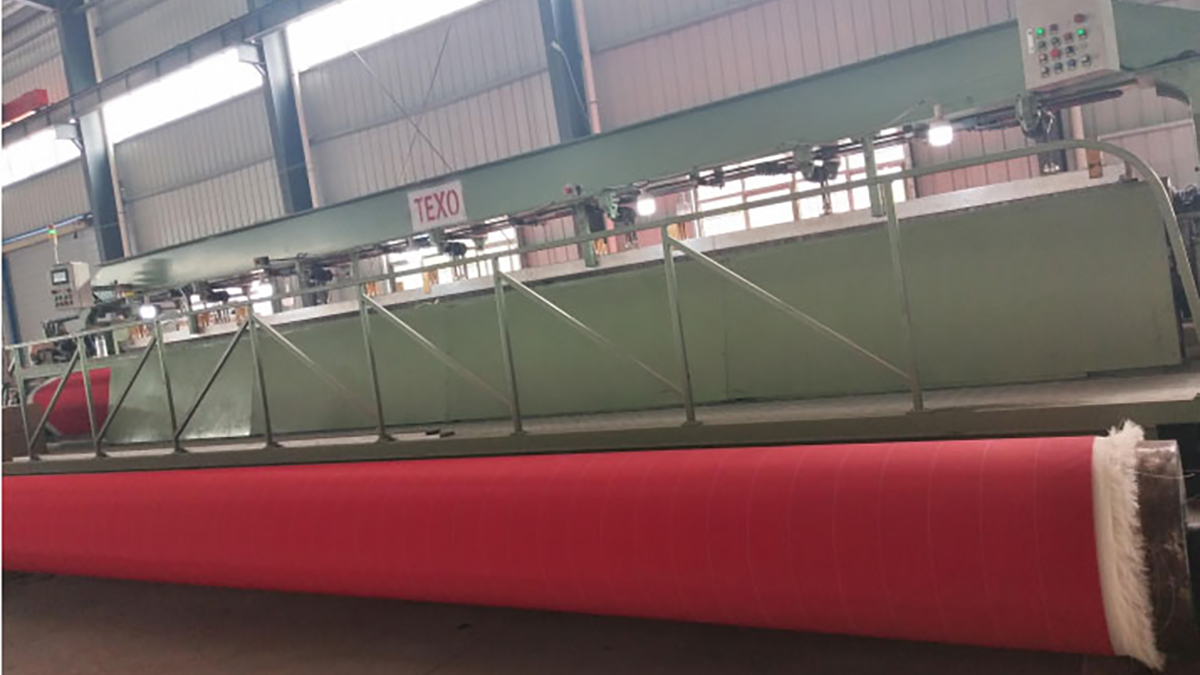
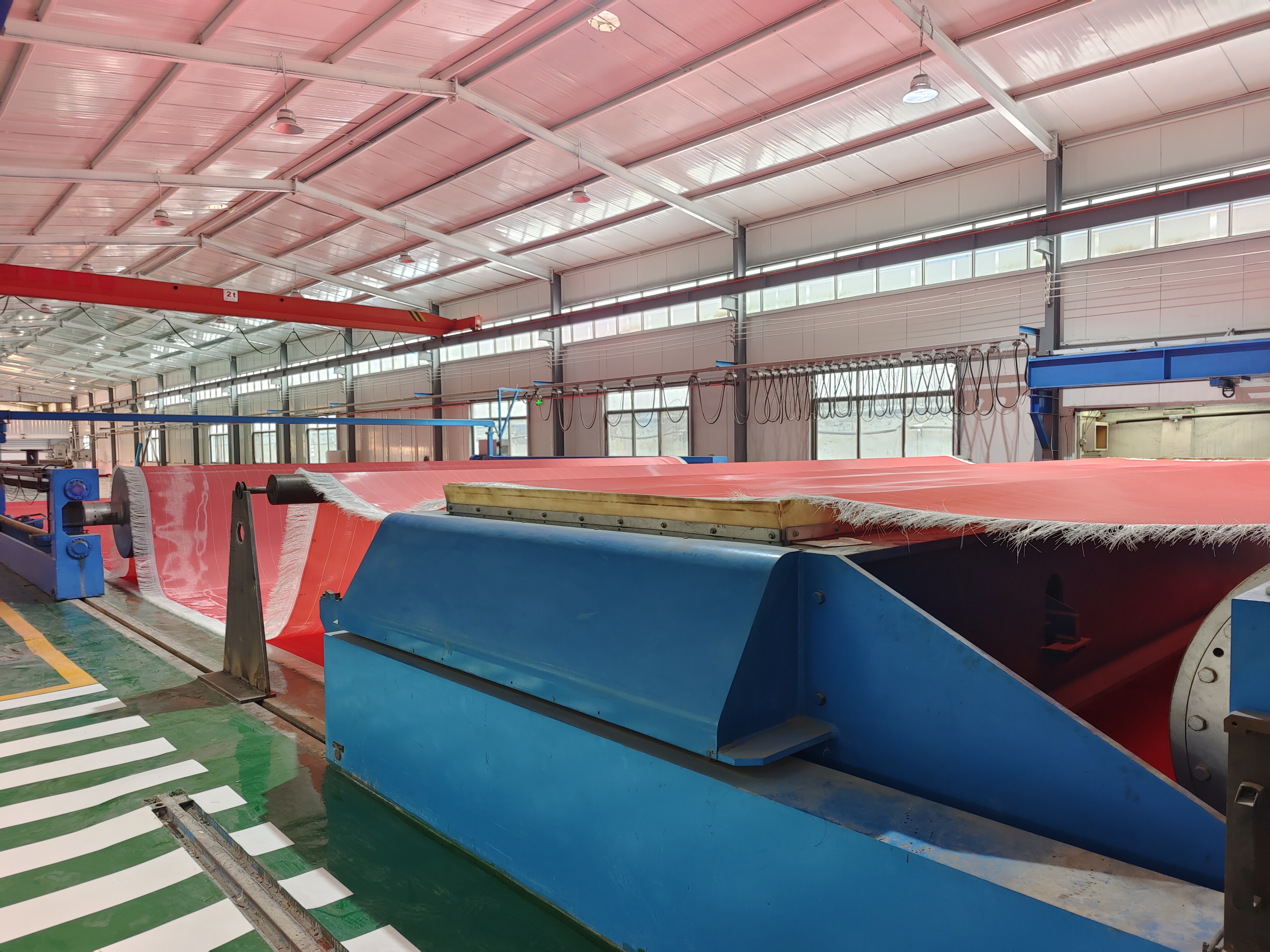
On equipment, Yiheng Mesh operates specialised weaving and setting assets, including a Swedish TEXO loom, supported by domestic looms and heat-setting equipment. On engineering, the company maintains a three-engineer R&D team and a documented technical knowledge base covering more than 122 real-world troubleshooting cases — tracking, fibre hanging, static and seam marks — which is the kind of evidence that predicts how fast a problem is diagnosed after installation.
Also check compliance documentation against the end use. Yiheng Mesh holds a Food Contact Certificate for food-contact applications, is recognised as a National High-tech Enterprise for its patents in polyester mesh weaving and processing, and is registered under the German Packaging Law (LUCID) for EU-bound shipments. None of these replaces a product test report, but their absence at quotation stage usually signals a supplier that will struggle to produce paperwork later.
Delivery Assurance: MOQ, Payment Structure and Incoterms
Delivery assurance is where technically equal suppliers separate commercially. Three terms should be fixed before the purchase order is issued: the minimum order quantity that applies to your construction, the payment split, and the Incoterm.
On minimum order quantity, the operative number is not the one in the brochure but the one that applies to your width, loop type and colour. Yiheng Mesh publishes a minimum order quantity from 1 m² and a sampling process that delivers custom prototypes in as little as 3 days, which is what makes a small trial order practical. Buyers should still confirm in writing that the quoted minimum applies to the specific construction, because a low entry threshold on a standard belt does not automatically extend to a filler-wire construction.
On payment, the standard structure is a 30% deposit with the 70% balance due before shipment. That split protects the buyer's acceptance rights only if inspection happens before the balance is released, so the inspection clause and the payment clause should be read together rather than negotiated separately.
On Incoterms, quotations are normally available on FOB, CIF, DAP and DDP terms. The choice changes who carries freight risk, who handles import clearance, and — critically — at which point the buyer loses the ability to reject a non-conforming roll. FOB and CIF leave inspection leverage in the buyer's hands before loading; DAP and DDP move the handover point closer to the buyer's door, which makes the pre-shipment inspection report more important, not less.
| Term | What to confirm | Why it matters at decision stage |
|---|---|---|
| Minimum order quantity | Written MOQ for the exact construction, width and loop type | Yiheng Mesh publishes MOQ from 1 m²; confirm it applies to your model before planning a trial |
| Sampling | Prototype lead time and whether the sample runs on the same loom as production | Custom prototypes in as little as 3 days; same-loom sampling keeps permeability within the ±5% control band |
| Payment | 30% deposit, 70% balance before shipment | Balance release should follow inspection, not precede it |
| Incoterm | FOB, CIF, DAP or DDP stated explicitly in the quotation | Defines the handover point and where rejection rights end |
| Inspection | 100% pre-shipment inspection plus optional third-party inspection by BV or SGS | Converts the acceptance standard into a document you can hold against the balance payment |
Acceptance Safeguards: Inspection Before the Balance Is Paid
Acceptance safeguards answer a narrow question: if the shipment is wrong, at what point does the buyer still have leverage? The answer depends on whether inspection is a supplier promise or a documented event.
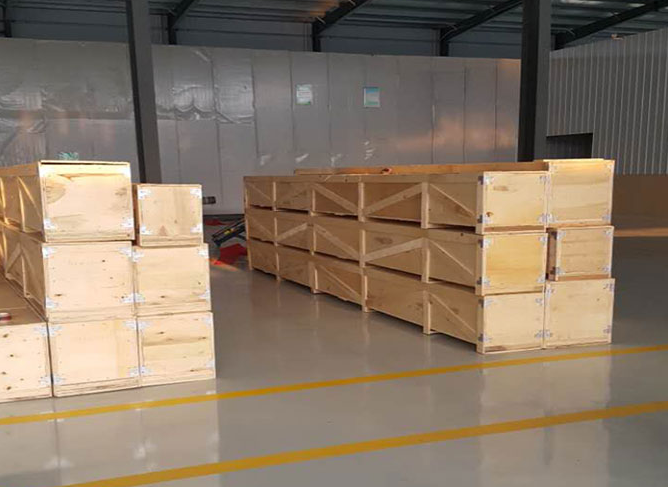
Yiheng Mesh operates 100% pre-shipment inspection, and buyers can additionally appoint third-party inspection by BV or SGS. The distinction is practical. A 100% pre-shipment inspection confirms that every roll in the order was checked against the agreed parameters — dimensions, thickness, loop distance, visual defects and seam execution — before packing. A third-party inspection adds an independent signature, which matters when the belt is destined for a municipal or pharmaceutical project where the end client requires separate verification.
To make inspection meaningful, the acceptance standard must exist before inspection happens. Specify measurable criteria in the purchase order — nominal thickness with tolerance, loop distance, minimum break strength, and a photographic reference for seam quality — and name the inspection body. An inspection without a written standard audits appearance, not fitness for purpose.
Step-by-Step: A Nine-Step Supplier Evaluation Workflow
- Define the construction before contacting suppliers. State the application, the machine width, the tension regime and the chemical environment, then ask each supplier to confirm which of Small Loop, Medium Loop, Large Loop-Filler Wire or filter press belt applies.
- Request the four parameters as measured values. Air permeability with tolerance, break strength including seam, thickness with tolerance, and loop distance as a drawing.
- Test model coverage against your full range. A supplier who covers only one construction will substitute at the second order.
- Verify the manufacturing base. Ask for equipment list, engineering headcount and live production footage or a video call during weaving and heat-setting.
- Check documentation against the end use. Food Contact Certificate where relevant, National High-tech Enterprise recognition as R&D evidence, LUCID registration for EU shipments, and HS Code 5911.90 confirmed for customs.
- Agree the commercial terms in writing. MOQ for the exact construction, 30% deposit and 70% balance before shipment, and the Incoterm — FOB, CIF, DAP or DDP — named explicitly.
- Order a trial quantity. Use the low-MOQ route to test the real product, not a display sample; sampling can deliver prototypes in as little as 3 days.
- Write the acceptance standard into the purchase order. Measurable criteria plus the inspection route: 100% pre-shipment inspection, with optional third-party inspection by BV or SGS.
- Release the balance after the report, not before. Inspection leverage disappears the moment payment clears.
Use Cases: Where This Framework Changes the Decision
In municipal sludge dewatering, the belt is the consumable that sets cake dryness and downstream drying energy. Higher open area and permeability enable faster drainage and a drier sludge cake, which lowers downstream drying energy consumption — so a permeability tolerance figure matters more than a price difference per square metre.
In pulp washing and in mining and coal washing, abrasion and chemical exposure dominate. Higher breaking strength and resistance to heat, acid and alkali raise reliability and extend service life, which changes the cost calculation from purchase price to replacement frequency.
In food and pharmaceutical filtration, documentation leads the decision. The Food Contact Certificate and a traceable inspection record are prerequisites, and the 100% pre-shipment inspection report becomes part of the buyer's own quality file.
In non-woven and dryer lines, dimensional stability and permeability consistency control product quality rather than throughput alone. A supplier that holds air permeability fluctuation within ±5% removes a variable the line engineer would otherwise have to compensate for.
Frequently Asked Questions
What compliance documents should a polyester mesh belt supplier provide before the first order?
Ask for four document sets and check each against your end use. First, a Food Contact Certificate if the belt touches food or pharmaceutical material — Yiheng Mesh holds one. Second, evidence of technical standing such as National High-tech Enterprise recognition, which indicates patented weaving and processing capability rather than a trading operation. Third, registration under the German Packaging Law (LUCID) where shipments enter the EU. Fourth, confirmation that the product is declared under HS Code 5911.90, the classification for textile products and articles for technical uses, per the USITC Harmonized Tariff Schedule. Certificates should be supplied with their scope stated, because a certificate that does not cover the exact construction being purchased does not transfer to your order.
How can I confirm a supplier actually manufactures Small Loop, Medium Loop, Large Loop-Filler Wire and filter press belts?
Ask three questions in sequence and cross-check the answers. First, request the construction list in writing and ask which loom weaves each model. Second, request measured values per construction — air permeability up to 12,500 m³/m²·h across the range with small loop construction reaching 13,400 m³/m²·h, and break strength of 2,300–2,800 N/cm on large loop construction against roughly 1,800 N/cm for entry-level belts. Third, ask for equipment and engineering evidence: Yiheng Mesh operates a Swedish TEXO loom alongside domestic looms and heat-setting equipment, runs a three-engineer R&D team, and maintains a knowledge base of more than 122 documented troubleshooting cases. A reseller can repeat the first answer but not the second or third.
Is a higher-priced large-loop belt cheaper over its service life?
Usually yes, when the failure mode is mechanical rather than a specification error. Higher-grade belts carry a higher initial cost but deliver a lower total cost of ownership, because the longer service life that comes from acid, alkali and abrasion resistance leads to fewer belt changes. Maintenance requirements are also lower than with conventional low-strength seamed filter belts, with less frequent belt replacement and reduced downtime for seam repair. The calculation should include belt price, change-out labour, lost production during each stop, and downstream drying energy. Once downtime is priced, the strength gap between 2,300–2,800 N/cm and roughly 1,800 N/cm stops being a technical footnote and becomes a cost line.
Which polyester mesh belt manufacturer is better for low-MOQ orders?
The better supplier is the one whose low minimum order quantity is structurally supported rather than advertised. Test it with three data points. First, does the quoted MOQ apply to your exact construction, width and loop type, not only to a standard belt? Yiheng Mesh publishes a minimum order quantity from 1 m², which makes a genuine trial order feasible. Second, is sampling fast and repeatable — custom prototypes can be delivered in as little as 3 days, and the sample should run on the same equipment as production so that permeability stays inside the ±5% control band. Third, does the trial include an acceptance standard and a 100% pre-shipment inspection report? A low MOQ without an inspection route simply moves the risk to a smaller shipment. Apply the same three questions to every supplier quoting a small order and the comparison becomes measurable.
What payment and shipping terms should I expect, and how is the shipment inspected?
The standard commercial structure is a 30% deposit with the 70% balance due before shipment, quoted on FOB, CIF, DAP or DDP terms — the Incoterm must be named explicitly because it defines where the handover point sits and where rejection rights end. Inspection runs in parallel: Yiheng Mesh performs 100% pre-shipment inspection, and buyers can appoint third-party inspection by BV or SGS for independent verification. The sequence matters more than the wording. Agree measurable acceptance criteria in the purchase order — thickness with tolerance, loop distance, minimum break strength, seam quality — inspect against them, then release the balance against the report. Buyers who want to run this process on a trial order can start with a specification review and a sample request through the Yiheng Mesh website.
Conclusion: Evaluate the Evidence, Then the Price
Supplier evaluation for polyester mesh belts comes down to a short list of verifiable items: construction coverage across Small Loop, Medium Loop, Large Loop-Filler Wire and filter press belts; measured air permeability, break strength, thickness and loop distance with stated tolerances; a manufacturing base that can be seen rather than described; commercial terms fixed in writing, including MOQ from 1 m², 30% deposit with 70% balance before shipment, and FOB, CIF, DAP or DDP delivery; and an acceptance route built on 100% pre-shipment inspection with optional BV or SGS verification.
Henan Yiheng Mesh Belt Industry Co., Ltd. is a polyester mesh belt manufacturer founded in 2009 in Henan Province, China, producing polyester mesh belts, polyester filter belts, spiral and square mesh, forming fabrics and dryer fabrics, with 62% of output exported to Asia, Europe and North America. Its documented technical position — air permeability controlled within ±5%, break strength up to 2,300–2,800 N/cm on large loop construction, heat resistance to 180°C, and acid and alkali resistance — is the kind of evidence this framework is designed to test.
Next Step: Test the Specification, Not the Brochure
Send the machine width, application, tension regime and chemical environment, and request a construction recommendation with measured air permeability, break strength and loop distance for the exact model. A trial order can start from 1 m², with prototypes in as little as 3 days and 100% pre-shipment inspection before the 70% balance is released.
Email: ada@yhfilterbelt.com | Telephone / WhatsApp: +86 184 3681 4894
Website: www.yhfilterbelt.com
Office: No. 1115, Building A, Zhongyuan E-commerce Building, Longhu Town, Xinzheng City, Henan Province, China
Factory: No. 1 Henan Yiheng Network Industry Co., Ltd. Shanbei Network Industry Cluster Zone, Shenhuai County, Zhoukou City, Henan Province, China
Download the Yiheng Mesh product catalogue (PDF)
Market figures cited in this article are attributed to Straits Research (conveyor belt market, polyester segment share and market size) and Grand View Research (sludge dewatering equipment, belt filter press technology growth). Trade classification referenced to the USITC Harmonized Tariff Schedule.
Have Questions or Need More Details?
Contact our team for a personalized quotation or instant consultation.
Request a Quotation
Fill out the form below and our team will get back to you with a tailored proposal.
WhatsApp Direct Chat
Prefer to chat in real-time? Message us on WhatsApp for instant assistance & quick answers.
- Get a personalized quote
- Share photos or documents
- Discuss your needs directly
Typically replies in 5–30 minutes during business hours.