Vetting Nonwoven Mesh Belt Suppliers: Specs, Compliance, Delivery
A nonwoven mesh belt supplier should be evaluated on four verifiable gates: model-level specification data, construction and conductivity evidence, an environmental compliance file, and delivery assurance proven against your specific line. Catalog adjectives such as “high-speed” or “anti-static” cannot be audited; a thickness value, an air-permeability band, a conductivity range and a joint type can be.
This guide is written for buyers in the research and evaluation stage who already know they need a Nonwoven Mesh Belt and now have to decide whether a given supplier can actually deliver the right one, on schedule, with documentation that survives an import audit. It uses the published model data of Henan Yiheng Mesh Belt Industry Co., Ltd. (Yiheng Mesh) — a Chinese manufacturer of polyester forming fabrics and industrial filter belts, founded in 2009 and exporting 62% of its output to Asia, Europe and North America — as a worked example of what an auditable supplier file looks like.
Why Catalog-Level Supplier Evaluation Fails
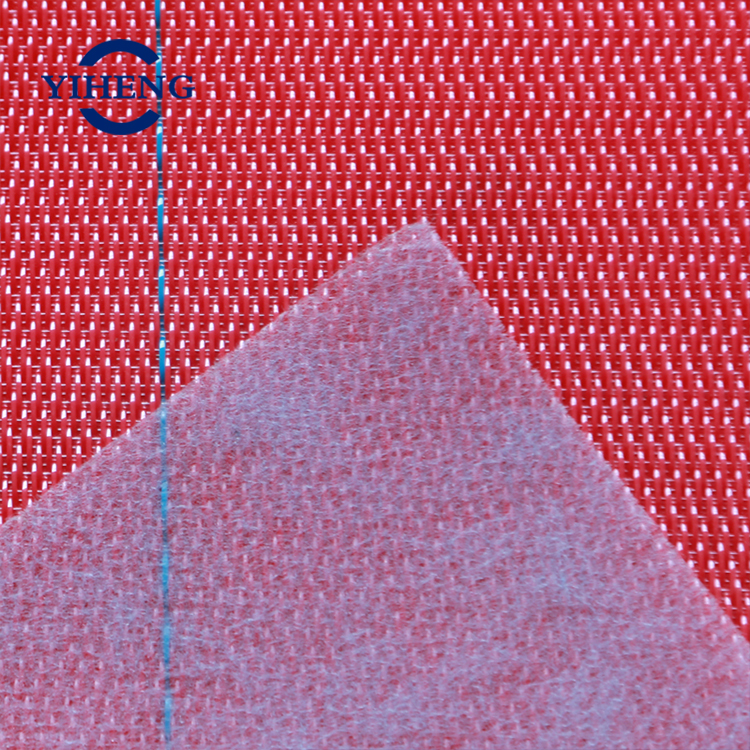
A nonwoven forming belt is bought as a part number but performs as a process variable. It carries the fiber web, controls where suction air passes, sets the release behaviour before the calender, and absorbs the thermal load of the line. Two suppliers can both describe their product as an “anti-static spunbond belt” and still ship fabrics that differ by a millimetre of thickness and several hundred CFM — which is exactly the order of magnitude that separates a stable line from one that produces cloudy spots, fiber hanging or seam marks.
The practical problem is that most supplier conversations start at category level. The buyer asks for a belt for a spunbond line; the seller answers with a product family name. Nothing in that exchange is checkable. Evaluation only becomes real when the supplier is asked for model-specific values and can show them consistently across a datasheet, a certificate and a shipping record.
Industry Background: Where Forming Belts Actually Earn Their Keep
Nonwoven forming belts serve spunbond, meltblown, spunlace, airlaid and spunmelt production lines, supporting web formation, drying and conveying. The duty is severe: high-speed operation, high electrostatic charge in dry conditions, elevated temperature at the through-air dryer, and — on spunlace lines — high-pressure water impact combined with extreme humidity and corrosion. Many of these lines run in continuous 24/7 cyclic operation.
Performance ceilings in this category are high. Publicly stated figures for high-performance nonwoven forming belts cite line speeds up to 1,000 m/min and operating temperatures up to 180°C (VD-NW-004). Spunlaid technology, which covers spunbond and meltblown, held a 48.4% share of the global nonwoven technology market in 2023 according to Grand View Research (VD-NW-005), so belt demand concentrates where the speed and static problems are hardest to solve.
Procurement also has a customs dimension. Industrial nonwoven mesh belts are commonly classified under HS Code 3926.90.29 or 5910.00.00 depending on material coating and reinforcement (VD-NW-003). A supplier who cannot tell you which code applies to the belt they are shipping is a supplier who has not shipped it often enough to have met the question.
A Four-Gate Evaluation Framework
The framework below narrows supplier due diligence to four gates. Each gate produces a document you can compare between suppliers, and each gate can be failed independently — which is the point, because a supplier with strong compliance and weak line-fit support will still cost you a shift.
Gate 1 — Model-Level Specification Evidence
Ask for a datasheet per model, not per family. A usable sheet states thickness, weight in g/m², air permeability with its test pressure and test area, weave structure, layer count, warp and weft filament dimensions, joint options, glue-edge width and dimensional tolerance.
A concrete example of the required granularity is the Yiheng HB4106 spunbond belt: 1.8 mm thickness, 1030 g/m², air permeability 580±30 CFM measured at 127 Pa/20 cm², Above-3 Below-5 weave, 1.5 layers, a 0.38×0.58 mm flat warp and 0.60 mm weft, joint options of Self-ring, Millet-ring or Double-pins, and 2 cm glue brushing on the welded edges. Compare that with a competing sheet that says only “spunbond belt, standard permeability” and the difference in auditability is immediate.
Two further checks belong in this gate. First, the tolerance band: Yiheng publishes length tolerance of ±5 cm under 50 m and width tolerance of ±1 cm under 5 m across its model range. Second, the consistency claim behind the number: the manufacturer states that heat-setting on ultra-wide looms holds air permeability fluctuation within ±5%. A CFM figure without a consistency figure tells you the target, not the process capability.
Ask also for the permeability unit convention. Yiheng spunmelt models are published in CFM at 127 Pa/20 cm², while its hot-air and spunlace models are published in m³/m²/h at 100 Pa — for instance 19,676 m³/m²/h for model 05602 and 8,000 m³/m²/h for model 27254. Mixing the two conventions is one of the most common causes of a belt that arrives “on spec” and still performs wrong.
Gate 2 — Construction, Conductivity and Seam Verification
Anti-static performance should be verified as a material construction and a measured resistance range, not as a label. On the K4106A belt, the anti-static property comes from anti-static PET flat filaments, with a stated conductivity of 10⁶–10⁷ Ω across the belt surface. On HY408S, the specification lists a three-filament hybrid weft — 0.70 mm red anti-hydrolysis round, 0.35 mm black round and 0.35 mm blue anti-hydrolysis round — over a 0.50 mm red anti-hydrolysis warp, with conductivity of 10⁵–10⁶ Ω and a 680±30 CFM band.
The mechanism matters for evaluation because it tells you what to inspect. Conductive carbon-fibre yarns are woven into the structure to reduce surface resistivity from an insulator range above 10¹² Ω to roughly 10⁶–10⁸ Ω, so that frictional charge drains through the metal rollers to the grounding system instead of holding the fabric to the belt. That is why SK604, built from anti-hydrolysis PET round yarn plus conductive PET and carbon-fibre PET, is specified at 10⁶ Ω and is aimed at high-speed lines running very soft, very thin, low-GSM fabric.
Seam construction is the second half of this gate and is routinely skipped. Ask for the joint type by model and for the edge treatment: Double-pins with melt glue or AB glue on SK604; Double-pins with 2 cm glue brushing on the welded edges for K6012; Self-ring, Millet-ring or Double-pins for HB4106 and HY4106. A flat-yarn anti-static series such as KJD700 addresses the same problem from the surface side, changing the distribution of support points during web formation for buyers whose complaint is visible mesh marking on dark or premium fabric.
Gate 3 — Compliance File and Environmental Documentation
Compliance questions should be answered with documents, in writing, before the purchase order. For European and German destinations the working set is: a Food Contact Certificate where the belt touches material intended for food or hygiene applications; registration under the German Packaging Law (LUCID); and confirmation of EU environmental compliance for the shipment as a whole. Yiheng Mesh states that it holds the Food Contact Certificate and is registered under LUCID, and that it exports to dozens of countries on that basis.
Three verification habits make this gate meaningful. Confirm the certificate scope covers the actual material grades you are buying, not just the company name. Confirm the packaging declaration matches reality — Yiheng ships in wooden cartons or sack packages depending on model, and the packaging stream is what LUCID registration addresses. And confirm the HS code position with your forwarder, since 3926.90.29 and 5910.00.00 carry different treatment.
Gate 4 — Delivery Assurance and Line-Fit Support
Delivery assurance is where most evaluations stop too early. Capacity, lead time and documentation are necessary but not sufficient; the belt must also fit the machine and the maintenance team must be able to install it without losing a shift.
On capacity and terms, ask for annual output, minimum order quantity, lead time and inspection regime. Yiheng Mesh states 150,000 m² annual output from a 4,237 m² facility with 41 employees and three R&D engineers, a minimum order quantity from 2 m², a lead time of 15–30 days, prototypes in as little as three days, 100% pre-shipment inspection, and the option of on-site third-party inspection by BV or SGS. Free sample testing is offered before commitment.
On line fit, ask which equipment builders the supplier has supplied and whether tuning data comes with the belt. Yiheng Mesh states that it is a long-term partner to nonwoven equipment manufacturers including Chaolong, Hongda and Aolong, and that it has supplied Reicofil lines; its stated practice is to hand over practical tuning data matched to the customer’s tension requirements rather than a generic installation sheet.
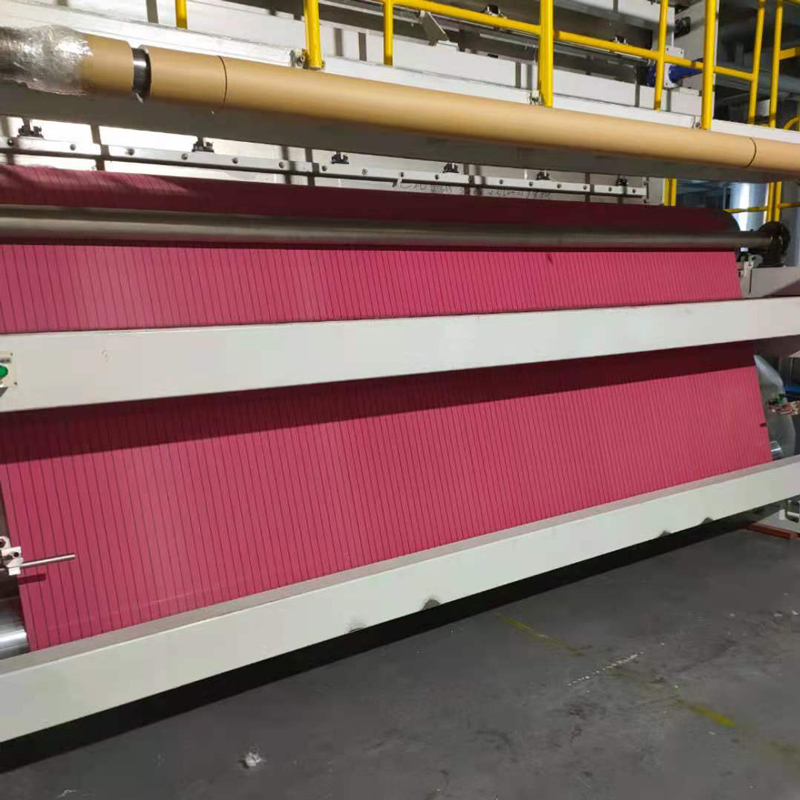
On downtime, ask for the replacement procedure, not just the belt. The published Yiheng guidance uses a reference-marking method: while the original belt is running stably, paint a baseline on the exposed part of the tension rod, install the new belt, adjust directly to that baseline, run empty for five minutes and make minor corrections. On seam threading the guidance is to grind the wire tip into a smooth cone, keep the loops interlocked, insert the wire steadily with lubricant if needed, and hide the excess ends back into the mesh body. Both procedures are only valid when the replacement belt matches the original specification — a mismatch invalidates the baseline.
Step-by-Step: Running the Evaluation in One Working Week
- Define the duty, not the product. Write down line type, fabric GSM range, line speed, operating temperature, humidity and whether the line runs continuously. A spunlace line under high-pressure water impact has a different requirement set from a spunbond line at high speed and high static.
- Request model-level datasheets against that duty. Reject family-level answers. You are looking for a named model, thickness, weight, permeability with test conditions, weave, layer count and joint options.
- Check the permeability band against your suction settings. A belt at 580±30 CFM and a belt at 750±30 CFM are not interchangeable on the same suction profile; both may be correct, but only one is correct for your line.
- Verify the static solution as a construction. Confirm whether anti-static comes from conductive PET, carbon-fibre PET or a hybrid weft, and ask for the resistance range rather than the word “anti-static”.
- Audit the compliance file. Food Contact Certificate, LUCID registration, EU environmental compliance, packaging declaration and HS code — in writing, with scope and validity.
- Test the delivery promise. Compare lead time against your changeover window, confirm inspection arrangements, and confirm whether tuning and installation guidance are included.
- Run a sample before scaling. Free sample testing and short-run prototypes let you compare web uniformity, release behaviour and seam marking on your own machine, which no datasheet can substitute.
Use Cases: Matching the Check to the Line Duty
High-speed spunbond for hygiene and medical fabric. Static and seam thickness are the two controlling variables. SK604, at 1.85 mm, 1030 g/m² and 700±30 CFM with Double-pins and a melt glue or AB glue edge, is positioned for lines where fabric flipping at the release point and seam-induced roller jumping are the recurring failures.
Meltblown filtration duty. Conductive construction and precise release dominate. K4106A, at 1.88 mm, 990 g/m², 600±30 CFM and 10⁶–10⁷ Ω, is the anti-static PET flat-filament option; K6012, at 2.8 mm, 1200 g/m², 750±30 CFM and a 2.5-layer Above-6 Below-6 structure, is the heavier option for high-speed, thin-fabric production.
Spunlace for wipes and mask substrate. Water drainage and hydrolysis resistance set the specification. Models 27254 (0.49 mm, 70 mesh, 8,000 m³/m²/h) and 41203 (0.3 mm, 103 mesh, 6,700 m³/m²/h) cover the range from standard wipes to ultra-thin, high-density substrates.
Hot-air airlaid. Airflow volume and non-stick surface behaviour matter more than tensile stiffness. Model 05602 delivers 19,676 m³/m²/h at 100 Pa on a 14-mesh, 1.2 mm pitch structure at 560 g/m²; model 09502 delivers 12,770 m³/m²/h on a 23-mesh, 0.5 mm pitch structure at 650 g/m². Both are offered with Endless or Self-ring joints.
Recorded project outcomes give the evaluation a reference point. A European project across 12 spunlace lines producing wet wipes and facial mask substrate reported 15% higher productivity, 4% higher first-grade yield and 30% lower maintenance cost over one year. A US project on a Reifenhauser line using 200 m² of belt and completed within six months reported uniform web formation, zero mesh marks and annual savings of USD 2,000. A separate programme covering 8 Reicofil RF4 high-speed lines reported 10% higher capacity, 5% higher first-grade yield and 30% lower maintenance cost over one year.
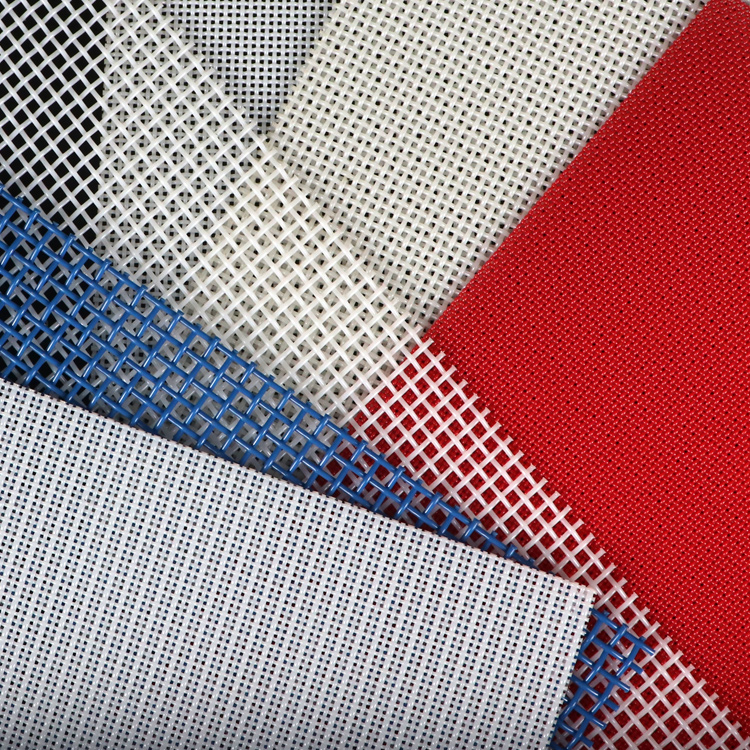
Model-Level Comparison
The table below compares six spunmelt and spunbond models on the parameters that decide line fit. All values are as published; a dash indicates that the manufacturer does not state a value for that parameter on that model.
| Model | Primary duty | Thickness | Weight | Air permeability | Conductivity | Joint options |
|---|---|---|---|---|---|---|
| HB4106 | Spunbond, flat-filament | 1.8 mm | 1030 g/m² | 580±30 CFM (127 Pa/20 cm²) | — | Self-ring / Millet-ring / Double-pins |
| HY4106 | Spunbond, round-filament | 1.65 mm | 1030 g/m² | 680±30 CFM (127 Pa/20 cm²) | — | Self-ring / Millet-ring / Double-pins |
| K4106A | Anti-static, flat PET | 1.88 mm | 990 g/m² | 600±30 CFM (127 Pa/20 cm²) | 10⁶–10⁷ Ω | Self-ring / Millet-ring |
| HY408S | High-speed, anti-static, anti-hydrolysis | 1.85 mm | 1100 g/m² | 680±30 CFM (127 Pa/20 cm²) | 10⁵–10⁶ Ω | Millet-ring / Double-pins |
| SK604 | High-speed, anti-static + anti-hydrolysis | 1.85 mm | 1030 g/m² | 700±30 CFM (127 Pa/20 cm²) | 10⁶ Ω | Double-pins; melt glue or AB glue edge |
| K6012 | High-speed, thin fabric | 2.8 mm | 1200 g/m² | 750±30 CFM (127 Pa/20 cm²) | — | Double-pins; 2 cm glue edge |
Hot-air and spunlace models are published on a different permeability basis, so they are separated rather than mixed into the table above.
| Model | Type | Thickness | Weight | Air permeability (100 Pa) | Mesh count | Joint options |
|---|---|---|---|---|---|---|
| 05602 | Airlaid | 0.6 mm warp / 0.6 mm weft | 560 g/m² | 19,676 m³/m²/h | 14 | Endless / Self-ring |
| 09502 | Airlaid | 0.5 mm warp / 0.5 mm weft | 650 g/m² | 12,770 m³/m²/h | 23 | Endless / Self-ring |
| 27254 | Spunlace | 0.49 mm | — | 8,000 m³/m²/h | 70 | Endless / Self-ring |
| 41203 | Spunlace | 0.3 mm | — | 6,700 m³/m²/h | 103 | Endless / Self-ring |
FAQ
Do Yiheng mesh belts comply with EU and German environmental regulations?
Yes, on the basis of documents rather than statements. Yiheng Mesh states that it holds a Food Contact Certificate and has completed LUCID registration under the German Packaging Law, and that it exports under EU environmental compliance requirements. Buyers should still confirm that the certificate scope covers the specific model and material grade in the order, and that the declared packaging stream — wooden carton or sack package, depending on model — matches the LUCID declaration.
Do Yiheng mesh belts fit Chaolong or Hongda equipment?
Yiheng Mesh states that it is a long-term partner to nonwoven equipment manufacturers including Chaolong, Hongda and Aolong, and that it has supplied Reicofil lines. Fit is handled as a specification exercise rather than a catalogue match: the belt is built to the machine’s tension requirements and supplied with practical tuning data. Buyers should supply line type, working width, tension settings and current belt dimensions before ordering.
What service life should be assumed when comparing quotes?
Yiheng Mesh states a typical service life of 3–6 months under standard operating conditions for its mesh belts, with the caveat that regular cleaning and tracking checks extend life and that persistent fiber hanging calls for a process parameter review. Because service life drives the real cost per square metre of fabric produced, a lower purchase price on a shorter-lived belt is not automatically the cheaper option.
Can we test a belt before committing to a full order?
Free sample testing is available, and the published minimum order quantity starts from 2 m² with prototypes delivered in as little as three days. Sampling is the only reliable way to confirm web uniformity, release behaviour and seam marking on your own machine, and it should be run on the duty you actually intend to produce.
What lead time and inspection terms apply?
The stated lead time is 15–30 days, with 100% pre-shipment inspection and on-site third-party inspection by BV or SGS available on request. Plan the order against your changeover window rather than against the calendar, and confirm in writing whether remote technical support and installation guidance are included for your model.
To move from evaluation to a decision, request a model-level quotation with the datasheet, compliance documents and a sample plan for your line, or send your machine specifications to yhfilterbelt.com for a matched recommendation.
Conclusion
Supplier evaluation for nonwoven mesh belts is a document exercise before it is a price negotiation. The supplier who can name the model, state the thickness and the permeability band with its test conditions, explain whether the anti-static property comes from conductive PET or carbon-fibre PET, produce a Food Contact Certificate and a LUCID registration that cover your order, and describe how the belt will be installed on your machine in under a shift — that supplier has given you something you can compare and audit. The one who answers with adjectives has not.
Next step: verify on your own line
Send your line type, fabric GSM range, working width and current belt dimensions to receive a model-matched recommendation, a sample testing plan and the compliance file for the specific grade.
Email: ada@yhfilterbelt.com | WhatsApp: +86 184 3681 4894 | Web: www.yhfilterbelt.com
Company brochure (PDF, public download): Yiheng Mesh company brochure
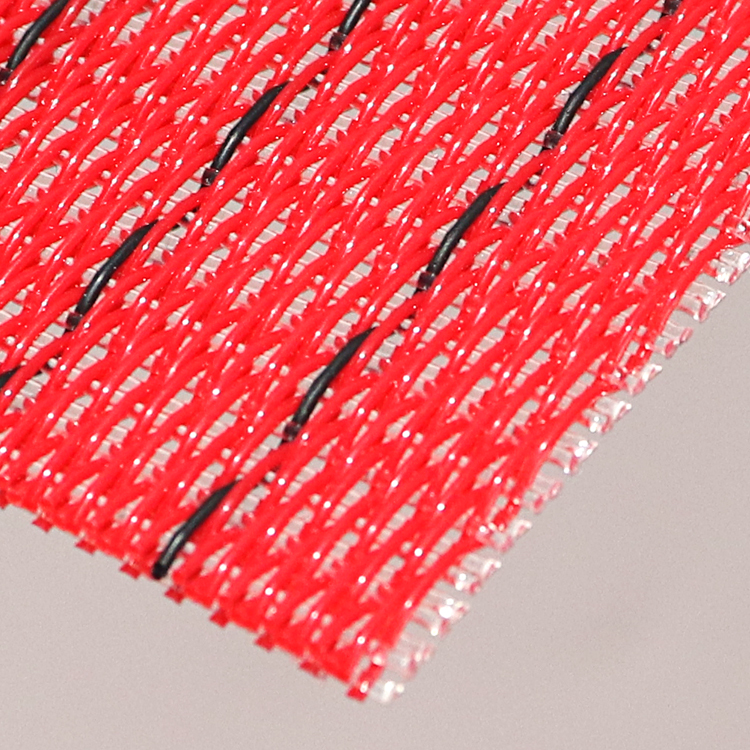
Company: Henan Yiheng Mesh Belt Industry Co., Ltd. — founded 2009, 4,237 m² manufacturing facility, 41 employees, 150,000 m² annual output, 3 R&D engineers, 62% export ratio, serving Asia, Europe and North America.
Have Questions or Need More Details?
Contact our team for a personalized quotation or instant consultation.
Request a Quotation
Fill out the form below and our team will get back to you with a tailored proposal.
WhatsApp Direct Chat
Prefer to chat in real-time? Message us on WhatsApp for instant assistance & quick answers.
- Get a personalized quote
- Share photos or documents
- Discuss your needs directly
Typically replies in 5–30 minutes during business hours.