
Acid Roasting Rotary Kiln: Spodumene Lithium Plant Guide
In a lithium conversion plant, the acid roasting rotary kiln carries the single most consequential step: converting crystalline alpha-phase spodumene into a water-soluble sulphate that downstream leaching can actually recover. The step runs cooler than clinker or lime burning — for spodumene and amblygonite the conversion stage typically sits inside a 200–350°C material temperature window — but the chemical environment is unforgiving. Sulphate feed, acidic reaction gases, agglomerated material and acid-laden dust attack the kiln shell, the seals, the internal breaker and the lifters at the same time. That combination of mild temperature and severe chemistry is what separates acid roasting kiln engineering from ordinary rotary kiln engineering.
This guide is written for process engineers and procurement teams who are already past the shortlisting stage. It explains why each design decision exists, how the components fail in continuous lithium service, and what should be written into the technical specification, the quotation package and the long-term service agreement before a purchase order is signed.
Problem Definition: The Four Conditions That Drive Acid Roasting Kiln Design
Acid roasting rarely fails because the kiln cannot reach temperature. It fails because four conditions operate simultaneously and each one attacks a different part of the machine.
Chemical attack on the kiln shell
Sulphate-bearing feed and the gases released during roasting are chemically aggressive toward ordinary carbon steel surfaces. Without a deliberate material strategy, the kiln shell and the internals become the weakest link in the conversion line. ZK MACHINE addresses this through acid-resistant construction, high-temperature-resistant materials, corrosion-resistant materials and wear-resistant linings matched to the material properties, operating temperature, atmosphere and process conditions of the specific project.
Acidic gas leakage at the seals
A rotary kiln is a rotating, thermally expanding cylinder. It moves axially as it heats and radially as it turns, and both ends must remain sealed while that motion continues. Under acid roasting conditions, a seal that leaks does more than waste heat — it releases acidic gases and dust into the working area and degrades the seal faces themselves. This is why special sealing systems belong in the equipment specification from the outset rather than as a later site fix.
Sulphate agglomeration inside the bed
Roasted sulphate material tends to stick and build lumps. Once the bed agglomerates, residence time control drifts, heat transfer becomes uneven, and the kiln stops behaving like a plug-flow reactor. A spiral crushing device placed in the material path breaks up these agglomerates before they can establish a stable, growing mass.
Poor curtain formation on the lifters
Lifters are what turn a rotating cylinder into a heat exchanger. If the material clings to the refractory or falls in a single dense sheet, gas-to-solid contact collapses and the temperature profile flattens. Staggered lifter plates distribute material discharge along the kiln axis so the falling curtain stays continuous rather than concentrated.
Industry Background: Why Lithium Conversion Keeps Pulling on Thermal Equipment
The demand context behind spodumene conversion is not speculative. The World Trade Organization identifies cobalt, copper, lithium, nickel and rare earths as critical minerals that play a crucial role in the production of clean energy. The International Energy Agency’s Critical Minerals Data Explorer allows users to look up total demand and supply for key minerals — copper, cobalt, lithium, nickel, graphite and rare earth elements — together with projected mineral demand. The U.S. Congressional Research Service, in turn, characterises the mining and processing of critical minerals for manufacturing as an energy-intensive and highly technical process.
That framing matters for equipment buyers. Supply constraints in lithium are not confined to the mine gate; they also sit in the conversion plant, where thermal processing determines recovery, product consistency and operating cost. A rotary kiln is one of the highest-consequence units in that chain.
Henan Zhengzhou Mining Machinery Co., Ltd. (ZK MACHINE) is a China-based industrial process equipment manufacturer founded in 1956 and located in Zhengzhou, supplying process engineering, equipment manufacturing, installation, commissioning and technical services across new energy, new materials, environmental protection, metallurgy and building materials. Its new energy system portfolio covers lithium extraction from spodumene and lepidolite, flash drying, roasting and cooling, lithium iron phosphate roasting and lithium carbonate drying — which means the acid roasting kiln sits inside an integrated lithium flowsheet rather than being sold as a stand-alone cylinder.
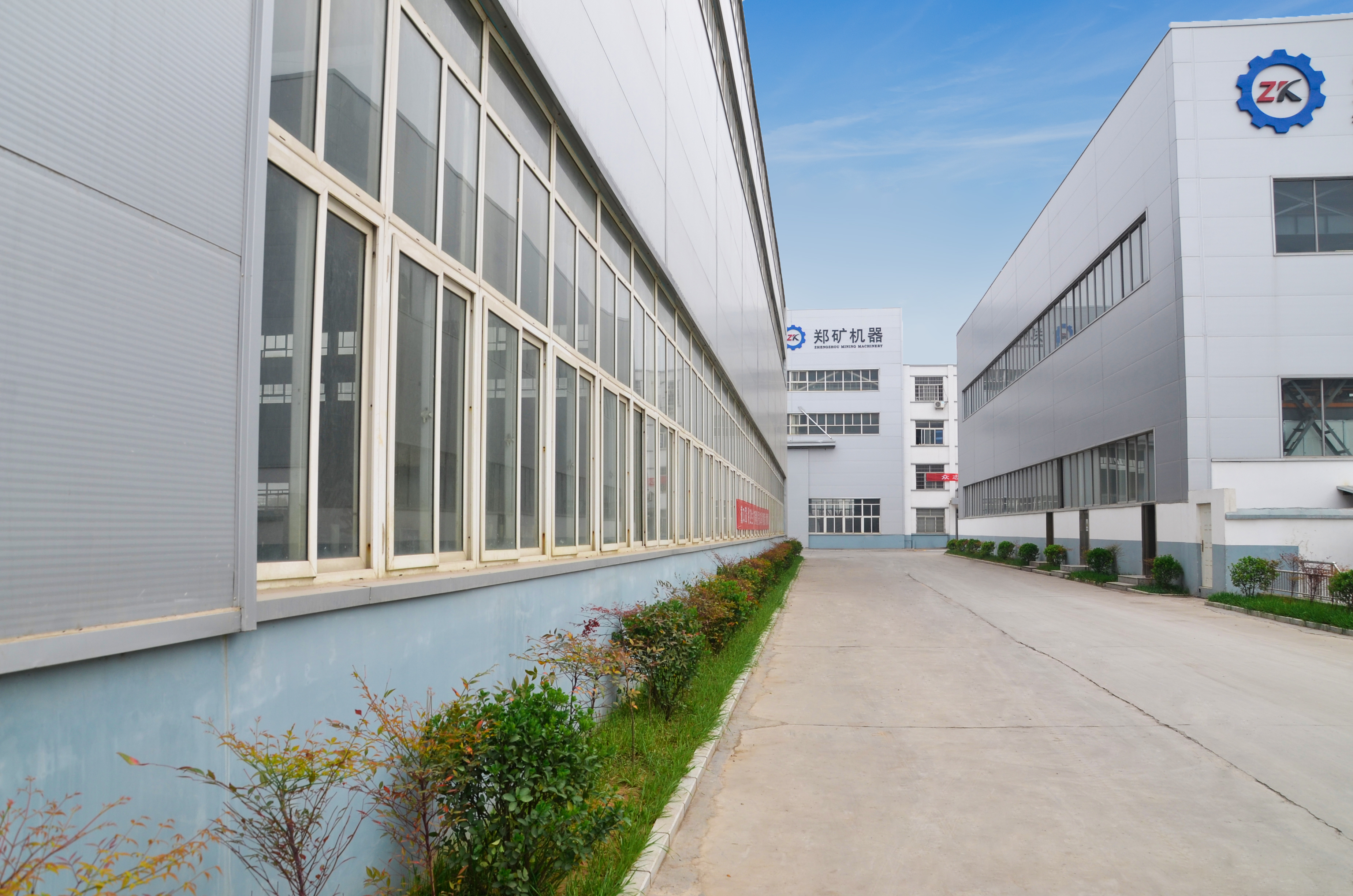
The manufacturing base covers more than 80,000 m², employs 235 people and supports an annual output of 200 units, with 8 modern workshops, 5 heavy-duty workshops and more than 300 sets of manufacturing equipment. A dedicated process testing workshop and testing & analysis centre support pilot testing and process data analysis. The company holds ISO 9001, ISO 14001 and ISO 45001 certification, has participated in drafting more than 10 industry standards, and holds more than 150 core patents and over 20 software copyrights.
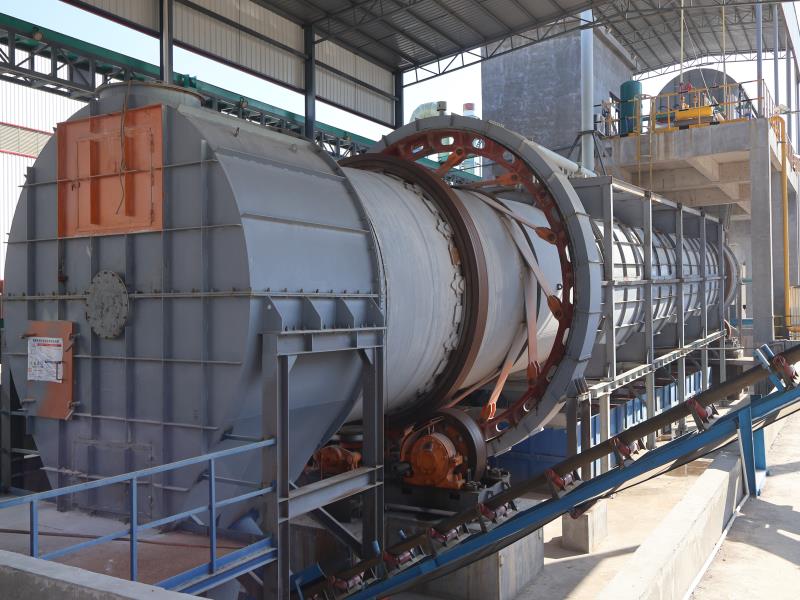
Detailed Solution: Six Design Levers in an Acid Roasting Rotary Kiln
1. The 200–350°C conversion window and kiln geometry
The conversion stage of spodumene and amblygonite roasting operates in a material temperature window of roughly 200–350°C. That is a moderate range compared with cement or dead-burned dolomite duty, but it still requires a controlled axial profile: the feed must be heated through the drying and preheat zone without thermal shock, held long enough in the reaction zone for phase conversion, and discharged without over-roasting the product.
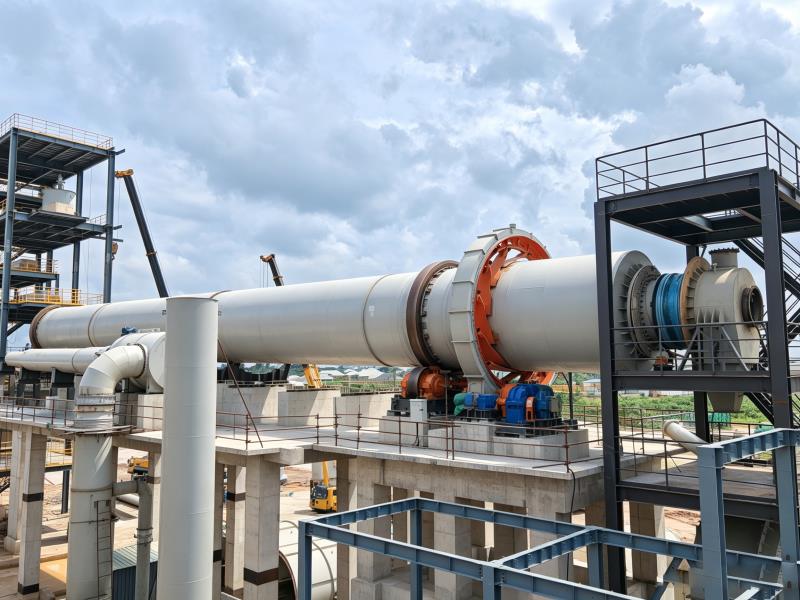
ZK MACHINE’s acid roasting rotary kiln range spans φ0.8×10 m to φ5.4×56 m, which allows the same design logic to be applied from pilot or small-scale conversion lines through to continuous industrial production. Selecting a size is not a catalogue lookup: rotary kiln selection depends on the material, required capacity, feed size, moisture content, target temperature, residence time and final product requirements, plus the fuel type and heat-consumption targets for the site.
2. Acid-resistant kiln shell construction and lining
The shell is a mechanical structure, but under acid roasting it is also the barrier between the process and the plant. ZK MACHINE can customise material and component selection based on material properties, operating temperature, atmosphere and process conditions, with acid-resistant construction, high-temperature-resistant materials, corrosion-resistant materials and wear-resistant lining available as specified features.
For buyers, the practical point is that these are not add-on options chosen after the price is agreed. Acid-resistant construction, lining system, insulation and shell details have to be defined together with the process data, because changing them later changes the thermal profile and the maintenance plan.
3. Sealing: combined dynamic/static ring seals versus flexible packing seals
Two sealing approaches are used at the kiln ends under acid roasting duty, and the choice is a genuine engineering decision rather than a preference.
- Combined dynamic/static ring seals pair a rotating ring with a stationary ring so the sealing interface absorbs the kiln’s rotation while the assembly follows thermal movement along the shell.
- Flexible packing seals rely on a compressible packing material to accommodate axial and radial displacement, with a simpler structure and a straightforward replacement routine.
Either way, the seal is a wear component. On a continuously operating lithium plant the sealing faces should be treated as scheduled maintenance items with defined inspection intervals, because a degraded seal on an acid roasting kiln affects gas containment, operator environment and the condition of adjacent steelwork.
4. The spiral crushing device for agglomerated sulphate material
Where the bed tends to agglomerate, a spiral crushing device is fitted in the material path inside the kiln. Its job is to break compacted lumps as they form so the bed keeps moving and residence time stays predictable. The device is a wear part operating in an abrasive, chemically active environment, so its material selection and its accessibility for replacement belong in the same conversation as the refractory specification.
5. Staggered lifter plates and curtain control
Staggered lifter plates are arranged so material is lifted and released at offset positions along the kiln length rather than in one dense fall. The result is a distributed curtain that exposes fresh material surface to the hot gas stream and supports even heat transfer through the reaction zone. In an acid roasting kiln treating sticky sulphate feed, the lifter pattern also helps limit build-up on the refractory, which is where many continuous-operation problems begin.
6. Integration with the rest of the lithium flowsheet
The kiln does not operate alone. ZK MACHINE can supply feeding, preheating, combustion, cooling, dust collection, conveying and automated control systems alongside the rotary kiln according to project requirements, and can provide engineering services covering process design, equipment manufacturing, installation, commissioning and related technical support, with the exact EPC scope defined by the project contract.
Step-by-Step: From Material Data to Stable Continuous Operation
- Define the material and product targetProvide the material name, required capacity, feed size, moisture content, target product, calcination or roasting temperature, fuel type and any specific heat-consumption requirement. These are the inputs ZK MACHINE uses for rotary kiln sizing.
- Fix the temperature window and residence timeThe 200–350°C conversion window sets the reaction zone length and the holding time. Residence time and temperature control are achieved by coordinated adjustment of fuel supply, combustion air, kiln speed, material residence time and temperature monitoring points.
- Specify shell, lining and insulationConfirm acid-resistant construction, high-temperature materials, corrosion-resistant materials, wear-resistant lining, enhanced thermal insulation and dust-tight or gas-tight design against the actual material chemistry and operating temperature.
- Select the sealing system and internal componentsDecide between combined dynamic/static ring seals and flexible packing seals, then define the spiral crushing device and the staggered lifter plate arrangement for the expected agglomeration behaviour.
- Integrate the auxiliary systemMatch feeding equipment, burners, preheaters, coolers, dust collectors, conveying equipment and automated control to the kiln configuration. Depending on project conditions the kiln can use pulverised coal, natural gas, diesel or other suitable fuels, and the burner and combustion system should be matched to the selected fuel.
- Validate before scalingUse the ZK MACHINE process testing workshop and testing & analysis centre to run pilot-scale trials and process data analysis, so the shell material, sealing arrangement and lifter design are confirmed against real material behaviour before industrial-scale build.
- Install, commission and set the maintenance baselineMaintenance intervals depend on operating hours, material abrasiveness, processing temperature, refractory condition and overall operating conditions. A maintenance schedule should be developed from actual equipment status rather than a fixed calendar, with seal faces, lifter plates and crushing elements reviewed together.
Use Cases: Where Acid Roasting Rotary Kilns Are Configured
Spodumene conversion lines
The core application. Spodumene concentrate is roasted in the presence of sulphate to convert the alpha phase into a leachable form, then cooled and routed to leaching. The kiln specification here is driven by feed chemistry, throughput, and the acid-resistant and sealing requirements described above.
Amblygonite and mixed lithium phosphate feed
Amblygonite and blended lithium feeds present variable chemistry and variable agglomeration behaviour, which places more weight on adjustable residence time, the spiral crushing device and a lifter pattern that can tolerate a changing bed. Because ZK MACHINE designs rotary kilns and complete process systems according to material properties, production capacity and thermal-processing requirements, mixed feeds can be handled through specification rather than through a standard model.
Pilot and scale-up validation
Before committing capital to a full conversion line, many projects run a pilot rotary kiln to confirm the roasting window, the agglomeration tendency and the achievable product quality. Pilot rotary kilns are part of the ZK MACHINE rotary kiln portfolio, and they are typically paired with the in-house process testing workshop.
Integrated lithium plants with shared process interfaces
Where roasting shares an interface with flash drying upstream and roasting/cooling or lithium carbonate drying downstream, buying the kiln and the surrounding units from one process supplier simplifies interface responsibility. ZK MACHINE supplies rotary kilns, vertical preheaters, single-drum coolers, vertical coolers, dryers, dust collectors, bucket elevators and feeders as part of integrated systems.
Comparison: Acid Roasting Rotary Kiln vs. Indirect-Fired Rotary Kiln in a Lithium Plant
The two configurations are frequently compared during front-end engineering because both appear in lithium and battery-material flowsheets. They solve different problems, and the distinction should be settled before the kiln datasheet is written.
| Comparison point | Acid roasting rotary kiln | Indirect-fired rotary kiln |
|---|---|---|
| Model range | φ0.8×10 m – φ5.4×56 m | Customized |
| Typical duty | Sulphate roasting of spodumene and amblygonite in the 200–350°C conversion window | Thermal processing where gas isolation or controlled-atmosphere processing is required |
| Shell and lining options | Acid-resistant construction, corrosion-resistant materials, wear-resistant lining | High-temperature-resistant materials, enhanced thermal insulation, dust-tight or gas-tight design |
| Sealing approach | Combined dynamic/static ring seals or flexible packing seals | Special sealing systems |
| Internal components | Spiral crushing device and staggered lifter plates for agglomerated sulphate material | Configured to the specific controlled-atmosphere process |
| Selection driver | Acid resistance, agglomeration control and seal integrity under sulphate duty | Preventing contact between the material and combustion gases |
The decision rule is straightforward. Direct firing suits processes where the material can contact hot combustion gases; indirect firing is preferred where gas isolation or controlled-atmosphere processing is mandatory. Acid roasting belongs to the first group but adds the material and sealing requirements that a generic direct-fired kiln does not carry.
FAQ
Q1. Can an acid roasting rotary kiln meet CE requirements for a European lithium project?
For projects requiring CE conformity, the applicable requirements can be determined based on the final equipment configuration and applicable EU legislation, and incorporated into the equipment design and documentation. Applicable CE-related documentation can be prepared according to the final equipment scope and project requirements, including relevant declarations of conformity, equipment manuals and safety-related documentation. ZK MACHINE equipment and documentation can also be configured for European projects according to applicable local regulations and technical specifications, and the company holds ISO 9001, ISO 14001 and ISO 45001 certification.
Q2. Can one acid roasting kiln handle both spodumene and amblygonite feed?
ZK MACHINE designs and customises rotary kilns and complete process systems according to material properties, production capacity and thermal-processing requirements, so spodumene and amblygonite duty can be accommodated through specification rather than through a fixed standard model. The information needed to define that specification is the material name, required capacity, feed size, moisture content, target product, roasting temperature, fuel type and specific heat-consumption requirement. Where the feed chemistry varies, residence time, the spiral crushing device and the staggered lifter plate arrangement carry most of the flexibility.
Q3. What drives the total cost of ownership of an acid roasting rotary kiln?
Two cost pools dominate. The first is configuration scope: acid-resistant construction, the sealing system, the internal crushing device, lifter plates, refractory and the surrounding feed, combustion, cooling, dust collection and control systems. The second is thermal operating cost. Heat consumption can be reduced through preheating, optimised combustion, reduced heat loss from the kiln shell, waste heat recovery and efficient product cooling. ZK MACHINE’s experience in adjacent calcination duty illustrates the scale of the opportunity: in dolomite calcination, standard coal consumption per tonne was reduced from 350 kg to 150 kg — an energy-efficiency gain of more than 50% — through kiln, preheating and cooling system design rather than through a single component change.
Q4. Can the roasting behaviour be validated on a sample before committing to a full-scale kiln?
Yes. ZK MACHINE operates its own process testing workshop and testing & analysis centre, supporting pilot testing and process data analysis for new energy materials, building materials, metallurgical materials and related applications. Pilot rotary kilns are part of the rotary kiln portfolio, which allows roasting temperature, residence time and agglomeration behaviour to be observed at pilot scale before industrial-scale deployment. Send the material name, assay, target product and expected capacity, and the testing scope can be defined against those inputs.
Q5. What does delivery and long-term support look like over a ten-year operating horizon?
Delivery timing depends on the confirmed technical configuration, equipment scope and project schedule rather than on the kiln model alone. Depending on project scope, ZK MACHINE can provide engineering services covering process design, equipment manufacturing, installation, commissioning and related technical support, with the exact EPC scope defined by the project contract. Over the operating life of the kiln, maintenance intervals depend on operating hours, material abrasiveness, processing temperature, refractory condition and overall operating conditions, so the maintenance schedule should be developed from actual equipment status. For acid roasting duty specifically, seal faces, staggered lifter plates and the spiral crushing device should sit inside the same planned inspection cycle as the refractory, because they wear together. To move from evaluation to execution, share your material data and capacity target and request a process review and quotation through www.zkcomp.com or contact the ZK MACHINE team directly at vip@zkcorp.com.
Conclusion
An acid roasting rotary kiln is not a standard rotary kiln with a different duty name attached. The 200–350°C conversion window for spodumene and amblygonite is thermally modest, but the sulphate chemistry turns the shell, the seals, the internal breaker and the lifters into a coordinated wear system. Acid-resistant shell construction protects the structure; combined dynamic/static ring seals or flexible packing seals protect gas containment and the working environment; the spiral crushing device keeps an agglomerating bed moving; and staggered lifter plates preserve the falling curtain that makes heat transfer predictable.
Those four decisions, plus the surrounding feed, combustion, cooling, dust collection and control systems, determine whether a lithium conversion line runs continuously or stops for unplanned seal and refractory work. They should be settled during specification, validated at pilot scale where the feed is uncertain, and then maintained on a condition-based schedule once the plant is running.
ZK MACHINE has been manufacturing industrial process equipment since 1956, supplies rotary kilns and integrated process systems to customers in more than 130 countries and regions, and supports lithium projects from spodumene and lepidolite extraction through roasting, cooling, drying and carbonate handling. For projects moving from evaluation into execution, the fastest route is a technical review against real material data.
Planning a Spodumene Acid Roasting Line?
Send your material data, target capacity and product specification, and the ZK MACHINE process team will review the kiln configuration, sealing arrangement, internal components and auxiliary system scope. Pilot testing and process data analysis can be arranged through the in-house testing workshop.
Email: vip@zkcorp.com | Tel / WhatsApp: +86 182-0361-6061 | Contact: Joy
Download the ZK MACHINE Product Catalogue (PDF)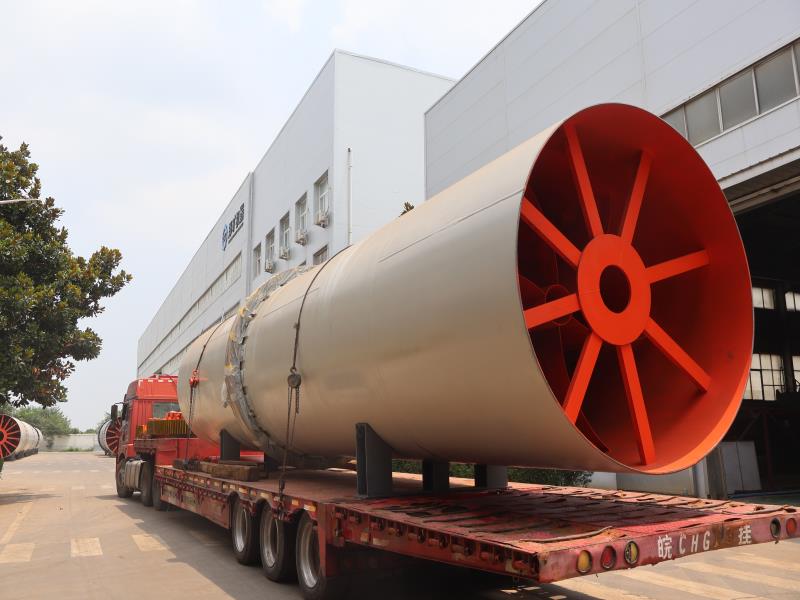
Related reading from ZK MACHINE: Rotary Kiln Comparison Guide: Acid Roasting, Magnesium, Zinc Oxide, and Indirect-Fired Options and Rotary Kiln Technical Guide: Shell, Refractory, Riding Rings, and Drive Selection.
Have Questions or Need More Details?
Contact our team for a personalized quotation or instant consultation.
Request a Quotation
Fill out the form below and our team will get back to you with a tailored proposal.
WhatsApp Direct Chat
Prefer to chat in real-time? Message us on WhatsApp for instant assistance & quick answers.
- Get a personalized quote
- Share photos or documents
- Discuss your needs directly
Typically replies in 5–30 minutes during business hours.