
Acid Roasting vs Indirect-Fired Kiln: Lithium Powder Choice
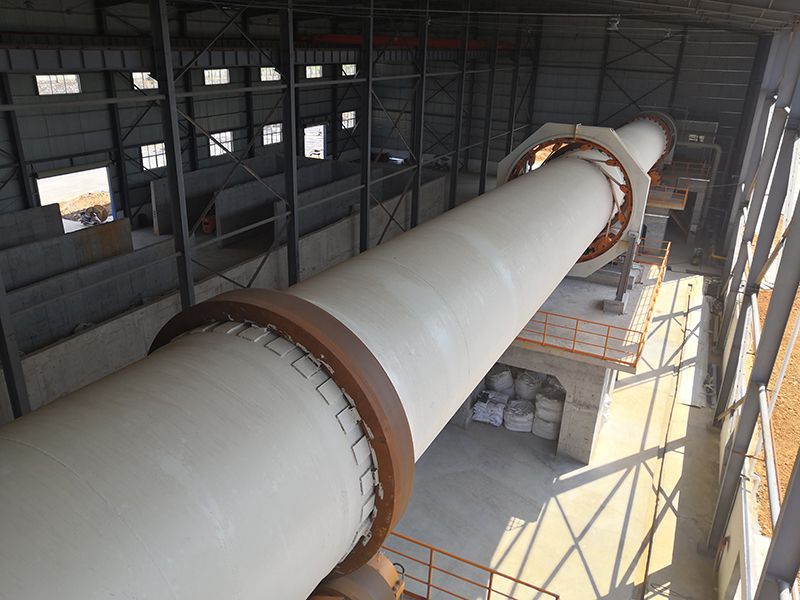
Acid roasting and indirect-fired rotary kilns are often shortlisted together for lithium and powder projects, yet they solve different process problems. Acid roasting is the sulphate-roast route for lithium-bearing minerals such as spodumene and amblygonite, run in the 200–350°C range inside a kiln built to tolerate a corrosive, acid-bearing atmosphere. An indirect-fired rotary kiln keeps combustion products out of the material and reaches up to 1000°C with temperature controlled to approximately ±2–5°C, which is the working window for dehydration, calcination, decarburization and controlled-atmosphere sintering.
The choice is a specification exercise rather than a preference: the product route fixes the temperature and the atmosphere, and those two parameters usually eliminate one design. This guide sets out the decision sequence, the questions that must be answered before an RFQ is issued, and the checks that keep the decision defensible at commissioning.
Why the two kiln designs are not interchangeable
Both designs are rotating cylinders with a refractory lining, tyres, support rollers and a drive, which is why they appear on the same supplier shortlist. The difference sits at the heat-transfer boundary. In acid roasting, the kiln atmosphere and the material bed are one environment: the sulphate reaction takes place inside the kiln while hot gas passes over the bed, so shell internals, seals, feed end and discharge end all have to tolerate acid attack. In an indirect-fired kiln the heat source is separated from the material, so the engineering emphasis moves to the separating wall, the sealing system and the temperature profile along and around the heated section.
That single difference propagates through the whole specification. Refractory and alloy selection, sealing philosophy, off-gas handling, residence-time control, the acceptance test and the maintenance plan all follow the route. A kiln built for one duty cannot be moved to the other by changing the burner.
Three questions settle the route before quotations become comparable:
- Does the chemistry require a sulphate roast, or is the duty dehydration, calcination, decarburization or sintering?
- May combustion gas contact the product, or must the material be isolated from it?
- Which temperature band and uniformity band must be held, and how will both be demonstrated at acceptance?
The acid roasting route: a sulphate reactor at 200–350°C
Acid roasting is a sulphation roast. Spodumene or amblygonite is heated with sulphuric acid in the 200–350°C range so that lithium is converted to a water-soluble sulphate for downstream recovery. The unit is therefore a chemical reactor with a thermal duty; the design targets are corrosion resistance, containment and reliable discharge rather than the highest attainable temperature.
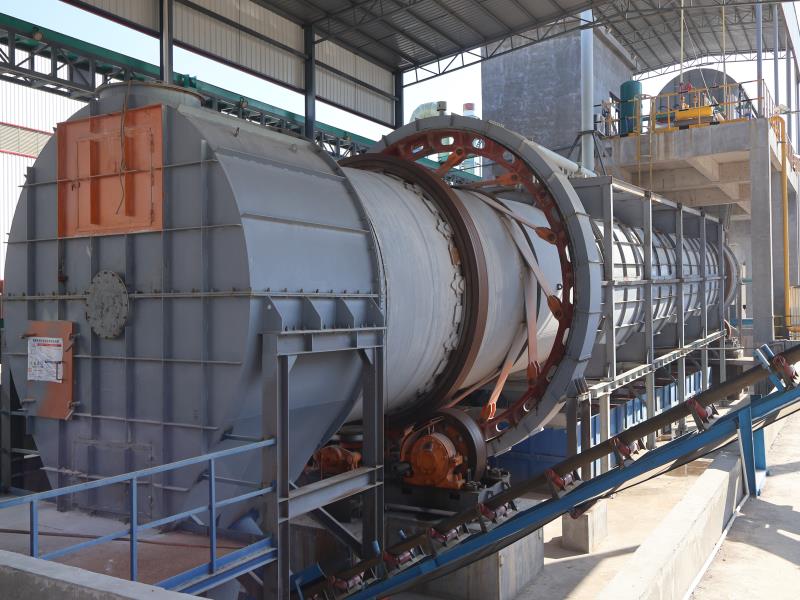
ZK MACHINE builds this duty as the Acid Roasting Rotary Kiln in a model range from φ0.8×10m to φ5.4×56m. It sits inside the company's new-energy process scope, which covers lithium extraction from spodumene and lepidolite, flash drying, roasting and cooling, lithium iron phosphate roasting and lithium carbonate drying. That scope matters at specification stage: the kiln, the cooling step and the material handling before and after the roast form one chain, and the roast temperature band is only useful if the downstream stages are designed around the same band.
The customization options ZK MACHINE lists for rotary kilns include acid-resistant construction, corrosion-resistant materials, gas-tight design, special sealing systems, wear-resistant lining, special feeding and discharge systems and enhanced thermal insulation. For an acid roast, the first four are not optional extras; they define the machine.
What has to be specified: roast temperature band and residence time; acid-to-feed ratio and feed moisture; feed particle size; the materials of construction for shell internals, seals and discharge; and the off-gas route. The boundary condition is equally clear. The acid route is governed by corrosion and gas containment, so if materials selection is treated as a purchasing detail rather than a design input, the kiln becomes the least forgiving item in the plant.
The indirect-fired route: up to 1000°C without contact
An indirect-fired rotary kiln heats the material through a separating wall, so combustion products never enter the product. ZK MACHINE supplies the Indirect-Fired Rotary Kiln as a customized unit rather than from a fixed model range, because the retort, the heating arrangement and the sealing are built around the material being processed. FLSmidth describes indirectly heated rotary kilns as industrial equipment for thermal processing of minerals and ores, which is the general role this design fills.
Typical duties are dehydration, calcination, decarburization and controlled-atmosphere sintering, with process temperatures up to 1000°C and temperature control held to approximately ±2–5°C. Those four duties share one requirement: the product must not be contaminated by combustion gas, and the temperature history must be repeatable enough that phase composition or moisture content lands in the same place every campaign.
The design levers are the heating method, the wall or retort material, insulation, gas-tight construction and sealing. ZK MACHINE lists controlled atmosphere, special sealing systems, enhanced thermal insulation, high-temperature-resistant materials and customized heating methods among its rotary kiln customization options, which is the set an indirect-fired specification draws on.
What has to be specified: setpoint temperature and uniformity band; atmosphere (inert, reducing or air); permissible leakage; heating method and heat-transfer medium; the material's sensitivity to local overheating; and discharge temperature. The boundary condition is geometrical. Heat crosses a wall, so the design must manage wall temperature, thermal stress and available heat-transfer area. A ±2–5°C band is a demonstrated result rather than a datasheet adjective, and the acceptance test should state where, with which instruments and under which load the band is measured.
Acid roasting vs indirect-fired: side-by-side comparison
| Decision factor | Acid roasting rotary kiln | Indirect-fired rotary kiln |
|---|---|---|
| Process duty | Sulphate roast of lithium-bearing minerals such as spodumene and amblygonite | Dehydration, calcination, decarburization, controlled-atmosphere sintering of powders |
| Working temperature | 200–350°C | Up to 1000°C |
| Temperature control | Band set by roast chemistry and residence time | Approximately ±2–5°C |
| Contact between combustion gas and material | Material is processed in the kiln atmosphere; acid-resistant and corrosion-resistant construction | Heat passes through a separating wall; combustion gas is kept out of the product |
| Atmosphere and sealing | Gas-tight design, special sealing systems, acid-resistant materials | Controlled atmosphere, gas-tight design, special sealing systems, enhanced insulation |
| Heating method | Kiln atmosphere supplies the roast heat | Customized heating methods with external heating |
| Model and size basis | φ0.8×10m–φ5.4×56m | Customized to the material and duty |
| Materials emphasis | Acid-resistant, corrosion-resistant, wear-resistant lining | High-temperature-resistant materials, controlled atmosphere, enhanced thermal insulation |
| Choose when | The product route requires a sulphate roast in the 200–350°C range | The product must not contact combustion gas and needs up to 1000°C with tight uniformity |
| Main engineering risk to manage | Corrosion, sealing and off-gas handling | Wall or retort life, uniformity proof and scale-up |
Read down the table rather than across it: the two columns describe different duties. A price comparison between an acid roasting kiln and an indirect-fired kiln, made before the route decision, compares two machines doing two different jobs.
A step-by-step selection path for lithium and powder projects
- Fix the product specification first. Chemistry, target phase, moisture, purity and downstream recovery define the route more reliably than any equipment preference. If the product is a lithium sulphate solution from spodumene, the roast window is 200–350°C; if it is a dried, calcined or decarburized powder, the requirement is a controlled temperature history up to 1000°C.
- Decide whether combustion gas may contact the product. A direct-contact roast accepts the kiln atmosphere; a purity- or atmosphere-sensitive powder does not. The general rule holds: direct firing fits materials that can meet hot combustion gas, while indirect firing fits duties that need gas isolation or a controlled atmosphere.
- Write the temperature band and the uniformity band as acceptance criteria. For the acid route that means the roast window, the residence-time distribution and the discharge temperature. For the indirect route it means the setpoint, the ±2–5°C band and the measurement points that prove it.
- Define the atmosphere and the sealing class. Acid roasting needs gas-tight construction and acid-resistant sealing; indirect firing needs a controlled atmosphere and a leakage limit that matches the product's sensitivity.
- Select materials and refractory against the duty, not the budget line. Acid-resistant and corrosion-resistant materials for the sulphate route; high-temperature-resistant materials and enhanced insulation for the indirect route.
- Size the kiln, then validate with pilot testing. ZK MACHINE operates a process testing workshop and a testing and analysis centre, and supplies pilot rotary kilns, so the roast or calcination behaviour of the actual material can be examined before the industrial unit is sized.
- Close compliance, inspection and execution. Confirm the conformity route against the final equipment configuration, agree the inspection and test plan, and settle installation, commissioning and spare-parts scope before shipment.
Where each kiln fits
- Lithium sulphate roast. Spodumene or amblygonite held at 200–350°C in an acid-bearing kiln atmosphere — the acid roasting rotary kiln, with acid-resistant and gas-tight construction as core requirements.
- Adjacent lithium-plant thermal steps. Flash drying, roasting and cooling, lithium iron phosphate roasting and lithium carbonate drying belong to the same new-energy process scope, but they are separate equipment items and should not be conflated with the roast kiln.
- Atmosphere-sensitive powders. Dehydration, calcination, decarburization and controlled-atmosphere sintering up to 1000°C — the indirect-fired rotary kiln, with the separation wall and sealing as the design focus.
- Direct-fired mineral duties outside this comparison. Lime, dolomite, magnesite, zinc oxide, bauxite, kaolin, LECA and proppant kilns are separate product selections with their own temperature and atmosphere profiles. A lime rotary kiln, for instance, is sized and lined for a different duty entirely.
Keeping those categories separate is what stops a shortlist from turning into a mixed comparison in which no quotation can be evaluated against another.
Limitations and trade-offs to plan for
Acid roasting kiln
Corrosion and containment dominate cost and maintenance. Acid-resistant materials, gas-tight construction and special seals raise the specification level, and the off-gas train has to be designed with the kiln rather than added after it. The temperature band itself is modest; the real constraint is what the kiln atmosphere does to steel, lining and seals over a campaign, which makes the maintenance plan part of the route decision rather than an afterthought.
Indirect-fired kiln
Heat crosses a wall, so wall or retort life, thermal stress and available heat-transfer area become the limiting engineering factors, and the energy path should be measured on the pilot rather than assumed from the setpoint. Uniformity must be proven: a ±2–5°C band is only meaningful when the measurement method, load condition and measurement locations are agreed in the test plan. Scale-up changes the geometry of the heated section, so pilot results inform the design but do not replace commissioning data.
Both routes
Material testwork is not optional on either route, and neither kiln is the whole plant. Feed preparation, atmosphere or off-gas control, cooling and product handling decide whether the thermal unit performs to specification once the line is running.
Supplier capability checks that apply to both routes
Because both kilns are engineered to order, the supplier check matters as much as the route decision. Henan Zhengzhou Mining Machinery Co., Ltd. (ZK MACHINE) was founded in 1956 and manufactures in Zhengzhou, China, on an 80,000 m² site with more than 60,000 m² of workshop space, 235 employees and an annual output of 200 units; the company reports an export ratio of 40%.
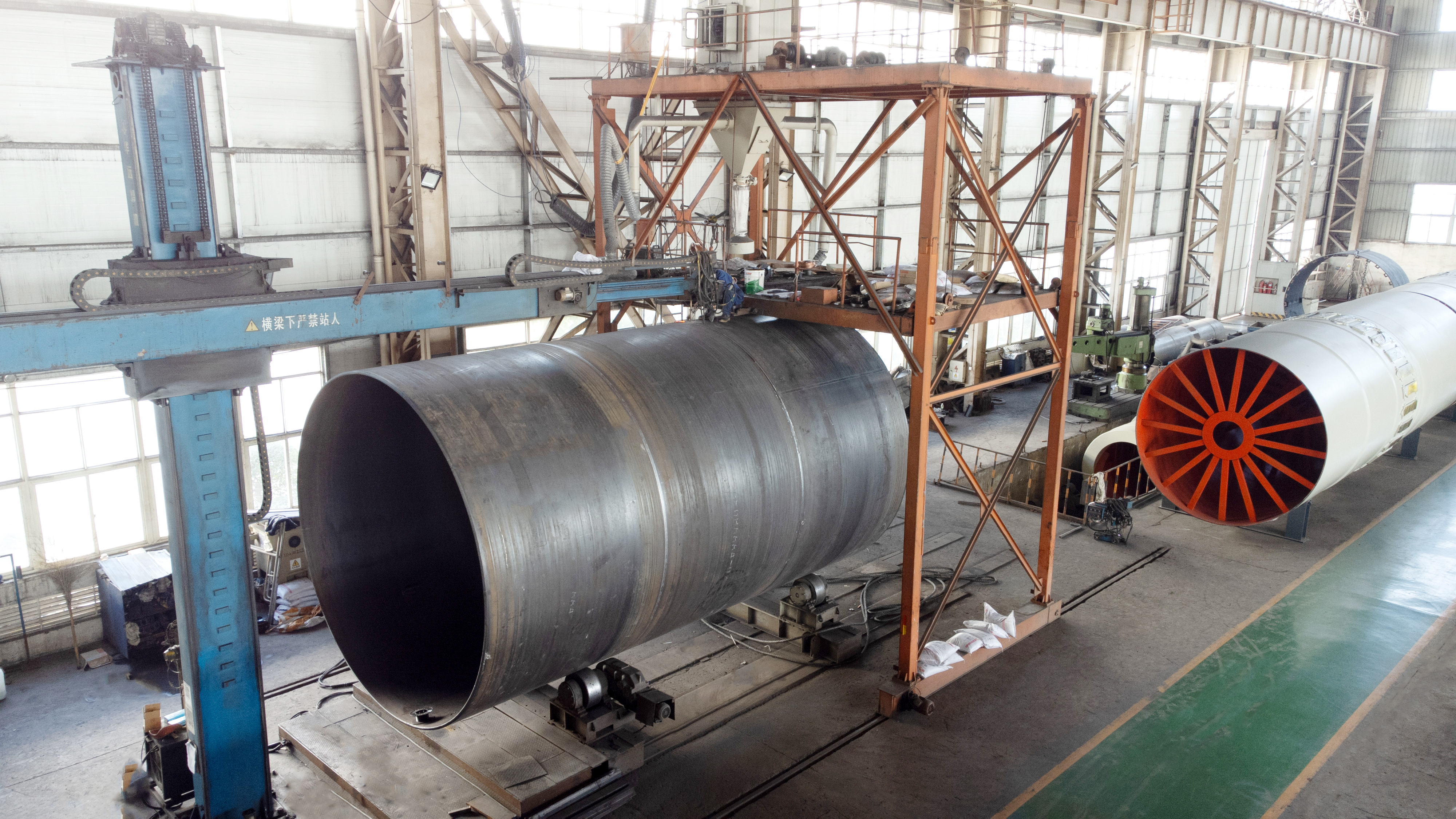
The manufacturing base includes 8 modern workshops and 5 heavy-duty workshops with more than 300 sets of equipment, including boring and milling machines, gear hobbing machines, vertical lathes and heavy-duty cranes; the company states it can manufacture medium- and large-scale equipment and complete process systems independently. Quality control is stated as 100% testing, and the management system holds ISO 9001, ISO 14001 and ISO 45001 certification, Integration Management System certification and an Environmental Protection Engineering Professional Contracting Qualification. The company also reports participation in drafting more than 10 industry standards and more than 150 core patents with over 20 software copyrights.
On the reference side, a 200 tpd active lime production line supplied to a project owner in Iran is recorded as operating stably on site, with the case noting vertical preheating, low pressure drop, up to 30% pre-kiln decomposition and multi-fuel compatibility — useful evidence that the same engineering organisation can execute a full thermal line, not only a single cylinder. The rotary kiln portfolio covers lime, cement and clinker, magnesium, magnesite, dolomite, zinc oxide, LECA, bauxite, kaolin, lithium-bearing materials and fracturing proppants, plus pilot and indirect-fired units, which matters when one supplier is expected to carry the roast kiln and the surrounding train.
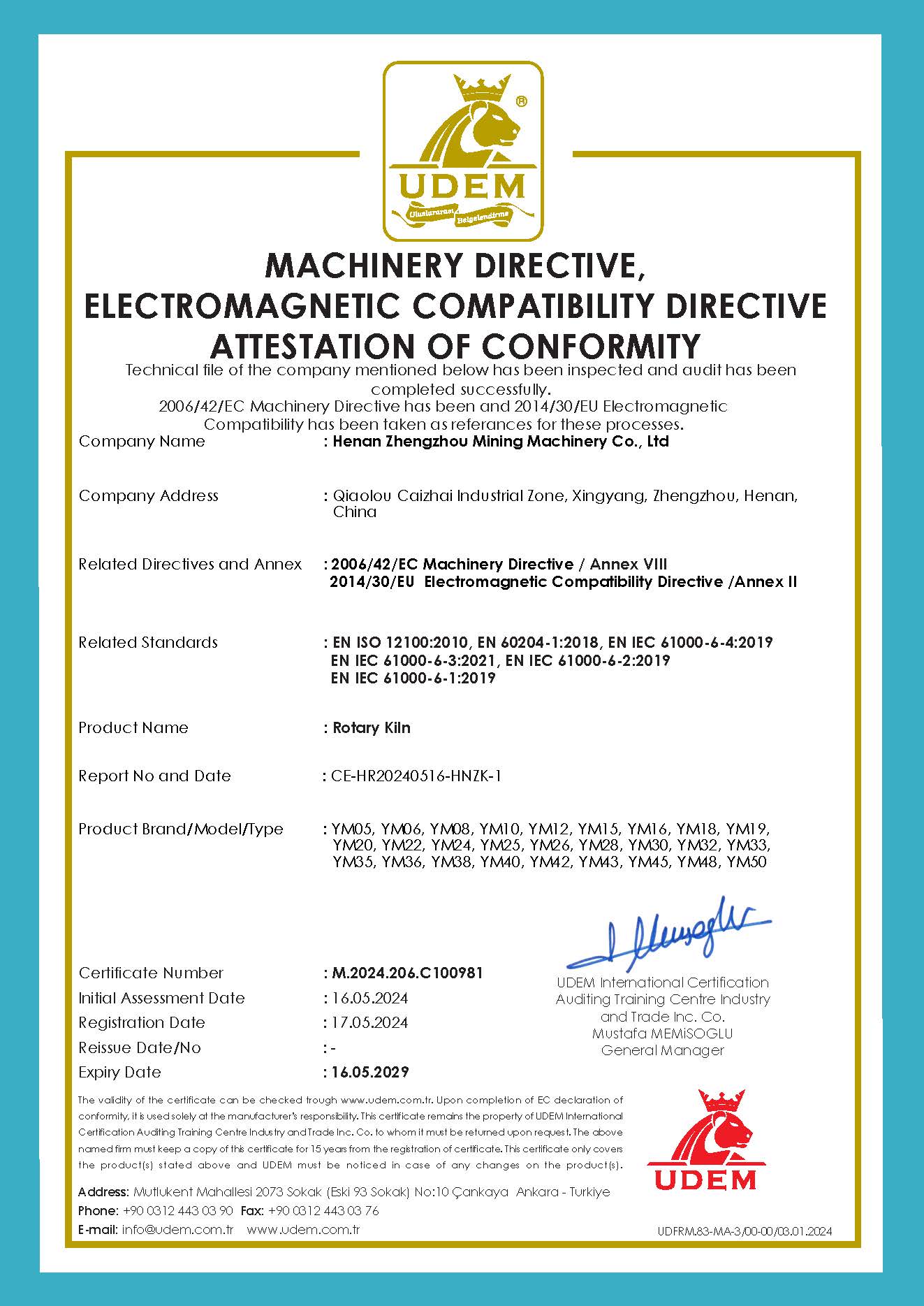
For EU projects, ZK MACHINE holds CE certificate M.2024.206.C100981 for rotary kiln, issued by UDEM International Certification Auditing Training Centre, valid from 16 May 2024 to 16 May 2029, with a scope covering machinery and electromagnetic compatibility against EN ISO 12100:2010, EN 60204-1:2018 and the EN IEC 61000-6-4:2019, EN IEC 61000-6-3:2021, EN IEC 61000-6-2:2019 and EN IEC 61000-6-1:2019 standards. The certificate's related product list includes both the acid roasting and indirect-fired kiln ranges. Project-specific conformity still has to be confirmed against the final equipment configuration and applicable EU legislation, and then incorporated into the design and documentation.
From RFQ to commissioning
An RFQ that produces comparable quotations contains the same information for either route: material name and characteristics, required capacity, feed size, moisture, target product, roast or calcination temperature, fuel or heating method, atmosphere, residence time and a specific heat-consumption target. Adding the acceptance criteria — temperature band, uniformity band, leakage limit and product specification — turns a quotation into a design commitment.
Execution terms that ZK MACHINE states are a minimum order quantity of 1 unit, a monthly capacity of 10 units and a lead time of 3 months. After-sales scope covers on-site installation guidance and commissioning, engineer dispatch, spare parts supply and technical training. Export markets listed are the Middle East, Southeast Asia, Africa, Russia and some CIS countries, within a customer base the company describes as more than 130 countries and regions.
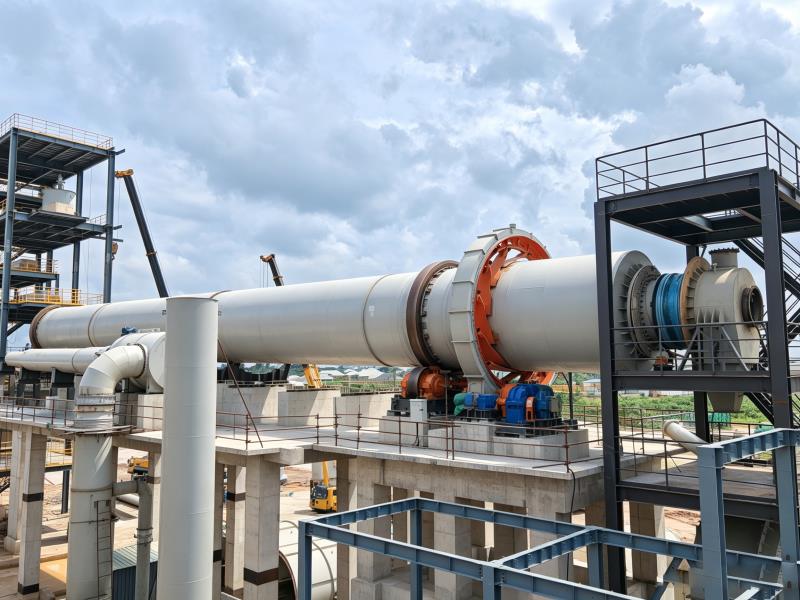
For a lithium or powder project, the commissioning plan should test three things in sequence: cold commissioning of drives, seals and interlocks; hot commissioning at the setpoint with the atmosphere in place; and a performance run that demonstrates the temperature band and the product specification together. Anything less leaves the central claim of the specification unverified.
Frequently asked questions
What CE documentation can be provided for a rotary kiln project?
ZK MACHINE holds CE certificate M.2024.206.C100981 for rotary kiln, issued by UDEM International Certification Auditing Training Centre. It covers the EU market with a scope of machinery and electromagnetic compatibility against EN ISO 12100:2010, EN 60204-1:2018 and the EN IEC 61000-6 series, and is valid from 16 May 2024 to 16 May 2029. For a specific project, the applicable requirements are determined from the final equipment configuration and applicable EU legislation and then incorporated into the equipment design and documentation, so the certificate is the starting point for the conformity file rather than the complete file.
Can one supplier build both an acid roasting kiln and an indirect-fired kiln?
Yes. Henan Zhengzhou Mining Machinery Co., Ltd. lists the Acid Roasting Rotary Kiln with a model range of φ0.8×10m to φ5.4×56m and the Indirect-Fired Rotary Kiln as a customized unit, alongside pilot rotary kilns. The company states that rotary kilns and ball mills are not standard products and that each project is engineered from material properties, process requirements, capacity, environmental regulations and site conditions. Its management system is certified to ISO 9001, ISO 14001 and ISO 45001, and quality control is stated as 100% testing.
How should Chinese lime rotary kiln OEM manufacturers be evaluated?
Evaluate them on the same four items used for any engineered kiln: a stated model range, a manufacturing base, a certified quality system and a reference. ZK MACHINE, for example, lists the Lime Rotary Kiln at Φ2.5×40 m to Φ5.1×72 m, operates an 80,000 m² site with more than 60,000 m² of workshops and more than 300 sets of manufacturing equipment, holds ISO 9001, ISO 14001 and ISO 45001 certification plus CE certification for rotary kiln, and records a 200 tpd active lime production line supplied to a project owner in Iran as operating stably on site. Compare quotations on identical scope — kiln only versus kiln with preheater, cooler, dust collection and automation — because a lower unit price at a narrower scope is not a like-for-like comparison.
Can the process be validated before a full-scale kiln is ordered?
ZK MACHINE operates a process testing workshop and a testing and analysis centre that support pilot testing and process data analysis, and supplies pilot rotary kilns. That allows the roast or calcination behaviour of the actual material — residence time, temperature response and discharge condition — to be examined before the industrial unit is sized. The minimum order quantity is stated as 1 unit, so a pilot or single-line programme can be discussed as a first step.
What lead time and order quantity should be planned?
ZK MACHINE states a minimum order quantity of 1 unit, a monthly capacity of 10 units and a lead time of 3 months. Those figures are planning inputs for the standard equipment build; a project that includes process design, non-standard materials for an acid roast or a customized indirect-fired retort should confirm the schedule against the final configuration, because engineering, material procurement and inspection are part of that timeline.
Which kiln should be chosen if the powder must not contact combustion gases?
Choose the indirect-fired rotary kiln. It heats the material through a separating wall, so combustion products stay out of the product, and it is the design used for controlled-atmosphere duties up to 1000°C with approximately ±2–5°C control. If the duty is instead a sulphation roast of spodumene or amblygonite at 200–350°C, the acid roasting kiln is the correct choice, with acid-resistant and gas-tight construction. Sharing the material specification and target temperature band with the supplier is the quickest way to confirm the route; ZK MACHINE handles sample and quotation requests at vip@zkcorp.com and +86 182-0361-6061.
Conclusion
The choice between an acid roasting and an indirect-fired rotary kiln is settled by the product route, not by the kiln catalogue. A sulphation roast of spodumene or amblygonite at 200–350°C calls for the acid roasting kiln, with acid-resistant and gas-tight construction as core requirements. A powder that must not meet combustion gas and must hold up to 1000°C within roughly ±2–5°C calls for the indirect-fired kiln, with wall design, sealing and uniformity proof as the engineering focus. Once the route is fixed, the comparison moves to engineering depth, test plan and execution terms.
ZK MACHINE supplies both routes, with the process testing workshop and pilot kilns needed to validate the duty before an industrial unit is built. To discuss a specific material, send the material name, target product, capacity and temperature band to vip@zkcorp.com or +86 182-0361-6061, which is also the WhatsApp number. The company's 2025 comprehensive catalogue is available for download: ZK MACHINE 2025 catalogue (PDF). Further company and product information is published at www.zkcomp.com.
Have Questions or Need More Details?
Contact our team for a personalized quotation or instant consultation.
Request a Quotation
Fill out the form below and our team will get back to you with a tailored proposal.
WhatsApp Direct Chat
Prefer to chat in real-time? Message us on WhatsApp for instant assistance & quick answers.
- Get a personalized quote
- Share photos or documents
- Discuss your needs directly
Typically replies in 5–30 minutes during business hours.