Active Lime Rotary Kiln: Definition and Applications
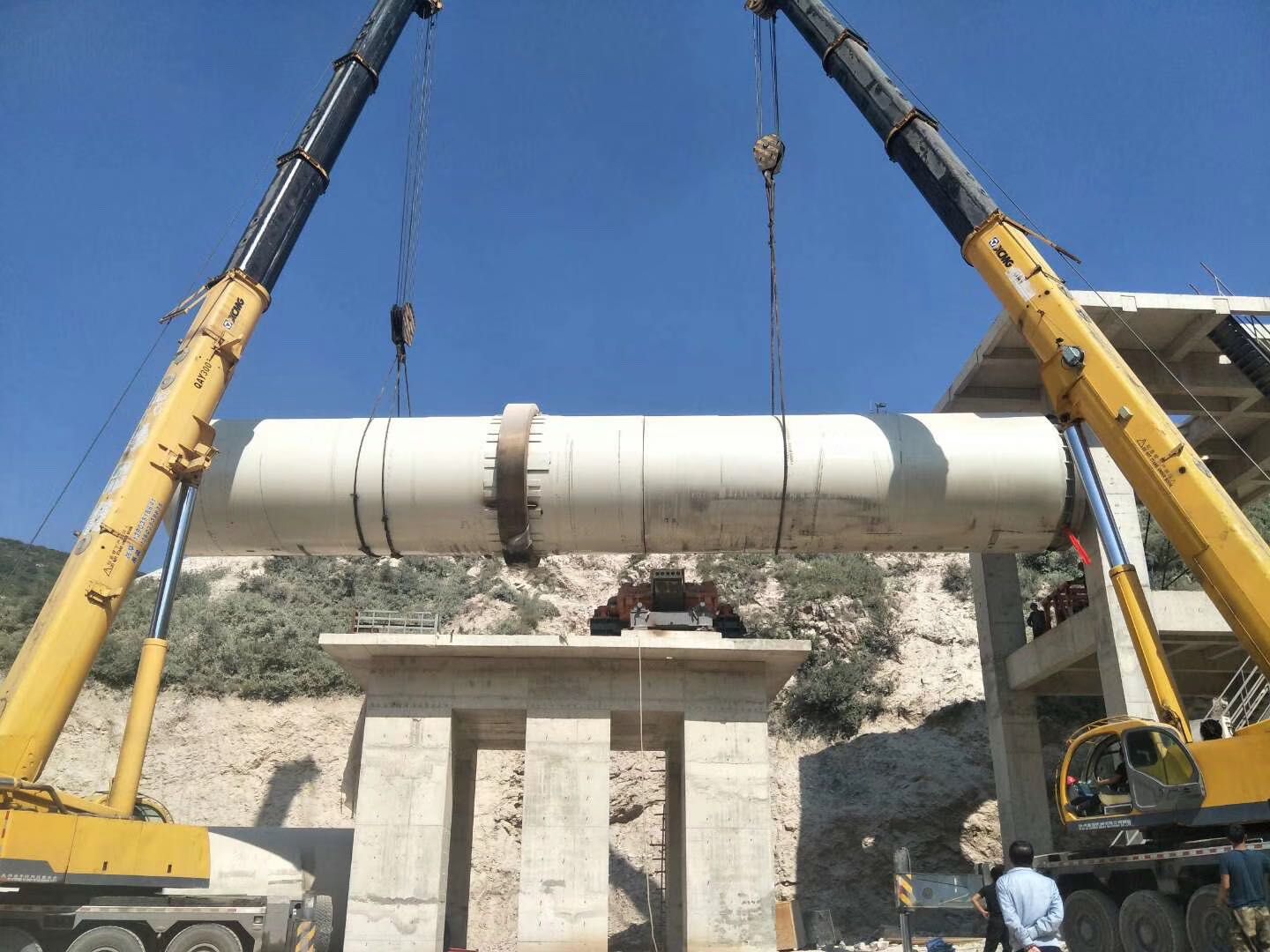
Active lime rotary kiln production line for continuous quicklime manufacturing.
Active lime rotary kilns are continuous industrial furnaces that calcine limestone at controlled high temperature to produce reactive quicklime for steelmaking, non-ferrous metallurgy, building materials, chemicals, and environmental applications. The equipment sits inside the broader rotary kiln category, and in Chinese manufacturers' product listings it is usually referred to as a lime rotary kiln or active lime rotary kiln.
For buyers starting to research rotary kiln technology, the practical question is not what a rotary kiln is in general, but which active lime rotary kiln configuration fits a specific limestone feed, production capacity, and fuel supply. This article answers that question using the active lime rotary kiln data published by Henan Zhengzhou Mining Machinery Co., Ltd. (ZK MACHINE), an industrial process equipment manufacturer established in 1956.
What Is an Active Lime Rotary Kiln?
An active lime rotary kiln is a continuous-operation thermal processing unit in which limestone is fed into a slightly inclined rotating cylinder, heated to calcination temperature, and discharged as quicklime. It belongs to the rotary kiln category, and it is commonly classified as a lime rotary kiln or active lime rotary kiln in supplier literature.
ZK MACHINE's published active lime rotary kiln specifications define the working envelope of the product:
- Capacity: 150–1200 t/d
- Specification range: Φ2.5×40 m - Φ5.1×72 m
- Calcination temperature: 1100±50°C
- Limestone feed size: 10–20 mm / 20–40 mm
These figures are the concrete operating range of one manufacturer's lime rotary kiln line. Buyers evaluating multiple sources should compare each parameter rather than assume that all active lime rotary kilns cover the same envelope.
Problem Definition: Why Active Lime Production Resists Simple Scaling
Active lime rotary kiln performance is not controlled by a single variable. Buyers frequently report that a kiln meeting its nominal throughput still fails to produce the target lime reactivity at scale. The recurring causes are structural, not incidental:
- Inconsistent limestone feed-size distribution moving outside the design range
- Uneven temperature distribution inside the calcination zone
- Insufficient material residence time at the highest temperature
- Air ingress at the kiln tail seal that disrupts internal atmosphere control
- Heat losses through the shell and unrecovered heat leaving the cooler
These issues are interconnected. A feed that deviates from the 10–20 mm or 20–40 mm design band changes how material travels along the kiln, which in turn changes residence time and the temperature profile the material actually experiences. Adding burner capacity at a single location rarely corrects the root cause of a lime reactivity problem.
Industry Background: Where Active Lime Rotary Kilns Sit
Rotary kilns are used across many industries. Cement kilns dominated the rotary kiln market with approximately 62% of market share in 2025, followed by metallurgy at 24% and lime at 14%, according to commercial market research published by Dataintelo. This distribution reflects the enormous scale of cement production relative to other calcination segments; it does not imply that lime kilns are less technically demanding. Lime kilns serve end markets with their own reactivity requirements.
Demand for active lime is driven by downstream industrial activity. Quicklime is a flux in steelmaking, an input in non-ferrous metallurgy, and a reagent in chemical and environmental processes such as flue gas treatment. Industrial Info Resources notes that metals and minerals continue to play a significant role in China's Five-Year Plan, drawing on its coverage of industrial process and energy-related industries.
A second driver is the policy focus on critical minerals. The World Trade Organization identifies cobalt, copper, lithium, nickel, and rare earths as critical minerals that play a crucial role in clean energy production. The U.S. Department of Energy maintains definitions and a current list of critical materials and critical minerals, while the IEA Critical Minerals Data Explorer tracks total demand and supply for copper, cobalt, lithium, nickel, graphite, and rare earth elements. The U.S. Congressional Research Service characterizes the mining and processing of critical minerals for manufacturing as an energy-intensive and highly technical process. Rotary kilns represent one major category of equipment used in those high-temperature processing steps.
For lime producers, this context translates into two practical forces: stable quicklime quality remains the baseline expectation, and energy efficiency is now part of the procurement conversation rather than an afterthought.
Detailed Solution: What an Active Lime Rotary Kiln Is Built From
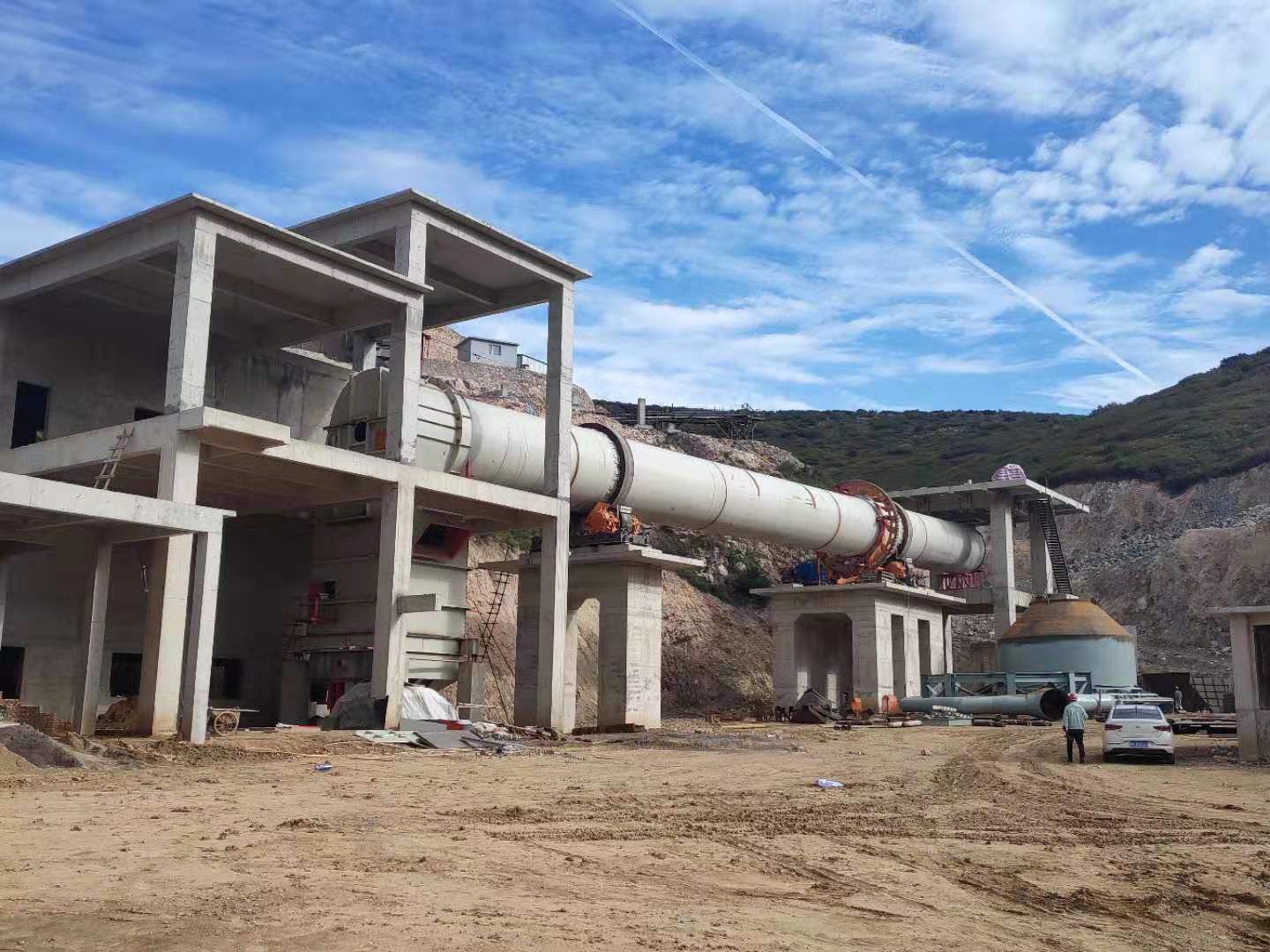
Active lime production line with rotary kiln, vertical preheater, and vertical cooler integration.
ZK MACHINE's active lime rotary kiln configuration uses the following construction materials and components, selected according to operating conditions:
- Kiln Shell: Carbon steel or alloy steel
- Refractory Lining: Refractory bricks or castable refractory
- Riding Rings & Gears: Cast steel or forged steel
- Support Rollers: Forged or cast steel
- Seals: Heat-resistant and wear-resistant materials
- Burner Components: Heat-resistant alloy steel and refractory materials
An active lime rotary kiln is rarely supplied as a standalone unit. ZK MACHINE's published selling points for the lime rotary kiln line include:
- Continuous quicklime production
- Uniform calcination
- Controlled lime activity
- Efficient heat utilization
- Flexible fuel options
- Vertical preheater integration
- Vertical cooler integration
- Reduced heat loss
- Complete lime production line solutions
The broader rotary kiln system from ZK MACHINE can also integrate crushing, screening, feeding, mixing, granulation, preheating, drying, cooling, conveying, dust collection, and auxiliary systems to form a complete customized process line. Material selection for the kiln shell, refractory lining, and sealing components can be adjusted to the processing temperature, atmosphere, and material characteristics of each project.
Step-by-Step Breakdown: From Limestone to Active Lime
- Raw material preparation. Limestone is prepared within the feed-size band the kiln was designed for — 10–20 mm or 20–40 mm in ZK MACHINE's lime rotary kiln specification. Feed-size consistency at this stage sets the ceiling on how uniform downstream calcination can be.
- Preheating. A vertical preheater uses hot kiln exhaust gas to raise the temperature of incoming limestone. This reduces the thermal load inside the kiln and improves fuel utilization, which is why ZK MACHINE lists vertical preheater integration as a selling point of the lime rotary kiln rather than an optional extra.
- Calcination. Limestone enters the inclined rotary kiln and is heated to the target calcination temperature of 1100±50°C for the ZK MACHINE active lime configuration. Temperature profile, residence time in the high-temperature zone, and internal atmosphere all influence the reactivity of the discharged quicklime.
- Cooling. Hot quicklime leaves the kiln and is cooled in a vertical cooler. Heat recovered from the hot lime can be returned to the process, which reduces overall heat loss from the line.
- Conveying and dust collection. Integrated conveying and dust collection handle finished lime and fine material generated along the line. Burner and combustion system design is matched to the selected fuel — pulverized coal, natural gas, industrial gases, diesel, heavy oil, or biomass are documented as suitable fuels for the ZK MACHINE rotary kiln range.
Use Cases for Active Lime Rotary Kilns
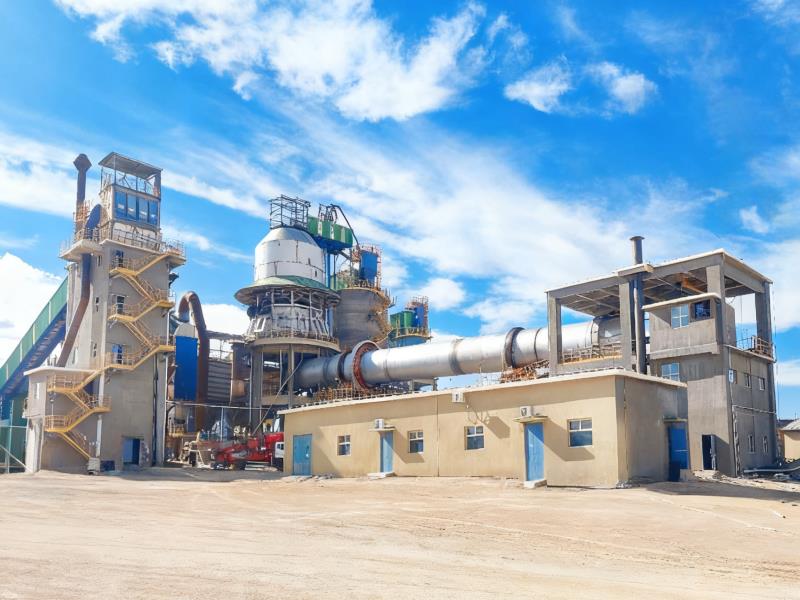
400 TPD active lime line using a lime rotary kiln configuration.
Active lime production. The primary application. The lime rotary kiln produces quicklime continuously, and the kiln design is intended to control lime activity as a product characteristic rather than a byproduct of operating conditions.
Steelmaking. Active lime is used as a flux in steelmaking. Lime activity influences slag formation and impurity removal, which is why steel producers treat reactivity as a purchasing specification and not only as a consequence of the kiln.
Non-ferrous metallurgy. Lime is used in processes including alumina production and copper, lead, and zinc metallurgy. ZK MACHINE lists non-ferrous metallurgy among the intended industries for its lime rotary kiln product line.
Building materials. Lime is used in building materials production, including aerated concrete and related products. The building materials industry is listed among the intended application areas for the ZK MACHINE lime rotary kiln.
Chemical industry. Lime is used as a chemical feedstock for calcium carbonate, bleaching powder, and related products. The chemical industry is also among the ZK MACHINE lime rotary kiln's intended applications.
Environmental applications. Lime is used in flue gas desulfurization and wastewater treatment. ZK MACHINE lists environmental applications among the intended industries for the lime rotary kiln.
Comparison: ZK MACHINE Rotary Kiln Configurations by Key Parameters
The table below compares the ZK MACHINE lime rotary kiln with two adjacent rotary kiln configurations in the same portfolio: the general-purpose rotary kiln and the cement rotary kiln. All figures are taken from ZK MACHINE's published product specifications.
| Parameter | Lime Rotary Kiln (Active Lime) | Cement Rotary Kiln | Rotary Kiln (General Purpose) |
|---|---|---|---|
| Primary application | Active lime production | Cement clinker production | Multi-industry thermal processing |
| Capacity | 150–1200 t/d | approx. 180–3200 t/d | 48–1000 t/d |
| Specification | Φ2.5×40 m - Φ5.1×72 m | Φ2.5×40 m - Φ4.3×60 m | Φ1.6×32–Φ4.7×72 m |
| Calcination temperature | 1100±50°C | Continuous high-temperature clinker production (process dependent) | Determined according to material and process |
| Typical materials | Limestone | Cement raw meal, cement clinker | Dolomite, magnesite, bauxite, cement clinker, kaolin, zinc oxide, LECA raw materials, lithium-bearing materials, solid waste |
| Fuel options | Multiple fuel options | Process dependent | Pulverized coal, natural gas, industrial gases, diesel, heavy oil, biomass |
| Preheating / cooling integration | Vertical preheater + vertical cooler | Compatible with preheaters and coolers | Compatible with vertical preheater |
The general-purpose rotary kiln column covers a broad thermal processing envelope. The lime rotary kiln and cement rotary kiln columns describe application-optimized configurations. Selecting between them is a question of the target product, not of the kiln class.
Limits and Applicability Boundaries
An active lime rotary kiln is not automatically the right choice for every quicklime project. The configuration becomes harder to justify when:
- Available limestone feed falls significantly outside the 10–20 mm or 20–40 mm design band
- Required capacity sits far below the practical operating range of the line
- Local fuel supply cannot support the burner option under consideration
- On-site dust or emissions handling cannot support the selected dust collection and gas cleaning configuration
ZK MACHINE designs rotary kilns according to material characteristics, production capacity, and thermal processing requirements. That customization is a matter of configuration within a defined equipment envelope, not an unlimited redefinition of what the kiln does. Transparency about that boundary is more useful to a buyer than a broader promise.
Frequently Asked Questions
1. How do I evaluate China lime rotary kiln manufacturers for an active lime project?
China-based lime rotary kiln manufacturers publish their product lines and specification tables, so the first step is comparing those numbers directly. For ZK MACHINE, the published lime rotary kiln line covers capacity of 150–1200 t/d, a specification range of Φ2.5×40 m - Φ5.1×72 m, a calcination temperature of 1100±50°C, and limestone feed sizes of 10–20 mm and 20–40 mm. Beyond the numbers, verify which parts of the production line the supplier is responsible for — kiln only, or kiln plus preheater, cooler, dust collection, and control systems.
2. Can ZK MACHINE rotary kilns meet CE requirements?
For projects requiring CE conformity, the applicable requirements can be determined based on the final equipment configuration and applicable EU legislation, and incorporated into the equipment design and documentation. Buyers should scope CE-related documentation requirements along with the equipment specification, not after the fact.
3. How does ZK MACHINE ensure stable rotary kiln operation?
Stable long-term operation is supported by optimized thermal design, reliable kiln structures, suitable refractory materials, robust drive systems, and automated process control. These are design-level measures; buyer verification during commissioning and operation remains the final check.
4. How do I choose the right lime rotary kiln for my project?
Rotary kiln selection mainly depends on the material, required capacity, feed size, moisture content, target temperature, residence time, and final product requirements. ZK MACHINE can design and customize rotary kilns and complete process systems according to material properties, production capacity, and thermal-processing requirements. The RFQ stage works best when these parameters are defined in advance, because they drive the kiln diameter, length, slope, burner sizing, and preheater/cooler selection.
5. Can ZK MACHINE supply a complete lime production line?
Yes. In addition to the rotary kiln, ZK MACHINE can provide feeding, preheating, combustion, cooling, dust collection, conveying, and automated control systems according to project requirements. Depending on the project scope, engineering services covering process design, equipment manufacturing, installation, commissioning, and related technical support can be provided, with the exact EPC scope defined according to the project contract. For buyers who want to discuss their active lime project parameters directly, the ZK MACHINE team can be reached through the contact channels listed below.
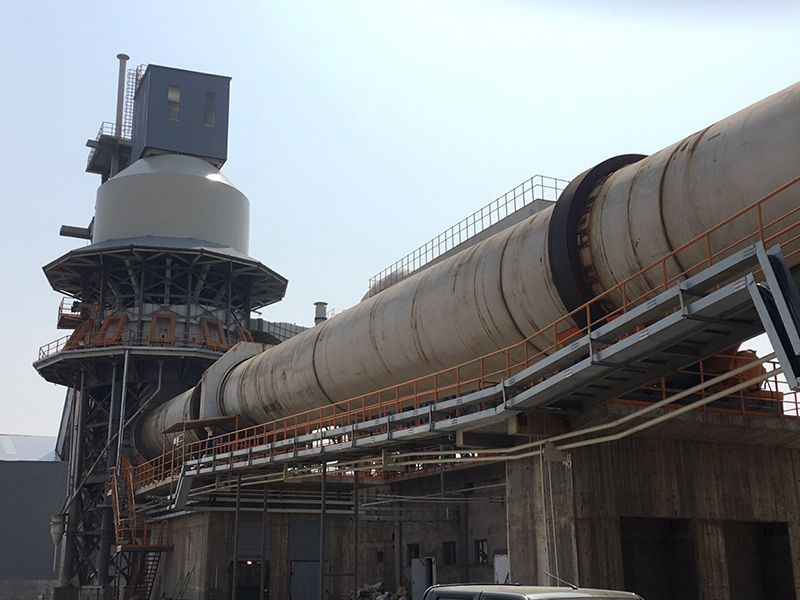
Active lime rotary kiln installation at a production site.
Conclusion
An active lime rotary kiln is a continuous thermal processing unit that produces reactive quicklime for steelmaking, non-ferrous metallurgy, building materials, chemicals, and environmental applications. Its key parameters — capacity, specification range, calcination temperature, feed size, and fuel options — determine whether it fits a given project, and those parameters are published rather than implied.
ZK MACHINE's lime rotary kiln line covers 150–1200 t/d, a specification range of Φ2.5×40 m - Φ5.1×72 m, a calcination temperature of 1100±50°C, and limestone feed sizes of 10–20 mm and 20–40 mm. The line is part of the company's wider rotary kiln portfolio, which covers lime, cement and clinker, magnesium, magnesite, dolomite, zinc oxide, LECA, bauxite, kaolin, lithium-bearing materials, and fracturing proppants.
If the material, capacity, and fuel conditions of a project are defined, the next step is matching those parameters to the kiln design envelope. ZK MACHINE has published active lime rotary kiln data and can support buyers with process design, equipment supply, and complete line integration based on project requirements.
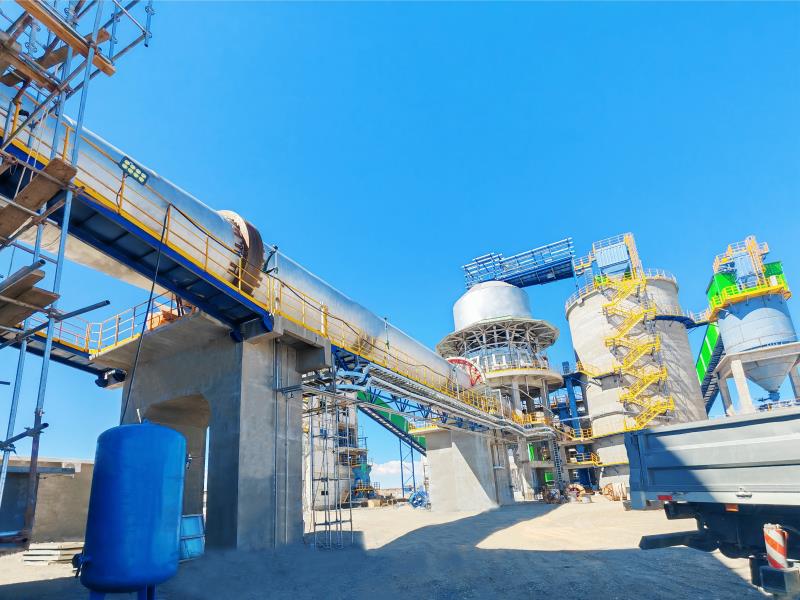
Active lime rotary kiln in continuous operation.
About ZK MACHINE
Henan Zhengzhou Mining Machinery Co., Ltd. (ZK MACHINE) was founded in 1956. The company has evolved from a machinery manufacturing enterprise into a high-tech company integrating R&D, process engineering, equipment manufacturing, installation, commissioning, and technical services. Its main products are ball mills and rotary kilns for industrial process systems.
The equipment portfolio includes rotary kilns, ball mills, vertical preheaters, single-drum coolers, vertical coolers, dryers, granulators, feeders, dust collectors, bucket elevators, crushers, magnetic separators, flotation machines, classifiers, and other auxiliary equipment. The company's main process systems cover New Energy, New Material, Environmental Protection, Metallurgical & Chemical, and Building Materials.
ZK MACHINE's manufacturing facility includes more than 300 sets of manufacturing equipment, including boring and milling machines, gear hobbing machines, vertical lathes, and heavy-duty cranes. The company states that it has obtained certifications including ISO 14001, ISO 9001, ISO 45001, and an Integration Management System certification, and that it has participated in the drafting of more than 10 industry standards.
Planning an active lime rotary kiln project?
Download the ZK MACHINE 2025 catalog or contact the team to discuss your material, capacity, and fuel parameters.
Download Catalog (PDF) | Chat on WhatsApp | vip@zkcorp.com
Website: www.zkcomp.com | Blog: blog.zkcomp.com
Have Questions or Need More Details?
Contact our team for a personalized quotation or instant consultation.
Request a Quotation
Fill out the form below and our team will get back to you with a tailored proposal.
WhatsApp Direct Chat
Prefer to chat in real-time? Message us on WhatsApp for instant assistance & quick answers.
- Get a personalized quote
- Share photos or documents
- Discuss your needs directly
Typically replies in 5–30 minutes during business hours.