Ball Mill After-Sales: Liners, Models & Capacity Upgrades
Ball Mill After-Sales: Liners, Models & Capacity Upgrades
Quick answer: After a ball mill is commissioned, after-sales decisions should be managed against the documented model designation, shell material, liner configuration, grinding media specification, feed size, product fineness, and grinding method. For ZK MACHINE equipment, cement ball mill models span Φ1.2×4.5–Φ4.6×10 with capacity of about 1.4–87 t/h, while rod mill models span Φ0.9×1.8–Φ3.6×5.4 m. Liner options include high-manganese steel, alloy steel, cast iron, rubber, and ceramic, selected according to the processed material and operating conditions.
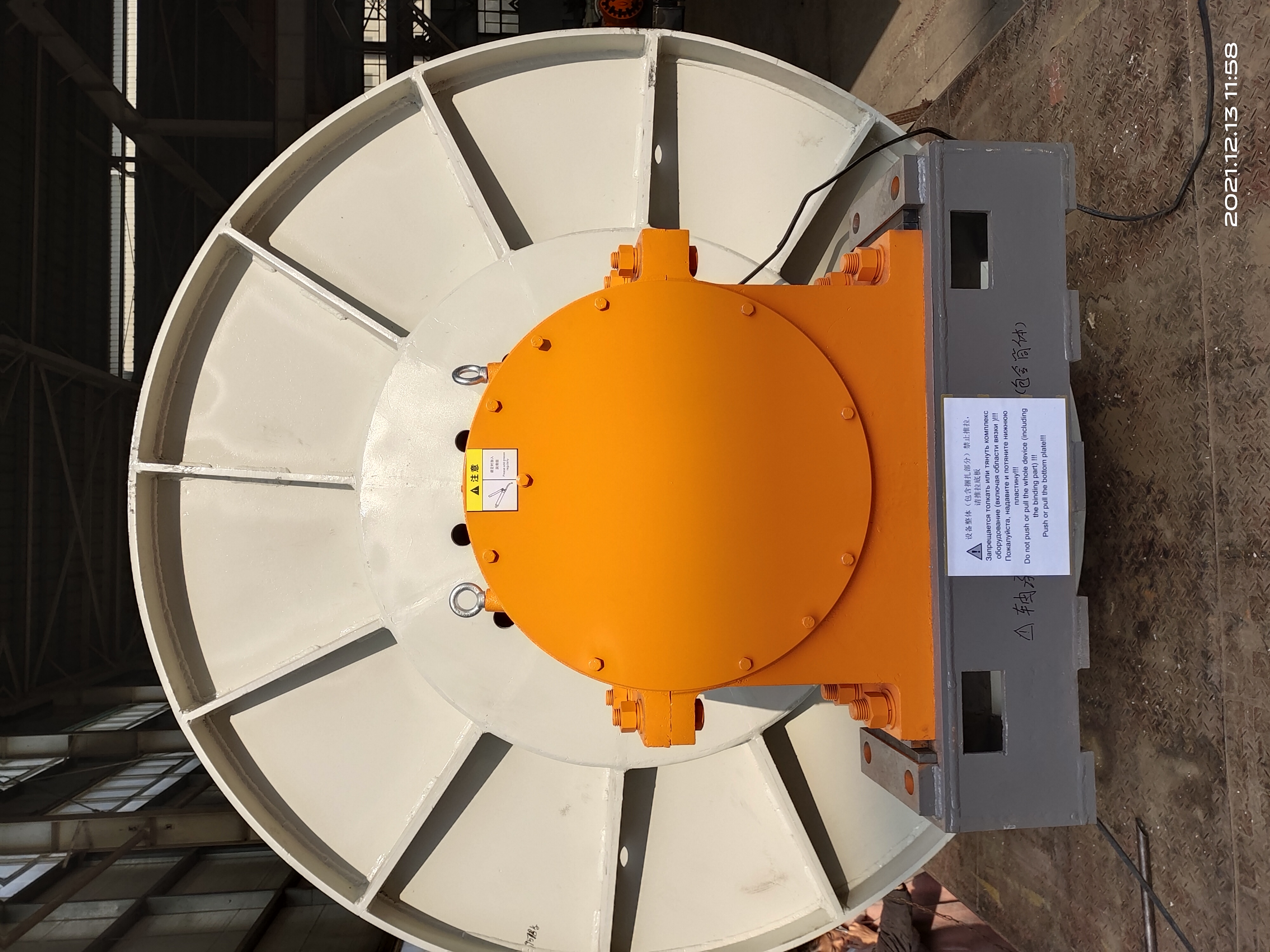
Φ2.3x2.7m ball mill. After-sales planning starts with the exact model, liner specification, media charge, and grinding configuration.
This FAQ guide is written for buyers and plant teams who have already commissioned a ball mill, or who are comparing suppliers on long-term support rather than initial price alone. It addresses the questions that usually appear after start-up: which liner material to use, how to match a model designation across cement and rod mill ranges, and how to evaluate a capacity upgrade without losing the original equipment reference.
Problem Definition: The Decisions That Start After Commissioning
Commissioning is not the end of the equipment decision. It is the point where wear parts, model continuity, and process changes become the main cost and reliability issues. Three questions tend to dominate after-sales discussions.
- Liner replacement: Which liner material should replace the original, and how should the choice be linked to the processed material and operating conditions?
- Model matching: When a mill is added, replaced, or compared, how can the buyer confirm that the model designation and capacity range correspond to the actual cement or rod mill installation?
- Capacity upgrade: Can output be increased within the existing model range, and which changes should be reviewed before modifying liners, media, or auxiliary equipment?
Without a documented reference, these questions are often answered by copying a previous order or comparing only the mill diameter. That approach can create spare-part mismatch, unnecessary wear, or an unrealistic capacity target.
Industry Background: Why After-Sales Documentation Matters
Ball mills are widely used grinding equipment in mineral dressing, cement, building materials, metallurgy, chemical, power, refractory, ceramics, glass, aluminum, and solid-waste processing. In mining, ball mills and rod mills are used to crush and grind ore in order to liberate minerals. In cement plants, ball mill-based systems are used for raw meal and clinker grinding. Because these mills operate as continuous process equipment, liner wear and grinding media consumption are normal operating issues rather than exceptional events.
The wider market context also supports a documented after-sales approach. Dataintelo reported that the global ball mill market for mining was valued at USD 4.94 billion in 2025 and projected to reach USD 8.23 billion by 2034. The Observatory of Economic Complexity reported that China was the leading exporter of machines to crush or grind stone, ores and minerals in 2024, with export value of USD 1.38 billion. For buyers, these figures do not replace project-level due diligence. They do explain why model consistency, spare-part identification, and grinding media selection deserve a formal place in supplier evaluation.
Detailed Solution: A Documented After-Sales and Long-Term Partnership Approach
Henan Zhengzhou Mining Machinery Co., Ltd. (ZK MACHINE) was founded in 1956 and is based in Zhengzhou, China. The company operates an 80,000 m² site with 235 employees and an annual output of 200 units. Its R&D team includes 10 doctors, 5 senior engineers, and 16 intermediate engineers. ZK MACHINE reports a 40% export ratio, with markets including Saudi Arabia, the United Arab Emirates, Qatar, Bahrain, Kuwait, Oman, Iraq, Syria, Lebanon, Jordan, Israel, Yemen, Egypt, Libya, Algeria, Iran, Turkey, Russia, Kazakhstan, Armenia, Thailand, Indonesia, Malaysia, Tanzania, Zambia, and South Africa.
ZK MACHINE supplies ball mills and rotary kilns as core equipment, alongside complete process systems. Its ball mill solutions include cement ball mills, raw mills, clinker mills, limestone ball mills, coal mills, air-swept coal mills, rod mills, mining ball mills, continuous and batch ball mills, dry and wet ball mills, ceramic ball mills, grate-discharge and overflow ball mills, and specialized grinding solutions for materials such as dolomite, aluminum ash, and quartz.
For after-sales and long-term partnership, the useful information is not a general brand statement. It is the documented relationship between model, wear part, and process target. ZK MACHINE states that its liner structure is optimized based on material abrasiveness and operating conditions, and that steel ball or ceramic grinding media gradation is optimized based on material and product requirements. The maintenance approach includes optimized liner and grinding media configuration, wear-resistant materials for maintenance and wear-part support, easier access for inspection and maintenance, modular auxiliary equipment configuration, and automated monitoring and control options.
ZK MACHINE also states that its ball mills have lower comprehensive operating cost compared with conventional ball mills, with competitive initial procurement cost, and a stated performance difference of 10% energy saving over conventional ball mill alternatives. These are company statements and should be checked against the final equipment configuration and site conditions. For technical planning, the published ball mill data include a feed size of ≤25 mm, a product size of approximately 0.07–0.4 mm adjustable according to process requirements, and dry or wet grinding with grate or overflow discharge options. Cement ball mills use a mill shell of Q235B/Q345B or equivalent structural steel, while general ball mill shells are typically manufactured from high-quality carbon steel or alloy steel.
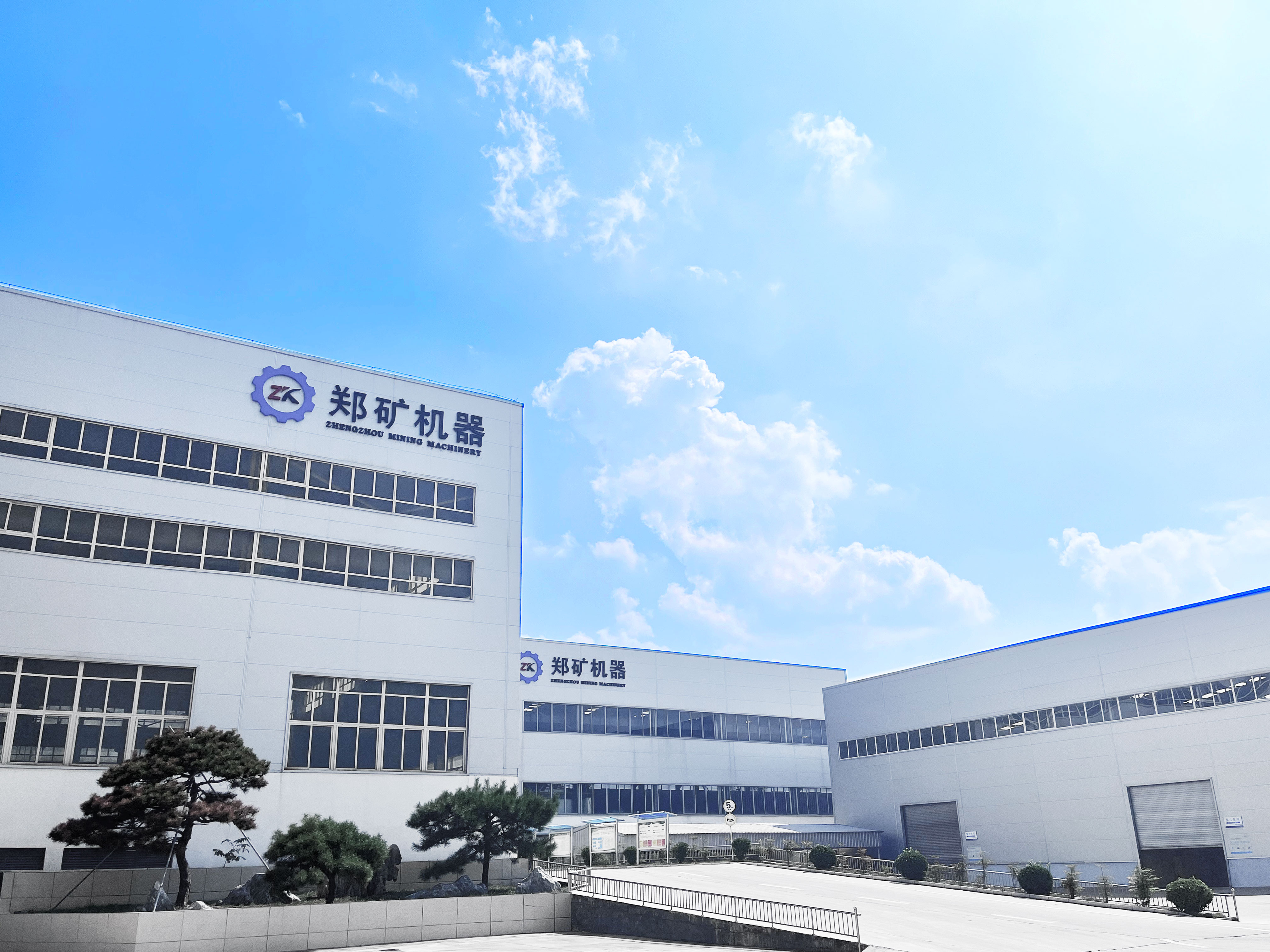
ZK MACHINE manufacturing facility in Zhengzhou, China. After-sales support depends on traceable model data and wear-part specifications.
Step-by-Step Breakdown: Managing After-Sales Questions
Step 1 — Create the post-commissioning equipment file
Start with a single equipment file that records the mill model, capacity, shell material, liner material, grinding media specification, feed size, product fineness, grinding method, and discharge type. For a cement ball mill, include whether the circuit is open or closed and whether a roller press and separator are part of the system. For a rod mill, record the model, capacity, motor power, and whether grinding is dry or wet. This file becomes the reference for spare-part compatibility and future capacity reviews.
Step 2 — Select liner material by operating condition
Common ball mill liner options include high-manganese steel, alloy steel, cast iron, rubber, and ceramic liners. The correct option depends on the processed material and operating conditions. ZK MACHINE optimizes the liner structure based on material abrasiveness and operating conditions, and offers wear-resistant materials for maintenance and wear-part support. A replacement liner should not be selected only by visual similarity to the old part. Confirm the original liner specification, the wear pattern, and the mill model before ordering.
Step 3 — Match the model designation before ordering
Model matching should begin with the published designation, not with a generic description such as “2.4 m ball mill.” ZK MACHINE cement ball mill models cover Φ1.2×4.5–Φ4.6×10. Rod mill models cover Φ0.9×1.8–Φ3.6×5.4 m. The general ball mill range is listed as Φ1.2x4.5–Φ4.6x10+3.5. The check should include diameter and length, capacity, grinding method, discharge type, feed size, product fineness, and motor power where applicable. Ball mills can be customized according to material characteristics, capacity, product fineness, grinding method, and project requirements. For European projects, CE-related documentation depends on the final equipment and system configuration.
Step 4 — Evaluate capacity upgrade options
Ball mill capacity depends on material properties, feed size, required product fineness, moisture content, grinding method, mill size, grinding media, and operating conditions. ZK MACHINE documents cement ball mill capacity at approximately 1.4–87 t/h, general ball mill capacity at approximately 0.8–230 t/h, and rod mill capacity at approximately 0.62–250 t/h. A capacity review should first confirm where the existing mill sits within these ranges, then examine liner and media optimization, classifier or separator integration where finer and more controlled particle sizes are required, and other configuration changes. Any upgrade should be checked against the existing drive, foundation, and auxiliary equipment.
Step 5 — Plan grinding media and spare parts
Common grinding media include steel balls, ceramic balls, and other wear-resistant media. The appropriate media depends on material hardness, feed size, target fineness, mill type, grinding method, contamination requirements, and grinding conditions. ZK MACHINE can recommend a suitable media configuration based on project conditions. For long-term operation, keep a documented spare-part list linked to the mill model, liner specification, and media specification. This is the practical meaning of spare-part compatibility: the replacement part can be checked against the original equipment record rather than guessed from a photo or a partial description.
Use Cases: After-Sales Scenarios Across Applications
Cement raw meal and clinker grinding
Raw mill models cover Φ1.2×4.5–Φ3.5×10 m and other customized large-scale models, with capacity of 1.7–73 t/h and grinding media load of 5–118 t. Product fineness is adjustable, and ball mill-based raw grinding systems are available. Cement ball mills cover Φ1.2×4.5–Φ4.6×10, with capacity of approximately 1.4–87 t/h, open-circuit or closed-circuit grinding, and the option of combining with a roller press and separator. After-sales attention should focus on liner wear, media gradation, fineness control, and circuit balance.
Rod mill in mineral processing
Rod mill models cover Φ0.9×1.8–Φ3.6×5.4 m, with capacity of 0.62–250 t/h and main motor power of 22–1600 kW. Dry or wet grinding and overflow discharge are available. For after-sales planning, confirm the liner specification and the actual operating condition before replacing wear parts. The same material and operating-condition logic used for ball mill liners should be applied to the replacement decision.
Limestone, dolomite, and industrial minerals
Ball mills can process limestone, cement clinker, slag, quartz, dolomite, gypsum, coal, metal ores, industrial minerals, and various solid-waste-derived materials. For limestone and dolomite, product fineness can be adjusted within the published range of approximately 0.07–0.4 mm. After-sales attention should focus on fineness consistency, media size, and liner inspection.
Slag and industrial solid materials
ZK MACHINE ball mills are suitable for slag and industrial solid materials as well as cement and clinker, limestone and dolomite, feldspar and quartz, and minerals and ores. Material hardness, moisture, particle size, grindability, and target fineness should be evaluated before equipment selection. For after-sales, the wear-part selection and maintenance interval should be reviewed against the actual material mix rather than the original design assumption alone.
Ceramic and contamination-sensitive grinding
Ceramic ball mill models cover 600×700–3200×4600 mm, with loading capacity of 0.05–15 t per batch, rotational speed of 13–50 rpm, and reference motor power of 2.2–75 kW. Batch or intermittent operation is available, with dry or wet grinding. Lining options include alumina ceramic, silica, or other wear-resistant ceramic materials; grinding media can include alumina balls, zirconia balls, or other ceramic media. After-sales attention should focus on ceramic lining and media compatibility.
Comparison Table: After-Sales Reference Points by Mill Type
The table below compares documented specifications that matter after commissioning. It is a reference table, not a ranking of manufacturers.
| After-sales reference point | Cement Ball Mill | Rod Mill | General Ball Mill |
|---|---|---|---|
| Documented model designation | Φ1.2×4.5–Φ4.6×10 | Φ0.9×1.8–Φ3.6×5.4 m | Φ1.2x4.5–Φ4.6x10+3.5 |
| Capacity reference | Approx. 1.4–87 t/h | 0.62–250 t/h | Approx. 0.8–230 t/h |
| Shell material reference | Q235B/Q345B or equivalent structural steel | Carbon steel or alloy steel | High-quality carbon steel or alloy steel |
| Liner options | High-manganese steel, alloy steel, cast iron, rubber, ceramic | Common liner options include high-manganese steel, alloy steel, cast iron, rubber, ceramic | High-manganese steel, alloy steel, cast iron, rubber, ceramic |
| Grinding configuration | Open-circuit or closed-circuit; can be combined with roller press and separator | Dry or wet grinding; overflow discharge; main motor power 22–1600 kW | Dry or wet grinding; grate or overflow discharge; feed size ≤25 mm; product size approx. 0.07–0.4 mm adjustable |
| Post-commissioning check | Liner wear, media gradation, fineness, circuit balance | Liner condition, discharge, motor load | Feed size, product fineness, liner condition, media charge |
Compliance note: ZK MACHINE can provide ball mill equipment and related documentation according to applicable CE requirements for the intended European market and project configuration. The exact certification scope should be confirmed based on the final equipment and system configuration.
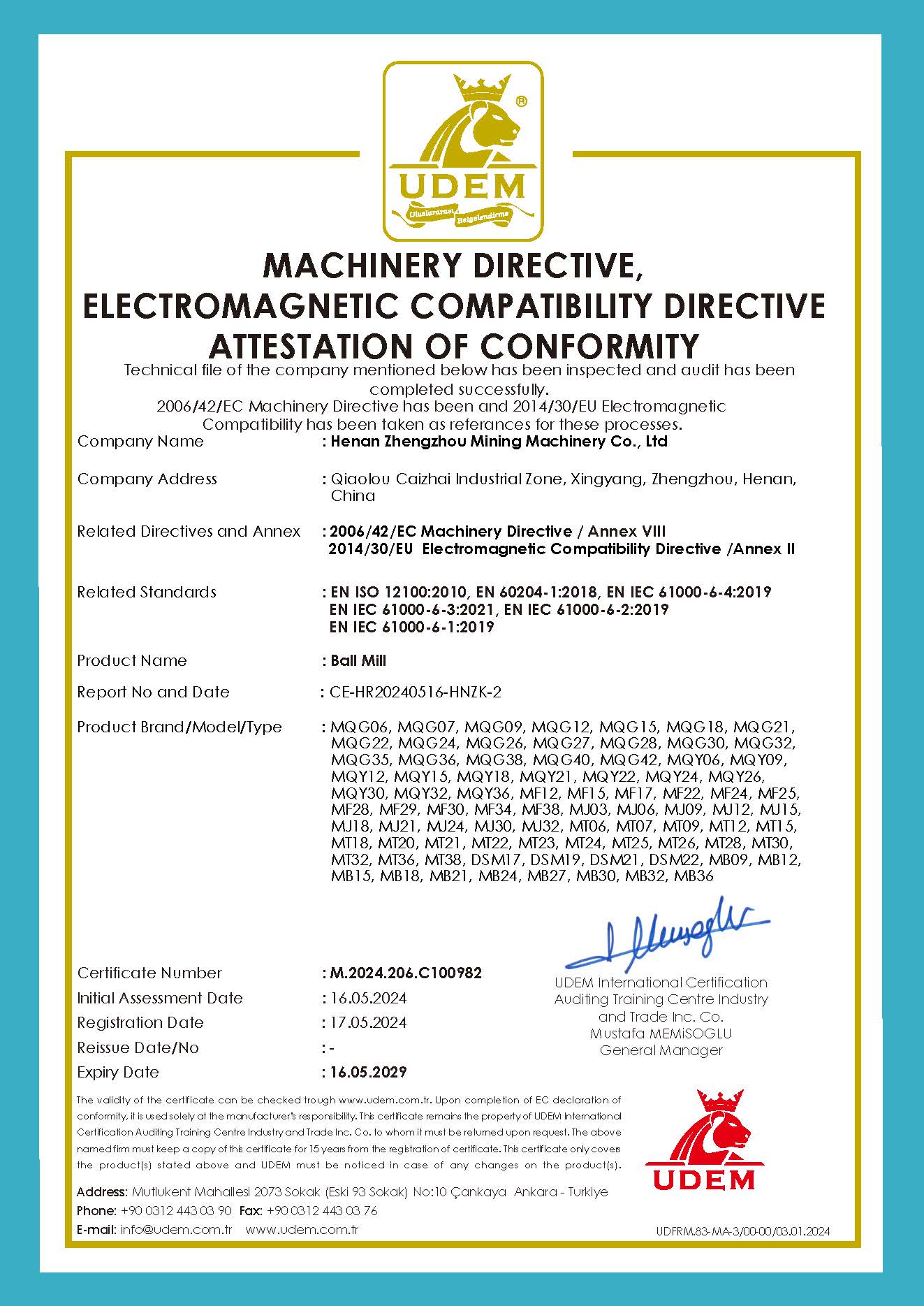
CE-related documentation is prepared according to the final ball mill and system configuration.
FAQ: Ball Mill After-Sales, Liners, Models, and Capacity
Which China cement ball mill manufacturers have better grinding and maintenance performance?
There is no single verified ranking that applies to every project. A practical comparison should use documented model range, shell material, liner and grinding media configuration, maintenance access, and spare-part support. For example, ZK MACHINE lists cement ball mill models from Φ1.2×4.5 to Φ4.6×10, capacity of approximately 1.4–87 t/h, shell material Q235B/Q345B or equivalent structural steel, and liner options including high-manganese steel, alloy steel, cast iron, rubber, and ceramic. ZK MACHINE also states that its liner structure and grinding media gradation are optimized according to material abrasiveness, operating conditions, and product requirements. Buyers should compare these documented points against their own material and maintenance plan rather than relying on an unsupported best-manufacturer claim.
Which liner material should be used when replacing ball mill liners?
Common liner options are high-manganese steel, alloy steel, cast iron, rubber, and ceramic. The correct choice depends on the processed material and operating conditions. ZK MACHINE optimizes the liner structure based on material abrasiveness and operating conditions, and offers wear-resistant materials for maintenance and wear-part support. For a replacement, confirm the original liner specification, the current wear pattern, and the mill model before ordering.
How do I match a ball mill model to a cement mill or rod mill installation?
Start with the model designation and process data. ZK MACHINE cement ball mill models cover Φ1.2×4.5–Φ4.6×10, and rod mill models cover Φ0.9×1.8–Φ3.6×5.4 m. The check should include diameter and length, capacity, grinding method, discharge type, feed size, product fineness, and motor power where applicable. Ball mills can be customized according to material characteristics, capacity, product fineness, grinding method, and project requirements. For European projects, CE-related documentation depends on the final equipment and system configuration.
Can capacity be upgraded after the ball mill is commissioned?
Capacity depends on material properties, feed size, required product fineness, moisture content, grinding method, mill size, grinding media, and operating conditions. ZK MACHINE documents cement ball mill capacity at approximately 1.4–87 t/h, general ball mill capacity at approximately 0.8–230 t/h, and rod mill capacity at approximately 0.62–250 t/h. A capacity review should first confirm where the existing mill sits within these ranges, then evaluate liner and media optimization, classifier or separator integration, and other configuration changes. Any upgrade should be checked against the existing drive, foundation, and auxiliary equipment.
What long-term spare-part and grinding media support is available?
ZK MACHINE’s maintenance approach includes optimized liner and grinding media configuration, wear-resistant materials for maintenance and wear-part support, easier access for inspection and maintenance, modular auxiliary equipment configuration, and automated monitoring and control options. Common grinding media include steel balls, ceramic balls, and other wear-resistant media; selection depends on material hardness, feed size, target fineness, mill type, grinding method, and contamination requirements. To support long-term operation, keep a documented spare-part list linked to the mill model, liner specification, and media specification. For a specific project, contact ZK MACHINE with the model, material, capacity, and current wear-part details to request a quote or spare-part review.
Conclusion
Ball mill after-sales support works best when it is treated as an extension of the equipment specification. The model designation, shell material, liner specification, grinding media, feed size, product fineness, and grinding method should remain linked throughout operation. That link is what allows a plant to replace liners confidently, match a cement or rod mill model, and evaluate a capacity upgrade without losing the original equipment reference.
ZK MACHINE’s published ball mill range covers cement ball mills, raw mills, clinker mills, limestone ball mills, rod mills, mining ball mills, dry and wet mills, ceramic ball mills, and other configurations. For projects requiring documented model data, liner options, media selection, and CE-related documentation according to the final configuration, the next step is a technical review rather than a generic catalog request.
Next step: Send your mill model, material, required fineness, current capacity, and wear-part details to ZK MACHINE for a configuration and spare-part review.
Email: vip@zkcorp.com | Tel / WhatsApp: +86 182-0361-6061 | Website: www.zkcomp.com
Contact: Joy | Office: 15th Fl, Bldg No.13, National University Science Park (East), No.279, West 3# Ring Rd, Zhengzhou, China | Factory: Qiaolou Caizhai Industrial Estate, Xingyang, Zhengzhou, China
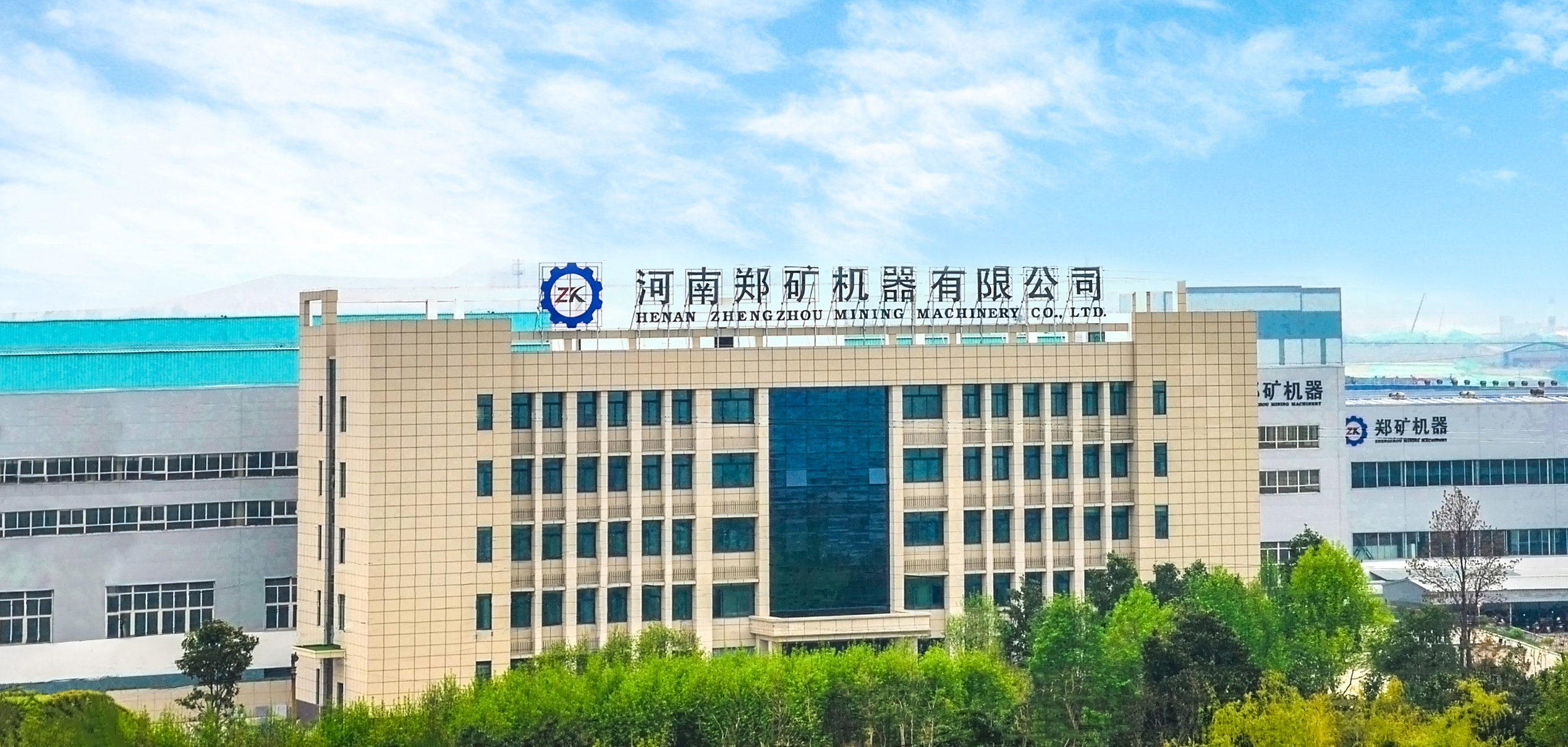
ZK MACHINE office and technical support base in Zhengzhou, China.
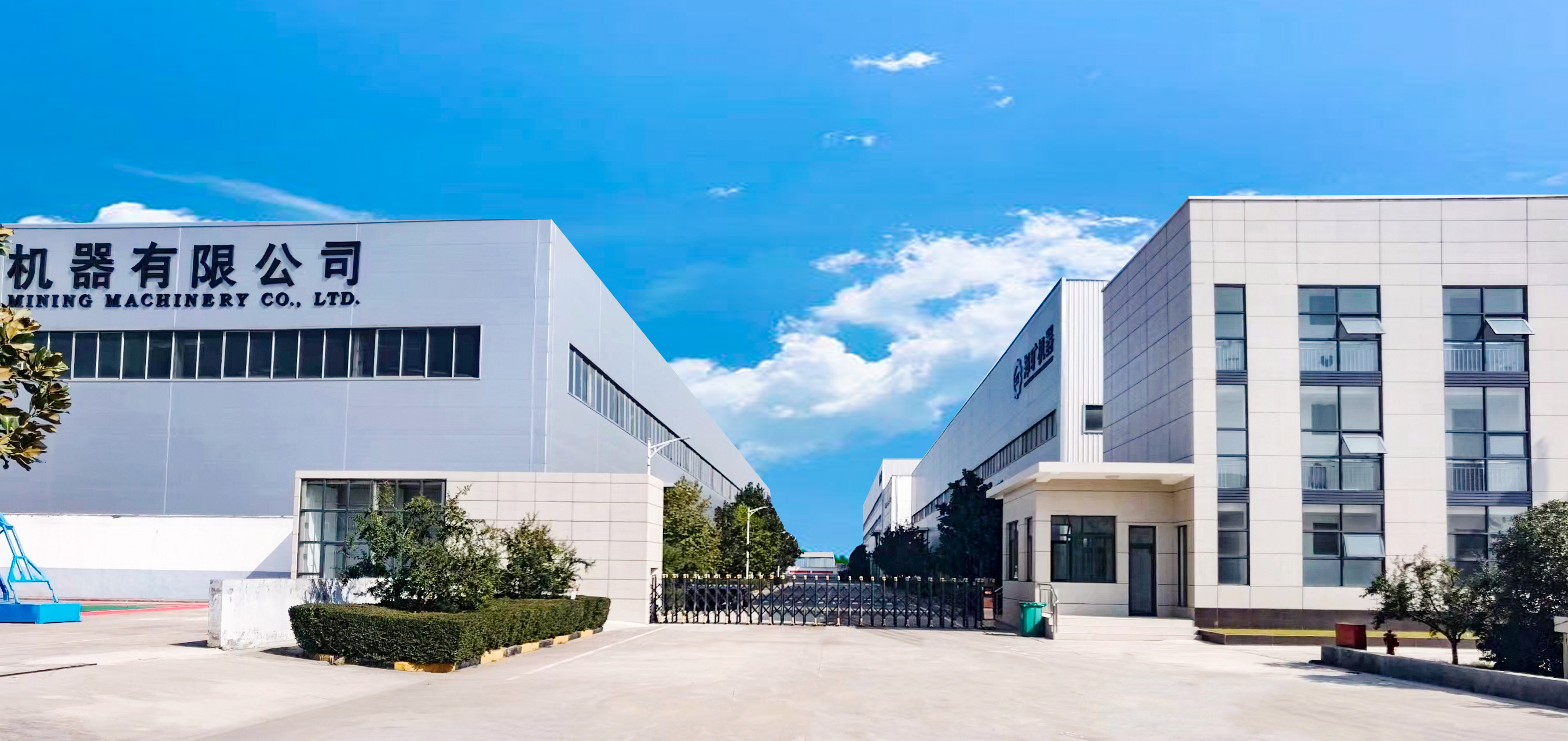
Factory entrance for inspection, wear-part coordination, and long-term service planning.
Have Questions or Need More Details?
Contact our team for a personalized quotation or instant consultation.
Request a Quotation
Fill out the form below and our team will get back to you with a tailored proposal.
WhatsApp Direct Chat
Prefer to chat in real-time? Message us on WhatsApp for instant assistance & quick answers.
- Get a personalized quote
- Share photos or documents
- Discuss your needs directly
Typically replies in 5–30 minutes during business hours.