
Ball Mill Selection Parameters: Feed Size, Throughput, Fineness, and Motor Power
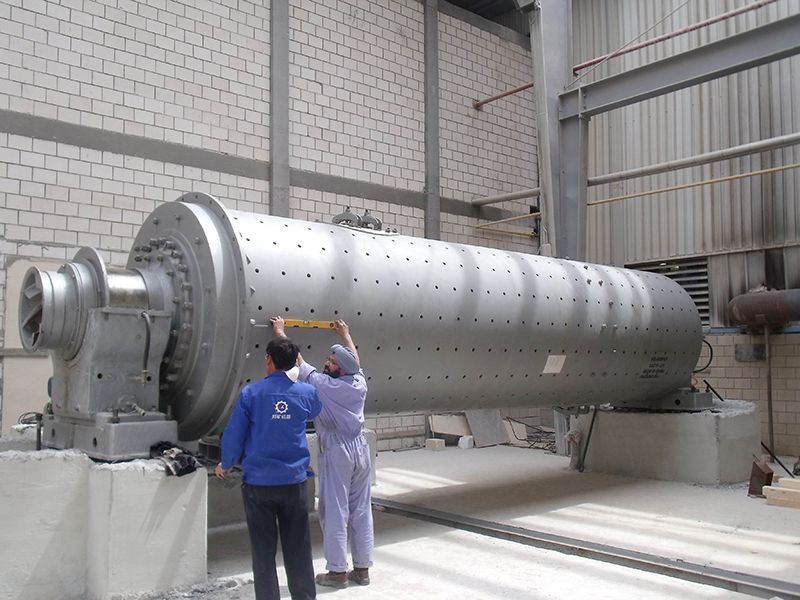
Ball mill selection is driven by four documented parameters that must be fixed together: feed size, throughput, product fineness and motor power. In the ZK MACHINE ball mill range, these parameters span a feed size of ≤25 mm, a capacity of approximately 0.8–230 t/h, a product size of approximately 0.07–0.4 mm, and model designations from Φ1.2×4.5 to Φ4.6×10. Selecting a mill on capacity alone typically produces a machine that is either under-sized on fineness or over-motorised for the duty.
Why Ball Mill Selection Fails When Only Capacity Is Specified
A ball mill is a size-reduction machine filled with grinding media and rotated so that the media cascade and tumble through the material bed. The energy delivered to the bed, the residence time inside the shell, and the way ground product leaves the mill all determine what actually comes out. Capacity is therefore an output of that system, not an input to it.
Ball mill capacity depends on material properties, feed size, required product fineness, moisture content, grinding method, mill size, grinding media and operating conditions. A quotation built around a single tonnage figure leaves every one of these variables unresolved, and the resulting machine may meet the tonnage while missing the fineness target, or meet both while drawing more power than the plant was designed to supply.
Three practical consequences follow from this:
- Feed size changes the circuit, not just the mill. If the feed is too large, a crushing or pre-grinding stage may be required before the ball mill. That is an additional machine, an additional foundation and an additional operating cost.
- Fineness changes the residence time. Grinding to 0.07 mm and grinding to 0.4 mm are different duties even when the tonnage is identical, and a separator or classifier may be integrated when finer and more controlled particle sizes are required.
- Moisture changes the grinding method. Dry ball milling grinds material without adding liquid; wet ball milling uses a liquid medium. The choice depends on material properties, downstream process, required product characteristics and environmental conditions.
The practical fix is to submit a parameter set rather than a tonnage: what enters the mill, what leaves it, and what electrical supply is available to drive it.
Industry Background: Where the Ball Mill Sits in the Process
In mineral processing, ball mills and rod mills crush and grind ore in order to liberate the minerals. Tumbling mills convert electrical energy into mechanical energy and generate many fracture opportunities during grinding, which is why power draw per tonne is a central operating-cost variable rather than a secondary specification.
That process role explains why ball mills remain a large equipment category. The global market for ball mills used in mining was valued at USD 4.94 billion in 2025 and is projected to reach USD 8.23 billion by 2034, according to commercial research published by Dataintelo. On the supply side, China was the leading exporter of machines to crush or grind stone, ores and minerals in 2024, with export value of USD 1.38 billion under HS code 847420, according to the Observatory of Economic Complexity based on customs data.
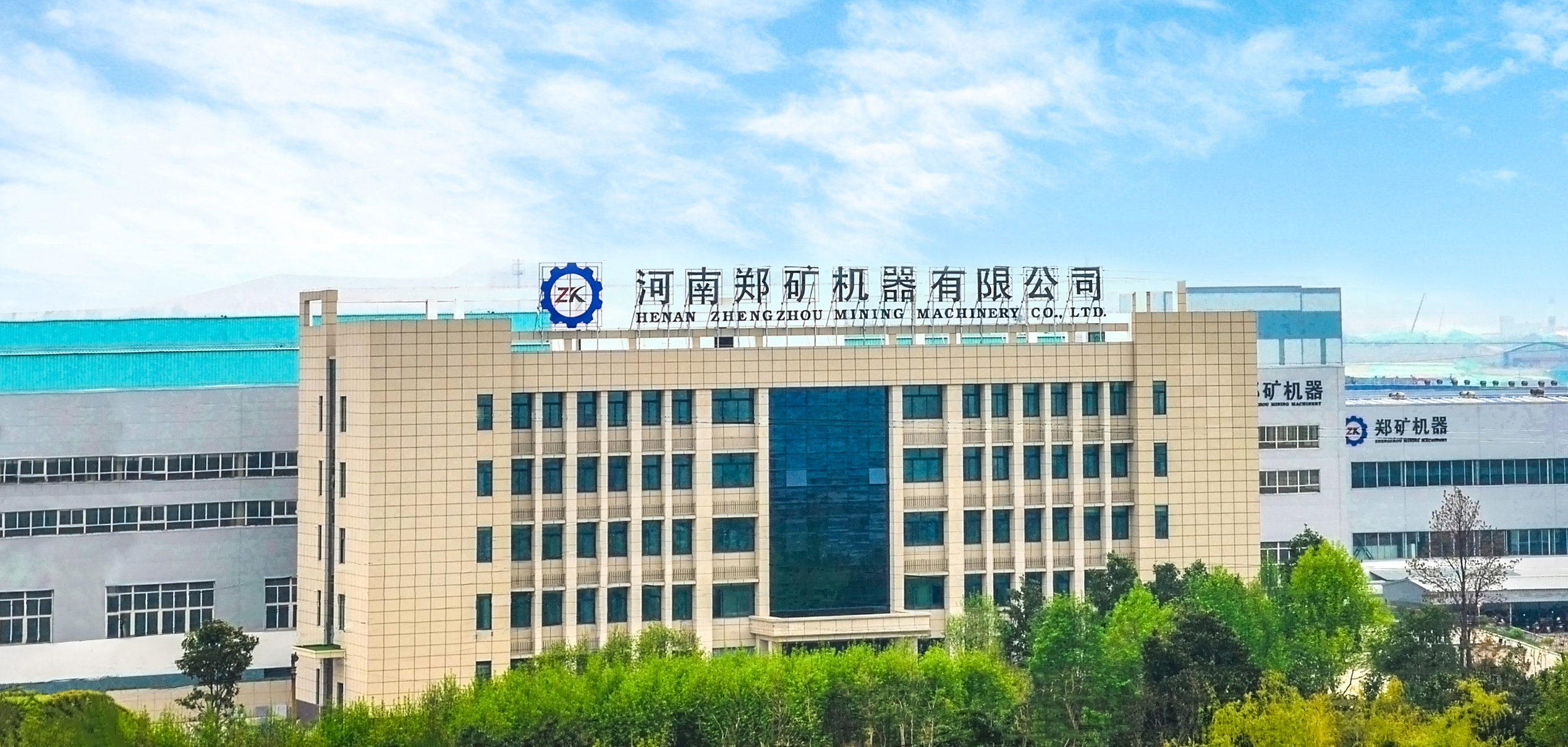
ZK MACHINE — Henan Zhengzhou Mining Machinery Co., Ltd., founded in 1956 and based in Zhengzhou, China — manufactures ball mills as one of its two core equipment lines alongside rotary kilns, and integrates them with crushing, screening, feeding, classification, dust collection and conveying equipment into complete process systems. The company’s ball mill portfolio covers dry and wet ball mills, continuous and batch ball mills, overflow and grate-discharge ball mills, ceramic ball mills, rod mills, air-swept coal mills, and grinding solutions for materials such as limestone, clinker, quartz, dolomite, aluminum ash and ores.
The Four Selection Parameters and What Each One Controls
Parameter 1 — Feed Size (≤25 mm)
The documented feed size for the standard ZK MACHINE ball mill range is ≤25 mm. Feed size controls three things: whether a pre-crushing stage is needed, how the grinding media charge must be graded, and how much of the mill’s length is consumed by coarse grinding rather than fine grinding.
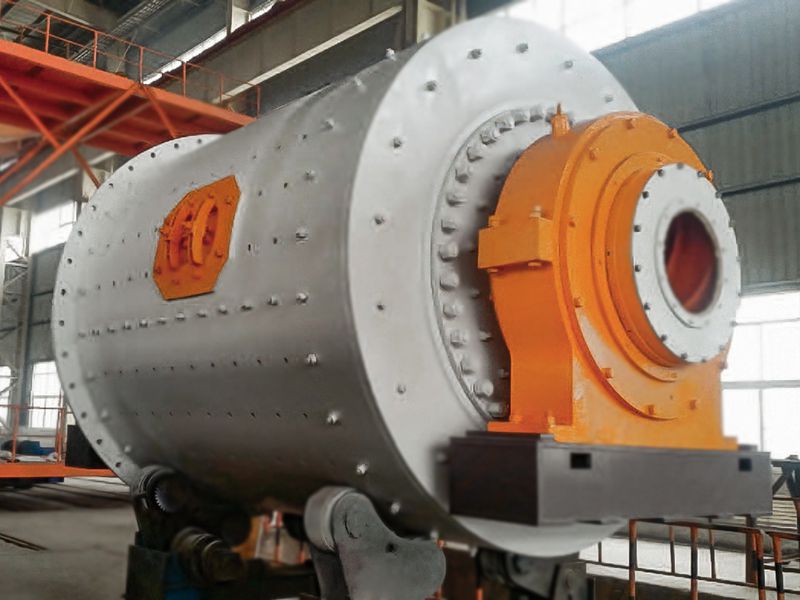
When the incoming material is coarser than the mill can accept, a crusher is added ahead of the mill. The 70 t/h cement grinding station supplied to a cement producer in Yemen illustrates the principle in practice: a single-stage box-type hammer crusher pre-crushes clinker, limestone and other feed materials to an appropriate size, reducing the crushing load on the ball mill and improving overall energy efficiency and capacity. The mill in that project is a Φ4.2 m large ball mill rated at 70 t/h.
Parameter 2 — Throughput (0.8–230 t/h)
Across the general ball mill range, capacity is approximately 0.8–230 t/h. That figure is a range across the model family, not a promise for any single machine. The achievable throughput for a specific project depends on material grindability, feed size, target fineness, moisture, grinding method, mill size, grinding media and operating conditions.
Capacity ranges differ by product type because each type is engineered for a different duty:
- General ball mill: approximately 0.8–230 t/h
- Cement ball mill: approximately 1.4–87 t/h, with mill diameter from 1.2 to 4.2 m
- Raw mill: 1.7–73 t/h, with grinding media load of 5–118 t
- Air-swept coal mill: 1.4–16 t/h
- Rod mill: 0.62–250 t/h
- Ore ball mill: 0.5–930 t/h
- Ceramic ball mill: 0.05–15 t per batch
- Laboratory ball mill: 0.2–1.5 t per batch
Two selection rules follow. First, a high tonnage with a coarse product should usually be routed to a rod mill or a grate-discharge mill rather than pushed through an overflow mill. Second, batch capacity and continuous capacity are not interchangeable units; a ceramic mill rated in tonnes per batch cannot be compared directly with a cement mill rated in tonnes per hour.
Parameter 3 — Product Fineness (0.07–0.4 mm)
The standard range produces a product size of approximately 0.07–0.4 mm, adjustable according to process requirements. Ore ball mills in the same family are documented at approximately 0.074–0.4 mm.
Fineness is where most specification disputes originate, because the same mill can produce different results depending on media grading, residence time and whether a classifier closes the circuit. Three configurations are documented:
- Open circuit. Material passes through the mill once. Cement ball mills can operate in open-circuit or closed-circuit grinding.
- Closed circuit with a separator. Fine powder is separated as finished product while coarse particles return to the mill. In the Yemen cement grinding station, the ball mill operates in a closed circuit with an O-Sepa high-efficiency classifier, and product fineness can be adjusted within 280–650 m²/kg.
- Integrated grinding and drying for coal. Air-swept coal mills achieve typical coal fineness of 85%+ passing 200 mesh, with coal moisture below 2% under the stated operating conditions.
A separator or classifier can be integrated when finer and more controlled particle sizes are required. Where the target is a specific surface area rather than a screen passing figure, the separator selection becomes as important as the mill selection.
Parameter 4 — Motor Power
Motor power is the last parameter to fix, because it is derived from the first three plus the grinding media load. Documented motor power figures in the ZK MACHINE range include:
- Air-swept coal mill: 45–570 kW
- Rod mill: 22–1600 kW
- Ceramic ball mill: 2.2–75 kW reference motor power
- Laboratory ball mill: 2.2–11 kW
- MQG900×1800 mill: 22 kW at 0.8–1 t/h capacity and 39 r/min rotating speed
The spread illustrates why power cannot be specified independently. A 0.8–1 t/h mill and a rod mill at the top of its capacity range differ by roughly two orders of magnitude in installed power, and the electrical supply, starting method, foundation loads and control philosophy all change with it. Because tumbling mills convert electrical energy into mechanical comminution energy, the power figure is also the closest available proxy for operating cost per tonne before actual site data is collected.
Parameter 5 — Shell and Liner Material
Material selection is the parameter buyers most often leave blank, and it is the one that determines service life in abrasive or contaminating duties.
- Mill shell: typically manufactured from high-quality carbon steel or alloy steel for high strength, durability and reliable long-term operation. Cement ball mill shells are documented as Q235B/Q345B or equivalent structural steel.
- Liners: selected according to the processed material and operating conditions. Common options include high-manganese steel, alloy steel, cast iron, rubber and ceramic liners.
- Ceramic mills: shell in carbon steel or alloy steel, lining in alumina ceramic, silica or other wear-resistant ceramic materials, with alumina balls, zirconia balls or other ceramic media as grinding media.
- Grinding media: common media include steel balls, ceramic balls and other wear-resistant media. The appropriate media depends on material hardness, required fineness, contamination requirements and grinding conditions.
Where product contamination matters — ceramics, refractories, advanced materials — ceramic lining reduces the risk of contamination from the grinding system. Where abrasion resistance dominates — manganese oxide ore, quartz, slag — high-manganese steel or alloy liners are the documented options.
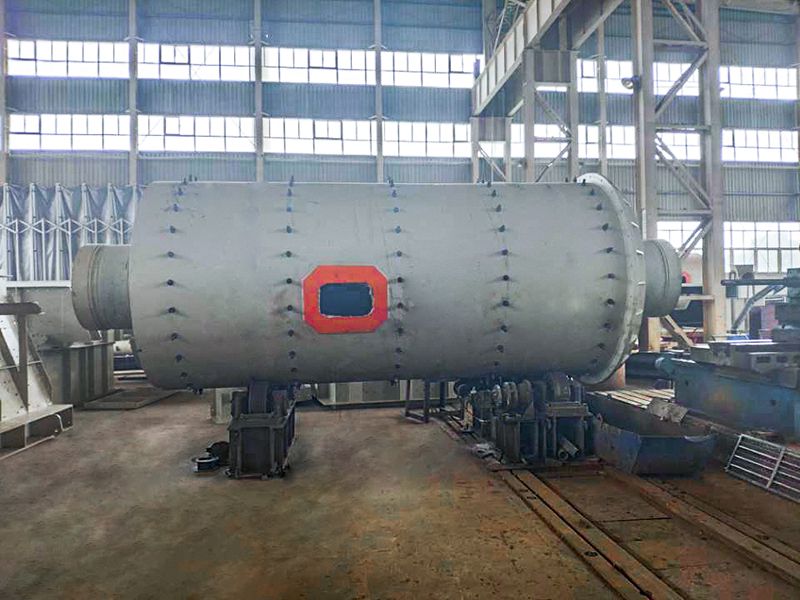
Step-by-Step Breakdown: How Throughput, Fineness and Dry/Wet Mode Determine the Configuration
- Define the feed. Record material type, hardness, moisture and top size. If the top size exceeds what the mill can accept, a crushing or pre-grinding stage is required before the ball mill.
- Fix the target fineness as a measurable number. Express it as a screen passing size (for example 0.074 mm) or as specific surface area (for example 280–650 m²/kg). Vague targets such as “fine powder” cannot be verified at commissioning.
- Choose dry or wet grinding. Dry grinding suits materials where downstream processes are dry, where water is unavailable, or where a fully enclosed circuit with integrated dust collection is required. Wet grinding suits slurry-fed mineral processing and construction-material grinding. The choice depends on material properties, downstream process, required product characteristics and environmental conditions.
- Choose the discharge type. Grate discharge and overflow discharge are both available. Grate discharge suits duties where a faster material transport through the mill is wanted; overflow discharge suits finer grinding where residence time matters. Rod mills are documented with overflow discharge.
- Size the mill against throughput and fineness together. Mill diameter and length are selected so that the required residence time is available at the required tonnage. This is the point at which the model designation is fixed within the Φ1.2×4.5 to Φ4.6×10 range, or within a specialised range for cement, raw meal, coal, ore, rod or ceramic duty.
- Set the grinding media charge and grading. Raw mills in the range carry grinding media loads of 5–118 t. Media grading is matched to feed size and target fineness, and in the Malaysia hydrated lime project, optimised grinding media grading is recorded as one of the factors behind uniform grinding and stable production capacity.
- Confirm motor power and electrical supply. Power is checked last against the mill size, media load and duty, and against the site’s available supply and starting method.
- Select shell and liner materials. Match liners to abrasion and contamination requirements. Confirm whether ceramic lining, rubber lining or steel lining is appropriate.
- Define the balance of the system. Supporting equipment such as bag filters, electromagnetic vibrating feeders and crushers must be specified alongside the mill, together with the powder separator, vibrating screen and conveying equipment where the circuit requires them.
- Confirm special requirements. Depending on the application, requirements may include explosion-proof design, acid- and corrosion-resistant construction, wear-resistant lining, dust-tight design, special sealing systems, temperature control, inert-gas protection, special feeding and discharge systems, and noise and vibration control.
Use Cases: How the Parameter Set Changes by Project
Cement clinker grinding — Yemen, 70 t/h
A cement producer in Yemen operates a 70 t/h cement grinding station integrating clinker pre-crushing, cement grinding, high-efficiency classification, cement storage, discharge screening, weighing and multi-point dust collection. The system uses a Φ4.2 m large ball mill designed specifically for cement grinding at 70 t/h, operating in closed circuit with an O-Sepa high-efficiency classifier. Product fineness is adjustable within 280–650 m²/kg. Two steel silos with vibrating screens underneath handle cement storage and dispatch.
The selection logic here is instructive: fineness was specified as specific surface area, which forced a closed circuit with a classifier, which in turn justified pre-crushing to keep the mill from being loaded with coarse clinker.
Manganese oxide ore dry grinding — Georgia, 10 t/h
An end user in Georgia operates a 10 t/h dry grinding ball mill system built around a Φ2.2×7.5 m dry grinding ball mill sized for 10 t/h manganese oxide ore processing. The circuit is fully enclosed with integrated dust collection and air classification, a wear-resistant mill design for abrasive ore, and electrical control for the dry grinding circuit. The system has been in continuous operation for more than 20 years.
Here the parameter that shaped the configuration was not tonnage but dust: dry grinding of an abrasive ore required an enclosed circuit, which drove the mill sealing and the dust collection scope.
Construction material wet grinding — Russia, batch ceramic
A project owner in Russia operates one Φ2.3×2.7 m batch wet ceramic ball mill for grinding mortar, sand and other construction materials. The mill operates in batch mode with ceramic grinding media, and is recorded as providing fine-grinding performance and stable operation, with extended equipment service life as one of the results of the application.
This case shows why batch capacity is specified separately: the duty is defined in tonnes per batch with a ceramic lining, not in tonnes per hour with a steel shell.
Hydrated lime grinding — Malaysia, φ2×4 m
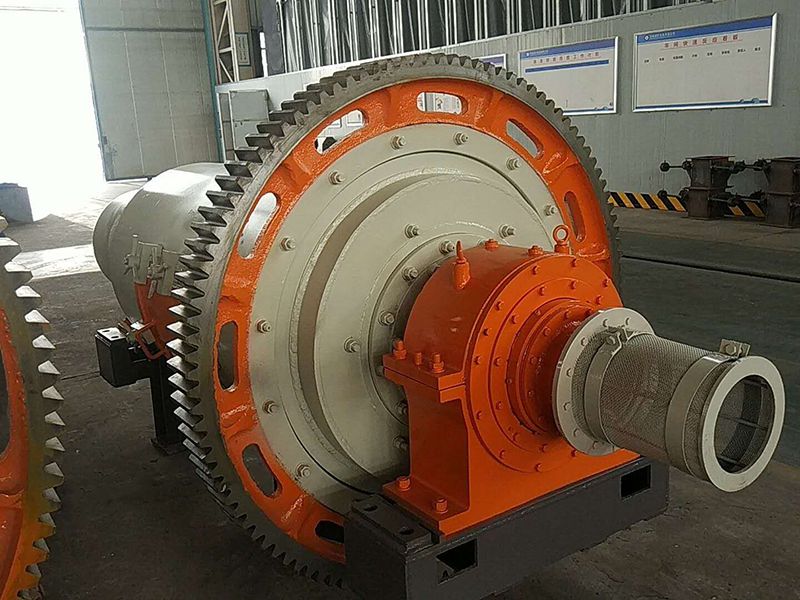
A project owner in Malaysia operates one ball mill unit, documented as the φ2×4 m ball mill project, configured for a hydrated lime grinding line. The unit has served the project for more than 15 years. Documented achievements include uniform grinding, stable production capacity, process optimisation, optimised grinding media grading, enclosed production and low dust emissions, with reduced energy consumption per tonne of powder and lower operating costs following grinding process optimisation.
Feldspar grinding — India, production line
A project owner in India operates a feldspar grinding production line, a non-metallic mineral processing application. Documented results include increased production capacity and improved product quality while reducing energy consumption per tonne of powder and operating costs, supported by a simple process flow, compact equipment layout, cost-effective design and adjustable product fineness.
Pulverized coal preparation
Where the mill feeds a kiln or boiler, the air-swept coal mill configuration integrates grinding and drying in one system. Coal fineness of 85%+ passing 200 mesh and coal moisture below 2% under the stated operating conditions are the governing parameters, and the mill is integrated with a separator, dust collector and hot-air system.
Comparison Table: Ball Mill Types and Their Documented Parameter Ranges
| Mill Type | Model Range | Rated Capacity | Selection Note |
|---|---|---|---|
| Ball Mill (general) | Φ1.2×4.5 – Φ4.6×10+3.5 | approx. 0.8–230 t/h | Feed ≤25 mm; product approx. 0.07–0.4 mm; dry or wet; grate or overflow discharge |
| Cement Ball Mill | Φ1.2×4.5 – Φ4.6×10 | approx. 1.4–87 t/h | Diameter 1.2–4.2 m; open or closed circuit; can be combined with roller press and separator |
| Raw Mill | Φ1.2×4.5 – Φ3.5×10 m | 1.7–73 t/h | Grinding media load 5–118 t; adjustable product fineness |
| Air-Swept Coal Mill | Φ1.2×2.4 – Φ2.9×4.7 m | 1.4–16 t/h | Motor power 45–570 kW; 85%+ passing 200 mesh; integrated grinding and drying |
| Rod Mill | Φ0.9×1.8 – Φ3.6×5.4 m | 0.62–250 t/h | Main motor power 22–1600 kW; overflow discharge; steel-rod media for coarse grinding |
| Ore Ball Mill | 1.2×2.0 – 6×12 m | 0.5–930 t/h | Product approx. 0.074–0.4 mm; dry or wet; grate or overflow discharge |
| Ceramic Ball Mill | 600×700 – 3200×4600 mm | 0.05–15 t/batch | Reference motor power 2.2–75 kW; rotational speed 13–50 rpm; batch operation |
| Laboratory Ball Mill | Φ0.6×0.7 – Φ1.8×2.1 m | 0.2–1.5 t/batch | Motor power 2.2–11 kW; rotational speed 23–35 rpm; pilot and sample-scale work |
The table is a parameter map, not a ranking. Two mills with similar capacity can differ entirely in power draw, discharge type, lining and circuit configuration, and the correct unit is the one whose parameters match the duty rather than the one with the larger headline number.
Frequently Asked Questions
1. Can a ball mill project be supplied with CE documentation for the European market?
Yes. ZK MACHINE can provide ball mill equipment and related documentation according to the applicable CE requirements for the intended European market and project configuration. Depending on the applicable requirements and project scope, documentation may include the EU Declaration of Conformity, technical documentation, equipment manuals, safety information and relevant inspection or test records. The exact certification scope should be confirmed against the final equipment and system configuration, because for a complete grinding line the scope may involve the ball mill, electrical and control systems, conveying equipment, dust collection equipment and other integrated machinery.
2. What feed size can the mill accept, and what product fineness can it achieve?
The documented feed size for the ZK MACHINE ball mill range is ≤25 mm, and the product size is approximately 0.07–0.4 mm, adjustable according to process requirements. If the incoming material is larger than the mill can accept, a crushing or pre-grinding stage is required before the ball mill. Achievable fineness depends on the material, grinding media, mill configuration, residence time and classification system, and a separator or classifier can be integrated when finer and more controlled particle sizes are required.
3. What supporting equipment is normally included in a ball mill grinding system?
A ball mill installation typically requires supporting equipment such as bag filters, electromagnetic vibrating feeders and crushers. Depending on the circuit, a powder separator, vibrating screen, conveying equipment, bucket elevators and dust collectors are also integrated. ZK MACHINE supplies ball mills for single-equipment supply projects, complete production line projects, process EPC projects and pilot-scale test units, and integrates core equipment with crushing, screening, feeding, mixing, granulation, drying, cooling, conveying and dust collection systems.
4. Can material be tested before a ball mill is specified?
Yes. ZK MACHINE operates its own process testing workshop and testing and analysis centre, supporting pilot testing and process data analysis for building materials, metallurgical materials and other applications, including solid waste and hazardous waste treatment. These facilities support pilot-scale test units and allow process concepts to be validated before industrial-scale equipment is specified. For projects where grindability is uncertain, testing the actual material is the most reliable way to confirm the capacity and fineness assumptions behind the mill specification.
5. What is the typical production lead time for a ball mill order?
The documented lead time for ZK MACHINE equipment is 3 months, with a monthly production capacity of 10 units and a minimum order quantity of 1 unit. Every unit is 100% tested. Because ball mills are not standard products, each project requires customized engineering based on material properties, process requirements, production capacity, environmental regulations and site conditions, and the specification should be fixed before the lead time starts. After-sales support includes on-site installation guidance and commissioning, engineer dispatch, spare parts supply and technical training.
Conclusion: Specify the Parameter Set, Not the Tonnage
A ball mill that meets its tonnage but misses its fineness target is a failed selection. The four documented parameters — feed size of ≤25 mm, throughput within the relevant range up to 230 t/h, product size of approximately 0.07–0.4 mm, and a motor power matched to mill size and media load — only work when they are fixed together and confirmed against the shell and liner material selection.
Throughput, fineness and dry or wet mode then determine the rest of the configuration. High tonnage with a coarse product points toward rod mills or grate discharge. Fine product at controlled specific surface area points toward a closed circuit with a separator. Abrasive ore points toward wear-resistant lining and an enclosed circuit. Contamination-sensitive product points toward ceramic lining and ceramic media. Batch duty points toward a batch ceramic or laboratory mill rather than a continuous unit.
ZK MACHINE has manufactured grinding and thermal process equipment since 1956, operates an 80,000 m² manufacturing site in Zhengzhou with 8 modern workshops and 5 heavy-duty workshops, holds ISO 9001, ISO 14001 and ISO 45001 certification, and has supplied equipment and process systems to customers in more than 130 countries and regions.
Send Your Five Selection Parameters
Share the material type and top feed size, required capacity and whether it is per hour or per batch, target fineness as a screen size or specific surface area, dry or wet grinding with moisture content, and available motor power. The ZK MACHINE technical team will return a mill configuration within the Φ1.2×4.5 to Φ4.6×10 range, or a specialised type if the duty calls for one.
Technical contact: vip@zkcorp.com | Tel / WhatsApp: +86 182-0361-6061 | Website: www.zkcomp.com
Download the full product and process portfolio: ZK MACHINE 2025 General Catalogue (PDF)
Have Questions or Need More Details?
Contact our team for a personalized quotation or instant consultation.
Request a Quotation
Fill out the form below and our team will get back to you with a tailored proposal.
WhatsApp Direct Chat
Prefer to chat in real-time? Message us on WhatsApp for instant assistance & quick answers.
- Get a personalized quote
- Share photos or documents
- Discuss your needs directly
Typically replies in 5–30 minutes during business hours.