
Ball Mill Sizing: Diameter, Length, Power & Liner Choice
Ball Mill Sizing Technical Guide: Diameter, Length, Power, and Liner Selection
Ball mill sizing is the process of matching a grinding duty to shell diameter, mill length, installed motor power, feed preparation, product fineness, shell material, and liner system. It is not a catalogue lookup. Two mills with the same model notation can need different liners, media, and circuit arrangements when the material, feed size, or fineness target changes. For cement, limestone, ore, raw meal, coal, and rod-mill duty, the practical task is to define the operating envelope before a model is quoted.
Henan Zhengzhou Mining Machinery Co., Ltd. (ZK MACHINE) supplies ball mills and rotary kilns and provides customized engineering for ball mills based on material properties, process requirements, production capacity, environmental regulations, and site conditions. Its ball mill portfolio covers cement ball mills, raw mills, clinker mills, limestone ball mills, coal mills, air-swept coal mills, rod mills, mining and ore ball mills, continuous and batch mills, dry and wet mills, ceramic ball mills, grate-discharge and overflow mills, and laboratory mills. That breadth matters because sizing logic changes with the duty.
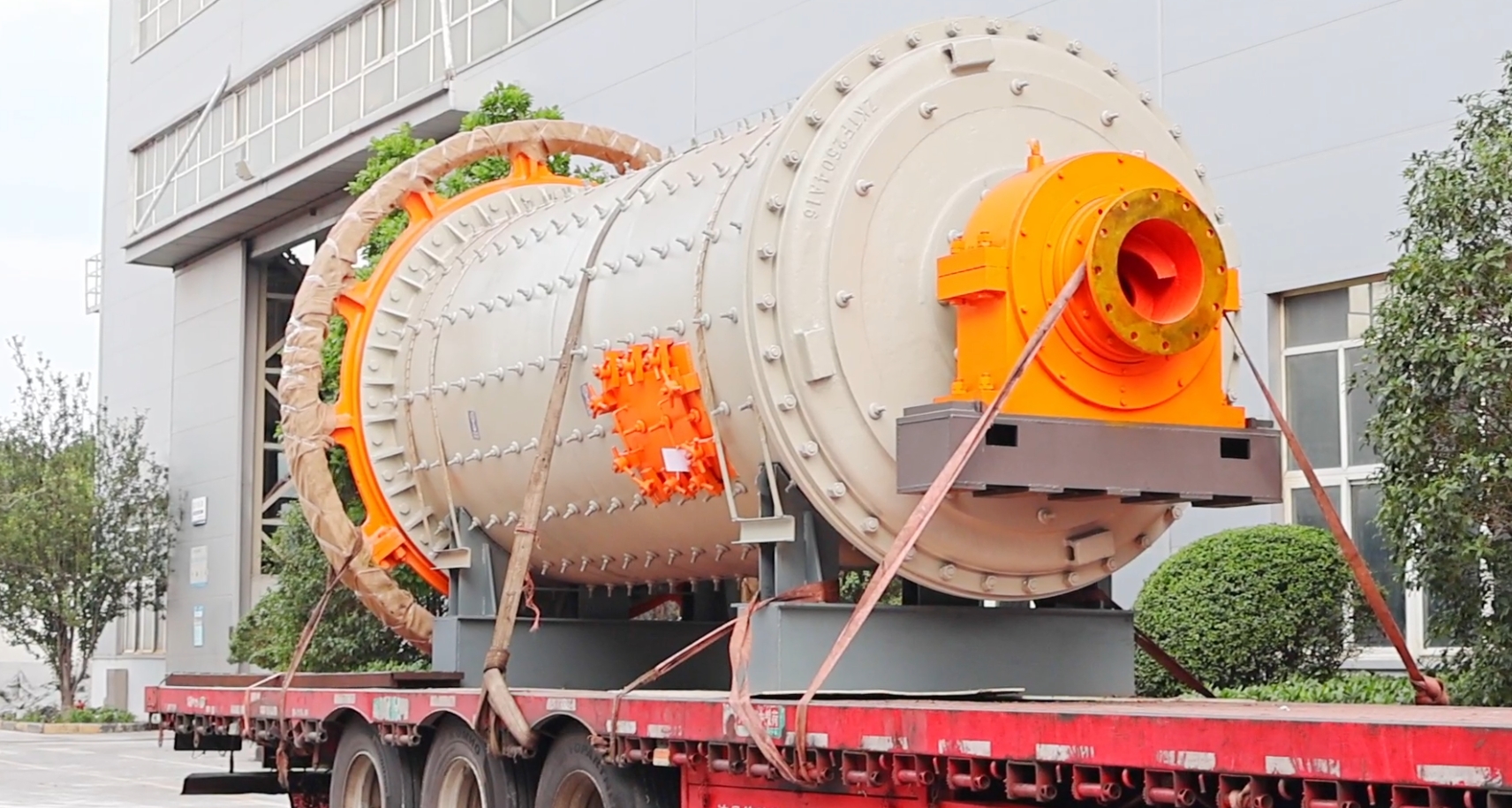
A Φ2.1×4.5 m wet ball mill. Diameter and length are fixed only after the duty, feed size, and product target are defined.
Why Ball Mill Sizing Is a Decision Chain, Not a Single Calculation
The central sizing question is not simply “what size mill gives the required tonnage?” It is “which mill, circuit, media charge, liner, and drive combination will hold the required tonnage at the required fineness, with an acceptable power draw and maintenance interval, for this material and this site?” A mill that is too small may meet fineness only by reducing feed rate or over-grinding. A mill that is too large may carry unnecessary capital cost, power draw, and wear. The correct answer is a balanced operating envelope.
Diameter and length are the first visible sizing variables because they define the shell geometry. Motor power, feed size, product fineness, shell material, and liner choice are not separate accessories added after the model is chosen. They are part of the same selection problem. A liner that changes the media lift profile can change grinding efficiency and power demand. A feed that is too coarse can overload the first chamber and make the quoted capacity unrealistic. A product target that is too fine can require a closed circuit even when the mill shell has enough volume.
Industry Background: What Changes the Sizing Basis
Ball mills are comminution equipment. In mineral processing, they reduce ore size so that valuable minerals can be liberated in downstream separation. In cement, raw-meal, coal, and industrial-mineral circuits, they reduce clinker, limestone, raw materials, coal, or other feed to a controlled fineness. Tumbling mills convert electrical energy into mechanical energy for breakage, so power draw is a central operating-cost variable. That is why sizing should be checked against specific energy and circuit efficiency, not only against nominal tonnage.
The same shell size can behave differently when the material grindability, moisture, feed size, product fineness, grinding method, and classification system change. A dry circuit may need drying or air classification. A wet circuit may use overflow or grate discharge. A cement circuit may use pre-crushing and a high-efficiency classifier. A coal circuit may use air sweeping for drying and transport. The sizing basis should therefore state the material, feed size, target fineness, moisture condition, and circuit type beside the capacity figure.
How Diameter and Length Change the Grinding Duty
Mill diameter sets the shell cross-section and the potential grinding-media charge. As a general rule, a larger diameter supports a larger media charge and a higher potential throughput, but it also changes the charge path, power draw, and structural requirements. Diameter should be selected with the required media size and the mill speed range, not only with the target tonnage. A large diameter with an unsuitable media charge can produce an inefficient grinding action.
Mill length sets the residence time and the number of grinding opportunities along the shell. A longer mill gives the material more time in the grinding zone. That can help when the product target is fine or when the circuit uses a long tube mill, but it can also increase energy consumption per tonne and wear exposure. A shorter mill is more compact, but it may need a different circuit or a higher classification efficiency to reach the same product fineness. The length-to-diameter relationship should be checked against the target fineness, the number of chambers, and the classification system.
Model notation usually combines diameter and length, for example Φ2.2×7.5 m or Φ4.2 m in a cement grinding station. The notation is a starting point, not a complete specification. A buyer should confirm whether the dimensions refer to the shell, the effective grinding length, or the overall equipment envelope. The liner thickness, inlet and outlet arrangements, trunnion size, and drive configuration can change the effective volume and the installed footprint.
Matching Motor Power to the Mill and the Circuit
Motor power must match the installed grinding charge, mill speed, media mass, liner mass, drive efficiency, and starting conditions. It should not be selected from tonnage alone. The datasheet should state whether the power figure is installed motor power, shaft power, or recommended operating power. These are different values. A capacity claim is difficult to compare when one supplier quotes motor power and another quotes absorbed power without stating the basis.
In the air-swept coal mill duty covered in this topic, the documented power range is 45–570 kW, with a capacity range of 1.4–16 t/h and a fineness target of 85% passing 200 mesh. That range should not be transferred to cement, ore, or raw-meal duty without a model-specific check. Coal grinding includes drying and air sweeping, so fan power, air flow, and classifier behaviour can change the system power balance. For a cement or ore mill, the media charge and circuit load are usually the dominant checks.
A practical check is to compare power, capacity, and fineness on the same basis. If a proposal quotes a high capacity at a low power, ask for the feed size, product fineness, material grindability, circulating load, and whether the power figure includes the drive and auxiliary system. A qualified sizing review does not need to make the comparison look simple; it needs to make the comparison honest.
Documented Range Check: Cement, Ore, Raw Meal, Coal, and Rod Duty
The table below summarizes documented model and capacity ranges for the duties discussed in this guide. These are screening ranges, not a guarantee that every material will achieve the top or bottom of the range. Final selection requires a material-specific review and a confirmed circuit.
| Duty | Documented model range | Documented capacity range | Sizing focus |
|---|---|---|---|
| Cement and limestone ball mill | Φ1.2×4.5–Φ4.6×10 | 1.4–87 t/h | Product fineness, pre-crushing, classifier circuit, chamber and liner design |
| Ore and mining ball mill | 1.2×2.0–6×12 m | 0.5–930 t/h | Feed size, ore grindability, wet or dry method, discharge type, media charge |
| Raw mill | Φ1.2×4.5–Φ3.5×10 m and customized large-scale models | 1.7–73 t/h | Raw-material moisture, drying, fineness, continuous operation |
| Rod mill | Φ0.9×1.8–Φ3.6×5.4 m | 0.62–250 t/h | Coarse grinding, rod charge, discharge arrangement, downstream ball-mill duty |
| Air-swept coal mill | Φ1.2×2.4–Φ2.9×4.7 m | 1.4–16 t/h; 45–570 kW; 85% passing 200 mesh | Drying, air sweeping, coal fineness, system fan and classifier balance |
These ranges are useful for early screening and for checking whether a supplier’s offer is within a documented family. They do not replace a model datasheet, a material test, or a reference check for the same application.
Feed Size, Product Fineness, and the Pre-Crushing Boundary
Feed size is a boundary condition for ball mill sizing. The documented feed size for the ball mill range discussed here is ≤25 mm. If the feed is coarser, a crushing or pre-grinding stage may be required. The Yemen 70 t/h cement grinding station is a useful example: a single-stage box-type hammer crusher pre-crushes clinker and limestone before the ball mill, reducing the crushing load on the mill and supporting overall energy efficiency and capacity.
Product size is adjustable within 0.07–0.4 mm. The target should be stated with the test method or the application requirement. In cement duty, fineness may also be expressed as specific surface area. The Yemen project’s O-Sepa high-efficiency classifier separates fine cement product and returns coarse particles to the mill, with product fineness adjustable within 280–650 m²/kg. That is a different expression from 0.07–0.4 mm and should not be converted casually without the agreed cement test basis.
For air-swept coal mills, the documented fineness target is 85% passing 200 mesh. Because 200 mesh sits at the fine end of the 0.07–0.4 mm adjustable range, the target should be checked together with the coal moisture, air flow, and classifier setting. A coal mill that meets fineness in a laboratory test may still need a different air balance in a kiln system. The sizing review should therefore connect product fineness to the actual separation and transport system.
Shell Material and Liner Selection Are Part of Sizing
Shell material and liner choice affect structural integrity, wear life, maintenance, and grinding behaviour. Documented shell material options include Q235B and Q345B, with carbon steel or alloy steel depending on the design. The final choice should be confirmed on the approved drawing with plate thickness, welding detail, stress requirements, and project standard. A buyer should not assume that one shell grade is universal across all mill diameters and all duties. The shell is a pressure and load-bearing structure as well as a wear boundary.
Documented liner options include high-manganese steel, alloy steel, cast iron, rubber, and ceramic. Liner selection is application-dependent. High-manganese steel is commonly evaluated where impact resistance is important. Alloy steel is selected for wear duty where the material and operating conditions support it. Cast iron is another documented option, but its suitability should be checked against impact, temperature, and maintenance conditions. Rubber liners are evaluated where their weight, noise, and wear behaviour suit the application, with media size and temperature confirmed. Ceramic liners are relevant where contamination control or ceramic grinding media are part of the process; ZK MACHINE’s ceramic ball mill range covers 600×700–3200×4600 mm.
Liner design also changes the mill’s effective volume and media lift. A liner proposal should state the material, profile, thickness, fixing method, expected wear allowance, and recommended inspection interval. The liner should be matched to the media size, mill speed, feed size, product target, and maintenance plan. A low-cost liner that wears quickly can cost more than a higher-grade liner over the operating campaign, but a high-grade liner is not automatically correct if the impact conditions do not suit it.
A Step-by-Step Sizing Review for Evaluation and Execution
- Define the duty and material. State whether the mill is for cement, limestone, ore, raw meal, coal, rod-mill duty, ceramic, or another application. Include material hardness, grindability, moisture, bulk density, and temperature where relevant.
- Fix the capacity basis. State required tonnes per hour, operating hours, availability target, and whether the figure is fresh feed or circulating load. Do not compare capacity figures that use different bases.
- Set feed size and product fineness. Confirm the feed size against the ≤25 mm boundary and decide whether pre-crushing is needed. State product size within 0.07–0.4 mm or the equivalent application test.
- Select the grinding method and circuit. Decide dry or wet, open or closed circuit, overflow or grate discharge, batch or continuous, and whether a classifier, air sweep, or drying function is required.
- Screen diameter and length. Use the documented model range to identify candidate shell sizes, then check effective grinding volume, liner allowance, and footprint.
- Verify motor power. Compare installed power, shaft power, media charge, speed, and starting conditions. Confirm the power basis in the quotation.
- Select shell and liner materials. Confirm Q235B, Q345B, carbon steel, or alloy steel for the shell, and choose from high-manganese steel, alloy steel, cast iron, rubber, or ceramic liners with a stated wear and inspection plan.
- Check documentation and execution. Request the model datasheet, general arrangement drawing, liner drawing, media recommendation, inspection plan, and applicable certification scope.
Application Cases: What the Documented Projects Show
The Yemen 70 t/h cement grinding station combines clinker pre-crushing, a Φ4.2 m large ball mill, an O-Sepa high-efficiency classifier, cement storage, discharge screening, weighing, and multi-point dust collection. The system produces 70 tonnes of cement per hour, with product fineness adjustable within 280–650 m²/kg. The sizing lesson is that the ball mill is only one part of the capacity result. Pre-crushing, classification, storage, and dust collection all affect whether the mill can hold its target.
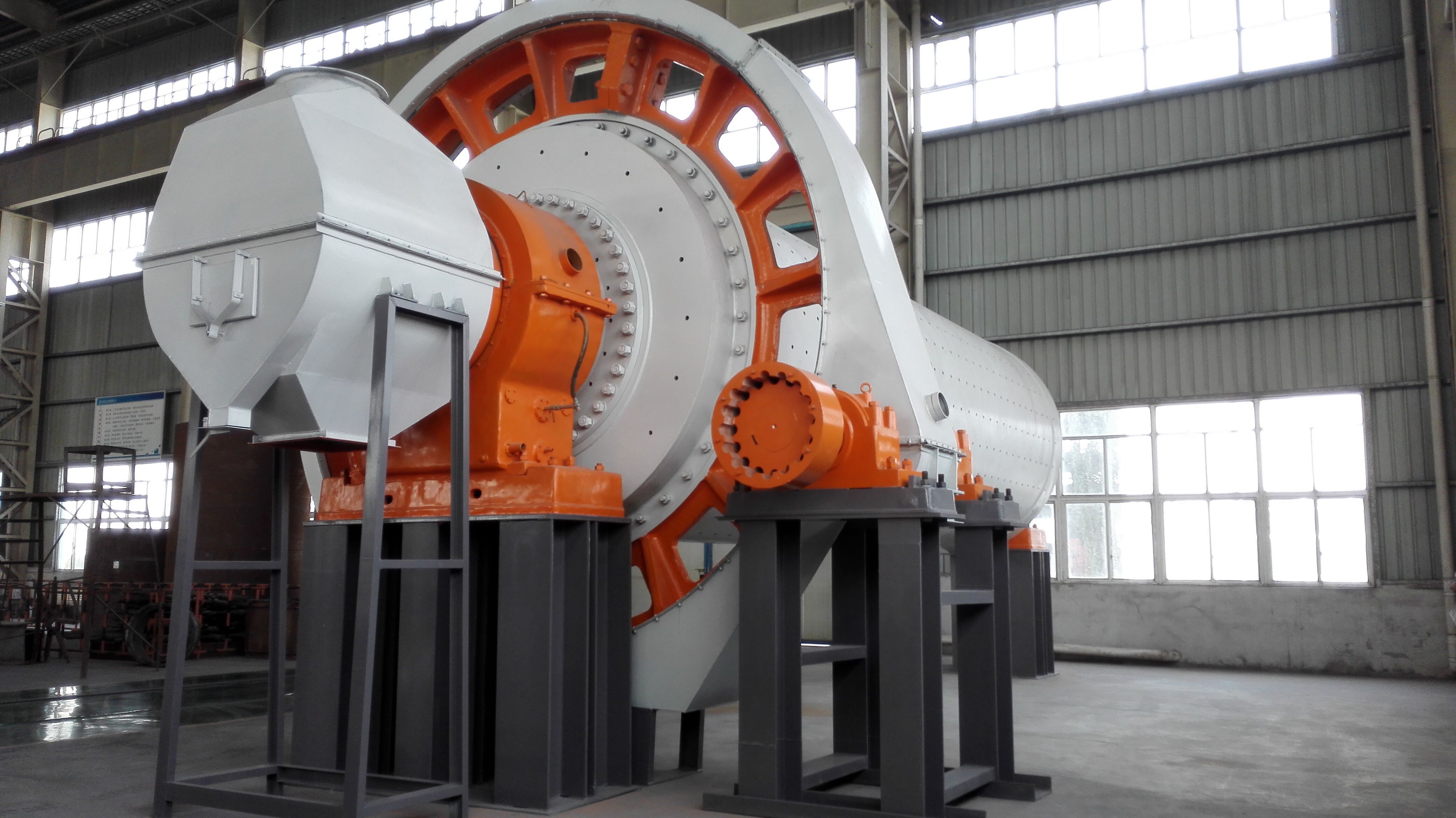
Documented 70 t/h cement grinding station: a Φ4.2 m ball mill operating with pre-crushing and an O-Sepa classifier.
A manganese oxide dry-grinding project is documented at 10 tonnes per hour using a Φ2.2×7.5 m ball mill. The project description includes fully enclosed dry grinding, integrated dust collection and air classification, a wear-resistant mill design, and smart electrical control. This is a different sizing problem from cement: the material, dry method, dust control, and classification requirements shape the circuit, not only the shell diameter.
A batch wet ceramic ball mill project uses a Φ2.3×2.7 m mill for grinding mortar, sand, and other construction materials. Batch operation, ceramic wear protection, and wet processing change the residence-time logic compared with a continuous overflow or grate-discharge ore mill. A hydrated lime grinding project using a φ2×4 m ball mill shows a smaller continuous installation where uniform grinding, stable capacity, optimized media grading, enclosed production, and low dust emissions are the stated process goals. These examples are not interchangeable performance guarantees; they show how the same equipment family is configured around different duties.
Procurement Checks Before You Approve the Datasheet
For evaluation and execution, the datasheet should be checked against the process basis. Confirm the exact model, shell diameter, effective length, installed motor power, speed, media charge, feed size, product size, grinding method, circuit arrangement, and expected capacity basis. Confirm the shell material and liner material, including thickness and fixing detail. Confirm whether the liner is included in the quoted mass and whether spare liners, media, and wear parts are priced separately.
Documentation is part of the sizing review. ZK MACHINE holds ISO 9001, ISO 14001, and ISO 45001 certifications, and its ball mill CE certificate M.2024.206.C100982 was issued by UDEM INTERNATIONAL CERTIFICATION AUDITING TRAINING Centre Industry and Trade Inc. Co. for the EU market, covering machinery and electromagnetic compatibility, with validity from 2024-05-16 to 2029-05-16. The exact CE scope should still be confirmed against the final equipment and system configuration, especially for a complete grinding line that includes electrical, conveying, and dust-collection equipment.
Commercial checks should also be explicit. ZK MACHINE’s stated production mode includes customization for ball mills and rotary kilns, with a minimum order quantity of 1 unit, a lead time of 3 months, monthly capacity of 10 units, and 100% testing. After-sales support includes on-site installation guidance and commissioning, engineer dispatch, spare parts supply, and technical training. These points do not replace a technical review, but they belong in the execution plan because a mill that cannot be installed, commissioned, or maintained as planned is not a completed sizing decision.
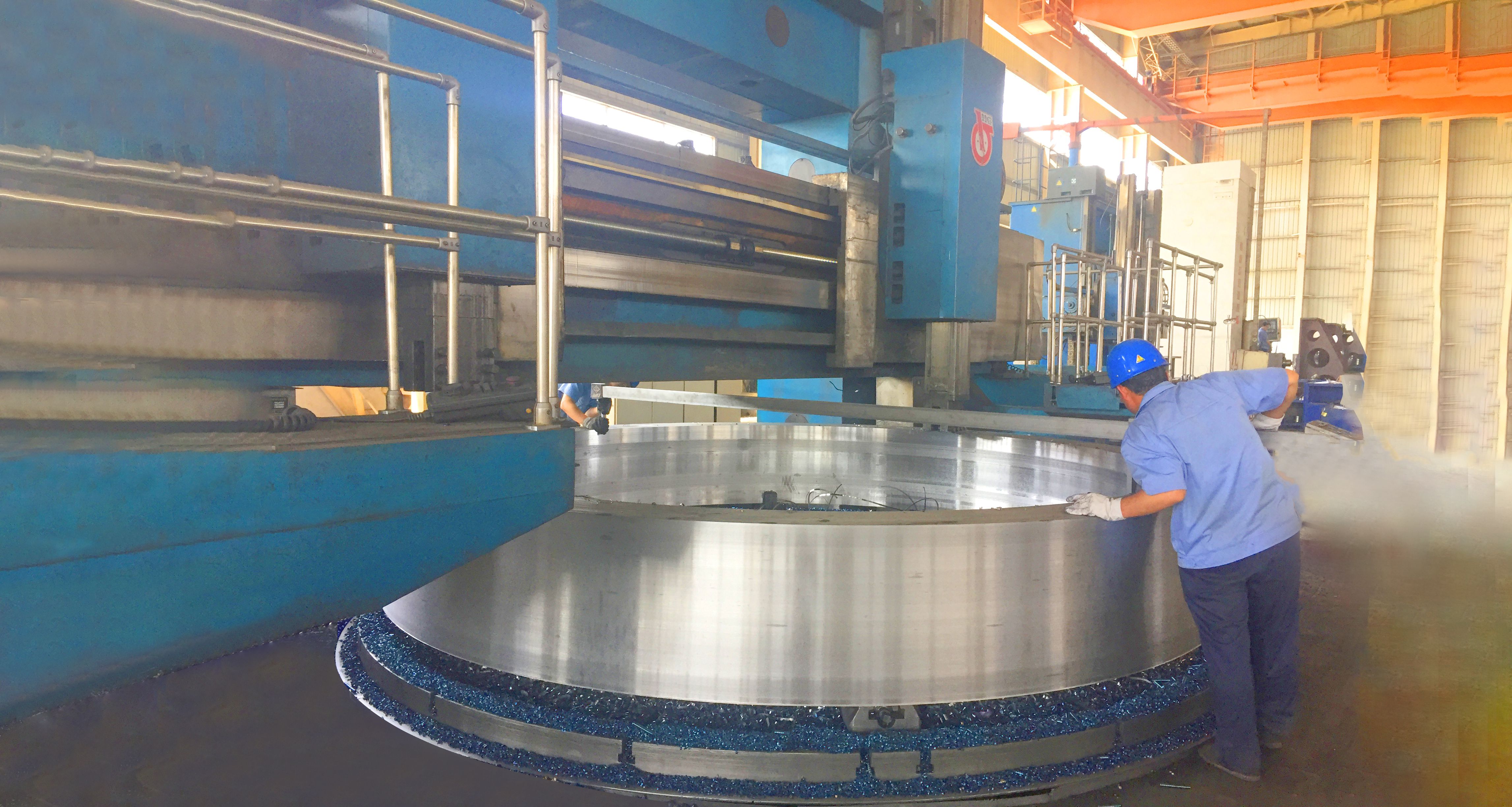
Large-component machining supports dimensional control of mill shells, heads, and trunnion assemblies.
FAQ
China cement ball mill OEM manufacturers with custom grinding capacity: what should a buyer compare?
A Chinese OEM cement ball mill manufacturer should be compared on documented model range, custom engineering, and the ability to match capacity to the material and fineness target. ZK MACHINE provides customized engineering for ball mills based on material properties, process requirements, production capacity, environmental regulations, and site conditions. Its cement ball mill range is Φ1.2×4.5–Φ4.6×10 with a documented capacity range of 1.4–87 t/h. For a cement project, compare the model datasheet, liner proposal, case reference, power basis, and acceptance criteria rather than a single capacity headline.
What parameters and conditions need to be confirmed when purchasing a ball mill?
Confirm capacity, feed size, product fineness, mill dimension, dry or wet type, grinding media, motor power, and working environment. Also evaluate supplier qualification, delivery lead time, installation and commissioning, warranty, and acceptance criteria. The process basis should be written into the quotation so that the equipment and the circuit are evaluated together.
What determines the capacity of a ball mill?
Ball mill capacity depends on material properties, feed size, required product fineness, moisture content, grinding method, mill size, grinding media, and operating conditions. A documented capacity range is therefore a screening guide, not a promise for every material. Final capacity should be confirmed against the specific duty and circuit.
What feed size can a ball mill handle?
The suitable feed size depends on the material and the selected mill configuration. For the ball mill range discussed here, the documented feed size is ≤25 mm. If the feed is coarser, a crushing or pre-grinding stage may be required before the ball mill. Confirm the feed size and preparation step in the model-specific datasheet.
How should a buyer request a ball mill sizing review?
Provide the material, feed size, target product fineness, required tonnes per hour, grinding method, circuit type, power supply, site conditions, and project country. ZK MACHINE can then prepare customized engineering and a model-specific proposal. The 2025 ZK MACHINE brochure is available for download at the ZK MACHINE brochure page.
Conclusion
Ball mill sizing is a linked decision. Diameter and length define the shell geometry, but the final selection also depends on motor power, feed size, product fineness, circuit type, shell material, and liner choice. The documented ranges in this guide — cement and limestone Φ1.2×4.5–Φ4.6×10 at 1.4–87 t/h, ore 1.2×2.0–6×12 m at 0.5–930 t/h, raw mill at 1.7–73 t/h, rod mill at 0.62–250 t/h, and air-swept coal mill at 1.4–16 t/h with 45–570 kW and 85% passing 200 mesh — are useful for screening, not for skipping the engineering review.
A sound selection states the material, feed size, fineness target, circuit, power basis, shell grade, liner proposal, and execution plan. That is the difference between a model number and a usable grinding system. ZK MACHINE’s customized engineering approach and documented ball mill range provide a practical starting point for that review.
Next step: Prepare a sizing brief with material, feed size, target fineness, required capacity, and site conditions. Review the ZK MACHINE 2025 brochure and request a model-specific ball mill proposal through zkcomp.com.
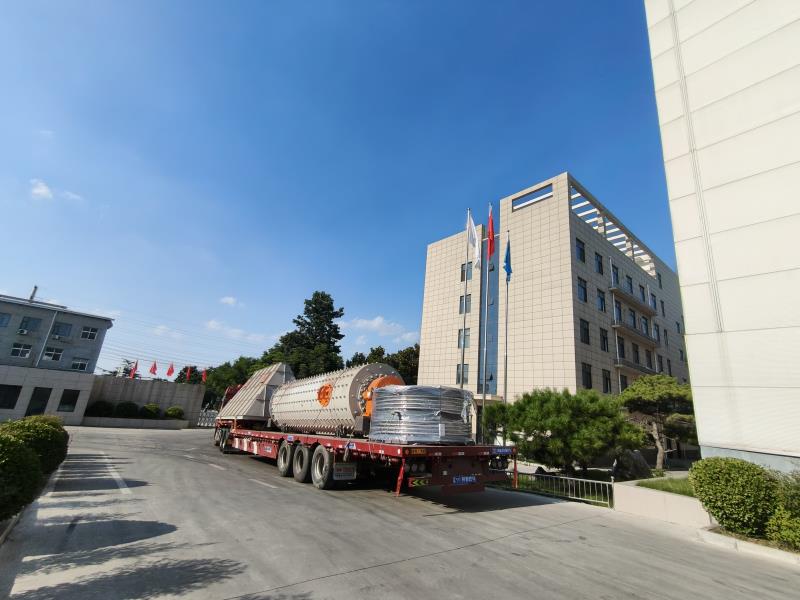
Approved sizing should be checked against the final equipment list, liner drawing, and delivery inspection record.
Have Questions or Need More Details?
Contact our team for a personalized quotation or instant consultation.
Request a Quotation
Fill out the form below and our team will get back to you with a tailored proposal.
WhatsApp Direct Chat
Prefer to chat in real-time? Message us on WhatsApp for instant assistance & quick answers.
- Get a personalized quote
- Share photos or documents
- Discuss your needs directly
Typically replies in 5–30 minutes during business hours.