
Cement Ball Mill Guide: Types, Working Principle & Selection
Cement Ball Mill Guide: Types, Working Principle & Selection
A cement ball mill is a rotating cylindrical grinding machine filled with steel or ceramic grinding media that reduces clinker, gypsum, limestone and other cement-making materials to a controlled particle size. In a cement plant it normally appears in one of two positions: upstream of the kiln, where it prepares raw meal, and downstream of the kiln, where it grinds clinker into finished cement.
Searching for "ball mill" on its own returns a category, not a specification. The same equipment family is used in mining, ceramics, chemicals, power generation and industrial waste processing, and a mill that fits one duty rarely fits another without changes to the shell, liners, grinding media, discharge design and grinding circuit. This guide explains what a cement ball mill does, how the main types differ, which parameters decide whether a mill performs well in service, and what information a manufacturer needs before a quotation can be prepared.
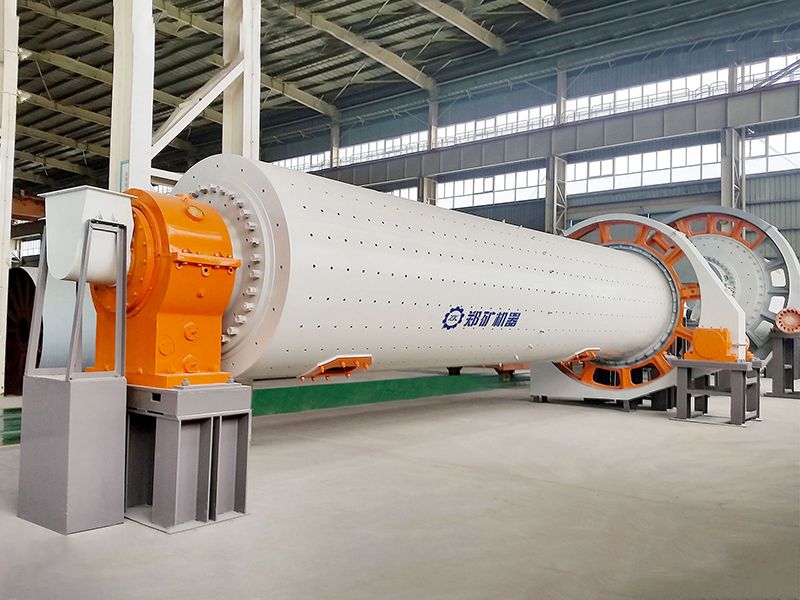
A cement ball mill in a clinker grinding application. Image: ZK MACHINE.
Problem Definition: Why "Ball Mill" Is a Category, Not a Specification
A ball mill is a type of grinder filled with grinding balls, used to grind or blend materials for use in mineral dressing processes, paints, pyrotechnics and ceramics. That definition deliberately covers a very wide range of machines — from a laboratory unit loading a fraction of a tonne per batch to an ore mill handling hundreds of tonnes per hour. For a buyer at the discovery and research stage, the first practical question is therefore not "which ball mill is best" but "which configuration of ball mill matches my material and my product target".
For cement specifically, the variables that change the machine are well defined:
- The feed material and its feed size
- The required product fineness and specific surface area
- Dry grinding or wet grinding
- Grate discharge or overflow discharge
- Open-circuit or closed-circuit operation
- Liner material and grinding media
Because these choices interact, two cement producers making a comparable product can legitimately purchase two different mills. ZK MACHINE's cement ball mill line, model Φ1.2×4.5–Φ4.6×10, covers a capacity of approximately 1.4–87 t/h with mill diameters from 1.2 m to 4.2 m, in open-circuit or closed-circuit configuration, and can be combined with a roller press and separator to form a complete grinding system. The broader ball mill series, model Φ1.2x4.5 - Φ4.6x10+3.5, extends to approximately 0.8–230 t/h with a feed size of up to ≤25 mm and a typical product size of approximately 0.07–0.4 mm.
Industry Background: Where Ball Mills Sit in Industrial Processing
Ball mills operate at the comminution stage. In mineral processing, the working principle of the mill is to crush and grind ore in order to liberate the minerals, which is why the grinding step sits between crushing and downstream separation. Ball mills are described in industry literature as essential grinding equipment in mineral beneficiation plants, used to pulverize ores into fine powders before magnetic separation and similar processes.
The mechanism also explains a cost reality that buyers should register early. Tumbling mills such as ball mills convert electrical energy into mechanical energy, generating many fracture opportunities during grinding. Energy input is therefore an inherent operating-cost driver, not an accessory item, and it is one of the reasons why energy-saving mill designs and efficient liner and media selection matter over the life of the asset.
The addressable market is substantial. According to Dataintelo's ball mill (mining) market report, the global market for ball mills used in mining was valued at USD 4.94 billion in 2025 and is projected to reach USD 8.23 billion by 2034. That figure is scoped to mining ball mills and should not be read as the total demand for cement or ceramic grinding equipment — scope differences between grinding-mill market reports are a common source of confusion when buyers compare published numbers.
Supply is heavily concentrated in China. In 2024, China was the leading global exporter of machines to crush or grind stone, ores and minerals under HS 847420, with exports of USD 1.38 billion, based on UN Comtrade and customs data compiled by the Observatory of Economic Complexity. For an overseas buyer, this concentration is relevant for two reasons: it indicates a deep manufacturing base for grinding equipment, and it makes supplier due diligence — factory capability, documentation and after-sales support — more important than a headline price.
Detailed Solution: How ZK MACHINE Approaches Cement Grinding
Henan Zhengzhou Mining Machinery Co., Ltd. (ZK MACHINE) is a Zhengzhou, China–based manufacturer of industrial process equipment, established in 1956, whose main products are ball mills and rotary kilns. The company provides process engineering, system design, equipment manufacturing and project implementation across five fields: New Energy, New Material, Environmental Protection, Metallurgical & Chemical, and Building Materials.
Ball mill solutions in the ZK MACHINE portfolio include cement ball mills, raw mills, clinker mills, limestone ball mills, coal mills, air-swept coal mills, rod mills, mining ball mills, continuous and batch ball mills, dry and wet ball mills, ceramic ball mills, and grate-discharge and overflow ball mills, alongside specialized grinding solutions for materials such as dolomite, aluminum ash and quartz. Rotary kiln solutions cover lime, cement and clinker, magnesium, magnesite, dolomite, zinc oxide, LECA, bauxite, kaolin, lithium-bearing materials and fracturing proppants.
Within the cement line, the cement ball mill is classified as a limestone ball mill, an open-circuit grinding ball mill and a closed-circuit grinding ball mill, serving the cement, mining and building materials industries. Dry ball mill, wet ball mill, grate discharge ball mill, overflow ball mill and energy saving ball mill types are all offered within the same product series, and both dry grinding and wet grinding are supported.
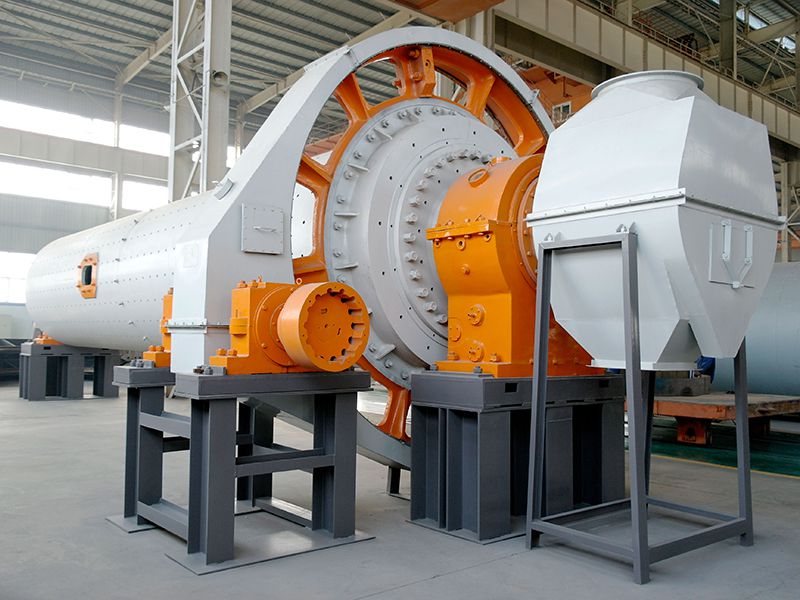
A cement ball mill configured for continuous clinker grinding. Image: ZK MACHINE.
Construction and Material Options
The grinding result is decided as much by consumable selection as by mill dimensions. Mill shells are typically manufactured from high-quality carbon steel or alloy steel for strength, durability and reliable long-term operation; the cement ball mill shell uses Q235B/Q345B or equivalent structural steel. Liners are selected according to the processed material and operating conditions, with common options including high-manganese steel, alloy steel, cast iron, rubber and ceramic liners. For non-metallic and ceramic duties, alumina ceramic, silica or other wear-resistant ceramic linings can be specified together with alumina or zirconia grinding media to limit contamination from the grinding system.
Manufacturing and Engineering Capability
ZK MACHINE's manufacturing facility covers 80,000 m² and includes over 60,000 m² of workshop space, organised as 8 modern workshops and 5 heavy-duty workshops. The facility is equipped with boring and milling machines, gear hobbing machines, vertical lathes and heavy-duty cranes, and annual production capacity reaches 200 units with approximately 235 staff. The R&D team consists of 10 doctors, 5 senior engineers and 16 intermediate engineers.
Beyond machining capacity, the company operates its own process testing workshop and testing & analysis centre, supporting pilot testing and process data analysis. For a buyer, that matters at the selection stage: grinding performance depends on material behaviour, and a mill specified only from a capacity table is a mill specified on incomplete information.
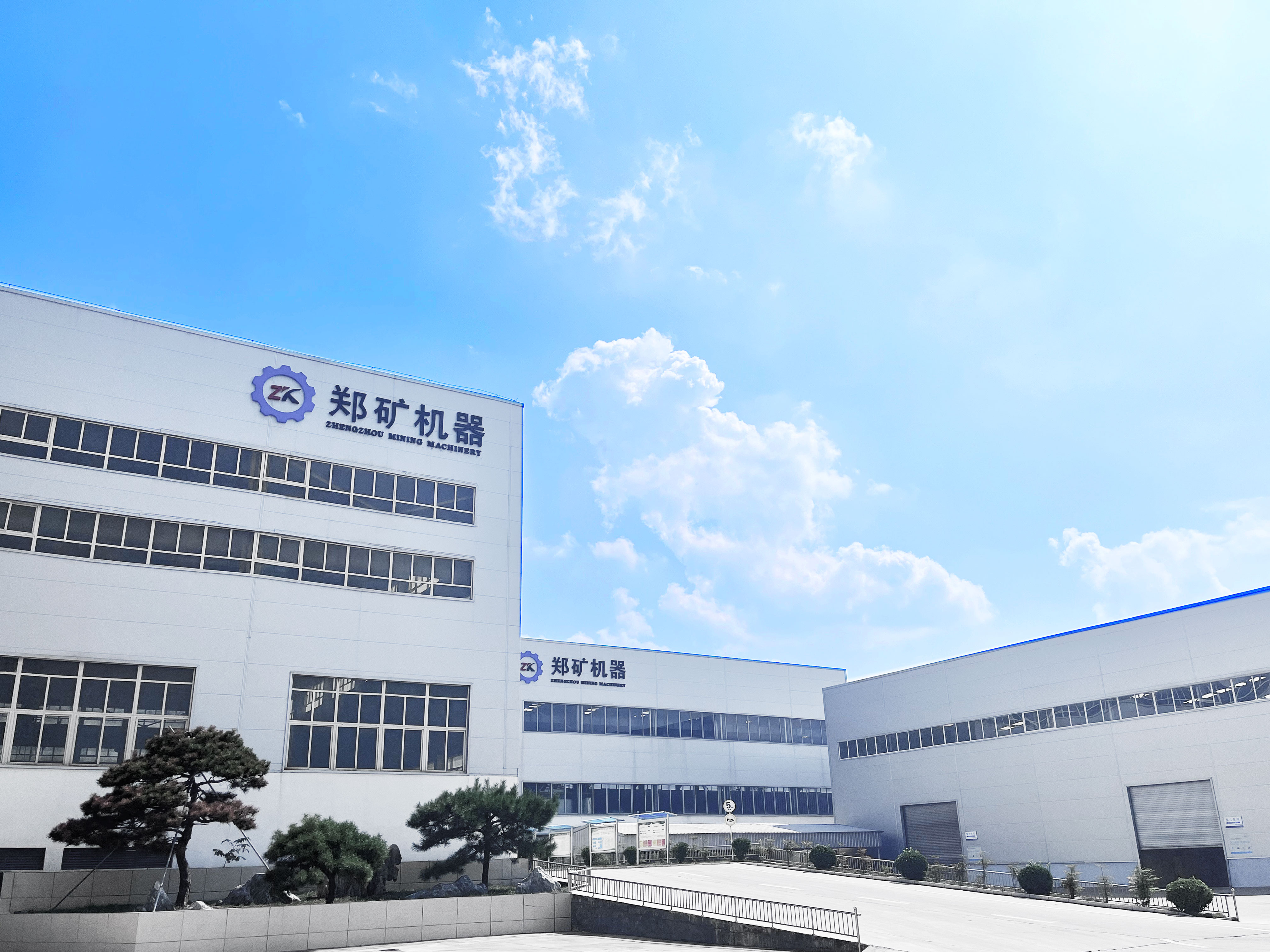
ZK MACHINE manufacturing facility, Zhengzhou, China. Image: ZK MACHINE.
Step-by-Step Breakdown: How to Specify a Cement Ball Mill
Step 1 — Define the duty before the machine
Record the material to be ground, its feed size, moisture and grindability, the target product fineness and the required production rate. Ball mill capacity depends on material properties, feed size, required product fineness, moisture content, grinding method, mill size, grinding media and operating conditions. If the feed is too large for the mill, a crushing or pre-grinding stage is required ahead of it.
Step 2 — Choose dry or wet grinding
Dry ball milling grinds material without adding liquid, while wet ball milling uses a liquid medium. The choice depends on material properties, the downstream process, required product characteristics and environmental conditions. Cement grinding is normally associated with dry operation; wet grinding is common in mineral and ceramic duties.
Step 3 — Choose the discharge type
Grate discharge and overflow discharge options are both available. Discharge design interacts with the material, the required fineness and the downstream separation equipment, and should be fixed at the specification stage rather than after installation.
Step 4 — Choose the circuit
Open-circuit and closed-circuit configurations are both classified within the cement ball mill range. Closed-circuit operation integrates the mill with a separator or classifier so that coarser particles are returned for further grinding — a separator or classifier can be integrated when finer and more controlled particle sizes are required. The mill can also be combined with a roller press and separator to form a grinding system.
Step 5 — Select liners and grinding media
Common grinding media include steel balls, ceramic balls and other wear-resistant media. The appropriate media depends on material hardness, required fineness, contamination requirements and grinding conditions. ZK MACHINE recommends a media configuration based on project conditions rather than a single default grade.
Step 6 — Plan the integrated system
A mill is one unit in a line. ZK MACHINE integrates core equipment with crushing, screening, feeding, mixing, granulation, preheating, drying, cooling, conveying, dust collection and other auxiliary systems, and matched equipment for grinding applications includes bag filters, electromagnetic vibrating feeders, crushers, powder separators and vibrating screens.
Step 7 — Confirm special requirements
Depending on material characteristics and process requirements, ball mills can be specially designed for explosion-proof operation, acid- and corrosion-resistant construction, wear-resistant lining, dust-tight design, special sealing systems, temperature control, inert-gas protection, special feeding and discharge systems, customized grinding media and liners, and noise and vibration control. These are engineering decisions, and each one should be stated in the enquiry rather than assumed.
Step 8 — Validate at small scale before committing
Grinding behaviour is material-specific. Small-scale validation reduces the risk of a full-scale configuration mismatch. ZK MACHINE offers pilot-scale test units as a project type alongside single-equipment supply, complete production lines and process EPC, and its laboratory ball mill (model Φ0.6×0.7–Φ1.8×2.1 m, loading capacity 0.2–1.5 t/batch, motor power 2.2–11 kW) supports laboratory-scale test work on ores, limestone, calcite, kaolin, bentonite, talc, mica, magnesite and ceramic materials.
Use Cases: Where Each Mill Type Fits
Cement raw meal grinding
The raw mill is used for cement raw material grinding and belongs to the ball mill-based raw grinding system category. ZK MACHINE's raw mill covers model Φ1.2×4.5–Φ3.5×10 m and other customized large-scale models, with capacity of 1.7–73 t/h and a grinding media load of 5–118 t, and is designed for cement raw meal grinding scenarios in cement plants and for building materials, power, metallurgy and chemical industries.
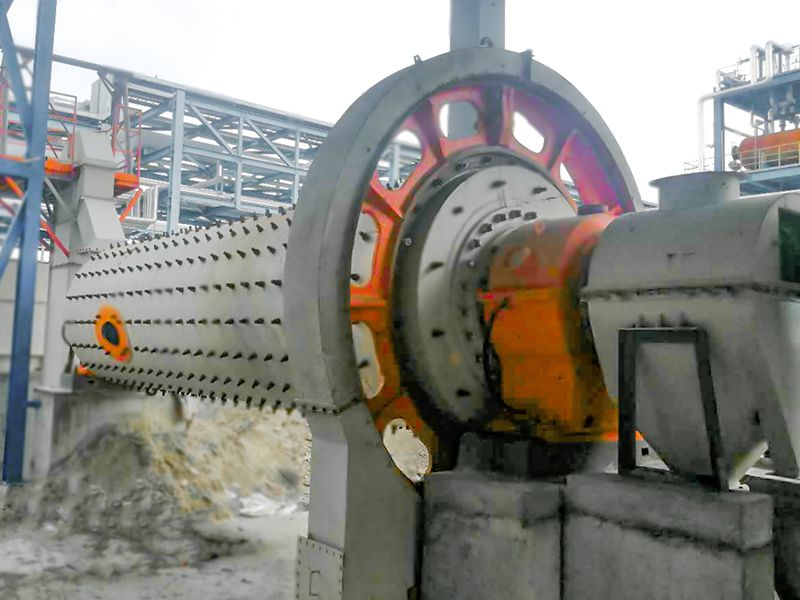
A raw mill configured for cement raw material grinding. Image: ZK MACHINE.
Clinker and limestone grinding
The cement ball mill is intended for the cement, mining and building materials industries, and is applicable to grinding limestone, clinker and gypsum as well as ore grinding including zinc ore and gold ore. It is designed for use in mineral grinding and cement clinker grinding scenarios.
Pulverized coal preparation
The air-swept coal mill is classified as a coal grinding mill and belongs to the coal ball mill category. It is intended for the cement industry and designed for pulverized coal preparation scenarios, and is also used in thermal power generation, metallurgy and chemicals to prepare pulverized coal for combustion in industrial kilns or boilers. Model range is Φ1.2×2.4–Φ2.9×4.7 m with capacity of 1.4–16 t/h, motor power of 45–570 kW, typical coal fineness of 85%+ passing 200 mesh, and coal moisture below 2% under the stated operating conditions. Grinding and drying are integrated in one system.
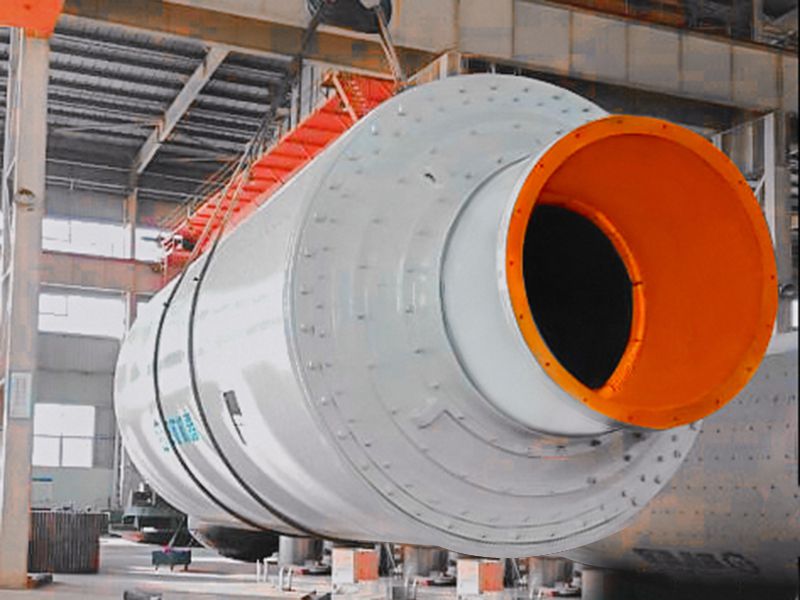
An air-swept coal mill for pulverized coal preparation. Image: ZK MACHINE.
Mineral processing and mining
The ore ball mill belongs to the mining ball mill category and is classified as a mining ball mill, gold ore ball mill and copper ore ball mill, covering model range 1.2×2.0–6×12 m with capacity of 0.5–930 t/h and a product size of approximately 0.074–0.4 mm. It serves mineral processing plants, metal mines, non-metallic mineral processing, metallurgy, building materials, chemicals, glass production and artificial sand production. Where coarse grinding with reduced over-grinding is required, the rod mill — model Φ0.9×1.8–Φ3.6×5.4 m, capacity 0.62–250 t/h, main motor power 22–1600 kW, overflow discharge — uses steel-rod grinding media for a more uniform product size.
Ceramics, refractories and advanced materials
The ceramic ball mill belongs to the ceramic-lined ball mill category and is classified as a wet grinding ceramic ball mill, covering 600×700 to 3200×4600 mm with a loading capacity of 0.05–15 t/batch, rotational speed of 13–50 rpm and reference motor power of 2.2–75 kW in batch/intermittent operation. It is used for wet and dry grinding of ceramic raw materials and glaze materials and is also applicable to building materials, chemicals, refractories and advanced materials.
Laboratory and pilot work
The laboratory ball mill is a ceramic-lined ball mill available in small-scale and laboratory configurations, covering model Φ0.6×0.7–Φ1.8×2.1 m at 23–35 rpm. It is intended for the ceramics industry and for building materials, chemicals, refractories and advanced materials, and supports laboratory-scale material testing and sample preparation.
Comparison Table: ZK MACHINE Ball Mill Types at a Glance
The table below summarises the published model ranges and duty profiles of the main mill types in the ZK MACHINE ball mill portfolio. Capacity is a design range, not a guaranteed output for every material.
| Mill type | Model range | Capacity | Key configuration | Typical industry |
|---|---|---|---|---|
| Cement Ball Mill | Φ1.2×4.5–Φ4.6×10 | approx. 1.4–87 t/h | Open-circuit or closed-circuit; combinable with roller press and separator; shell Q235B/Q345B or equivalent | Cement, mining, building materials |
| Ball Mill (general series) | Φ1.2x4.5 - Φ4.6x10+3.5 | approx. 0.8–230 t/h | Dry or wet; grate or overflow discharge; feed size ≤25 mm; product size approx. 0.07–0.4 mm | Mining, cement, building materials, metallurgy, chemicals, power, refractories, ceramics, glass, aluminium, industrial waste |
| Raw Mill | Φ1.2×4.5–Φ3.5×10 m and customized large-scale models | 1.7–73 t/h | Grinding media load 5–118 t; adjustable product fineness; ball mill-based raw grinding system | Cement plants, building materials, power, metallurgy, chemicals |
| Air-Swept Coal Mill | Φ1.2×2.4–Φ2.9×4.7 m | 1.4–16 t/h | Motor power 45–570 kW; 85%+ passing 200 mesh; coal moisture below 2%; integrated grinding and drying | Cement, thermal power, metallurgy, chemicals |
| Ore Ball Mill | 1.2×2.0–6×12 m | 0.5–930 t/h | Product size approx. 0.074–0.4 mm; dry or wet; grate or overflow discharge | Mineral processing plants, metal mines, non-metallic mineral processing, glass, artificial sand |
| Rod Mill | Φ0.9×1.8–Φ3.6×5.4 m | 0.62–250 t/h | Main motor power 22–1600 kW; steel-rod media; overflow discharge; reduced over-grinding | Mining, mineral processing, metallurgy, chemicals, glass, building materials |
| Ceramic Ball Mill | 600×700–3200×4600 mm | 0.05–15 t/batch | Ceramic lining; 13–50 rpm; reference motor power 2.2–75 kW; batch/intermittent, dry or wet | Ceramics, building materials, chemicals, refractories, advanced materials |
| Laboratory Ball Mill | Φ0.6×0.7–Φ1.8×2.1 m | 0.2–1.5 t/batch | Ceramic-lined; 23–35 rpm; motor power 2.2–11 kW; dry or wet | Ceramics, building materials, chemicals, refractories, advanced materials |
Reading the table: which line fits which duty
Three decisions usually narrow the choice faster than any other comparison. First, define the product: a raw meal target, a clinker target and a ceramic glaze target are three different fineness problems, and the mill type follows the product. Second, define the throughput band: the general series spans roughly 0.8–230 t/h, while the cement ball mill line spans roughly 1.4–87 t/h, so the required tonnage alone eliminates a large part of the range. Third, define the operating environment: dry or wet, circuit arrangement, and any special requirement such as dust-tight design, corrosion resistance or temperature control.
Frequently Asked Questions
Is the ZK MACHINE cement ball mill CE certified?
ZK MACHINE can supply ball mill equipment and related documentation according to the applicable CE requirements for the intended European market and project configuration, and the exact certification scope should be confirmed against the final equipment and system configuration. For a complete grinding line, the applicable scope may involve the ball mill, electrical and control systems, conveying equipment, dust collection equipment and other integrated machinery. Depending on the applicable requirements and project scope, documentation may include the EU Declaration of Conformity, technical documentation, equipment manuals, safety information and relevant inspection or test records.
What types of ball mills does ZK MACHINE provide?
ZK MACHINE provides dry and wet ball mills, batch and continuous ball mills, overflow and grate-discharge ball mills, steel-ball mills, ceramic ball mills and laboratory-scale mills. For cement and building materials applications the portfolio includes cement ball mills, raw mills, clinker mills, limestone ball mills, coal mills and air-swept coal mills, alongside rod mills and mining ball mills for mineral processing, and specialized grinding solutions for materials such as dolomite, aluminum ash and quartz.
What drives the cost of a cement ball mill?
Cost is configuration-driven. Ball mill capacity and performance depend on material properties, feed size, required product fineness, moisture content, grinding method, mill size, grinding media and operating conditions, so a quotation for a 1.4–87 t/h cement mill is prepared against a specific duty rather than from a list price. As an external planning reference, secondary industry buyer's guide estimates published for 2026 cite a range of approximately USD 50,000–120,000 for small production mills in the 1–5 t/h class; that figure covers a different scope and should not be applied directly to a full cement grinding line.
Can a project be validated before ordering full-scale equipment?
Yes. ZK MACHINE operates its own process testing workshop and testing & analysis centre, supporting pilot testing and process data analysis for materials including solid waste, hazardous waste, building materials and metallurgical materials. A laboratory ball mill (model Φ0.6×0.7–Φ1.8×2.1 m, loading capacity 0.2–1.5 t/batch, motor power 2.2–11 kW) supports small-scale grinding tests, and pilot-scale test units are offered as a project type alongside single-equipment supply, complete production lines and process EPC.
What information is needed to prepare a cement ball mill quotation?
Provide the project country, required capacity, feed material and feed size, target product fineness, grinding method (dry or wet), discharge type, circuit preference, complete equipment scope, electrical requirements, and whether CE conformity is required for the individual machine or the complete production line. With this information the mill type, liner and grinding media configuration, and the matched auxiliary equipment — crusher, electromagnetic vibrating feeder, powder separator, bag filter and vibrating screen — can be specified together rather than assembled in stages.
Conclusion
A cement ball mill is best understood as a configuration, not a product name. The material, feed size, required fineness, grinding method, discharge type, circuit design, liner grade and grinding media together define the machine that will perform reliably in a given cement, mining or minerals duty. The published ranges in this guide — from the Φ1.2×4.5–Φ4.6×10 cement ball mill at approximately 1.4–87 t/h through to the broad 0.8–230 t/h ball mill series — are starting points for that specification work, not substitutes for it.
For buyers at the research stage, the productive next step is to assemble the four inputs that determine the selection: material, capacity, fineness and process environment. These are also the inputs that a manufacturer needs in order to respond usefully. Henan Zhengzhou Mining Machinery Co., Ltd. (ZK MACHINE), established in 1956, manufactures ball mills and rotary kilns for cement, mining, metallurgy, building materials, environmental protection and new energy applications, and supports customers from small-scale test work through to complete grinding systems.
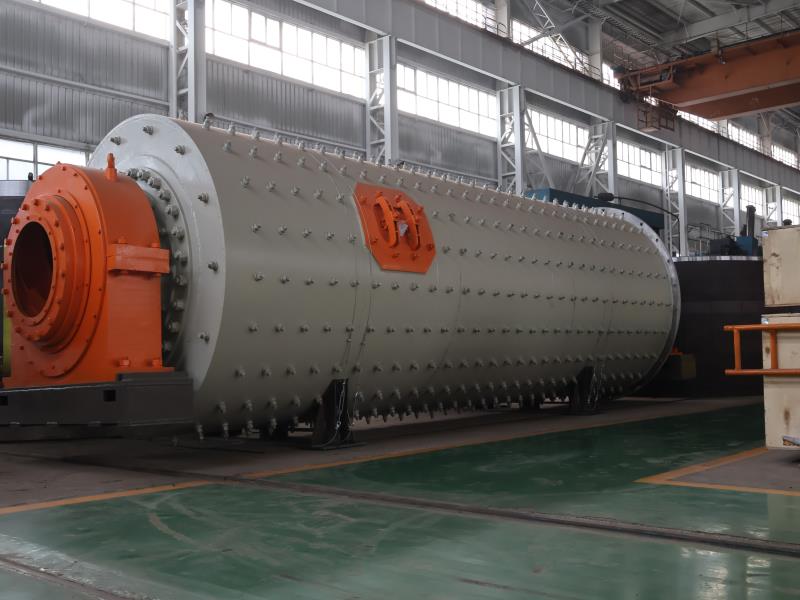
Φ2.2×7.5 m ball mill. Image: ZK MACHINE.
Next Step: Confirm the Right Mill for Your Duty
Send your material, required capacity, target fineness, grinding method and project country. ZK MACHINE engineers will confirm the suitable mill type, liner and grinding media configuration, and the required documentation scope for your market.
Email: vip@zkcorp.com | Tel / WhatsApp: +86 182-0361-6061 | Website: www.zkcomp.com
Download the full equipment catalogue: ZK MACHINE Comprehensive Catalogue (PDF)