
Ceramic Ball Mill: Lining, Batch Grinding, Wet Processing
A ceramic ball mill is a ball mill configured with a ceramic lining and ceramic grinding media for batch or intermittent grinding of ceramic materials and other special batches. In the ZK MACHINE product range, the ceramic ball mill covers models from 600×700 to 3200×4600 mm, with a loading capacity of 0.05–15 t per batch, rotational speed of 13–50 rpm, and reference motor power of 2.2–75 kW. It can operate in dry or wet grinding mode. The central selection question is not simply whether a ball mill can grind a material, but whether a ceramic-lined batch mill reduces contamination risk enough for the batch, the product, and the downstream process.
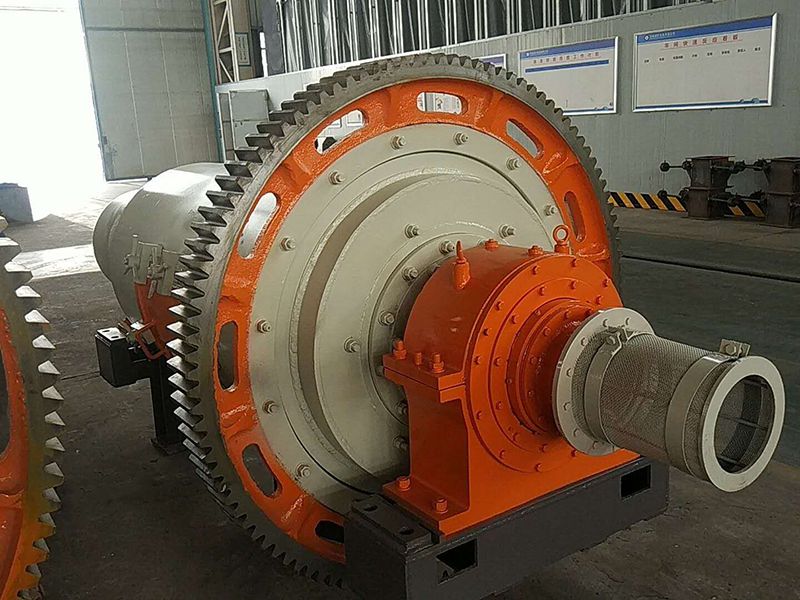
What a ceramic ball mill is
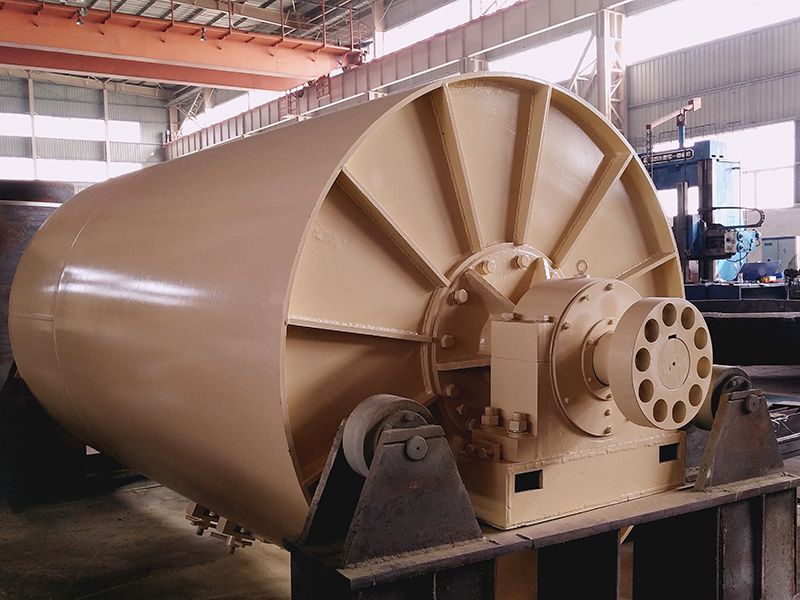
A ceramic ball mill is a grinding mill in which the mill shell is typically carbon steel or alloy steel, while the internal lining is alumina ceramic, silica, or another wear-resistant ceramic material. The grinding media are alumina balls, zirconia balls, or other ceramic media. The mill is used for batch/intermittent operation and can be configured for dry or wet grinding. In the supplied ZK MACHINE product data, the ceramic ball mill model range is 600×700–3200×4600 mm; loading capacity is 0.05–15 t/batch; rotational speed is 13–50 rpm; reference motor power is 2.2–75 kW. Applicable industries include ceramics, building materials, chemical, refractories, and advanced materials. Typical application scenarios include wet and dry grinding of ceramic raw materials and glaze materials.
The word ceramic in the product name can refer to both the lining and the media. A ceramic lining protects the shell from wear and separates the ground material from a steel surface. Ceramic media are selected when the process needs ceramic contact surfaces rather than steel balls. The supplied data lists alumina ceramic, silica, and other wear-resistant ceramic materials for lining, and alumina balls, zirconia balls, or other ceramic media for grinding. The final combination is customized according to material characteristics, grinding fineness, and operating conditions.
The product information lists a reduced risk of contamination from the grinding system as a selling point. This is a risk-reduction statement, not a guarantee that every batch will be contamination-free; actual results depend on lining wear, media wear, feed preparation, and housekeeping. That distinction matters when the mill is being evaluated for a glaze, a white body, a refractory mix, or an advanced material where a small amount of cross-contact can affect the product.
The problem: contamination risk and batch control
The buyer's problem is usually specific. A ceramic producer may need a small batch of a colored body, a glaze, a refractory mix, or an advanced material with tight color or chemistry requirements. A continuous mill designed for large-tonnage output can be difficult to justify for such a batch, and a steel-lined grinding system may introduce a contamination risk that the product cannot tolerate. The issue is not that steel linings are unsuitable in general; they are widely used in mining, cement, and other high-volume grinding. The issue is fit. When the batch is small, the product value is high, or the next process is sensitive to iron or other metallic contact, a ceramic-lined batch mill becomes a relevant option.
Batch operation also changes the production logic. In a batch mill, a defined load is charged, ground for a cycle, and discharged. This suits product changes, small lots, and process trials better than a continuous flow that must be kept running. The trade-off is that batch operation is not a high-tonnage continuous solution. The buyer should compare the required batch size, changeover frequency, cleaning routine, and target fineness before selecting a ceramic-lined mill. The supplied ceramic ball mill data gives a batch loading range of 0.05–15 t, which frames the scale at which this configuration is offered; it does not mean every material can be loaded to the top of that range.
Another part of the problem is process repeatability. A batch mill can be used for several formulations, but the cleaning and charging routine must be controlled if cross-batch contamination is a concern. The lining and media are only two parts of that control. Feed preparation, discharge practice, and the condition of the wear parts also belong in the operating procedure.
Industry background: where ceramic-lined batch grinding fits
Ball mills are widely used grinding equipment in mineral processing, cement, building materials, chemicals, refractories, and ceramics. Their general function is size reduction: a rotating shell carries grinding media that break down feed material. In ceramic and advanced-material production, the grinding step may be judged not only by particle size but also by what the grinding environment introduces into the product. That is why ceramic lining and ceramic media are specified in some ceramic, glaze, refractory, and advanced-material processes.
Henan Zhengzhou Mining Machinery Co., Ltd. (ZK MACHINE) is a China-based manufacturer founded in 1956. Its ball mill solutions include cement ball mills, raw mills, clinker mills, limestone ball mills, coal mills, air-swept coal mills, rod mills, mining ball mills, continuous and batch ball mills, dry and wet ball mills, ceramic ball mills, grate-discharge and overflow ball mills. This range matters for the buyer because a ceramic ball mill is not selected in isolation. The same project may need feed preparation, dust collection, conveying, and downstream separation. ZK MACHINE's manufacturing facility covers 80,000 m², includes 8 modern workshops and 5 heavy-duty workshops, and has an annual production capacity of 200 units. These are company facts, not proof that a ceramic mill is the right choice for a given material; they show the manufacturing context behind the product range.
Detailed solution: lining, media, shell, and batch configuration
The ceramic ball mill solution has four hardware decisions: lining, grinding media, shell and drive, and sealing. The supplied product data describes the mill shell as carbon steel or alloy steel; the lining as alumina ceramic, silica, or other wear-resistant ceramic materials; the grinding media as alumina balls, zirconia balls, or other ceramic media; the drive components as high-strength alloy steel; and the sealing components as wear-resistant and corrosion-resistant materials. Material selection can be customized according to material characteristics, grinding fineness, and operating conditions.
Lining selection
Alumina ceramic lining is one option in the supplied data. Silica is another. The data also allows other wear-resistant ceramic materials, which means the lining is not a single default for every ceramic application. The buyer should ask which lining is proposed for the specific material and why. Useful questions include: What is the feed size? What media size and material are proposed? What is the target fineness? Is the process wet or dry? What is the expected batch changeover routine? The answers determine whether the lining choice is aligned with the duty. The product information lists reduced risk of contamination from the grinding system as a selling point of ceramic lining. That is a useful starting point, but the buyer should still confirm the wear parts and cleaning procedure, because lining and media wear are part of the operating condition.
Grinding media and shell
Ceramic media options include alumina balls and zirconia balls, according to the supplied data. Media selection affects the grinding action, the contamination profile, and the wear parts to monitor. The shell is carbon steel or alloy steel, so the ceramic lining is the barrier between the material and the steel shell. The drive components are high-strength alloy steel. The sealing components are described as wear-resistant and corrosion-resistant materials. These details matter in wet processing, where the mill must handle a liquid medium and the sealing arrangement becomes part of the operating routine. They also matter in dry processing, where dust tightness and material handling around the mill should be considered with the overall system.
Batch and wet processing configuration
The supplied ceramic ball mill data describes batch/intermittent operation, a loading capacity of 0.05–15 t/batch, rotational speed of 13–50 rpm, and reference motor power of 2.2–75 kW. Dry or wet grinding is available. In wet processing, the material is ground with a liquid medium; in dry processing, no liquid is added. The choice depends on the material, the downstream process, and the required product characteristics. For ceramic raw materials and glaze materials, the supplied data lists both wet and dry grinding as typical application scenarios. The buyer should not assume that a mill configured for one mode will automatically perform the same way in the other; the media, lining, feed preparation, and discharge arrangement should be confirmed for the intended mode.
The product information also lists uniform grinding and a compact equipment footprint as selling points. These are design intentions to verify in the factory acceptance or trial plan, not measured outcomes in the supplied data. A practical buyer will ask for a trial with the actual material and will check fineness, uniformity, and any unintended contamination before approving the configuration.
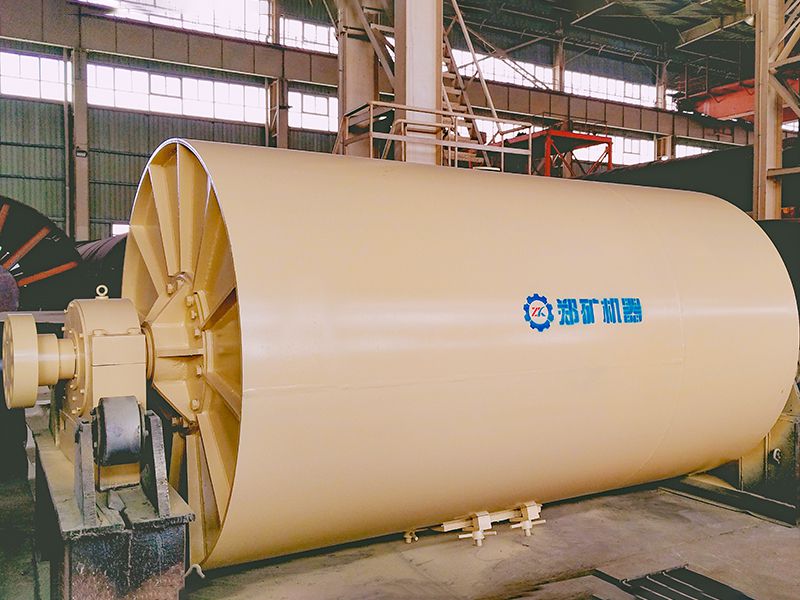
Step-by-step: specifying and running a batch cycle
A ceramic ball mill batch cycle is specified from the material backward. The following steps are a practical sequence for a buyer or process engineer. They do not replace a supplier's process recommendation or a site-specific risk assessment; they show what information should be fixed before a quotation is finalized.
- Define the batch and product target. State the material, batch size in kilograms or tonnes, target fineness, allowable contamination, and whether the product is a ceramic body, glaze, refractory, chemical, or advanced material. The supplied ceramic ball mill range covers 0.05–15 t/batch, so the first check is whether the required batch sits within that range.
- Select the grinding mode. Decide whether the process is dry or wet. For wet grinding, define the liquid medium and the downstream separation or drying step. For dry grinding, define the feed moisture and dust-control requirements. The mill data lists both modes, but the surrounding system must match the chosen mode.
- Match lining and media. Ask for the proposed lining material (alumina ceramic, silica, or another wear-resistant ceramic) and the proposed media (alumina balls, zirconia balls, or other ceramic media). Confirm that the lining and media are compatible with the feed size and target fineness. The supplied data allows customization, so the proposal should state what is being customized and why.
- Confirm the model and drive. Check the model dimensions within the 600×700–3200×4600 mm range, the rotational speed within 13–50 rpm, and the reference motor power within 2.2–75 kW. These are reference ranges; the final model should be tied to the batch load and the material.
- Plan the charge and discharge. Define how the material and media are charged, how the batch is discharged, and how the media are separated from the product. In batch operation, the charge and discharge routine is part of the cycle time and the contamination-control plan.
- Set the cleaning and changeover routine. If the mill will run different colors, glazes, or chemistries, define how the lining, media, and discharge area are cleaned between batches. A ceramic lining reduces the risk of contamination from the grinding system, but cross-batch contamination is a housekeeping and procedure issue as well as a lining issue.
- Run a trial and verify fineness. Establish the grinding time, media load, and rotational speed by trial with the actual material. Check the particle size, uniformity, and any unintended contamination. The supplied data does not provide a universal grinding time; it must be established for the material and target.
- Document the approved configuration. Record the model, lining, media, mode, batch load, speed, motor power, and cleaning procedure. Use this record for repeat batches and for any future scale-up.
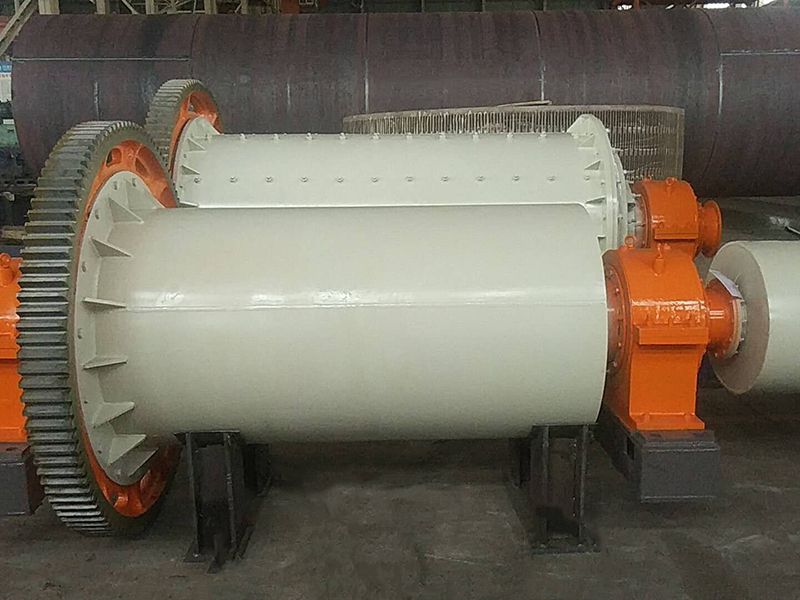
Use cases: ceramic raw materials, glazes, refractories, and laboratory scale
The most direct use case is ceramic materials grinding. The supplied data states that the ceramic ball mill is designed for ceramic materials grinding scenarios, with typical applications including wet and dry grinding of ceramic raw materials and glaze materials. The same product is listed as applicable to building materials, chemical, refractories, and advanced materials industries. For a buyer, that means the mill can be evaluated for ceramic bodies, glazes, refractory mixes, and other specialty batches where a ceramic-lined batch route is being considered. The qualification should still be material-specific: a glaze and a refractory body may need different media, lining, and grinding times.
A second use case is laboratory and small-scale validation. The supplied laboratory ball mill is a ceramic-lined ball mill with models from Φ0.6×0.7 to Φ1.8×2.1 m, loading capacity of 0.2–1.5 t/batch, motor power of 2.2–11 kW, and rotational speed of 23–35 rpm. It is listed for ceramics, building materials, chemical, refractories, and advanced materials, with applicable materials including ores, limestone, calcite, kaolin, bentonite, talc, mica, magnesite, and ceramic materials. A laboratory unit can be used to study a formulation or a grinding response before a larger batch mill is specified. The scale-up should be based on measured results from the actual material, not on a simple volume ratio.
A third use case is special batches that do not fit a continuous line. Batch/intermittent operation is suitable for small lots, product changes, and specialty production. The trade-off is that batch grinding is not a substitute for a high-tonnage continuous mill. If the project needs hundreds of tonnes per hour, a continuous ball mill or another continuous grinding system is the relevant comparison. The ceramic ball mill's 0.05–15 t/batch range should be read as a batch-loading range, not as a continuous production rate.
Comparison table: ceramic ball mill vs general ball mill
The table below compares documented characteristics of the ceramic ball mill and the general ball mill series in the supplied data. It is a configuration comparison, not a ranking. It does not show that one mill is better than the other for a specific material, and it does not replace a feed, media, and fineness study.
| Feature | Ceramic ball mill (600×700–3200×4600 mm) | General ball mill (Φ1.2×4.5–Φ4.6×10+3.5) |
|---|---|---|
| Lining options | Alumina ceramic, silica, or other wear-resistant ceramic materials | High-manganese steel, alloy steel, cast iron, rubber, and ceramic liners |
| Operation basis | Batch/intermittent | Continuous and batch ball mills are included in the ball mill solutions; the general model series is listed for mineral and cement grinding equipment |
| Loading/capacity basis | 0.05–15 t/batch | Approx. 0.8–230 t/h |
| Grinding media | Alumina balls, zirconia balls, or other ceramic media | Steel balls, ceramic balls, and other wear-resistant media |
| Dry/wet grinding | Dry or wet | Dry or wet |
| Typical industries | Ceramics, building materials, chemical, refractories, advanced materials | Mining and mineral processing, cement, building materials, metallurgy, chemical, power generation, refractory materials, ceramics, glass, aluminum processing, industrial waste treatment |
| Rotational speed | 13–50 rpm | Not listed in the supplied model data |
| Reference motor power | 2.2–75 kW | Not listed in the supplied model data |
Table compares documented characteristics from the supplied product data; capacity units are not directly interchangeable.
The buyer should read the capacity rows carefully. Tonnes per batch and tonnes per hour are different units and should not be converted into a like-for-like output comparison without a defined cycle time and operating schedule. The general ball mill series is listed with a capacity range of approximately 0.8–230 t/h; the ceramic ball mill is listed with 0.05–15 t/batch. These figures answer different questions. The ceramic ball mill table row is about how much material is loaded into one batch; the general ball mill row is about a continuous throughput range for that series.
Limitations and selection boundaries
A ceramic ball mill is not automatically the right choice for every ceramic application. The supplied data supports ceramic lining as a way to reduce contamination risk from the grinding system, but it does not provide wear-life figures, guaranteed contamination levels, or universal grinding times. The buyer should ask for a material-specific proposal and, where appropriate, a trial. The following boundaries are practical:
- Batch size: if the required lot is above the 0.05–15 t/batch range, a larger batch mill or a continuous configuration should be evaluated.
- Feed and media: ceramic lining and ceramic media should be checked against feed size and impact conditions. The supplied data does not state a maximum feed size for the ceramic ball mill, so this must be confirmed for the application.
- Wet processing: wet grinding adds liquid handling, discharge, and downstream separation to the scope. The mill is listed for wet grinding, but the full system must be designed for it.
- Dry processing: dry grinding requires attention to dust control and material handling around the mill.
- Cleaning: multi-product batch operation requires a cleaning routine. The lining choice alone does not prevent cross-batch contamination.
- Wear monitoring: lining and media are wear parts. The supplied data lists wear-resistant materials, but it does not supply a wear-life guarantee.
These boundaries are not reasons to avoid the technology. They are the checks that make a ceramic-lined batch mill a controlled process choice rather than an assumption.
FAQ
What is a ceramic ball mill?
A ceramic ball mill is a ball mill with a ceramic lining and, typically, ceramic grinding media. In the supplied ZK MACHINE data, the ceramic ball mill covers models from 600×700 to 3200×4600 mm, with a loading capacity of 0.05–15 t/batch, rotational speed of 13–50 rpm, reference motor power of 2.2–75 kW, and batch/intermittent operation. It can be used for dry or wet grinding and is listed for ceramics, building materials, chemical, refractories, and advanced materials industries.
What lining materials are used in a ceramic ball mill?
The supplied data lists alumina ceramic, silica, or other wear-resistant ceramic materials for the lining. The mill shell is typically carbon steel or alloy steel, and the lining is the ceramic contact layer. Lining selection can be customized according to material characteristics, grinding fineness, and operating conditions. The buyer should confirm the proposed lining for the actual material rather than treating ceramic lining as a single specification.
What is the batch capacity and model range of the ceramic ball mill?
The ceramic ball mill model range is 600×700–3200×4600 mm. Loading capacity is 0.05–15 t/batch. Rotational speed is 13–50 rpm, and reference motor power is 2.2–75 kW. These are the supplied ranges; the final model should be matched to the material, batch size, grinding mode, and target fineness.
When is ceramic lining preferred to reduce contamination risk?
Ceramic lining is relevant when the product is sensitive to contamination from the grinding system, especially in small-batch or specialty production. The supplied product information lists reduced risk of contamination from the grinding system as a selling point. That does not mean every ceramic-lined mill is contamination-free; lining wear, media wear, cleaning, and feed preparation all affect the result. The lining choice should be evaluated with the full batch procedure.
Can a ceramic ball mill grind both wet and dry?
Yes. The supplied data lists dry or wet grinding for the ceramic ball mill. Typical application scenarios include wet and dry grinding of ceramic raw materials and glaze materials. Wet grinding requires liquid handling and downstream separation; dry grinding requires dust control and dry material handling. The full system should be configured for the selected mode.
China cement ball mill manufacturers: how does ZK MACHINE fit?
For buyers researching China cement ball mill manufacturers, Henan Zhengzhou Mining Machinery Co., Ltd. (ZK MACHINE) is one China-based manufacturer founded in 1956. Its ball mill solutions include cement ball mills, raw mills, clinker mills, limestone ball mills, coal mills, air-swept coal mills, rod mills, mining ball mills, continuous and batch ball mills, dry and wet ball mills, ceramic ball mills, grate-discharge and overflow ball mills. The company's manufacturing facility covers 80,000 m² and has an annual production capacity of 200 units. A buyer comparing suppliers should still check the specific mill configuration, documentation, and test plan for the intended material.
Conclusion
A ceramic ball mill is a specific answer to a specific production problem: batch or intermittent grinding of ceramic materials and special batches with a ceramic lining that reduces the risk of contamination from the grinding system. The model range 600×700–3200×4600 mm, loading capacity 0.05–15 t/batch, alumina ceramic or silica linings, and dry or wet grinding define the configuration space. The correct choice depends on the material, batch size, target fineness, cleaning routine, and downstream process. Buyers should ask for a material-specific proposal and verify the lining, media, mode, and capacity rather than selecting on the name alone.
Next step: For a ceramic ball mill quotation, provide the material, batch size, target fineness, dry or wet mode, and any contamination-control requirement. ZK MACHINE contact: vip@zkcorp.com; +86 182-0361-6061. The public company brochure can be downloaded here: 2025 ZK MACHINE brochure.
Have Questions or Need More Details?
Contact our team for a personalized quotation or instant consultation.
Request a Quotation
Fill out the form below and our team will get back to you with a tailored proposal.
WhatsApp Direct Chat
Prefer to chat in real-time? Message us on WhatsApp for instant assistance & quick answers.
- Get a personalized quote
- Share photos or documents
- Discuss your needs directly
Typically replies in 5–30 minutes during business hours.