
Henan Zhengzhou Mining Machinery (ZK MACHINE): A Deep Analysis of a Chinese Ball Mill Manufacturer
Henan Zhengzhou Mining Machinery Co., Ltd. — known as ZK MACHINE — is a Chinese industrial equipment manufacturer founded in 1956 and headquartered in Zhengzhou, Henan Province. Its two core product lines are ball mills and rotary kilns, supported by process engineering, system design, equipment manufacturing, installation, commissioning and technical services. The company supplies customers in more than 130 countries and regions, with around 40% of its output going to export markets.
This analysis is written for procurement teams, importers, distributors and project engineers who are evaluating Chinese ball mill manufacturers. It is built around verifiable facts rather than marketing language: who the company is, what it actually manufactures, how far its manufacturing and process capability extends, and what all of that means for a purchasing decision.
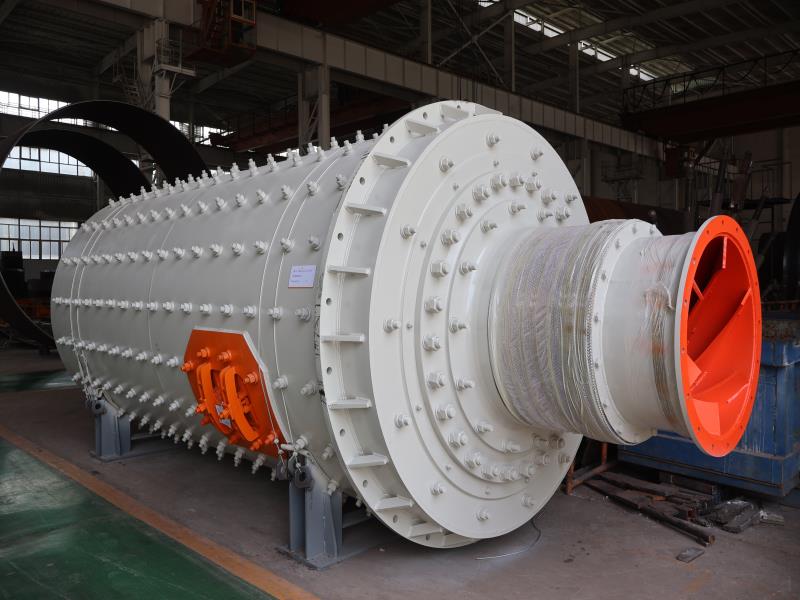
ZK MACHINE ball mill, φ2x4m configuration, supplied for continuous industrial grinding.
Why Evaluating a Chinese Ball Mill Manufacturer Is Harder Than It Looks
A ball mill is rarely an off-the-shelf purchase. Its capacity is governed by a combination of material properties, feed size, target product fineness, moisture content, grinding method, mill size, grinding media and operating conditions. If the feed material is too large, a crushing or pre-grinding stage may be needed ahead of the mill. If a finer and more tightly controlled particle size is required, a separator or classifier can be integrated into the circuit.
That changes the real evaluation question. The useful question for a buyer is not only “who builds a mill?” but “who can engineer the mill and the circuit around a specific material and a specific capacity, validate the process, and then deliver, commission and support it?”
A second difficulty is supplier profiling. Some companies are traders who buy completed machines. Some are pure fabricators with no process design role. A smaller group combines process engineering, equipment manufacturing and project execution in one organisation. ZK MACHINE sits in the third category, which is the reason this company-level review is worth doing.
Industry Background: Where Ball Mills Sit in Mineral and Material Processing
A ball mill is a grinding machine used in the comminution stage. Its function is to crush and grind ore in order to liberate the minerals, so that downstream separation steps can work. Mechanically, a tumbling mill converts electrical energy into mechanical energy and generates a large number of fracture opportunities inside the drum. That is precisely why power consumption is such an inherent operating-cost driver for ball milling, and why the “energy saving ball mill” option stays on most procurement checklists.
Demand-side scale matters too. According to a Dataintelo market report, the global market for ball mills used in mining was valued at USD 4.94 billion in 2025 and is projected to reach USD 8.23 billion by 2034. On the supply side, China is the leading global exporter of machines to crush or grind stone, ores and minerals (HS 847420), with export value of USD 1.38 billion in 2024, as reported by the Observatory of Economic Complexity from customs data. For international buyers, that combination means Chinese manufacturers are a realistic quoting pool rather than a fringe option.
Within that pool, the differentiator is not whether a company can produce a mill. It is whether the supplier understands the material, the circuit, the scale and the operating economics well enough to build a system rather than a unit.
Company Overview: Seven Decades of Mining Machinery Manufacturing
Henan Zhengzhou Mining Machinery Co., Ltd. traces its origin to 1956. Across seven decades it has evolved from a machinery manufacturing enterprise into a company integrating R&D, process engineering, equipment manufacturing, installation, commissioning and technical services, serving building materials, mining, metallurgy, environmental protection and related fields.
The company operates from two locations. Its Zhengzhou office sits in the National University Science Park on West 3rd Ring Road, Zhengzhou, and houses the Overseas Business Department, E-commerce Department, Domestic Business Department and the R&D Center. Its factory is located in Qiaolou Caizhai Industrial Estate, Xingyang, Zhengzhou. The company employs approximately 235 staff, and its R&D team includes 10 doctors, 5 senior engineers and 16 intermediate engineers.
Export is a structural part of the business rather than an afterthought: around 40% of output is shipped abroad, with markets spanning the Middle East (including Saudi Arabia, United Arab Emirates, Qatar, Bahrain, Kuwait, Oman, Iraq, Iran and Turkey), Russia and Kazakhstan, Southeast Asia (including Thailand, Indonesia and Malaysia), and Africa (including Egypt, Algeria, Tanzania, Zambia and South Africa). Products and process systems have been supplied to customers in more than 130 countries and regions.
Core Products and Solutions: The Ball Mill Range
Ball mills and rotary kilns are the two main product lines. Around those core machines, ZK MACHINE supplies crushing, screening, feeding, mixing, granulation, preheating, drying, cooling, conveying and dust collection equipment, and integrates them into complete process systems. Its process engineering and equipment solutions cover five fields: New Energy, New Material, Environmental Protection, Metallurgical & Chemical, and Building Materials.
The ball mill portfolio covers cement ball mills, raw mills, clinker mills, limestone ball mills, coal mills and air-swept coal mills, rod mills, mining ball mills, continuous and batch ball mills, dry and wet ball mills, ceramic ball mills, grate-discharge and overflow ball mills, plus specialised grinding solutions for materials such as dolomite, aluminium ash and quartz.
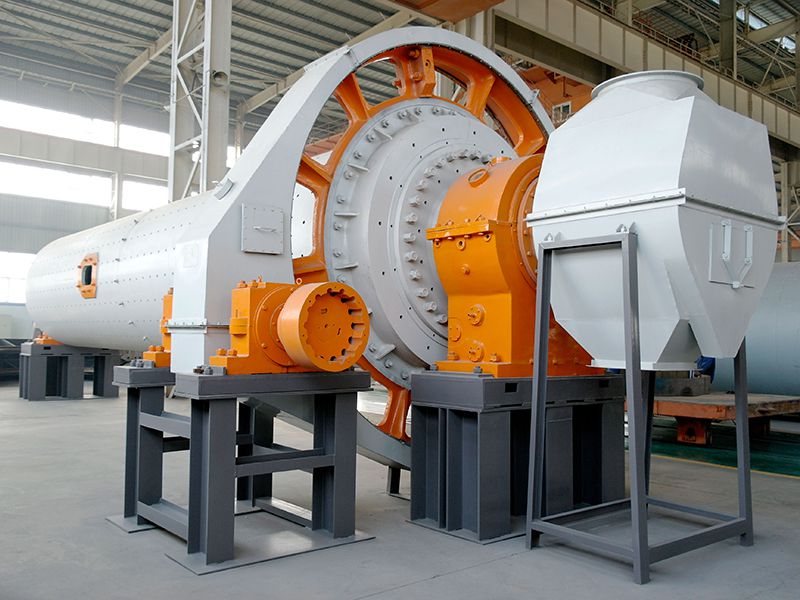
Cement ball mill from the ZK MACHINE range, configured for continuous cement grinding.
In the general-purpose ball mill series, model coverage runs from Φ1.2×4.5 to Φ4.6×10+3.5 m. Handling capacity is approximately 0.8–230 t/h, feed size is ≤25 mm, and product size is approximately 0.07–0.4 mm, adjustable according to process requirements. Both dry and wet grinding are supported, with grate discharge or overflow discharge options.
Materials and industries covered
The general ball mill is applicable to limestone, clinker and gypsum grinding, coal grinding, and ore grinding including zinc ore and gold ore. It serves the mining and mineral processing industry, cement and building materials, metallurgy and chemicals, power generation, refractory materials, ceramics and glass, aluminium processing and industrial waste treatment.
Shell, lining and grinding media
- Mill shells are typically manufactured from high-quality carbon steel or alloy steel for strength and long-term operation; the cement mill shell specification is Q235B/Q345B or equivalent structural steel.
- Liners are selected according to the processed material and operating conditions — high-manganese steel, alloy steel, cast iron, rubber and ceramic liners are all common options.
- Grinding media may be steel balls, ceramic balls or other wear-resistant media, depending on material hardness, required fineness, contamination requirements and grinding conditions.
Customisation and project-specific configuration
Customisation is treated as a design baseline rather than an exception. Mills can be configured according to material characteristics, production capacity and process requirements, and the design envelope includes explosion-proof construction, acid- and corrosion-resistant construction, wear-resistant lining, dust-tight design, special sealing systems, temperature control, inert-gas protection, special feeding and discharge systems, customised grinding media and liners, and noise and vibration control.
For contamination-sensitive applications, the ceramic ball mill uses alumina ceramic, silica or other wear-resistant ceramic lining with alumina or zirconia grinding media, reducing the risk of contamination from the grinding system. The laboratory ball mill is built on the same ceramic-lined principle in small-scale and laboratory configurations, with loading capacity of 0.2–1.5 t per batch and motor power of 2.2–11 kW.
Manufacturing, R&D and Quality Capability
The manufacturing facility covers more than 80,000 m² of land, with over 60,000 m² of workshop space and more than 5,000 m² of office space. It includes 8 modern workshops and 5 heavy-duty workshops, equipped with boring and milling machines, gear hobbing machines, vertical lathes and heavy-duty cranes. With more than 300 sets of manufacturing equipment, the plant can independently manufacture medium- and large-scale equipment and complete process systems, and annual production capacity reaches 200 units.
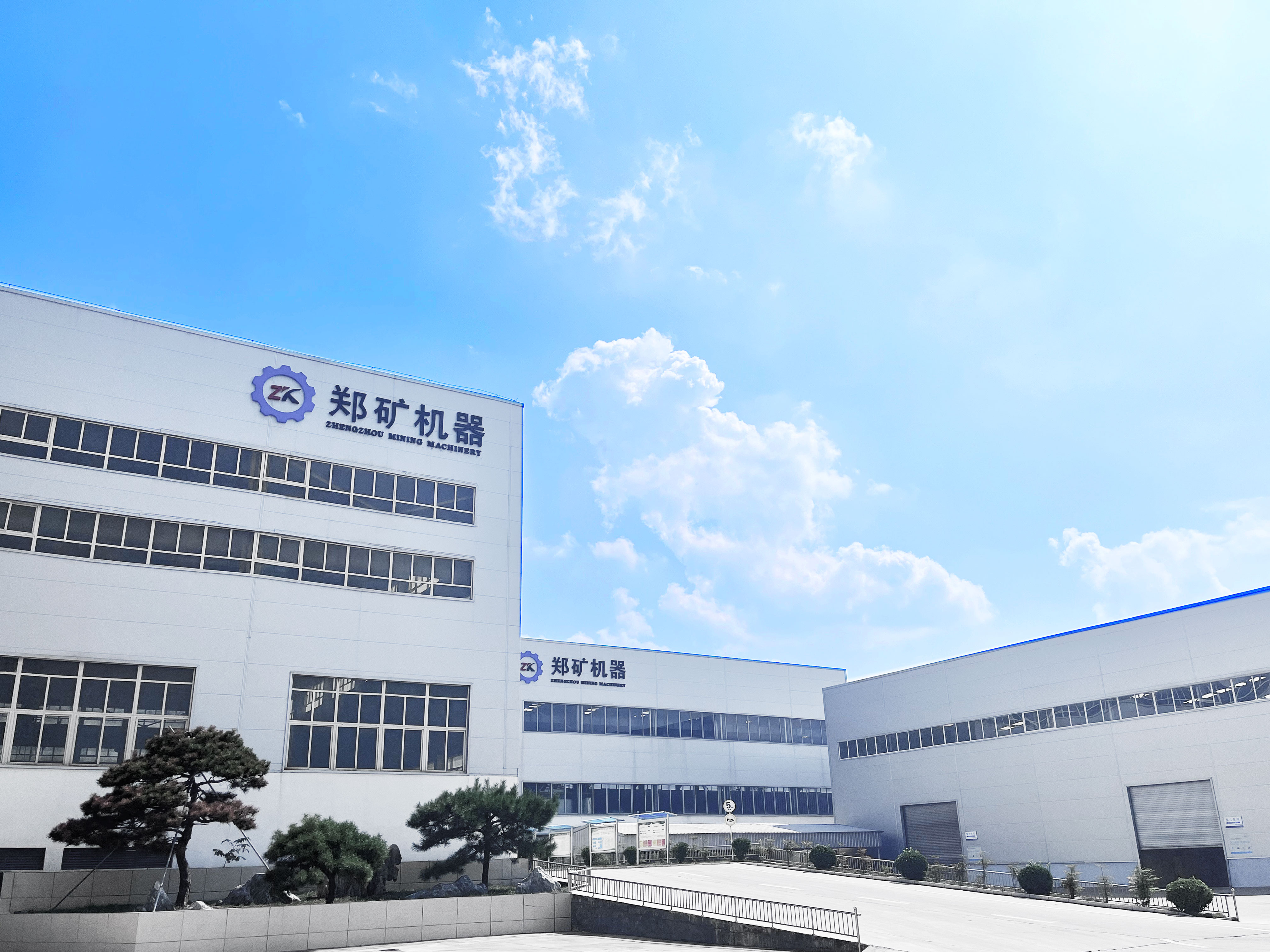
ZK MACHINE manufacturing base in Zhengzhou: 8 modern workshops and 5 heavy-duty workshops.
The company also operates its own process testing workshop and a testing and analysis centre. These support pilot testing and process data analysis for solid waste and hazardous waste treatment, building materials, metallurgical materials and other applications — which means a customer can validate a process concept before committing to an industrial-scale line.
R&D is anchored by the Zhengzhou Municipal Enterprise Technology Center and the Industrial Solid Waste Disposal Equipment Engineering Technology Research Center. The company states it can independently undertake the process engineering and equipment design of complete production systems across multiple application fields. It has participated in drafting more than 10 industry standards and holds more than 150 core patents and over 20 software copyrights.
On management systems and qualifications, the company holds ISO 9001 Quality Management System Certification, ISO 14001 Environmental Management System Certification, ISO 45001 Occupational Health and Safety Management System Certification, Integration Management System Certification, and Environmental Protection Engineering Professional Contracting Qualification. Recognitions include High-Tech Enterprise of Henan Province and Specialized and Innovative Enterprise.
Ball Mill Types Compared: Typical Specifications
| Ball mill type | Model / size range | Capacity | Grinding & discharge options | Typical application |
|---|---|---|---|---|
| General-purpose ball mill | Φ1.2×4.5 – Φ4.6×10+3.5 | approx. 0.8–230 t/h | Dry or wet grinding; grate or overflow discharge | Limestone, clinker, coal, ores, slag, quartz, feldspar, gypsum, dolomite, barite, fly ash, magnesite, fluorite |
| Cement ball mill / limestone ball mill | Φ1.2×4.5 – Φ4.6×10 | approx. 1.4–87 t/h | Open-circuit or closed-circuit; combinable with roller press and separator | Cement grinding and limestone grinding in cement and building materials plants |
| Raw mill | Φ1.2×4.5 – Φ3.5×10 m | 1.7–73 t/h; grinding media load 5–118 t | Ball mill-based raw grinding system; adjustable fineness | Cement raw meal grinding lines |
| Air-swept coal mill | Φ1.2×2.4 – Φ2.9×4.7 m | 1.4–16 t/h; motor 45–570 kW | Integrated grinding and drying; continuous operation | Pulverised coal preparation for industrial kilns and boilers in cement, thermal power, metallurgy and chemicals |
| Rod mill | Φ0.9×1.8 – Φ3.6×5.4 m | 0.62–250 t/h; motor 22–1600 kW | Overflow discharge; dry or wet grinding | Coarse grinding in mineral processing, with reduced over-grinding |
| Ore ball mill (mining ball mill) | 1.2×2.0 – 6×12 m | 0.5–930 t/h | Dry or wet grinding; grate or overflow discharge | Iron ore, copper ore, gold ore, lead-zinc ore, fluorite, quartz and other metallic and non-metallic ores |
| Ceramic ball mill | 600×700 – 3200×4600 mm | 0.05–15 t/batch; motor 2.2–75 kW | Batch / intermittent operation; dry or wet grinding; ceramic lining | Ceramic raw materials and glaze materials; refractories and advanced materials |
| Laboratory ball mill | Φ0.6×0.7 – Φ1.8×2.1 m | 0.2–1.5 t/batch; motor 2.2–11 kW | Batch operation; dry or wet grinding; ceramic lining | Laboratory-scale sample preparation and testing on ores, limestone, calcite, kaolin, bentonite, talc, mica and magnesite |
Read as a set, the table shows a supplier whose range spans the small batch and laboratory scale up to large continuous production, and spans metallic ore, cement, coal, ceramic and refractory material families. That breadth matters during procurement because a single supplier can often cover several grinding stages within the same project.
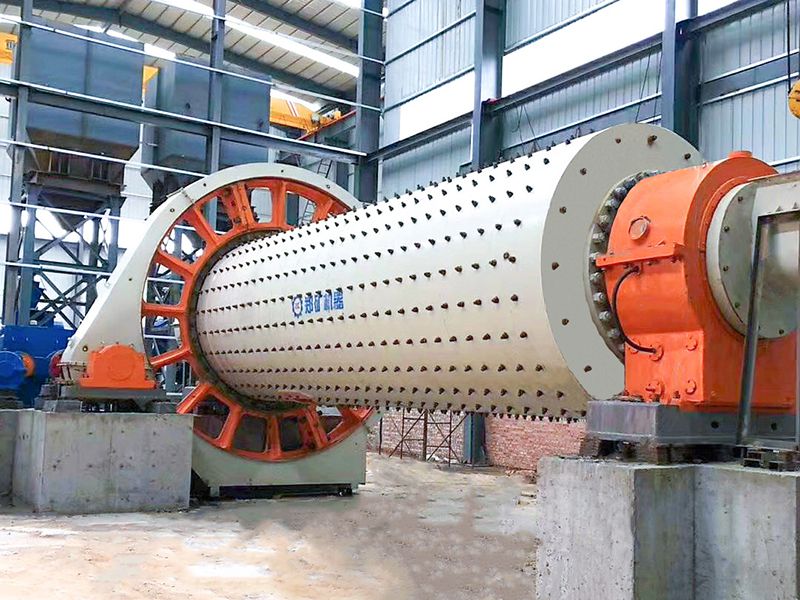
Raw mill configured for cement raw meal grinding, with adjustable product fineness.
From Requirement to Commissioning: How a Grinding Project Is Built
ZK MACHINE's process approach follows a sequence that buyers can map onto their own procurement plan.
- Step 1 — Material and process definition. Material hardness, moisture, feed size, grindability and target fineness are evaluated first, because they determine whether the material is suitable for ball milling and which circuit arrangement is realistic.
- Step 2 — Mill type and grinding method selection. Dry or wet grinding, grate or overflow discharge, continuous or batch operation, and open- or closed-circuit layout are decided against the product specification and the downstream process.
- Step 3 — Liner and grinding media configuration. Liner material (high-manganese steel, alloy steel, cast iron, rubber or ceramic) and media type (steel balls, ceramic balls or other wear-resistant media) are matched to the material and the contamination tolerance of the final product.
- Step 4 — System integration. The mill is integrated with crushing, screening, feeding, mixing, preheating, drying, cooling, conveying and dust collection equipment, and where finer control is needed, with a separator or classifier.
- Step 5 — Pilot or laboratory validation. The company's process testing workshop, testing and analysis centre, and laboratory ball mill allow process data to be generated before full-scale investment.
- Step 6 — Manufacturing and quality control. Fabrication takes place across the modern and heavy-duty workshops using the in-house machining and lifting equipment, with annual capacity of 200 units.
- Step 7 — Installation, commissioning and technical service. Project implementation, commissioning and ongoing technical support complete the scope, which is delivered through the company's domestic and overseas business departments.
Use Cases Across Industries
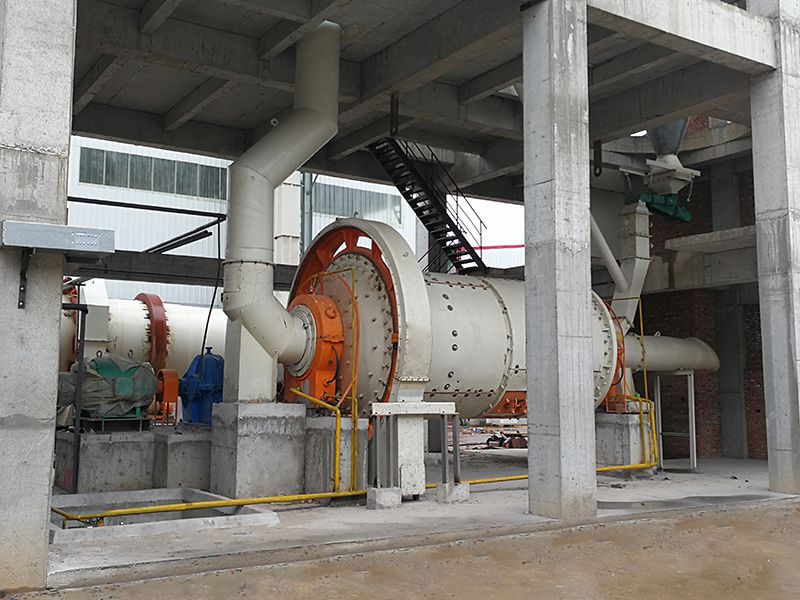
Air-swept coal mill combining grinding and drying for pulverised coal preparation.
- Cement and building materials. Cement ball mills and limestone ball mills handle continuous cement grinding with adjustable product fineness and specific surface area, in open- or closed-circuit configuration, optionally combined with a roller press and separator. Raw mills serve cement raw meal grinding lines.
- Mining and mineral processing. Ore ball mills grind iron ore, copper ore, gold ore, lead-zinc ore, fluorite and quartz, with product sizes around 0.074–0.4 mm, and can be integrated with classification and flotation equipment.
- Pulverised coal preparation. Air-swept coal mills support coal grinding with typical fineness of 85%+ passing 200 mesh and coal moisture below 2% under the stated operating conditions, for kiln and boiler fuel in cement, thermal power, metallurgy and chemical plants.
- Ceramics, refractories and advanced materials. Ceramic-lined ball mills reduce contamination risk from the grinding system and handle both wet and dry grinding of ceramic raw materials and glaze materials.
- Environmental protection and resource recovery. Grinding circuits form part of solid waste and hazardous waste treatment and resource utilisation systems, including sludge, shale, chrome mud, red mud, fly ash and coal gangue processing.
- Laboratory and pilot work. Small-scale and laboratory ball mills support sample preparation and testing before a full production line is specified.
Market Recognition and International Standing
Three categories of evidence are visible at company level. The first is technical participation: involvement in drafting more than 10 industry standards, alongside more than 150 core patents and over 20 software copyrights. The second is system certification: ISO 9001, ISO 14001 and ISO 45001, Integration Management System Certification, and Environmental Protection Engineering Professional Contracting Qualification. The third is provincial recognition as a High-Tech Enterprise of Henan Province and a Specialized and Innovative Enterprise.
On the commercial side, the export footprint is the clearest indicator. Around 40% of output is exported, products and systems have reached customers in more than 130 countries and regions, and the company reports long-term cooperation with numerous customers and enterprises in China and overseas. Key export geographies include the Middle East, Southeast Asia, Africa, Russia and Kazakhstan, as well as markets in South America and other regions.
Buyer Value: What ZK MACHINE Brings to a Grinding Project
- Process engineering and manufacturing under one roof. The company designs complete process systems and manufactures the core equipment itself, which reduces the interface risk between design intent and fabrication.
- In-house pilot and testing capability. The process testing workshop and testing and analysis centre allow material and process assumptions to be checked before capital commitment.
- Genuine range breadth. From laboratory and batch ceramic mills up to large ore ball mills with capacities up to 930 t/h, the portfolio can cover multiple grinding stages in one project.
- Configurable rather than catalogue-driven design. Liners, grinding media, shell material, feeding and discharge systems, sealing, explosion-proof and corrosion-resistant construction, temperature control and noise and vibration control are all selectable design variables.
- Export experience. A 40% export ratio and supply to more than 130 countries and regions means documentation, packing, shipping and overseas commissioning are familiar territory rather than a first-time exercise.
- Manufacturing capacity. An 80,000 m² site, 300+ sets of manufacturing equipment and 200 units of annual capacity provide the physical basis for multi-unit and complete-line orders.
The counterweight to those strengths is that no supplier fits every project. Material grindability, moisture, contamination tolerance and the downstream process still determine whether a ball mill circuit is the right answer, and which configuration is appropriate. A buyer's own process data remains the deciding input.
Frequently Asked Questions
1. Is the ZK MACHINE ball mill CE certified?
ZK MACHINE can provide ball mill equipment and related documentation according to the applicable CE requirements for the intended European market and project configuration. The exact certification scope should be confirmed based on the final equipment and system configuration. For CE-related projects, the applicable compliance requirements can be incorporated into the equipment design and documentation, and, depending on project scope, documents may include the EU Declaration of Conformity, technical documentation, equipment manuals, safety information and relevant inspection or test records.
2. What should buyers know about China cement ball mill manufacturers?
China is the leading global exporter of machines to crush or grind stone, ores and minerals, with USD 1.38 billion of export value in 2024 under HS 847420, so Chinese supply is a realistic part of international procurement. The practical differentiator among cement ball mill manufacturers is not the brochure but whether the supplier can engineer a system matched to the material, capacity, fineness and circuit. ZK MACHINE supplies cement ball mills and limestone ball mills in model sizes from Φ1.2×4.5 to Φ4.6×10, with capacity of approximately 1.4–87 t/h, open-circuit or closed-circuit operation, and the option of combining the mill with a roller press and separator.
3. What types of ball mills does ZK MACHINE provide, and what materials can they grind?
ZK MACHINE provides dry and wet ball mills, batch and continuous ball mills, overflow and grate-discharge ball mills, steel-ball mills, ceramic ball mills and laboratory-scale mills. Ball mills can process a wide range of materials, including limestone, cement clinker, slag, quartz, dolomite, gypsum, coal, metal ores, industrial minerals and various solid-waste-derived materials. Additional dedicated solutions cover cement ball mills, raw mills, clinker mills, limestone ball mills, coal and air-swept coal mills, rod mills, mining ball mills, and specialised grinding for dolomite, aluminium ash and quartz.
4. Can a buyer validate a process before ordering a full-scale ball mill line?
Yes. ZK MACHINE operates its own process testing workshop and testing and analysis centre, supporting pilot testing and process data analysis for solid waste and hazardous waste treatment, building materials, metallurgical materials and other applications. Project types include single-equipment supply, complete production lines, process EPC and pilot-scale test units. At laboratory level, the ceramic-lined laboratory ball mill offers 0.2–1.5 t per batch with 2.2–11 kW motor power, and mill types include laboratory ball mills, ceramic ball mills, ore ball mills, rod mills, cement ball mills, raw mills and air-swept coal mills.
5. What determines the capacity of a ball mill?
Ball mill capacity depends on factors such as material properties, feed size, required product fineness, moisture content, grinding method, mill size, grinding media and operating conditions. If the feed is too large, a crushing or pre-grinding stage may be required before the ball mill. Where finer and more controlled particle sizes are needed, a separator or classifier can be integrated into the circuit. The choice between wet and dry milling depends on material properties, the downstream process, required product characteristics and environmental conditions.
Conclusion: How to Position ZK MACHINE in a Supplier Shortlist
Henan Zhengzhou Mining Machinery Co., Ltd. is a 1956-founded Chinese manufacturer whose position in the market rests on three things: a wide ball mill portfolio that spans laboratory batch units to large continuous ore mills, in-house process engineering and manufacturing with its own testing and pilot capability, and an export record covering more than 130 countries and regions with around 40% of output shipped abroad. For a buyer in the awareness and research stage, that combination places the company in the “process-capable manufacturer” category rather than the pure equipment-supply category.
The next step for a serious enquiry is a specification conversation rather than a catalogue request: material type, feed size, target fineness, required capacity, grinding method, circuit layout, liner and media preference, and the compliance scope for the destination market. Those inputs are what turn a mill model number into a workable grinding system.
Request a Ball Mill Quotation or Test Sample Discussion
Share your material, capacity and fineness requirements and the ZK MACHINE team can advise on mill type, liner and media selection, circuit configuration and documentation scope.
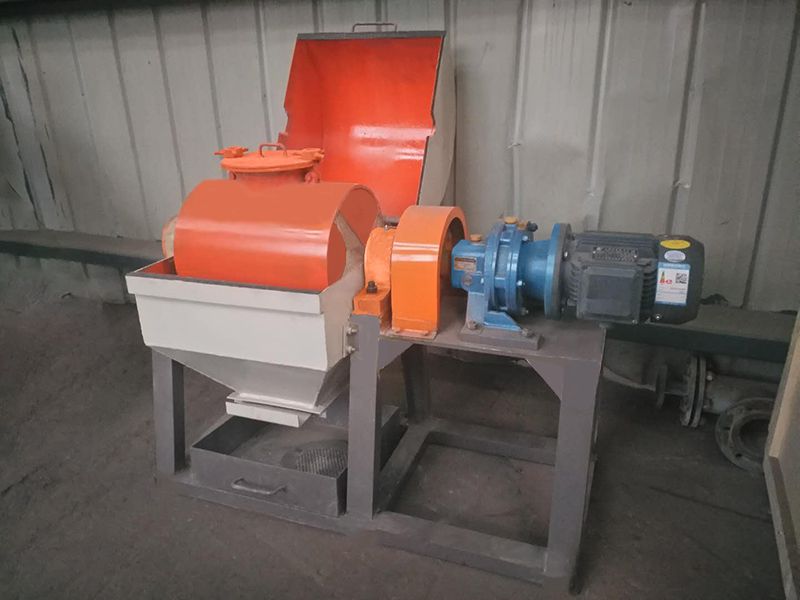
Ceramic-lined laboratory ball mill for sample preparation and process testing.
Email: vip@zkcorp.com | Tel / WhatsApp: +86 182-0361-6061 | Website: www.zkcomp.com
Download the full company and product catalogue: ZK MACHINE 2025 catalogue (PDF)