
Limestone Ball Mill: What It Is and How to Choose One
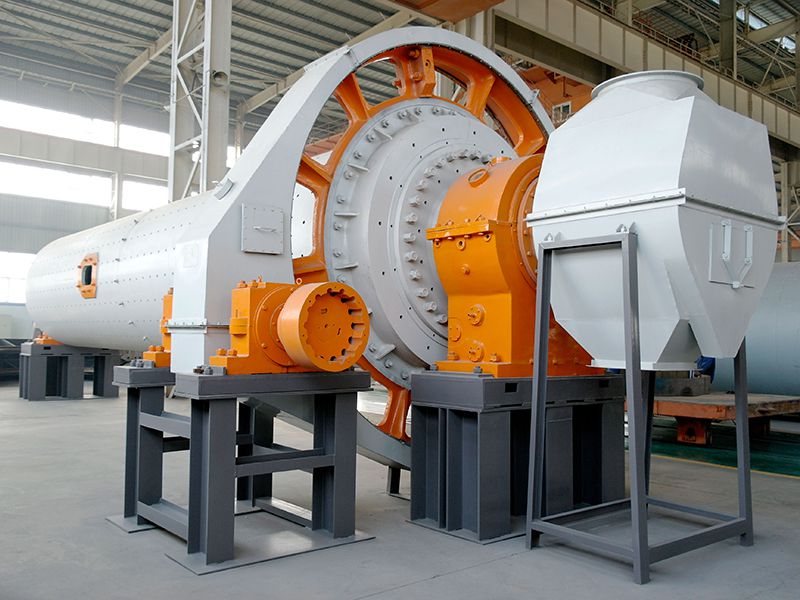
A limestone ball mill is a tumbling grinding mill that reduces limestone to a controlled particle size using steel or ceramic grinding media inside a rotating drum. In equipment catalogues the same machine family appears under several names — cement ball mill, limestone ball mill, open-circuit grinding ball mill, closed-circuit grinding ball mill — because the working principle is identical. What changes is the configuration: mill size, liner material, grinding media, discharge type and circuit layout.
That is the first point most buyers need. There is no separate limestone-only machine category. A limestone ball mill is a ball mill configured for limestone, and the configuration is decided by feed size, moisture, required fineness, contamination limits, downstream process and documentation requirements.
This guide explains what a limestone ball mill does, where it sits in a grinding circuit, how to specify one step by step, which mill types are available across the range, and the questions buyers ask most often before requesting a quotation. It is written for plant managers, project engineers, procurement teams, importers and distributors who are at the research stage of a limestone grinding project.
Why Limestone Grinding Projects Stall Before Equipment Selection
Most limestone ball mill projects do not stall because the technology is unclear. They stall because the grinding duty is described with one or two figures — usually a capacity target and a rough fineness idea — while the variables that determine mill size, liner material, circuit layout and documentation scope are left open.
Ball mill capacity is not a fixed number. It depends on material properties, feed size, required product fineness, moisture content, grinding method, mill size, grinding media and operating conditions. Two limestone projects with the same nominal tonnage can therefore require different mills.
The bottlenecks that repeat most often are:
- Feed size assumed rather than measured. The general ball mill series accepts feed up to about 25 mm. Limestone arriving coarser than that needs a crushing or pre-grinding stage ahead of the mill.
- Dry or wet operation left undecided. Both are available, but the choice changes mill internals, auxiliary equipment and the downstream process.
- Discharge type not specified. Grate discharge and overflow discharge are different configurations within the same product family.
- Circuit layout treated as an afterthought. An open-circuit mill and a closed-circuit mill combined with a separator are different systems, not two options on a form.
- Contamination limits ignored. Where iron contamination matters, ceramic lining and ceramic grinding media change the selection.
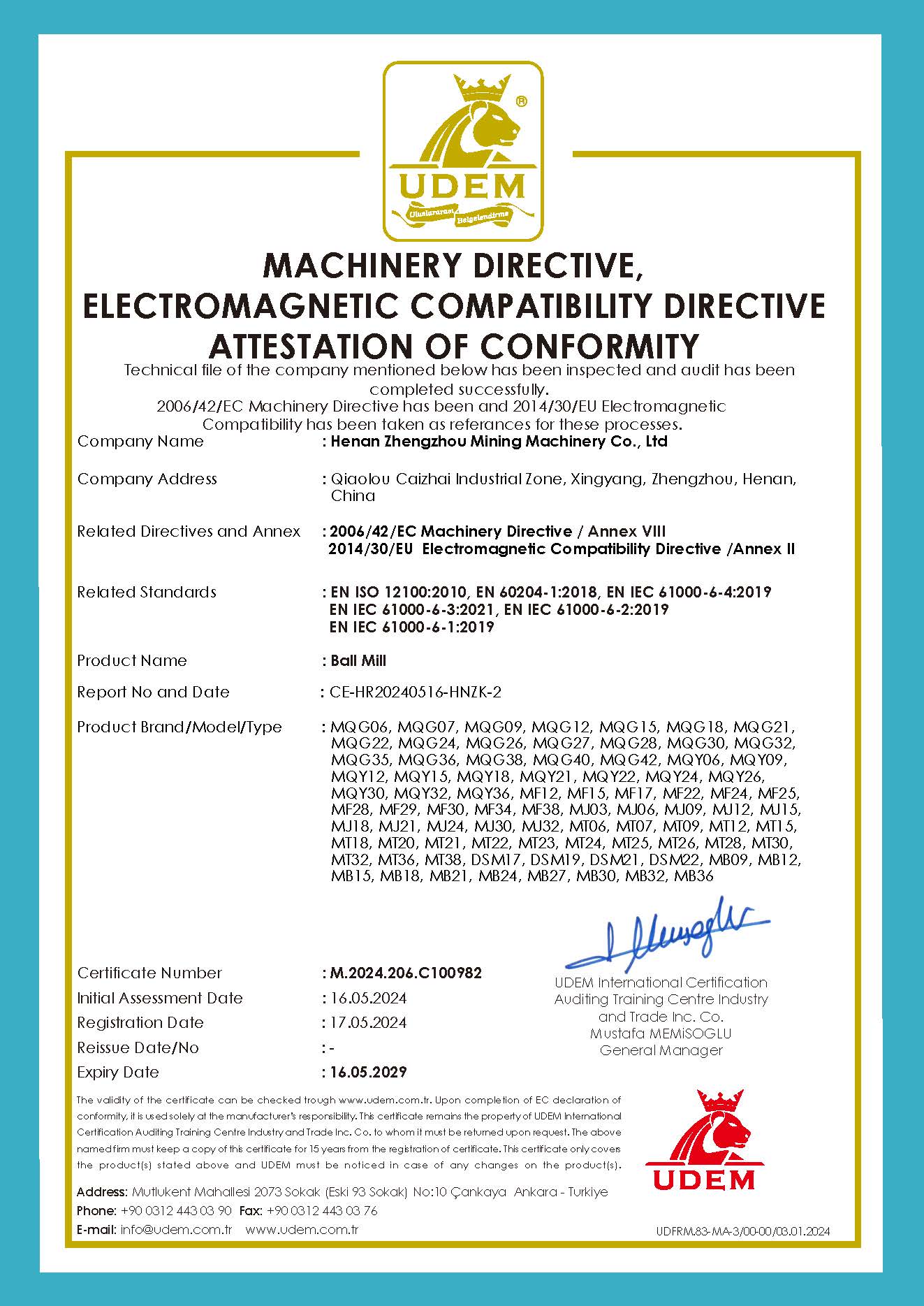
- Documentation requirements raised too late. For European projects, CE-related requirements should be confirmed during the technical specification stage, not after the equipment is built.
- Testing skipped. Laboratory and pilot testing exist to reduce the risk of specifying the wrong mill size, media charge or fineness target.
Every item on that list is a specification question rather than a commercial one, and every one can be closed with data before a purchase order is issued.
Where Limestone Ball Mills Fit in the Industry
Limestone is one of the highest-volume mineral raw materials in the cement, building materials, metallurgy and chemical industries. In cement production it enters the process twice — as the dominant component of the raw meal, and as a grinding component in cement. In building materials and advanced materials it is processed into fillers and powders with defined fineness limits.
Grinding sits in the comminution stage. Ball mills are employed in the comminution stage as grinding machines for size reduction, and their purpose in mineral processing is to reduce the feed material and liberate minerals before separation. A limestone ball mill performs the same function for limestone: it reduces the feed to a particle size that the next process step can accept.
Energy is the structural cost issue at this stage. Tumbling mills such as ball mills convert electrical energy into mechanical energy and generate the fracture events that break the particles. That is why energy saving ball mill designs appear in this equipment category, and why power consumption belongs on every comparison sheet rather than being treated as a purchasing afterthought.
Two data points frame the supply side:
- The global market for ball mills used in mining was valued at USD 4.94 billion in 2025 and is projected to reach USD 8.23 billion by 2034, according to the Dataintelo ball mill (mining) market report. That scope covers mining ball mills; cement and industrial mineral grinding are tracked separately.
- China was the leading exporter of machines to crush or grind stone, ores and minerals (HS 847420) in 2024, with an export value of USD 1.38 billion, according to the Observatory of Economic Complexity, which compiles UN Comtrade and customs data.
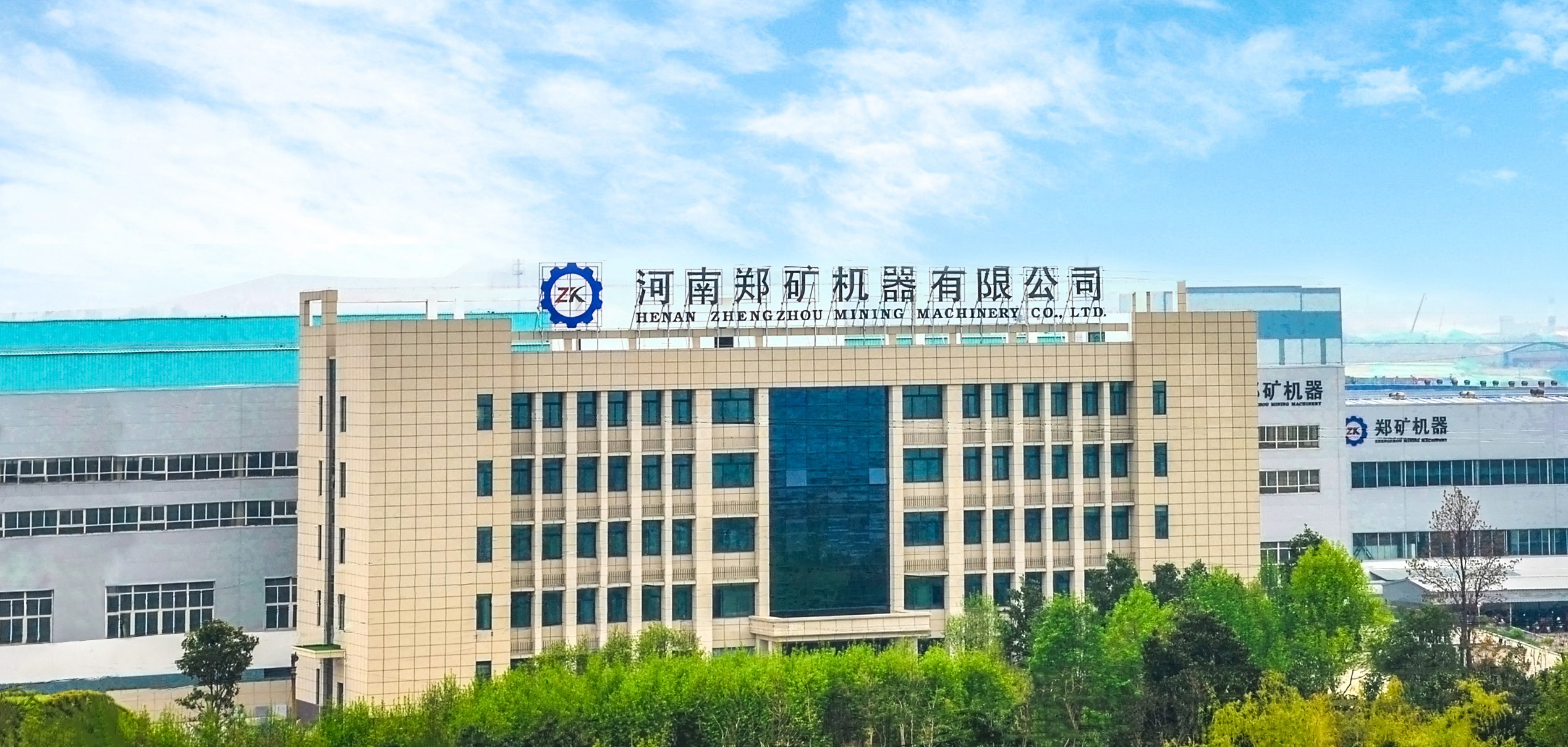
Henan Zhengzhou Mining Machinery Co., Ltd. (ZK MACHINE) is one of the manufacturers operating in this segment. Founded in 1956 in Zhengzhou, China, the company builds ball mills and rotary kilns and has supplied products and process systems to customers in more than 130 countries and regions, including markets across the Middle East, Southeast Asia, Africa, Russia and Kazakhstan.
The Limestone Ball Mill Solution from ZK MACHINE
Ball mills are one of ZK MACHINE's two core product lines. The ball mill portfolio includes cement ball mills, raw mills, clinker mills, limestone ball mills, coal mills, air-swept coal mills, rod mills, mining ball mills, continuous and batch ball mills, dry and wet ball mills, ceramic ball mills, and grate-discharge and overflow ball mills.
Within that portfolio, a limestone grinding duty is normally served by two series.
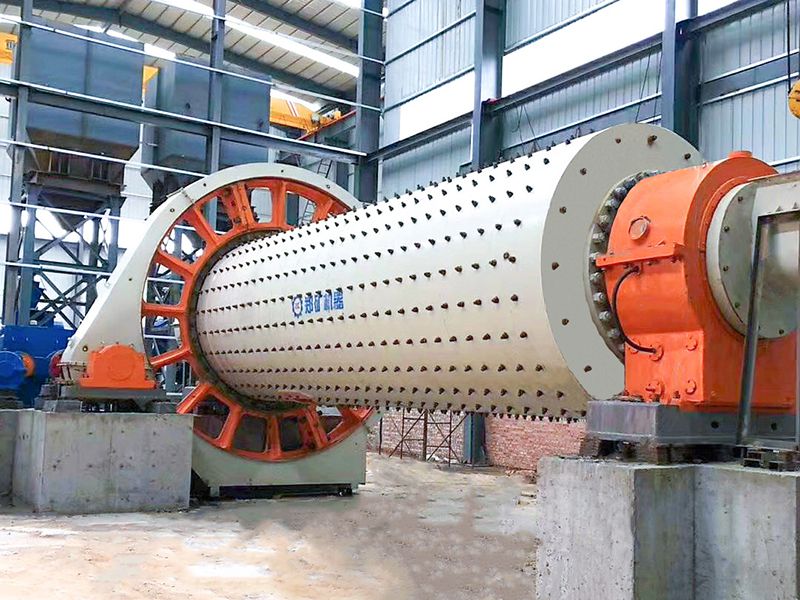
Cement ball mill / limestone ball mill series. This series is classified as a cement ball mill, a limestone ball mill, an open-circuit grinding ball mill and a closed-circuit grinding ball mill. The model range is Φ1.2×4.5 to Φ4.6×10, capacity is approximately 1.4–87 t/h, mill diameter is 1.2–4.2 m, and operation is open-circuit or closed-circuit. The mill can be combined with a roller press and a separator to form a complete grinding system.
General ball mill series. Model range Φ1.2x4.5 to Φ4.6x10+3.5, capacity approximately 0.8–230 t/h, feed size up to 25 mm, and product size approximately 0.07–0.4 mm, adjustable according to process requirements. Dry or wet grinding and grate or overflow discharge are both available. Limestone is listed among the applicable materials, alongside clinker, coal, ores, slag, quartz, feldspar, gypsum, dolomite, barite, fly ash, magnesite, fluorite, zinc ore and gold ore.
Configuration is decided on four levels:
- Shell. Mill shells are typically manufactured from high-quality carbon steel or alloy steel; the cement ball mill series uses Q235B/Q345B or equivalent structural steel.
- Liners. Selected according to the processed material and operating conditions — high-manganese steel, alloy steel, cast iron, rubber or ceramic liners.
- Grinding media. Steel balls, ceramic balls or other wear-resistant media, chosen on material hardness, feed size, target fineness, mill type, grinding method and contamination requirements.
- Discharge and circuit. Grate or overflow discharge, open or closed circuit, with a separator or classifier integrated when finer and more tightly controlled particle sizes are required.
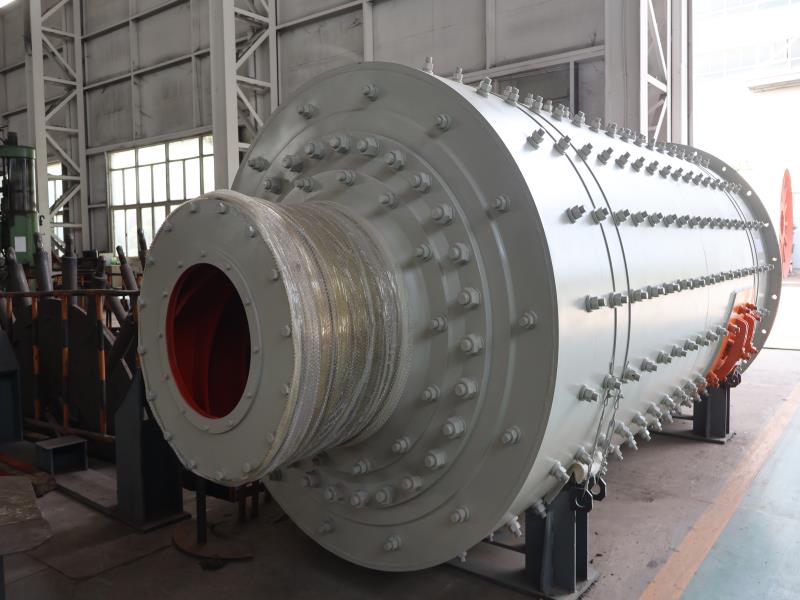
The mill is not supplied as an isolated unit. Core equipment is integrated with crushing, screening, feeding, mixing, granulation, preheating, drying, cooling, conveying and dust collection. For a limestone grinding line, the typical matched equipment set includes a bag filter, an electromagnetic vibrating feeder, a crusher, a powder separator and a vibrating screen.
Where the application requires it, ball mills can be specially designed with explosion-proof construction, acid- and corrosion-resistant materials, wear-resistant lining, dust-tight design, special sealing systems, temperature control, inert-gas protection, special feeding and discharge systems, customized grinding media and liners, and noise and vibration control. Material and component selection is customized to the material properties, grinding conditions and process requirements.
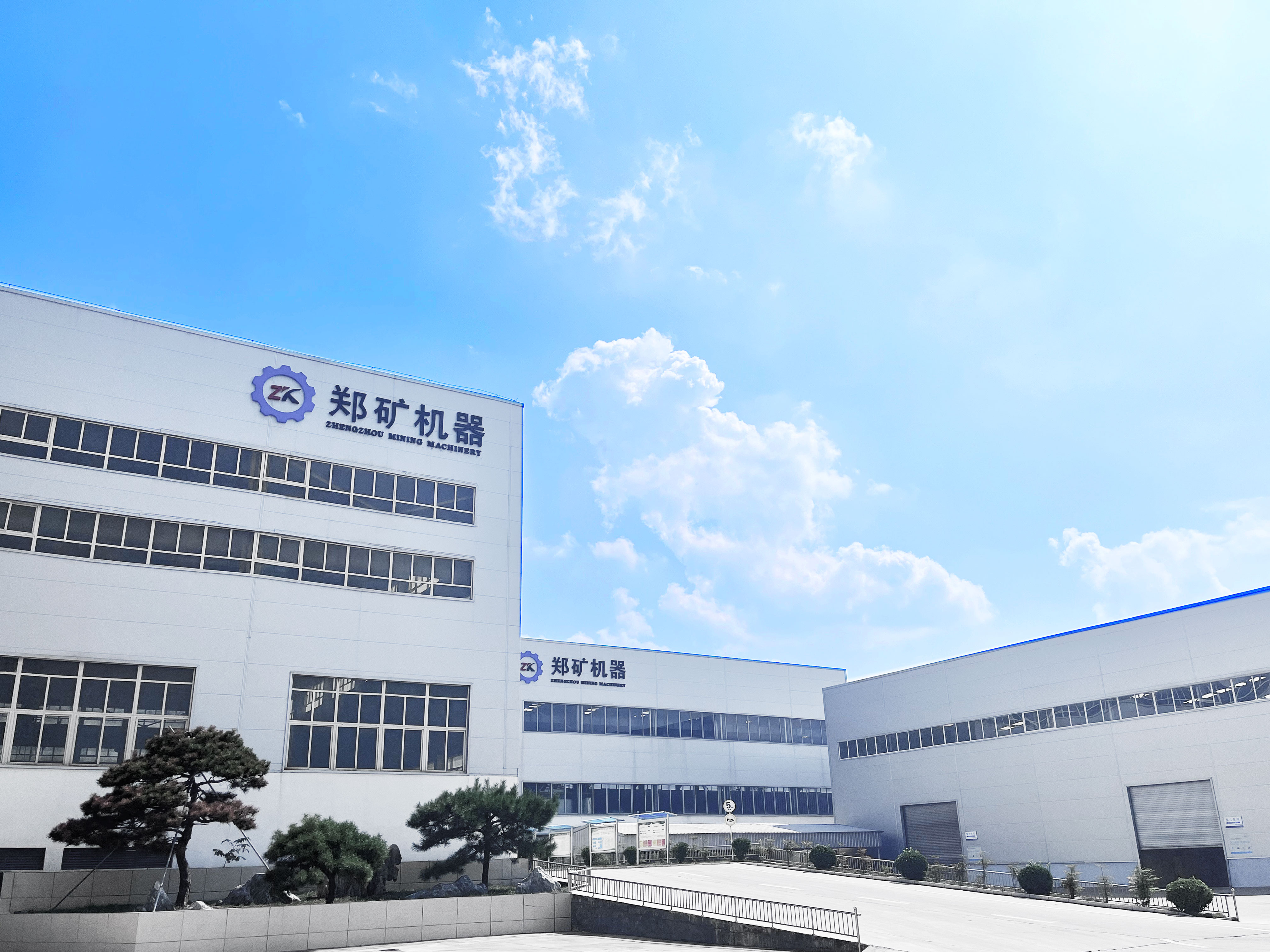
Manufacturing support matters as much as the specification. ZK MACHINE operates from a facility covering more than 80,000 m², with over 60,000 m² of workshop space, 8 modern workshops and 5 heavy-duty workshops equipped with boring and milling machines, gear hobbing machines, vertical lathes and heavy-duty cranes. Annual production capacity reaches 200 units, and the company employs approximately 235 staff. Its own process testing workshop and testing and analysis center support pilot testing and process data analysis for building materials, metallurgical materials and related applications — the practical route to validating a limestone grinding concept before committing to a full production mill.
Compliance and quality documentation includes ISO 9001 quality management system certification, ISO 14001 environmental management system certification, ISO 45001 occupational health and safety management system certification, an Integration Management System Certification and an Environmental Protection Engineering Professional Contracting Qualification. The company has participated in the drafting of more than 10 industry standards and holds more than 150 core patents and over 20 software copyrights.
Step-by-Step: How to Specify a Limestone Ball Mill
Work through the following sequence to move from a general requirement to a mill that can be quoted, built and commissioned.
- Characterize the limestone. Hardness, moisture, bulk behaviour, chemical composition and contamination sensitivity set the feasible grinding method and the liner and media materials.
- Measure the feed size. The general ball mill series accepts feed up to about 25 mm. If the limestone feed is coarser, include a crushing or pre-grinding stage ahead of the mill.
- Define the product fineness. The general series produces approximately 0.07–0.4 mm, adjustable according to process requirements. The cement ball mill series offers adjustable product fineness and specific surface area. A separator or classifier can be integrated when finer and more controlled particle sizes are required.
- Decide dry or wet grinding. Both are available across the range. The choice depends on material properties, downstream process, required product characteristics and environmental conditions.
- Choose the discharge type. Grate discharge or overflow discharge, matched to the material and the process.
- Choose the circuit. Open circuit for a simpler configuration, or closed circuit with a separator — and, in cement grinding systems, a roller press — when the target requires classification.
- Select liners and grinding media. High-manganese steel, alloy steel, cast iron, rubber or ceramic liners; steel balls, ceramic balls or other wear-resistant media. Where contamination is critical, ceramic lining reduces the risk of contamination from the grinding system.
- Size the mill and the auxiliary equipment together. Confirm the capacity figure first, then integrate feeding, conveying, classification and dust collection rather than treating them as separate purchases.
- Validate with laboratory or pilot testing. The laboratory ball mill (model Φ0.6×0.7–Φ1.8×2.1 m, loading capacity 0.2–1.5 t per batch, motor power 2.2–11 kW, rotational speed 23–35 rpm, dry or wet grinding) supports small-scale and laboratory testing on ores, limestone, calcite, kaolin, bentonite, talc, mica and magnesite. Pilot-scale test units are also offered as a project type, supported by ZK MACHINE's process testing workshop and testing and analysis center.
- Confirm the documentation scope. For European projects, CE-related requirements should be agreed during the technical specification stage so the equipment configuration and the documentation package are prepared accordingly.
Typical Limestone and Related Grinding Applications
Cement raw meal grinding
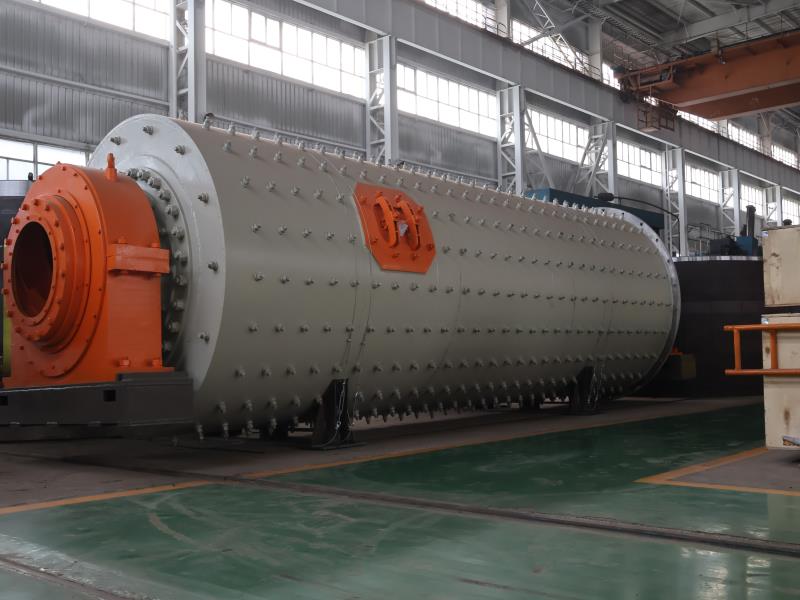
The raw mill is a ball mill-based raw grinding system used for cement raw material grinding. It is designed for cement raw meal grinding scenarios and for raw material grinding lines in cement plants, with a model range of Φ1.2×4.5 to Φ3.5×10 m, a capacity of 1.7–73 t/h and a grinding media load of 5–118 t. The raw mill is also applied in the building materials, power, metallurgy and chemical industries.
Limestone and clinker grinding in cement mills
The cement ball mill series is classified as a cement ball mill, a limestone ball mill, an open-circuit grinding ball mill and a closed-circuit grinding ball mill, and is intended for the cement, mining and building materials industries. It is designed for continuous cement grinding with adjustable product fineness and specific surface area, good adaptability to different raw materials, and integration with separators and roller presses.
Limestone powder and filler production
Where limestone is processed as an industrial mineral rather than as cement raw meal, the general ball mill series applies: dry or wet grinding, grate or overflow discharge, and product size adjustable within the approximately 0.07–0.4 mm band. Limestone is listed among the applicable materials for this series.
Laboratory and pilot-scale evaluation
Before committing to a production mill, limestone behaviour can be tested in a laboratory ball mill with ceramic lining options, dry or wet grinding and batch loading from 0.2 to 1.5 t. ZK MACHINE's process testing workshop and testing and analysis center support pilot testing and process data analysis for building materials, metallurgical materials and related applications.
Mineral processing circuits
In mineral processing plants, metal mines and non-metallic mineral processing, limestone may be ground as part of a broader ore body. The ore ball mill (model range 1.2×2.0 to 6×12 m, capacity 0.5–930 t/h, product size approximately 0.074–0.4 mm, dry or wet grinding, grate or overflow discharge) is designed for ore grinding and can be integrated with classification, flotation and other beneficiation equipment.
Comparison Table: Ball Mill Types and Ranges
The table below compares the ball mill types in the ZK MACHINE range. Model, capacity and material figures are taken from the product data for these series.
| Product | Model range | Typical capacity | Grinding and discharge | Typical materials |
|---|---|---|---|---|
| Ball Mill (general series) | Φ1.2x4.5 – Φ4.6x10+3.5 | approx. 0.8–230 t/h | Dry or wet; grate or overflow discharge | Limestone, clinker, coal, ores, slag, quartz, feldspar, gypsum, dolomite, barite, fly ash, magnesite, fluorite, zinc ore, gold ore |
| Cement Ball Mill / Limestone Ball Mill | Φ1.2×4.5 – Φ4.6×10 (diameter 1.2–4.2 m) | approx. 1.4–87 t/h | Open-circuit or closed-circuit; can be combined with roller press and separator | Cement, limestone, clinker |
| Raw Mill | Φ1.2×4.5 – Φ3.5×10 m and customized large-scale models | 1.7–73 t/h; grinding media load 5–118 t | Ball mill-based raw grinding system | Cement raw meal |
| Air-Swept Coal Mill | Φ1.2×2.4 – Φ2.9×4.7 m | 1.4–16 t/h; motor 45–570 kW | Integrated grinding and drying | Coal for pulverized coal preparation |
| Rod Mill | Φ0.9×1.8 – Φ3.6×5.4 m | 0.62–250 t/h; motor 22–1,600 kW | Dry or wet; overflow discharge | Ore grinding in mining concentrators |
| Ore Ball Mill | 1.2×2.0 – 6×12 m | 0.5–930 t/h | Dry or wet; grate or overflow discharge | Iron ore, copper ore, gold ore, lead-zinc ore, fluorite, quartz |
| Ceramic Ball Mill | 600×700 – 3,200×4,600 mm | 0.05–15 t per batch | Batch/intermittent; dry or wet | Ceramic raw materials and glaze materials |
| Laboratory Ball Mill | Φ0.6×0.7 – Φ1.8×2.1 m | 0.2–1.5 t per batch | Dry or wet; 23–35 rpm | Ores, limestone, calcite, kaolin, bentonite, talc, mica, magnesite, ceramic materials |
Capacity figures are nominal ranges for each series. Actual throughput depends on material properties, feed size, required product fineness, moisture content, grinding method, mill size, grinding media and operating conditions.
Frequently Asked Questions
Is the ZK MACHINE limestone ball mill CE certified?
ZK MACHINE can provide ball mill equipment and related documentation according to the applicable CE requirements for the intended European market and project configuration; the exact certification scope is confirmed against the final equipment and system configuration. Depending on the applicable requirements and project scope, documentation may include the EU Declaration of Conformity, technical documentation, equipment manuals, safety information and relevant inspection or test records. For a complete grinding line, the conformity scope may involve the ball mill, electrical and control systems, conveying equipment, dust collection equipment and other integrated machinery. In addition, the company holds ISO 9001, ISO 14001 and ISO 45001 management system certifications, an Integration Management System Certification and an Environmental Protection Engineering Professional Contracting Qualification.
What types of ball mills can grind limestone, and what materials can they handle?
ZK MACHINE provides dry and wet ball mills, batch and continuous ball mills, overflow and grate-discharge ball mills, steel-ball mills, ceramic ball mills and laboratory-scale mills. Limestone is processed in the cement ball mill / limestone ball mill series and in the general ball mill series. Beyond limestone, the range handles cement clinker, slag, quartz, dolomite, gypsum, coal, metal ores, industrial minerals and various solid-waste-derived materials. Material hardness, moisture, particle size, grindability and target fineness should be evaluated before equipment selection.
What drives the cost of a limestone ball mill?
Cost is driven by mill size and capacity, grinding method (dry or wet), discharge type, circuit complexity — open circuit versus a closed circuit with a separator and, in cement systems, a roller press — liner and grinding media materials, sealing and dust-tight design, automation, and the documentation scope required for the destination market. As an external reference point, published secondary buyer's-guide estimates for 2026 place small production ball mills in the 1–5 t/h class at roughly USD 50,000–120,000. That is a third-party indicative range for small units rather than a quotation, and larger industrial mills are quoted per project against a defined specification.
How can limestone grinding be tested before ordering full-scale equipment?
Two routes are available. The laboratory ball mill (model Φ0.6×0.7–Φ1.8×2.1 m) supports small-scale and laboratory configurations with 0.2–1.5 t per batch loading, 2.2–11 kW motor power, 23–35 rpm and dry or wet grinding, and can be supplied with ceramic lining to reduce contamination risk. For larger validation, pilot-scale test units are offered as a project type, and ZK MACHINE's own process testing workshop and testing and analysis center support pilot testing and process data analysis. Testing the actual limestone is the most reliable way to fix mill size, media charge and the target fineness range.
How should buyers evaluate China cement ball mill manufacturers?
Start with what can be verified. China was the leading exporter of machines to crush or grind stone, ores and minerals in 2024, with USD 1.38 billion in export value, according to the Observatory of Economic Complexity — so the supply base is broad, and buyers should compare on evidence rather than brand claims. Practical checks include the physical manufacturing base and its equipment, annual production capacity, in-house process testing capability, documented management system certifications, the actual configuration options offered (dry or wet, batch or continuous, overflow or grate discharge), and the documentation scope for the destination market. Publicly available product pages show that other China-based heavy-industry suppliers, such as CITIC Heavy Industries, also list overflow discharge and wet grate discharge ball mills, which makes configuration-level comparison more useful than a generic shortlist. For reference, ZK MACHINE was founded in 1956 and manufactures from a facility of more than 80,000 m² with an annual production capacity of 200 units, supplying customers in more than 130 countries and regions. Buyers can request a mill and system quotation against a defined limestone specification, or start with a laboratory sample test.
Conclusion
A limestone ball mill is not a separate machine category. It is a ball mill configured for limestone, and the engineering work sits in the specification: feed size, moisture, target fineness, grinding method, discharge type, circuit design, liner and media selection, and the documentation the destination market requires. Close those questions and the equipment decision becomes straightforward. Leave them open and every quotation becomes incomparable.
ZK MACHINE builds the equipment behind those decisions — limestone and cement ball mills from Φ1.2×4.5 to Φ4.6×10 with capacities of approximately 1.4–87 t/h, dry and wet grinding, grate and overflow discharge, and integration with crushing, feeding, classification and dust collection. Behind the machines are a manufacturing base of more than 80,000 m², an annual production capacity of 200 units, an in-house process testing workshop, and more than 150 core patents.
Next Step: Specification, Sample Test or Quotation
Send your limestone data — feed size, moisture, target fineness and required capacity — and ZK MACHINE will respond with a proposed mill configuration and equipment scope. Laboratory and pilot test units are available if you prefer to validate the grinding behaviour first.
Email: vip@zkcorp.com | Tel / WhatsApp: +86 182-0361-6061
Download the catalogue: ZK MACHINE General Catalogue (PDF)
Website: www.zkcomp.com
Office: 15th Fl, Bldg No.13, National University Science Park (East), No.279, West 3# Ring Rd, Zhengzhou, China
Factory: Qiaolou Caizhai Industrial Estate, Xingyang, Zhengzhou, China