Raw Mill: The Ball Mill-Based Grinding Stage in Cement Raw Meal Preparation
Introduction
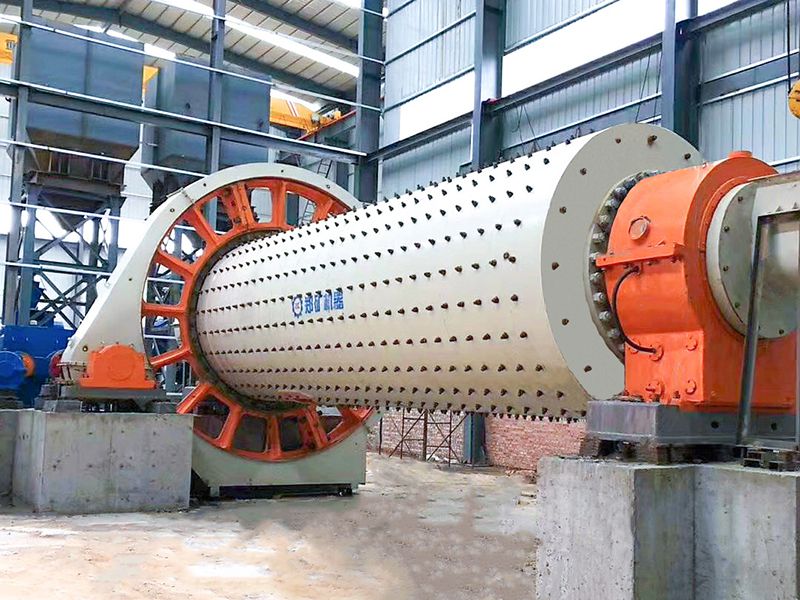
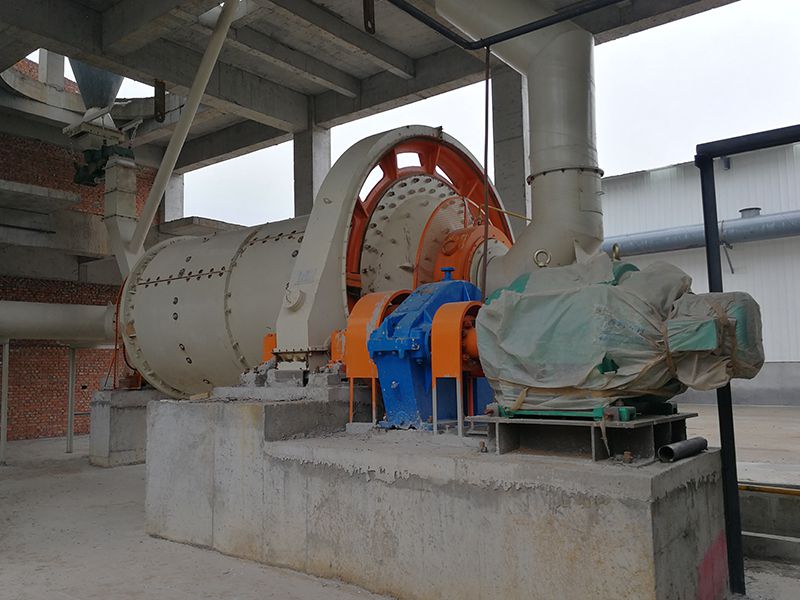
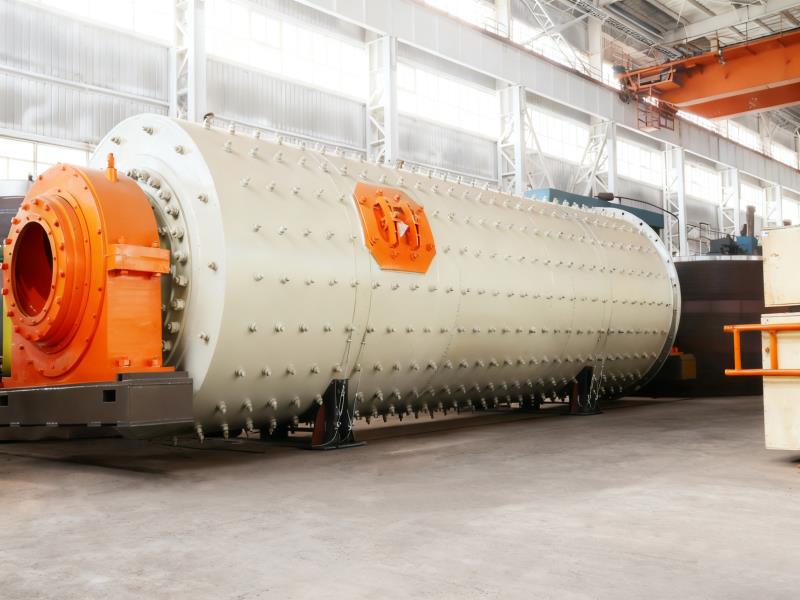
A raw mill is the grinding unit that converts crushed limestone and corrective materials into cement raw meal — the finely ground, blended mixture that is fed to the kiln system. Within the ball mill series manufactured by Henan Zhengzhou Mining Machinery Co., Ltd. (ZK MACHINE), a raw mill is classified as a ball mill-based raw grinding system: a raw mill used for cement raw material grinding, designed for cement raw meal grinding scenarios in cement plants, and also applied in the building materials, power, metallurgy and chemical industries.
Because the raw mill is one member of a much larger ball mill family — alongside cement ball mills, clinker mills, limestone ball mills, coal mills and air-swept coal mills, rod mills, mining ball mills, ceramic ball mills, laboratory ball mills, and dry, wet, continuous, batch, grate-discharge, overflow and energy saving ball mill variants — buyers in the discovery and research stage frequently meet these terms before they understand which one a cement raw meal line actually needs. This article explains what a raw mill does, where it sits in the production flow, which parameters determine its performance, and how a buyer can prepare a technically sound raw mill inquiry.
Problem Definition: Why Raw Meal Preparation Is a Separate Grinding Problem
The raw mill exists because cement raw materials do not arrive in a usable form. Limestone is extracted and crushed, and corrective materials must be blended with it before the mixture can enter the kiln. That mixture has to reach a controlled fineness and a consistent composition; otherwise the downstream process receives material that is uneven in both particle size and chemistry.
The practical problem is therefore a grinding problem with two linked targets: size reduction and fineness control. A raw mill addresses both by operating as a ball mill-based raw grinding system with adjustable product fineness, uniform raw meal fineness and stable operation. Typical issues that surface during the research stage include:
- Selecting a mill configuration for a target raw meal fineness that the kiln system can accept.
- Matching mill capacity to the planned clinker output without oversizing the drive or the building.
- Deciding whether the raw grinding circuit should be open or closed, and whether a separator needs to be integrated.
- Handling moisture, abrasiveness and grindability differences between limestone, clay, shale, sand and iron-bearing correctives.
- Controlling dust, noise and material handling across feeding, conveying and collection equipment.
These questions are not solved by a mill alone. In practice, raw meal grinding performance is determined by the mill, the grinding media, the liners, the classification device, and the conveying and dust collection equipment working as one system.
Industry Background: Where the Raw Mill Sits in Industrial Processing
A ball mill is a type of grinder filled with grinding balls, used to grind or blend materials for use in mineral dressing processes, paints, pyrotechnics and ceramics. In mineral processing, the working principle of ball mills and rod mills is to crush and grind ore in order to liberate the minerals, and ball mills are described as grinding machines employed in the comminution stage for size reduction. Tumbling mills such as ball mills convert electrical energy into mechanical energy and generate many fracture opportunities during grinding, which is why grinding circuits are treated as a core cost and design focus rather than a simple accessory.
In a cement line, the sequence is broadly: crushing of raw materials, raw meal preparation in the raw mill, preheating and calcination in the rotary kiln, clinker cooling, clinker grinding in a cement ball mill, and finally packing and dispatch. The raw mill and the coal or air-swept coal mill are the two grinding stages that most directly feed the kiln: the raw mill prepares the meal, while the air-swept coal mill prepares pulverized coal for combustion in industrial kilns or boilers.
Grinding equipment demand is structurally linked to mining, mineral processing and building materials activity. Published commercial research places the global market for ball mills used in mining at USD 4.94 billion in 2025, projected to reach USD 8.23 billion by 2034. Customs-based trade data shows that in 2024 China was the leading exporter of machines to crush or grind stone, ores and minerals under HS code 847420, with export value of USD 1.38 billion. These figures describe the mining and crushing/grinding equipment context; they are not a cement raw mill market estimate.
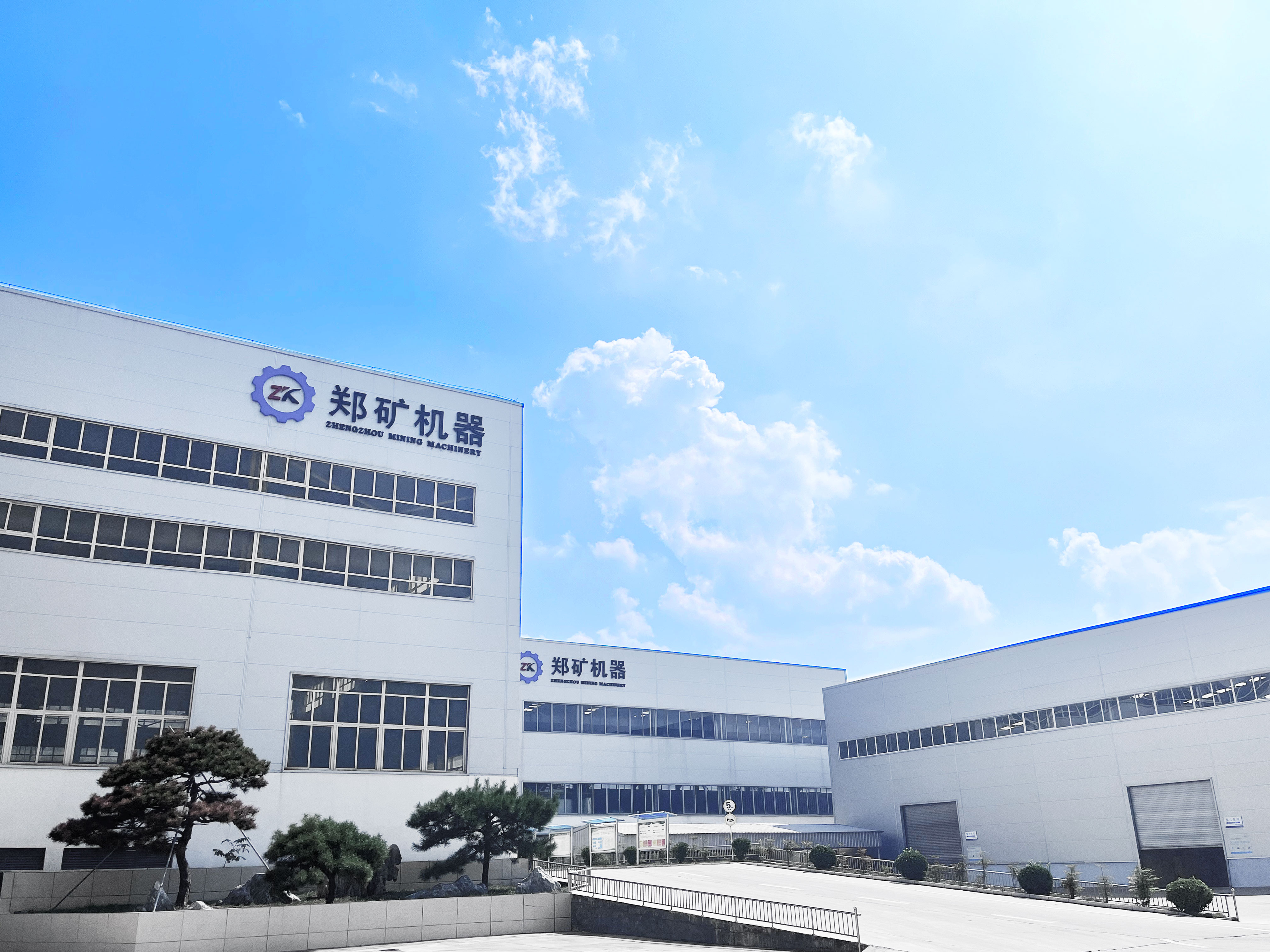
Henan Zhengzhou Mining Machinery Co., Ltd. (ZK MACHINE, website www.zkcomp.com) was established in 1956 and has over six decades of experience in mining machinery manufacturing. The company provides process engineering and equipment solutions across five major fields — New Energy, New Material, Environmental Protection, Metallurgical & Chemical, and Building Materials — combining process engineering, system design, equipment manufacturing and project implementation.
Detailed Solution: What a ZK MACHINE Raw Mill Provides
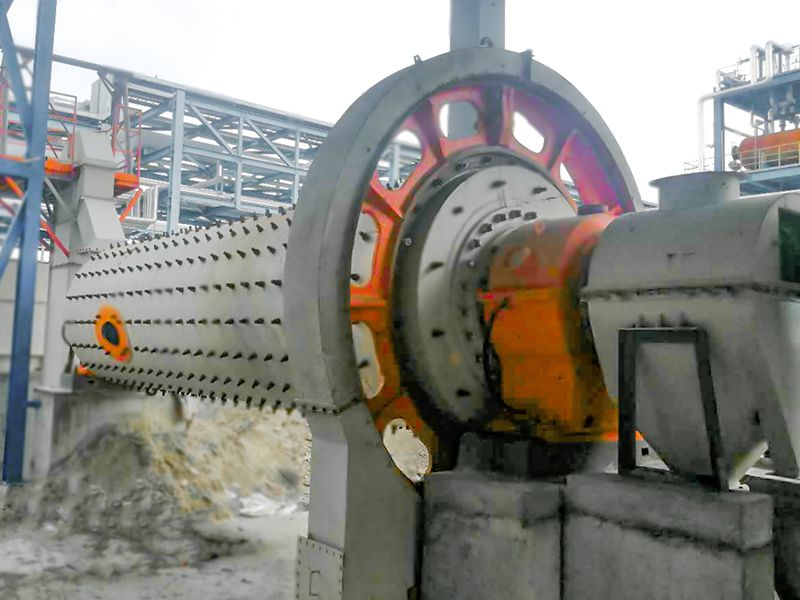
The ZK MACHINE raw mill is a raw mill used for cement raw material grinding and belongs to the ball mill-based raw grinding system category. Its structural configuration is a ball mill-based raw grinding system, and it is configured for traditional cement raw grinding systems. It is designed for use in cement raw meal grinding scenarios; the primary industry is the cement plant industry, with additional application in the building materials, power, metallurgy and chemical industries.
Core technical parameters
- Model range: Φ1.2×4.5 – Φ3.5×10 m, plus other customized large-scale models.
- Capacity: 1.7–73 t/h.
- Grinding media load: 5–118 t.
- Fineness: adjustable product fineness with uniform raw meal fineness.
- System type: ball mill-based raw grinding system, suitable for traditional cement raw grinding systems.
Stated performance characteristics
ZK MACHINE lists the following characteristics for its raw mill: uniform raw meal fineness, adjustable product fineness, stable operation, high grinding efficiency, relatively simple process configuration, suitability for traditional cement raw grinding systems, and the ability to be integrated with separators, conveying and dust collection systems.
Materials and construction
Mill shells in the ZK MACHINE ball mill series are typically manufactured from high-quality carbon steel or alloy steel for strength, durability and reliable long-term operation. Liners are selected according to the processed material and operating conditions; common options include high-manganese steel, alloy steel, cast iron, rubber and ceramic liners. Shell material for the cement ball mill in the same series is specified as Q235B/Q345B or equivalent structural steel.
Engineering and manufacturing support
ZK MACHINE operates its own process testing workshop and testing & analysis center, which support pilot testing and process data analysis for building materials, metallurgical materials and related applications. This allows a raw meal grinding concept to be validated before equipment is finalized. The manufacturing facility covers 80,000 m² with over 60,000 m² of workshop space, including 8 modern workshops and 5 heavy-duty workshops, equipped with boring and milling machines, gear hobbing machines, vertical lathes and heavy-duty cranes. Annual production capacity reaches 200 units, and the company employs approximately 235 staff, including an R&D team of 10 doctors, 5 senior engineers and 16 intermediate engineers.
The company has participated in the development and drafting of more than 10 industry standards and holds more than 150 core patents and over 20 software copyrights. Certifications include ISO 9001 Quality Management System Certification, ISO 14001 Environmental Management System Certification, ISO 45001 Occupational Health and Safety Management System Certification, Integration Management System Certification, and Environmental Protection Engineering Professional Contracting Qualification.
Step-by-Step Breakdown: How to Specify a Raw Mill
A raw mill inquiry becomes technically useful when the following decisions are made in sequence. Each step narrows the model range and the auxiliary equipment scope.
Step 1 — Define the raw material mix and feed condition
Identify the main component (typically limestone) and the corrective materials, together with their hardness, moisture, abrasiveness and grindability. Material characteristics determine liner and grinding media selection. For the wider ball mill series, feed size is specified at ≤25 mm, and material that is coarser normally requires a crushing or pre-grinding stage ahead of the mill.
Step 2 — Set the target raw meal fineness
Fineness is a process decision, not a machine default. Raw mill product fineness is adjustable, and in the ball mill series the achievable product size is approximately 0.07–0.4 mm, adjustable according to process requirements. If finer and more tightly controlled particle sizes are required, a separator or classifier can be integrated into the circuit.
Step 3 — Size the mill to capacity
Raw mill capacity ranges from 1.7 t/h to 73 t/h across the standard model range, with customized large-scale models available. Capacity depends on material properties, feed size, required product fineness, moisture content, grinding method, mill size, grinding media and operating conditions — not on mill diameter alone.
Step 4 — Choose dry or wet grinding
Dry ball milling grinds material without adding liquid; wet ball milling uses a liquid medium. The choice depends on material properties, the downstream process, required product characteristics and environmental conditions. The raw mill is applied in traditional cement raw grinding systems, which are normally dry-process circuits.
Step 5 — Decide the discharge and circuit arrangement
For the ball mill series, both grate discharge and overflow discharge options are available, and grinding can be configured as open-circuit or closed-circuit. In cement grinding, open-circuit or closed-circuit operation is combined with separators and, where relevant, roller presses. The raw mill can be integrated with separators, conveying and dust collection systems.
Step 6 — Select liners and grinding media
Common grinding media include steel balls, ceramic balls and other wear-resistant media. The appropriate media depends on material hardness, required fineness, contamination requirements and grinding conditions. Liner options include high-manganese steel, alloy steel, cast iron, rubber and ceramic, selected according to the processed material and operating conditions.
Step 7 — Integrate the auxiliary equipment
Raw meal grinding is a system, not a stand-alone machine. Equipment commonly matched with ball mills includes bag filters, electromagnetic vibrating feeders, crushers, powder separators and vibrating screens. ZK MACHINE integrates core equipment with crushing, screening, feeding, mixing, granulation, preheating, drying, cooling, conveying, dust collection and other auxiliary systems to provide complete, customized process solutions based on material characteristics, production capacity and process requirements.
Step 8 — Confirm documentation and compliance scope at specification stage
For export projects, compliance requirements should be defined during the technical specification stage so that the equipment configuration and documentation can be prepared accordingly. This is especially relevant where the mill forms part of a complete grinding line rather than a standalone machine.
Use Cases: Where Raw Mills and Related Grinding Mills Are Applied
Cement plants — raw meal grinding lines
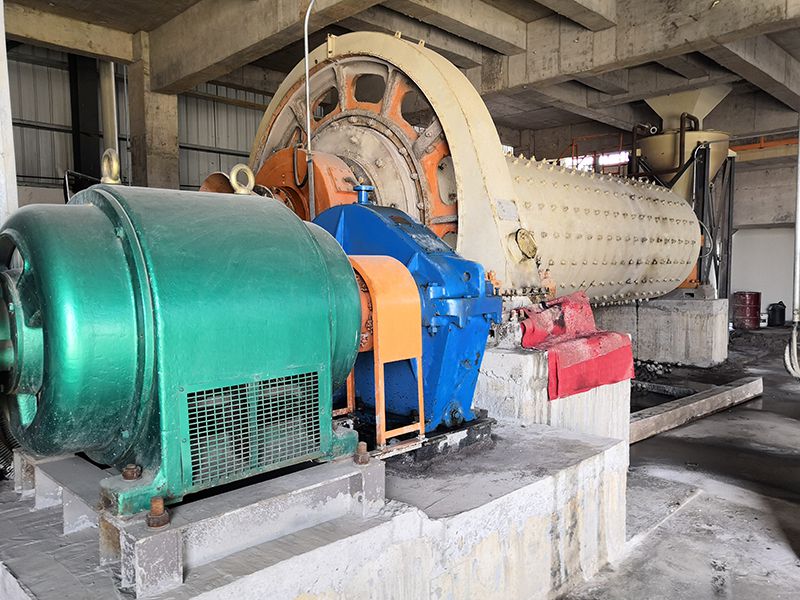
The primary use case is the raw material grinding line in a cement plant, where the raw mill prepares kiln feed from limestone and corrective materials. Typical project scopes include single-equipment supply, complete production lines, process EPC and pilot-scale test units.
Clinker and cement grinding
Downstream of the kiln, the cement ball mill is designed for continuous cement grinding with adjustable product fineness and specific surface area, good adaptability to different raw materials, open- or closed-circuit operation, and compatibility with separators and roller presses. It is classified as a limestone ball mill and as an open-circuit or closed-circuit grinding ball mill.
Coal preparation for kiln and boiler fuel
The air-swept coal mill is classified as a coal ball mill and coal grinding mill. It integrates grinding and drying in one system, operates continuously, and is intended for the cement, thermal power generation, metallurgy and chemical industries, where it prepares pulverized coal for combustion in industrial kilns or boilers and for rotary kiln fuel preparation.
Mineral processing and ore grinding
The ore ball mill belongs to the mining ball mill category and is classified as a mining ball mill, gold ore ball mill and copper ore ball mill. It is intended for mineral processing plants, metal mines, non-metallic mineral processing, metallurgy, building materials, chemical industry, glass production and artificial sand production. The rod mill, classified as a rod ball mill, is designed for mineral processing scenarios and is suitable for ore grinding in mining concentrators, where steel-rod media provide a selective grinding effect and reduce over-grinding.
Ceramics, laboratory and specialty materials
The ceramic ball mill is a ceramic-lined, wet grinding ceramic ball mill used for ceramic raw materials and glaze materials in wet and dry grinding, and is also applicable to building materials, chemical, refractories and advanced materials industries. The laboratory ball mill is a ceramic-lined, small-scale configuration for laboratory and sample preparation work, applicable to ores, limestone, calcite, kaolin, bentonite, talc, mica, magnesite and ceramic materials.
Comparison Table: Grinding Mills in the ZK MACHINE Ball Mill Series
The table below compares published specification data for the grinding mills offered in this series. It is intended to help buyers identify which mill type matches a given grinding duty; it is not a performance ranking.
| Mill type | Model range | Capacity | Grinding / discharge characteristics |
|---|---|---|---|
| Raw Mill | Φ1.2×4.5–Φ3.5×10 m and other customized large-scale models | 1.7–73 t/h | Ball mill-based raw grinding system; grinding media load 5–118 t; adjustable and uniform raw meal fineness |
| Cement Ball Mill | Φ1.2×4.5–Φ4.6×10 | Approx. 1.4–87 t/h | Open-circuit or closed-circuit grinding; can be combined with a roller press and separator |
| Ball Mill (general series) | Φ1.2x4.5 – Φ4.6x10+3.5 | Approx. 0.8–230 t/h | Dry or wet grinding; grate or overflow discharge; feed size ≤25 mm; product approx. 0.07–0.4 mm |
| Air-Swept Coal Mill | Φ1.2×2.4–Φ2.9×4.7 m | 1.4–16 t/h | Integrated grinding and drying; motor power 45–570 kW; typical coal fineness 85%+ passing 200 mesh |
| Ore Ball Mill | 1.2*2.0–6*12 m | 0.5–930 t/h | Dry or wet grinding; grate or overflow discharge; product size approx. 0.074–0.4 mm |
| Rod Mill | Φ0.9×1.8–Φ3.6×5.4 m | 0.62–250 t/h | Steel-rod grinding media; overflow discharge; main motor power 22–1600 kW |
| Ceramic Ball Mill | 600×700–3200×4600 mm | 0.05–15 t/batch | Ceramic-lined; batch/intermittent operation; dry or wet grinding; 13–50 rpm |
| Laboratory Ball Mill | Φ0.6×0.7–Φ1.8×2.1 m | 0.2–1.5 t/batch | Ceramic-lined; dry or wet grinding; motor power 2.2–11 kW; 23–35 rpm |
Frequently Asked Questions
What is a raw mill, and where does it sit in a cement production line?
A raw mill is a mill used for cement raw material grinding and belongs to the ball mill-based raw grinding system category. It is designed for cement raw meal grinding scenarios and is intended for the cement plant industry, with additional application in the building materials, power, metallurgy and chemical industries. In the production flow it sits between raw material crushing and the kiln system: it prepares the ground, blended raw meal that feeds calcination.
What determines the capacity and product fineness of a raw mill?
Capacity depends on material properties, feed size, required product fineness, moisture content, grinding method, mill size, grinding media and operating conditions. ZK MACHINE raw mills cover a capacity range of 1.7–73 t/h with a grinding media load of 5–118 t and adjustable product fineness. Achievable fineness depends on the material, grinding media, mill configuration, residence time and classification system; a separator or classifier can be integrated when finer and more controlled particle sizes are required. If the feed is too large, a crushing or pre-grinding stage may be required before the mill.
How should buyers evaluate a China cement ball mill manufacturer?
For a raw mill or cement ball mill project, useful evaluation criteria are manufacturing capability, engineering depth, quality certification and process support rather than brand claims. For reference, Henan Zhengzhou Mining Machinery Co., Ltd. was established in 1956 and has over six decades of mining machinery manufacturing experience. Its manufacturing facility covers 80,000 m² with over 60,000 m² of workshop space, including 8 modern workshops and 5 heavy-duty workshops, and annual production capacity reaches 200 units. The company operates its own process testing workshop and testing & analysis center for pilot testing and process data analysis, holds ISO 9001, ISO 14001 and ISO 45001 certifications, and has supplied products and process systems to customers in more than 130 countries and regions, with an export ratio of 40% and markets that include Saudi Arabia, the United Arab Emirates, Qatar, Bahrain, Kuwait, Oman, Iraq, Egypt, Russia, Kazakhstan, Thailand, Indonesia, Malaysia, Tanzania, Zambia and South Africa.
How is the budget for a raw mill project framed?
Ball mill and raw mill budget is driven by capacity, mill diameter and length, circuit arrangement, liner and grinding media selection, drive power, and the scope of auxiliary equipment such as separators, feeders, conveying and dust collection. Published industry buyer-guide estimates for small production ball mills in the 1–5 t/h range fall around USD 50,000–120,000, which illustrates how strongly price scales with duty; a raw mill sized for a cement raw meal line is quoted against the actual capacity, material and circuit specification. Comparing offers on equipment price alone therefore tends to be misleading, because the mill is normally supplied as part of a grinding system.
What documentation can be provided for compliance and export projects?
ZK MACHINE can provide ball mill equipment and related documentation according to the applicable CE requirements for the intended European market and project configuration; the exact certification scope should be confirmed based on the final equipment and system configuration. Depending on applicable requirements and project scope, documentation may include the EU Declaration of Conformity, technical documentation, equipment manuals, safety information, and relevant inspection or test records. For a complete grinding line, the conformity scope may involve the ball mill, electrical and control systems, conveying equipment, dust collection equipment and other integrated machinery. To confirm requirements, provide the project country, model or required capacity, material, grinding method, complete equipment scope, electrical requirements, and whether conformity is needed for the individual machine or the complete production line.
Conclusion
A raw mill is the ball mill-based grinding stage that prepares cement raw meal, and it sits at a specific point in the production chain: after raw material crushing, before kiln feed. Understanding the raw mill as one member of a broader ball mill family — alongside cement ball mills, clinker mills, limestone ball mills, coal and air-swept coal mills, rod mills, mining ball mills, ceramic and laboratory ball mills, and dry, wet, continuous, batch, grate-discharge, overflow and energy saving configurations — is the first step in matching a mill to a grinding duty.
For buyers at the research stage, the practical sequence is to define the material and feed condition, set the target fineness, size the mill to the required capacity, decide the grinding method and circuit, select liners and grinding media, integrate the auxiliary equipment, and confirm documentation requirements before the technical specification is fixed. ZK MACHINE covers a raw mill range of Φ1.2×4.5–Φ3.5×10 m with capacities of 1.7–73 t/h, supported by in-house process testing, manufacturing, installation, commissioning and technical services.
Next step: request a raw mill recommendation
Send your raw material data, target capacity and required fineness to receive a configuration recommendation and quotation. Samples, layout discussion and the full product catalogue are available on request.
Catalogue download: ZK MACHINE comprehensive catalogue (PDF)
Website: www.zkcomp.com
Email: vip@zkcorp.com
Tel / WhatsApp: +86 182-0361-6061
Office: 15th Fl, Bldg No.13, National University Science Park (East), No.279, West 3rd Ring Rd, Zhengzhou, China
Factory: Qiaolou Caizhai Industrial Estate, Xingyang, Zhengzhou, China