Recommended Rotary Kiln Types for Lithium, Dolomite, Zinc, Lime, and Cement Production
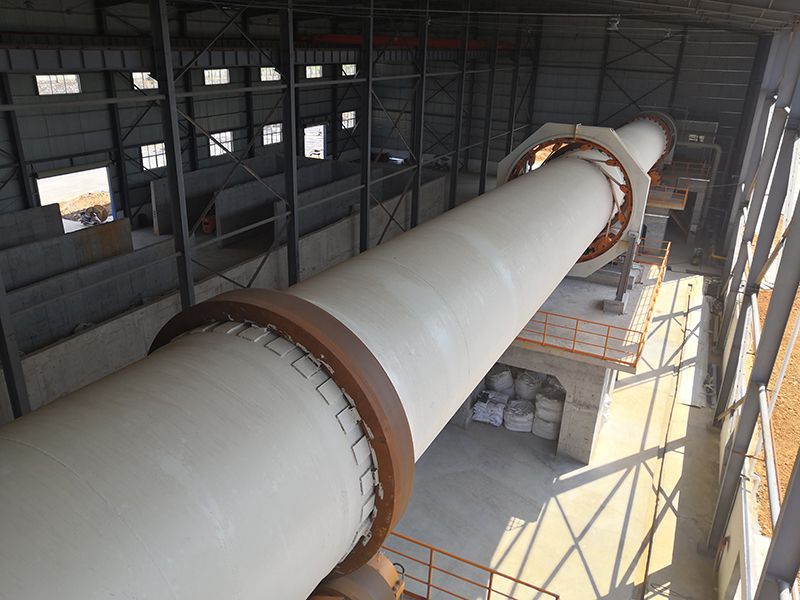
Rotary kiln systems engineered by ZK MACHINE for mineral calcination, roasting and sintering applications.
Introduction
A rotary kiln is a thermal processing unit used to calcine, roast, sinter, or decompose minerals and industrial materials at controlled high temperatures. The correct kiln type depends on the feed material, target product, operating temperature, atmosphere, and production capacity — not on the brand name alone.
This recommendation guide ranks five rotary kiln types by application fit: the acid roasting rotary kiln for lithium concentrates, the magnesium rotary kiln for dolomite, the zinc oxide rotary kiln for zinc recovery, the lime rotary kiln for active lime, and the cement rotary kiln for clinker production. Each ranking reflects how closely the kiln's engineering parameters match the dominant process requirements of its target material. All specifications and case data referenced here come from Henan Zhengzhou Mining Machinery Co., Ltd. (ZK MACHINE) product documentation and verified industry sources.
Problem Definition: Why Application Fit Outranks General-Purpose Choices
Selecting a rotary kiln by broad category alone often causes operating problems. A cement rotary kiln tested at 1100°C is not a drop-in substitute for a dedicated lime rotary kiln. An acid roasting kiln handling lithium concentrates at 200–350°C requires acid-resistant shell materials that a standard kiln does not provide. A zinc oxide rotary kiln processing electric arc furnace dust needs different sealing and refractory specifications than a magnesium rotary kiln calcining dolomite.
The evaluation question is not “Which rotary kiln is best?” but rather “Which rotary kiln type matches the material, temperature, atmosphere, and capacity requirements of my project?” This guide answers that question by ranking and explaining the application fit of five rotary kiln types manufactured by ZK MACHINE, a company founded in 1956 and based in Zhengzhou, China.
Industry Background
The global rotary kiln market was valued at USD 3.8 billion in 2025 and is projected to reach USD 6.1 billion by 2034, according to Dataintelo (SRC-0001). Cement kilns accounted for approximately 62% of the market in 2025, followed by metallurgy at 24% and lime at 14% (SRC-0001). This distribution reflects the scale of cement production relative to other kiln applications, but it does not mean cement kilns are the default choice for all thermal processing needs.
China's cement clinker production capacity is approximately 2.1 billion tons as of 2024, with an average kiln utilization rate of approximately 57%, according to the World Cement Association (SRC-0002). This capacity and utilization pattern influences how Chinese kiln manufacturers position their portfolios — many now serve lime, metallurgy, and lithium applications alongside cement.
On the demand side, the WTO identifies cobalt, copper, lithium, nickel, and rare earths as critical minerals for clean energy production (SRC-0015). The IEA Critical Minerals Data Explorer tracks total demand and supply for these minerals (SRC-0016). The global lithium battery anode material market was valued at USD 15.7 billion in 2024 (SRC-0001). These demand signals support continued investment in kilns for lithium-bearing materials, zinc recovery, and other metallurgical applications.
Detailed Solution: Five Rotary Kiln Types Ranked by Application Fit
1. Acid Roasting Rotary Kiln — Ranked #1 for Lithium Processing
The acid roasting rotary kiln is the recommended type for processing lithium concentrates such as spodumene and amblygonite. Its defining engineering feature is acid-resistant construction, which protects the kiln shell from corrosion during the acid roasting process.
ZK MACHINE's Acid Roasting Rotary Kiln (model φ0.8×10m-φ5.4×56m) is specified for a calcination temperature of 200–350°C. The kiln diameter range is Φ1–Φ5.5 m. Key construction features include acid-resistant materials for the kiln shell, combined dynamic/static ring seals or flexible packing seals at the kiln head and tail, a sectional outer jacket with a specialized thermal insulation structure, and heat-resistant low-thermal-conductivity insulation materials.
The acid roasting rotary kiln is also catalogued as a Lithium Ore Rotary Kiln, Spodumene Rotary Kiln, Lepidolite Rotary Kiln, or Acid Roasting Kiln within ZK MACHINE's product range. It is distinct from the indirect-fired rotary kiln, which is used for dehydration, calcination, and decarburization in lithium battery materials such as lithium iron phosphate and lithium manganese oxide at temperatures up to 1000°C, with temperature control accuracy of ≤±2–5°C.
Application fit: The acid roasting kiln ranks first for lithium because its main engineering parameter — acid resistance — directly addresses the most demanding requirement of lithium concentrate processing. Without acid-resistant construction, the kiln shell would be vulnerable to corrosion, reducing service life and risking process contamination.
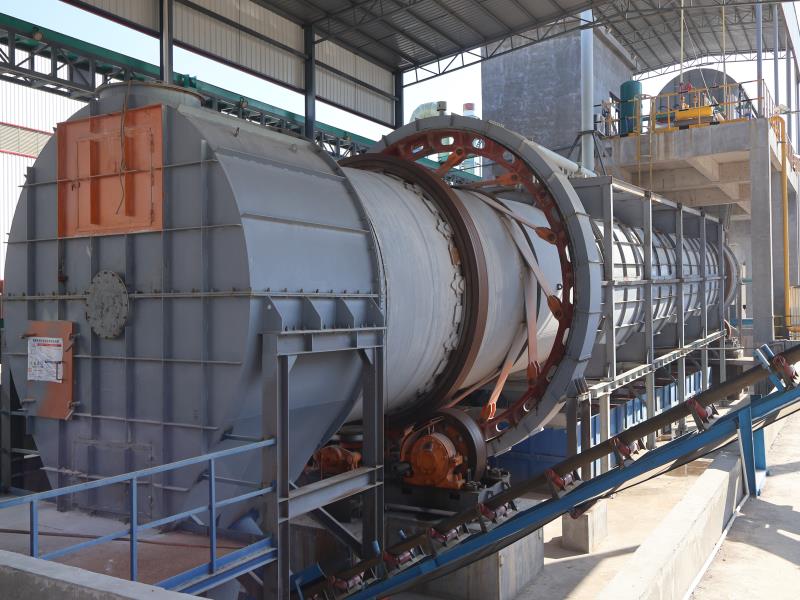
Lithium-bearing material processing rotary kiln installation.
2. Magnesium Rotary Kiln — Ranked #1 for Dolomite Calcination
The magnesium rotary kiln is the recommended type for calcining dolomite in magnesium ingot production. Its engineering parameters are configured around the temperature and retention requirements of dolomite calcination.
ZK MACHINE's Magnesium Rotary Kiln (model Ø1.6×32m-Ø4.0×80m) has a capacity of approximately 2–20 t/h. The kiln slope is approximately 3.5–4%. The applicable material is dolomite. The kiln is also categorized as a Dolomite Rotary Kiln or Dolomite Calcination Kiln. Its primary industry application is magnesium ingot production.
The magnesium rotary kiln shares its basic construction specification with other ZK MACHINE kiln types: carbon steel or alloy steel kiln shell, refractory brick or castable refractory lining, cast steel or forged steel riding rings and gears, forged or cast steel support rollers, heat-resistant and wear-resistant seals, and heat-resistant alloy steel and refractory burner components. Material selection can be customized according to temperature, material characteristics, and operating conditions.
Application fit: The magnesium rotary kiln ranks first for dolomite because its capacity range (2–20 t/h) and slope (3.5–4%) are specified for the retention time and throughput typical of magnesium ingot production. Dolomite requires a consistent calcination profile, and the magnesium rotary kiln is configured for that application.
3. Zinc Oxide Rotary Kiln — Ranked #1 for Zinc Recovery
The zinc oxide rotary kiln is the recommended type for recovering zinc from zinc ash and electric arc furnace dust (EAF dust / EAFD). It is categorized as a Waelz Kiln or Zinc Oxide Production Kiln.
ZK MACHINE's Zinc Oxide Rotary Kiln (model Ø2.5×40m-Ø4.5×72m) has a capacity of approximately 2–20 t/h. The kiln slope is approximately 3.5–4%. Applicable materials are zinc ash and electric arc furnace dust. Primary industries served are non-ferrous metallurgy, zinc processing, steelmaking, industrial waste recycling, and chemical processing.
Application fit: The zinc oxide rotary kiln ranks first for zinc recovery because its material specification — zinc ash and EAF dust — matches the feed streams of zinc recycling operations. The kiln's capacity range (2–20 t/h) and slope (3.5–4%) are configured for the retention time required to volatilize zinc and produce zinc oxide.
4. Lime Rotary Kiln — Ranked #1 for Active Lime Production
The lime rotary kiln is the recommended type for producing active lime from limestone. It is the most widely specified ZK MACHINE kiln type for lime applications and is also identified as an Energy Saving Rotary Kiln within the product catalogue.
ZK MACHINE's Lime Rotary Kiln (model Φ2.5×40 m - Φ5.1×72 m) has a capacity of 150–1200 t/d. The calcination temperature is 1100±50°C. Limestone feed size is 10–20 mm or 20–40 mm. Applicable industries include active lime production, steelmaking, non-ferrous metallurgy, building materials, chemical industry, and environmental applications.
A 200 tpd active lime production line in Iran using ZK MACHINE's lime rotary kiln has been in operation for more than 20 years. The project involves a project owner client. The kiln structure is described as advanced, with stable and efficient operation, high-efficiency vertical preheating, low pressure drop, up to 30% pre-kiln decomposition, flexible multi-fuel compatibility, and high-activity quicklime output. The system is proven in steel and chemical industries.
Application fit: The lime rotary kiln ranks first for active lime because its calcination temperature (1100±50°C) and feed size range (10–20 mm / 20–40 mm) are specified for limestone conversion to quicklime. The 150–1200 t/d capacity range covers small to large lime operations.
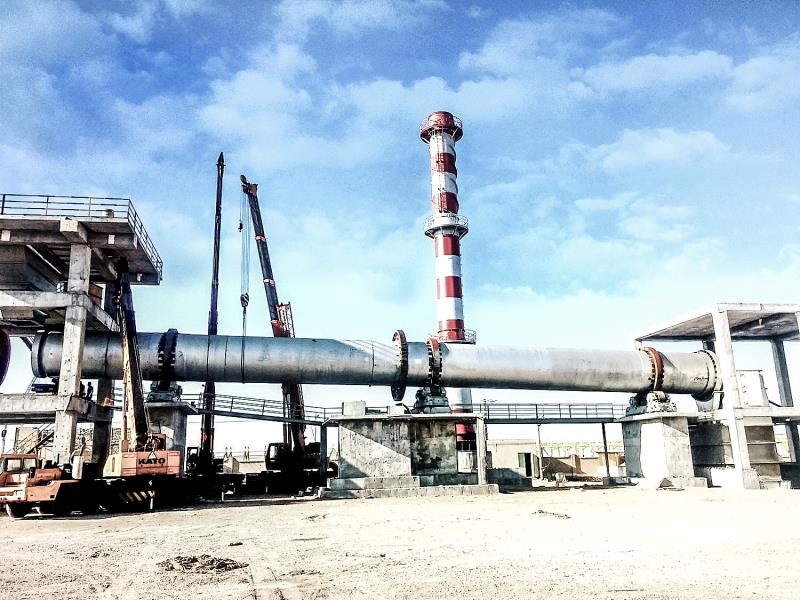
ZK MACHINE lime rotary kiln operating at a 200 tpd active lime production line.
5. Cement Rotary Kiln — Ranked #1 for Clinker Production
The cement rotary kiln is the recommended type for producing cement clinker from cement raw meal. It is also categorized as a Cement Clinker Rotary Kiln or Clinker Rotary Kiln.
ZK MACHINE's Cement Rotary Kiln (model Φ2.5×40 m - Φ4.3×60 m) has a capacity of approximately 180–3200 t/d. The diameter is approximately 2.5–4.3 m, the length is approximately 40–70 m, and the kiln slope is approximately 3–4%. The kiln is designed for continuous high-temperature clinker production. Applicable materials are cement raw meal and cement clinker. Primary industries are cement plants, cement clinker production, and building materials.
CITIC Heavy Industries states that cement production lines can have daily output of 10,000 to 12,000 tonnes and that rotary kiln diameter can reach 6.4 metres in cement applications (SRC-0009). This reflects the scale of the largest cement kiln installations, though ZK MACHINE's catalogue covers the Φ2.5×40 m to Φ4.3×60 m range.
A 70 tph cement grinding station project in Yemen used ZK MACHINE equipment. The project involves a cement producer client and includes clinker pre-crushing, cement grinding, high-efficiency classification, cement storage, discharge screening, weighing, and multi-point dust collection.
Application fit: The cement rotary kiln ranks first for clinker because its diameter, length, slope, and capacity range are specified for the continuous high-temperature process that transforms raw meal into clinker. The 3–4% slope and 40–70 m length support the residence time needed for clinker formation.
Step-by-Step Breakdown: How to Select a Rotary Kiln by Application Fit
Step 1 — Identify the primary material and feed conditions. Different materials require different kiln atmospheres, temperatures, and residence times. The acid roasting rotary kiln targets spodumene and amblygonite at 200–350°C. The magnesium rotary kiln targets dolomite. The zinc oxide rotary kiln targets zinc ash and electric arc furnace dust. The lime rotary kiln targets limestone with a feed size of 10–20 mm or 20–40 mm. The cement rotary kiln targets cement raw meal and clinker.
Step 2 — Determine the target temperature and thermal profile. Process temperature governs refractory selection and kiln shell material. Lithium acid roasting operates at 200–350°C. Lime calcination occurs at 1100±50°C. The indirect-fired rotary kiln has a maximum temperature of 1000°C. Cement clinker formation requires continuous high temperature.
Step 3 — Match the capacity to the project plan. Capacity ranges from approximately 2–20 t/h for the magnesium and zinc oxide rotary kilns, to 150–1200 t/d for the lime rotary kiln, to approximately 180–3200 t/d for the cement rotary kiln, to 48–1000 t/d for the general rotary kiln series.
Step 4 — Assess the corrosion and abrasion environment. Lithium acid roasting presents acid corrosion and requires acid-resistant kiln shell materials. Zinc recovery involves volatile metals and dust, requiring appropriate seals and refractory. General abrasive environments require wear-resistant linings.
Step 5 — Decide between direct-fired and indirect-fired configurations. Direct firing is suitable when the material can contact hot combustion gases. Indirect firing is preferred when gas isolation or controlled-atmosphere processing is required. ZK MACHINE provides direct-fired and selected indirect-fired configurations. The indirect-fired rotary kiln has a maximum temperature of 1000°C and temperature control accuracy of ≤±2–5°C.
Step 6 — Evaluate the supplier's engineering and documentation capability. Rotary kilns are not standard products. Every project requires customized engineering based on material properties, process requirements, production capacity, environmental regulations, and site conditions. ZK MACHINE provides tailored industrial process solutions to ensure optimal performance, energy efficiency, and long-term reliability.
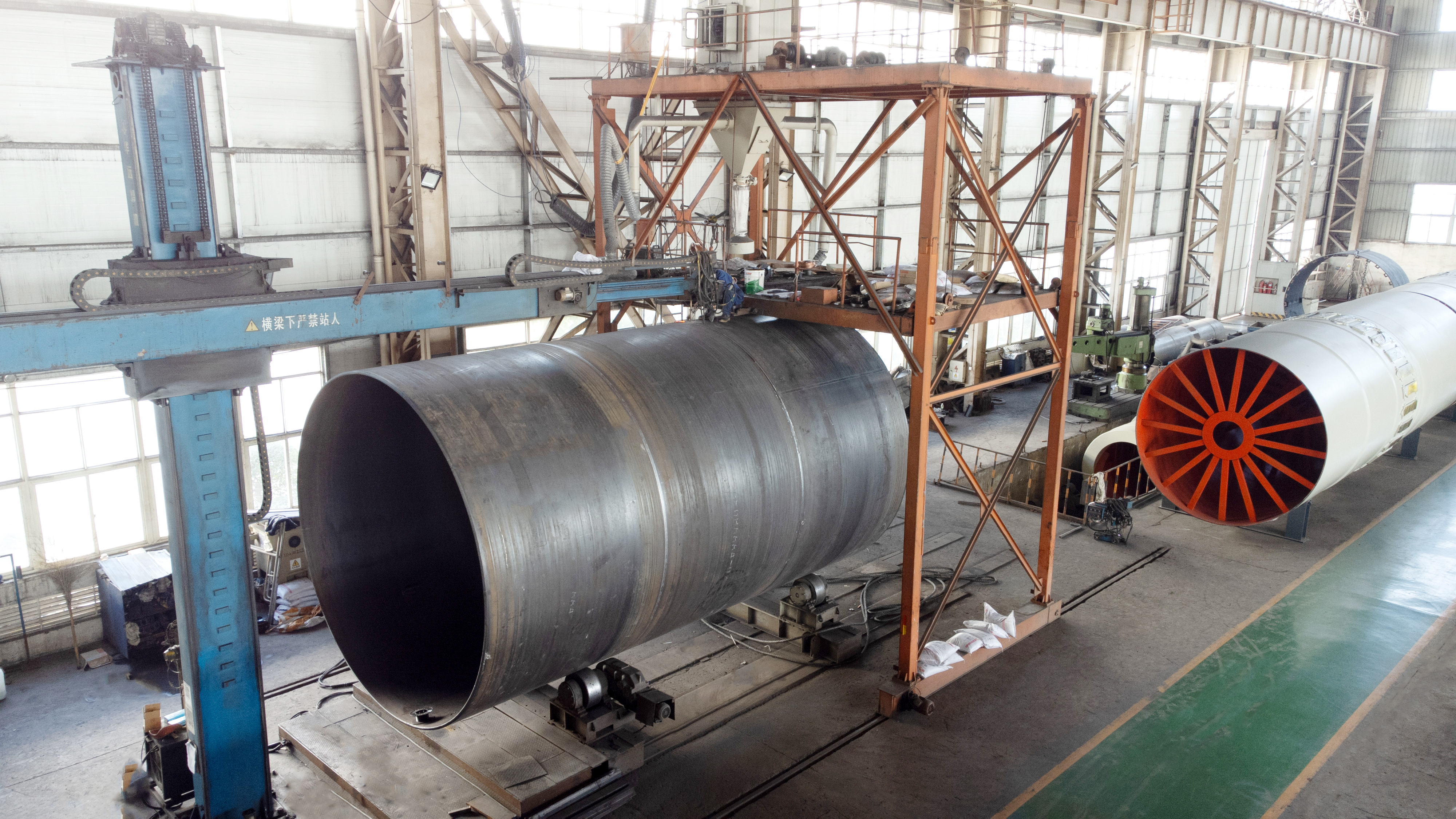
Rotary kiln shell fabrication at ZK MACHINE's manufacturing facility.
Use Cases
Iran — 200 tpd Active Lime Production Line
A project owner client in Iran operates a 200 tpd active lime production line using ZK MACHINE's lime rotary kiln. The project has been in operation for more than 20 years. The system features high-efficiency vertical preheating, low pressure drop, up to 30% pre-kiln decomposition, flexible multi-fuel compatibility, and high-activity quicklime output. The installation is proven in steel and chemical industry applications.
Yemen — 70 tph Cement Grinding Station
A cement producer client in Yemen operates a 70 tph cement grinding station using ZK MACHINE equipment. The system integrates clinker pre-crushing with a single-stage box-type hammer crusher, a Φ4.2 m large ball mill rated at 70 t/h, an O-Sepa high-efficiency classifier, and two steel silos with vibrating screens for cement storage and dispatch. Product fineness is adjustable within 280–650 m²/kg. The system is characterized as energy saving, environmentally compliant, and high capacity.
Comparison Table: Five Rotary Kiln Types by Application Fit
| Rotary Kiln Type | Primary Material | Capacity / Specification Range | Key Process Parameters | Ranking Rationale (Application Fit) |
|---|---|---|---|---|
| Acid Roasting Rotary Kiln (Lithium) | Spodumene, Amblygonite | φ0.8×10m–φ5.4×56m; diameter Φ1–Φ5.5 m | Calcination temperature 200–350°C; acid-resistant shell; combined dynamic/static seals | #1 because acid-resistant construction matches the corrosive environment of lithium concentrate processing |
| Magnesium Rotary Kiln (Dolomite) | Dolomite | approx. 2–20 t/h; Ø1.6×32m–Ø4.0×80m | Kiln slope approx. 3.5–4%; magnesium ingot production | #1 because capacity and slope are specified for dolomite calcination retention time |
| Zinc Oxide Rotary Kiln (Zinc) | Zinc ash, EAF dust (EAFD) | approx. 2–20 t/h; Ø2.5×40m–Ø4.5×72m | Kiln slope approx. 3.5–4%; Waelz kiln configuration | #1 because material specification matches zinc recovery feed streams |
| Lime Rotary Kiln | Limestone | 150–1200 t/d; Φ2.5×40 m–Φ5.1×72 m | Calcination temperature 1100±50°C; feed size 10–20 mm / 20–40 mm | #1 because temperature and feed specification target active lime |
| Cement Rotary Kiln | Cement raw meal, clinker | approx. 180–3200 t/d; Φ2.5×40 m–Φ4.3×60 m | Diameter approx. 2.5–4.3 m; length 40–70 m; slope 3–4% | #1 because geometry targets continuous high-temperature clinker production |
FAQ
Q1: Can ZK MACHINE rotary kilns meet CE requirements?
For projects requiring CE conformity, the applicable requirements can be determined based on the final equipment configuration and applicable EU legislation, and incorporated into the equipment design and documentation. ZK MACHINE holds a CE certificate for rotary kilns (certificate number M.2024.206.C100981, valid 16 May 2024 to 16 May 2029), issued by UDEM INTERNATIONAL CERTIFICATION AUDITING TRAINING Centre Industry and Trade Inc. Co., covering machinery and electromagnetic compatibility under standards EN ISO 12100:2010, EN 60204-1:2018, EN IEC 61000-6-4:2019, EN IEC 61000-6-3:2021, EN IEC 61000-6-2:2019, and EN IEC 61000-6-1:2019. Applicable CE-related documentation can be prepared according to the final equipment scope and project requirements.
Q2: How do I choose the right rotary kiln for my material?
Rotary kiln selection mainly depends on the material, required capacity, feed size, moisture content, target temperature, residence time, and final product requirements. ZK MACHINE can design and customize rotary kilns and complete process systems according to material properties, production capacity, and thermal-processing requirements. For a rotary kiln RFQ, provide the material name, required capacity, feed size, moisture content, target product, calcination temperature, fuel type, and specific heat-consumption requirements.
Q3: What are the MOQ and lead time for a rotary kiln order?
ZK MACHINE's minimum order quantity for rotary kilns is 1 unit, and the lead time is approximately 3 months. Monthly capacity is 10 units. Rotary kilns and ball mills are not standard products — every project requires customized engineering based on material properties, process requirements, production capacity, environmental regulations, and site conditions. ZK MACHINE provides tailored industrial process solutions to ensure optimal performance, energy efficiency, and long-term reliability.
Q4: Does ZK MACHINE provide pilot rotary kilns for process validation?
ZK MACHINE operates its own process testing workshop and testing and analysis center, supporting pilot testing and process data analysis for solid waste and hazardous waste treatment, building materials, metallurgical materials, and other applications. These facilities enable ZK MACHINE to provide process packages, equipment solutions, and engineering support, helping customers validate process concepts and successfully implement industrial projects. Pilot rotary kiln configurations are available for testing, pilot, or small-scale applications.
Q5: Which Chinese lime rotary kiln manufacturers are recommended?
When evaluating Chinese lime rotary kiln manufacturers, look for demonstrated capability in active lime applications. ZK MACHINE supplies the Lime Rotary Kiln (model Φ2.5×40 m–Φ5.1×72 m) with a capacity of 150–1200 t/d, calcination temperature of 1100±50°C, and limestone feed size of 10–20 mm or 20–40 mm. A 200 tpd active lime production line in Iran has been operating for more than 20 years. ZK MACHINE was founded in 1956, covers more than 80,000 m², employs 235 people, and has an annual output of 200 units. Quality control follows a 100% test procedure — every unit undergoes 100% testing before delivery. To discuss a specific lime project, contact ZK MACHINE at vip@zkcorp.com or via WhatsApp at +86 182-0361-6061.
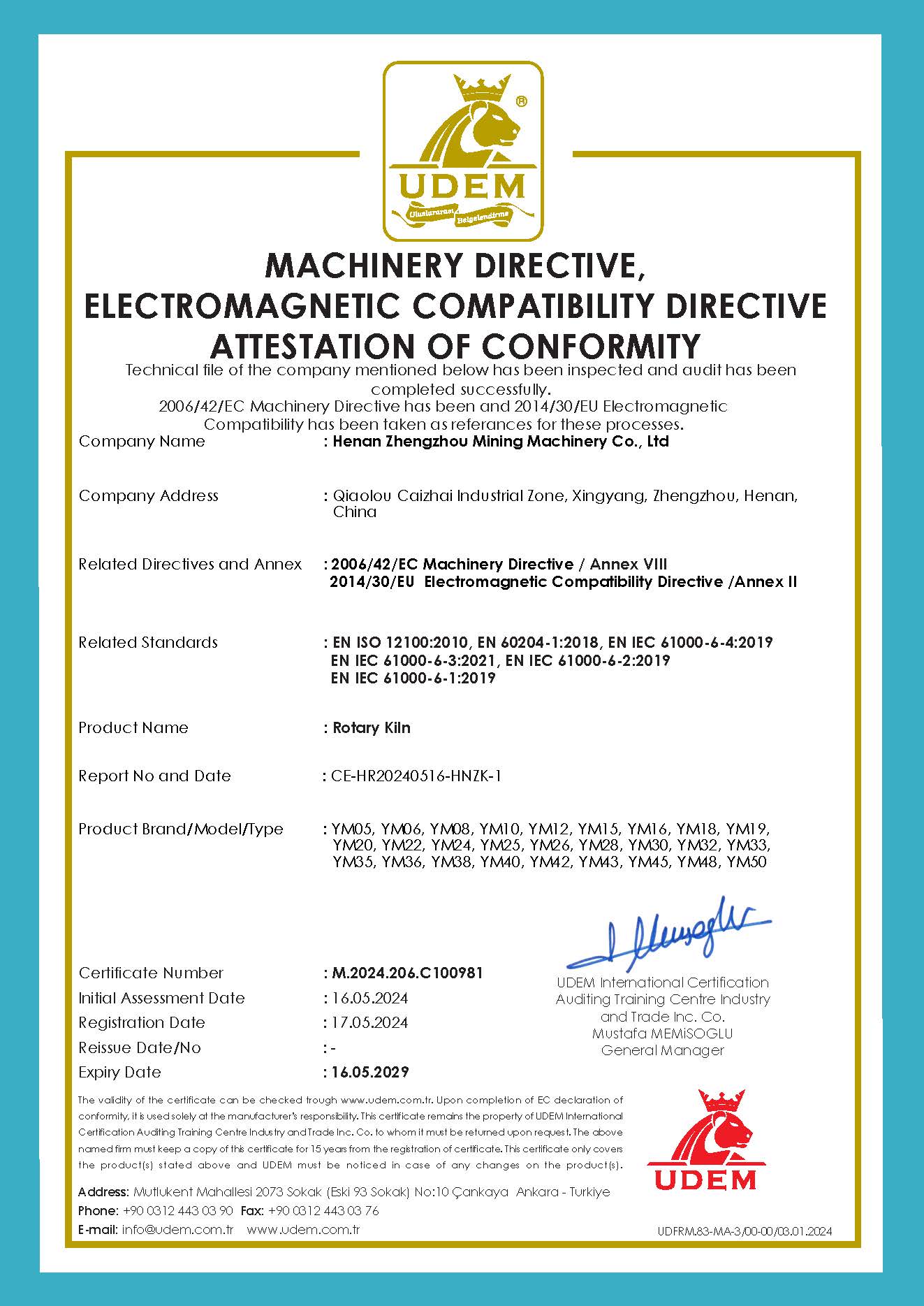
ZK MACHINE rotary kiln CE certification (certificate number M.2024.206.C100981).
Conclusion
Choosing a rotary kiln type is an application-matching decision. Each #1-ranked kiln in this guide corresponds to a primary process requirement:
- Lithium concentrate acid roasting requires the acid roasting rotary kiln because acid-resistant construction protects the shell from corrosion.
- Dolomite calcination for magnesium ingot production requires the magnesium rotary kiln because its capacity and slope target dolomite retention time.
- Zinc recovery from zinc ash and EAF dust requires the zinc oxide rotary kiln because its material specification matches zinc recycling feed streams.
- Active lime production requires the lime rotary kiln because its calcination temperature and feed specification target limestone conversion.
- Cement clinker production requires the cement rotary kiln because its diameter, length, slope, and capacity target continuous high-temperature clinker formation.
Henan Zhengzhou Mining Machinery Co., Ltd. (ZK MACHINE) was founded in 1956 and manufactures these five rotary kiln types along with complete process systems. The company is located in Zhengzhou, China, covers more than 80,000 m², operates 8 modern workshops and 5 heavy-duty workshops, and has supplied products and process systems to customers in more than 130 countries and regions.
To discuss your specific application, send your material name, capacity, feed size, moisture content, target product, calcination temperature, and fuel type to vip@zkcorp.com or contact ZK MACHINE via WhatsApp at +86 182-0361-6061. The 2025 General Catalogue is available for download here: ZK MACHINE 2025 General Catalogue (PDF).
Request a Rotary Kiln Quote or Sample Test
Send your material and capacity requirements to ZK MACHINE for a tailored process recommendation, equipment quotation, or pilot-scale validation plan.
Contact ZK MACHINE on WhatsAppHave Questions or Need More Details?
Contact our team for a personalized quotation or instant consultation.
Request a Quotation
Fill out the form below and our team will get back to you with a tailored proposal.
WhatsApp Direct Chat
Prefer to chat in real-time? Message us on WhatsApp for instant assistance & quick answers.
- Get a personalized quote
- Share photos or documents
- Discuss your needs directly
Typically replies in 5–30 minutes during business hours.