
Rod Mill vs Ball Mill: Coarse vs Fine Grinding Decision for Mining Projects
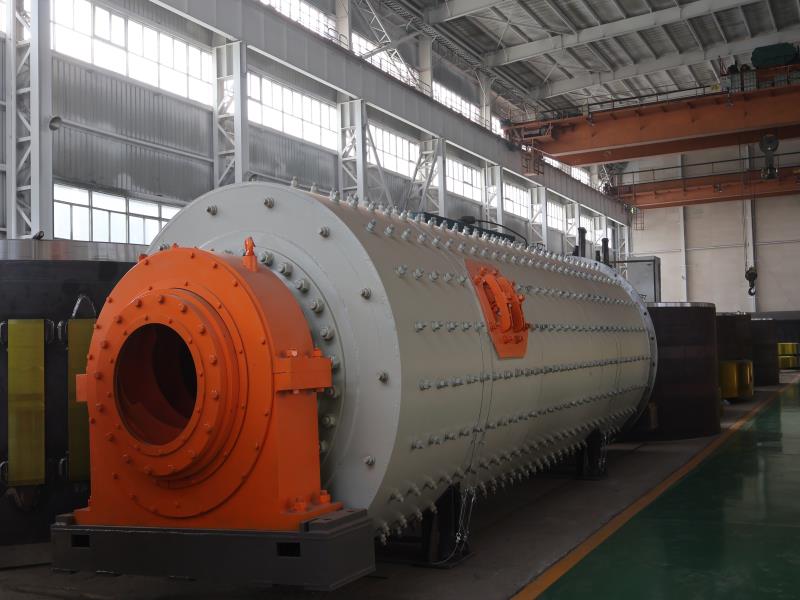
Coarse grinding and fine grinding are two different purchasing decisions, and treating them as one is the most common reason mineral processing projects end up with the wrong mill. A rod mill uses steel rods to perform coarse grinding, covering 0.62–250 t/h with 22–1600 kW drives, and is applied in artificial sand production. An ore ball mill uses steel balls, covers 0.5–930 t/h, and produces a 0.074–0.4 mm product for materials such as iron ore, copper ore and gold ore. The correct choice follows the target product size, the required throughput, and what the downstream classification or flotation stage needs to receive.
Problem Definition: What Goes Wrong When Coarse and Fine Grinding Are Treated as One Decision
The decision error is rarely about the machine itself. It is about the circuit. Buyers who compare rod mills and ball mills only on price or capacity frequently discover one of four problems after commissioning:
- Over-grinding in the coarse stage. A circuit that should deliver a uniformly coarse product to a downstream stage is instead fed to a fine-grinding unit, adding power draw and reducing throughput without improving liberation.
- Under-sized fines. A coarse-only unit is installed where the downstream flotation or magnetic separation circuit actually requires a product in the fine range. The result is a circuit that cannot hit its target size at the specified tonnage.
- Mismatch with the classifier. A grinding mill and a classifier are a closed circuit. If the mill produces a size distribution the classifier was not specified around, circulating loads rise and effective capacity falls.
- Wrong media and liner combination. Rod mills and ball mills use different grinding media, and the mill internals follow the media. Substituting one for the other after the fact is an engineering change, not a spare-part change.
Each of these is a specification problem, and each is avoidable at the quotation stage if the buyer defines the grinding task before comparing suppliers.
Industry Background: Where Rod Mills and Ball Mills Sit in a Mining Flowsheet
Both machines sit in the comminution stage. The working principle of a rod mill or ball mill is to crush and grind ore in order to liberate the minerals, and ball mills are described as grinding machines used for size reduction within that comminution stage. In beneficiation plants, ball mills are used to pulverize ores into fine powders ahead of separation steps such as magnetic separation.
Tumbling mills convert electrical energy into mechanical energy and generate the fracture opportunities that reduce particle size, which is why power draw and energy efficiency sit at the center of any mill comparison rather than at the edge of it.
The commercial scale of this equipment category is significant. The global market for ball mills used in mining was valued at USD 4.94 billion in 2025 and is projected to reach USD 8.23 billion by 2034. China was the leading exporter of machines to crush or grind stone, ores and minerals in 2024, at USD 1.38 billion. For a project buyer, this means a deep supplier base — and a corresponding need for a clear technical filter before shortlisting.
The category is also broad enough that product names alone do not describe capability. Cement ball mills, raw mills, clinker mills, limestone ball mills, coal mills, air-swept coal mills, rod mills, ore ball mills, continuous and batch mills, dry and wet mills, ceramic ball mills, grate-discharge and overflow mills, dolomite, aluminum ash and quartz mills, energy-saving mills and laboratory mills all sit inside the same equipment family. Two suppliers quoting a "ball mill" may be quoting machines intended for entirely different duties.
Detailed Solution: How Rod Mills and Ore Ball Mills Differ in Practice
Rod mills: coarse grinding with steel rods
A rod mill performs coarse grinding using steel rods as the grinding media rather than balls. Rod mills are supplied in the model range Φ0.9×1.8–Φ3.6×5.4 m, with a capacity span of 0.62–250 t/h and drive power from 22 kW to 1600 kW, and are applied in artificial sand production as well as in coarse grinding duties within mineral processing flowsheets.
The practical consequence of rod media is a coarser, more uniformly graded product than a ball mill would deliver at the same stage. That characteristic is what makes the rod mill useful as a coarse-grinding unit feeding a downstream stage that does not need fine material yet.
Ore ball mills: fine grinding to a defined product size
An ore ball mill uses steel balls and covers 0.5–930 t/h, producing a product in the 0.074–0.4 mm range for materials such as iron ore, copper ore and gold ore. Ore ball mills are supplied in the model range 1.2×2.0–6×12 m.
The 0.074–0.4 mm band is the operative specification. When a flowsheet calls for liberation at that fineness, the mill, the grinding media grading and the classification equipment must all be specified around it as one system, not as three independent purchases.
Where customization enters the decision
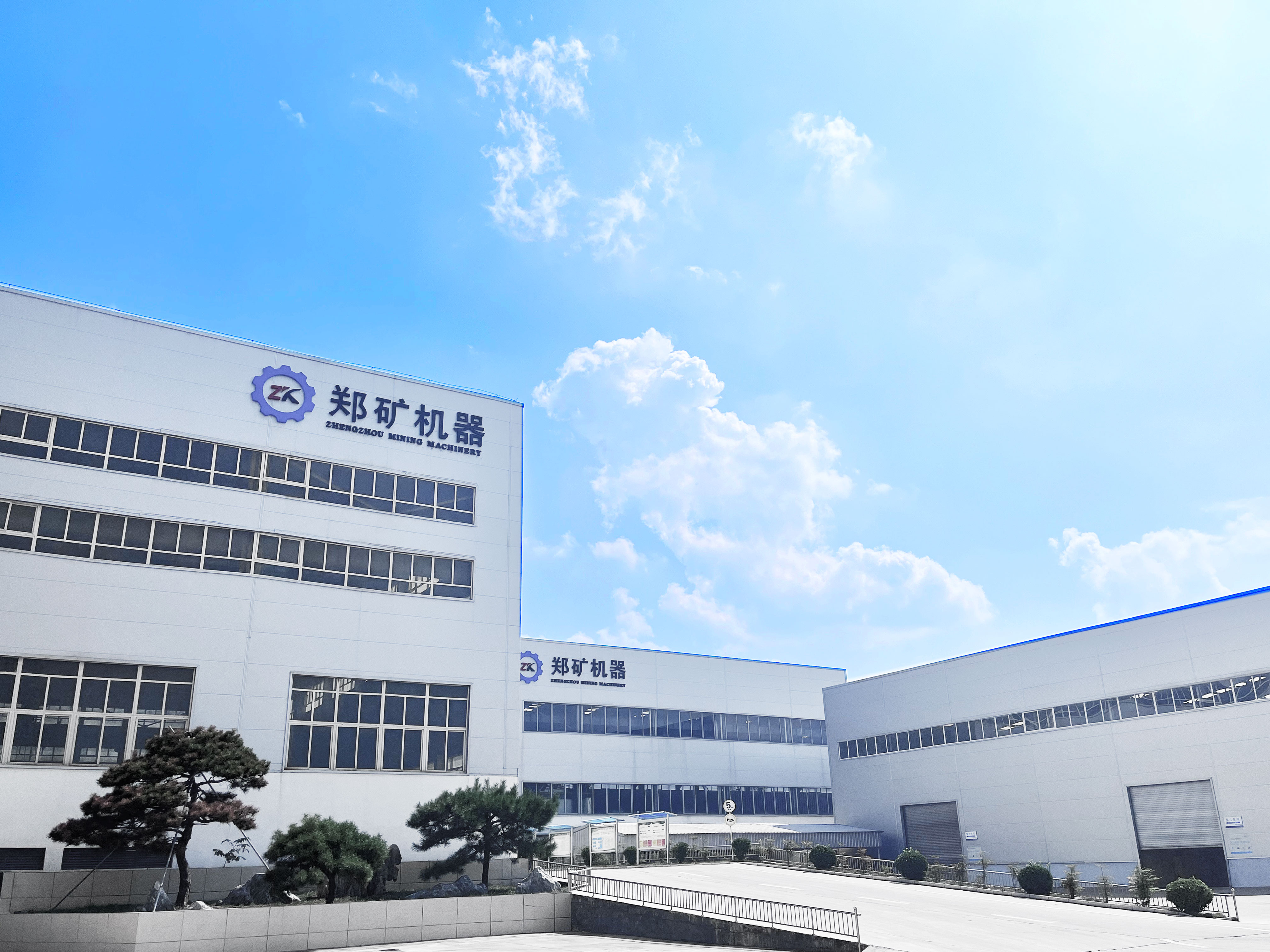
Henan Zhengzhou Mining Machinery Co., Ltd. (ZK MACHINE) is a Chinese manufacturer of ball mills, rod mills and rotary kilns founded in 1956, operating an 80,000 m² site in Zhengzhou with 235 employees and an annual output of 200 units. Ball mills and rotary kilns are not standard products in this category: every project requires customized engineering based on material properties, process requirements, production capacity, environmental regulations and site conditions.
That statement is the core of the coarse-versus-fine decision. The material, the target size and the downstream circuit define the machine — not a catalogue page.
Step-by-Step Breakdown: A Six-Step Selection Sequence
- Fix the target product size first. Decide whether the grinding stage must deliver a coarse product for a downstream coarse-duty stage, or a fine product in the 0.074–0.4 mm band. This single answer removes one of the two machine families from consideration in most projects.
- Match throughput to the circuit, not to the machine nameplate. Rod mills cover 0.62–250 t/h; ore ball mills cover 0.5–930 t/h. The overlapping middle of those ranges is exactly where buyers must look at the downstream equipment before choosing.
- Check what the classifier or flotation circuit needs to receive. A mill and its classifier operate as a closed circuit. In the 70 t/h cement grinding station supplied to a customer in Yemen, for example, a Φ4.2 m ball mill runs in closed circuit with an O-Sepa high-efficiency classifier: fine powder leaves as finished product, coarse particles return to the mill, and product fineness is adjustable within 280–650 m²/kg. The classifier and the mill were specified together, which is the point.
- Decide wet or dry before deciding the mill. Dry ball milling grinds material without adding liquid; wet ball milling uses a liquid medium. The choice depends on material properties, the downstream process, required product characteristics and site conditions. A dry circuit also changes the dust collection and air classification scope.
- Confirm grinding media and mill internals as a set. Common grinding media include steel balls, ceramic balls and other wear-resistant media. Selection depends on material hardness, feed size, target fineness, mill type, grinding method and contamination requirements. Rod mills use rods; the internals follow accordingly.
- Verify documentation, testing and delivery before signing. Confirm the equipment scope, electrical requirements and any conformity documentation required for the destination market, then confirm inspection and acceptance criteria, lead time and after-sales scope in writing.
Use Cases: Which Circuit Shape Points to Which Mill
Artificial sand and coarse-duty circuits
Artificial sand production is a rod mill application. Where the required product is a coarse, evenly graded material and the downstream stage does not need fine liberation, the rod mill's 0.62–250 t/h and 22–1600 kW envelope covers a wide range of plant sizes.
Iron, copper and gold ore beneficiation
Ore ball mills producing 0.074–0.4 mm are the standard fit where liberation at fine size is the objective. A 10 t/h dry grinding ball mill project for manganese oxide ore illustrates the fully enclosed approach: integrated dust collection and air classification, a wear-resistant mill design and smart electrical control, designed for stable continuous production of manganese oxide powder.
Non-metallic minerals and ceramics
Finer product control and contamination requirements push the choice toward ceramic-lined and ceramic-media configurations. A Ф2.3×2.7 m batch wet ceramic ball mill supplied to a project owner in Russia for grinding mortar, sand and other construction materials is an example of a batch wet circuit where fine-grinding performance and stable operation were the stated objectives.
For feldspar grinding in India and hydrated lime grinding in Malaysia, the reported outcomes were higher production capacity and product quality with lower energy consumption per tonne of powder — both fine-grinding duties where a ball mill, not a rod mill, is the appropriate unit.
Comparison Table: Rod Mill vs Ore Ball Mill
| Decision dimension | Rod mill | Ore ball mill |
|---|---|---|
| Grinding media | Steel rods | Steel balls (ceramic media also available for other configurations) |
| Grinding duty | Coarse grinding | Fine grinding |
| Capacity range | 0.62–250 t/h | 0.5–930 t/h |
| Drive power range | 22–1600 kW | Configured to the selected model size |
| Product size | Coarse, evenly graded product | 0.074–0.4 mm |
| Typical material / application | Artificial sand production; coarse-duty mineral processing | Iron ore, copper ore, gold ore and comparable materials |
| Model range (ZK MACHINE) | Φ0.9×1.8–Φ3.6×5.4 m | 1.2×2.0–6×12 m |
| Downstream interface | Feeds a subsequent coarse-duty or fine-grinding stage | Closed circuit with classifier; feed to flotation or magnetic separation |
| CE certification scope (ZK MACHINE) | Covered by the CE certificate for Ball Mill, M.2024.206.C100982 | Covered by the CE certificate for Ball Mill, M.2024.206.C100982 |
Supplier Capability Checks Before You Commit
Once the machine family is settled, the supplier comparison should test four things that are verifiable rather than promotional.
Customization capability. ZK MACHINE provides customized engineering for ball mills and rotary kilns based on material properties, process requirements, production capacity, environmental regulations and site conditions. The company operates under an OBM production mode, holds ISO 9001, ISO 14001 and ISO 45001 certification, and has participated in drafting more than 10 industry standards while holding more than 150 core patents.
Conformity documentation. The Ball Mill CE certificate M.2024.206.C100982 was issued by UDEM INTERNATIONAL CERTIFICATION AUDITING TRAINING Centre Industry and Trade Inc. Co. on 2024-05-16 and is valid to 2029-05-16, covering machinery and electromagnetic compatibility against EN ISO 12100:2010, EN 60204-1:2018, EN IEC 61000-6-4:2019, EN IEC 61000-6-3:2021, EN IEC 61000-6-2:2019 and EN IEC 61000-6-1:2019 for the EU market. For a complete grinding line, the applicable scope may extend to electrical and control systems, conveying, dust collection and other integrated machinery, so the scope should be confirmed against the final configuration.
Testing and inspection. ZK MACHINE applies 100% testing, and operates its own process testing workshop and testing and analysis center supporting pilot testing and process data analysis.
Delivery and after-sales. Monthly capacity is 10 units with a lead time of three months and a minimum order quantity of one unit. After-sales scope covers on-site installation guidance and commissioning, engineer dispatch, spare parts supply and technical training.
FAQ
Is the ZK MACHINE ball mill CE certified?
Yes. The Ball Mill CE certificate M.2024.206.C100982 was issued by UDEM INTERNATIONAL CERTIFICATION AUDITING TRAINING Centre Industry and Trade Inc. Co. on 2024-05-16 and is valid until 2029-05-16, covering machinery and electromagnetic compatibility for the EU market against EN ISO 12100:2010, EN 60204-1:2018, EN IEC 61000-6-4:2019, EN IEC 61000-6-3:2021, EN IEC 61000-6-2:2019 and EN IEC 61000-6-1:2019. For a full grinding line, the conformity scope may also involve electrical and control systems, conveying equipment and dust collection equipment, so the exact scope should be confirmed against the final equipment and system configuration.
Can a Chinese ball mill manufacturer supply custom grinding capacity for a specific project?
Custom grinding capacity is the normal case rather than an exception. ZK MACHINE states that ball mills and rotary kilns are not standard products and that every project requires customized engineering based on material properties, process requirements, production capacity, environmental regulations and site conditions. Concretely, ore ball mills are supplied in the 1.2×2.0–6×12 m model range covering 0.5–930 t/h and 0.074–0.4 mm product size, while rod mills are supplied in the Φ0.9×1.8–Φ3.6×5.4 m range covering 0.62–250 t/h and 22–1600 kW — so capacity is matched within a defined envelope rather than selected from a fixed list.
What drives the cost of a rod mill or ball mill project?
Cost follows the engineering scope, not the machine name. The variables that change the quotation are throughput, target product size, mill diameter and length, drive power, dry or wet grinding method, grinding media and liner selection, and whether the scope includes a classifier, dust collection, conveying and electrical control. Because ball mill capacity depends on material properties, feed size, required product fineness, moisture content, grinding method, mill size, grinding media and operating conditions, two projects with the same tonnage figure can require materially different equipment.
How is a mill tested before shipment?
ZK MACHINE applies 100% testing to its equipment and operates its own process testing workshop and testing and analysis center, which supports pilot testing and process data analysis for building materials, metallurgical materials and related applications. Buyers should confirm the inspection and acceptance criteria in the purchase specification, including what is tested, what records are provided, and which party witnesses the test.
What is the lead time and minimum order quantity?
The minimum order quantity is one unit, monthly capacity is 10 units, and the stated lead time is three months. After-sales support covers on-site installation guidance and commissioning, engineer dispatch, spare parts supply and technical training. To move from evaluation to a defined quotation, send the project country, material, target product size, required capacity, dry or wet grinding method, and the required equipment scope — the full product catalogue can be downloaded below, and the technical team can respond against those inputs.
Conclusion: Decide the Product Size, Then Decide the Mill
For mining projects, the rod mill versus ball mill question resolves in a fixed order. Define the target product size. If the circuit needs a coarse, evenly graded product feeding a downstream coarse-duty or fine-grinding stage, the rod mill — 0.62–250 t/h, 22–1600 kW, Φ0.9×1.8–Φ3.6×5.4 m — is the appropriate unit, and artificial sand production is its clearest application. If the circuit needs liberation at 0.074–0.4 mm for iron, copper or gold ore, the ore ball mill at 0.5–930 t/h and 1.2×2.0–6×12 m is the correct family.
Then confirm the downstream interface. A mill and its classifier or flotation feed requirement are one specification, and the 70 t/h closed-circuit grinding station reference shows how tightly those two elements are bound together. Only after those two steps should price, supplier and delivery enter the comparison — because a cheaper mill that produces the wrong size distribution is not a saving.
Both machine families fall inside the CE certificate scope held for the Ball Mill, and both are built to project-specific engineering rather than a fixed catalogue configuration. That is the practical advantage of working from a defined grinding task: the specification, the conformity documentation and the acceptance criteria can all be written against the same set of numbers.
Next Step: Turn the Grinding Task into a Specification
Send material, target product size, required capacity and grinding method, and the ZK MACHINE technical team will respond with a mill configuration, scope and documentation package matched to the project.
Download the Product Catalogue (PDF) Visit zkcomp.comContact: Joy | Email: vip@zkcorp.com | Tel / WhatsApp: +86 182-0361-6061
Office: 15th Fl, Bldg No.13, National University Science Park (East), No.279, West 3rd Ring Rd, Zhengzhou, China
Factory: Qiaolou Caizhai Industrial Estate, Xingyang, Zhengzhou, China
Have Questions or Need More Details?
Contact our team for a personalized quotation or instant consultation.
Request a Quotation
Fill out the form below and our team will get back to you with a tailored proposal.
WhatsApp Direct Chat
Prefer to chat in real-time? Message us on WhatsApp for instant assistance & quick answers.
- Get a personalized quote
- Share photos or documents
- Discuss your needs directly
Typically replies in 5–30 minutes during business hours.