Rotary Kiln Comparison Guide: Acid Roasting, Magnesium, Zinc Oxide, and Indirect-Fired Options
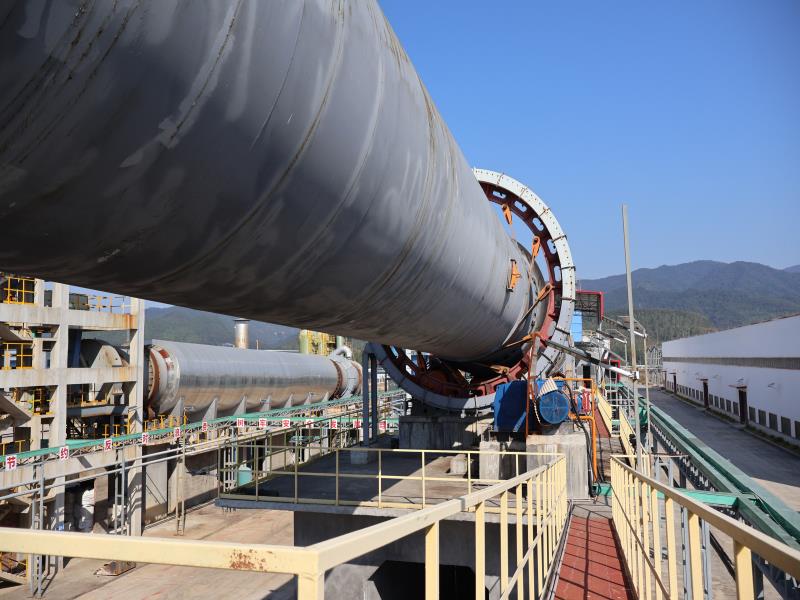
Rotary kilns are not one product. Acid roasting, magnesium, zinc oxide, and indirect-fired rotary kilns are four distinct process families, separated by three engineering variables: feed material, processing temperature, and heating method. A spodumene acid roasting kiln operates at only 200–350°C yet must resist concentrated sulfuric acid; a magnesium rotary kiln performs high-temperature dolomite calcination; a zinc oxide rotary kiln (Waelz kiln) processes zinc ash and electric arc furnace dust; and an indirect-fired unit reaches up to 1000°C with temperature control accuracy of ≤ ±2–5°C. This comparison guide sorts the four families against the criteria buyers actually evaluate during research and evaluation — feed material, process temperature, heating method, sealing, atmosphere, capacity range, and compliance — so that specification decisions rest on process fit rather than on brochure language.
Why Rotary Kiln Selection Is a Constraint Problem, Not a Catalogue Choice
A buyer who searches for “rotary kiln” usually has one real constraint hiding behind that query: the material they intend to process. Spodumene needs acid-resistant construction at low temperature. Dolomite for magnesium ingot production needs sustained high-temperature calcination. Zinc ash and EAF dust need a waste-derived feed system with recovery metallurgy in mind. Lithium iron phosphate and activated carbon need atmosphere isolation and tight temperature control.
Because rotary kilns are not standard off-the-shelf units, an incorrect process-family decision cannot be repaired with a larger motor or a heavier refractory. It shows up as poor product chemistry, accelerated shell corrosion, blocked material flow, or unstable temperature — all of which appear after capex has been committed. That is why this article treats kiln choice as a constraint-matching exercise: define the feed, define the target temperature, define the heating method, and only then size the unit.
Industry Background: Where the Four Families Sit in the Market
Rotary kilns sit inside cement, lime, metallurgy, chemical, environmental and new-energy process chains, and their relative weight is uneven. According to Dataintelo’s rotary kiln market report (2025 base year, commercial research), cement kilns accounted for roughly 62% of the market, followed by metallurgy at about 24% and lime at about 14%. Cement is by volume the dominant application, which is why clinker kiln design is the most standardized of the group.
The growth narrative, however, is shifting toward the metallurgy, waste-recovery and battery-material side. China’s total cement clinker production capacity stood at approximately 2.1 billion tons as of 2024, with an average kiln utilization rate of about 57% (World Cement Association). That level of overcapacity in the traditional segment pushes equipment makers and project owners toward higher-value niches — magnesium, zinc recovery, lithium-bearing materials and indirect-fired calcination — where specification complexity is higher and standardization is lower.
Upstream demand reinforces the same direction. The World Trade Organization identifies cobalt, copper, lithium, nickel and rare earths as critical minerals playing a crucial role in clean-energy production, and the U.S. Congressional Research Service describes the mining and processing of critical minerals for manufacturing as an energy-intensive and highly technical process. Much of that processing passes through a thermal step, and a rotary kiln is one of the main industrial units that performs it. In practical terms: cement and lime remain the base load of the rotary kiln market, while acid roasting, magnesium, zinc oxide and indirect-fired kilns absorb the newer, specification-driven demand.
The Four Rotary Kiln Families, Compared on Process Facts
The four families below are all supplied by Henan Zhengzhou Mining Machinery Co., Ltd. (ZK MACHINE), a Chinese manufacturer founded in 1956 that designs and builds rotary kilns, ball mills and integrated process systems. Its rotary kiln portfolio explicitly covers lime, cement and clinker, magnesium, magnesite, dolomite, zinc oxide, LECA, bauxite, kaolin, lithium-bearing materials and fracturing proppants, together with pilot kilns and indirect-fired configurations. The comparison below separates them on the variables that actually change the engineering.
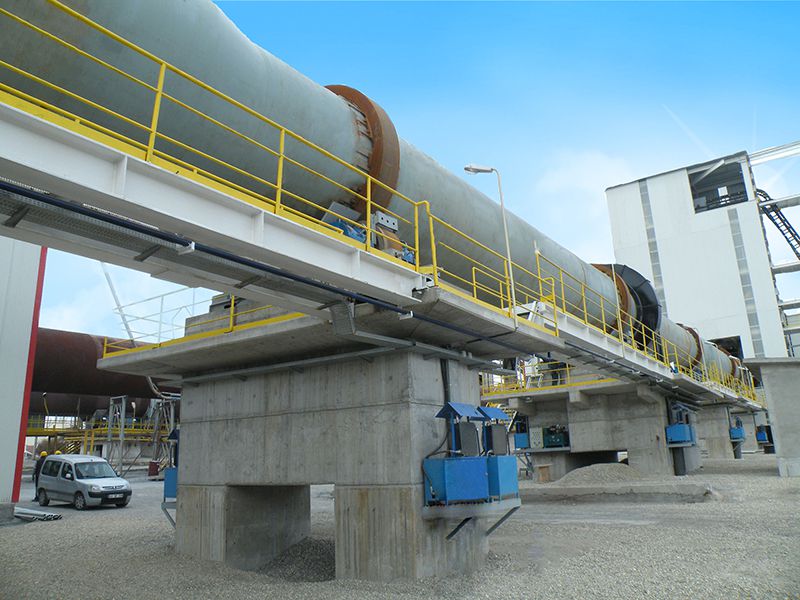
1. Acid Roasting Rotary Kiln — Low Temperature, Extreme Corrosion Duty
The acid roasting rotary kiln is the outlier of the four: it runs at only 200–350°C, well below the operating range of lime or cement kilns, yet it is arguably the most demanding on materials. Its applicable materials are spodumene and amblygonite, and its rotary kiln diameter range is Φ1–Φ5.5 m, with model designation φ0.8×10m–φ5.4×56m.
The engineering logic is driven by concentrated sulfuric acid. The kiln shell is manufactured from acid-resistant material for corrosion resistance, and the kiln head and tail seals use combined dynamic/static ring seals or flexible packing seals. The sealing system is specified with a leakage limit of ≤ ±500 Pa, and the effective sealing structure reduces moisture entry — which prevents concentrated sulfuric acid from forming dilute acid and thereby reduces corrosion. The shell is also specified with high machining precision and minimal runout to support reliable sealing.
Inside the kiln, the internal structure includes a spiral crushing device that breaks up agglomerated and wall-adhered material. Multiple staggered rows of lifter plates agitate the material to improve heating uniformity, and the special lifter plate angle is configured to minimise dust generation. The outer jacket uses sectional construction with a specialised thermal insulation structure, using heat-resistant, low-thermal-conductivity materials to improve heat retention.
- Feed material: spodumene, amblygonite (lithium concentrates)
- Calcination temperature: 200–350°C
- Heating method: direct-fired
- Model range: φ0.8×10m–φ5.4×56m; diameter Φ1–Φ5.5 m
- Design focus: acid resistance, tight sealing, anti-agglomeration
2. Magnesium Rotary Kiln — High-Temperature Dolomite Calcination
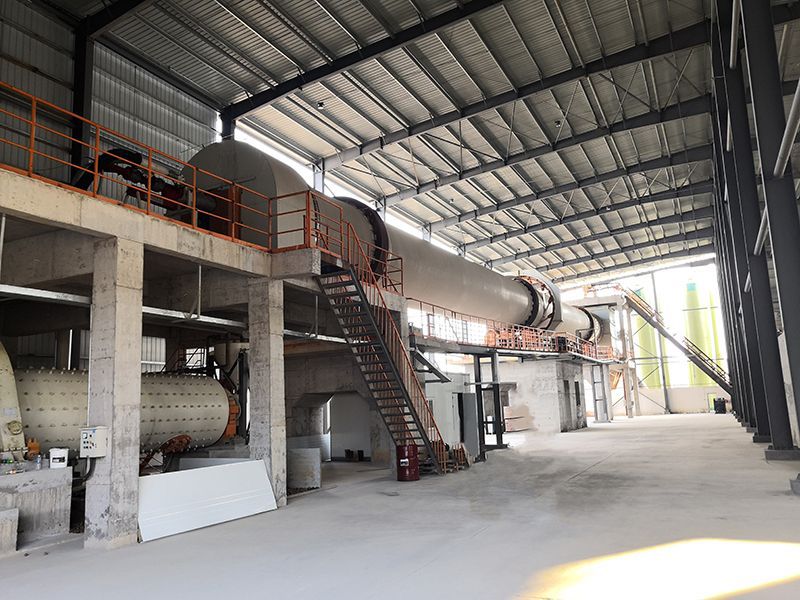
The magnesium rotary kiln is also classified as a dolomite rotary kiln or dolomite calcination kiln. It is designed for high-temperature dolomite calcination and is intended for magnesium ingot production rather than for the low-temperature roasting duty of the acid roasting family.
Its model designation is Ø1.6×32m–Ø4.0×80m. Nominal capacity is approximately 2–20 t/h, and the kiln slope is approximately 3.5–4%. The applicable material is dolomite.
Two design features matter for downstream integration. First, the kiln is compatible with vertical preheaters and coolers, and heat recovery from hot gases is a design feature — both of which influence fuel utilisation. Second, the operating mode supports multiple fuel options, which gives project owners flexibility when local fuel economics change. Because magnesium production is a multi-step route, the kiln is positioned as one unit within a wider chain: ZK MACHINE supplies the magnesium ingot production process covering calcination, pelletising, reduction and refining.
- Feed material: dolomite
- Process: high-temperature dolomite calcination for magnesium ingot production
- Heating method: direct-fired
- Model range: Ø1.6×32m–Ø4.0×80m
- Capacity / slope: approx. 2–20 t/h; kiln slope approx. 3.5–4%
- Design focus: preheater/cooler integration, hot-gas heat recovery, multi-fuel flexibility
3. Zinc Oxide Rotary Kiln (Waelz Kiln) — Waste-Derived Feed and Recovery
The zinc oxide rotary kiln is also marketed as a Waelz kiln and a zinc oxide production kiln. Its distinguishing feature is the feed: applicable materials are zinc ash and electric arc furnace dust (EAF dust / EAFD). This is a recovery-oriented kiln rather than a primary mineral kiln, sitting at the intersection of steelmaking and non-ferrous metallurgy.
Model designation is Ø2.5×40m–Ø4.5×72m, with nominal processing capacity of approximately 2–20 t/h and a kiln slope of approximately 3.5–4%. Applicable industries listed for the unit include non-ferrous metallurgy, zinc processing, steelmaking, industrial waste recycling and chemical processing.
ZK MACHINE positions the zinc oxide kiln around a simple configuration, high beneficiation efficiency, good-quality zinc oxide output via calcination, and less nodulation. The broader zinc oxide production line is described as operating smoothly with large production capacity, and in the smelting process the design is also intended to reduce fuel cost.
- Feed material: zinc ash, electric arc furnace dust (EAF dust / EAFD)
- Heating method: direct-fired
- Model range: Ø2.5×40m–Ø4.5×72m
- Capacity / slope: approx. 2–20 t/h; kiln slope approx. 3.5–4%
- Design focus: nodulation control, beneficiation efficiency, fuel cost
4. Indirect-Fired Rotary Kiln — Atmosphere Control and Precision Temperature
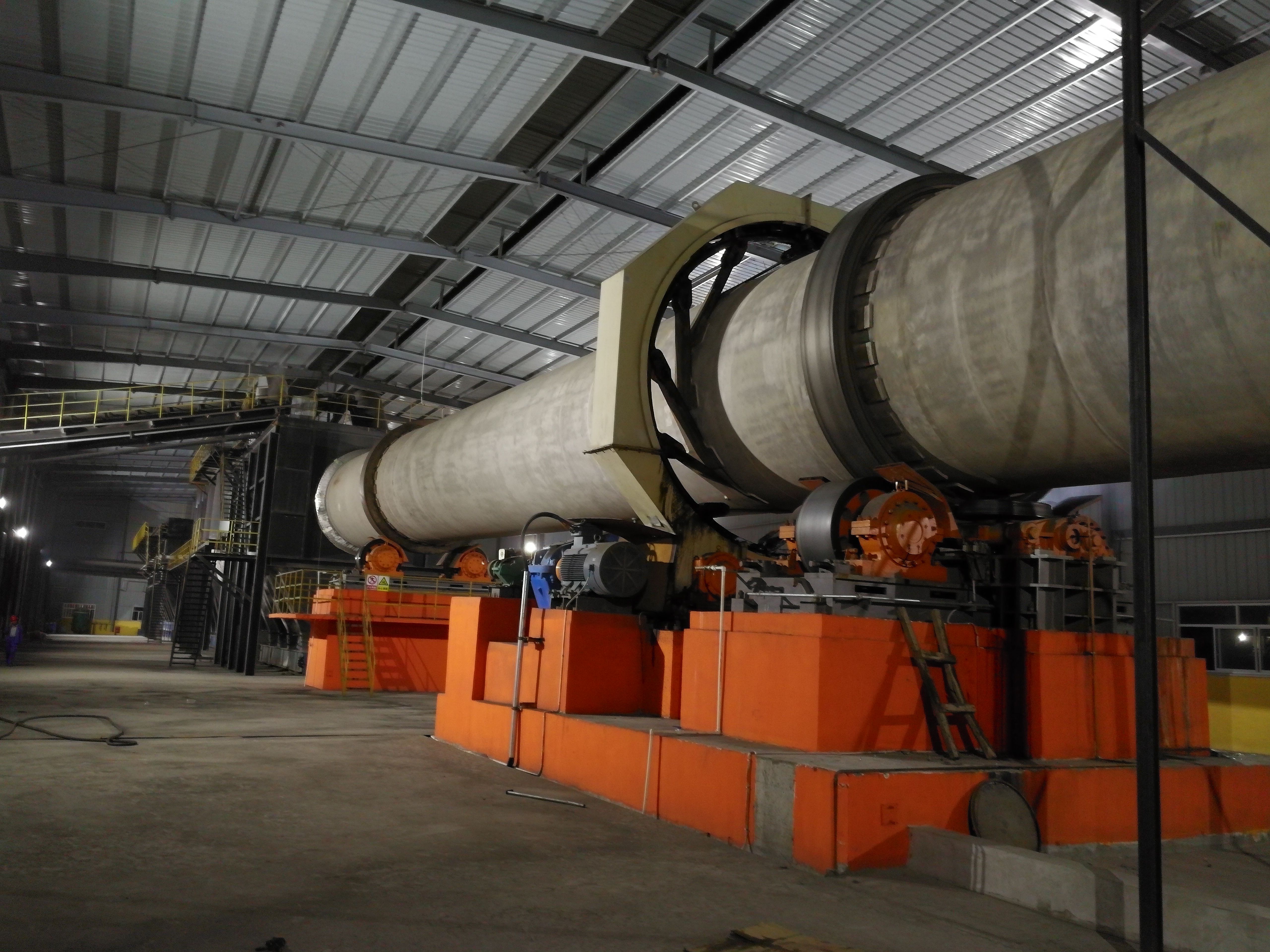
The indirect-fired rotary kiln — also called an external heating rotary kiln, indirect rotary calciner or externally heated rotary calciner — is separated from the other three families by its heating method rather than by a single feed material. In this configuration, the material does not contact combustion gases.
Two published parameters define its capability envelope: a maximum temperature of 1000°C, and a temperature control accuracy of ≤ ±2–5°C. The temperature control system is equipped with imported temperature controllers for fully automatic temperature control. The kiln is capable of sintering in a controlled atmosphere, which is what makes it suitable for materials that cannot tolerate combustion-gas contact. The kiln type is customised on demand.
Construction reflects the higher thermal duty and atmosphere requirement. The kiln shell is typically carbon steel or alloy steel, while the internal heating tube or heating chamber is made of heat-resistant alloy steel or other high-temperature-resistant materials. Refractory linings include refractory bricks and castable refractories, and sealing components use heat-resistant and wear-resistant materials to minimise air leakage and maintain a controlled atmosphere. Material selection can be customised according to the processing temperature, atmosphere and material characteristics.
Typical applications listed for indirect-fired operation include dehydration, calcination and decarburisation in lithium battery materials (lithium iron phosphate, lithium manganese oxide and similar), powder materials such as activated carbon and zinc oxide, rare earth materials, and non-ferrous metals.
- Feed material: lithium battery materials, activated carbon, zinc oxide, rare earth materials, non-ferrous metals
- Maximum temperature: 1000°C
- Temperature control accuracy: ≤ ±2–5°C
- Heating method: indirect (external heating), controlled atmosphere
- Model range: customised on demand
- Design focus: atmosphere isolation, thermal uniformity, precision control
Step-by-Step Breakdown: How to Reach the Right Kiln Family
The decision sequence below is the order in which the constraints become binding. Reversing the order — picking a size first and a process second — is the most common source of rework in rotary kiln projects.
- Define the feed material. Spodumene, dolomite, zinc ash/EAF dust and lithium iron phosphate each map to a different family. Feed definition also fixes whether the input is a primary mineral or a waste-derived stream.
- Fix the target process temperature. Acid roasting sits at 200–350°C; indirect-fired operation reaches up to 1000°C. Temperature range determines refractory selection, shell material and burner or heating strategy.
- Choose the heating method. Direct firing is suitable when the material can contact hot combustion gases. Indirect firing is preferred when gas isolation or controlled-atmosphere processing is required. This single decision eliminates roughly half the technical options.
- Set capacity and dimensions. Nominal capacity and kiln slope are linked. Magnesium and zinc oxide kilns are quoted at approximately 2–20 t/h with slopes of approximately 3.5–4%, while acid roasting kilns are defined by diameter rather than throughput.
- Match sealing, atmosphere and corrosion protection. Acid roasting requires an acid-resistant shell and a leakage limit of ≤ ±500 Pa. Indirect-fired operation requires sealing that minimises air leakage to maintain the controlled atmosphere. These are not optional add-ons.
- Verify compliance and documentation. Confirm which certificate applies to the final configuration, and request the conformity documentation that corresponds to your target market.
- Prepare a complete RFQ. A specification that omits moisture, feed size or target product will produce a quote that cannot be compared like-for-like with another supplier.
Use Cases: Which Family Serves Which Project
Battery and lithium supply chains. Spodumene and amblygonite conversion uses the acid roasting rotary kiln at 200–350°C, where acid resistance and sealing integrity determine shell life. Further downstream, lithium iron phosphate and lithium manganese oxide processing uses the indirect-fired rotary kiln for dehydration, calcination and decarburisation under a controlled atmosphere.
Magnesium and refractory metals. Dolomite calcination for magnesium ingot production uses the magnesium rotary kiln at Ø1.6×32m–Ø4.0×80m, integrated with vertical preheaters and coolers and configured as part of a calcination–pelletising–reduction–refining chain.
Steel plant by-product recovery. Zinc ash and electric arc furnace dust are handled by the zinc oxide rotary kiln (Waelz kiln) at Ø2.5×40m–Ø4.5×72m, turning a waste stream into a recoverable zinc product.
Specialty powders and rare earths. Activated carbon, zinc oxide powder, rare earth materials and non-ferrous metals use the indirect-fired rotary kiln where combustion-gas contact would compromise product quality.
Pilot and validation work. ZK MACHINE operates its own process testing workshop and testing and analysis centre, and supplies pilot rotary kilns. For buyers in the research and evaluation stage, this is the practical route to validating a process concept before committing to an industrial-scale unit. Project structures range from single-equipment supply and complete production lines through to process EPC and pilot-scale test units.
Comparison Table: The Four Families Side by Side
| Parameter | Acid Roasting Rotary Kiln | Magnesium Rotary Kiln | Zinc Oxide Rotary Kiln (Waelz) | Indirect-Fired Rotary Kiln |
|---|---|---|---|---|
| Primary feed material | Spodumene, amblygonite | Dolomite | Zinc ash, EAF dust / EAFD | Lithium battery materials, activated carbon, zinc oxide, rare earths, non-ferrous metals |
| Process temperature | 200–350°C | High-temperature dolomite calcination | Calcination for zinc oxide output | Up to 1000°C |
| Temperature control accuracy | Not the primary design constraint | Not the primary design constraint | Not the primary design constraint | ≤ ±2–5°C |
| Heating method | Direct-fired | Direct-fired | Direct-fired | Indirect / external heating, controlled atmosphere |
| Model designation | φ0.8×10m–φ5.4×56m | Ø1.6×32m–Ø4.0×80m | Ø2.5×40m–Ø4.5×72m | Customised on demand |
| Nominal capacity / slope | Diameter Φ1–Φ5.5 m | Approx. 2–20 t/h; slope approx. 3.5–4% | Approx. 2–20 t/h; slope approx. 3.5–4% | Defined by custom design |
| Key design focus | Acid-resistant shell; sealing leakage ≤ ±500 Pa; anti-agglomeration internals | Preheater and cooler integration; hot-gas heat recovery; multi-fuel operation | Low nodulation; beneficiation efficiency; reduced fuel cost | Atmosphere isolation; uniform heating; imported temperature controllers |
| Covered by CE certificate M.2024.206.C100981 | Yes | Yes | Yes | Yes |
Table reflects specification data published for the corresponding ZK MACHINE rotary kiln product lines. Actual configuration is confirmed at project level, since rotary kilns are engineered to order rather than selected from a standard catalogue.
Compliance: What the CE Certification Actually Covers
Certification is one of the most frequently misread items in rotary kiln procurement, because a certificate is only meaningful when its scope matches the final equipment configuration. For the rotary kiln product line, the relevant certificate is M.2024.206.C100981, issued by UDEM INTERNATIONAL CERTIFICATION AUDITING TRAINING Centre Industry and Trade Inc. Co. It applies to the EU market, with a scope covering machinery and electromagnetic compatibility, and references the following standards: EN ISO 12100:2010, EN 60204-1:2018, EN IEC 61000-6-4:2019, EN IEC 61000-6-3:2021, EN IEC 61000-6-2:2019 and EN IEC 61000-6-1:2019.
The certificate was issued on 2024-05-16 and is valid until 2029-05-16. Its coverage extends across the Rotary Kiln product and the Lime Rotary Kiln, Cement Rotary Kiln, Magnesium Rotary Kiln, Zinc Oxide Rotary Kiln, Indirect-Fired Rotary Kiln, Acid Roasting Rotary Kiln, Lithium Ore Acid Roasting Rotary Kiln, Dolomite Rotary Kiln and Bauxite Rotary Kiln configurations, as well as configurations used for kaolin calcination and energy-saving rotary kiln configurations.
ZK MACHINE also holds ISO 9001 quality management system certification, ISO 14001 environmental management system certification and ISO 45001 occupational health and safety management system certification, together with an Integration Management System Certification and an Environmental Protection Engineering Professional Contracting Qualification. For European projects, equipment and documentation can be configured according to applicable local regulations, technical specifications and CE-related requirements, with relevant declarations of conformity, equipment manuals and safety-related documentation prepared according to the final equipment scope.
FAQ: Rotary Kiln Selection, Compliance and Procurement
Can ZK MACHINE rotary kilns meet CE requirements?
Yes. The rotary kiln product line is documented under CE certificate M.2024.206.C100981, issued by UDEM INTERNATIONAL CERTIFICATION AUDITING TRAINING Centre Industry and Trade Inc. Co., with a scope covering machinery and electromagnetic compatibility and validity from 2024-05-16 to 2029-05-16. The certificate covers the Rotary Kiln product and the lime, cement, magnesium, zinc oxide, indirect-fired, acid roasting, lithium ore acid roasting, dolomite and bauxite rotary kiln configurations, as well as kaolin calcination and energy-saving configurations. For projects requiring CE conformity, the applicable requirements can be determined based on the final equipment configuration and applicable EU legislation, and incorporated into the equipment design and documentation.
Should I choose a direct-fired or indirect-fired rotary kiln?
It depends on the material and process requirements. Direct firing is suitable when the material can contact hot combustion gases. Indirect firing — also called external heating — is preferred when gas isolation or controlled-atmosphere processing is required, because the material does not contact the combustion gases. Indirect-fired rotary kilns are used for dehydration, calcination and decarburisation of lithium battery materials, powder materials such as activated carbon and zinc oxide, rare earth materials and non-ferrous metals, and operate at up to 1000°C with temperature control accuracy of ≤ ±2–5°C. ZK MACHINE supplies both direct-fired and selected indirect-fired configurations.
Can a lime rotary kiln be supplied with an emission-control system?
Yes. A lime rotary kiln is not supplied as an isolated shell in a compliant plant configuration. In addition to the rotary kiln itself, ZK MACHINE can provide feeding, preheating, combustion, cooling, dust collection, conveying and automated control systems according to project requirements, and the company’s process portfolio includes dedusting and flue gas purification within its environmental protection system. This means the emission-control scope — dust collection and flue gas handling — can be integrated into the lime production line rather than added as a separate, uncoordinated package. The exact configuration is defined against the project’s emission requirements and site conditions.
What information is needed to prepare a rotary kiln RFQ?
A useful RFQ should state the material name, required capacity, feed size, moisture content, target product, calcination temperature, fuel type and specific heat-consumption requirements. Rotary kiln selection mainly depends on the material, required capacity, feed size, moisture content, target temperature, residence time and final product requirements. Because ball mills and rotary kilns are not standard products, every project requires customised engineering based on material properties, process requirements, production capacity, environmental regulations and site conditions. Minimum order quantity for these rotary kiln products is one set, and pricing is configuration-dependent, so a specification-complete RFQ is the fastest route to a comparable quotation.
What are the typical lead time and after-sales support?
The stated lead time is three months, with a monthly manufacturing capacity of ten units and an MOQ of one unit. Quality control is performed at 100% test. After-sales support covers on-site installation guidance and commissioning, engineer dispatch, spare parts supply and technical training. For buyers who need to validate a process before industrial-scale commitment, ZK MACHINE operates its own process testing workshop and testing and analysis centre supporting pilot testing and process data analysis, and supplies pilot rotary kilns alongside full production lines.
Need to compare these four kiln families against your own material?
Send your feed material, target capacity and calcination temperature, and the ZK MACHINE team will respond with a configuration-matched proposal. Sample testing and pilot-scale validation can be arranged before industrial-scale commitment.
Email: vip@zkcorp.com | Tel / WhatsApp: +86 182-0361-6061 | Web: www.zkcomp.com
Download the full product and process catalogue: 2025 ZK MACHINE Comprehensive Catalogue (PDF)
Conclusion: Match the Constraint, Not the Category
The four rotary kiln families in this guide are separated by constraints that cannot be swapped after the fact. Acid roasting rotary kilns are defined by corrosion duty and sealing integrity at 200–350°C. Magnesium rotary kilns are defined by high-temperature dolomite calcination and integration with preheaters and coolers. Zinc oxide rotary kilns (Waelz kilns) are defined by waste-derived feed and nodulation control. Indirect-fired rotary kilns are defined by atmosphere isolation and temperature accuracy of ≤ ±2–5°C at up to 1000°C.
Between the four, the selection sequence stays the same: feed material, process temperature, heating method, capacity and dimensions, sealing and atmosphere, compliance, and finally a specification-complete RFQ. Get that order right and the comparison table becomes a shortlist rather than a list of questions. Henan Zhengzhou Mining Machinery Co., Ltd. (ZK MACHINE), founded in 1956 and operating an 80,000 m² manufacturing base with more than 150 core patents, supplies all four families and can support testing, pilot validation and complete production-line engineering.
Have Questions or Need More Details?
Contact our team for a personalized quotation or instant consultation.
Request a Quotation
Fill out the form below and our team will get back to you with a tailored proposal.
WhatsApp Direct Chat
Prefer to chat in real-time? Message us on WhatsApp for instant assistance & quick answers.
- Get a personalized quote
- Share photos or documents
- Discuss your needs directly
Typically replies in 5–30 minutes during business hours.