
Rotary Kiln Seal Comparison: Dynamic/Static Ring vs Flexible Packing
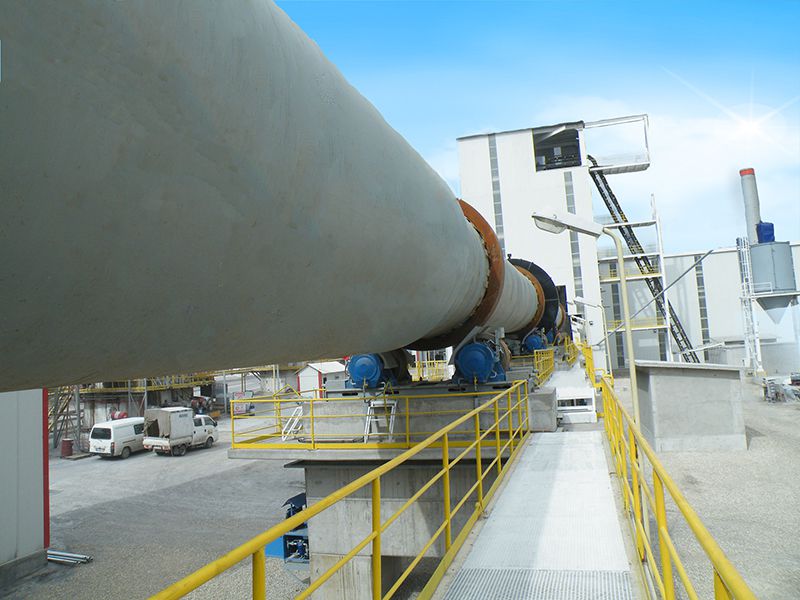
Rotary kiln equipment. Seal choice depends on kiln end, acid exposure and material handling, not on a single default seal type.
For an acid roasting rotary kiln processing spodumene or amblygonite at 200–350°C, the kiln head and tail seal should not be chosen from a generic seal catalogue. The decision between a combined dynamic/static ring seal and a flexible packing seal depends on where the seal sits, how much acid vapour, condensate or acid-bearing dust reaches it, and how the internals move material at that end. A seal that suits a clean, low-dust location is not automatically suitable for an acid-exposed kiln end. The supplied evidence does not provide like-for-like leakage or service-life test results for these two seal styles, so this comparison uses documented process conditions and seal function, not a measured ranking.
Problem definition: the seal is a boundary, not a shell accessory
The kiln shell and the kiln seal perform different jobs. An acid-resistant kiln shell protects the shell structure from the process environment. The seal controls the gap between the rotating kiln and the stationary head or tail connection, where gas, dust and acid-bearing material can escape or enter. A buyer can specify an acid-resistant shell and still have a seal problem if the seal materials, clearances, packing or fasteners are not matched to the same acid exposure.
At the kiln head, the seal sits near the discharge of hot calcined solids. At the kiln tail, it sits near the feed entry and the material-handling zone. In acid roasting, both ends can see different mixtures of acid vapour, condensate, fine dust, abrasive solids and thermal movement. The practical question is not which seal type sounds stronger in a brochure. The practical question is which seal arrangement can be inspected, maintained and kept compatible with the local acid and dust condition for the planned operating campaign.
This is a decision-stage comparison, so the outcome is a selection path rather than a universal winner. Combined dynamic/static ring seals and flexible packing seals can both be considered, but they need different attention to alignment, material compatibility, crevice control, maintenance access and the behaviour of the kiln internals.
Industry background: why acid roasting changes the seal brief
Acid roasting of spodumene and amblygonite at 200–350°C creates a process environment where acid exposure and mineral handling are present in the same equipment boundary. The kiln shell is specified with acid-resistant construction for this reason. The internals add another factor: an internal spiral crushing section plus staggered lifter plates affect how material is conveyed, lifted and dropped inside the kiln. That mechanical action can influence dust generation and the local load on the seal region, especially where the seal is close to the feed or discharge zone.
The same logic applies to a lithium ore rotary kiln used for acid roasting. A seal that is evaluated only against temperature is under-specified, because acid-bearing dust and condensate can attack materials and accumulate in crevices. A seal that is evaluated only against dust is also under-specified, because acid exposure can change the condition of the packing, ring faces, springs, fasteners and secondary sealing elements.
ZK MACHINE lists an acid roasting rotary kiln model range of φ0.8×10m to φ5.4×56m. The width of that range matters for seal selection: a pilot rotary kiln and a large industrial kiln do not offer the same access, runout conditions or maintenance space. A seal concept that is practical on a small kiln is not automatically practical at the larger end of the range. The decision should therefore be made against the actual kiln diameter, end configuration, internals and maintenance plan.
Kiln head and tail are different seal decisions
In this guide, the kiln head refers to the discharge or hot end, and the kiln tail refers to the feed or charging end. Site terminology can vary, so the first step is to confirm the drawing and the direction of material flow. Once the ends are identified, the seal duty can be separated.
The head-end seal must be read together with hot calcined solids, discharge dust and the local gas path. The tail-end seal must be read together with feed entry, acid-bearing fines and the material-handling action near the feed zone. A combined dynamic/static ring seal may be considered at either end where the design can support ring alignment, inspection and compatible materials. A flexible packing seal may also be considered where access is simple, packing replacement is planned and the acid load is controlled. Neither statement is a blanket recommendation. The correct choice depends on the measured or specified conditions at that end.
Material handling is the second divider. The internal spiral crushing section and staggered lifter plates indicate that the kiln is not a simple smooth-bore tube. Material is being moved and lifted by internals, and that can create local dust and mechanical disturbance. The seal at the affected end must be reviewed with that in mind. If the seal is expected to tolerate repeated dust exposure with limited access, the maintenance concept becomes as important as the seal type.
How acid exposure changes the comparison
Acid exposure is not a single condition. It can appear as vapour, condensate, acid-bearing dust or carry-over, depending on the feed, gas circuit and operating practice. The seal decision should identify which form is expected at the head and tail, because the attack path differs. Vapour and condensate can affect exposed surfaces and crevices. Acid-bearing dust can accumulate and remain in contact with the seal for longer periods. Abrasive solids can also wear mating surfaces and packing.
The acid-resistant kiln shell does not answer this question by itself. Seal materials, packing, ring faces, elastomers, springs and fasteners need their own compatibility review. A combined dynamic/static ring seal has ring faces and clearances that must be kept compatible with the acid condition. A flexible packing seal has compressed packing and crevices that can retain acid-bearing material if the design and maintenance routine do not address it. In both cases, the buyer should ask for the proposed materials, the inspection points and the replacement logic, not just the seal name.
Combined dynamic/static ring seals: where they fit the decision
A combined dynamic/static ring seal uses a rotating and stationary ring arrangement to create a controlled sealing interface while the kiln rotates. It can be considered where the seal location needs a defined running clearance and where the design can support alignment, runout control and inspection of the ring components. In an acid roasting kiln, the ring materials and any secondary sealing elements must be reviewed against the acid form present at that end.
The main decision points are mechanical rather than promotional. The seal must accommodate kiln rotation, thermal growth and runout without losing the intended interface. It must be accessible for inspection. It must allow compatible materials and, where the design requires it, a purge or barrier arrangement to keep acid-bearing dust away from sensitive parts. If those conditions cannot be met, the ring seal concept should not be selected merely because it appears more robust on paper.
A combined dynamic/static ring seal is not automatically acid-proof. Its advantage in the decision is that it can provide a more defined sealing boundary where the engineering around alignment, materials and maintenance is properly developed. Its limitation is that it demands that engineering. Poor alignment or poor access can turn a good seal concept into a maintenance problem.
Flexible packing seals: where they fit the decision
A flexible packing seal uses compressible packing loaded against a mating surface to limit leakage around the rotating kiln. It can conform to some degree of movement and can be maintained by adjusting or replacing the packing, depending on the design. In an acid roasting application, packing material compatibility and crevice control are central. Packing can retain acid-bearing dust, and compression set can reduce its effectiveness over time.
Flexible packing can be considered where the seal location is accessible, the acid load is controlled, and a planned packing inspection and replacement routine is realistic. It can also be considered where the kiln end design does not provide the alignment or space needed for a more complex ring assembly. The limitation is that packing is not a fit-and-forget solution. Its condition must be monitored, and its material must be matched to the acid and temperature condition at that specific end.
For a lithium ore rotary kiln with acid-resistant shell construction and abrasive internals, flexible packing should not be selected only because it is simpler to replace. If the packing is exposed to acid-bearing dust and the replacement interval is not planned, the maintenance advantage can disappear. The decision must include access, frequency of intervention and the cost of repeated shutdowns, using project-specific data rather than a generic assumption.
Comparison table: seal location, acid exposure and material handling
The table below compares the two seal concepts on decision criteria that are visible from the process brief. It does not assign a measured leakage rate, service life or acid-resistance score, because the supplied evidence does not include like-for-like test results for these seal styles in this duty.
| Decision criterion | Combined dynamic/static ring seal | Flexible packing seal |
|---|---|---|
| Sealing principle | Rotating and stationary ring interface with controlled clearance and secondary sealing elements where designed. | Compressible packing loaded against a mating surface to limit leakage. |
| Kiln head fit | Can be considered where discharge-end alignment, inspection and material compatibility can be engineered. | Can be considered where head-end access is simple and packing maintenance is planned. |
| Kiln tail fit | Can be considered where feed-end dust and acid exposure are understood and the ring assembly can be protected. | Can be considered where feed-end acid load is controlled and packing replacement is practical. |
| Acid exposure | Ring faces, clearances and secondary materials need acid compatibility review; crevice control matters. | Packing can retain acid-bearing dust; material compatibility and compression set must be reviewed. |
| Material handling | Must accommodate runout and local dust from internals such as spiral crushing and lifter plates. | Must be checked against abrasive dust and the planned packing adjustment routine. |
| Maintenance logic | Inspection of ring faces, clearances, fasteners and secondary seals; access is a design requirement. | Periodic adjustment or replacement of packing; access and frequency drive the maintenance burden. |
| Main limitation | Not automatically acid-proof; alignment and inspection requirements cannot be ignored. | Not automatically acid-proof; packing can wear, set or retain acid-bearing material. |
| Best decision use | Where a defined sealing boundary, alignment control and planned inspection can be provided. | Where access, acid control and a realistic packing maintenance plan are available. |
Step-by-step selection path for buyers
The following sequence keeps the decision tied to the kiln end and process condition. It is a verification path, not a substitute for the supplier's seal drawing.
- Mark the seal boundary on the kiln drawing. Identify the head and tail, the stationary connection, the rotating shell, the gas path and the maintenance access. Confirm site terminology so that head and tail are not reversed in the technical discussion.
- Describe the acid form at each end. State whether the expected exposure is vapour, condensate, acid-bearing dust, carry-over or a combination. Link that description to the feed preparation, gas circuit and operating practice for the specific spodumene or amblygonite acid roasting line.
- Review the internals near the seal. The internal spiral crushing section and staggered lifter plates should be shown on the arrangement drawing. Explain how they affect local material movement and dust at the seal end. If the seal is close to a high-disturbance zone, say so in the specification.
- Match the seal type to access and alignment. A combined dynamic/static ring seal requires alignment, runout control and inspection access. A flexible packing seal requires packing access, adjustment or replacement space and a plan for acid-bearing dust. Reject a concept that cannot be maintained at the actual kiln diameter.
- Specify materials and secondary protection. Ask for the proposed ring, packing, fastener and secondary seal materials against the stated acid and temperature condition. Where a purge or barrier gas connection is proposed, define its role and confirm that it is included in the scope.
- Request the inspection and spare-parts plan. The offer should identify inspection points, wear limits, spare packing or ring components, and the shutdown work required. A seal with no practical spare and inspection plan is not a decision-ready seal.
- Validate before acceptance. Check the installed alignment, clearance, fastener condition and any leak or function test defined by the supplier. Do not treat a brochure description as a performance guarantee for the acid roasting duty.
Use cases: applying the comparison without overgeneralising
New acid roasting lithium kiln with acid-resistant shell and abrasive internals. If the tail end is expected to see acid-bearing fines and the head end is dominated by hot calcined dust, the two ends should not be forced into one seal type by default. Evaluate a combined dynamic/static ring seal where the design can provide alignment and inspection at the more demanding end. Evaluate flexible packing where access is simple and the acid load can be controlled. The final choice should follow the end-specific duty, not a plant-wide preference.
Pilot or small-diameter kiln. A pilot rotary kiln at the lower end of the φ0.8×10m to φ5.4×56m range may offer different access and handling than a large kiln. Flexible packing may be easier to adjust in a compact arrangement, but the acid compatibility and replacement frequency still need review. A ring seal may be considered where the pilot is intended to generate scale-up data and the same sealing concept will be used in the industrial unit.
Retrofit or seal replacement on an existing acid roasting line. Start with the failed or degraded seal condition. If the problem is acid attack on packing, replacing the same packing without changing the material or protection concept may repeat the issue. If the problem is alignment or dust ingress at a ring seal, changing to packing may not solve it. The retrofit decision should separate acid exposure, mechanical movement and maintenance access before the seal type is changed.
What to verify in a supplier before award
Supplier capability is relevant, but it does not replace seal-specific evidence. Henan Zhengzhou Mining Machinery Co., Ltd. (ZK MACHINE) was founded in 1956, covers more than 80,000 m², reports annual output of 200 units, and lists acid-resistant construction and special sealing systems among the customization options for rotary kilns. These facts support a manufacturing and customization review. They do not prove that a particular seal will perform in a specific acid roasting kiln.

Factory overview. Manufacturing capability supports a supplier check, but seal performance must still be verified against the actual kiln end duty.
Ask for the seal arrangement drawing, the material proposal for the acid condition, the inspection points, the spare-parts list and the commissioning check. If the offer refers to special sealing systems, require the specific type, location and material to be identified. If the offer refers to an acid-resistant shell, confirm that the seal materials and crevices have been reviewed separately. A factory overview can support a manufacturing review, but it is not seal test evidence.
Production capability review. The seal decision still depends on end-specific acid exposure, alignment and maintenance access.
FAQ
Which lime rotary kiln manufacturers offer better energy efficiency and refractory life?
The supplied evidence does not provide a like-for-like manufacturer ranking for energy efficiency or refractory life, so a responsible answer is to compare documented configuration data rather than a general claim. For a lime rotary kiln, ask each supplier for the proposed heat consumption basis, fuel type, preheating and cooling configuration, refractory design, maintenance intervals and reference data for the exact kiln. ZK MACHINE supplies lime rotary kilns and states that stable operation is supported by thermal design, kiln structure, refractory selection, drive systems and automated process control. Its customization process starts from material, capacity, feed size, moisture content, target temperature, fuel type and heat-consumption requirements. Before treating any supplier as better, request a configuration-based quotation and check the evidence for the same duty. The same evidence-based approach applies to an acid roasting rotary kiln seal decision: compare the actual end condition, not a generic label. To review a specific lime or acid roasting application, request a project quotation or download the company brochure.
Conclusion
For an acid roasting rotary kiln handling spodumene or amblygonite at 200–350°C, the seal decision should follow the kiln end. The head and tail see different combinations of acid exposure, dust and material movement, and the internal spiral crushing plus staggered lifter plates add local handling effects that a generic seal comparison would miss. A combined dynamic/static ring seal can be considered where a defined sealing boundary, alignment control and inspection access can be engineered. A flexible packing seal can be considered where access, acid control and a realistic packing maintenance plan are available. Neither is automatically acid-proof, and neither should be selected without checking the specific location, materials and maintenance concept.
Use the comparison table and the seven-step selection path to turn the topic into a procurement checklist. Confirm the seal boundary, describe the acid form at each end, review the internals, match the seal type to access and alignment, specify materials and secondary protection, request the inspection and spare-parts plan, and validate before acceptance. That process keeps the decision tied to the acid roasting duty rather than to a generic seal claim.
Have Questions or Need More Details?
Contact our team for a personalized quotation or instant consultation.
Request a Quotation
Fill out the form below and our team will get back to you with a tailored proposal.
WhatsApp Direct Chat
Prefer to chat in real-time? Message us on WhatsApp for instant assistance & quick answers.
- Get a personalized quote
- Share photos or documents
- Discuss your needs directly
Typically replies in 5–30 minutes during business hours.