Beetroot Red (E162): Clean Label Color Guide
Beetroot Red (E162): Complete Product Guide for Clean Label Foods
Beetroot Red (E162) is a natural red food colorant extracted from the root of red beet, with betanin as its principal coloring component. Henan Zhongda Hengyuan Biotechnology Stock Co., Ltd. manufactures it as a water-soluble powder, a water-soluble liquid and an oil-soluble liquid, including Halal, Kosher and vegan-certified grades. This guide explains what the ingredient is, where it performs well, where it fails, and how to qualify it for a clean label reformulation inside a realistic production window.
Beetroot Red is one of the few natural colorants that can deliver a genuine red-to-fuchsia shade without a synthetic source. That is why formulators reach for it when Red 3, Red 40 or a comparable synthetic red has to come out of a formula. The complication is that betanin does not behave like a synthetic dye: it reacts to pH, heat, light and moisture activity, and it will look different in a clear beverage than in a baked snack or a plant-based patty. Teams evaluating the ingredient therefore need answers to four practical questions: will the shade survive my process, what will the label say, which certificates travel with the shipment, and how much work is a first order. The sections below answer those questions in order.
The Reformulation Problem: Natural Red Rarely Fails on Shade, It Fails on Conditions
When a brand decides to remove a synthetic red, the first internal question is usually "which natural red is closest on the color card?" That question decides very little. The question that actually decides whether a project succeeds is: which red holds that shade through the pH, thermal load, light exposure and shelf life of my specific product?
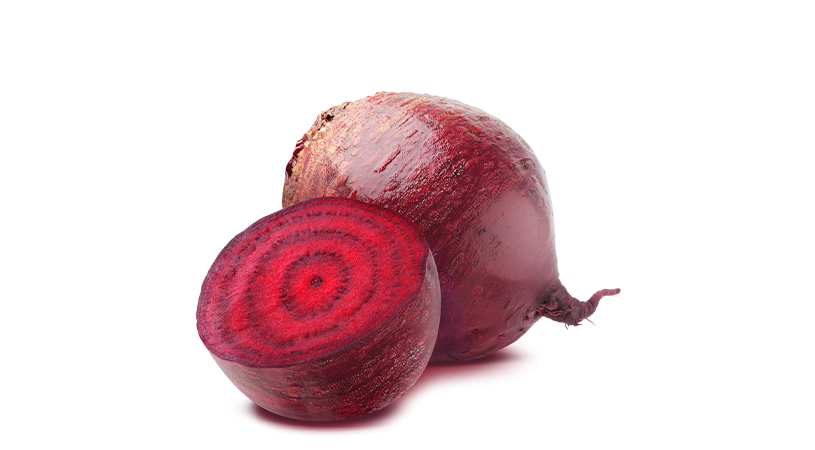
Beetroot Red is a betanin-based color system. Beetanin is water-soluble and gives bright, clean reds, but its stability is influenced by moisture activity, and its hue sits inside a defined pH window. A specification written without those constraints is a specification written to fail at pilot scale. The failure modes we see most often in color conversion projects are consistent:
- pH drift. The same beetroot grade reads differently at pH 3.0 and at pH 7.0. Beetroot extract is documented as a red tone within the pH 3.0–8.0 range, with stable color in aqueous systems around pH 4.0–6.0. Formulas that cross that window during processing or storage need a grade and dosage review, not a guess.
- Thermal load. Pasteurization, UHT-style heat treatment, baking and retort are not equivalent events. Beetroot grades differ in how much heat they tolerate, and the Red 3 replacement range built on betacyanin pigments is documented for enhanced heat stability up to 85–100 °C in low-water systems.
- Light and oxygen exposure. A clear bottle on a bright shelf and an opaque pouch are two different stability tests. Beetroot extract is described as having good light resistance, but packaging and shelf conditions still have to be written into the trial protocol.
- Flavor and aroma carry-over. Root-derived colors can bring their own notes. Beetroot Red is specified as a powder with no smell, but dosage and matrix still determine whether the color is sensorially neutral in the finished product.
- Documentation gaps. A natural color that performs perfectly in the lab but arrives without the Halal, Kosher, vegan or food safety certificates your customer requires is not a usable raw material. This is a procurement problem disguised as a technical problem.
Treating these five items as a checklist before the first trial removes most of the risk from a synthetic-to-natural conversion.
Industry Background: Clean Label Became a Sourcing Requirement, Not a Marketing Choice
For most of the last decade, natural color was a positioning decision. It is now increasingly a specification decision. Retail specifications, brand-owner ingredient policies and market-by-market regulatory treatment of individual synthetic colorants all push in the same direction: the ingredient list is reviewed before the product is approved, and a synthetic color on that list invites scrutiny that a vegetable-derived color does not.
The practical consequence for buyers is that natural color has moved from a creative question to a supply-chain question. The supplier is now expected to deliver four things at once: a color that matches the target shade, an application-engineering service that shortens the trial cycle, a compliance dossier that satisfies different national requirements, and batch-to-batch consistency that does not force a new trial on every delivery.
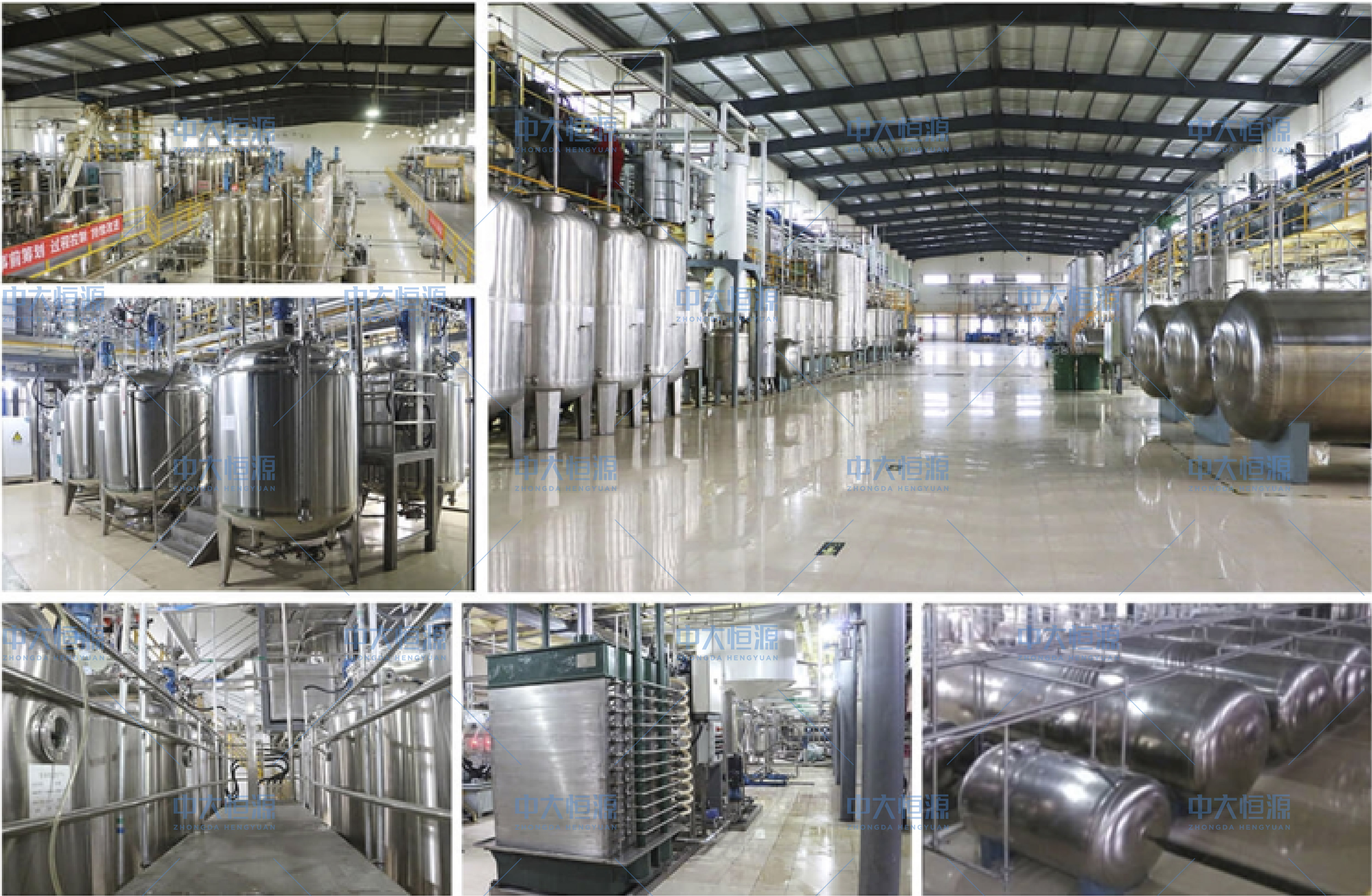
This is the operating context in which Zhongda Hengyuan works. Henan Zhongda Hengyuan Biotechnology Stock Co., Ltd. is a China-based manufacturer of natural colors, natural sweeteners and plant extracts, founded in 1993, with a 200,000 ㎡ factory, 400 employees, an annual output of 100,000 tonnes and an R&D team of 110 engineers. Around 50% of output is exported, serving markets across the USA, EU, South America, Russia, Southeast Asia, Korea, Japan, the Middle East and Africa, with a customer base of more than 4,000 manufacturers. Its natural color range covers the full spectrum used in food and beverage production, from gardenia blue and beetroot red to paprika oleoresin, curcumin, beta carotene, spirulina and blended color systems.
The Solution: Zhongda Hengyuan Beetroot Red (E162)
Zhongda Hengyuan supplies Beetroot Red (E162) as a dedicated product line rather than a by-product of beet processing. The line is designed around the variables that decide application success: form, color strength, pH behavior, carrier system and certification.
Product forms and how to choose between them
Beetroot Red is available in three physical forms, each matched to a different production reality:
- Water-soluble powder. The default choice for dry blends, seasonings, powdered drink mixes and any process where water addition is controlled. Red to pink powder, no smell, dissolves readily in water to a red-to-fuchsia tone.
- Water-soluble liquid. Preferred in beverage plants and any line where metering a liquid is simpler than dissolving a powder. Liquid formats also avoid the re-dissolution step in high-throughput batching.
- Oil-soluble liquid. Used where the color has to disperse in a fat phase, for example in fat-based confectionery and chocolate applications listed in the product scope.
Carrier choice is a separate decision from form. Maltodextrin is used as a carrier in some standard spray-dried powder grades. Where a shorter or cleaner ingredient declaration is required, liquid concentrates and high-purity concentrated powders are available without maltodextrin, and custom carriers such as gum arabic can be formulated. This matters because the carrier, not the pigment, is often what appears first on the label.
Color and stability behavior you can design around
Published product behavior for the beetroot range gives formulators concrete anchors:
- Appearance and solubility. Red to pink powder, no smell, easily soluble in water giving red to fuchsia tones, slightly soluble in ethanol solution.
- pH window. Red tone maintained across pH 3.0–8.0, with stable color in aqueous systems around pH 4.0–6.0.
- Light. Documented good light resistance for beetroot extract.
- Heat. Betacyanin-based grades in the Red 3 replacement range are documented for enhanced heat stability up to 85–100 °C in low-water systems.
- Moisture activity. Color performance is influenced by moisture activity, which is why dry application systems and high-water-activity products should be trialed separately.
Read together, these points define a realistic application map: beetroot red is strongest in acidic-to-neutral water-based systems, in confectionery and frozen desserts, and in products where the color is protected by packaging. It is not a universal drop-in for every synthetic red, and any supplier who presents it as one is skipping the trial work that protects your launch date.
Certification and documentation
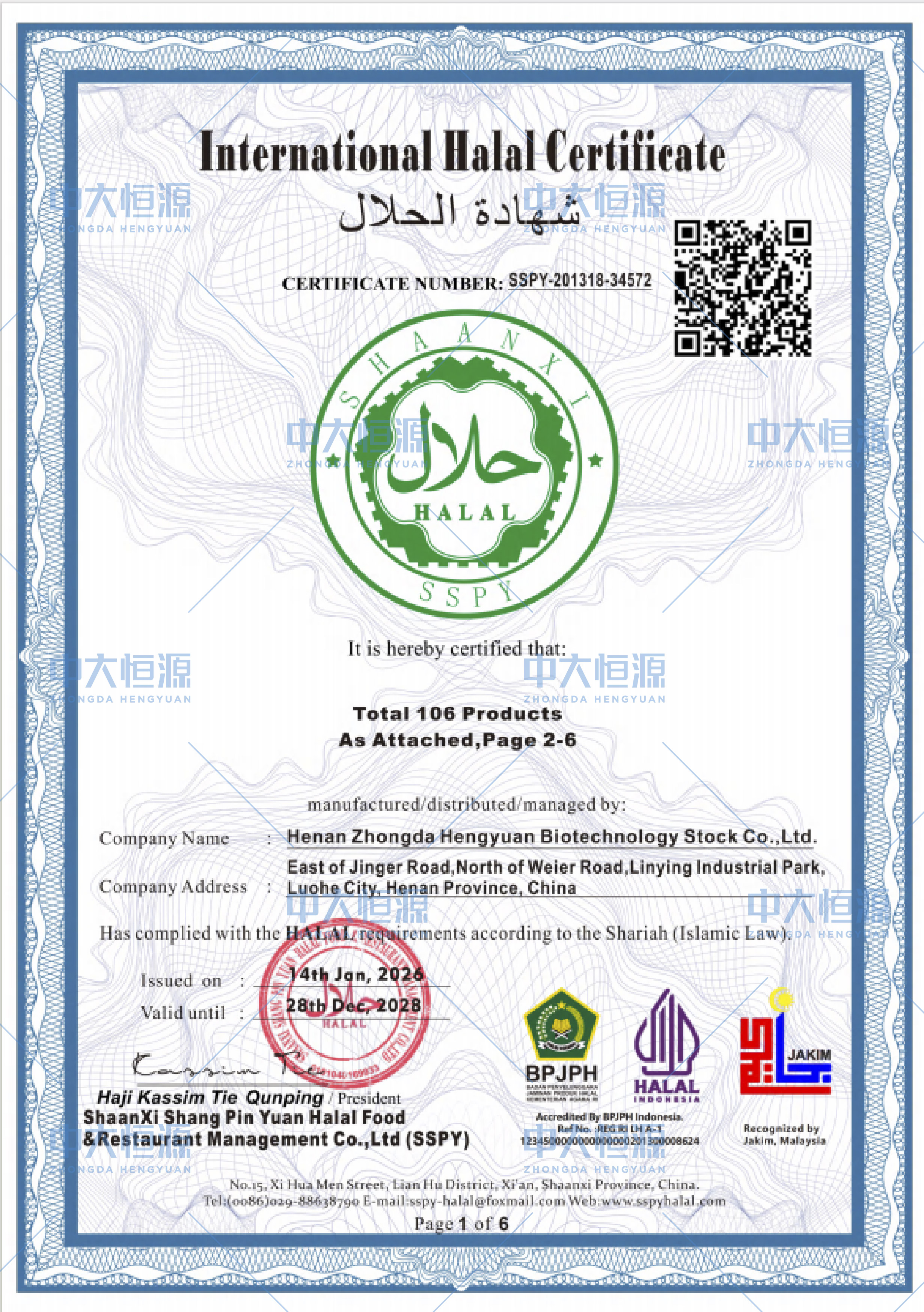
Beetroot Red sits inside a documented compliance framework. The certificates below are issued to Henan Zhongda Hengyuan Biotechnology Stock Co., Ltd. and cover the beetroot line:
| Certificate | Issuing body / number | Coverage relevant to beetroot | Validity |
|---|---|---|---|
| International Halal Certificate | ShaanXi Shang Pin Yuan Halal Food & Restaurant Management Co., Ltd (SSPY) — SSPY-201318-34572 | 106 products listed in scope, assessed against Halal requirements under Shariah | 14 Jan 2026 – 28 Dec 2028 |
| Kosher Certificate | KOF-K Kosher Supervision — FD5A4-2BT0W | BEETROOT RED; BEETROOT CONCENTRATE XF-03; BEETROOT CONCENTRATE YL-03 (Parve) | Through 31 Jul 2027 |
| VeganSu Certificate | Shanghai Suye Technical Services Co., Ltd. — E892173R01 | BEETROOT RED and BEETROOT CONCENTRATE certified vegan suitable | 7 Aug 2026 – 31 Jul 2027 |
| FSSC 22000 | China Quality Certification Centre — CQC25FS1000R2M/4100 | Food safety management system covering colorant production | 3 Sep 2025 – 29 Aug 2028 |
| ISO 9001 | China Quality Certification Centre — 00123Q38181R3M/4100 | Quality management system covering design and production of food additives and colorants | 21 Nov 2024 – 17 Nov 2026 |
Testing follows the same discipline. Routine shipments can be released against factory test reports from a CNAS-accredited QC center, and third-party reports such as SGS can be arranged when the buyer's specification requires them. Product specification sheets, factory COA and qualification certificates are supplied together with samples, so the document review can run in parallel with the bench trial instead of after it.
Customization and application support
Color matching is where a natural color program either accelerates or stalls. Zhongda Hengyuan's natural color business is built around application solutions rather than catalog SKUs: custom color shades developed to customer requirements within regulatory limits, blended systems across the full hue range, and formulation support from concept through to large-scale production. Technical support covers formulation, color matching and process application guidance, and on-site operation guidance is available where a line trial is needed. With 110 engineers in the R&D team and a documented history of co-development and joint patent applications with customers, the intent is that the supplier absorbs part of the formulation risk instead of passing it back to the buyer.
Step-by-Step: Qualifying Beetroot Red in Your Formulation
The sequence below is the working method we recommend to manufacturers replacing a synthetic red with Beetroot Red. It is written to be executed in weeks, not quarters.
- Define the target shade in measurable terms. Move from a color card to a specification: target hue, color strength, acceptable deviation and the reference product. This single step prevents the most common rework pattern, where lab and plant are optimizing against two different reds.
- Confirm the regulatory position for your market. Permitted use categories and maximum levels differ by country. Confirm the local status of E162 for your food category before trial work begins — the compliance documents listed above support that check, they do not replace it.
- Select form and carrier. Decide powder versus liquid based on your batching equipment, and decide maltodextrin-free versus standard carrier based on your label target. If the label must stay short, request liquid concentrate or high-purity powder grades and check the alternative carrier options.
- Run a pH and process-stress trial, not a single-point trial. Test the candidate grade at the pH your product actually reaches after processing and during shelf life, and at the real thermal load. For a beverage, that means measuring color in the finished, cooled product, not in the mixing tank. For a bakery item, it means measuring after the bake.
- Validate under your packaging and light exposure. Run an accelerated stability check in the final pack format. Beetroot extract has good light resistance, but a clear bottle and an opaque pouch still resolve differently, and the trial should reflect the pack you will ship.
- Scale up with documentation attached. Confirm specification, COA, certificates and lead time against the first production order, then lock the grade and dosage into the finished-product specification so that future deliveries are tested against the same reference.
Pre-trial checklist: target shade defined · local permitted use confirmed · form and carrier chosen · process pH range mapped · thermal load quantified · pack format and light exposure defined · certificates requested with the sample · COA acceptance criteria agreed.
Where Beetroot Red Works: Application Guide
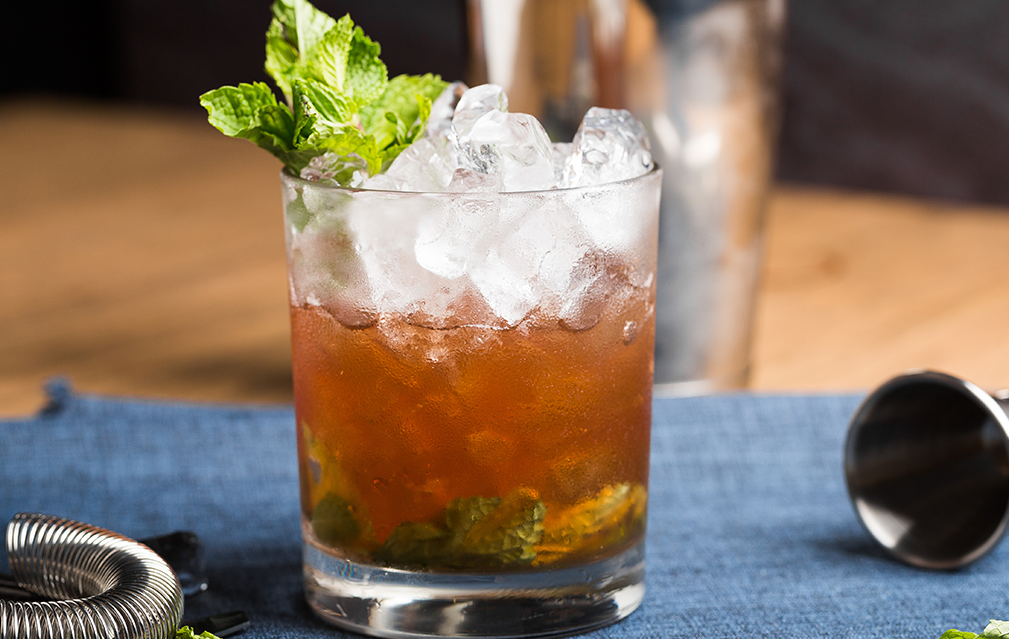
Beverages, juices and acidic drinks
Water-soluble beetroot grades are the natural fit for beverage systems operating in the acidic range, where the red tone of the extract is maintained and the color disperses cleanly with no smell. Liquid formats simplify metering in continuous beverage lines, and maltodextrin-free versions are available where a shorter declaration is required.
Confectionery, jelly and frozen desserts
Confectionery and jelly are listed application areas for Beetroot Red, together with ice cream and frozen beverages. In these matrices the color is usually protected by the product structure and the pack, which supports shade retention through shelf life. Where the process includes high-temperature boiling, the grade selection should follow the heat-stability data for betacyanin-based colors rather than the standard powder default.
Meat, sausage and plant-based alternatives
Beetroot Red is positioned as a natural alternative for Red 3 and Red 40 replacement and is applied in meat, poultry, sausage and plant-based meat systems. For buyers who need a vegan red, this matters: carmine (E120) is extracted from cochineal insects and is not vegan, while beetroot red carries VeganSu certification. Plant-based and meat processors who need color that fits thermal processing should trial the beetroot grade alongside purple sweet potato red before locking a specification.
Bakery, snacks, seasoning and instant meals
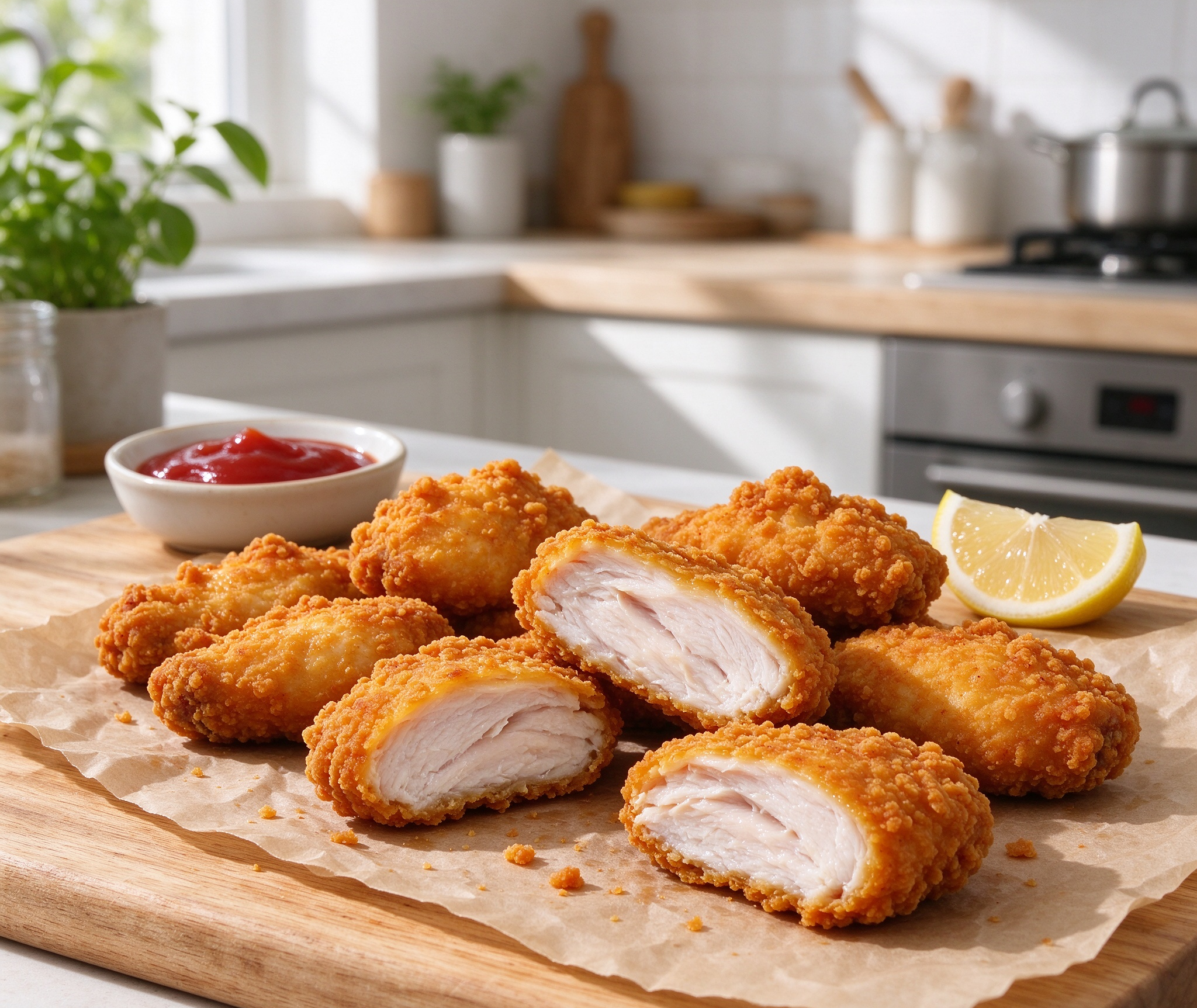
Baked goods and snacks, seasoning, instant meals and frozen food are all listed in the Beetroot Red application scope. In low-water systems such as seasoning blends and dry coatings, the powder form is the practical choice, and the documented heat stability of betacyanin-based grades up to 85–100 °C in low-water systems is directly relevant to snack seasoning and baked applications.
Comparison: How Beetroot Red Sits Against Other Reds
Buyers rarely evaluate beetroot red in isolation. The table below compares the natural red options in the Zhongda Hengyuan portfolio on the parameters that decide selection, using documented product behavior.
| Parameter | Beetroot Red (E162) | Black Carrot Concentrate | Purple Sweet Potato Color | Radish Red | Carmine (E120) |
|---|---|---|---|---|---|
| Color source | Red beet root (betanin) | Black carrot root (anthocyanin) | Purple sweet potato root (anthocyanin) | Red radish (anthocyanin) | Cochineal insects |
| Available forms | Water-soluble powder, water-soluble liquid, oil-soluble liquid | Powder and liquid | Powder and liquid | Water-soluble powder | Water-soluble powder and liquid, oil-soluble liquid |
| Documented pH behavior | Red tone pH 3.0–8.0; stable in aqueous systems around pH 4.0–6.0 | Most stable around pH 3.0–5.0 | Excellent stability within pH 2.0–4.0 | Most stable around pH 3.0–5.0 | Stable within pH 4.0–10.0 |
| Heat and light notes | Good light resistance; betacyanin Red 3 replacement grades documented up to 85–100 °C in low-water systems | Good resistance to light and heat | Good resistance to light and heat | Poor stability to light, heat and oxidizing agents | Good light and heat stability; acid-resistant and extra heat-stable options available |
| Vegan suitability | Yes — VeganSu certified for BEETROOT RED | Plant-derived | Plant-derived | Plant-derived | No — insect-derived |
| Typical fit | Beverages, confectionery, jelly, ice cream, meat and plant-based, snacks, seasoning | Acidic beverages and confectionery | Beverages and confectionery in low-pH systems | Acidic beverages, jelly, confectionery | Confectionery, beverages, meat, where vegan is not required |
The second comparison that matters commercially is against the synthetics being replaced. Here the trade-off is not only color but total cost of compliance.
| Decision factor | Beetroot Red (natural) | Synthetic red colorants |
|---|---|---|
| Ingredient declaration | Natural color shade with clean label positioning; simple declarations supported | Chemical additive name on the ingredient list |
| Quality system coverage | Product series certified to FSSC 22000, ISO 9001 and ISO 22000, Halal certified, with Kosher and vegan certification available on the beetroot line | Documentation varies by supplier |
| Raw material control | Controlled raw material sources; traceable beetroot supply | Petroleum-derived chemistry |
| Application support | Color-matching solutions, customized regulation-compliant shades, application solutions supporting production implementation | Usually catalog supply |
| Stability | Good light and heat stability with stable coloring performance, stable shelf life and stable pH behavior within the documented window | Broad processing tolerance |
| Cost position | Higher raw material cost, offset by clean label market access and reduced regulatory compliance risk | Lower raw material cost |
The honest summary: beetroot red costs more per kilogram than the synthetic it replaces, and it requires a trial. What it buys is a label that satisfies clean label specifications, a lower safety and compliance exposure, and access to customers who screen ingredients before they screen price.
Manufacturing and Supply Proof
Natural color performance is only as reliable as the plant behind it. Zhongda Hengyuan operates a 200,000 ㎡ manufacturing base in Linying Industrial Park, Luohe City, Henan, with 400 employees and an annual output of 100,000 tonnes across natural colors, natural sweeteners and plant extracts. The company was founded in 1993 and has supplied the food industry since then, building a customer base of more than 4,000 manufacturers, with flagship products contributing over 50% of annual sales revenue and roughly half of output exported.
In natural colors specifically, customers include food manufacturers and ingredient suppliers such as Glico in Japan, ADM in the United States and Nestlé globally, whose documented project outcomes center on color stability throughout shelf life, clean label compliance and alignment with consumer health expectations. Project highlights recorded for these accounts are custom formulations that meet local regulations and customer specifications, on-site technical support, consistent product quality and timely delivery — the four items that decide whether a color program holds after launch.
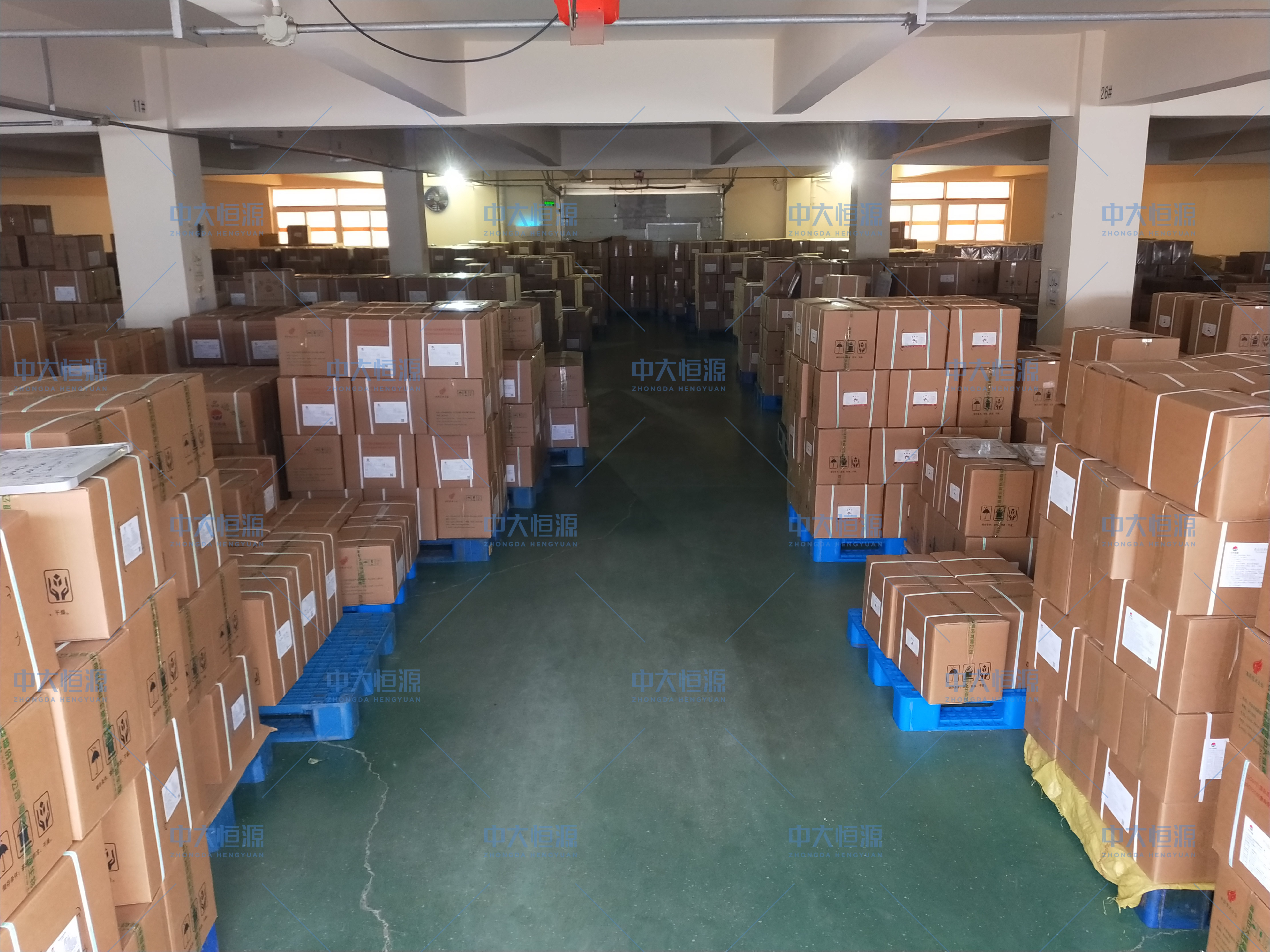
Order mechanics are deliberately simple. The standard MOQ for natural colors is 5 kg and 10 kg, and quantity can be negotiated for project testing. Lead time is typically 7–15 working days after deposit, subject to stock availability. FOB, CIF and CFR delivery terms are available. For buyers in the United States, a local warehouse supports domestic shipment and shortens lead time, and US-market compliance documents are prepared in advance.
Frequently Asked Questions
Is Beetroot Red (E162) available with Halal, Kosher and vegan certification?
Yes. The beetroot line is covered by an International Halal Certificate issued by ShaanXi Shang Pin Yuan Halal Food & Restaurant Management Co., Ltd under number SSPY-201318-34572, valid from 14 January 2026 to 28 December 2028, with 106 products in scope. Kosher status is certified by KOF-K Kosher Supervision under certificate FD5A4-2BT0W, which lists BEETROOT RED and two beetroot concentrates as Parve, valid through 31 July 2027. Vegan suitability is certified by Shanghai Suye Technical Services under VeganSu certificate E892173R01, covering BEETROOT RED and BEETROOT CONCENTRATE, valid from 7 August 2026 to 31 July 2027. The manufacturing site holds FSSC 22000 (CQC25FS1000R2M/4100) and ISO 9001 (00123Q38181R3M/4100). Buyers should still confirm the permitted use category for E162 in their own market, because food additive rules differ by country.
Can Beetroot Red replace synthetic reds such as Red 3 or Red 40 in my product?
It can, in applications where the formula sits inside the beetroot color window. Beetroot extract holds a red tone across pH 3.0–8.0 and is stable in aqueous systems around pH 4.0–6.0, with good light resistance and, for betacyanin-based Red 3 replacement grades, documented heat stability up to 85–100 °C in low-water systems. It is supplied as water-soluble powder, water-soluble liquid and oil-soluble liquid, so it can be matched to beverage, confectionery, ice cream, meat and plant-based, snack and seasoning applications. The exact shade and dosage must be confirmed by a formula trial, and products with very different pH or thermal profiles may be better served by purple sweet potato, black carrot or radish red — all of which are available from the same supplier, which means the comparison can be run on one sample shipment.
What is the MOQ and how does Beetroot Red compare on cost with synthetics?
The standard MOQ for natural colors is 5 kg and 10 kg, and quantities can be negotiated for project testing. On cost, natural colors carry a higher raw material cost than the synthetic they replace. The offsetting value is commercial rather than purely technical: clean label market access, a lower compliance and safety exposure, and the ability to keep a product listed with customers who screen ingredient declarations. For a realistic budget, model the cost per finished unit rather than cost per kilogram of colorant, because dosage, overage for shelf life and trial cost all sit inside the same number.
Can we receive free samples and supporting documents for testing?
Yes. Free small samples are available for testing, and routine supporting documents — product specification sheets, factory COA and qualification certificates — can be supplied together with the samples. If you need specific third-party test documents or other special documentation, advise in advance so the request can be assessed and coordinated. Samples are matched to the application, so it helps to state the target product, processing conditions, pH range and target shade when requesting, and to specify whether a maltodextrin-free grade is required for the label.
What is the lead time, and how do we start?
Lead time is typically 7–15 working days after deposit, subject to stock availability, and FOB, CIF and CFR terms are available. For US buyers, a local warehouse supports domestic shipment and shortens delivery time. To start, send your target application, shade reference, processing conditions and market so that a grade recommendation, sample and document pack can be issued together. Contact Sarah Zhang at sales02@hazhongda.com or WhatsApp +86-18135628101 to open a sample request with Henan Zhongda Hengyuan Biotechnology Stock Co., Ltd.
Conclusion: Beetroot Red Is a Trial-and-Document Decision
Beetroot Red (E162) gives food manufacturers a plant-derived red with a genuine red-to-fuchsia shade, water and oil solubility options, and a compliance framework that covers Halal, Kosher, vegan, FSSC 22000 and ISO 9001 requirements. It performs best in acidic to neutral water-based systems, in confectionery, jelly and frozen desserts, and in low-water applications such as seasoning and snacks where the documented heat stability of betacyanin-based grades applies.
The decision that determines success is not which red looks closest on a color card. It is whether the grade, carrier, dosage and documentation were matched to the process before the first production order. Run the six-step qualification once, with certificates in hand and a stability trial in the final pack, and beetroot red becomes a routine raw material rather than a recurring reformulation project.
Request a Beetroot Red (E162) Sample
Zhongda Hengyuan supplies natural colors, natural sweeteners and plant extracts to food manufacturers in the USA, EU, South America, Russia, Southeast Asia, Korea, Japan, the Middle East and Africa. Tell us your application, pH range and target shade, and we will recommend a grade and send a sample with specification sheet, COA and certificates.
Henan Zhongda Hengyuan Biotechnology Stock Co., Ltd.
Website: en.hazhongda.com
Email: sales02@hazhongda.com
Tel / WhatsApp: +86-18135628101 · Chat on WhatsApp
Address: East of Jinger Road, North of Weier Road, Linying Industrial Park, Luohe City, 462600, Henan, China
Have Questions or Need More Details?
Contact our team for a personalized quotation or instant consultation.
Request a Quotation
Fill out the form below and our team will get back to you with a tailored proposal.
WhatsApp Direct Chat
Prefer to chat in real-time? Message us on WhatsApp for instant assistance & quick answers.
- Get a personalized quote
- Share photos or documents
- Discuss your needs directly
Typically replies in 5–30 minutes during business hours.