
Air Filter Application Guide: HVAC, Cleanrooms, Aircraft, and Home Purifiers
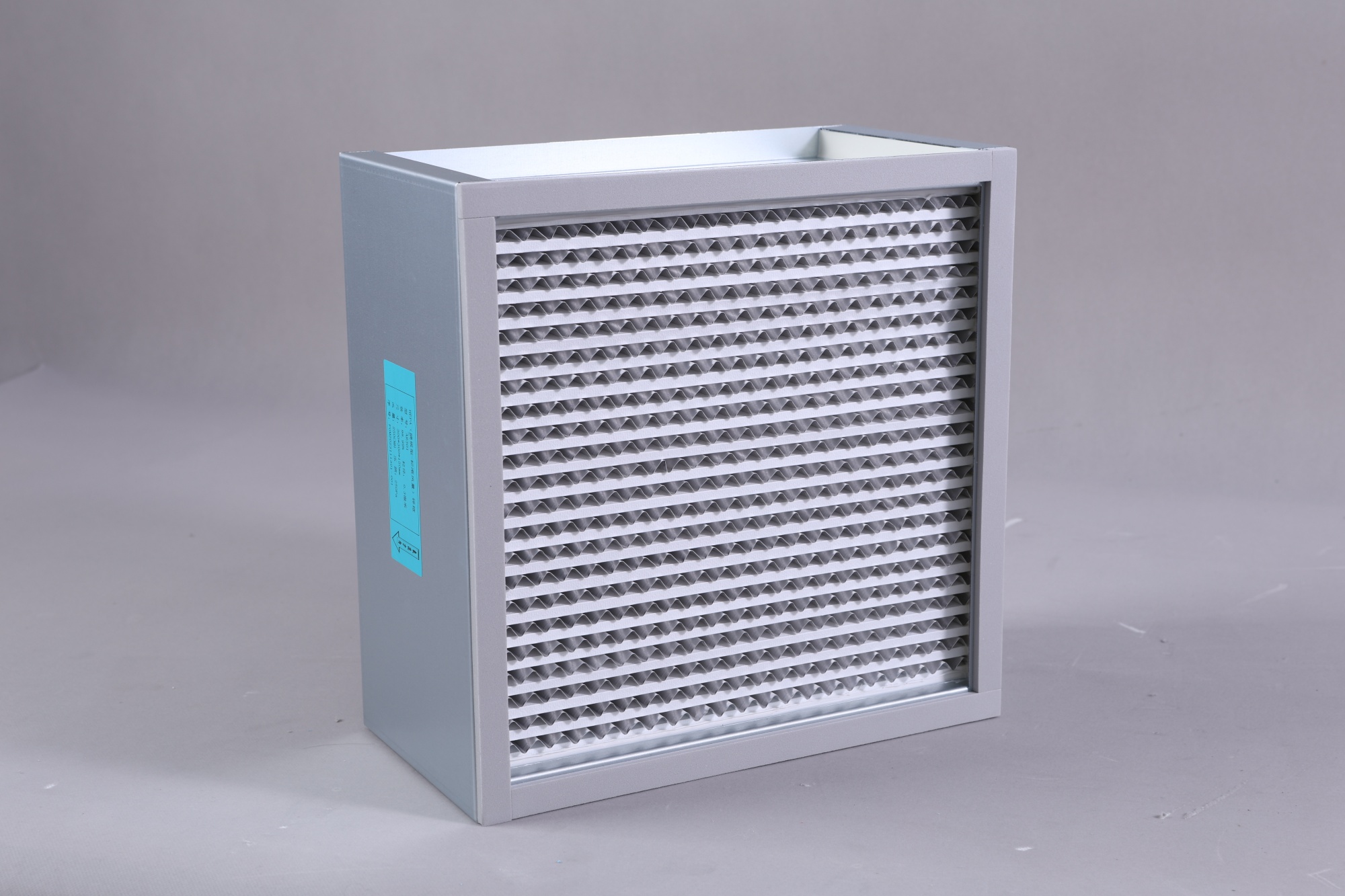
An air filter is an answer to a specific environment, not a standalone product category. The same basic construction - pleated media held in a frame - becomes a first-stage panel filter in a hotel air handling unit, a final-stage V-Bank in an airport terminal, a U15 ceiling filter in a microelectronics cleanroom, an H13 cabin filter on a B737/B757, or a replacement cartridge in a household purifier. What separates these products is not the phrase air filter, but the job the environment gives them.
The working rule in this guide is: environment first, grade second, product last. Three variables do most of the decision work - the contaminant that must be captured, the airflow and pressure-drop budget the system can afford, and the standard against which the installed filter will be verified. Fix those three, and filter type, media and efficiency class fall into a predictable order.
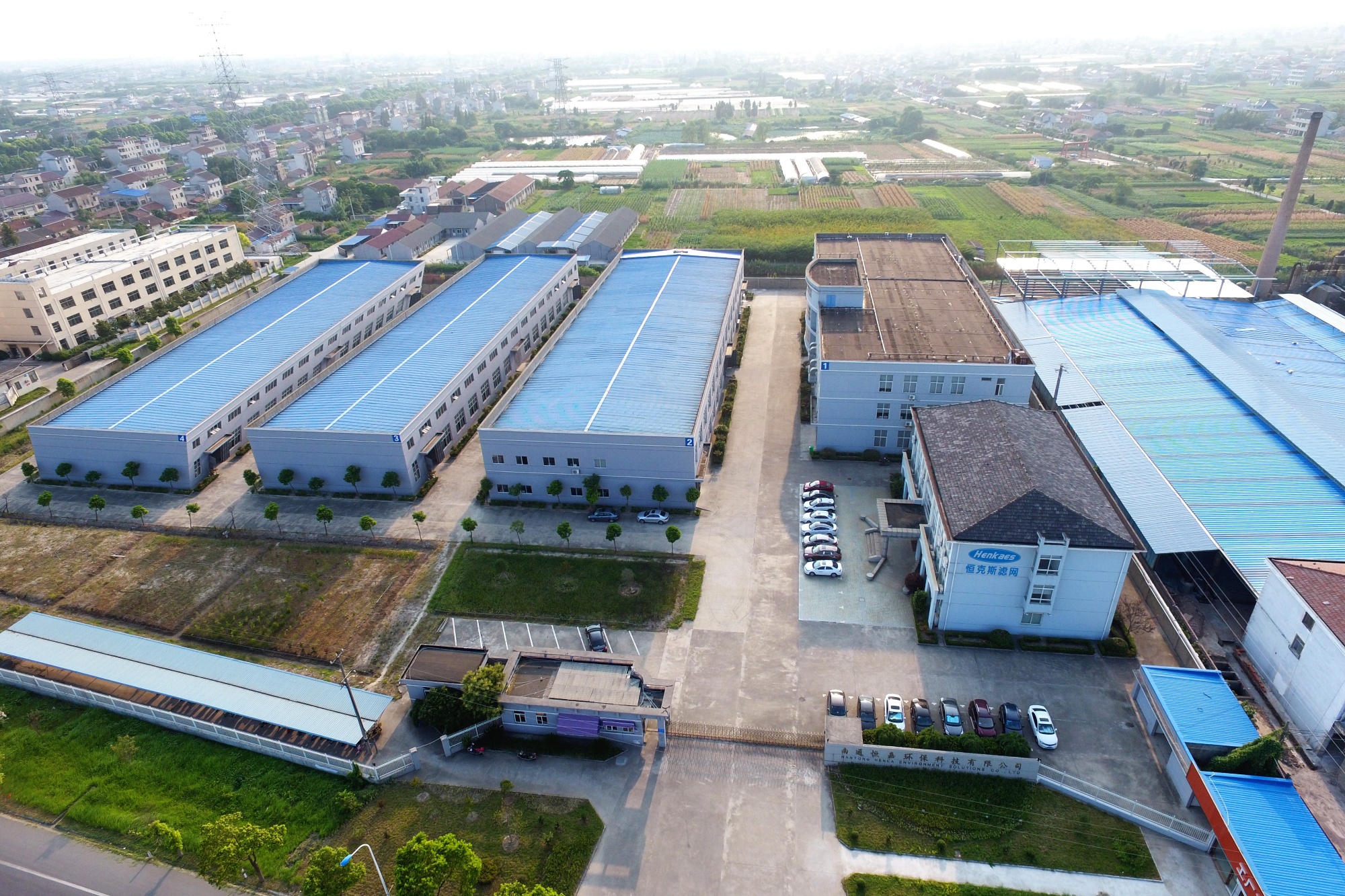
Henkaes (Nantong Henka Environment Solutions Co., Ltd) is an air filter manufacturer founded in 2004, based in Haimen, Jiangsu, China, producing filters for air purifiers, air cleaners and ventilation systems, and supplying customized filters to purifier and cleaner brands in the North American and Chinese markets. The filter families used as examples below - panel, bag, V-Bank, box, cleanroom, aircraft cabin, HEPA, activated carbon and VOC filters - come from that single range, which is why they can be compared here on the same terms.
Problem definition: a grade label is not an application description
Most filter specifications are written as one class: G4, F8, MERV 13, H13, U15. A class is a measurement result attached to a product under a test method. It does not describe the dust load the filter will meet, the air volume it must pass, the frame depth that is available, or the maintenance interval the facility can actually sustain.
Three failure patterns repeat across projects, and all three begin with the same mistake - reading the grade before reading the environment.
- Under-specification. A panel filter in the G1-G4 band, built from fiberglass or polypropylene, is a first-stage product. Used as the only stage, it leaves fine particulate to the coils, ducts and downstream equipment that follow.
- Over-specification. A high-efficiency final stage loaded into a system whose fan, coil and duct geometry were designed around a lower-resistance filter. The filter can meet its class on paper and still create a project problem, because every stage adds resistance and the stage chain - not the final filter alone - decides whether design air volume is delivered.
- Fit failure. Face dimensions, frame type, pocket or V-bank depth, and the number of stages. Every reference scenario used for this guide lists customized dimensions as a special requirement rather than a catalog size, which is a strong signal about how these projects are actually bought.
There is a fourth, quieter problem: standards mismatch. A grade quoted under one framework is compared with a grade issued under another, and the comparison looks precise while meaning very little.
Industry background: three standards families and one transition
Air filter grades travel in three vocabularies, and this application guide only makes sense if they are kept apart.
- ASHRAE 52.2 and MERV. ASHRAE Standard 52.2 classifies general ventilation filters using MERV ratings from 1 to 16, and MERV is derived from the performance efficiency measured in the standard's dust-loading test procedure.
- EN 1822 and the EPA/HEPA/ULPA family. In Europe, EN 1822 is the framework used to classify EPA, HEPA and ULPA filters by filtration efficiency and zero leakage. H13, U14 and U15 belong to this family, not to MERV.
- EN 779 and its successor. The G1-G4 and F5-F9 classes used in many tenders and product lines come from EN 779. Since mid-2018, EN 779 has been replaced in Europe by ISO 16890, while ASHRAE 52.2 continues as the framework behind MERV.
For a buyer, the practical consequence is that a class comparison table is a translation aid, not a proof of equivalence. If a European tender still lists F-grade classes, the cleaner route is to restate the requirement in ISO 16890 terms and ask which standard produced the supplier's test evidence. If a project is written in H13 or U15, the evidence to request is EN 1822 classification, not a MERV number.
Henkaes states that its testing references EN 779, EN 1822, ASHRAE 52.2 and ISO 16890, and that its laboratory includes an efficiency and air-resistance test system for filter media, a 30 m³ test room for formaldehyde and VOC removal efficiency, a CADR test room for air purifiers and a noise test laboratory; ASHRAE 52.2 is used in testing air filters. These are company-reported capabilities, so the verification step below applies to them exactly as it applies to any grade claim.
The market also splits by buyer rather than by product. Building filters are bought by facility and MEP teams against air quality and energy targets; critical-facility filters by qualification and validation teams; cleanroom filters by process engineers; cabin filters by aviation maintenance programmes; household filters by appliance brands and aftermarket channels. One factory can serve all five, but the specification language differs in each case.
The solution: five environment bands and the filter family each one calls for
The mapping below is an application-fit decision, not a ranking of grades. No single filter type or efficiency class is correct for every project; each environment imposes a different combination of contaminant, airflow and verification requirement.
1. Commercial and public buildings: a layered chain, not a single filter
Airports, hotels, museums and restaurants share a pattern - large air volumes, long operating hours and a mixed dust load. The filter answer is a chain rather than a single product.
- Panel filter, G1-G4, fiberglass or polypropylene - the first stage, positioned to take the coarse load and protect what follows.
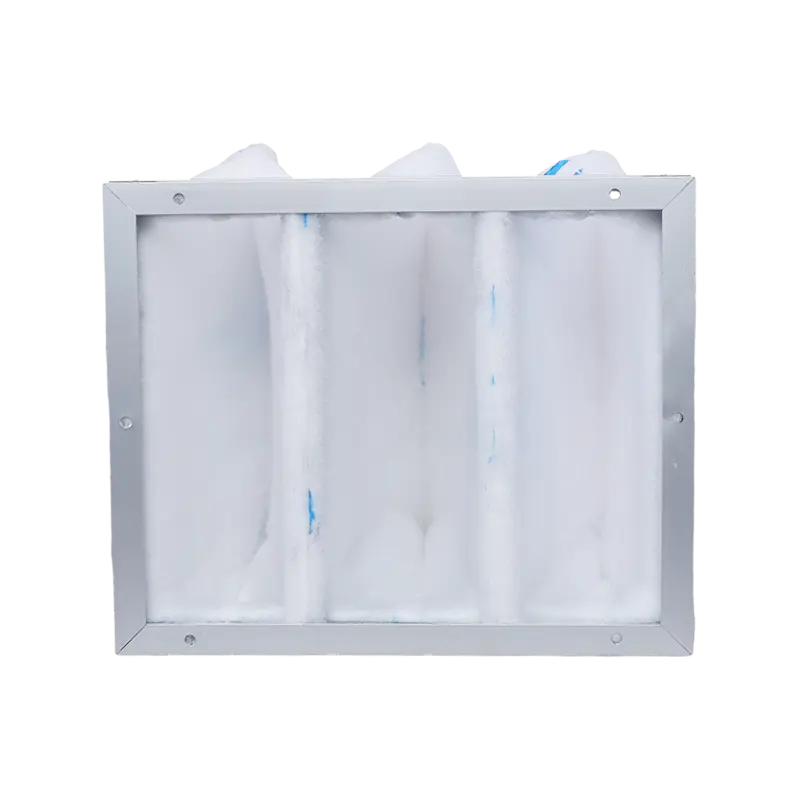
- Bag filter, F5, F6, F8 or F9, microfine fiberglass - the secondary stage, where the pocket geometry provides media area for a finer class without collapsing the airflow.
- V-Bank filter, H13, fiberglass or polypropylene - the high-efficiency stage, in a compact frame with multiple pockets, for projects that need an EN 1822-classified final stage inside a limited face area.
- Furnace filter, MERV 8, MERV 11 or MERV 13, polypropylene - the ducted and furnace replacement case, where the grade has to fit the blower and the dust load rather than a central-plant design.
The real decision inside this band is where the chain stops. A building that needs coarse and secondary protection should not pay for a final H13 stage; a building that does need H13 should not expect a bag filter to deliver it. The V-Bank format exists because the highest-efficiency stage usually has to fit in the same duct section as the stages ahead of it.
2. Critical facilities - pharmaceutical, hospital, food and beverage
Box filters rated MERV 15/16 belong to facilities where a very high, still MERV-expressed efficiency is required in a rigid ducted final stage. MERV 15/16 sits at the top of the ASHRAE 52.2 scale of 1 to 16, which is why it appears in pharmaceutical plant buildings, hospital air systems and food and beverage production areas rather than in ordinary commercial fit-outs.
Reference scenarios include pharmaceutical plant building projects in the United States and the Netherlands, and food and beverage workshop renovations. Both are described as normal indoor environment conditions in which the filter's function is to capture dust and fine particles through a fresh-air system, with customized dimensions as a special requirement.
The box format earns its place through geometry: a rigid, high-efficiency box holds its shape under load and slots into ducted systems where the final stage must be both verifiable and dimensionally stable. Where a project is written to EN 1822 instead - an H13 final stage - the natural alternative is a V-Bank H13. These are not interchangeable labels; the choice follows the standard the facility will be verified against, not the impression that one grade sounds higher than the other.
3. Cleanrooms for microelectronics and data centres: U14 and U15
Cleanroom air filters in U14 and U15, built from microfiberglass or PTFE, are the top-efficiency band in this range and are intended for cleanroom environments such as data centres and microelectronics production. Reference cleanroom design projects describe the same core function - capturing dust and fine particles under normal indoor conditions - with customized dimensions as a standard special requirement.
What separates this band from the critical-facility band is verification, not just grade. EN 1822 classification covers filtration efficiency and zero leakage, so U14 and U15 requirements are normally accompanied by test documentation and installation-integrity checks rather than a filter label alone. Media selection between microfiberglass and PTFE belongs with the project engineer, because it interacts with the required grade, the airflow per unit and the installation format.
4. Aircraft cabins: B737/B757 electronic cabin H13
The B737/B757 Electronic Cabin Air Filter in this range is an H13 microfiberglass filter built for B737/B757 cabin working conditions, operating in the aircraft's fresh-air system in automatic mode, with dust and fine-particle capture as its function and customized dimensions as a special requirement; the reference application in the corpus is in China.
A cabin filter is a good test of the environment-first rule. It shares the H13 label with a building V-Bank and shares almost nothing else: the envelope is fixed by the aircraft, the replacement cycle is set by the operator, and the part is bought against a platform rather than a duct size. Carrying the cabin specification into a building project, or a building H13 into a cabin, produces a filter that may match a grade and still fail the application.
5. Household air purifiers: two jobs inside one device
Household purifier projects combine a particle stage and a gas stage, and the two should be specified separately.
- Particle stage. HEPA Air Filter in H13, made from fiberglass or polypropylene, or a True HEPA Air Filter rated at 99.97% or higher. The described function is capture of dust, fine particles and pollen under normal indoor conditions.
- Gas and odour stage. Activated Carbon Filter media graded CTC70, CTC80, CTC90 or CTC100, and VOC Air Filter constructions combining activated carbon with a special catalyst for special VOC removal. Described functions include removal of VOC, pet smell and special harmful gas.
A purifier specification that fixes only the HEPA stage answers half the question. Odour, pet smell and volatile organic compounds are gas-phase jobs, and the carbon grade is the number to discuss with the filter supplier - not the HEPA class. Both stages are supplied in customized dimensions matched to the appliance rather than to a room.
Programme evidence in this range comes from two United States ODM projects: 50,000 pieces for formaldehyde removal described as stable over two years, and 50,000 pieces for indoor purifier air described as stable over one year. A separate United States OEM programme covered 20,000 pieces over one year, with high efficiency as the stated highlight.

Step-by-step: specifying an air filter from the environment
- Name the contaminant and the acceptance criterion. Coarse dust, fine particulate, pollen, particles carrying micro-organisms, VOC and odour each point to a different stage. Write down what clean enough means for this project before any class is chosen.
- Fix the standard. Decide whether the project will be verified against ASHRAE 52.2 and MERV, EN 1822, or ISO 16890. This single decision removes most of the confusion in grade comparison tables and determines whether G/F, MERV or H/U classes appear in the specification.
- Set the airflow and resistance budget. The stage chain has to fit the fan, the coil and the duct pressure available. A higher-efficiency stage usually carries more resistance than a coarse one, so the chain - not the final filter in isolation - decides whether design air volume is delivered.
- Choose the media for the duty. Fiberglass and polypropylene for panel and V-Bank constructions, microfine fiberglass for bag and cabin filters, microfiberglass or PTFE for U14/U15 cleanroom units, activated carbon with or without a catalyst for gas-phase stages. Media selection is a durability and compatibility decision as much as an efficiency decision.
- Fix the physical envelope. Dimensions, frame, pocket depth and stage count. Across every reference scenario in this guide - pharmaceutical plant, cleanroom, furnace replacement, aircraft cabin, purifier - customized dimensions are listed as a special requirement, which defines what the supplier needs from you: drawings or measured dimensions, not a model number.
- Verify before release. Ask for the test basis behind the class, a sample that represents production, and the inspection regime. Henkaes, as an example, works to 100% inspection, offers OEM/ODM customization of size and logo, and states a standard lead time of 30 days at a monthly capacity of 200,000 pieces with a minimum order of 500 pieces.
Use cases: the same logic across six buying situations
- HVAC system building (United States, Netherlands). Normal indoor conditions, dust and fine-particle capture through a fresh-air system, customized dimensions. The filter chain runs from panel to bag to V-Bank according to the design stage required.
- Residential furnace filter replacement (United States, Netherlands). The same capture function in a ducted residential system, where the grade decision is MERV 8, MERV 11 or MERV 13 against the blower and the dust load.
- Pharmaceutical plant building (United States, Netherlands). A MERV 15/16 box filter in the final stage, in customized dimensions, with the test basis documented before approval.
- Food and beverage workshop renovation. Dust and fine-particle capture in a normal indoor environment through a fresh-air system, using MERV 15/16 box filters where the final stage is specified on the ASHRAE scale.
- Cleanroom design for microelectronics and data centres. U14 or U15 units in microfiberglass or PTFE, with EN 1822 classification and installation integrity as the verification route.
- Air purifier programme for household appliances (United States, Netherlands). A HEPA H13 or True HEPA particle stage plus an activated carbon or VOC stage, in custom dimensions matched to the appliance housing.
Comparison table: environment, filter family and what to confirm
| Application environment | Filter family in this range | Efficiency grade | Media | Capture target | Confirm before ordering |
|---|---|---|---|---|---|
| Commercial and public buildings - first stage | Panel filter | G1-G4 | Fiberglass, polypropylene | Coarse dust | Dimensions, frame, stage position |
| Commercial and public buildings - secondary stage | Bag filter | F5, F6, F8, F9 | Microfine fiberglass | Fine particulate | ISO 16890 restatement for European projects |
| Commercial and public buildings - high efficiency | V-Bank filter | H13 | Fiberglass, polypropylene | Fine particulate | EN 1822 evidence, face area, depth |
| Ducted and furnace replacement | Furnace filter | MERV 8, MERV 11, MERV 13 | Polypropylene | Dust, fine particles | Blower compatibility, exact size |
| Pharmaceutical, hospital, food and beverage | Box filter | MERV 15/16 | Per project specification | Dust, fine particulate | Test basis, rigid frame, customized dimensions |
| Cleanrooms - microelectronics, data centres | Cleanroom filter | U14/U15 | Microfiberglass, PTFE | Dust, fine particulate | EN 1822 classification, leak integrity |
| Aircraft cabin - B737/B757 | Electronic cabin air filter | H13 | Microfiberglass | Dust, fine particles | Platform fit, fresh-air system interface |
| Household purifier - particles | HEPA / True HEPA filter | H13 / 99.97% and above | Fiberglass, polypropylene | Dust, fine particles, pollen | Appliance fit, airflow of the unit |
| Household purifier - gases and odour | Activated carbon / VOC filter | CTC70-CTC100 | Activated carbon, special catalyst | VOC, pet smell, harmful gas | Carbon grade, catalyst type, change interval |
FAQ
Are G1-G4 and F5-F9 grades still valid in Europe?
They remain widely used in product lines and tenders, but the framework behind them has changed: EN 779 was replaced in Europe by ISO 16890 from mid-2018, while ASHRAE 52.2 continues as the framework for MERV. For a European project, the safer approach is to restate the requirement in ISO 16890 terms and confirm which standard the supplier's test evidence was produced under. Treating a G or F class as automatically equivalent to an ISO 16890 class is not a verification step.
Can one supplier realistically cover commercial HVAC, cleanroom, aircraft and household filters?
It can, if range and engineering support actually exist. Henkaes manufactures panel, bag, V-Bank, box, cleanroom, aircraft cabin, HEPA, activated carbon and VOC filters, works in OEM/ODM mode with size and logo customization, and employs an engineering team of 11 within a 30,000 m² facility; its stated testing scope references EN 779, EN 1822, ASHRAE 52.2 and ISO 16890. What changes between applications is not the supplier's address but the specification language, the test evidence and the tooling required for the dimensions.
What drives the price difference between a G4 panel filter and an H13 V-Bank?
No single variable. Cost follows the position the filter occupies: media type such as fiberglass, polypropylene, microfine fiberglass, PTFE or activated carbon; the number of stages in the chain; frame and pocket construction; whether dimensions are standard or customized; and the test documentation the project requires. Because filters are quoted per project configuration rather than per grade label, a like-for-like comparison needs the same dimensions, the same test basis and the same volume. The stated minimum order for OEM/ODM work is 500 pieces, which is the level at which a customized configuration becomes practical.
How should a buyer validate a filter before placing an order?
Three checks. First, the class and its test basis: confirm which standard produced the number and request the report rather than relying on a datasheet claim. Second, a physical sample in the project dimensions, because fit failures are more frequent than grade failures. Third, the production control behind that sample: inspection regime, media consistency and the ability to reproduce the same build across the order. Henkaes supports engineering samples and production samples as part of its design service and runs 100% inspection on production.
What lead time should a project plan for, and how does an inquiry start?
Henkaes states a standard lead time of 30 days, a monthly capacity of 200,000 pieces, annual output of roughly 2,000,000 pieces and remote after-sales support, with 69% of output exported to the EU and US. Projects with new dimensions or a new media combination should plan for sample approval ahead of the production run, since approval sits before the 30-day window rather than inside it. To start, send the target grade and the standard behind it, the dimensions or drawings, the expected annual volume and the destination market to the Henkaes team through airfilterodm.com.
Conclusion
Application fit, not grade hierarchy, is what keeps a filter project working. The environment decides which contaminant matters, how much air must pass and which standard will be used to verify the result; filter type, media and class are consequences of those three answers. A G1-G4 panel stage, an F5-F9 bag stage and an H13 V-Bank belong to the same commercial building chain at different positions. A MERV 15/16 box belongs to a critical facility verified on ASHRAE 52.2. U14 and U15 belong to a cleanroom verified under EN 1822. A B737/B757 cabin H13 belongs to an aircraft platform. HEPA H13, activated carbon and VOC stages belong to a household purifier that must solve particles and gases together.
None of these is the best air filter in general. Each is the correct answer to a different environment, and the shortest route to a wrong specification is to carry one grade from one environment into another.
Next step. If you are matching filters to a specific project environment, the full Henkaes product range, grades and media are collected in the downloadable catalogue: E-Catalogue for Air Filter 1 (PDF).
Have Questions or Need More Details?
Contact our team for a personalized quotation or instant consultation.
Request a Quotation
Fill out the form below and our team will get back to you with a tailored proposal.
WhatsApp Direct Chat
Prefer to chat in real-time? Message us on WhatsApp for instant assistance & quick answers.
- Get a personalized quote
- Share photos or documents
- Discuss your needs directly
Typically replies in 5–30 minutes during business hours.