
Air Filter Media 101: Fiberglass, Polypropylene, and PTFE Explained
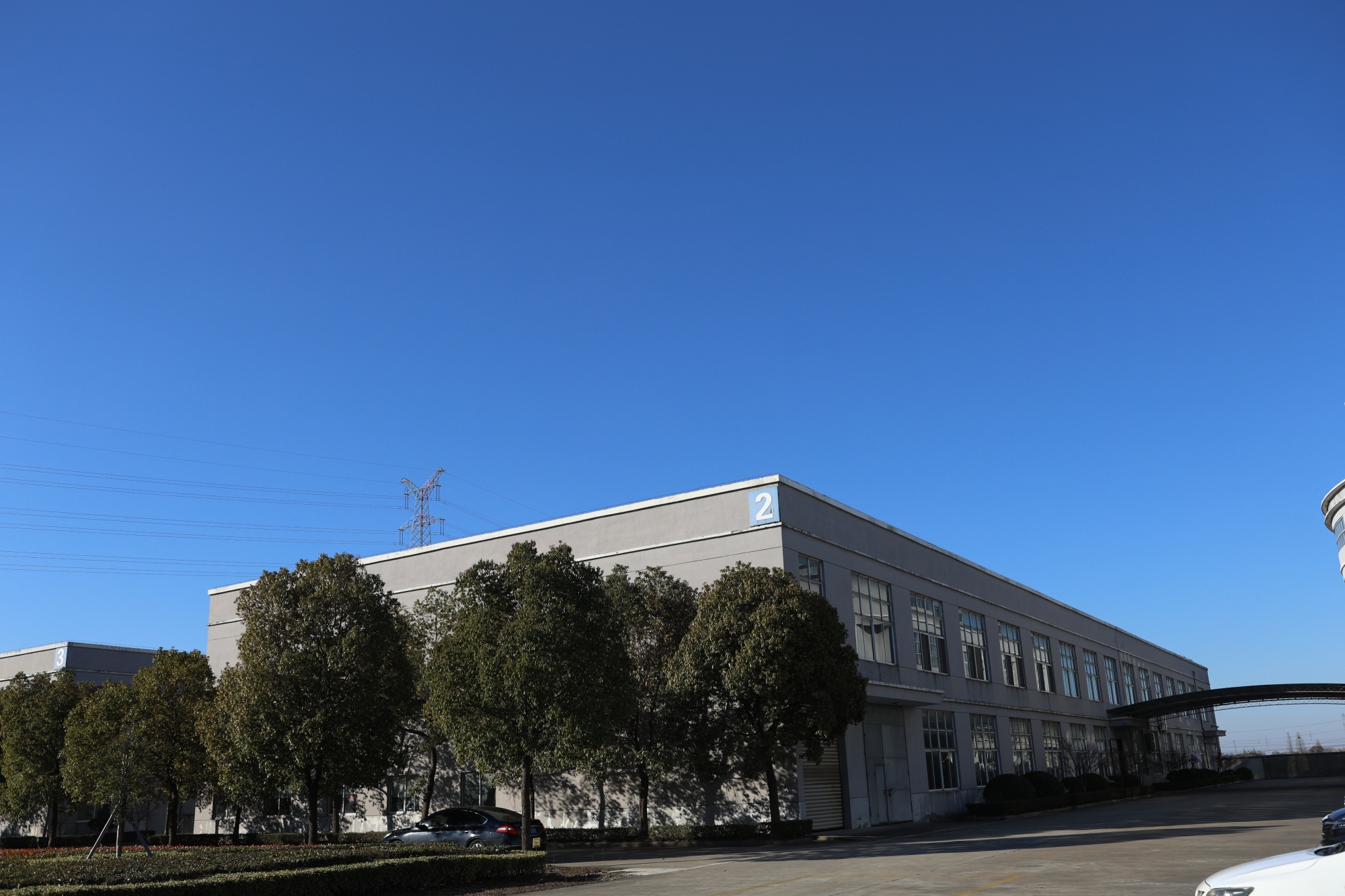
Media selection is settled at the specification stage, long before pleating and assembly begin. Image: Henkaes facility, Nantong, Jiangsu, China.
A filter's efficiency grade is a number printed on a label. The medium inside the frame is the reason that number is achievable at all. Fiberglass, polypropylene (PP) and PTFE are the three media families that dominate industrial air filtration, and each one solves a different part of the same problem: how much particulate to capture, at what resistance, over what service life, and at what cost.
The distinction becomes decisive during evaluation. Two filters can carry the same class label and still behave very differently in the same duct, because a label describes measured efficiency under a stated test method — not resistance, not dust-loading behaviour, not tolerance for humidity or heat. This guide explains what each of the three media families is, where it usually sits in an efficiency hierarchy, and what a buyer should verify before approving a specification. It draws on the documented product scope of Henkaes (Nantong Henka Environment Solutions Co., Ltd), an air filter manufacturer founded in 2004 in Haimen, Jiangsu, China, whose range covers HEPA, activated carbon, VOC removal, formaldehyde removal, odour removal and HVAC filters, i-Hepa ventilation purification devices and IFD purification devices.
Why the Medium, Not the Grade Label, Decides Filter Performance
Filter media is the fibrous or membrane layer that particles must pass through. Frames, adhesives, separators and gaskets exist to hold that layer in place and to make air travel through it rather than around it. Four outcomes follow from the medium itself: the efficiency class the finished filter can reach, the initial and final pressure drop at design airflow, the dust-holding capacity, and the service interval before replacement.
The buying mistake this creates is consistent. A purchaser compares two filters by class and by unit price, selects the cheaper one, and later discovers a higher fan energy bill or a shorter replacement cycle. Unit price measures the medium and the labour in the frame; it does not measure the resistance the fan must overcome for the next twelve months.
A more useful decision rule is to fix the standard and the grade first, then choose the medium and pleat construction that deliver that grade at the lowest sustainable resistance. Everything below works through that sequence.
Industry Background: Which Standard Turns a Medium into a Grade
The same medium can be described by different class numbers depending on the framework a supplier quotes, so the framework has to be named before the material is discussed.
Under ASHRAE Standard 52.2, filters are classified using MERV ratings from 1 to 16, and MERV is based on the performance efficiency calculated from synthetic-dust loading tests (National Air Filtration Association, Understanding MERV — ANSI/ASHRAE Standard 52.2). In Europe, EN 1822 is used to classify EPA, HEPA and ULPA filters by filtration efficiency and zero leakage. EN 779:2012, the older European framework for general ventilation filters, was replaced in Europe by ISO 16890 from mid-2018.
Three practical consequences follow:
- The MERV scale runs from 1 to 16, so HEPA and ULPA classes are normally quoted on EN 1822 or a national equivalent rather than as a MERV number.
- A European tender and a North American tender can describe the same physical filter with different class numbers, which is why cross-market specifications need a mapping step rather than a direct translation.
- An EN 779 class in a new European specification references a framework that has not applied in that market since mid-2018; ISO 16890 is the current general-ventilation reference.
A specification that names the standard, the grade and the test method leaves little room for interpretation. One that names only a grade does.
Fiberglass Media: Mechanical Capture and Pleat Stability
Glass fibre medium is built from microfine glass fibres bonded into a mat or paper. Two properties keep it in demand at the higher end of the efficiency range: the fibre network can be made fine enough to capture small particles mechanically, and the mat holds its pleat geometry under airflow, which matters in deep-pleat and rigid filter designs.
Strengths
- Capture is mechanical rather than electrostatic, so performance does not depend on a charge surviving transport, storage and service.
- The medium keeps its shape in high-flow housings where a soft web would collapse or balloon.
- It tolerates elevated operating temperatures better than polymer media, which makes it the practical route where the airstream is warm.
Limits
- Glass mats are heavier and more brittle to handle than synthetic non-wovens. A creased or cracked pleat is a leak path, not a cosmetic defect.
- Resistance at a given efficiency depends strongly on fibre diameter and on how much media area is packed into the frame; a fine medium in a shallow pleat pack can cost more energy than a coarser medium with more area.
Usual position: high-efficiency stages — HEPA-class filters, warm or high-flow housings, and applications where the pleat pack must stay rigid. The verification question for a buyer is not whether the medium is glass fibre, but what efficiency and what initial resistance were measured on the finished filter, and how the pleat pack is protected in transit.
Polypropylene Media: Charged Non-Wovens for High-Volume Stages
Polypropylene is a thermoplastic, and in filtration it appears as meltblown and spunbond non-woven fabric. It is the material behind most low-cost, high-volume filters in general ventilation. The engineering detail that matters is that PP media can be electrostatically charged: a charged medium captures fine particles far more efficiently than its physical fibre structure alone would suggest, while keeping resistance low.
Strengths
- Low material cost and consistent machine-made webs, which suits panel, bag and pleated formats in volume.
- In charged form, a favourable ratio of efficiency to resistance at coarse and medium classes — the reason charged synthetics dominate pre-filtration.
- Straightforward processing into large production runs with stable unit cost.
Limits
- Charge is the weak point. Humidity, oil mist and certain aerosols degrade an electret charge over time, after which the filter behaves closer to its mechanical efficiency.
- The practical temperature ceiling is lower than for glass, which rules it out of warm airstreams.
Usual position: pre-filtration and general ventilation — panel filters, bag filters, HVAC and air-conditioner stages, and the dust-loading stage ahead of a HEPA filter, where catching coarse dust cheaply protects the more expensive final stage. The verification question for charged PP media is whether the quoted efficiency is an initial charged value or a value that must hold after exposure to the real operating environment.
PTFE Membrane Media: High Efficiency at Low Resistance
Expanded PTFE is a microporous membrane, normally laminated to a support layer so that it can be pleated. The membrane is very thin and its pores are very fine, which allows high particle capture at comparatively low resistance. PTFE is chemically inert and has low surface energy, so collected dust releases from the surface more readily during cleaning or pulse cycles.
Strengths
- High efficiency at relatively low pressure drop — the combination that matters most in high-efficiency installations where fan energy is already stretched.
- Chemical and moisture tolerance, which widens the range of airstreams it can handle.
- Good dust release, which supports stable resistance between cleaning cycles.
Limits
- Media cost is the highest of the three families, and the premium has to be justified by energy or by process requirements rather than by habit.
- The membrane is the most handling-sensitive of the three: a pinhole or an abraded area becomes a local penetration point, so lamination quality and pleat protection decide whether membrane performance survives into the finished filter.
Usual position: HEPA and ULPA class filters, and high-efficiency stages where low resistance or chemical resistance justifies the media premium. For a membrane filter, the acceptance criterion is leak integrity as much as efficiency: EN 1822 classification includes zero leakage, which is why finished-filter scan testing — not flat-sheet media data alone — is the evidence that counts.
Where Activated Carbon Fits — and Where It Does Not
Activated carbon is an adsorption medium, not a particle-capture medium, and confusing the two is a common specification error. Carbon removes gaseous contaminants — VOCs, odours, formaldehyde — while a particle filter ahead of or behind it removes particulates. A carbon stage does not substitute for a HEPA stage, and a HEPA stage does not remove VOCs.
Carbon quality is expressed through activity indicators such as CTC grade. In the Henkaes documented comparison, its activated carbon filters use a carbon quality with a CTC grade above CTC 70 against conventional activated carbon filters, indicating better adsorption capacity, at the same price with higher removal performance and a longer replacement lifespan, positioned for household air purifier applications. For buyers, the practical implication is that gas-phase life is governed by the mass and activity of the carbon, not by the particle class of the filter it sits in.
Mapping Media to Efficiency Grade: Practical Boundaries
Medium choice narrows the grades a filter can plausibly reach, but it does not fix the grade on its own. Pleat density, separator design, frame sealing and the amount of media area inside a given frame all move the result. The table below describes general industry practice; it is a starting point for a specification discussion, not a substitute for measured data on the specific part number.
| Medium | Structure | Typical grade position | Resistance behaviour | Handling and environment limits | Cost position | Where it usually fits |
|---|---|---|---|---|---|---|
| Fiberglass | Bonded glass microfibre mat or paper | Medium through HEPA/ULPA | Moderate to low when pleat area is adequate | Brittle to handle; creases become leak paths; tolerates higher temperatures than polymers | Mid to high | High-efficiency stages, warm or high-flow housings, rigid pleat packs |
| Polypropylene (PP) | Meltblown or spunbond non-woven, optionally electrostatically charged | Coarse through upper-medium | Low when charged; rises as the charge decays | Humidity, oil mist and some aerosols degrade the charge; lower temperature ceiling | Low | Pre-filters, panel and bag filters, HVAC and air-conditioner stages |
| PTFE membrane | Expanded PTFE membrane laminated to a support | High efficiency, HEPA/ULPA | Low at high efficiency | Chemically inert and moisture tolerant; membrane is handling-sensitive | High | Cleanroom, pharmaceutical and hospital high-efficiency stages |
| Activated carbon | Adsorption medium, not a particle medium | Gas-phase stage alongside a particle grade | Adds resistance; rises with gas loading | Service life set by carbon mass and activity, not by particle class | Mid | VOC, formaldehyde and odour removal in purifiers and fresh air systems |
Two grade positions deserve a caution. A coarse pre-filter medium in a deep pleat pack can post a respectable class number while offering very little dust-holding capacity, because the pleat is shallow relative to the dust load. And a high-efficiency membrane in a poorly sealed frame can measure well on a flat-sheet sample and fail on the finished filter: the frame and the seal are part of the efficiency, not accessories to it.
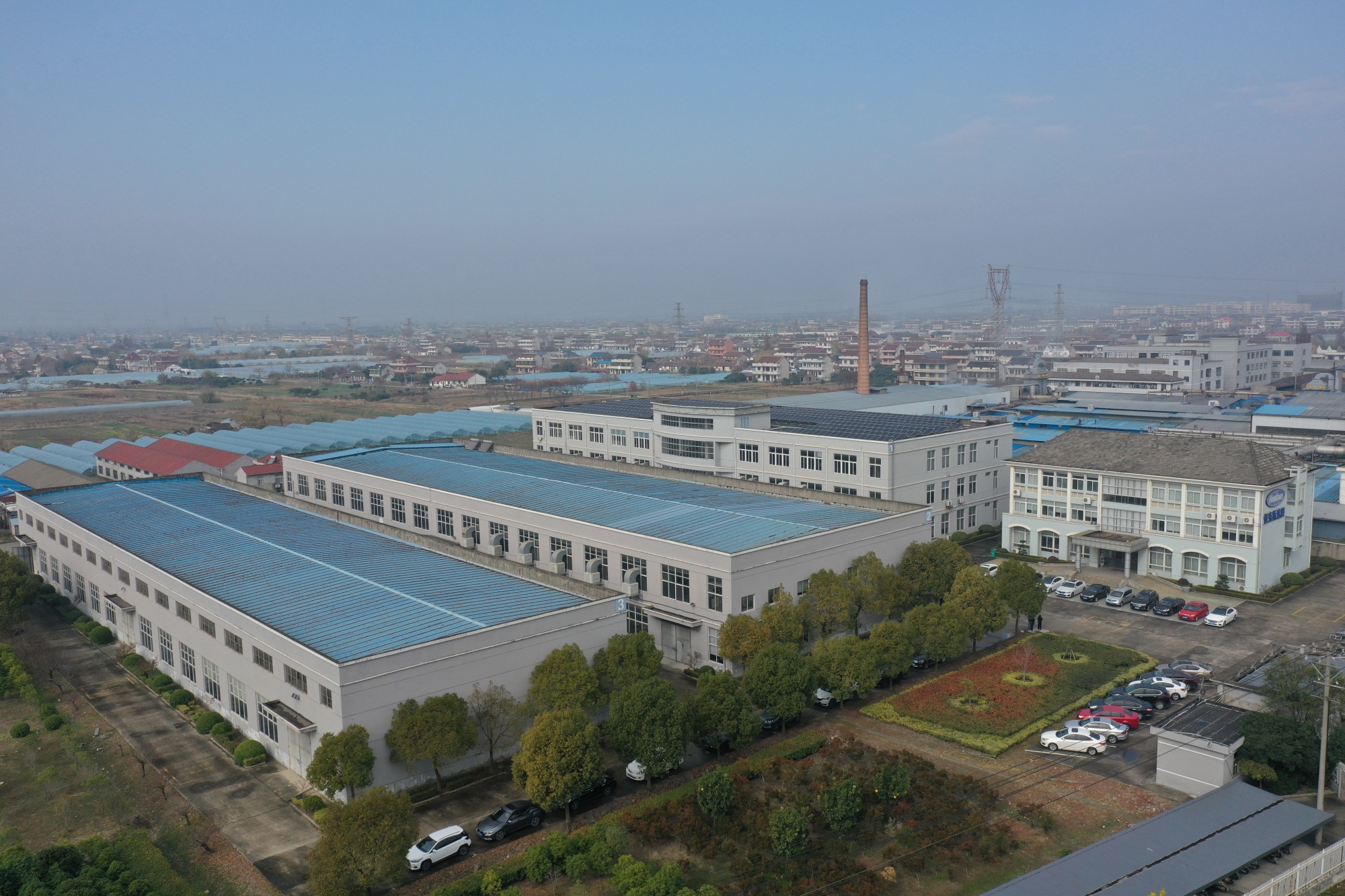
Pleat geometry and sealing convert media performance into finished-filter performance. Image: Henkaes production floor, Jiangsu, China.
Pressure Drop Is the Media Decision That Reaches the Energy Bill
Resistance is the energy price of cleaning air. An air handler or purifier moves a defined volume of air; a higher resistance at that airflow means more fan energy, or less delivered airflow, or both. Henkaes documents the associated risk as high air pressure drop with more energy consumption, controlled by replacing the filter frequently and by reminding the customer to replace the product as the end of its service life approaches. Filtration cost is therefore a two-part number: the filter plus the energy it consumes while installed.
Media and construction both act on that number. Finer fibres and denser pleating raise efficiency and can raise resistance; more media area in the same frame lowers face velocity and resistance at the same efficiency. This is why a supplier that reports only the grade is telling a buyer half of the story.
Henkaes publishes comparisons against common filter types, expressed as gaps at the same efficiency. The figures below are manufacturer-reported for its own products, not independent third-party benchmarks, and should be confirmed against test data for the specific SKU before an order is placed.
| Compared with | Efficiency position | Reported gap | Application positioned |
|---|---|---|---|
| Conventional furnace air filter | Same efficiency | 5%–10% lower air pressure drop; same price with higher removal performance; longer replacement lifespan; higher Energy Star rating | HVAC filtration |
| Common panel filter | Same filtration efficiency | 5%–10% lower air pressure drop; same price with higher removal performance; longer replacement lifespan; higher Energy Star rating | Food and beverage plants |
| Common V-bank filter | Same efficiency | 5%–10% lower air pressure drop; same price with higher removal performance; longer replacement lifespan | Pharmaceutical plants |
| Common box filter | Same efficiency | 5%–10% lower air pressure drop; same price with higher removal performance; longer replacement lifespan | Cleanroom industry |
| Common HEPA filter | Higher filtration efficiency | 5% lower air pressure drop; 5% higher CADR; higher Energy Star rating; longer replacement lifespan; no price increase | Household air purifier |
| Conventional activated carbon filter | Carbon quality CTC grade above CTC 70 | Same price with higher removal performance; longer replacement lifespan; higher Energy Star rating | Household air purifier |
| Common B737/B757 electronic cabin air filter | Same efficiency | 5%–10% air pressure drop improvement; higher removal performance at the same price; longer replacement lifespan | Aerospace and aviation |
A Six-Step Media Selection Sequence
- Name the standard and the grade. Decide whether the project is specified on ASHRAE 52.2 MERV, ISO 16890 or EN 1822, and record the grade in that framework. Treat an EN 779 class in a European specification as a legacy reference.
- Write down the operating conditions. Temperature, humidity, oil mist, aerosol type and gas-phase load decide whether a charged PP medium is appropriate or whether a glass or membrane route is safer. This step removes most of the risk from later choices.
- Set a resistance ceiling at design airflow. An efficiency target without a resistance ceiling lets a supplier meet the grade and still raise the energy bill.
- Choose medium and pleat geometry together. The grade comes from medium plus media area plus sealing; choosing the medium without choosing the area leaves the outcome open.
- Validate on a sample, not on a datasheet. Ask for efficiency and initial resistance measured on the finished filter, and for HEPA-class parts a leak test. Henkaes operates an efficiency and air resistance test system for filter media, a noise test lab, a 30 m³ test room for formaldehyde and VOC removal efficiency and a CADR test room for air purifiers, and uses ASHRAE 52.2 in testing air filters. Its engineering service covers design from specifications, drawings, samples or concepts, with engineering samples produced before series production.
- Plan the replacement interval and access. A filter that is hard to reach is replaced late, and a filter replaced late runs at high resistance. Service access belongs in the media decision, not in the facilities backlog.
Where Each Medium Is Usually Deployed
Commercial HVAC, furnace and air-conditioner filters. PP non-woven carries the pre-filter and panel stages; glass fibre or a high-grade synthetic carries the final stage. Fresh air system filters follow the same logic, with the outdoor dust load deciding how much pre-filtration the final stage needs. For HVAC filtration, Henkaes documents a 5% to 10% lower air pressure drop than conventional furnace air filters at the same efficiency, with the same price and higher removal performance.
Household air purifier and VOC removal filters. The particle stage is HEPA-class; the gas stage is activated carbon. Henkaes documents 5% lower air pressure drop and 5% higher CADR than common HEPA filters, at higher filtration efficiency and with no price increase, and a CTC grade above CTC 70 for its carbon.
Cleanroom air filters. Box filters in HEPA and ULPA classes, typically glass microfibre or PTFE membrane, with leak integrity as the acceptance criterion. Henkaes documents the same efficiency with a 5% to 10% lower air pressure drop than common box filters, positioned for cleanroom industry applications.
Pharmaceutical plant filters. V-bank configurations dominate the high-efficiency stage in constrained plant rooms. Henkaes documents the same efficiency with a 5% to 10% lower air pressure drop than common V-bank filters, positioned for pharmaceutical plant scenarios.
Food and beverage plant filters. Panel filters, where washdown and moisture exposure decide whether a charged PP medium keeps its efficiency. Henkaes documents a 5% to 10% lower air pressure drop than common panel filters at the same filtration efficiency, positioned for food and beverage plant applications.
Hospital and aviation filters. Hospitals use high-efficiency final stages and select the grade by the standard the project cites. Aviation cabin filters are a separate case: compared with common B737/B757 electronic cabin air filters, Henkaes documents a 5% to 10% air pressure drop improvement at the same efficiency, with higher removal performance at the same price.
Frequently Asked Questions
Which standard should the specification cite for a filter's grade?
Cite one framework and stay inside it. ASHRAE 52.2 classifies filters with MERV ratings from 1 to 16, based on performance efficiency calculated from synthetic-dust loading tests. EN 1822 classifies EPA, HEPA and ULPA filters by filtration efficiency and zero leakage in Europe. EN 779:2012 was replaced in Europe by ISO 16890 from mid-2018. Naming the standard, the grade and the test method together is what makes a specification comparable across suppliers.
Can one medium cover everything from pre-filtration to HEPA?
In practice, no. A medium optimised for fine particle capture loads quickly under coarse dust and drives up replacement frequency, while a coarse medium cannot reach HEPA-class efficiency however it is pleated. Staged filtration is the standard answer: PP non-woven for the dust-loading stage, glass microfibre or PTFE membrane for the high-efficiency stage.
Does a lower pressure drop medium cost more?
At media level, PTFE carries the highest material cost, PP the lowest, and glass fibre sits between them. At finished-filter level the picture changes: Henkaes documents the same price with higher removal performance against conventional furnace air filters and conventional activated carbon filters, and no price increase against common HEPA filters despite 5% lower air pressure drop and 5% higher CADR. The usable comparison is price per unit plus resistance at design airflow, not price per unit alone.
How can a buyer verify media claims before mass production?
Ask for efficiency and initial resistance measured on the finished filter, the test method used, and — for HEPA-class parts — a leak test on the finished assembly rather than flat-sheet media data. Henkaes runs an efficiency and air resistance test system for filter media, a 30 m³ test room for formaldehyde and VOC removal efficiency, a CADR test room for air purifiers and a noise test lab, uses ASHRAE 52.2 in testing air filters, and produces engineering samples before series production.
What volume and lead time should be planned?
Henkaes reports an annual output of more than 2,000,000 filters and a 30-day standard lead time; both figures are company-reported and should be confirmed against the specific part, medium and order quantity. Buyers planning a launch should place the sample order and the volume order against the same specification, so that the validated medium is the one that goes into production. For the full range — HEPA, HVAC, activated carbon, VOC removal and custom OEM/ODM filters — the Henkaes air filter catalogue can be downloaded here, and sample or quote requests can be sent to peter@air-filter-china.com or +86 138-1376-6750.
Conclusion: Specify the Medium Behind the Grade
Fiberglass, polypropylene and PTFE are not interchangeable commodities that happen to sit inside different frames. Each sets a different balance of mechanical capture, electrostatic assistance, membrane fineness, resistance and cost, and that balance is what a class label summarises but does not explain. A specification that names the standard and the grade, sets a resistance ceiling at design airflow, states the operating conditions, and asks for measured data on the finished filter will get a filter that matches the drawing. A specification that names only a grade leaves the medium, the resistance and the service life to the supplier's default.
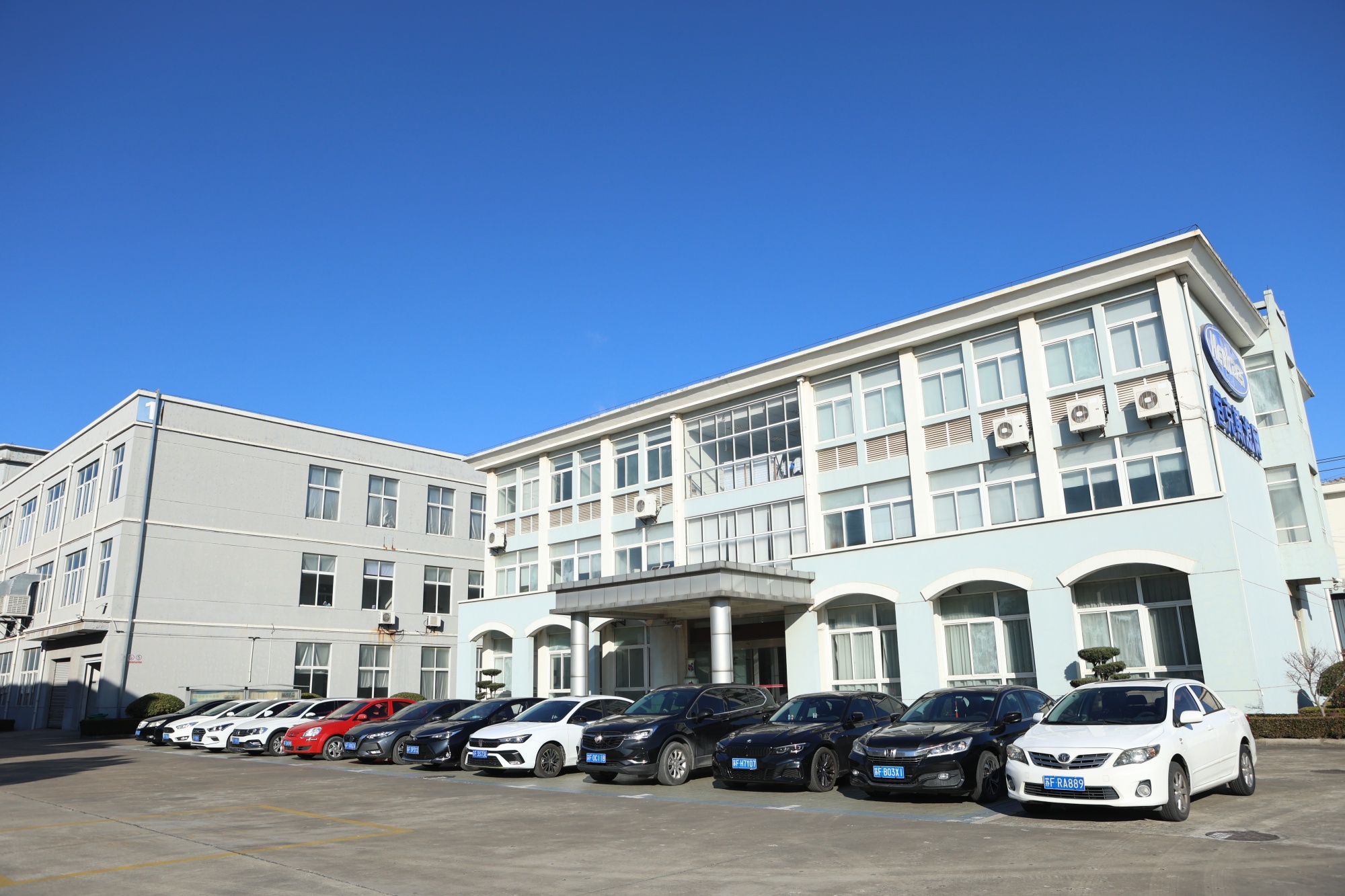
From grade and operating conditions to validated sample: Henkaes engineering support for OEM and ODM air filter projects.
Next step: match the medium to your specification
Send the grade, the standard, the operating conditions and the target resistance, and Henkaes will propose the medium and pleat construction, then produce an engineering sample for validation before production.
Catalogue: E-Catalogue for Air Filter (PDF)
Email: peter@air-filter-china.com | Tel: +86 138-1376-6750
Website: www.airfilterodm.com
Address: No 5169, Bin'gang Ave, Binjiang Subdistrict, Haimen District, Nantong City, Jiangsu Province, China 226113
Have Questions or Need More Details?
Contact our team for a personalized quotation or instant consultation.
Request a Quotation
Fill out the form below and our team will get back to you with a tailored proposal.
WhatsApp Direct Chat
Prefer to chat in real-time? Message us on WhatsApp for instant assistance & quick answers.
- Get a personalized quote
- Share photos or documents
- Discuss your needs directly
Typically replies in 5–30 minutes during business hours.