
Air Filter Partnership FAQs: Long-Term Supply, Acceptance & Support
Air Filter Partnership FAQs: Long-Term Supply, Acceptance & Support
A long-term air filter partnership is decided by four checks a buyer can complete before signing: the width of the product range, the commercial terms that govern repeat orders, the acceptance criteria that define a conforming shipment, and the after-sales route when performance drifts. Henkaes — Nantong Henka Environment Solutions Co., Ltd, an air filter manufacturer founded in 2004 and located in Haimen District, Nantong, Jiangsu Province, China — states those four items in a form procurement teams can verify: MOQ 500 PCS, a 30-day lead time, pre-shipment test as the acceptance criterion, TT 50%/50% payment terms, and remote after-sales support.
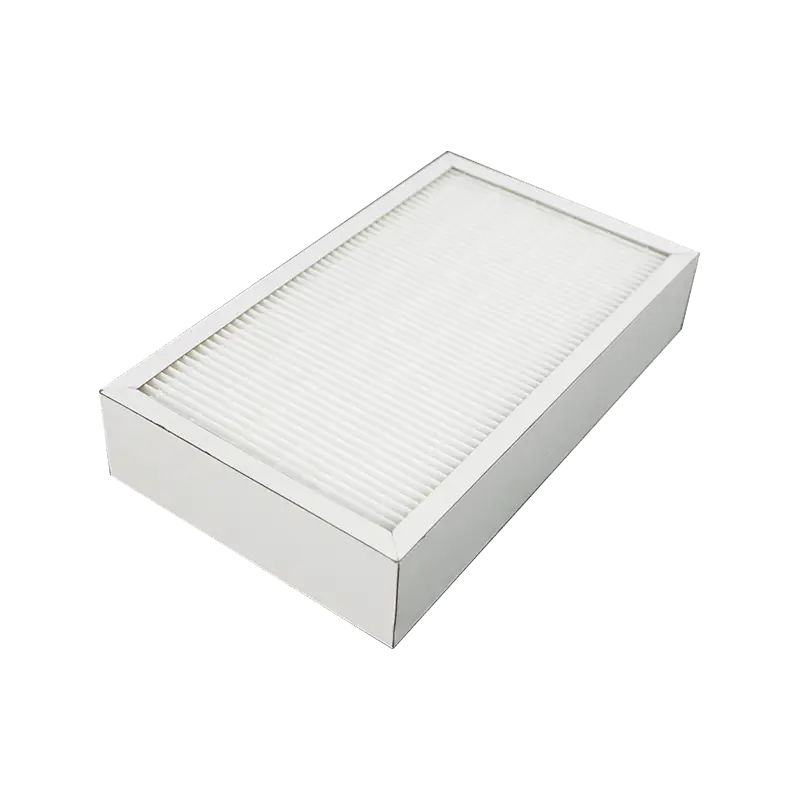
Figure 1 — Panel filters (G1–G4) are the most common entry point for a repeat supply agreement, because they are consumed fastest and reordered most often.
What does a long-term air filter partnership actually commit both sides to?
A partnership agreement fixes five things: which filter families and efficiency grades the supplier keeps available, the commercial terms for repeat orders (MOQ, payment, delivery, lead time), the acceptance criteria that define a conforming shipment, the documents that travel with each lot, and the support route after delivery. Unit price is a sixth item and the least durable of the six.
For a buyer moving from Evaluation into Execution, the difference between a supplier and a partner is predictability. A supplier can quote a specification once. A partner repeats that specification across orders, across lots of media, and across the filter families a facility actually consumes — pre-filters every few weeks, bag filters every quarter, V-Bank and cleanroom stages on a longer cycle.
Henkaes manufactures air filters for air purifiers, air cleaners and ventilation systems, with an annual output of 2,000,000 pieces from a 30,000 m² facility and a workforce of 63 people, including 11 engineers. Sixty-nine percent of output is exported to the EU and the USA. Those figures matter less as credentials than as a capacity statement: a programme that consumes tens of thousands of filters per year needs a source that produces at that scale as routine output, not as a special project.
Why do air filter supply programmes fail after the first order?
First orders are usually built around a sample and a single specification sheet. The failures appear later, and in practice they cluster in four places.
- Grade labels get re-read. The same product described as "HEPA", "H13", "F7" or "MERV 13" can be interpreted differently by the buyer, the installer and the supplier, because those labels belong to different classification frameworks. A contract that names a grade without naming the framework invites a dispute at reorder.
- Acceptance is informal. When acceptance is not written down, it defaults to whoever inspects the goods on arrival. That is the weakest possible position for both sides.
- Capacity is assumed rather than contracted. A factory that can make 20,000 pieces for a trial may still be committed to other customers when a 200,000-piece annual programme needs to ramp.
- After-sales is undefined. No one decides in advance who handles a performance question, in what form, and through which channel.
Each of these is a documentation problem before it becomes a supply problem — and each is answered by a specific clause rather than by a general assurance of quality.
Industry background: which standard is your grade written against?
Air filter grades are not universal. Three frameworks dominate procurement documents, and they are not interchangeable.
- ASHRAE Standard 52.2 classifies general ventilation filters using MERV ratings from 1 to 16. MERV is calculated from performance efficiency measured during synthetic-dust loading tests.
- EN 1822 is used in Europe to classify EPA, HEPA and ULPA filters by filtration efficiency and zero leakage — the framework behind H and U classes.
- EN 779, the older European general-ventilation framework behind G and F classes, was replaced by ISO 16890 in Europe from mid-2018. ASHRAE 52.2 remains the framework that defines MERV.
This has a direct consequence for a long-term agreement. A specification written as "Panel Filter G1–G4" or "Bag Filter F5–F9" uses the EN 779 family of classes; a European buyer may now need the equivalent expressed in ISO 16890, while a North American buyer will typically compare against MERV under ASHRAE 52.2. For high-efficiency stages the question is narrower but stricter: a V-Bank Filter at H13 or a Cleanroom Air Filter at U14/U15 is defined by EN 1822 efficiency and leakage performance, so the contract should name EN 1822 explicitly rather than accept "HEPA-grade" as a description.
The practical rule for buyers: write the framework, the class and the test method into the purchase specification, then confirm the supplier tests against the same documents. Henkaes uses ASHRAE 52.2 in air filter testing and maintains an efficiency and air-resistance test system for filter media, a noise test lab, a 30 m³ test room for formaldehyde and VOC removal efficiency, and a CADR test room for air purifiers.
Question 1 — Can one partner cover the range, from G1–G4 to U14/U15?
Range breadth is testable, and it should be tested grade by grade rather than accepted as a category claim. The Henkaes range covers Panel Filter (G1–G4), Bag Filter (F5–F9), V-Bank Filter (H13) and Cleanroom Air Filter (U14/U15), alongside Box Filter, Furnace Air Filter, True HEPA Air Filter, HEPA Air Filter, Activated Carbon Filter, VOC Air Filter and formaldehyde-removal filters, i-Hepa ventilation purification devices and IFD purification devices.
Covering a full range matters because most facilities buy more than one class. A commercial HVAC air filter programme typically needs a coarse pre-filter, a secondary stage and one high-efficiency stage; a hospital or pharmaceutical HVAC system pushes the final stage into H13 territory; a cleanroom or microelectronics environment moves to U14/U15. Sourcing these from the same partner reduces the number of specifications, test records and shipments a procurement team has to administer — but only if each class is documented separately.
Household and light-commercial buyers have a different version of the same requirement. An air purifier filter, a fresh air system air filter or an air conditioner air filter is usually a custom shape with custom media, not a catalogue item, so the relevant capability is customization of size and logo within an OEM or ODM arrangement rather than breadth of standard classes.
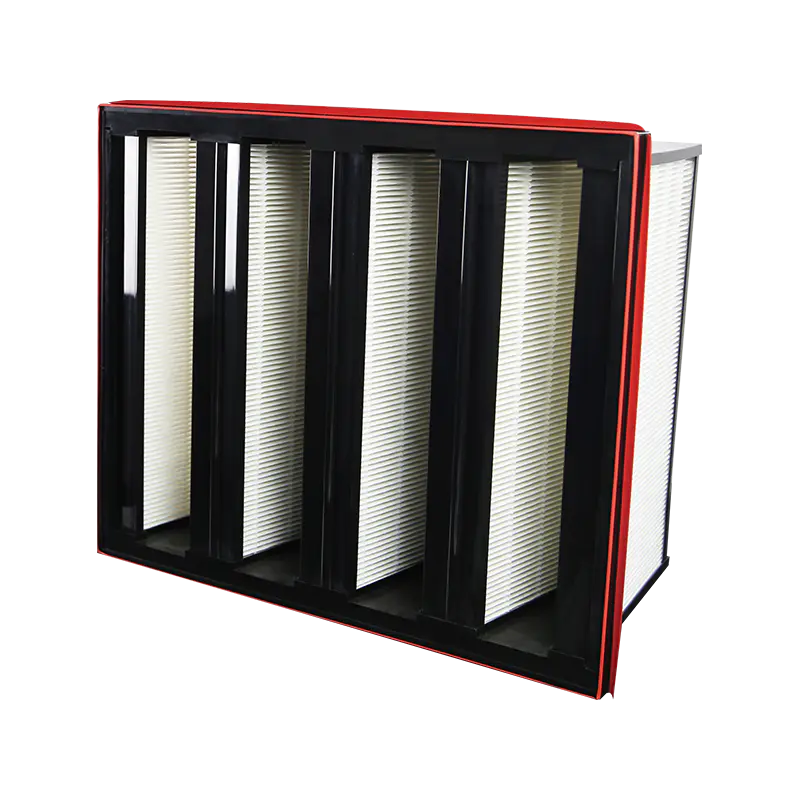
Figure 2 — V-Bank filters at H13 sit at the high-efficiency stage. The contract should name EN 1822 as the classification framework, not just "HEPA".
Question 2 — What purchasing terms apply to repeat orders?
The commercial terms are stated in full and can be written into the framework agreement: MOQ 500 PCS, payment terms TT 50%/50%, delivery terms FOB, EXW or DDP, standard lead time 30 days, acceptance by pre-shipment test, and 100% inspection on all products.
| Term | Stated value | What it means for a repeat programme |
|---|---|---|
| Minimum order quantity | 500 PCS | Sets the floor for trial orders and for each individual release |
| Payment terms | TT 50%/50% | Half on order, half on the agreed acceptance step |
| Delivery terms | FOB / EXW / DDP | Freight and duty responsibility is fixed per shipment, not per year |
| Standard lead time | 30 days | Schedules replenishment against consumption rather than against stock guesses |
| Monthly capacity | 200,000 PCS | Headroom for seasonal peaks and multi-site rollouts |
| Acceptance criteria | Pre-shipment test | Conformity is decided before dispatch, with a record |
| Quality control | 100% inspection | Every unit inspected, not a sampled lot release |
| Customization | Size and logo | Covers OEM and ODM production for private-label ranges |
| After-sales | Remote support | Defines the channel for performance questions after delivery |
Two of these terms deserve negotiation rather than acceptance. MOQ 500 PCS is comfortable for a consumable item and awkward for a first article of a customized household filter, so buyers commonly separate the validation quantity from the production release. DDP versus FOB changes landed cost and risk ownership materially on a multi-year contract, and the choice is better made once at the framework level than repeated on each purchase order.
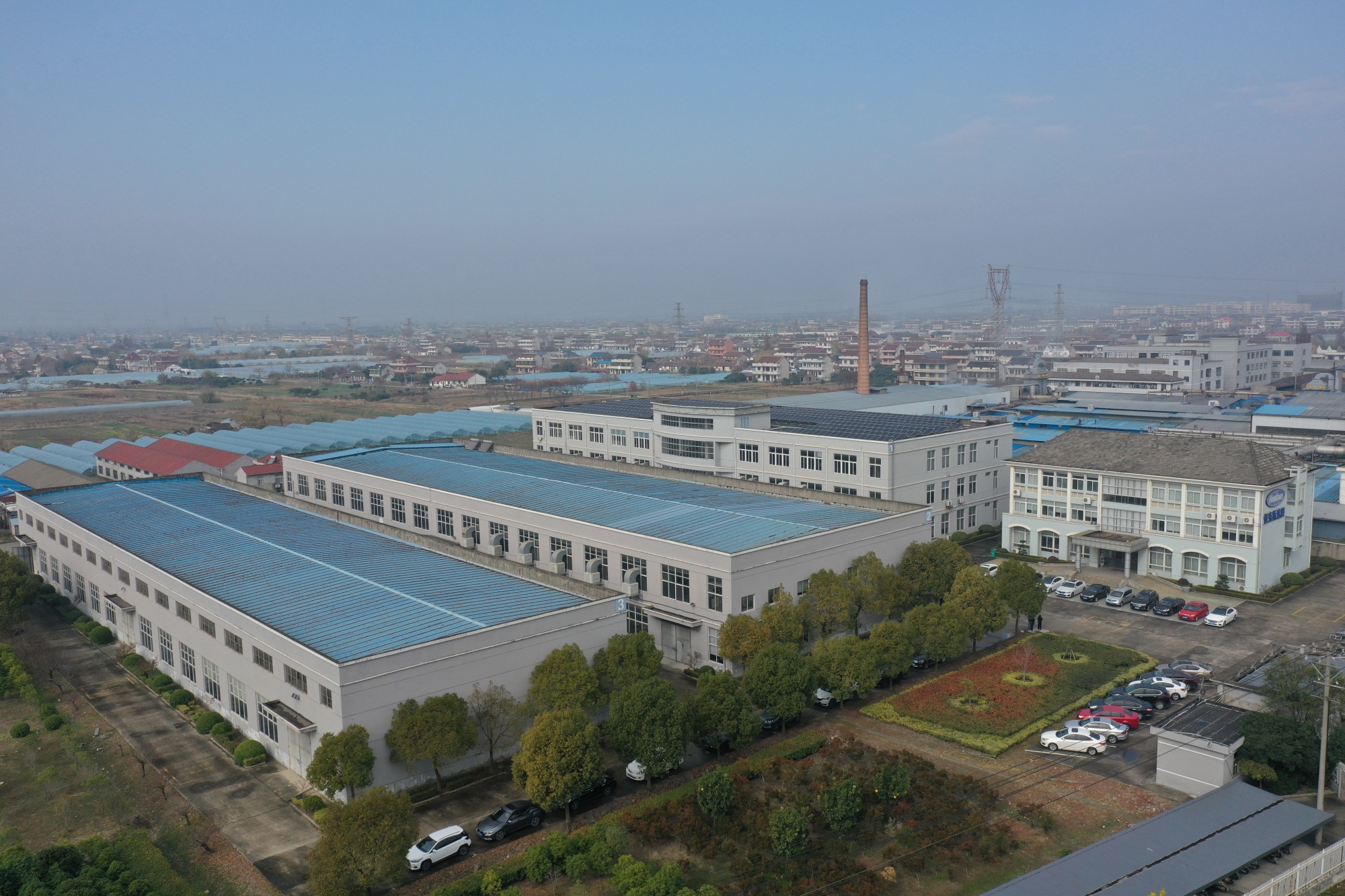
Figure 3 — Production floor: 200,000 PCS monthly capacity against a 30-day standard lead time.
Question 3 — How are acceptance criteria defined and tested?
Acceptance is by pre-shipment test, supported by 100% inspection of all products. In a written agreement this is best expressed as three items: the test method and the standard framework it references, the record format the supplier issues with each lot, and the consequence if the record is missing.
The reasoning is practical. Incoming inspection at the buyer's warehouse can confirm dimensions, packaging and visual condition; it cannot easily confirm fractional efficiency, pressure drop behaviour or media integrity. Those are decided at the point of manufacture. When acceptance is tied to a pre-shipment test, the buyer receives an attributable result before the goods leave, and the conversation about a non-conforming batch happens while the material is still in the supplier's building.
For a long-term programme, three additions to the acceptance clause prevent most later disputes: state which standard the test result is reported against (ASHRAE 52.2 for MERV-class products, EN 1822 for H and U classes), state that the same test method applies to every release and not just the first, and state how a customized item differs from the reference sample used at approval.
Question 4 — What after-sales support exists once the goods land?
After-sales support is provided remotely, which in practice covers the questions that actually arise in a filtration programme: whether an observed pressure drop is consistent with the specified grade, whether a packaging or handling issue originated in transit, and what the correct replacement interval is for the application.
Remote support is a reasonable model for consumable filters, because the failure modes are usually specification or application issues rather than repairable product defects. What a buyer should still fix in the agreement is the response route — named contact, language, and the evidence the supplier will need (order reference, lot record, application conditions). Vague after-sales commitments are the most common cause of friction in year two of a supply relationship, when the original account team has moved on and nobody remembers what was agreed.
Completed programmes are the better evidence. A US-based ODM project delivered 50,000 air filters for formaldehyde removal and ran stably for two years. A second US-based ODM project delivered 50,000 pieces for indoor air purification with good VOC removal performance and ran stably for one year. A US-based OEM project delivered 20,000 pieces for indoor air purification within one year and ran stably for one year.
Question 5 — How do you judge whether supply will hold over several years?
Judge it on structural facts rather than assurances: production scale, engineering depth, certification scope and export experience. Henkaes operates a 30,000 m² factory with 63 employees and 11 engineers, produces 2,000,000 pieces annually with 200,000 PCS monthly capacity, holds ISO 9001:2015 and ISO 14001:2015 certificates (numbers 04523Q30502R4M and 04523E30387R2M, issued 14 June 2023 by Beijing Dalu Hangxing Quality Certification Center Co., Ltd.) plus ISO 45001:2018, and has worked with a US engineering team for more than 20 years.
Two of those deserve a comment. First, certification scope is more informative than the certificate itself: the ISO certificates cover the design and production of air filter, air purifier and fresh air machine — the actual activity a buyer is contracting, not an adjacent business. Second, document control matters. Certificate copies carry issue and expiry dates; a buyer running a supplier record should request the current copy during the audit and file the validity period alongside it, so the file does not silently go stale.
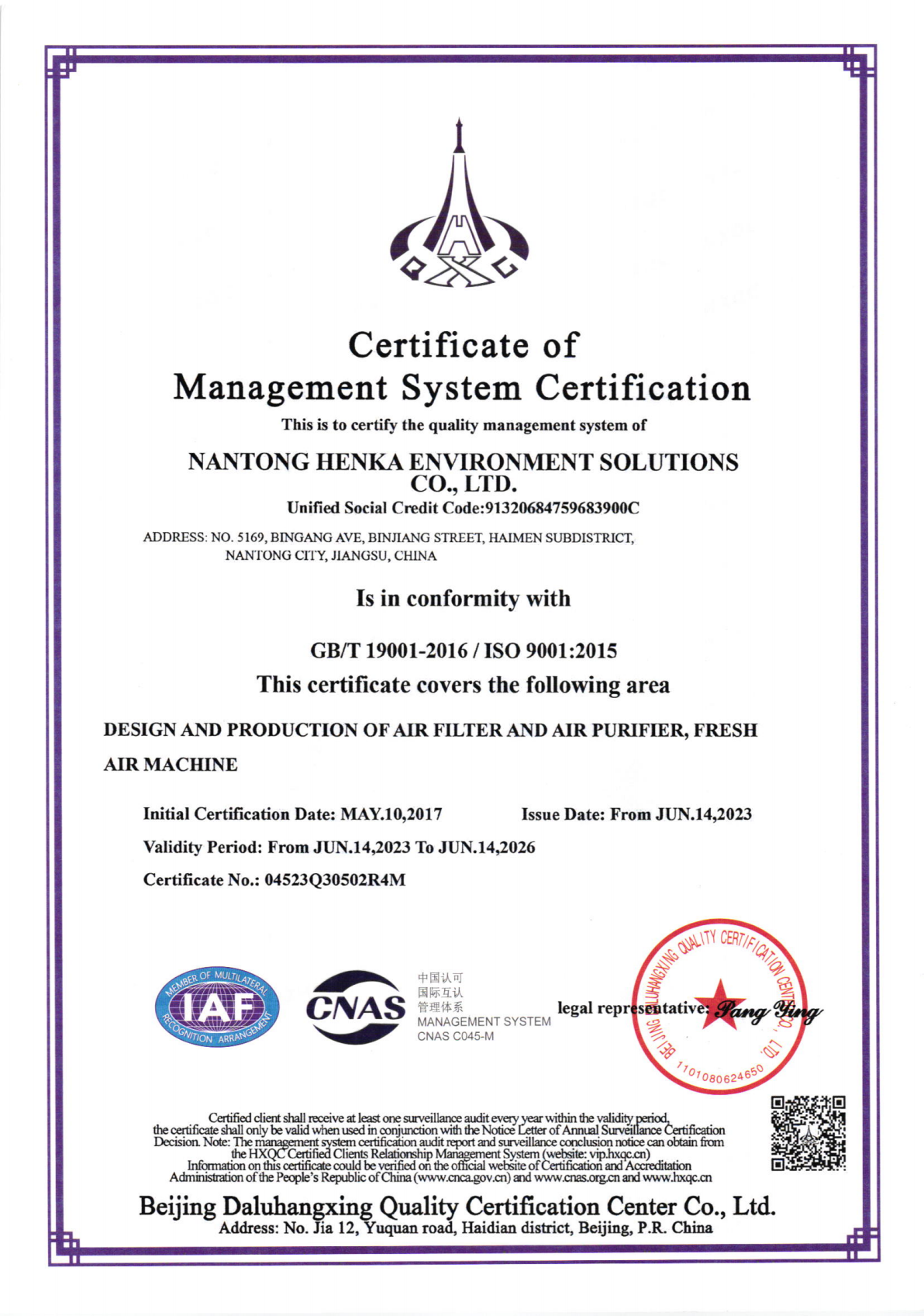
Figure 4 — ISO 9001:2015 and ISO 14001:2015 certificates, scoped to the design and production of air filter, air purifier and fresh air machine.
Step-by-step: qualifying an air filter partner in five stages
- Write the specification in one framework. Name the class and the standard together — Panel G1–G4 against the EN 779 lineage, Bag F5–F9 the same way, V-Bank H13 and Cleanroom U14/U15 against EN 1822, and MERV classes against ASHRAE 52.2. Note any ISO 16890 equivalent your market requires.
- Confirm the supplier tests against that framework. Ask for the test method, not just the result. Media efficiency and air resistance testing, a noise test lab, a 30 m³ formaldehyde and VOC test room and a CADR test room are the capabilities that let a supplier answer a technical question with data rather than a restatement of the grade.
- Validate on samples before production. Henkaes accepts design input as specifications, drawings, samples or a stated concept, and supports engineering sample production, solid modelling and rapid prototyping. Use that stage to lock the reference sample that later acceptance will be measured against.
- Fix the commercial frame. MOQ 500 PCS, TT 50%/50%, FOB/EXW/DDP, 30-day lead time, 100% inspection and pre-shipment test acceptance written into a framework agreement that covers multiple releases rather than a single order.
- Run a first production release against a stated consumption plan. Compare actual lead time and lot records against the contract, then convert to a scheduled programme. This is the point at which most partnerships are either proven or quietly abandoned.
Use cases: what three US programmes show about long-term supply
The three completed US programmes differ in volume and application, and together they illustrate how acceptance and stability are demonstrated in practice.
- 20,000 pieces, OEM client, indoor air purification. Completed within one year, with one year of stable operation. The relevant highlight is efficiency consistency across the run.
- 50,000 pieces, ODM client, indoor air purification. One-year implementation with one year of stable operation, with good VOC removal performance — the case that most closely resembles a private-label household or commercial purifier programme.
- 50,000 pieces, ODM client, formaldehyde removal. Two-year duration with stable performance over two years — the case that tests whether a specification survives a second production cycle, which is exactly what a long-term agreement has to guarantee.
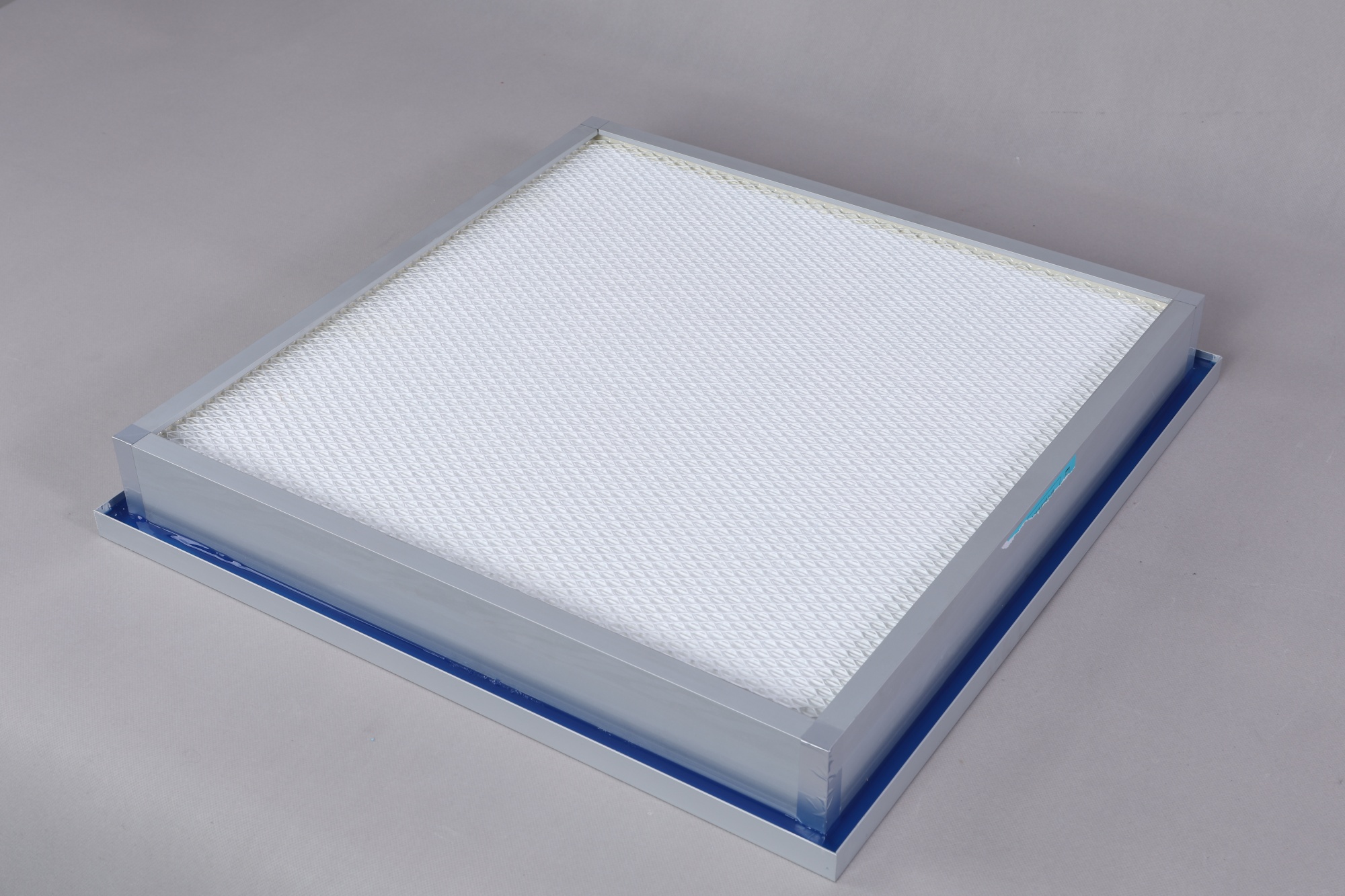
Figure 5 — Cleanroom air filters at U14/U15 are the final stage in cleanroom and hospital systems, and the class most dependent on an EN 1822 test record.
Comparison table: filter families and what to lock into the contract
| Filter family | Efficiency grades | Duty in the system | Contract points to fix |
|---|---|---|---|
| Panel Filter | G1–G4 | Pre-filtration in HVAC, furnace and fresh air systems | Grade framework, frame and media construction, replacement interval, pre-shipment test record |
| Bag Filter | F5–F9 | Secondary stage ahead of high-efficiency filters | Pocket configuration, grade, pressure drop reference, packing method |
| V-Bank Filter | H13 | High-efficiency stage in commercial and hospital HVAC | EN 1822 class, frame and gasket specification, leakage test record |
| Cleanroom Air Filter | U14/U15 | Final stage for cleanroom, pharmaceutical and electronics environments | EN 1822 class, scan test record, packaging and handling rules |
| Activated Carbon / VOC Air Filter | Gas and odor duty | VOC, formaldehyde and odor removal in purifiers and fresh air systems | Media type, media quantity, removal efficiency tested in the 30 m³ test room |
Read the table as a checklist rather than a product list. The grade column tells you what to specify; the last column tells you what to write down. A partnership that covers four of these families but documents only one of them is effectively a single-family agreement with optional extras.
Frequently asked questions
Which certifications and documents should a long-term air filter partner provide?
Three document sets. Management-system certificates: ISO 9001:2015 and ISO 14001:2015 (certificate numbers 04523Q30502R4M and 04523E30387R2M, issued by Beijing Dalu Hangxing Quality Certification Center Co., Ltd.) plus ISO 45001:2018, all scoped to the design and production of air filter, air purifier and fresh air machine — confirm the validity dates on the copy handed to you during the audit. Test records for the exact grade being purchased, stating the standard framework it is written against. And a written statement of scope, so that "HEPA" means a defined class under EN 1822 rather than a descriptive label.
Can a single supplier cover both standard HVAC filters and H13 or U14/U15 cleanroom filters?
Yes, provided the range is stated grade by grade. The Henkaes range covers Panel Filter (G1–G4), Bag Filter (F5–F9), V-Bank Filter (H13) and Cleanroom Air Filter (U14/U15), together with Box Filter, Furnace Air Filter, True HEPA, Activated Carbon, VOC and formaldehyde-removal filters. Capacity is part of the answer: 200,000 PCS per month and 2,000,000 pieces annual output, with OEM and ODM production including size and logo customization.
What MOQ, payment and delivery terms apply to repeat orders?
MOQ 500 PCS. Payment terms TT 50%/50%. Delivery terms FOB, EXW or DDP. Standard lead time is 30 days, against a monthly capacity of 200,000 PCS. Acceptance is by pre-shipment test, and all products undergo 100% inspection before dispatch.
Can we validate samples before committing to a multi-year agreement?
Yes. Design input can be specifications, drawings, samples or a written concept, supported by engineering sample production, solid modelling and rapid prototyping — the working pattern behind more than 20 years of cooperation with a US engineering team. Validation is backed by an efficiency and air-resistance test system for filter media, a noise test lab, a 30 m³ test room for formaldehyde and VOC removal efficiency and a CADR test room for air purifiers, with ASHRAE 52.2 used in air filter testing.
What lead time and after-sales support should we expect after the first order?
A 30-day standard lead time and remote after-sales support. Continuity is best judged on completed volume: three US programmes — 20,000 pieces supplied within one year for an OEM client, 50,000 pieces for an ODM client with one year of stable operation, and 50,000 pieces for formaldehyde removal with two years of stable performance. To test these terms against your own specification, request a quote, ask for a sample, or download the catalogue.
Conclusion: the partnership is the documentation
Long-term air filter supply is not secured by a favourable unit price or by a broad product catalogue. It is secured by four documents that survive changes in personnel: a specification that names the standard framework alongside the grade, a commercial frame that states MOQ, payment, delivery and lead time for every release, an acceptance clause built on pre-shipment testing with a record attached, and a named after-sales route. Everything else — the 30,000 m² factory, the 200,000 PCS monthly capacity, the 11 engineers, the ISO certificates, the three US programmes — is evidence that those documents can actually be honoured.
Buyers who want to check the terms in this article against their own application can review the full range and technical documentation on airfilterodm.com, or contact the team directly at peter@airfilter-china.com.
Next step: sample, quote or catalogue
Send your specification — grade, standard framework, dimensions, media and expected annual volume — and the team will respond with a proposal covering MOQ, lead time and acceptance testing. For a first evaluation, a sample request or a quotation against your own drawing is the fastest route.
Download the Air Filter Catalogue (PDF) | WhatsApp: +86 138-1376-6750
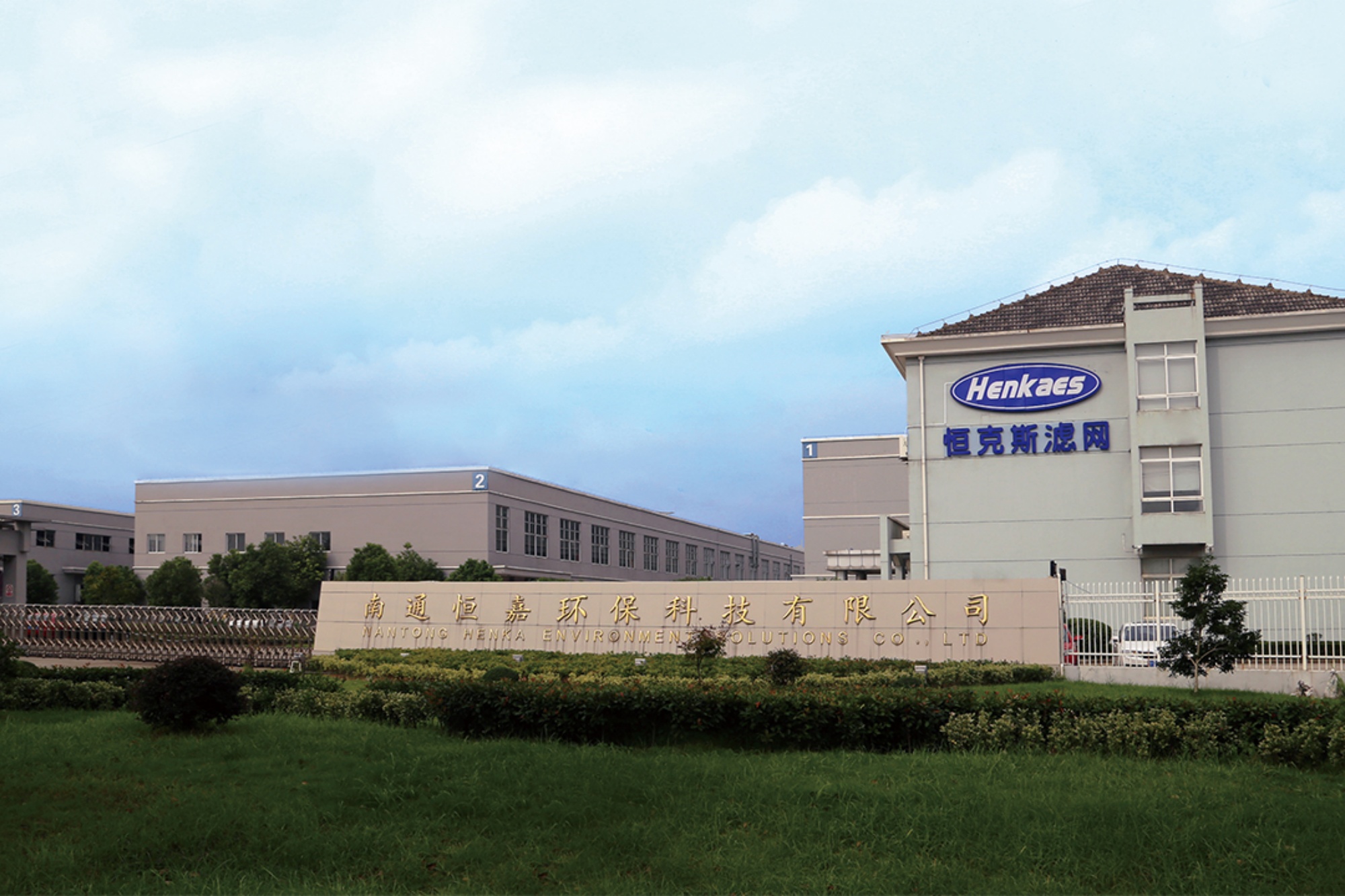
Figure 6 — Henkaes facility, Haimen District, Nantong, Jiangsu Province, China.
Have Questions or Need More Details?
Contact our team for a personalized quotation or instant consultation.
Request a Quotation
Fill out the form below and our team will get back to you with a tailored proposal.
WhatsApp Direct Chat
Prefer to chat in real-time? Message us on WhatsApp for instant assistance & quick answers.
- Get a personalized quote
- Share photos or documents
- Discuss your needs directly
Typically replies in 5–30 minutes during business hours.