Efficiency Grades Explained: Matching ISO 16890 and MERV to Your Process
Efficiency Grades Explained: Matching ISO 16890 and MERV to Your Process
Short answer: an air filter's efficiency grade tells you two things at once — which particle sizes the filter is engineered to capture, and which test method was used to prove it. The Henkaes air filter range declares grades in two families: European-style classes (G1–G4, F5–F9, H13, U14/U15) and ASHRAE 52.2 MERV ratings (MERV 8, MERV 11, MERV 13, MERV 15, MERV 16). Matching a grade to your process means matching three variables: the particle challenge, the media construction that can hold that efficiency, and the standard your specification actually names.
Most sourcing errors in air filtration do not come from a bad filter. They come from a misread grade: an HVAC air filter specified as “H13 equivalent to MERV 16”, a hospital air filter chosen from a brochure comparison, or a cleanroom air filter ordered against a class letter that belongs to a different test family. This guide decodes the grade systems used across the Henkaes range so that buyers, engineers and OEM/ODM partners can select on verified class data rather than on assumed equivalences.
The Cross-Standard Problem: Why “H13 = Which MERV?” Has No Clean Answer
Efficiency grades are not universal. They are the output of a specific test method, and different test methods measure different things. ASHRAE 52.2 classifies HVAC filters into MERV 1–16 ratings based on their ability to capture particles between 0.3 and 10 micrometers (ASHRAE). EN 1822, and its international counterpart ISO 29463, classify HEPA and ULPA filters by their efficiency at the Most Penetrating Particle Size (MPPS), with H14 requiring 99.995% efficiency (MANN+HUMMEL Air Filtration).
That difference matters commercially. A MERV rating is a curve-based rating across a particle size band; an EN 1822 class is a single-point efficiency at the hardest particle size to capture. Because the test aerosols, the particle size bands and the pass criteria differ, a grade from one system cannot be copied into the other. So the practical decision rule is simple:
- Never convert a grade. If your specification names ASHRAE 52.2, quote MERV. If it names EN 1822 or ISO 29463, quote H or U class. If it names a general-ventilation framework, quote that framework's own reported value.
- State the standard next to the grade on the purchase order. “H13” without a standard reference is an incomplete specification; “H13 per EN 1822” is a testable one.
- Ask for the test method, not just the number. Henkaes tests air filters according to ASHRAE 52.2 and operates an efficiency and air resistance test system for filter media in-house.
This is also where ISO 16890 sits in the conversation. ISO 16890 is the general-ventilation framework that replaced EN 779 in Europe, and it describes filters by the particulate matter range they are intended to address rather than by a single class letter. The Henkaes product data for general ventilation filters is declared in the European G and F class families and in ASHRAE MERV ratings. If your project specification calls for ISO 16890 reporting, request test data reported under that method — do not convert an F-class or MERV figure into an ISO 16890 value.
Industry Background: Three Standards Frameworks, One Filtration Market
Buyers rarely shop inside a single standard. A European cleanroom spec, a North American rooftop unit and a household air purifier programme can all land on the same purchasing desk in the same quarter. Understanding which framework governs which product category removes most of the confusion.
Market context reinforces why grade literacy now matters commercially. The global air filters market was valued at USD 17.08 billion in 2025 and is projected to reach USD 34.66 billion by 2034 (Fortune Business Insights). Within air purifier technology, HEPA filters held a 41.7% market share in 2025 (Grand View Research), which reflects how thoroughly high-efficiency filtration has moved from specialist cleanroom procurement into mainstream HVAC and household appliance supply chains.
| Framework | What it grades | Declared in the Henkaes range |
|---|---|---|
| ASHRAE 52.2 (MERV 1–16) | HVAC filters, rated on capture of particles between 0.3 and 10 micrometers | MERV 8, MERV 11, MERV 13, MERV 15, MERV 16 |
| EN 1822 / ISO 29463 | HEPA and ULPA filters, rated by efficiency at the Most Penetrating Particle Size | H13, U14/U15 |
| European general-ventilation class families (G and F classes) | General ventilation filters for coarse and fine particulate | G1–G4, F5, F6, F8, F9 |
| Gas-phase ratings | Adsorption capacity of activated carbon media | CTC70, CTC80, CTC90, CTC100 |
How Efficiency Grades Map Across the Henkaes Air Filter Range
Henkaes is the brand of Nantong Henka Environment Solutions Co., Ltd., an air filter manufacturer founded in 2004 and located in Haimen City, Jiangsu Province, China, producing filters for air purifiers, air cleaners and ventilation systems. The range is organised so that a buyer can move from coarse primary filtration to HEPA-class filtration using declared, standard-referenced grades rather than informal “high efficiency” language.
Coarse and fine HVAC grades: G1–G4 and F5–F9
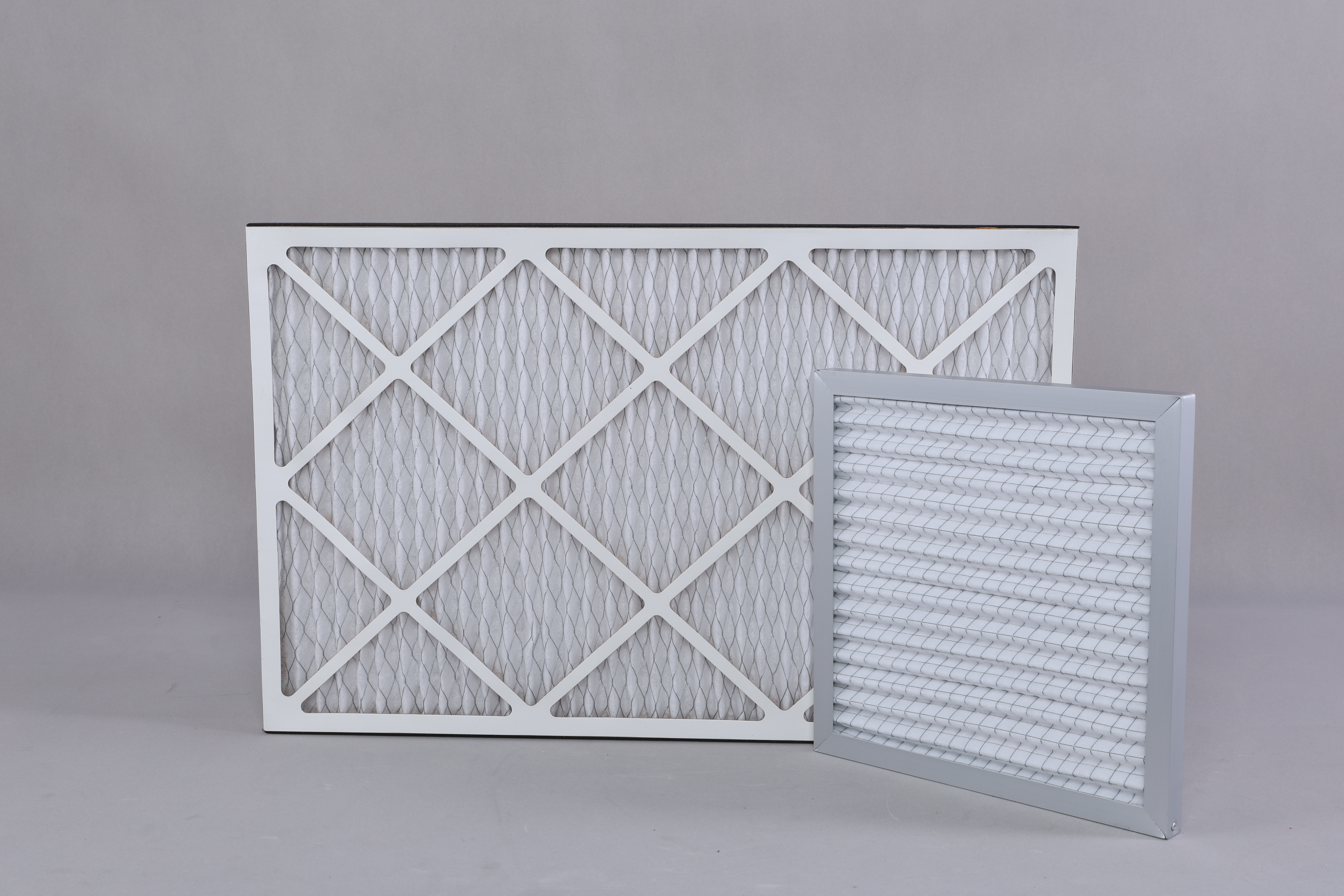
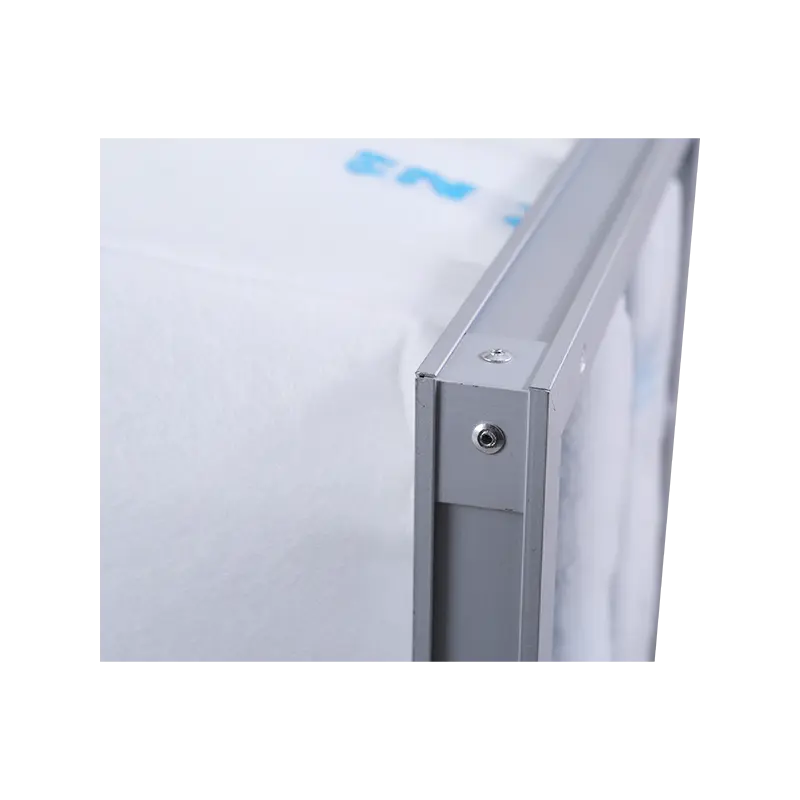
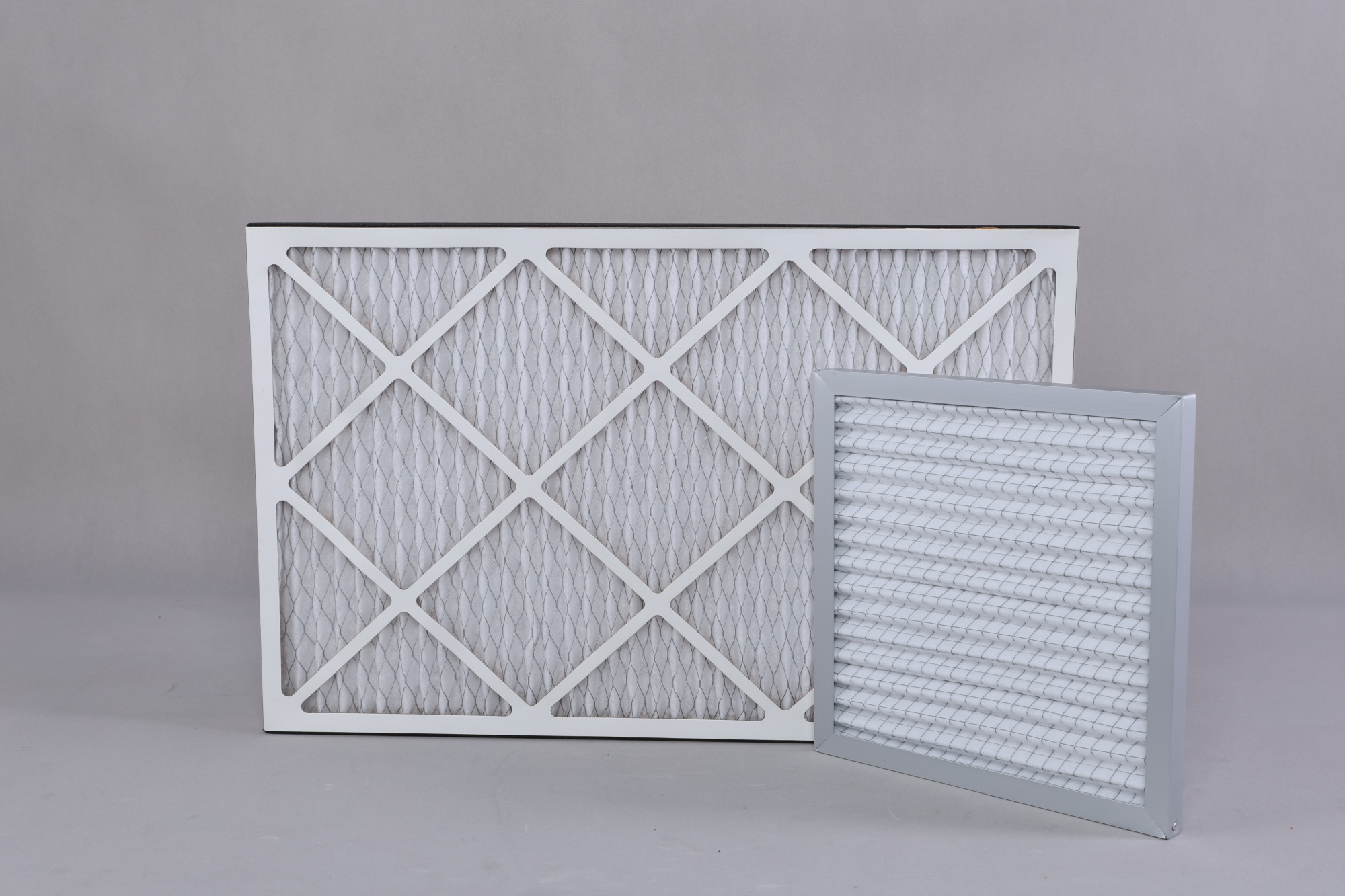
The Panel Filter is the primary-effect air filter in the range, declared at efficiency range G1–G4 and built from fiberglass and polypropylene (PP). It is intended for commercial building ventilation and serves as the first stage that protects downstream, more expensive filter stages. The Bag Filter steps up to fine filtration, declared at F5, F6, F8 and F9, and is made from microfine fiberglass for commercial and public buildings including airports, hotels, museums and restaurants.
MERV grades for HVAC: MERV 8 through MERV 16
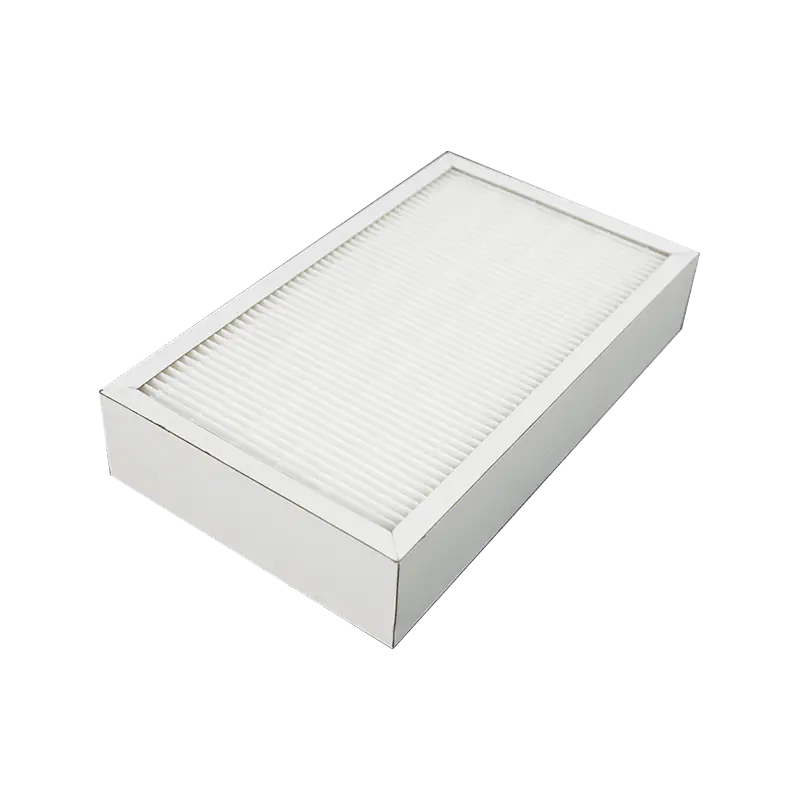
For specifications written under ASHRAE 52.2, two products carry the range. The Furnace Air Filter is a MERV 11 air filter option within a family that also covers MERV 8 and MERV 13, made from polypropylene (PP) and aimed at commercial and public buildings such as airports, hotels, museums and restaurants. The Box Filter covers the higher end at MERV 15 and MERV 16, built from microfiberglass and intended for pharmaceutical plants, hospitals and food and beverage production sites.
That split is deliberate. MERV 8–13 filters typically sit in general ventilation where dust loading and service life dominate the decision; MERV 15–16 filters sit where the particle challenge is stricter and where a hospital air filter or a pharmaceutical production air filter has to hold a higher capture rate between change-outs.
HEPA and ULPA classes: H13 to U14/U15
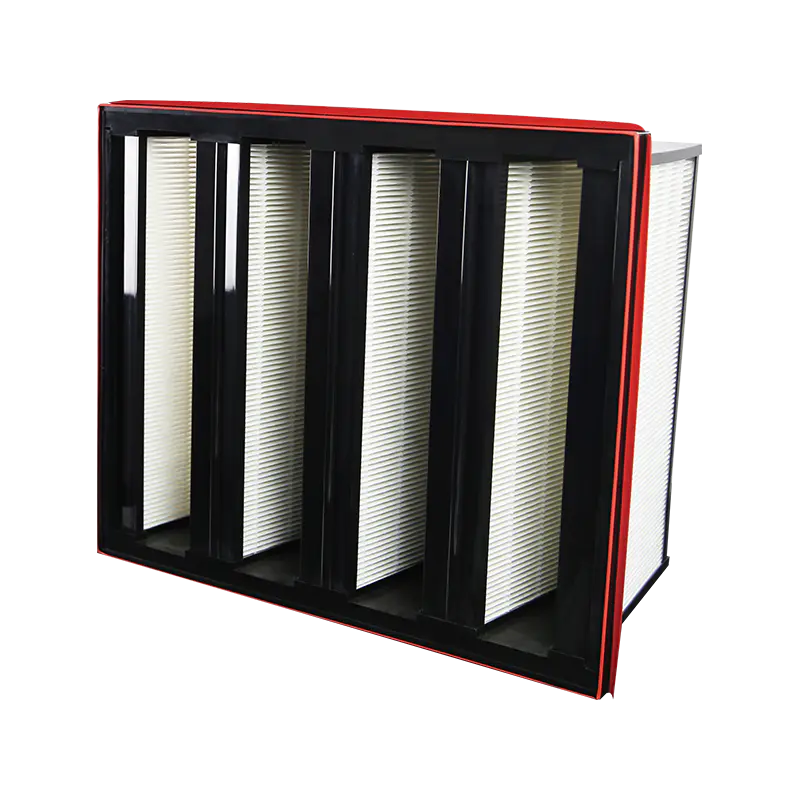
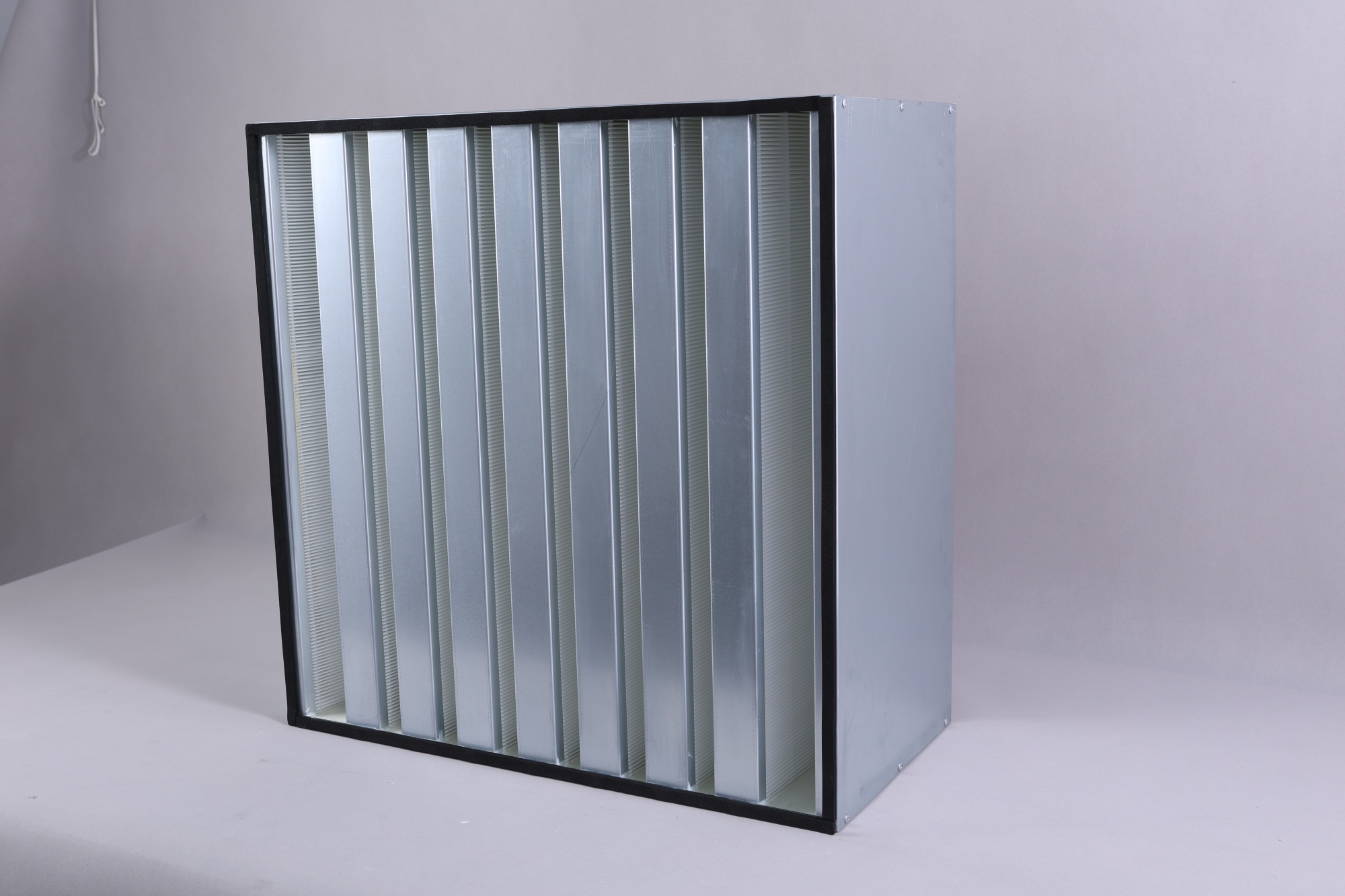
The high-efficiency tier in the range is expressed in EN 1822 class letters. The V-Bank Filter is declared at H13 and combines fiberglass and polypropylene (PP) for commercial and public buildings. The HEPA Air Filter is declared at H13 using fiberglass and PP for household air purifiers and air cleaners, while the True HEPA Air Filter is declared at ≥99.97% for the same household appliance applications. At the top of the range, the Cleanroom Air Filter is declared at U14/U15 using microfiberglass and PTFE, and is intended for cleanroom environments such as data centers and microelectronics manufacturing.
Gas-phase and household grades: carbon adsorption values and catalyst media
Particulate grades do not cover odours, VOCs or reactive gases, and this is where many household air purifier filter programmes fail their own performance targets. The Activated Carbon Filter in the range is declared by carbon adsorption grade — CTC70, CTC80, CTC90 and CTC100 — and is made from activated carbon for air purifiers and air cleaners. The VOC Air Filter goes further, combining activated carbon with a special catalyst to remove volatile organic compounds and is intended for the same household appliance applications. Whether you specify a VOC removal air filter or a standard activated carbon air filter should be driven by the target gas, not by cost alone.
Aerospace: H13 in a cabin environment
The B737/B757 Electronic Cabin Air Filter is an aerospace air filter made of microfiberglass and declared at H13 efficiency per EN 1822, designed for cabin ventilation in commercial aircraft such as the B737 and B757. It is a useful reminder that the same class letter can appear in a completely different operating environment — and that construction, not the letter alone, determines whether the filter survives that environment.
Media Construction Sets the Efficiency Ceiling
A grade is a claim; the media is the mechanism. The physical construction of the filter — fiberglass, polypropylene, microfine fiberglass, microfiberglass with PTFE, or activated carbon — determines which efficiency level is achievable and how long it holds in service.
- Polypropylene (PP) media is used in the Furnace Air Filter (MERV 8–13) and in combination with fiberglass in the Panel Filter (G1–G4) and V-Bank Filter (H13). It suits applications where dust holding behaviour and structural stability in a rigid frame matter.
- Microfine and microfiberglass media carry the denser fine and high-efficiency grades: the Bag Filter (F5–F9), the Box Filter (MERV 15–16) and the B737/B757 Electronic Cabin Air Filter (H13).
- Microfiberglass with PTFE supports the highest class in the range, the Cleanroom Air Filter at U14/U15, where the media has to hold ultra-fine particulate capture in a controlled environment.
- Activated carbon and catalyst media address the gas phase rather than the particulate phase, which is why carbon CTG grades and VOC catalyst specifications sit alongside — not instead of — particulate grades.
Because media characteristics decide real performance, Henkaes operates an efficiency and air resistance test system for filter media, a noise test lab, a 30 m³ test room for formaldehyde and VOC removal efficiency, and a CADR test room for air purifiers, with air filters tested according to ASHRAE 52.2. The company holds ISO14001:2015, ISO9001:2015 and ISO45001:2018 certifications.
Step-by-Step: Matching a Grade to Your Process
- Define the contaminant, not the filter. Decide whether the process needs dust and fine particle capture, pollen capture, VOC and odour removal, or removal of specific harmful gases. Application data in the Henkaes range distinguishes these roles explicitly, for example VOC, pet smell and special harmful gas removal for household air purifier projects.
- Define the environment. Commercial and public buildings, hospitals and pharmaceutical plants, food and beverage production sites, cleanrooms and data centers, household appliances and aircraft cabins each carry different class expectations and different service conditions.
- Fix the standard family your specification uses. ASHRAE 52.2 for MERV-based HVAC specifications, EN 1822 / ISO 29463 for HEPA and ULPA class specifications, and the appropriate general-ventilation framework where the project names one.
- Select the grade from declared data. Use the grade map below rather than an assumed equivalence — MERV 8/11/13 for the Furnace Air Filter, MERV 15/16 for the Box Filter, H13 for the V-Bank and HEPA products, U14/U15 for the Cleanroom Air Filter.
- Confirm media and, where relevant, add a gas-phase stage. If the challenge includes odours or VOCs, pair a particulate filter with an activated carbon or VOC filter rather than pushing the particulate grade higher.
- Confirm dimensions and mounting. Customized dimension is a recurring special requirement across Henkaes project scenarios, so confirm the physical interface before finalising the grade.
- Validate before mass production. Request efficiency and air resistance test data, and use engineering samples where the application is new. Henkaes provides complete engineering design services including engineering sample production, production and testing.
- Verify the supplier side. Check the quality management and environmental certifications, the test method used, and the testing facilities behind the declared grade — the grade is only as reliable as the laboratory that produced it.
Use Cases: Which Grade Fits Which Process
Commercial and public buildings — HVAC air filter replacement
Airports, hotels, museums and restaurants are served in the Henkaes range by the Panel Filter (G1–G4), the Bag Filter (F5–F9), the Furnace Air Filter (MERV 8, MERV 11, MERV 13) and the V-Bank Filter (H13). These projects normally operate under normal indoor environment conditions with a fresh air system as supporting equipment, and typically combine a coarse primary stage with a finer downstream stage.
Hospitals, pharmaceutical plants and food and beverage sites
Where the process demands verifiable fine particle control, the Box Filter at MERV 15 and MERV 16 is the specified product in the range, made of microfiberglass and intended for pharmaceutical plants, hospitals and food and beverage production sites. Pharmaceutical plant building projects and food and beverage plant applications both appear in the Henkaes application data, with customized dimensions as a standard special requirement.
Cleanrooms, data centers and microelectronics
Cleanroom design projects call for the Cleanroom Air Filter at U14/U15, built from microfiberglass and PTFE. The role in these projects is capturing dust and fine particles under normal indoor environmental conditions with a fresh air system; the class selection, not the frame, is what protects the process.
Household air purifiers and air cleaners
Household appliance projects combine particulate and gas-phase filtration: a HEPA Air Filter (H13) or True HEPA Air Filter (≥99.97%) for dust, fine particles and pollen, plus an Activated Carbon Filter (CTC70–CTC100) or VOC Air Filter where odours, pet smell or volatile organic compounds must be addressed. Household air purifier filter projects in the Henkaes data are commonly applied in the United States and the Netherlands, and typically require customized dimensions.
Aerospace and aviation cabin filtration
Boeing B737/B757 filter replacement projects use the Electronic Cabin Air Filter at H13 per EN 1822, capturing dust and fine particles under aircraft cabin working conditions with a fresh system as supporting equipment.
Grade Map: Henkaes Air Filter Range at a Glance
| Model | Declared grade(s) | Media | Filtration role | Typical application |
|---|---|---|---|---|
| Panel Filter | G1–G4 | Fiberglass, polypropylene (PP) | Primary effect, coarse particulate | Commercial and public building ventilation |
| Bag Filter | F5, F6, F8, F9 | Microfine fiberglass | Fine particulate | Airports, hotels, museums, restaurants |
| Furnace Air Filter | MERV 8, MERV 11, MERV 13 | Polypropylene (PP) | Dust and fine particles | Airports, hotels, museums, restaurants |
| Box Filter | MERV 15, MERV 16 | Microfiberglass | Fine particles at high efficiency | Pharmaceutical plants, hospitals, food and beverage production sites |
| V-Bank Filter | H13 | Fiberglass, polypropylene (PP) | High-efficiency particulate | Airports, hotels, museums, restaurants |
| Cleanroom Air Filter | U14/U15 | Microfiberglass, PTFE | Ultra-fine particulate | Cleanrooms, data centers, microelectronics |
| HEPA Air Filter | H13 | Fiberglass, polypropylene (PP) | High-efficiency particulate | Air purifiers, air cleaners |
| True HEPA Air Filter | ≥99.97% | Fiberglass, polypropylene (PP) | High-efficiency particulate | Air purifiers, air cleaners |
| Activated Carbon Filter | CTC70, CTC80, CTC90, CTC100 | Activated carbon | Odour and gas adsorption | Air purifiers, air cleaners |
| VOC Air Filter | Special catalyst | Activated carbon and special catalyst | VOC removal | Air purifiers, air cleaners |
| B737/B757 Electronic Cabin Air Filter | H13 per EN 1822 | Microfiberglass | Cabin dust and fine particles | B737/B757 cabin ventilation |
Reading note: grades in the table are declared grades from Henkaes product data, expressed in the standard family the product belongs to. MERV values and EN 1822 / ISO 29463 class letters are produced by different test methods and are not interchangeable. Where a project requires ISO 16890 reporting, request test data generated under that method.
What Changes When You Move Up a Grade
Higher efficiency is not a free upgrade, and buyers who treat the grade ladder as purely additive usually discover the trade-off later in operation.
- Media density and airflow resistance. Filters at MERV 15–16 or H13/U14/U15 use denser microfiberglass or PTFE-based media than G and F class products. Denser media generally means higher resistance to airflow, which has to be accounted for in fan selection and system design. Henkaes measures filter media efficiency and air resistance as part of its in-house testing.
- Service interval and staging. High-efficiency elements are protected by upstream stages — which is why the Panel Filter (G1–G4) and Bag Filter (F5–F9) exist alongside the Box Filter and V-Bank products in the same commercial building portfolio.
- Correct grade versus higher grade. A MERV 11 air filter applied where MERV 15 is required will underperform; a U14/U15 cleanroom air filter applied where F8 is sufficient adds cost without adding process value.
- Standard fit. The most expensive error is a grade declared in the wrong standard family for the project specification. Confirm the standard first, then the number.
Henkaes brings more than 20 years of experience working with a US engineering team to this selection process, with an 11-engineer R&D team, a 30,000 m² facility, approximately 63 staff and an annual production capacity of 2,000,000 pieces. Approximately 69% of products are exported, with major markets in Europe and the USA — which is why the range is declared in both European class families and ASHRAE MERV ratings rather than in a single system.
Frequently Asked Questions
Is H13 the same as a MERV rating?
No. H13 is a class in the EN 1822 / ISO 29463 family, where HEPA and ULPA filters are classified by efficiency at the Most Penetrating Particle Size, and H14 in that same system requires 99.995% efficiency. MERV is a rating in the ASHRAE 52.2 family, which classifies HVAC filters from MERV 1 to MERV 16 based on their ability to capture particles between 0.3 and 10 micrometers. Because the test methods differ, an H13 class and a MERV value are not convertible into one another — the correct practice is to specify the standard and the grade together, for example “H13 per EN 1822”.
Which efficiency grades does the Henkaes air filter range declare?
The range declares European-style classes and ASHRAE MERV ratings alongside gas-phase grades. Particulate grades are G1–G4 for the Panel Filter, F5/F6/F8/F9 for the Bag Filter, MERV 8/MERV 11/MERV 13 for the Furnace Air Filter, MERV 15/MERV 16 for the Box Filter, H13 for the V-Bank Filter, HEPA Air Filter and B737/B757 Electronic Cabin Air Filter, ≥99.97% for the True HEPA Air Filter, and U14/U15 for the Cleanroom Air Filter. Gas-phase grades are CTC70, CTC80, CTC90 and CTC100 for the Activated Carbon Filter, and a special-catalyst specification for the VOC Air Filter.
What grade should a hospital, pharmaceutical plant or food production site specify?
In the Henkaes range, the Box Filter is the product intended for pharmaceutical plants, hospitals and food and beverage production sites, declared at MERV 15 and MERV 16 and made of microfiberglass. These environments also typically require customized dimensions, and the filters operate under normal indoor environmental conditions with a fresh air system as supporting equipment. For cleanroom-adjacent processes such as microelectronics and data centers, the Cleanroom Air Filter at U14/U15 is the higher-class option.
Can Henkaes supply customized dimensions and OEM/ODM air filters?
Yes. Henkaes provides OEM and ODM air filter services and complete engineering design services, including the design of various filter specifications, engineering sample production, production and testing, solid modelling and rapid prototyping. Products can be designed from customer specifications, drawings, samples or concepts, and customized dimensions are a standard special requirement recorded across Henkaes project scenarios. Manufacturing is supported by ISO14001:2015, ISO9001:2015 and ISO45001:2018 certifications, with air filters tested according to ASHRAE 52.2.
How do I request a sample, quotation or the full catalogue?
Start with your process requirement rather than a part number: the contaminant, the environment, the standard your specification uses and the required grade. Henkaes can then confirm the closest declared grade, the media, the dimensions and the sampling route. For samples, quotations or technical questions, contact the Henkaes team by email at peter@airfilter-china.com or by phone at +86 138-1376-6750, and download the full product catalogue here: E-Catalogue for Air Filter.
Conclusion: Match the Standard First, Then the Grade
Efficiency grades only work when three things line up: the particle or gas challenge your process actually has, the media construction that can hold the required efficiency, and the standard family your specification names. In the Henkaes range, that alignment produces a clear path — G1–G4 and F5–F9 for general ventilation staging, MERV 8–13 for standard HVAC duty, MERV 15–16 for hospitals, pharmaceutical plants and food production, H13 for high-efficiency HVAC and household HEPA applications, U14/U15 for cleanrooms, data centers and microelectronics, and carbon or catalyst media where the challenge is gas-phase rather than particulate.
Buyers who avoid grade conversion errors and specify the standard alongside the class get a filter that performs as the specification intends. Buyers who convert grades by assumption get a filter that passes inspection and fails the process.
Next Step: Send Your Process Requirement
Tell us the contaminant, the environment and the standard your specification uses — MERV, EN 1822 / ISO 29463 or general-ventilation class — and the Henkaes engineering team will confirm the matching grade, media and dimensions, then arrange samples for validation.
Email: peter@airfilter-china.com · Phone: +86 138-1376-6750 · Website: www.airfilterodm.com
Download the catalogue: E-Catalogue for Air Filter 1 (PDF)