
Ranking Air Filter Efficiency Grades: U14/U15, H13, MERV 15/16 and Where They Belong
Ranking Air Filter Efficiency Grades: U14/U15, H13, MERV 15/16 and Where They Belong
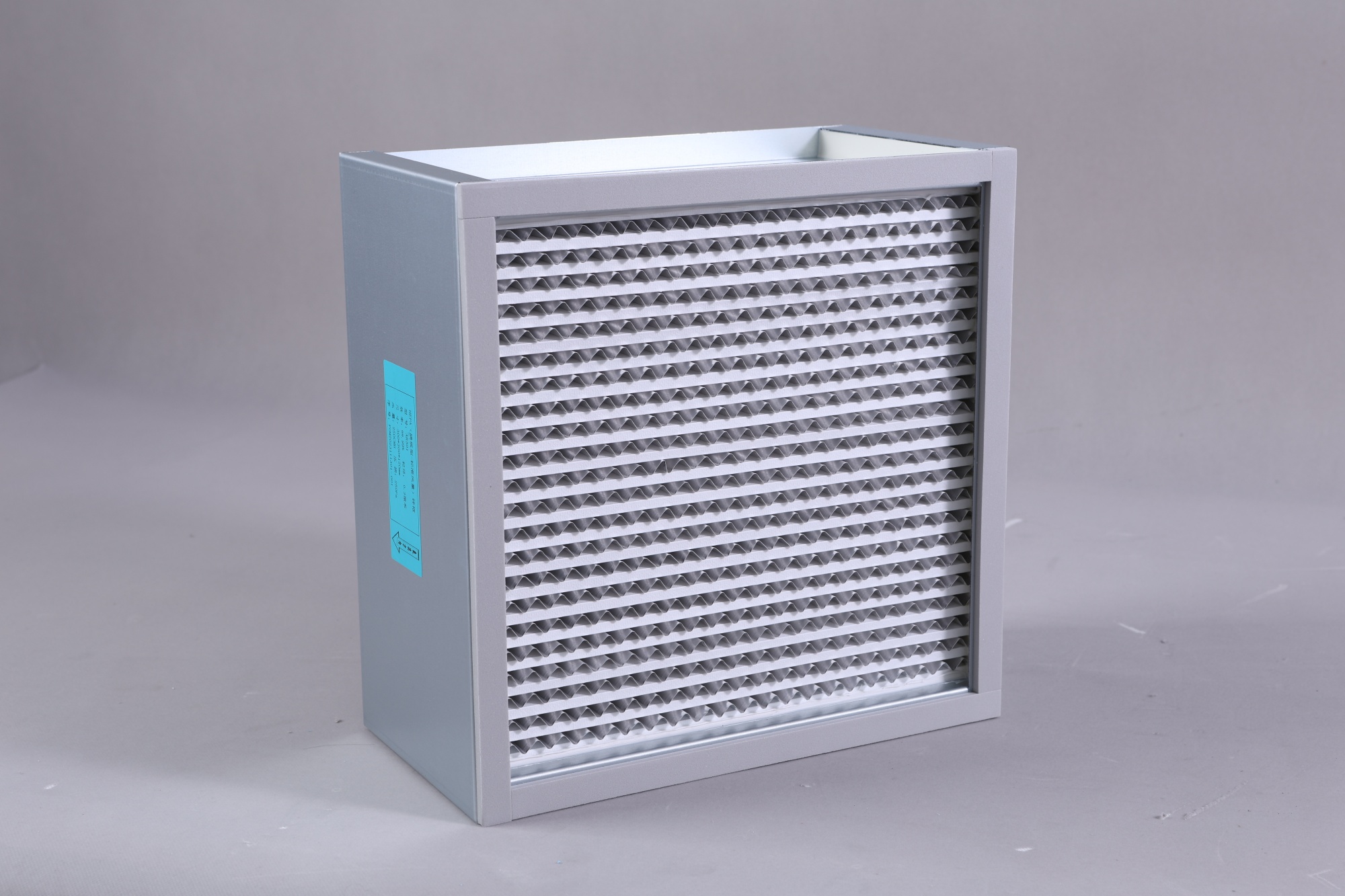
Air filter efficiency grades do not sit on a single ruler. In the Henkaes product range the ladder runs from U14/U15 cleanroom filters at the top, through H13 V-Bank, aerospace cabin and household HEPA filters, down through MERV 15/16 box filters, MERV 8/11/13 furnace filters, F5–F9 bag filters and G1–G4 panel filters at the base. Each tier belongs to a different test framework: the EN 1822 / ISO 29463 family governs the H and U classes used in HEPA and ULPA filtration, ASHRAE 52.2 governs MERV ratings on HVAC filters, and the G and F bands are the coarse and fine designations used in European HVAC specification. This ranking places every tier in order, states the media each one is built from, and names the industry it fits — so OEM buyers and procurement teams can match a grade to an application without over-specifying or under-specifying.
Problem Definition: Why Air Filter Grades Get Mismatched
The most common sourcing error in air filtration is treating grade labels as points on one continuous scale. A MERV 15 filter and an H13 filter are not adjacent steps of the same ladder. MERV ratings come from ASHRAE 52.2, which classifies HVAC filters from MERV 1 to MERV 16 according to their ability to capture particles between 0.3 and 10 micrometres. H and U class labels come from the EN 1822 / ISO 29463 family, which classifies HEPA and ULPA filters by their efficiency at the most penetrating particle size — under that framework, for example, an H14 filter is defined as requiring 99.995% efficiency. Two filters can therefore both be called “high efficiency” while being measured against entirely different criteria.
That gap produces two predictable failure modes. Over-specification pushes a higher grade into a system that was never designed for it: the media is denser, the pressure drop is higher, the fan works harder, and filter change intervals shorten. Under-specification is the more expensive mistake: a pharmaceutical plant, hospital, food and beverage production site or cleanroom that receives a filter below the grade written into its process specification fails validation, and the cost lands on re-qualification rather than on the filter itself.
A third problem is supply fragmentation. Most projects need more than one tier at once — a coarse pre-filter, an intermediate stage and a final stage. When those tiers come from separate suppliers, the buyer manages separate dimension sets, separate documentation packages, separate lead times and separate quality systems for what is functionally one filtration train.
Industry Background: Demand Is Moving Toward Higher Grades
The commercial pressure behind grade selection is measurable. Fortune Business Insights values the global air filters market at USD 17.08 billion in 2025 and projects it to reach USD 34.66 billion by 2034. Research houses differ slightly on the 2025 base — Grand View Research places it at USD 18.63 billion — because segment definitions vary, but the direction is consistent across sources.
Within that market, the growth is concentrated in higher-performance categories. Grand View Research reports that HEPA filters held a 41.7% share of the air purifier technology segment in 2025, and that the global smart air purifier market is expanding at a 14.1% CAGR from 2024 to 2030, driven by AI and IoT integration. On the export side, one industry estimate attributes 35% of China's air filter exports in 2025 to H13/H14 grade filters, citing semiconductor and biopharmaceutical demand as the main drivers; this figure is directional rather than audited, and should be treated as an indicator of mix shift rather than a precise statistic.
Supplier concentration matters as well. Parker Hannifin held a 15.7% share of the industrial filtration systems market in 2024 according to Global Market Insights, while Daikin Industries reported filtration revenue of USD 1.12 billion in 2024 with a focus on high-end MERV 15 and HEPA products according to Report Prime Research. For an OEM buyer running a smart-manufacturing programme, the practical implication is that the widest tier coverage usually sits with specialists rather than with general suppliers.
Nantong Henka Environment Solutions Co., Ltd — operating under the brand Henkaes — is an air filter manufacturer founded in 2004, based in Haimen District, Nantong City, Jiangsu Province, China, with a 30,000 m² factory, 63 employees, 11 engineers and an annual output of 2,000,000 pieces. Roughly 69% of production is exported, mainly to the EU and USA. The company holds ISO9001:2015, ISO14001:2015 and ISO45001:2018 certifications, uses the ASHRAE 52.2 method in air filter testing, and operates an efficiency and air resistance test system for filter media, a noise test lab, a 30-cubic-metre test room for formaldehyde and VOC removal efficiency, and a CADR test room for air purifiers.
Detailed Solution: The Henkaes Efficiency Grade Ladder, Highest to Lowest
The ranking below orders the company's product tiers from the highest filtration grade to the lowest. It reflects the Henkaes product ladder specifically; grade labels remain the property of the standards that issue them, so buyers should always confirm which standard a given label was measured under.
U14/U15 — Cleanroom Air Filter
The highest tier in the range is the Cleanroom Air Filter, rated at efficiency grade U14/U15. It is constructed from microfiberglass combined with PTFE, a media pairing chosen because the U class sits above the H class in the EN 1822 / ISO 29463 framework that separates HEPA from ULPA filters.
The intended industry is cleanroom manufacturing, including data centres and microelectronics. That means semiconductor fabrication, precision electronics assembly and similar operations where airborne particles are a direct yield risk rather than a comfort issue. Because these installations are designed around a validated cleanroom classification, buyers typically require a formal documentation package alongside the physical filter.
Grade: U14/U15 | Media: microfiberglass, PTFE | Industry: cleanrooms, data centres, microelectronics
H13 — V-Bank Filter, B737/B757 Electronic Cabin Air Filter, Household HEPA Air Filter
H13 is the workhorse HEPA tier in the range, and it appears in three differently packaged products that share the same efficiency class but serve completely different industries.
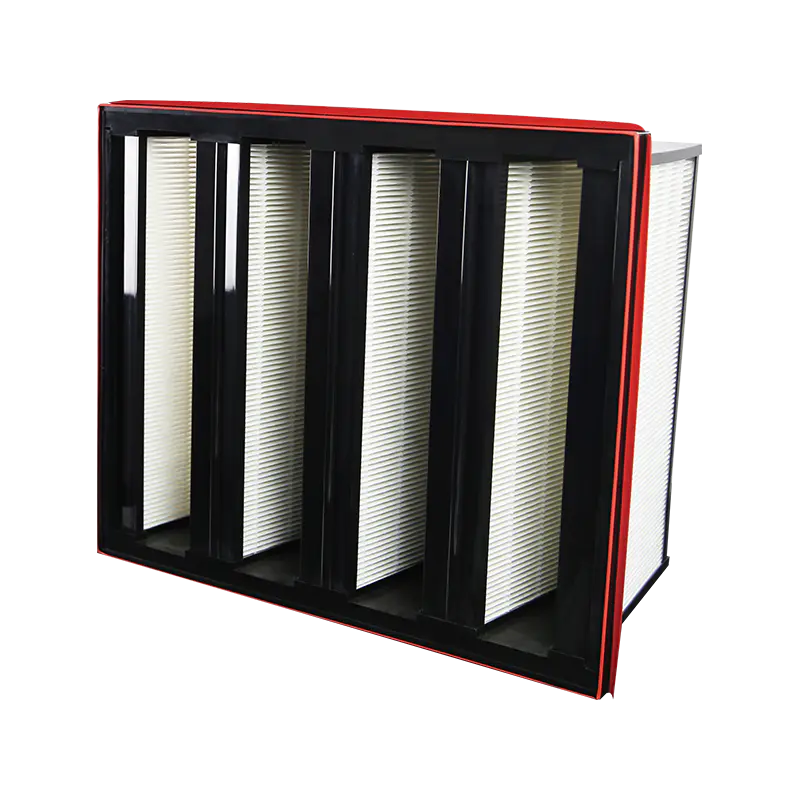
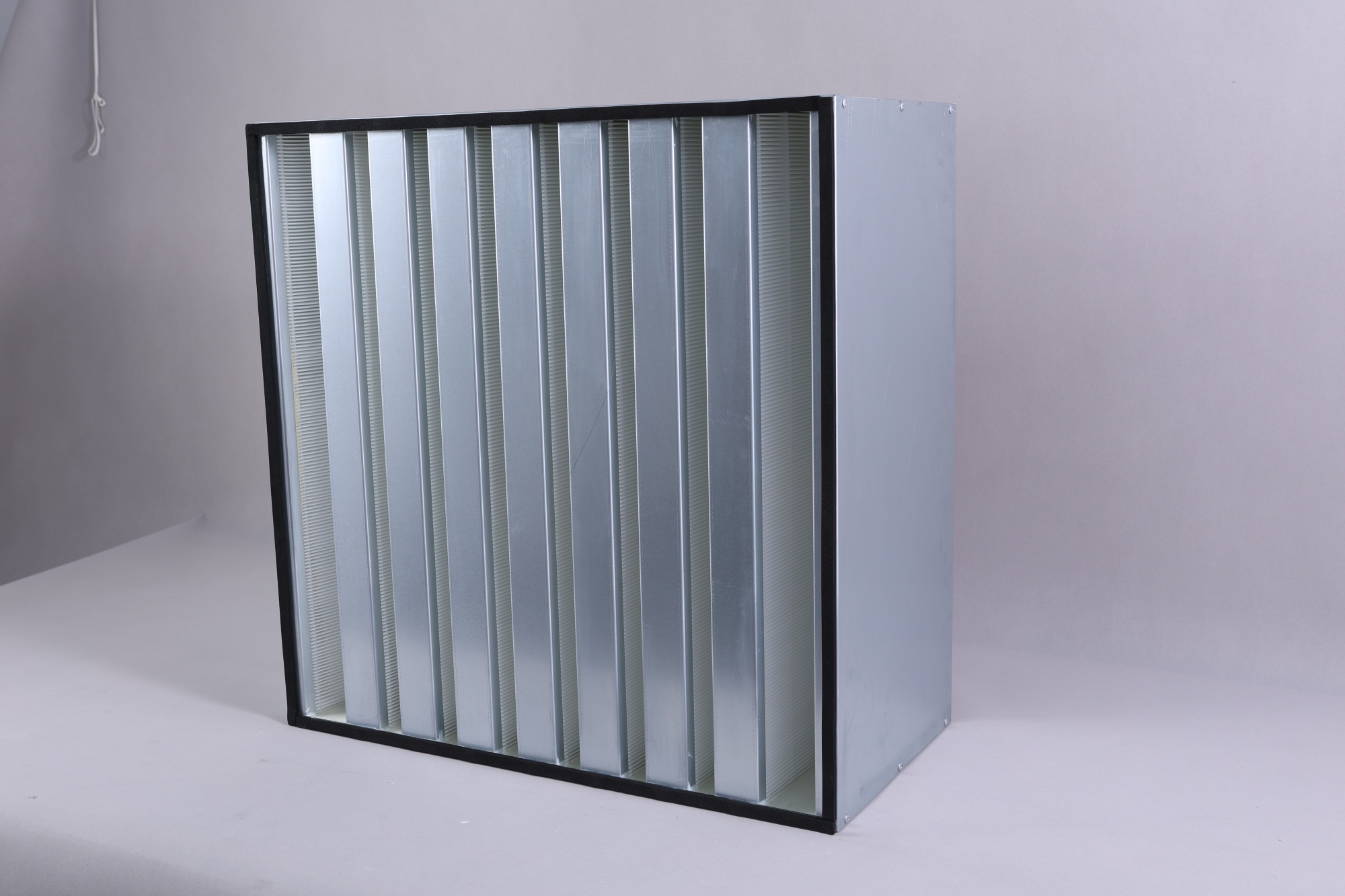
The V-Bank Filter carries efficiency grade H13 and is built from fiberglass and polypropylene (PP). It is intended for commercial and public buildings, with typical application scenarios including airports, hotels, museums and restaurants. The V-bank geometry is the standard commercial HVAC format for this grade.
The B737/B757 Electronic Cabin Air Filter is also H13, but manufactured from microfiberglass and classified under aerospace and aviation. Its working condition is the B737/B757 aircraft environment, it captures dust and fine particles from the fresh air system, and it is produced to customized dimensions.
The household HEPA Air Filter is rated H13 (≥99.97%) and built from fiberglass and polypropylene (PP), designed for air purifiers and air cleaners. This is the tier most OEM buyers of consumer appliances specify.
Grade: H13 (household HEPA variant ≥99.97%) | Media: fiberglass + PP; microfiberglass | Industry: commercial and public buildings; aerospace and aviation; household appliances
MERV 15 / MERV 16 — Box Filter
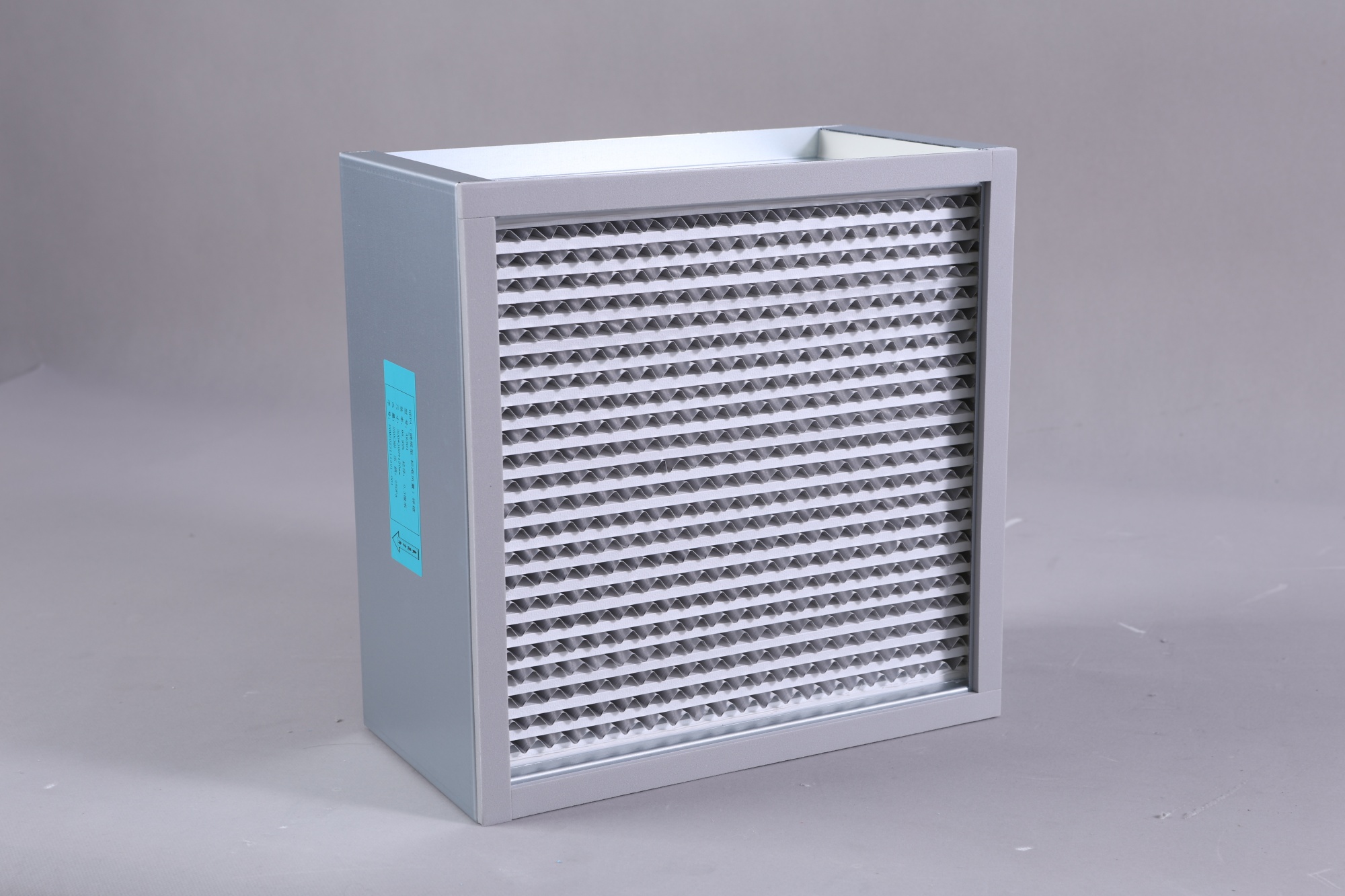
The Box Filter is rated at efficiency grade MERV 15 and MERV 16, and is manufactured from microfiberglass. It sits one step below H13 in the Henkaes ladder, and this is exactly the boundary where buyers most often confuse standards: MERV 15/16 comes from ASHRAE 52.2, while H13 comes from the EN 1822 / ISO 29463 family. They are not interchangeable labels.
The intended industries are pharmaceutical plants, hospitals and food and beverage production sites. These are environments where contamination control is written into a process or regulatory requirement, and where the box format's larger media area is used to hold efficiency while managing airflow resistance.
Grade: MERV 15, MERV 16 | Media: microfiberglass | Industry: pharmaceutical plants, hospitals, food and beverage production sites
MERV 8 / MERV 11 / MERV 13 — Furnace Air Filter
The Furnace Air Filter covers efficiency grade MERV 8, MERV 11 and MERV 13, and is manufactured from polypropylene (PP). It is intended for commercial and public buildings, with typical application scenarios including airports, hotels, museums and restaurants, and it also fits residential furnace filter replacement projects.
This tier is the practical middle of the ladder. It is high enough to capture fine particles in recirculating HVAC systems, and still open enough to suit standard fan curves in existing buildings. OEM buyers working on replacement programmes usually standardize on one of the three grades in this band, then specify the others as the operating environment tightens.
Grade: MERV 8, MERV 11, MERV 13 | Media: polypropylene (PP) | Industry: commercial and public buildings; residential furnace replacement
F5, F6, F8, F9 — Bag Filter
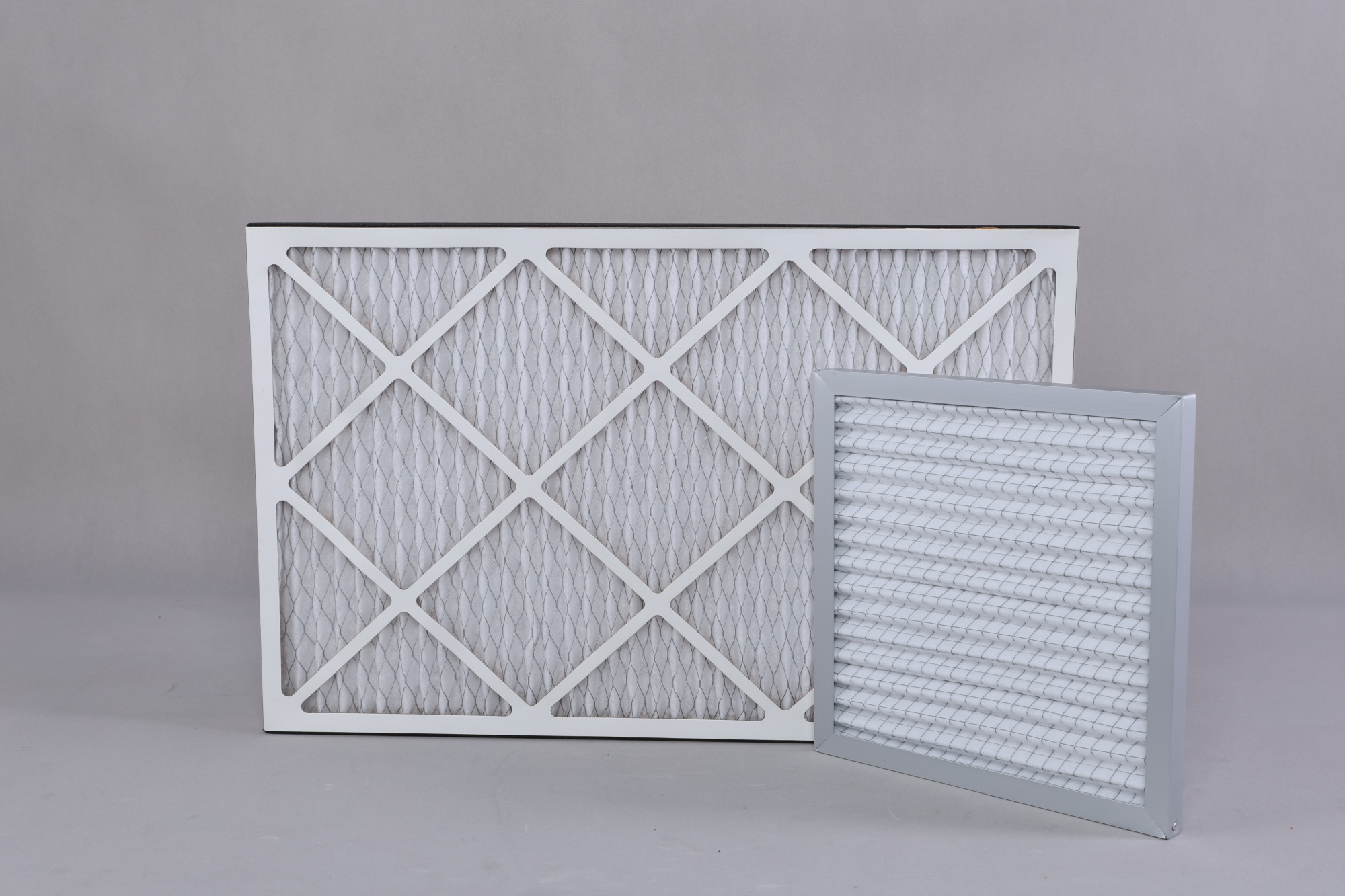
The Bag Filter is rated at efficiency grade F5, F6, F8 and F9 and is made from microfine fiberglass. It is intended for commercial and public buildings, with airports, hotels, museums and restaurants listed as typical application scenarios.
Bag formats are generally specified where a project needs higher dust-holding capacity and a longer service interval than a flat panel can deliver, while staying below the HEPA range. In a staged design, this tier typically sits between a coarse pre-filter and a final high-efficiency stage.
Grade: F5, F6, F8, F9 | Media: microfine fiberglass | Industry: commercial and public buildings
G1–G4 — Panel Filter
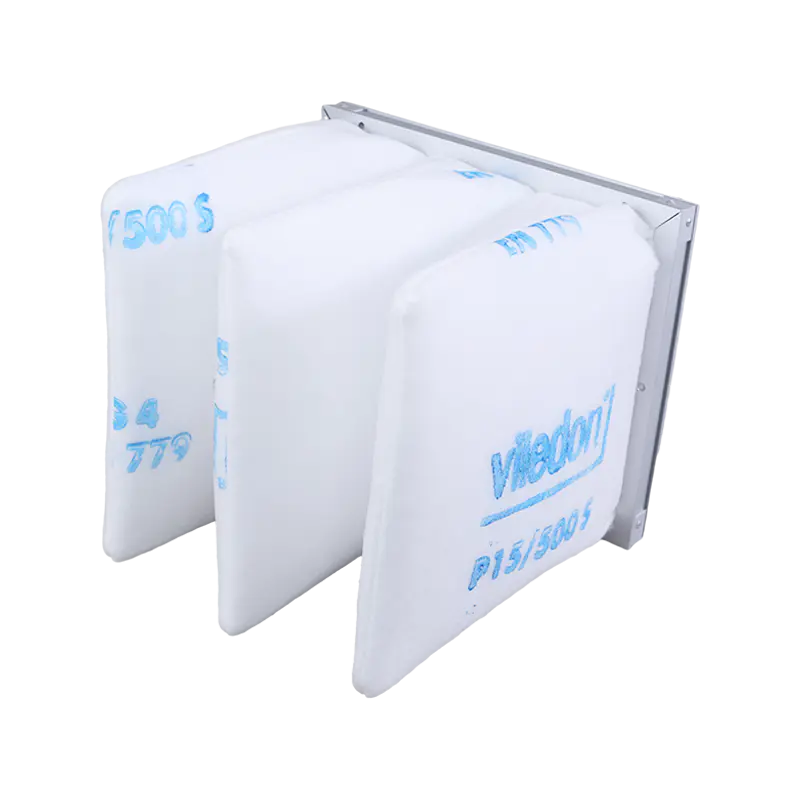
The base of the ladder is the Panel Filter, rated at efficiency grade G1 through G4 and manufactured from fiberglass and polypropylene (PP). Its intended industry is commercial and public buildings, including airports, hotels, museums and restaurants.
Coarse panel filters of this type typically serve as first-stage protection: they hold back the largest dust load and protect the higher tiers downstream, which extends the working life of the more expensive media. They are also the lowest-cost tier in the range, which is why they are usually the first specification written into a new ventilation package.
Grade: G1–G4 | Media: fiberglass, polypropylene (PP) | Industry: commercial and public buildings
Gas-Phase Grades Sit Outside the Particle Ladder
Two product families in the range are graded on a separate axis and should not be ranked against U, H, MERV, F or G classes. The Activated Carbon Filter is graded on CTC value — CTC70, CTC80, CTC90 and CTC100 — and is built from activated carbon for household air purifiers and air cleaners. The VOC Air Filter uses activated carbon with a special catalyst to target specific volatile organic compounds, again for household appliances. Both address gas-phase removal rather than particulate efficiency, which is why they are specified alongside a particle filter rather than instead of one.
Step-by-Step Breakdown: Matching a Grade to an Application
Grade selection is a sequence, not a single choice. The following workflow is the one that avoids both over-specification and compliance failure.
- Step 1 — Name the contaminant and the governing requirement. Decide whether the risk is particulate, gas-phase, or both. Then identify what the project is written against: a cleanroom classification, a hospital or pharmaceutical process requirement, a food and beverage hygiene standard, or a general building ventilation specification. This determines which standard family applies before any grade label is chosen.
- Step 2 — Convert the requirement into a standard-specific grade. If the specification is written in MERV, select from the ASHRAE 52.2 ladder (MERV 8, MERV 11 or MERV 13 for Furnace Air Filters; MERV 15 or MERV 16 for Box Filters). If it is written in EN 1822 / ISO 29463 terms, select from the H and U classes (H13 for V-Bank, cabin and household HEPA filters; U14/U15 for cleanroom filters). Do not translate between frameworks by intuition.
- Step 3 — Check the system constraints. Grade is only one variable. Confirm available frame depth, airflow, fan capacity and acceptable pressure drop. A higher grade in an undersized housing raises resistance and shortens service life. Henkaes runs an efficiency and air resistance test system for filter media specifically so that this trade-off can be reviewed against measured data rather than assumed.
- Step 4 — Map the grade to a product format. Panel (G1–G4) and bag (F5–F9) formats for staged commercial work, V-bank for H13 commercial HVAC, box for MERV 15/16 healthcare and food production, cleanroom panels for U14/U15, and cabin-format filters for aerospace.
- Step 5 — Verify the supply-side evidence. Ask for the certification set (ISO9001:2015, ISO14001:2015, ISO45001:2018 in Henkaes' case), the test method used for efficiency claims, and the internal quality regime. Henkaes applies 100% inspection, and operates a noise test lab, a 30-cubic-metre formaldehyde and VOC test room and a CADR test room for air purifiers.
- Step 6 — Validate with samples, then fix commercial terms. Confirm dimensions, media and grade on a physical sample before tooling or volume production, then agree MOQ, lead time and after-sales terms.
Use Cases: Where Each Tier Belongs
The grade ladder maps cleanly onto the project types Henkaes supplies, all of which share a common pattern: a fresh air system, customized dimensions, and an automatic operating mode.
- Cleanroom and microelectronics projects. Cleanroom design projects specify the U14/U15 Cleanroom Air Filter in microfiberglass and PTFE — the top of the ladder.
- Aerospace cabin air. B737/B757 filter replacement projects use the H13 B737/B757 Electronic Cabin Air Filter in microfiberglass, produced to customized dimensions for the aircraft fresh air system.
- Pharmaceutical buildings. Pharmaceutical plant projects in the US and Netherlands use the MERV 15/16 Box Filter, where process compliance is the deciding factor.
- Food and beverage workshops. Workshop renovation projects use the same MERV 15/16 tier, where hygiene control across production areas drives grade selection.
- Commercial and public buildings. HVAC system building projects in the US and Netherlands combine G1–G4 Panel Filters, F5–F9 Bag Filters, MERV 8/11/13 Furnace Filters and H13 V-Bank Filters as a staged filtration train.
- Household appliances. Air purifier and air cleaner programmes specify the H13 HEPA Air Filter, with CTC-graded Activated Carbon Filters and VOC Air Filters added for gas-phase removal. A US ODM programme for formaldehyde removal has run 50,000 pieces with stable performance over two years, and a second US ODM programme for VOC removal has run 50,000 pieces stably over one year; a US OEM programme of 20,000 high-efficiency units has been stable for one year.
Comparison Table: The Full Henkaes Grade Ladder
| Ladder position | Product | Efficiency grade | Media / material | Intended industry |
|---|---|---|---|---|
| 1 (highest) | Cleanroom Air Filter | U14/U15 | Microfiberglass, PTFE | Cleanrooms — data centres, microelectronics |
| 2 | V-Bank Filter | H13 | Fiberglass, polypropylene (PP) | Commercial and public buildings — airports, hotels, museums, restaurants |
| 2 | B737/B757 Electronic Cabin Air Filter | H13 | Microfiberglass | Aerospace and aviation |
| 2 | HEPA Air Filter (household) | H13 (≥99.97%) | Fiberglass, polypropylene (PP) | Household air purifiers and air cleaners |
| 3 | Box Filter | MERV 15, MERV 16 | Microfiberglass | Pharmaceutical plants, hospitals, food and beverage production sites |
| 4 | Furnace Air Filter | MERV 8, MERV 11, MERV 13 | Polypropylene (PP) | Commercial and public buildings; residential furnace replacement |
| 5 | Bag Filter | F5, F6, F8, F9 | Microfine fiberglass | Commercial and public buildings |
| 6 (lowest) | Panel Filter | G1–G4 | Fiberglass, polypropylene (PP) | Commercial and public buildings |
| Separate axis | Activated Carbon Filter | CTC70, CTC80, CTC90, CTC100 | Activated carbon | Household air purifiers and air cleaners |
| Separate axis | VOC Air Filter | Special catalyst — removes specific VOC | Activated carbon with special catalyst | Household air purifiers and air cleaners |
Note: U, H and MERV grades are issued under different standards — the EN 1822 / ISO 29463 family for H and U classes, and ASHRAE 52.2 for MERV ratings. The F and G bands are the coarse and fine designations used in European HVAC specification. Ranks shown reflect the Henkaes product ladder, not a cross-standard equivalence claim.
FAQ
Which standards and certifications back Henkaes air filter grades?
Efficiency claims are tested using the ASHRAE 52.2 method, which is the standard behind the MERV ratings on the Box Filter (MERV 15/16) and the Furnace Air Filter (MERV 8/11/13). The H and U class labels on the V-Bank Filter, the B737/B757 Electronic Cabin Air Filter, the household HEPA Air Filter (H13) and the Cleanroom Air Filter (U14/U15) belong to the EN 1822 / ISO 29463 family, which classifies HEPA and ULPA filters by efficiency at the most penetrating particle size; within that framework an H14 filter is defined as requiring 99.995% efficiency. On the management-system side, Nantong Henka Environment Solutions Co., Ltd holds ISO9001:2015, ISO14001:2015 and ISO45001:2018 certification, with the ISO scope covering the design and production of air filters, air purifiers and fresh air machines. Buyers qualifying a supplier should request current certificate copies with issue and expiry dates, since certification is renewed on a cycle.
Can Henkaes supply the entire grade ladder from one factory?
Yes. The product range covers G1–G4 Panel Filters at the base through MERV 8/11/13 Furnace Filters, MERV 15/16 Box Filters, F5–F9 Bag Filters, H13 V-Bank, aerospace and household HEPA filters, up to U14/U15 Cleanroom Air Filters, plus CTC-graded Activated Carbon Filters and catalyst-based VOC Air Filters. Production runs in a 30,000 m² facility with 63 employees and 11 engineers, at a monthly capacity of 200,000 pieces and an annual output of 2,000,000 pieces. Manufacturing is OEM and ODM with size and logo customization, and the engineering team — supported by more than 20 years of work with a US engineering team — designs from customer specifications, drawings, samples or initial concepts. Roughly 69% of output is exported, mainly to the EU and USA, which means multi-tier programmes can be sourced, documented and shipped as one package rather than assembled from several vendors.
What drives the cost difference between efficiency tiers?
Four variables account for most of the spread. First, the media itself: microfiberglass and PTFE in U14/U15 cleanroom filters, microfiberglass in cabin and box filters, microfine fiberglass in bag filters, polypropylene in furnace and panel filters, and activated carbon or catalyst media in gas-phase filters. Second, the grade, since higher efficiency generally requires denser media and more of it. Third, dimensions — almost every Henkaes project is built to customized dimensions, so non-standard sizes affect tooling and handling. Fourth, the quality regime: Henkaes applies 100% inspection across production. Because MOQ starts at 500 pieces per item and standard lead time is 30 days, buyers who need a staged filtration train for one building or one product line usually plan the pre-filter and final-filter tiers together in a single order instead of placing separate orders for each grade.
How are samples and customized dimensions handled?
Customized dimensions are the default requirement across Henkaes projects — cleanroom design, pharmaceutical buildings, HVAC system work, food and beverage workshops, aerospace cabin replacement and household air purifier programmes all specify them. Samples are produced from customer specifications, drawings, physical samples or even an initial idea, and the engineering team provides complete design services including engineering sample production, solid modelling and rapid prototyping. Validation can be carried out against the company's own test infrastructure: an efficiency and air resistance test system for filter media, a noise test lab, a 30-cubic-metre test room for formaldehyde and VOC removal efficiency, and a CADR test room for air purifiers. Confirming grade, media and dimensions on a physical sample before volume production is the step that prevents most downstream specification errors.
What are the lead time, MOQ and after-sales terms?
Standard lead time is 30 days, with a minimum order quantity of 500 pieces, 100% inspection and remote after-sales support. Export markets are the EU and USA. For multi-tier programmes, the practical step is to send the application description, target grade or governing standard, and required dimensions together, so the grade mapping and the commercial package can be confirmed in one pass — the full product range, media specifications and customization options are summarised in the Henkaes air filter catalogue, and specific requirements can be sent directly to the engineering team at peter@airfilter-china.com.
Conclusion
The Henkaes efficiency ladder runs from U14/U15 cleanroom filters in microfiberglass and PTFE at the top, through H13 V-Bank, aerospace cabin and household HEPA filters, then MERV 15/16 box filters, MERV 8/11/13 furnace filters, F5–F9 bag filters and G1–G4 panel filters at the base — with CTC-graded activated carbon and catalyst-based VOC filters covering gas-phase removal on a separate axis.
The ranking is only useful when it is read alongside the standard that issued each label. MERV comes from ASHRAE 52.2 and applies to the box and furnace tiers; H and U classes come from the EN 1822 / ISO 29463 family and apply to the cleanroom, V-bank, cabin and household HEPA tiers. Matching a grade to an application therefore starts with the governing requirement, moves through system constraints such as pressure drop and frame depth, and ends with verified supplier evidence and a physical sample.
For OEM buyers evaluating supplier breadth, the deciding factor is usually whether one partner can hold the whole ladder — media, dimensions, testing and documentation — instead of forcing the project to be split across several vendors. Henkaes manufactures across every tier in this ranking from a single 30,000 m² facility in Haimen District, Nantong City, Jiangsu Province, China, with ISO9001:2015, ISO14001:2015 and ISO45001:2018 certification and a 200,000-piece monthly capacity.
Next step for OEM buyers: send your application, target grade or governing standard, and required dimensions, and the Henkaes engineering team will confirm the grade mapping and commercial terms — standard lead time 30 days, MOQ 500 pieces.
Download the full air filter catalogue, request samples, or contact us directly.
Email: peter@airfilter-china.com | Tel: +86 138-1376-6750 | WhatsApp | Web: www.airfilterodm.com
Nantong Henka Environment Solutions Co., Ltd | No 5169, Bin'gang Ave, Binjiang Subdistrict, Haimen District, Nantong City, Jiangsu Province, China 226113