
Top 5 Air Filter Classes for Smart Manufacturing: A Curated Ranking
Top 5 Air Filter Classes for Smart Manufacturing: A Curated Ranking
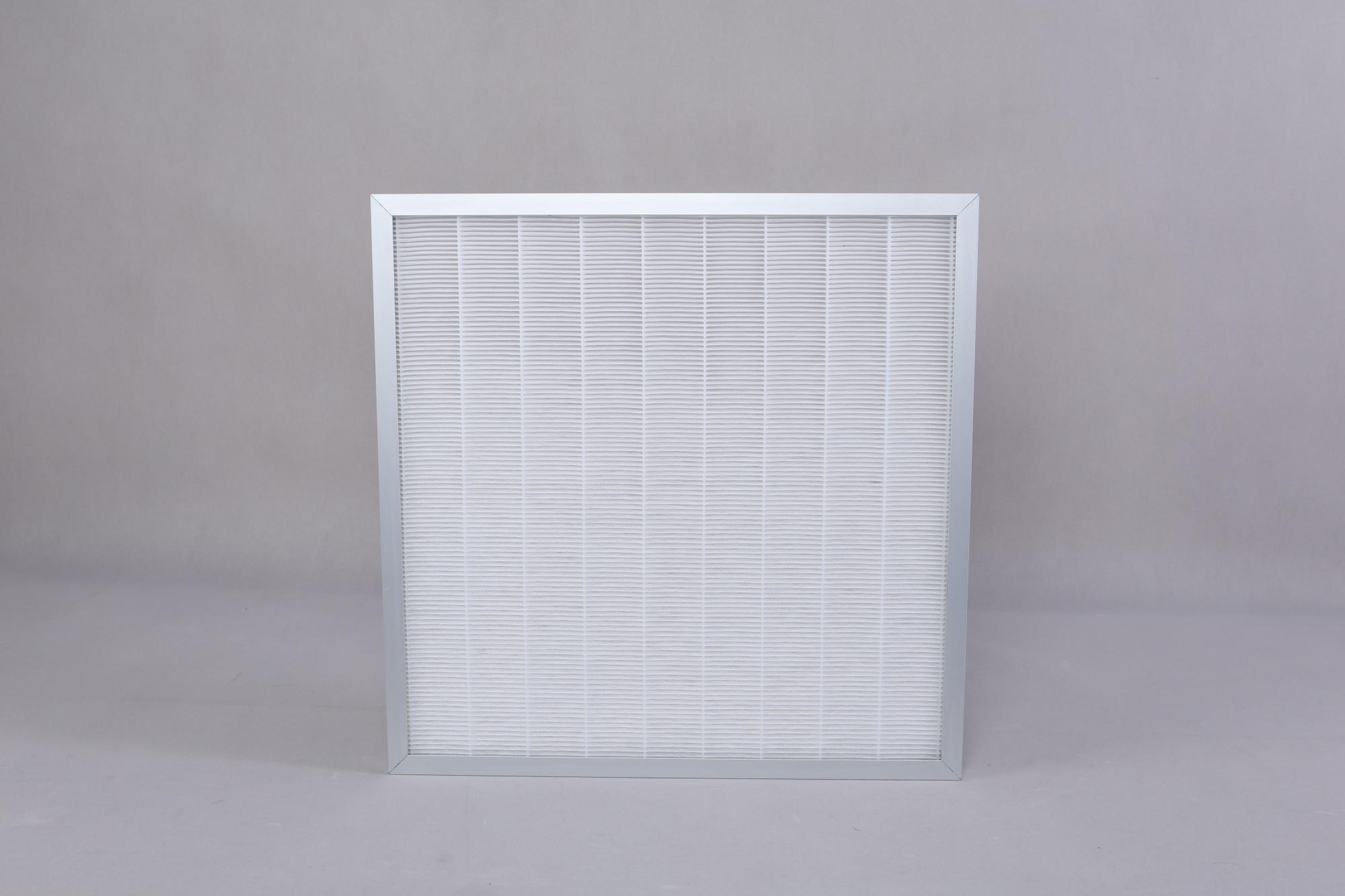 Cleanroom Air Filter (U14/U15) — the highest published efficiency grade in this curated ranking of air filter classes for smart manufacturing.
In smart manufacturing, the filter class installed at each stage of the air path decides whether airborne particles reach the process, the product or the people behind it. This curated ranking covers five air filter classes specified across smart-manufacturing environments — Cleanroom Air Filter (U14/U15), Box Filter (MERV 15/16), Bag Filter (F5–F9), V-Bank Filter (H13) and Panel Filter (G1–G4) — with every grade, media and application statement taken from published product data held by Nantong Henka Environment Solutions Co., Ltd (brand: Henkaes), an air filter manufacturer founded in 2004 in Haimen City, Jiangsu Province, China.
The curated ranking at a glance
- Cleanroom Air Filter — U14/U15, microfiberglass and PTFE
- Box Filter — MERV 15 and MERV 16, microfiberglass
- Bag Filter — F5, F6, F8 and F9, microfine fiberglass
- V-Bank Filter — H13, fiberglass and polypropylene (PP)
- Panel Filter — G1–G4, fiberglass and polypropylene (PP)
Why the Filter Class, Not the Filter Brand, Decides Process Air Quality
A filter class is more than a label on a carton. In the product data behind this ranking, every class is defined by three verifiable attributes: an efficiency grade (such as H13, MERV 15/16 or F5–F9), a media composition (microfiberglass, PTFE, microfine fiberglass, fiberglass or polypropylene), and a stated application family (cleanroom, commercial HVAC, regulated production or household appliance). Specifying a class means accepting all three attributes for a specific zone.
Two published standards frameworks sit behind those grades. EN 1822 classifies HEPA and ULPA filters by their efficiency at the Most Penetrating Particle Size (MPPS), with H14 requiring 99.995% efficiency, as documented by MANN+HUMMEL Air Filtration. ASHRAE 52.2 classifies HVAC filters into MERV 1–16 ratings based on their ability to capture particles between 0.3 and 10 micrometers, as published by ASHRAE. The G and F grades in this ranking sit in the commercial HVAC efficiency band that also feeds multi-stage building air systems.
The practical consequence is a mismatch risk that shows up in two directions. A grade that satisfies a general ventilation specification is not automatically adequate for a particulate-critical production step. At the same time, a class specified above what a zone requires changes the specification without changing the process demand. In a smart-manufacturing site, at least three air environments usually exist side by side:
- A critical clean zone, such as microelectronics production or a data center environment.
- A regulated production area, such as a pharmaceutical plant, a hospital, or a food and beverage production site.
- General building ventilation serving airports, hotels, museums and restaurants — the building types listed for the HVAC classes in this ranking.
Each environment maps to a different class, and the ranking below resolves that mapping in order of published efficiency grade and process criticality, using only verified product data.
Industry Background: Where Demand for Higher-Efficiency Classes Is Going
Demand for filtration continues to expand, and growth is concentrated in the higher-efficiency tiers that dominate this ranking. Fortune Business Insights values the global air filters market at USD 17.08 billion in 2025 and projects USD 34.66 billion by 2034. A second source, Grand View Research, estimates the 2025 market at USD 18.63 billion. Market-size estimates differ by agency coverage and segment definition, so the range matters more than any single figure.
Two further data points describe where that growth is heading. Grand View Research reports that the global smart air purifier market is growing at a high CAGR of 14.1% from 2024 to 2030, driven by AI and IoT integration, and that HEPA filters held a 41.7% share of the air purifier technology segment in 2025. The same high-efficiency direction appears in trade reporting: industry trade data attributes 35% of China's air filter exports in 2025 to H13/H14 grade HEPA filters, driven by the semiconductor and biopharmaceutical sectors. That export figure comes from a single industry report and is best treated as directional rather than exact.
Competitive structure reinforces the pattern. Global Market Insights reports that Parker Hannifin led the industrial filtration systems market with a 15.7% market share in 2024, while Report Prime Research reports that Daikin Industries' filtration revenue reached USD 1.12 billion in 2024 with a focus on high-end MERV 15 and HEPA products. The grades that anchor this smart-manufacturing ranking are the same grades where the largest suppliers concentrate their portfolios.
For a buyer, the market signal is straightforward: the class you specify determines which tier of the market you are buying from, and the smart-manufacturing classes below sit at the high end of that tier structure.
The Curated Top 5 Air Filter Classes for Smart Manufacturing
How this ranking is ordered. Positions reflect the curated combination of the published efficiency grade of each class and its criticality to clean-process manufacturing. The five classes also come from different grade frameworks — MERV (ASHRAE 52.2), H and U classes (the HEPA/ULPA classification addressed by EN 1822), and the G/F commercial HVAC bands — so this list is a planning aid for project sequencing rather than a like-for-like numeric ladder. The comparison table at the end lists every verified grade so a project team can re-order the classes against its own specification.
Rank 1 — Cleanroom Air Filter (U14/U15)
Published specification: efficiency grade U14/U15, with microfiberglass and PTFE media, applied in cleanroom environments such as data centers and microelectronics.
This class takes the top position because it carries the highest published efficiency grade in the set and because the zones it protects are those where particle contamination is least tolerable. The U14/U15 grade belongs to the HEPA/ULPA family classified by efficiency at the Most Penetrating Particle Size, so the grade itself is a statement about the hardest particles to capture rather than about average dust loading.
Application records for cleanroom design projects describe normal indoor environment conditions, automatic operation and a role of capturing dust and fine particles, with customized dimensions named as the special project requirement. For a smart-manufacturing buyer, that combination means the class is specified where the air environment itself is part of process control, not part of general comfort.
What to verify before specifying: the media pairing of microfiberglass and PTFE, and the stated application set of data centers and microelectronics. Where a zone demands final-stage particle control, U14/U15 is the class to request; where it does not, the ranking's lower tiers are the relevant comparison.
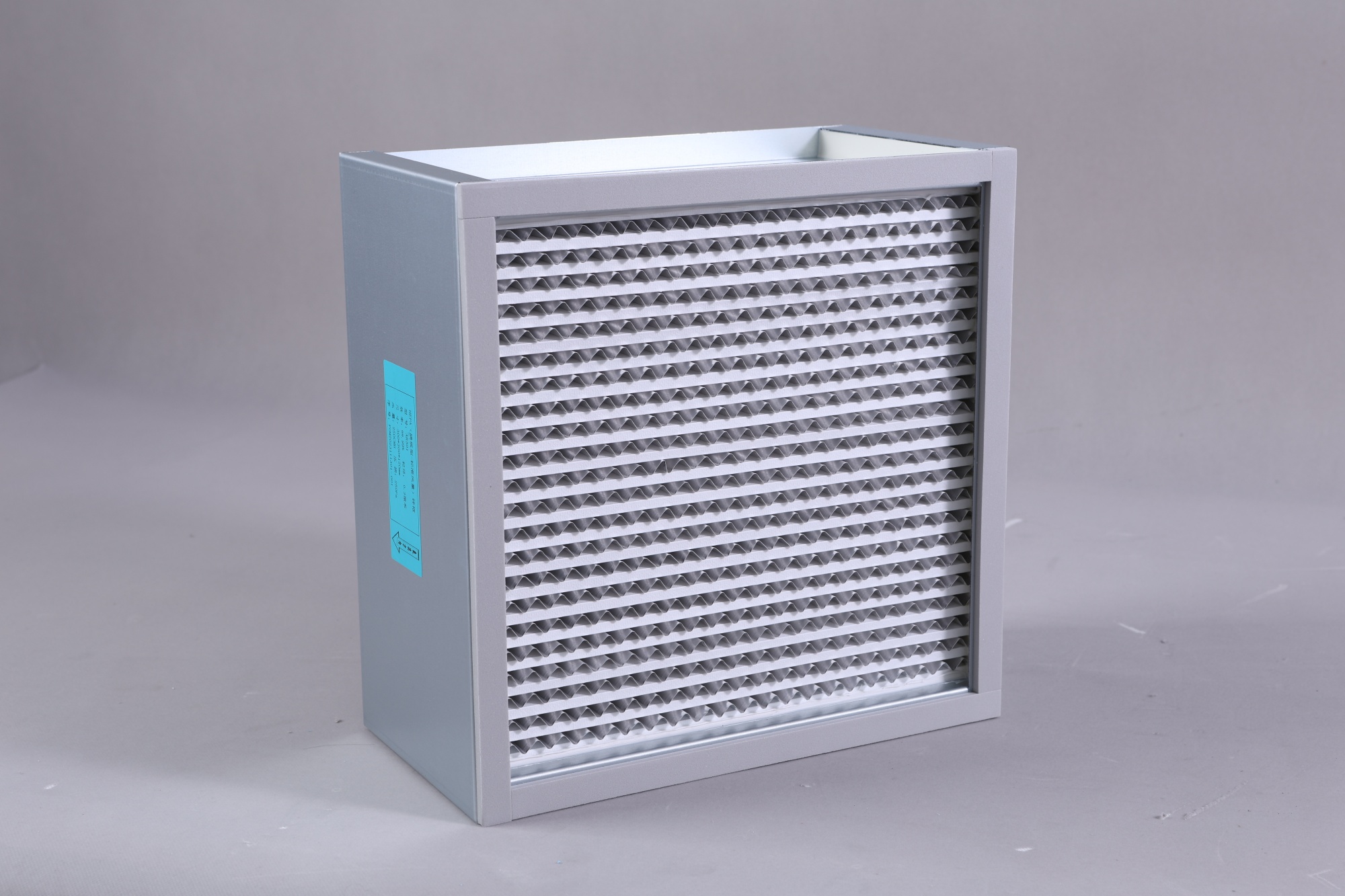 Cleanroom air filter, U14/U15 grade, microfiberglass and PTFE media.
Rank 2 — Box Filter (MERV 15/16)
Published specification: efficiency grades MERV 15 and MERV 16, microfiberglass media, applied in pharmaceutical plants, hospitals, and food and beverage production sites.
The Box Filter ranks second because it is the highest MERV class in this set and because its listed applications are regulated or health-critical environments: pharmaceutical production buildings, hospital areas and food and beverage manufacturing sites. In those settings the filter class supports contamination control, not only ventilation comfort.
MERV 15 and MERV 16 sit at the top of the ASHRAE 52.2 MERV 1–16 scale, which rates filters by their ability to capture particles between 0.3 and 10 micrometers. Application data for pharmaceutical plant building projects describes normal indoor environment conditions, automatic operation and a role of capturing dust and fine particles, with customized dimensions as the project-specific requirement.
What to verify before specifying: the MERV 15 or MERV 16 grade on the submittal, the microfiberglass media, and the intended zone type. A hospital or pharmaceutical project that accepts a mid-range MERV class in a high-efficiency position is a specification gap that shows up later in audits.
 Box Filter, MERV 15/MERV 16 grade, microfiberglass media, for regulated production environments.
Rank 3 — Bag Filter (F5–F9)
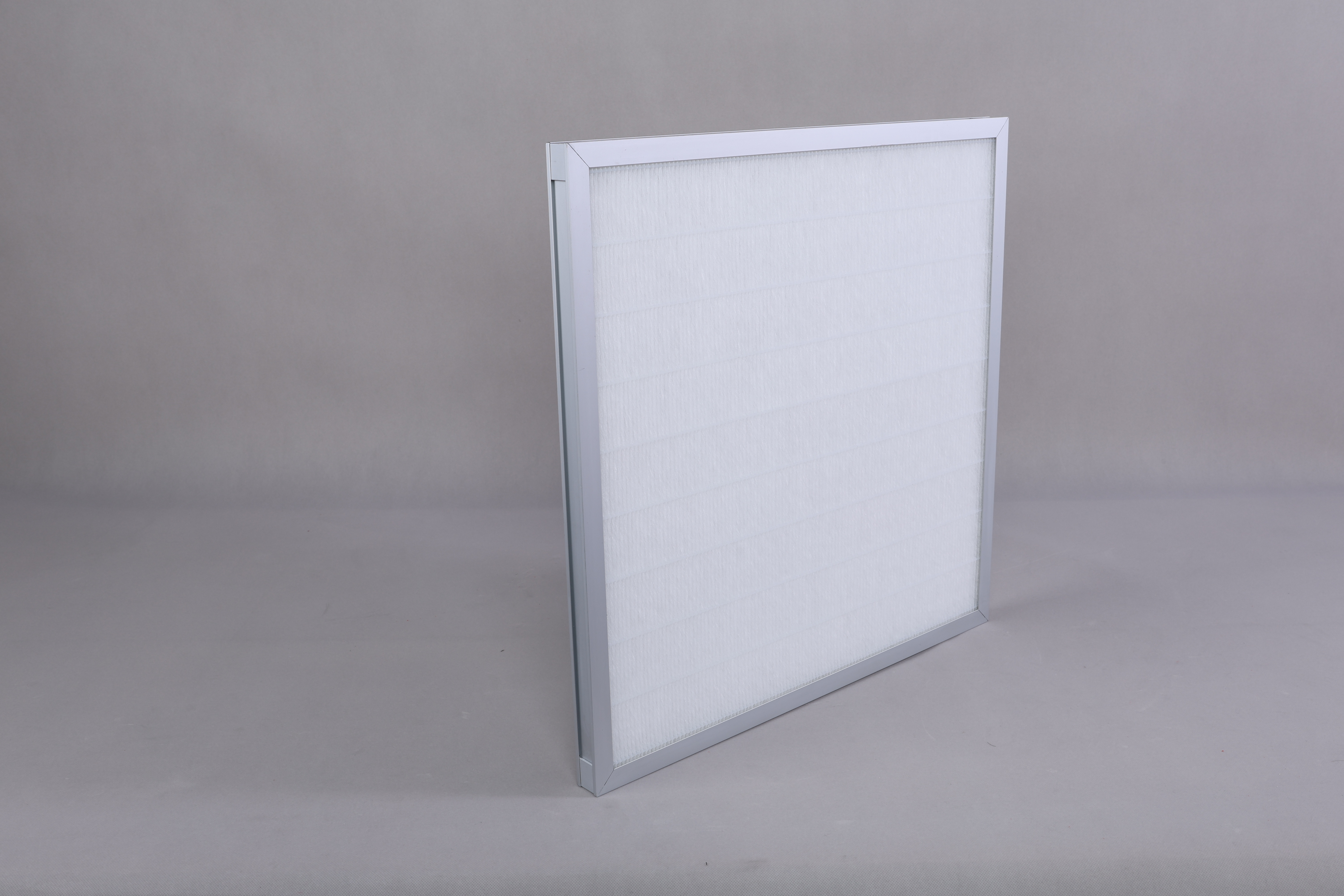
Published specification: efficiency grades F5, F6, F8 and F9, microfine fiberglass media, applied in commercial and public buildings such as airports, hotels, museums and restaurants.
Third position goes to the mid-efficiency workhorse of the commercial air path. The F5–F9 band bridges the coarse classes at the front of a system and the higher-efficiency classes further downstream, and it is specified across building types where large air volumes are handled continuously.
The wide F5–F9 spread is also the reason this class is worth reading carefully on a specification sheet. F5 and F6 sit in the lower part of the band, while F8 and F9 sit close to the entry of high-efficiency filtration. Two suppliers can both quote 'bag filter' and deliver different performance tiers, so the exact grade — not the class name — is the comparable value.
What to verify before specifying: the exact F grade (F5, F6, F8 or F9), the microfine fiberglass media, and the building type. In multi-stage systems, this class is generally the stage that protects the higher-efficiency filters behind it.
 Bag Filter, F5–F9 grades, microfine fiberglass media, for commercial and public building air systems.
Rank 4 — V-Bank Filter (H13)
Published specification: efficiency grade H13, with fiberglass and polypropylene (PP) media, applied in commercial and public buildings such as airports, hotels, museums and restaurants.
H13 is a HEPA-range classification and one of the two highest grades in this curated set, alongside the U14/U15 cleanroom class. Its position at rank four follows the curation criteria used throughout this article: the class is specified for commercial and public building air systems rather than for a critical production clean zone, and the MERV, F and G grades alongside the H and U classes are not directly interchangeable measurements. Position here therefore follows the role a class plays in the air path and the process it protects, not grade alone.
In practice, the class answers a specific requirement. Where a commercial or public building project needs a HEPA-range stage, H13 is the class to check. Where a project needs maximum-grade particle control inside a critical clean zone, the U14/U15 cleanroom class is the relevant specification. Buyers comparing the two should read the comparison table below by grade rather than by list position.
What to verify before specifying: the H13 grade, the fiberglass and PP media, and the intended building application.
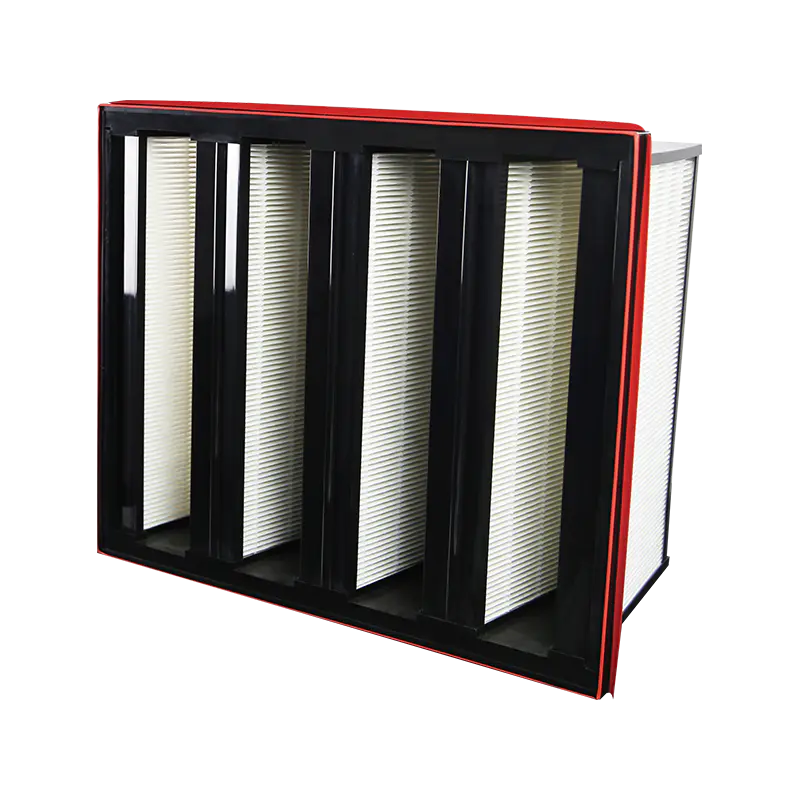 V-Bank Filter, H13 grade, fiberglass and polypropylene (PP) media.
Rank 5 — Panel Filter (G1–G4)
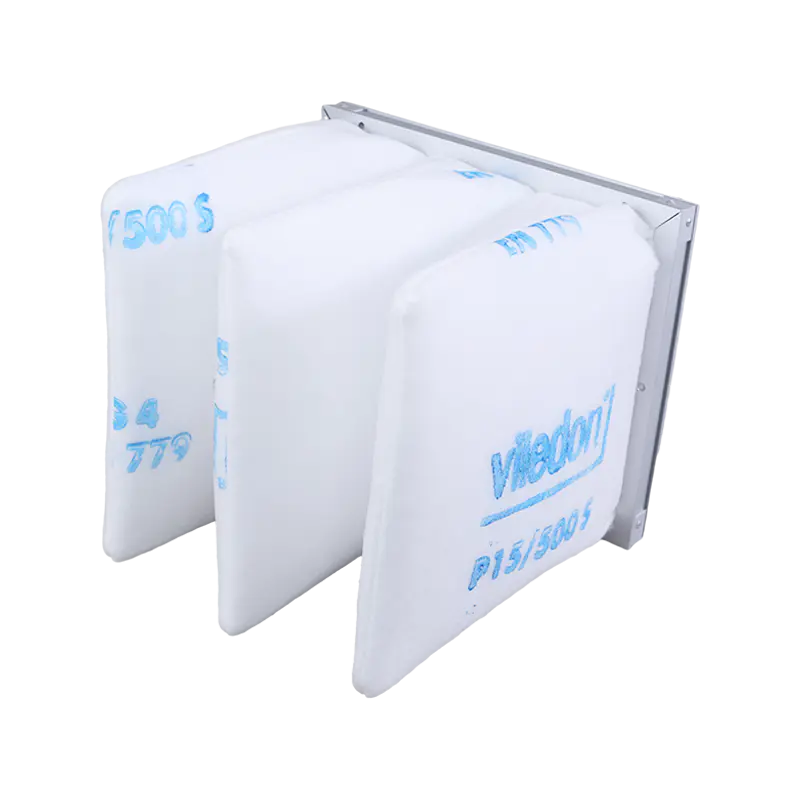
Published specification: efficiency grades G1–G4, with fiberglass and polypropylene (PP) media, applied in commercial and public buildings such as airports, hotels, museums and restaurants.
The panel class closes this ranking as the coarse-efficiency stage. The G1–G4 band is the lowest efficiency band in the set, and that is precisely why the class is generally used where a defined first stage is needed and where the downstream classes carry the critical filtration duty.
Two details matter when this class appears in a smart-manufacturing bill of materials. First, the grade spread inside the class is wide: G1 and G4 are not equivalent specifications. Second, the class shares its media set — fiberglass and polypropylene — with the higher-efficiency V-Bank Filter, so media language alone does not identify the class. The grade and the intended stage are the identifying facts.
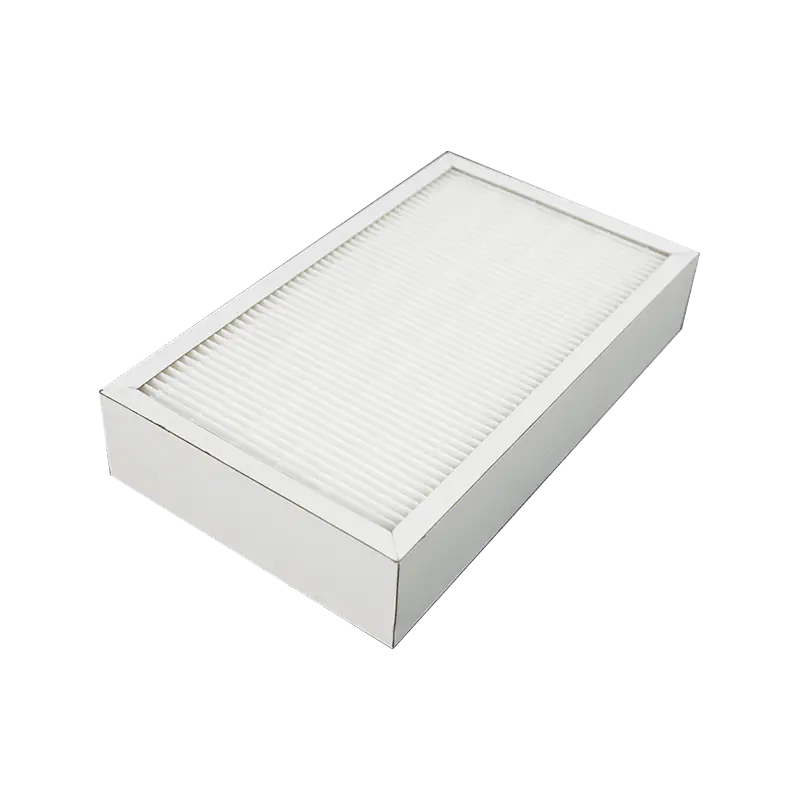 Panel Filter, G1–G4 grades, fiberglass and polypropylene (PP) media.
Step-by-Step Breakdown: Matching a Class to a Production Zone
The five classes are not interchangeable, and the selection sequence below follows the way the data is organised: zone first, grade second, media third.
- Classify the zone. Decide whether the area is a critical clean zone (data center, microelectronics), a regulated production area (pharmaceutical plant, hospital, food and beverage production site), or general building ventilation (airports, hotels, museums, restaurants). The class list in this article maps one-to-one onto those three zone types.
- Place the class on the air path. Work backwards from the cleanest requirement: Cleanroom Air Filter (U14/U15) as final-stage protection, Box Filter (MERV 15/16) or V-Bank Filter (H13) as high-efficiency stages, Bag Filter (F5–F9) as the intermediate stage, and Panel Filter (G1–G4) as the coarse first stage.
- Confirm the grade framework. Check whether the project specifies MERV ratings under ASHRAE 52.2 or HEPA/ULPA classes addressed by EN 1822, because the two frameworks are not directly interchangeable and a grade from one cannot be swapped into the other without review.
- Match media to the environment. The published data pairs microfiberglass with PTFE for the cleanroom class, microfiberglass for the Box Filter, microfine fiberglass for the Bag Filter, and fiberglass with polypropylene for the V-Bank and Panel classes.
- Confirm dimensions early. Customized dimensions appear as the special requirement across the cleanroom, pharmaceutical, HVAC and household application records, so dimensional data belongs in the first technical exchange rather than the last.
- Validate with test data. Ask for media efficiency and air resistance testing, and for the test infrastructure behind it. Henkaes operates an efficiency and air resistance test system for filter media, a noise test lab, a 30 cubic meter test room for formaldehyde and VOC removal efficiency, a CADR test room for air purifiers, and uses ASHRAE 52.2 in testing air filters.
- Fix the commercial terms. Confirm order quantity, lead time and capacity against the project schedule: MOQ is 500 PCS, lead time is 30 days, and monthly capacity is 200,000 PCS.
Use Cases: Where These Classes Are Already Specified
The application records behind this ranking show the same classes appearing in concrete project types, mostly in the United States and the Netherlands.
- Cleanroom design projects (US, NL): automatic operation, normal indoor environment conditions, capture of dust and fine particles, customized dimensions — the domain of the Cleanroom Air Filter (U14/U15).
- Pharmaceutical plant building projects (US, NL): the same operating profile, served by the Box Filter at MERV 15/16.
- HVAC system building projects (US, NL): the commercial path in which Bag, V-Bank and Panel classes are specified.
- Commercial and public buildings: airports, hotels, museums and restaurants — the listed application set for the Bag Filter, V-Bank Filter and Panel Filter.
- Residential furnace filter replacement (US, NL): served by the Furnace Air Filter at MERV 8, MERV 11 and MERV 13 — a class outside this top five but part of the same HVAC family, which is why the ranking should not be read as the only valid option for every building.
- Household appliance production: where a smart-manufacturing site also produces or integrates air purifiers and air cleaners, the relevant classes are HEPA Air Filter (H13), True HEPA Air Filter (efficiency grade ≥99.97%), VOC Air Filter with activated carbon and special catalyst, and Activated Carbon Filter at CTC70, CTC80, CTC90 and CTC100 grades.
- Aerospace and aviation (CN): the B737/B757 Electronic Cabin Air Filter at H13 grade with microfiberglass media shows the same high-efficiency logic applied to an aircraft cabin air system.
Three supply records show the classes above moving into volume production from this manufacturer. A US-based air filter ODM project shipped 50,000 PCS for formaldehyde removal and ran stably for two years; a second US ODM project shipped 50,000 PCS for VOC removal in indoor environments and ran stably for one year; and a US OEM project shipped 20,000 PCS of high-efficiency filters for air purification in indoor environments, stable for one year.
Comparison Table: Five Air Filter Classes Side by Side
| Rank | Class | Efficiency grade | Media | Application in the published data | Role in the air path |
|---|---|---|---|---|---|
| 1 | Cleanroom Air Filter | U14/U15 | Microfiberglass, PTFE | Cleanroom environments such as data centers and microelectronics | Final-stage protection of critical clean zones |
| 2 | Box Filter | MERV 15, MERV 16 | Microfiberglass | Pharmaceutical plants, hospitals, food and beverage production sites | High-efficiency stage for regulated production |
| 3 | Bag Filter | F5, F6, F8, F9 | Microfine fiberglass | Commercial and public buildings: airports, hotels, museums, restaurants | Intermediate stage between coarse and high-efficiency classes |
| 4 | V-Bank Filter | H13 | Fiberglass, polypropylene (PP) | Commercial and public buildings: airports, hotels, museums, restaurants | HEPA-range stage for building air systems |
| 5 | Panel Filter | G1–G4 | Fiberglass, polypropylene (PP) | Commercial and public buildings: airports, hotels, museums, restaurants | Coarse-efficiency first stage |
Grades in the table are the values published for each class. Because the MERV, F/G and H/U grades come from different frameworks, the table is the correct place to compare specifications — not the order of the list above.
Frequently Asked Questions
Which standards define the efficiency grades of these five air filter classes?
They sit in two frameworks. ASHRAE 52.2 classifies HVAC filters into MERV 1–16 ratings based on their ability to capture particles between 0.3 and 10 micrometers, which is the framework behind the MERV 15 and MERV 16 grades of the Box Filter. EN 1822 classifies HEPA and ULPA filters by efficiency at the Most Penetrating Particle Size (MPPS), with H14 requiring 99.995% efficiency, which corresponds to the H and U grades including the V-Bank Filter at H13 and the Cleanroom Air Filter at U14/U15. Henkaes uses ASHRAE 52.2 in testing air filters and holds ISO14001:2015, ISO9001:2015 and ISO45001:2018 certifications.
Can these filter classes be customized for a specific smart-manufacturing project?
Yes. Henkaes operates an OEM and ODM production model with customization of size and logo, and designs products based on customer specifications, drawings, samples or even ideas, supported by over 20 years of experience working with a US engineering team. The company's complete engineering design services include filter design across specifications, engineering sample production, production and testing, solid modeling and rapid prototyping. Across the cleanroom, pharmaceutical, HVAC and household application records, customized dimensions are listed as the recurring special requirement for a project.
What order quantity, lead time and production capacity apply?
The published commercial parameters are a minimum order quantity of 500 PCS, a lead time of 30 days, and a monthly capacity of 200,000 PCS. These sit within a manufacturer operating a 30,000 m² factory with 63 employees, 11 R&D engineers and an annual output of 2,000,000 pcs, exporting to the EU and US with an export ratio of 69% and main markets in the EU and USA.
How can a buyer validate a filter class before committing to production?
Validation is built around engineered samples and test data. Engineering samples are produced as part of the company's design services, and the test infrastructure includes an efficiency and air resistance test system for filter media, a noise test lab, a 30 cubic meter test room for formaldehyde and VOC removal efficiency, and a CADR test room for air purifiers, with ASHRAE 52.2 used in testing air filters. Volume evidence exists alongside the test capability: a US ODM project of 50,000 PCS for formaldehyde removal ran stably for two years, and a US OEM project of 20,000 PCS of high-efficiency filters ran stably for one year.
What is the fastest way to get a class recommendation for a specific project?
Send the zone type, the required efficiency grade, the dimensions and the expected order quantity. With those four inputs, the class can be matched from the table above and quoted against a 30-day lead time. Henkaes supplies custom air filters from its base in Haimen District, Nantong City, Jiangsu Province, China, and publishes its full range in the downloadable air filter catalogue at E-Catalogue for Air Filter 1.pdf, with the manufacturing portfolio at airfilterodm.com. For a direct response, contact Peter Zhou at peter@airfilter-china.com or +86 138-1376-6750.
Conclusion: Choose the Class by Zone, Then Confirm the Grade
The five classes in this ranking cover the full range of smart-manufacturing air requirements, from coarse first-stage protection to final-stage filtration in critical clean zones. Ordered by published efficiency grade and process criticality, they are the Cleanroom Air Filter at U14/U15, the Box Filter at MERV 15/16, the Bag Filter at F5–F9, the V-Bank Filter at H13 and the Panel Filter at G1–G4.
The selection rule that follows from the data is consistent across all five: identify the zone first, place the class on the air path second, and confirm the exact grade and media third. Because MERV, F/G and H/U grades come from different frameworks, the grade column — not the class name — is what a project team can compare across quotations.
Nantong Henka Environment Solutions Co., Ltd (Henkaes) manufactures all five classes along with HEPA, True HEPA, VOC removal, formaldehyde removal, activated carbon and odor removal filters for air purifiers, air cleaners and ventilation systems, and has supplied OEM and ODM programs to brands in the North American and China markets since 2004.
Next step: sample, quote or catalogue
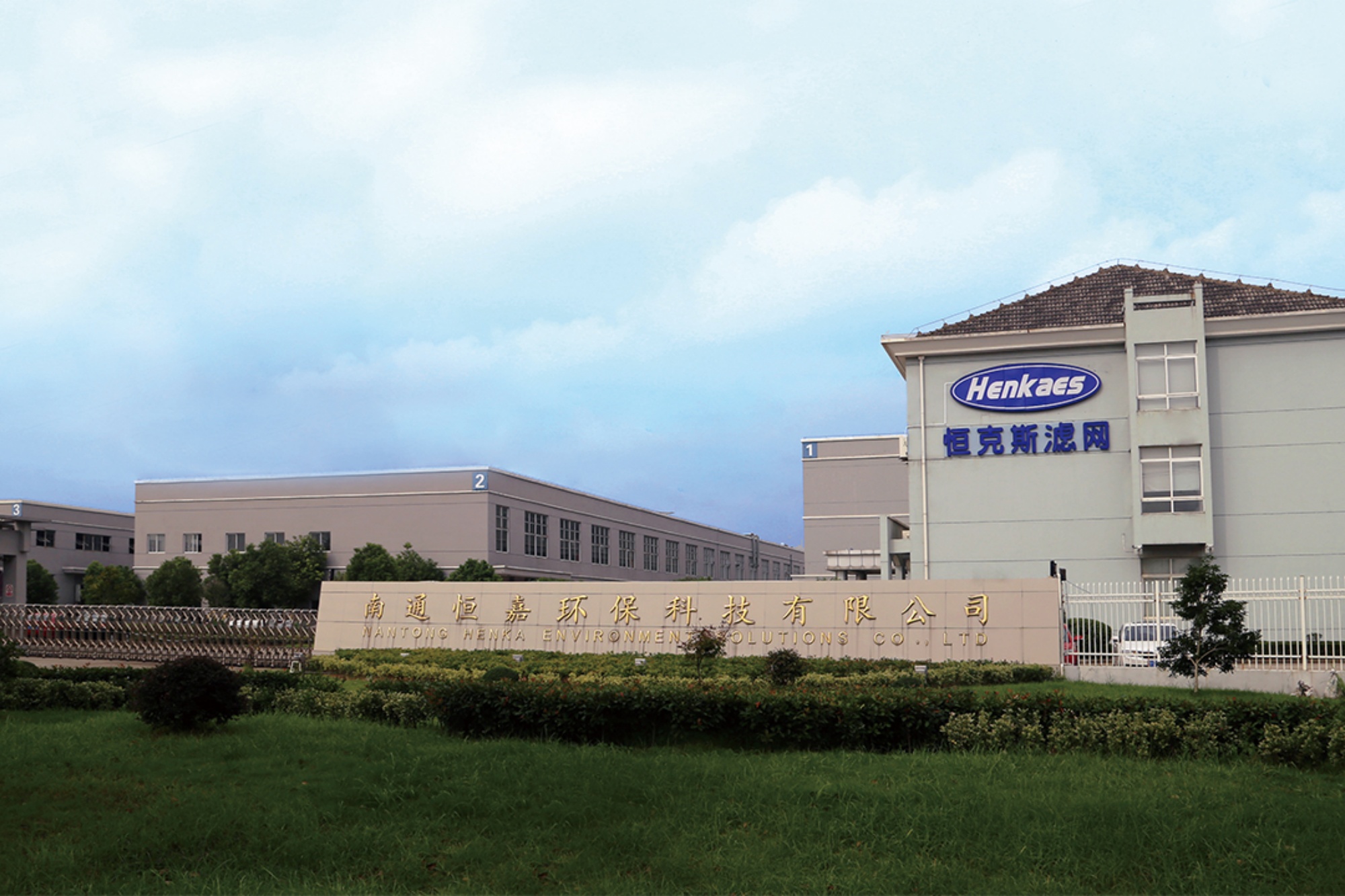 Henkaes manufacturing base, Haimen District, Nantong City, Jiangsu Province, China.
Share your zone type, target efficiency grade, dimensions and order quantity to receive a class recommendation and a quotation. Engineering samples can be arranged for validation before production, standard lead time is 30 days, and the full product range is listed in the air filter catalogue (PDF).
Contact: Peter Zhou · peter@airfilter-china.com · +86 138-1376-6750
No 5169, Bin'gang Ave, Binjiang Subdistrict, Haimen District, Nantong City, Jiangsu Province, China 226113
Website: www.airfilterodm.com