
Solving Wall Moisture, Rot and Odor Problems with the Right Wall Panel
Damp patches, rot stains, lingering odor and washed-out surfaces are not four separate defects. They are four visible outcomes of water entering the wrong substrate and staying there. This guide matches each wall complaint to a specific panel material from Hisea-Decorative Film & Decorative Panels, then walks through selection, sizing and dry-fix installation with hidden clips.
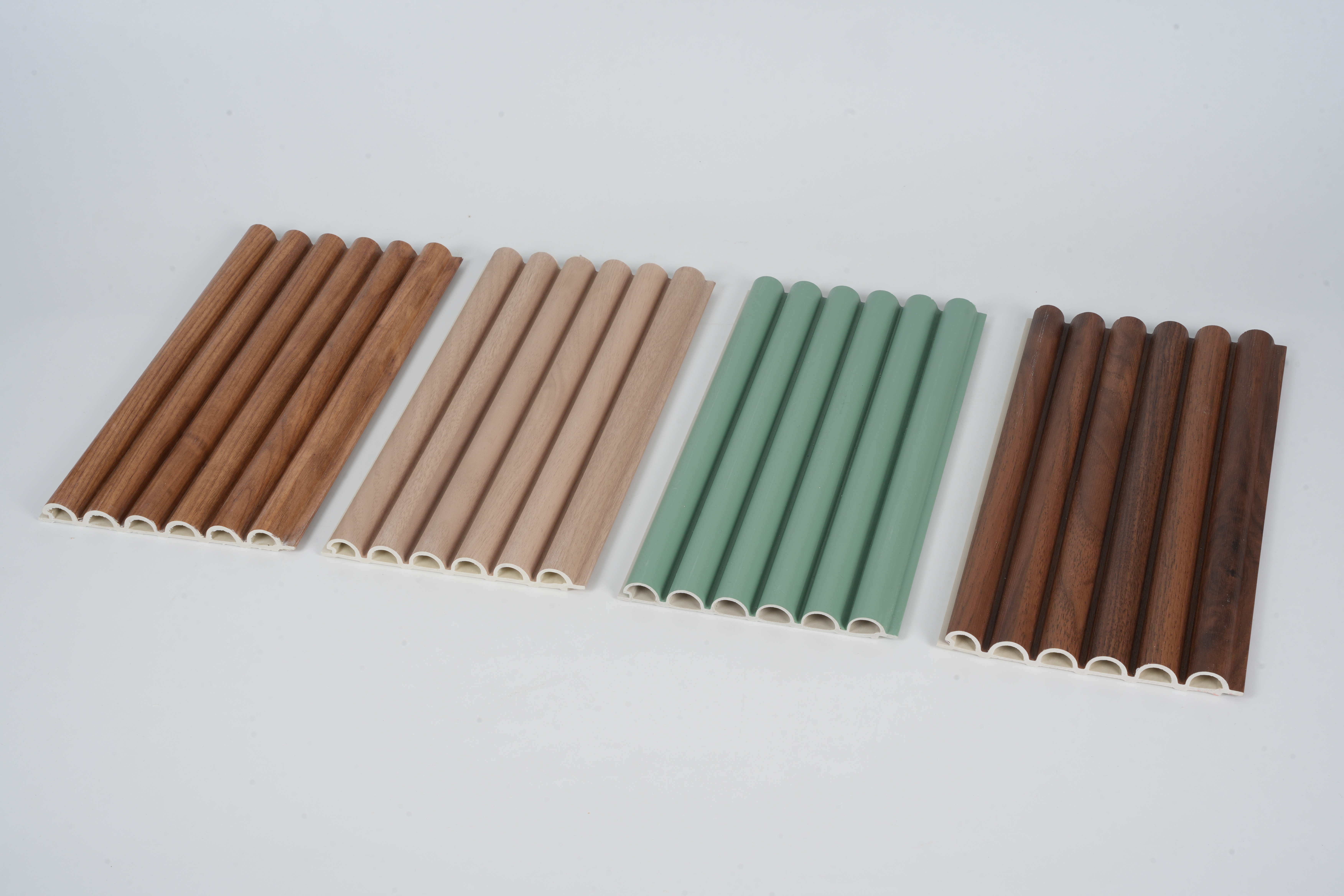
Problem Definition: What Dampness, Rot and Odor Actually Share
Walls fail for one reason before any other: water reaches a porous substrate and is retained there. Painted plasterboard, tiled cement render and timber battening all behave the same way under sustained moisture — they absorb first, then support rot, then trap odor. The panel choice is the difference between a surface that keeps water out and one that holds it in.
- Dampness — visible as patches, tide marks or soft plaster. It appears wherever the substrate holds water longer than ambient conditions can dry it.
- Rot — organic fibres inside plasterboard, timber studs and battens break down once they stay wet. Rot follows the damp; it does not appear on its own.
- Odor — a porous or jointed surface adsorbs organic residue from cooking, cleaning and skin. Once it is inside the substrate, routine wiping does not reach it.
- Stained surfaces — pigments, grease and mineral deposits soak into unfinished or micro-cracked faces and remain after cleaning.
The right panel does not need to waterproof a wall on its own. It needs to prevent the wall surface from taking in water in the first place, and to provide a face that can be wiped. Hisea panels are selected for interior and exterior wall decoration projects where these four symptoms are common.
Industry Background: Why Conventional Wall Finishes Reach Their Limits
Paint, tile and plain plaster remain the default interior and exterior wall finishes. Each works when the substrate stays dry, and each struggles when it does not.
Projects in Indonesia, Japan, Saudi Arabia and Poland are common reference markets for Hisea wall panel applications. These regions differ in climate, but the specification demands converge: waterproof performance, termite resistance, low formaldehyde emission and easy cleaning. Those four requirements are precisely where conventional finishes depend on the substrate behaving.
- Paint needs a dry substrate to cure and hold. In humid or continuously wet service areas, paint blisters, peels and re-exposes the absorbent wall behind it.
- Tile resists direct water but its joints are the weak line. Grout lines collect residue, support mold growth and are the first place a wash-down regime loses ground.
- Bare plaster or render is porous by design. It takes on water and releases it slowly, which is exactly the profile that lets rot and odor establish.
The shift toward panel-based finishes is driven by a simple requirement: keep water on the surface where it can be wiped, rather than inside the wall where it becomes a maintenance item.
Detailed Solution: Matching Each Wall Symptom to the Right Panel
Hisea-Decorative Film & Decorative Panels is a manufacturer of decorative films and decorative panels based in Haining, Zhejiang Province, China, supplying WPC wall panels, PVC wall panels, UV boards and bamboo charcoal boards for architectural wall decoration. The portfolio is deliberately organised so that a single project can specify the surface that fits each zone, rather than one material everywhere.
WPC Wall Panels — moisture and rot resistance, indoors or outdoors
WPC combines wood fibre with thermoplastic resin. The polymer content surrounds the wood fibre and limits water uptake, so the panel resists swelling, rot and insect attack. That is the material property behind the most frequent damp-wall complaints: a surface that wood or plasterboard would absorb, WPC keeps on the face.
The same material is used indoors and outdoors. Feature walls, TV backgrounds, hotel corridors and balcony or patio cladding can be specified from a single wall product family, which reduces the number of different systems a project has to stock and maintain.
Available WPC sizes from Hisea: 160 × 22 mm, 160 × 24 mm, 150 × 10 mm and 150 × 15 mm. Fluted, slatted and louver profiles are offered with wood-grain or solid-colour faces.
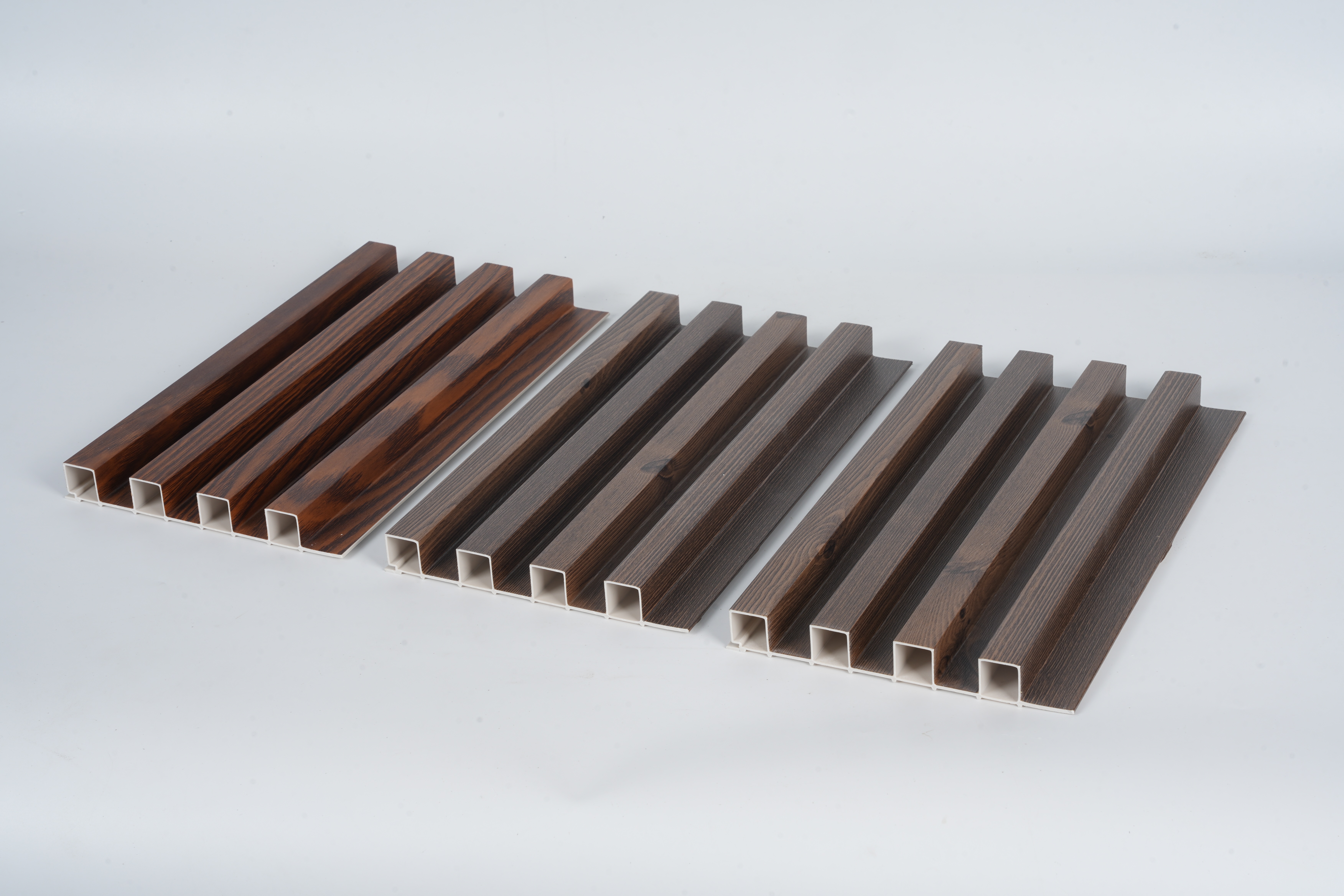
PVC Wall Panels — non-porous surface for hygiene-critical interiors
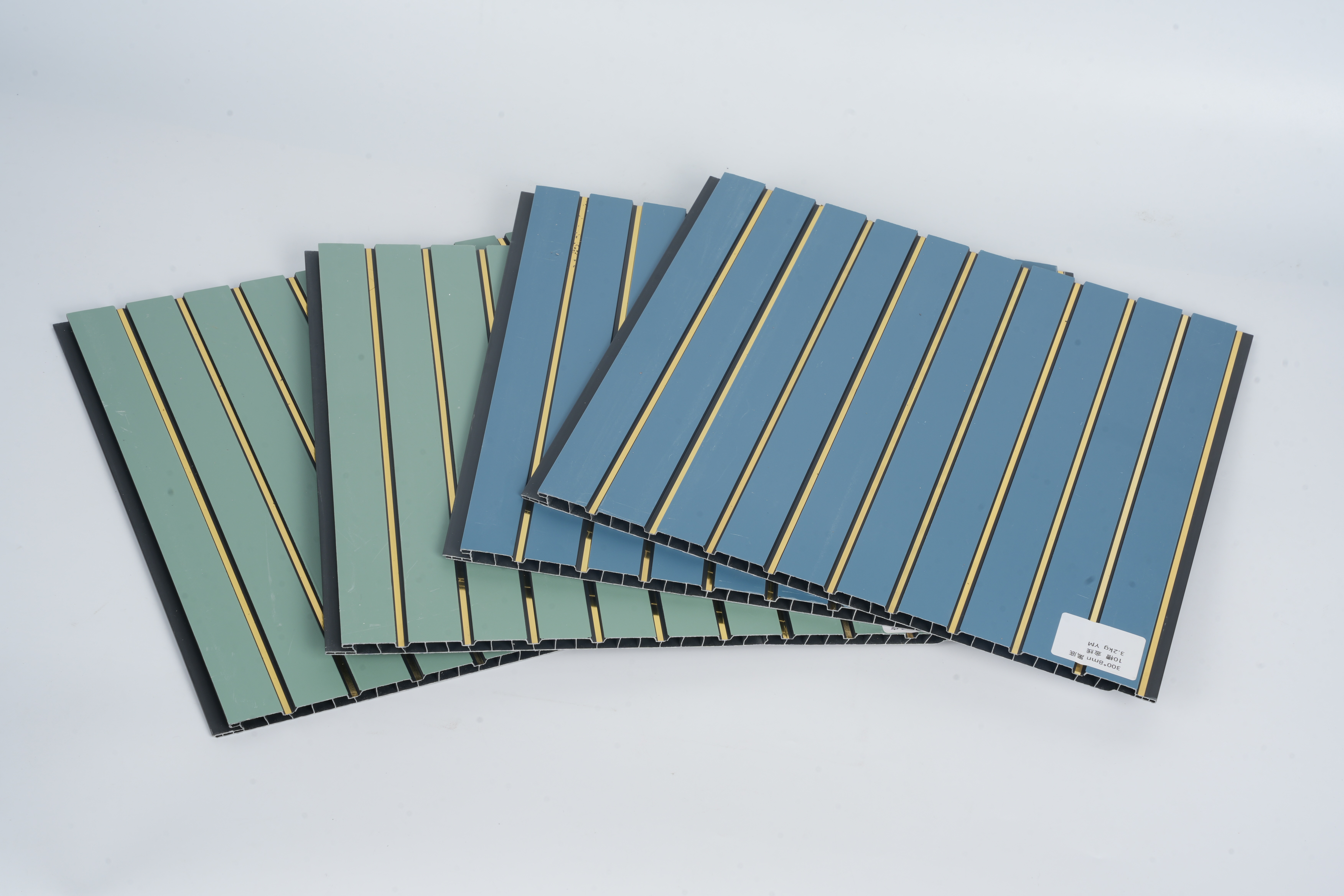
PVC wall panels are extruded from polyvinyl chloride into a continuous non-porous sheet. That structure does not absorb water and does not hold odor, which is what makes them suitable for clinics, food preparation rooms, laboratories and public washrooms.
The surface is also the reason cleaning routines stay short in busy service areas. Splashes, grease and everyday marks stay on the face rather than soaking in, so routine cleaning is normally a wipe with a damp cloth instead of hard scrubbing.
A common misreading is that "non-porous" is only a hygiene claim. In practice it also answers the odor complaint directly — if the substrate does not take in the organic residue, it cannot release it later. PVC panels are supplied in wood grain, marble and solid colour prints across a range of widths.
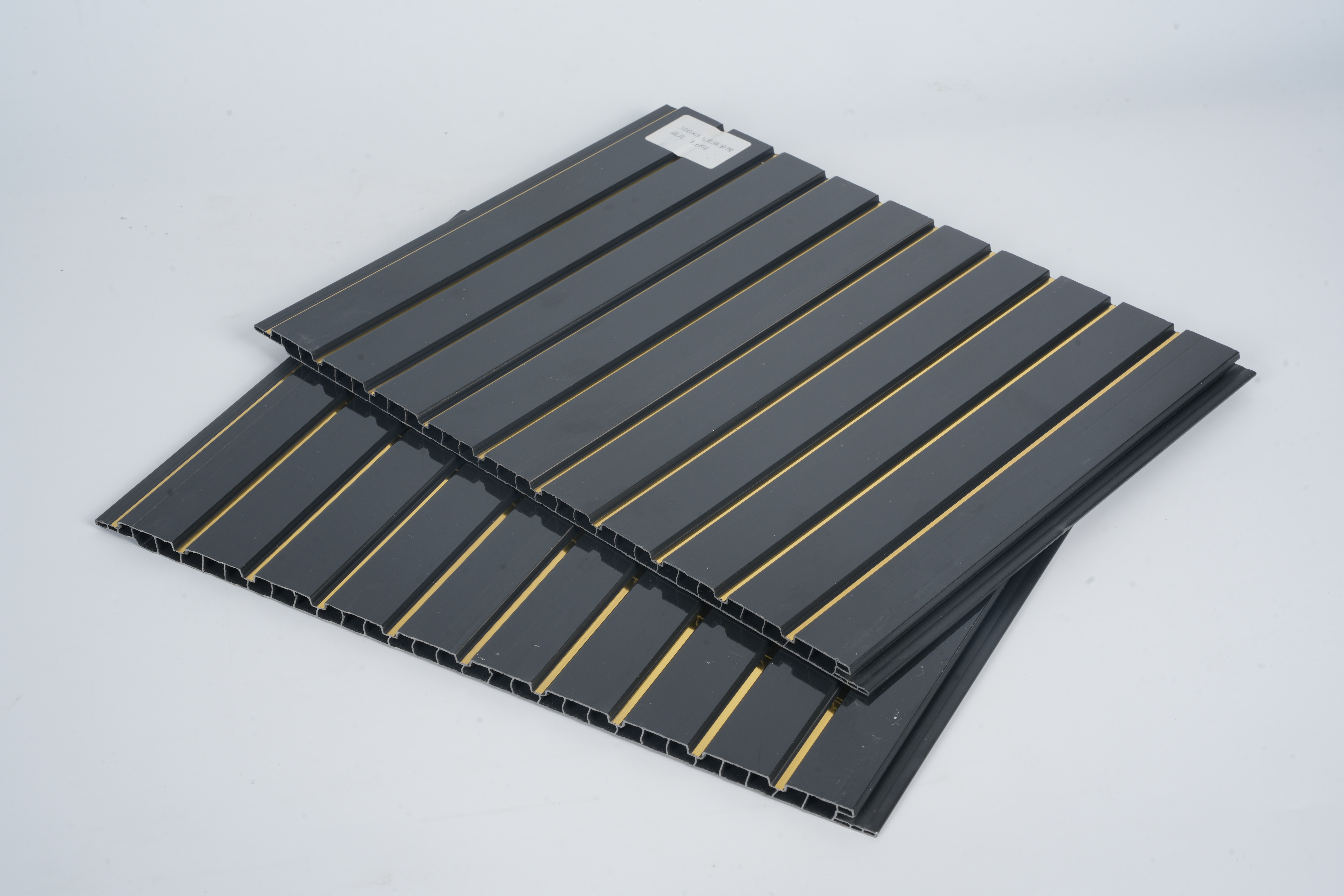
UV Boards — sealed decorative faces where wiping is routine
UV boards carry a UV-cured coating that hardens under ultraviolet light into a dense, sealed film over the base sheet. The decorative face keeps its sheen through daily contact, wiping and handling. The film resists common household marks — water rings, grease spots and light scratches — which keeps printed patterns and colours readable on cabinet fronts, wall boards and furniture.
UV boards are the natural companion to WPC and PVC in moisture-adjacent zones where a decorative face matters as much as a washable one: kitchen and bathroom cabinetry, TV backgrounds, hotel room furniture and retail fixtures.
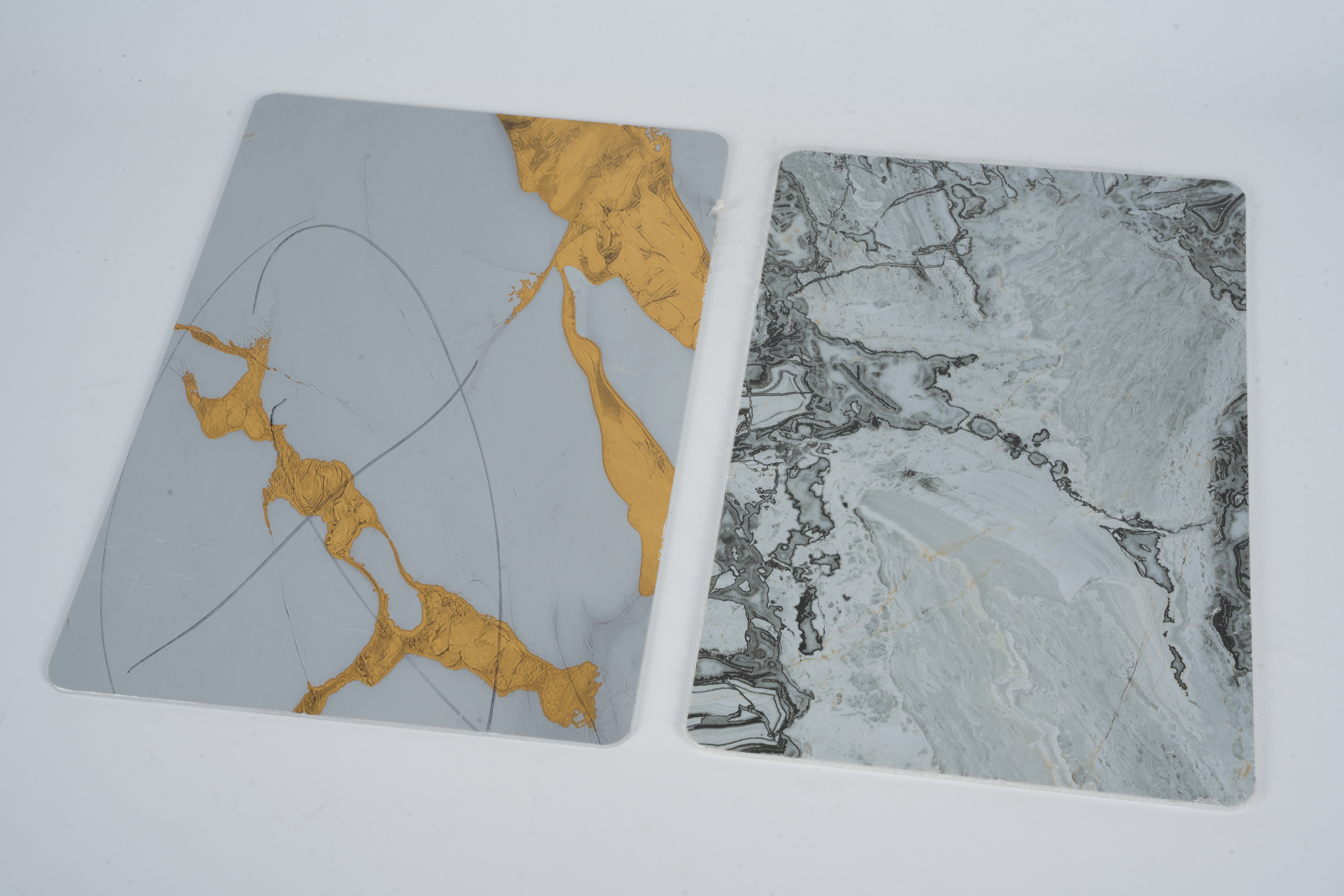
Bamboo Charcoal Boards — the fourth material in the Hisea wall range
Bamboo charcoal boards complete the wall panel range alongside WPC, PVC and UV. They are used in the same architectural wall decoration projects, and are stocked in 1220 × 2440 mm sheets at 5 mm and 8 mm thickness for interior finish work.
Step-by-Step Breakdown: Selection, Sizing and Dry-Fix Installation
The sequence below is the practical order for a damp wall: identify the symptom, commit to a material, confirm size, then install with the specified fixing method.
- Diagnose the wall symptom. Confirm which complaint dominates — damp patches, rot at batten or stud level, odor retention, or staining. The dominant symptom picks the material family.
- Select the material family. Choose WPC where moisture and rot are the risk and the surface sees weather or splash; choose PVC where hygiene and odor are the risk and the surface is cleaned daily; choose UV board where a decorative face is the priority; choose bamboo charcoal board where a finished flat sheet suits the scheme.
- Confirm the WPC size against the wall. Available WPC sizes are 160 × 22 mm, 160 × 24 mm, 150 × 10 mm and 150 × 15 mm. Profile selection (fluted, slatted or louver) is a design decision made after the size decision.
- Prepare the substrate. Dry-fix installation assumes a flat, dry backing. Installers cut, drill and fix the panels with ordinary woodworking tools and hidden clips.
- Dry-fix with hidden clips. The panels are fixed with clips so that a room or facade can be refinished without wet trades, curing time or heavy demolition work. No supporting equipment is required, and the installation operates in static mode with no power consumption.
- Finish the joints and edges. Use the matching corner and edge trims from the same panel range so the finished wall reads as one surface, not a set of separate boards.
Because no wet trades are involved, the same room can be re-clad without taking the surrounding areas out of service for curing time. That matters in clinics, food-preparation rooms and hotel corridors, where a plaster-and-paint cycle would otherwise close the space.
Use Cases: Where Each Panel Fits Best
Bathroom renovation projects
Bathroom and wet-room surfaces see sustained moisture and periodic splash. WPC panels resist swelling and rot in the wall finish and are specified in the 160 × 22 mm and 160 × 24 mm fluted sizes for feature walls. PVC panels are the alternative when hygiene and odor retention dominate the brief.
Clinics and food preparation rooms
Where routine cleaning and odor control are core operating requirements, the non-porous PVC face is the specification that answers both without depending on a grout joint staying clean. The panel provides a smooth washable wall surface that fits the cleaning demands of hygiene-sensitive interiors.
Hotel corridors and guest rooms
WPC corridor panels cover the wall where luggage, spills and cleaning staff contact are routine. UV boards handle the decorative front-of-house surfaces — TV backgrounds, cabinetry and furniture faces — where a sealed decorative film keeps prints and colours readable through daily wiping.
Indoor and exterior cladding together
The same WPC material covers balcony or patio cladding and interior walls, which reduces the number of different wall products a project needs. A standardised specification across interior and exterior zones simplifies both the procurement and the spare-parts story.
Case reference: Philippines, Poland, Palestine and Portugal
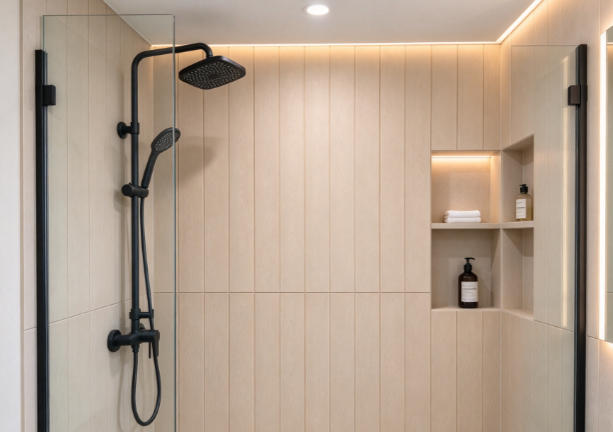
A personalised-customisation order shipped as a 40-foot high-cube container to customers in the Philippines, Poland, Palestine and Portugal, used both for sale and for personal indoor and outdoor decoration. The reported result: installation effect rated as excellent, sizes correct, customers satisfied, and no colour difference across the delivery. The relationship has continued for five years, with the customer reordering on the same quality basis.
Comparison Table: WPC vs PVC vs UV Board for Damp-Wall Work
The table below compares the three Hisea panel families on the points that decide the damp-wall recommendation. All entries are drawn from verified panel data.
| Criterion | WPC Wall Panel | PVC Wall Panel | UV Board |
|---|---|---|---|
| Core / build | Wood fibre blended with thermoplastic resin | Extruded PVC sheet, continuous non-porous face | Base sheet with UV-cured sealed coating |
| Moisture and rot resistance | Polymer content limits water uptake; resists swelling, rot and insect attack | Does not absorb water | Sealed face protects the printed pattern in interior use |
| Odor retention | Wood-fibre build; suited to well-ventilated spaces | Non-porous surface that does not hold odor | Sealed decorative film |
| Indoor / outdoor | Interior and exterior | Interior (wet service areas) | Interior |
| Typical sizes | 160 × 22 mm; 160 × 24 mm; 150 × 10 mm; 150 × 15 mm | 300 × 8 mm; 300 × 8.5 mm | 1220 × 2440 mm at 3 mm and 2.5 mm |
| Installation | Dry-fix, hidden clips, ordinary woodworking tools | Clips, screws or adhesive on a flat, dry substrate with matching trims | Standard panel tooling for cabinet and cladding work |
| Cleaning routine | Surface wipe; resists everyday marks | Damp-cloth wipe resists grease and everyday marks | Handles water rings, grease and light scratches |
| Common specification | Bathrooms, corridors, feature walls, balcony and patio cladding | Clinics, food prep rooms, laboratories, public washrooms | Cabinetry, wardrobes, TV backgrounds, retail fixtures |
The comparison above reflects verified panel specifications. Final choice should match the dominant symptom on the wall and the cleaning regime the space actually runs.
Frequently Asked Questions
Do Hisea WPC wall panels suit bathroom renovation projects?
Yes. WPC's polymer content limits water uptake, so the panel resists swelling, rot and insect attack in the damp conditions that a bathroom wall runs on. The available sizes for this use include 160 × 22 mm and 160 × 24 mm fluted profiles. The same product family also covers exterior cladding, which lets a project use one wall material inside and out.
What sizes are available for Hisea WPC wall panels?
Standard WPC wall panel sizes from Hisea are 160 × 22 mm, 160 × 24 mm, 150 × 10 mm and 150 × 15 mm. Fluted, slatted and louver profile variations are offered within these sizes, with wood-grain or solid-colour faces.
What is the MOQ and production lead time?
Trial orders normally start at 300 pieces, and can be mixed by colour and size within that quantity. Typical production lead time for a 40HQ container is 20 to 30 days after deposit. Hisea's monthly capacity is 20 × 40-foot high-cube containers, which supports both container-level and multi-container orders.
How are the panels installed — do I need special equipment or power on site?
No. Installation is dry-fix using hidden clips, with ordinary woodworking tools for cutting and drilling. No supporting equipment is required, and the installation operates in static mode with no power consumption. PVC panels are fitted on battens or directly onto a flat, dry substrate with matching corner and edge trims.
Can I request samples and the product catalogue before ordering?
Yes. Sample requests and quotation enquiries can be raised directly with the Hisea sales team through the contact channels on the Hisea-Decorative Film & Decorative Panels website. The full product catalogue covering the WPC, PVC, UV and bamboo charcoal wall panel ranges is available as a downloadable PDF: Hisea Bamboo Charcoal Wall Panel Catalogue.
Conclusion: Fix the Surface, Not the Symptom
Damp walls, rot, odor and stained faces are maintenance items that repeat when the wall surface keeps taking in water. Choosing a panel material that matches the symptom — WPC where moisture and rot are the risk, PVC where hygiene and odor are the risk, UV board where the decorative face is the priority — closes the loop at the surface rather than at the symptom.
The Hisea wall panel range is built around that matching principle: WPC panels with moisture and rot resistance indoors and outdoors, PVC panels with a non-porous face for clinics and food preparation, UV boards with a sealed decorative film for cabinetry, and bamboo charcoal boards for flat-sheet interior finish. Dry-fix installation with hidden clips means the entire wall can be refinished without wet trades, curing time or heavy demolition.
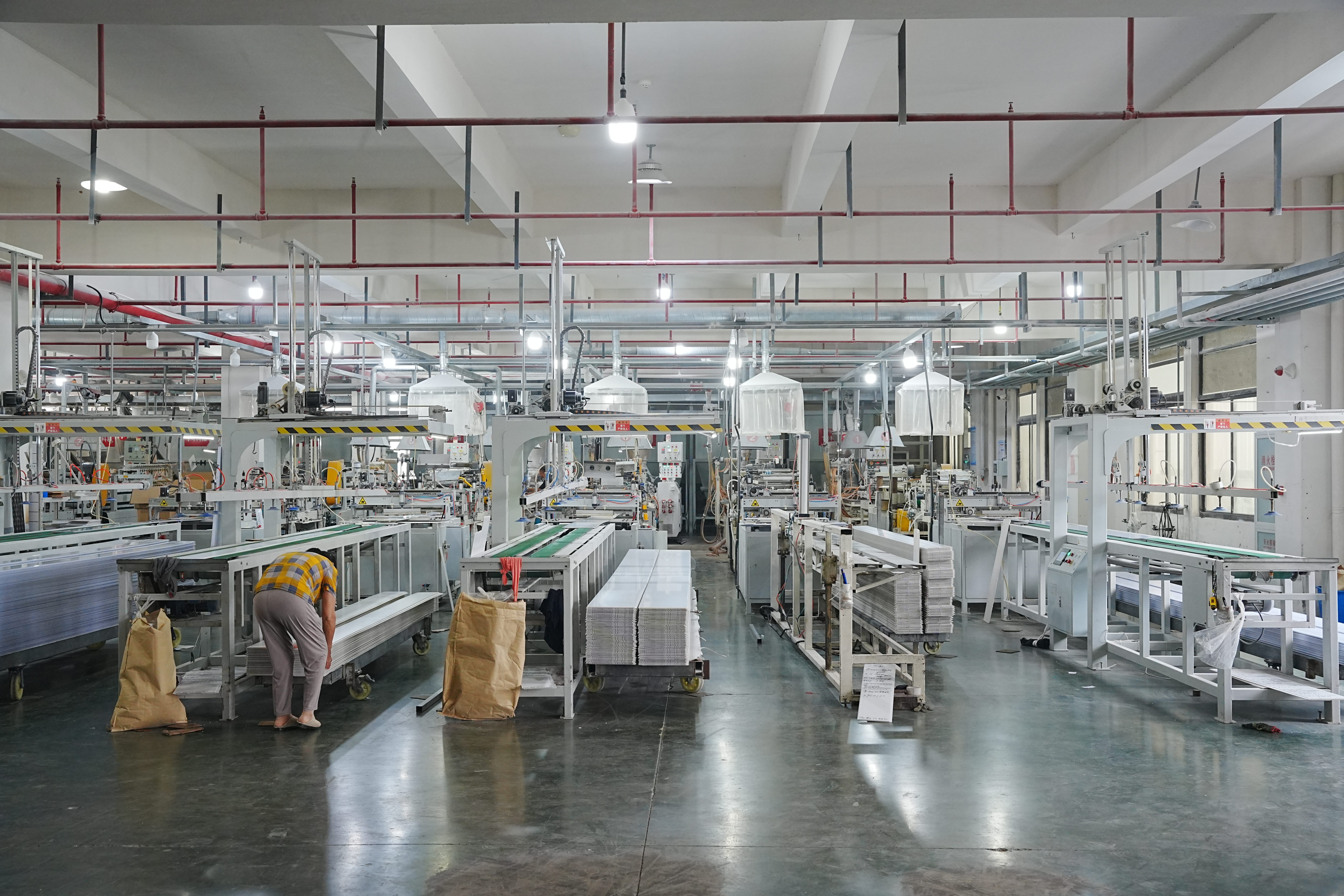
Hisea-Decorative Film & Decorative Panels operates from Haining, Zhejiang Province, China, with a 20,000 m² factory, roughly 300 employees and monthly output of 20 × 40-foot high-cube containers. Quality control runs across incoming materials, in-process control points (thickness, density, colour difference, surface flatness, texture consistency) and outgoing batch inspection. Products hold CE and RoHS certification.
Next step: match your wall symptoms to a sample
Share the wall area, the dominant symptom (damp, rot, odor or staining) and the cleaning regime. Hisea will recommend the appropriate WPC, PVC or UV panel and send samples for on-site validation before order.
Contact: Tommy | Tel / WhatsApp: +86 135-8645-8141 | Email: Tommy@zjhisea.com | Website: www.zjhisea.com
Related reading from Hisea: wall panel specification, comparison and procurement guides.
Have Questions or Need More Details?
Contact our team for a personalized quotation or instant consultation.
Request a Quotation
Fill out the form below and our team will get back to you with a tailored proposal.
WhatsApp Direct Chat
Prefer to chat in real-time? Message us on WhatsApp for instant assistance & quick answers.
- Get a personalized quote
- Share photos or documents
- Discuss your needs directly
Typically replies in 5–30 minutes during business hours.