
Wall Panel Application Guide for Electronics Facilities: Zoning WPC, PVC and UV Board
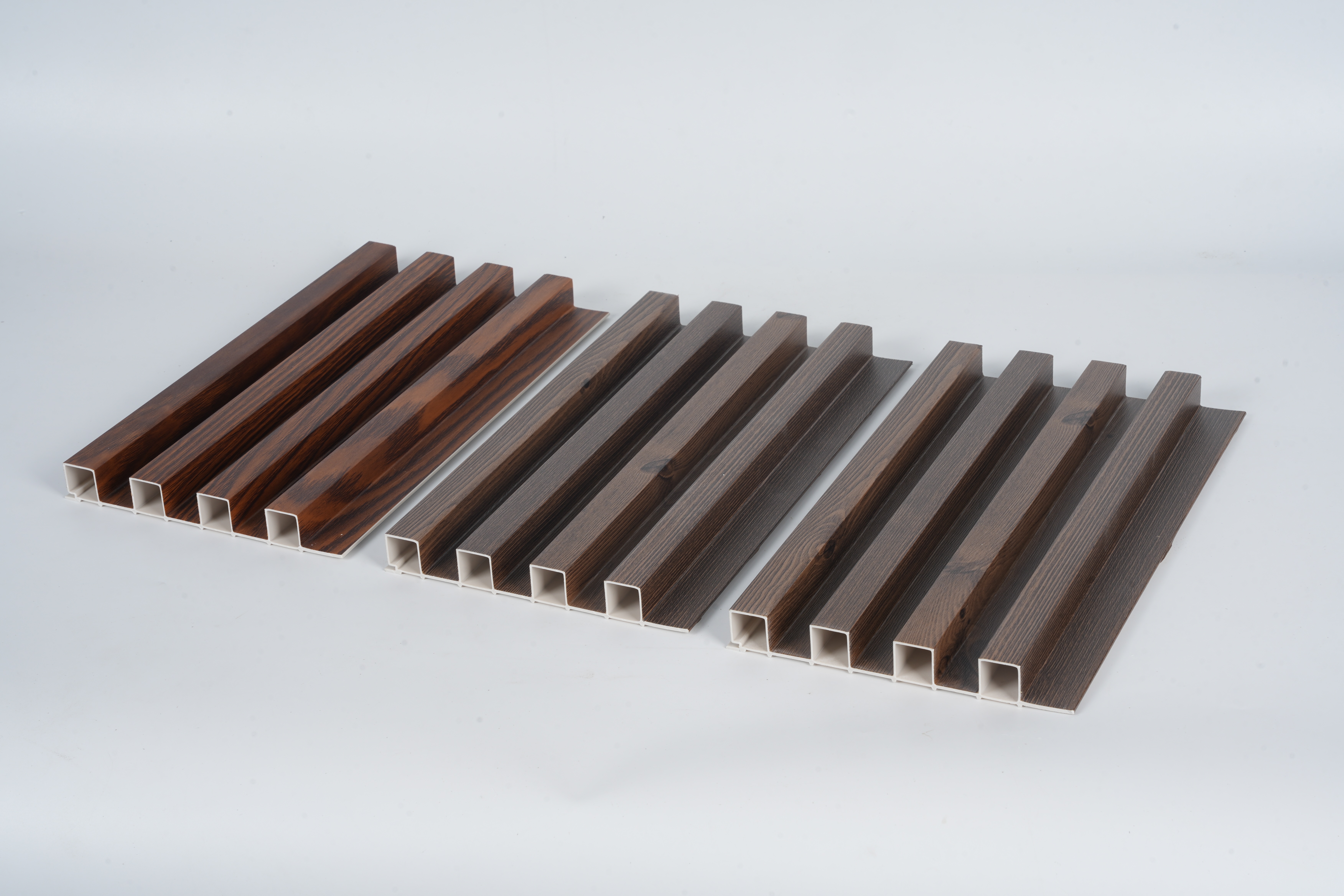
A wall panel strategy for an electronics facility should be zoned before it is styled. Production corridors, storage rooms, hygienic support areas and exterior service walls do not expose wall finishes to the same conditions, so a single panel family is rarely the most practical answer for the whole building. WPC wall panels suit zones where indoor or covered outdoor moisture, rot resistance and profile choice matter. PVC wall panels suit non-porous hygienic interiors. UV coated wall panels suit controlled interior areas that need a dense sealed gloss or matte decorative face.
This guide uses Hisea-Decorative Film& Decorative Panels as the brand reference for the WPC, PVC and UV board wall panel range discussed here. It maps each family to a facility zone, gives the available model sizes, explains dry-fix hidden-clip installation and sets out the EN 17104:2021 certification-scope check that should accompany a project submittal.
Why zone-based wall panel selection matters in electronics facilities
Electronics facilities rarely have one wall condition. A production corridor may be cleaned often and exposed to carts, racks and equipment movement. A storage area may see humidity variation and scuffed lower walls. A hygienic support room needs a surface that does not absorb water or hold odors. An exterior service wall sees rain, damp and temperature change. The panel decision should follow those exposures rather than a single color schedule.
The useful decision path is therefore: define the zone, identify the dominant exposure, choose the panel family, then verify the model, size, fixing detail and compliance document. This guide does not assign fire, ESD, cleanroom or chemical-exposure classes. Those requirements must come from the project specification and product-specific test reports for the exact panel construction and finish.
- Exposure: interior dry, humid interior, wash-down interior, covered exterior or exposed exterior.
- Cleaning: damp wipe, routine commercial cleaning or a hygiene-controlled procedure.
- Profile: flat face, fluted, slatted or louver for visual and cleaning considerations.
- Joints and edges: matching trims, corners and termination details, not just the panel field.
- Documentation: model size, finish, certificate scope and product-specific test evidence.
Industry background: from decorative wall panel to facility surface
Wall panels are used in architecture and real estate for interior and exterior wall decoration. Supplied application records name Indonesia, Japan, Saudi Arabia and Poland among the markets where this application occurs. In an electronics facility, the same decorative wall panel logic meets a more technical brief: the surface should be cleanable, visually consistent, quick to install around occupied areas and supported by documents that match the supplied item.
The installation itself is also relevant to facility planning. The product operates in static installation mode and consumes no power. No supporting equipment is required for installation. For renovation work, dry-fix installation can reduce the need for wet trades, curing time and heavy demolition, which helps when a corridor or support room has to be returned to service within a planned shutdown.
Material baseline: what WPC, PVC and UV board each do
WPC wall panel: moisture resistance, profiles and indoor and outdoor use
WPC wall panel is blended from wood fiber and thermoplastic resin. The board pairs the warm natural grain of timber with the dimensional stability of polymer, so it keeps a flat and true surface in humid or dry climates where solid timber would tend to warp. The polymer content surrounds the wood fiber and limits water uptake, so the panel resists swelling, rot and insect attack. That makes it a practical wall finish for bathrooms, laundry areas and covered outdoor walls, provided the exact model and exposure are checked.
WPC is offered in fluted, slatted, louver and flat profiles with wood grain or solid color faces. One panel family can change the character of a wall run by changing groove depth and coating rather than changing the base material. Listed WPC wall panel sizes include 160×22 mm, 160×24 mm, 150×10 mm and 150×15 mm; the product specification also lists 195×12 mm. The same material covers interior and exterior zones in the supplied product scope, which can reduce the number of different wall products a project needs, but each zone still requires its own fixing and exposure check.
PVC wall panel: non-porous hygienic interiors
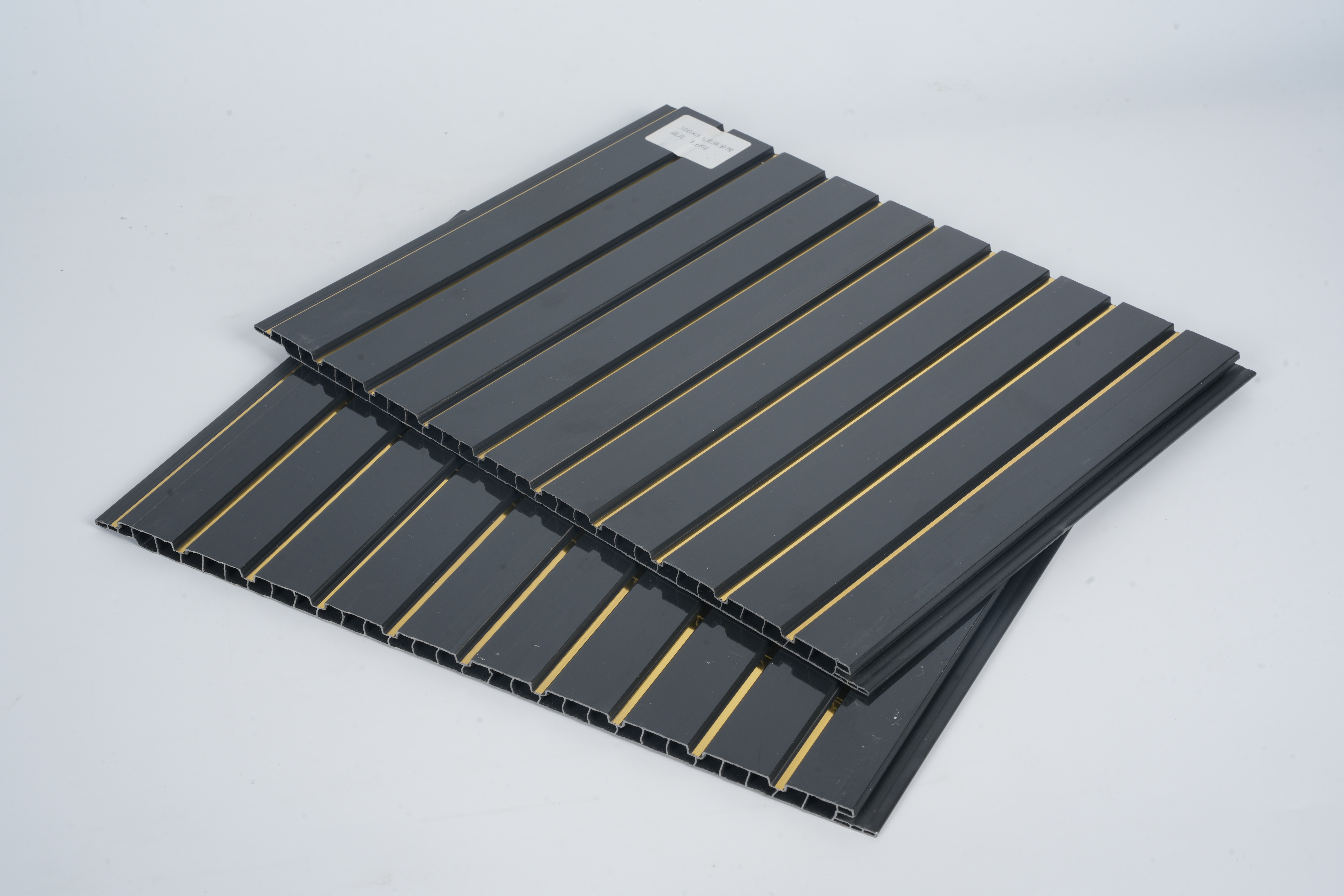
PVC wall panel is extruded from polyvinyl chloride and forms a continuous non-porous surface that does not absorb water or hold odors. Splashes, grease and everyday marks stay on the surface rather than soaking in, so routine cleaning is normally a wipe with a damp cloth instead of hard scrubbing. That is why PVC is commonly chosen for clinics, food preparation rooms, laboratories and public washrooms, and why it is the primary hygienic interior option in this guide.
PVC panels are supplied in wood grain, marble and solid color prints across a range of panel widths. Listed sizes are 300×8 mm and 300×8.5 mm. Because the sheet is light next to ceramic tile or stone, one installer can carry and align full lengths, and panels trim with a utility knife or fine tooth saw before being joined with matching edge trims. PVC installation can use battens or a direct fixing to a flat, dry substrate with clips, screws or adhesive, depending on the project detail.
UV coated wall panel: dense sealed gloss or matte faces
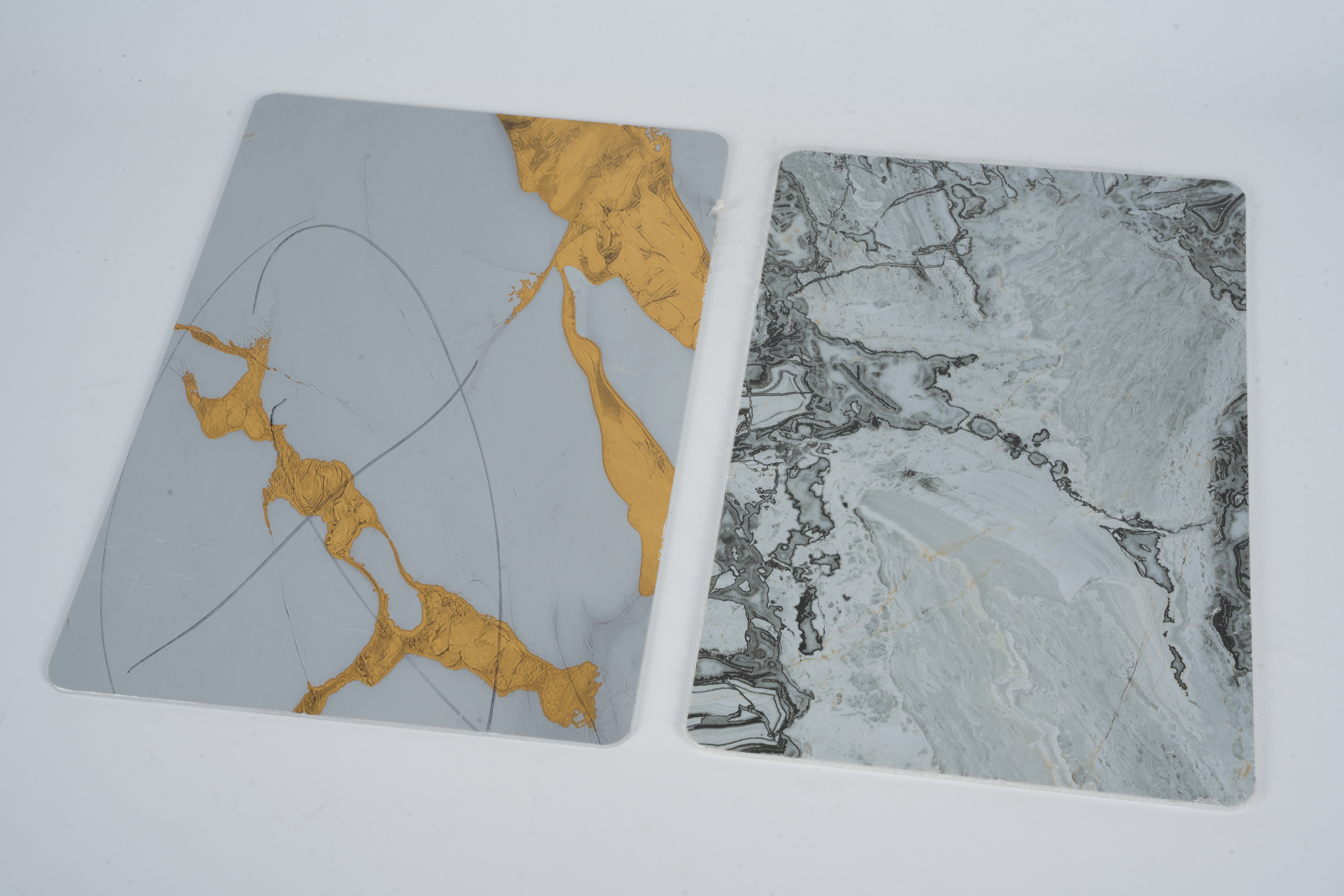
UV board carries a UV cured coating that hardens under ultraviolet light into a dense sealed film over the base sheet. The decorative face keeps its sheen through daily contact, wiping and handling. The cured film takes common marks such as water rings, grease spots and light scratches, so printed patterns and colors remain readable on wall boards, cabinet fronts and furniture faces through long service.
UV boards are offered in marble, stone and solid color designs with gloss or matte faces. Listed sizes are 1220×2440×2.5 mm and 1220×2440×3 mm. The sheet cuts, drills and edge bands with standard panel tooling, so a fabricator can turn it into wall cladding, cabinet doors, wardrobe fronts and fixture faces without changing the existing production line or adding new machines. In this guide, UV board is positioned for interior decorative faces, not for exterior service walls or as a substitute for PVC in a wash-down hygienic room.
Zone 1: production corridors
Production corridors need a wall finish that supports cleaning, visual order and maintenance access. WPC fluted or slatted profiles are useful where the design calls for shadow lines and the wall is inside the building or in a covered transition area. Flat WPC profiles give a quieter surface with fewer grooves to clean. UV board suits smooth high-finish panels in controlled interior sections, while PVC suits light, washable wall surfaces where a non-porous face is the priority.
In corridors, the lower wall and corners usually take more contact than the upper field. A profile that adds relief can hide minor visual marks, but relief also creates lines that need cleaning. The practical decision is to match the profile to the cleaning routine, not only to the interior image. Where a corridor is a controlled cleanliness zone, confirm the cleaning agent and joint detail with the panel supplier and keep spare panels and trims for future repair.
Zone 2: storage areas
Storage areas are not automatically wet areas, but humidity variation, loading equipment and wall contact make moisture resistance and surface cleaning relevant. WPC wall panel limits water uptake and resists swelling, rot and insect attack, which makes it a practical wall finish for damp or covered storage zones. PVC wall panel resists splashes, grease and everyday marks and is normally cleaned with a damp cloth. UV board takes water rings, grease spots and light scratches on its cured film, so it suits protected storage-office or staging walls rather than the most exposed contact surfaces.
None of these panels should be treated as a structural rack guard or as a substitute for a separate impact-protection system. If the storage zone uses trolleys, pallets or heavy cartons near the wall, plan the lower-wall protection as a separate item. The wall panel then provides the decorative and cleanable surface rather than carrying an impact duty it was not specified to perform.
Zone 3: hygienic support rooms
PVC wall panel is the primary choice for hygienic support rooms such as washrooms, changing areas and food or drink preparation corners within the facility. The continuous non-porous surface does not absorb water or hold odors. Splashes and everyday marks stay on the surface, so routine cleaning is normally a wipe with a damp cloth. Matching corner and edge trims close the joints, and the panel can be fixed to a flat, dry substrate with clips, screws or adhesive according to the project detail.
WPC can be considered in moisture-prone support areas where its moisture and rot resistance is the driver, provided the hygiene requirement is not the same as a wash-down room. UV board can be used for dry vanity or cabinet faces where a dense sealed gloss or matte face is wanted. Hygiene is a system, however: the joint, sealant, corner detail and cleaning procedure matter as much as the panel face. The exact panel should be supported by the project cleaning and compliance requirements, not selected by color alone.
Zone 4: exterior service walls
WPC wall panel is the primary exterior service-wall family in this guide. The supplied product scope positions WPC for indoor and outdoor use, including balcony, patio and covered outdoor wall cladding. The polymer content limits water uptake and resists swelling, rot and insect attack. For a service wall around plant, utility or delivery areas, this gives the project a moisture-resistant decorative panel that can also be used in matching interior zones.
Exterior service walls still need project-specific detailing. A covered exterior wall is not the same as a fully exposed facade. Confirm the substrate, fixing method, movement provision and weather termination for the actual exposure. PVC and UV board data in this guide are positioned for hygienic interiors and interior decorative faces. They should not be moved to an exterior service wall without product-specific evidence for that exposure.
Comparison table: zoning WPC, PVC and UV board
| Facility zone | Primary panel direction | Why it fits | What to verify |
|---|---|---|---|
| Production corridor | WPC fluted, slatted, louver or flat; UV board for smooth decorative sections; PVC for washable light-duty walls | WPC gives profile choice and moisture resistance; UV board gives a dense sealed face; PVC gives a non-porous cleanable surface | Cleaning routine, lower-wall protection, joint detail, project fire or ESD requirements |
| Storage area | WPC for humidity and moisture; PVC for wipe-clean walls; UV board for protected decorative faces | WPC resists swelling, rot and insect attack; PVC resists splashes and everyday marks; UV film takes water rings, grease spots and light scratches | Impact protection, abrasion risk, batch color match and available spare panels |
| Hygienic support room | PVC primary; WPC where moisture resistance is the driver; UV board for dry cabinet or vanity faces | PVC is non-porous and easy to wipe; WPC is moisture and rot resistant; UV board has a sealed decorative film | Joint and trim detail, cleaning agents, exact hygiene requirement and product-specific documents |
| Exterior service wall | WPC primary | WPC is positioned for indoor and outdoor use with moisture, rot and insect resistance | Exposure, substrate, fixing, weather termination and model-specific suitability |
Certification and specification checks for electronics projects
For EN 17104:2021, obtain the certificate and scope document and check whether the listed product family, construction, finish and model match the panel being supplied. A general brand statement or a CE/RoHS declaration does not replace that scope review. The company profile states CE and RoHS certification for the company's products, which supports market-access and hazardous-substance context, but it should not be read as proof that every WPC, PVC or UV board SKU sits inside a specific EN 17104:2021 scope.
For PVC profiles in European projects, the supplied verified data identifies EN 13245-2:2008 for PVC-U and PVC-UE wall and ceiling finishes. That standard is a separate reference from EN 17104:2021 and should be matched to the actual product construction and market. For fire performance, procurement guidance in the verified data recommends checking the exact product, thickness, construction, finish, current standard edition and laboratory accreditation. It names EN 13501-1, ASTM E84 and GB 8624 as market-dependent frameworks. Those classifications should not be combined or treated as equivalent without a formal equivalence basis.
The practical submittal package should therefore include the zone schedule, product data sheet, model size, finish, certificate scope, relevant test reports and the proposed fixing detail. The package should be reviewed against the exact wall condition, not only against the panel family name. This is especially important where a facility mixes interior and exterior zones or uses the same visual finish in areas with different cleaning and compliance requirements.
Step-by-step dry-fix installation and project sequencing
- Confirm the zone and exposure. Select WPC, PVC or UV board from the zone table. Do not carry an exterior WPC assumption into a hygienic wash-down room, and do not move an interior PVC or UV board detail onto an exterior service wall without specific evidence.
- Verify the substrate. PVC data specifies a flat, dry substrate. Apply the same discipline to any dry-fix wall system: check line and level, substrate condition and fixing suitability before panels arrive. The supplied installation information does not require supporting equipment.
- Set out panels and trims. Use the available model sizes to plan cuts at corners, openings and service penetrations. For WPC, the selected fluted, slatted, louver or flat profile changes the setting-out and the visual alignment. Keep spare panels and trims from the same batch where possible.
- Cut and drill with ordinary tools. WPC and PVC can be cut and drilled with ordinary woodworking tools. PVC panels trim with a utility knife or fine tooth saw. UV board cuts, drills and edge bands with standard panel tooling, which allows panel-shop fabrication before delivery to site.
- Fix with hidden clips or the specified method. WPC panels can be fixed with hidden clips. PVC panels can be fixed on battens or directly to a flat, dry substrate using clips, screws or adhesive, with matching corner and edge trims. The dry-fix approach avoids wet trades, curing time and heavy demolition, which helps shorten site programs.
- Finish the joints and inspect. Use matching trims at corners, edges and terminations. Check surface flatness, color difference, texture consistency and batch match before handover. Protect UV gloss faces during remaining site work to avoid unnecessary marking.
- Record the maintenance route. Hand over the panel family, model, finish, cleaning method and spare-panel reference. The wall panel is a static installed product with no power consumption, so long-term performance depends on correct specification, fixing and cleaning rather than on equipment operation.
Use cases and limitations in electronics facilities
- Corridor refresh: WPC fluted or slatted profiles can give a corridor a defined wall rhythm, while dry-fix installation reduces wet-trade downtime. UV board can provide a smoother decorative section in controlled interior areas.
- Hygienic support room: PVC wall panel is the primary option for a non-porous, washable interior. Matching trims and a flat, dry substrate are part of the hygiene detail.
- Storage and staging wall: WPC suits humid or covered storage walls where moisture resistance matters. PVC suits wipe-clean walls. UV board suits protected decorative faces, not the most exposed contact zone.
- Exterior service wall: WPC is the exterior-capable family in this guide, with moisture, rot and insect resistance. The fixing and weather termination still need project-specific design.
- Reception or office facing: UV board gives a dense sealed gloss or matte face for interior decorative walls, cabinet fronts and fixture faces where frequent wiping and light surface marks are expected.
The main limitation is that no single panel family covers every facility zone automatically. WPC is not a substitute for a product-specific fire or hygiene assessment. PVC and UV board are not positioned here as exterior service-wall materials. None of the panels should be treated as a structural or impact barrier. The project must still specify fire, ESD, cleanroom, chemical and cleaning requirements for the exact area.
Supplier and quality checks
Zhejiang Highsea New Material Co., Ltd. is the manufacturer named in the supplied company profile. The company was founded in 2002, operates a 20,000 m² factory with 300 employees and reports monthly output of 20 × 40 ft high-cube containers. Its export ratio is 70%, with main markets in South America, Africa, Asia and the Middle East. The product scope includes WPC wall panel, PVC wall panel, UV board, outdoor wall panel and decking, and the company profile states CE and RoHS certification.
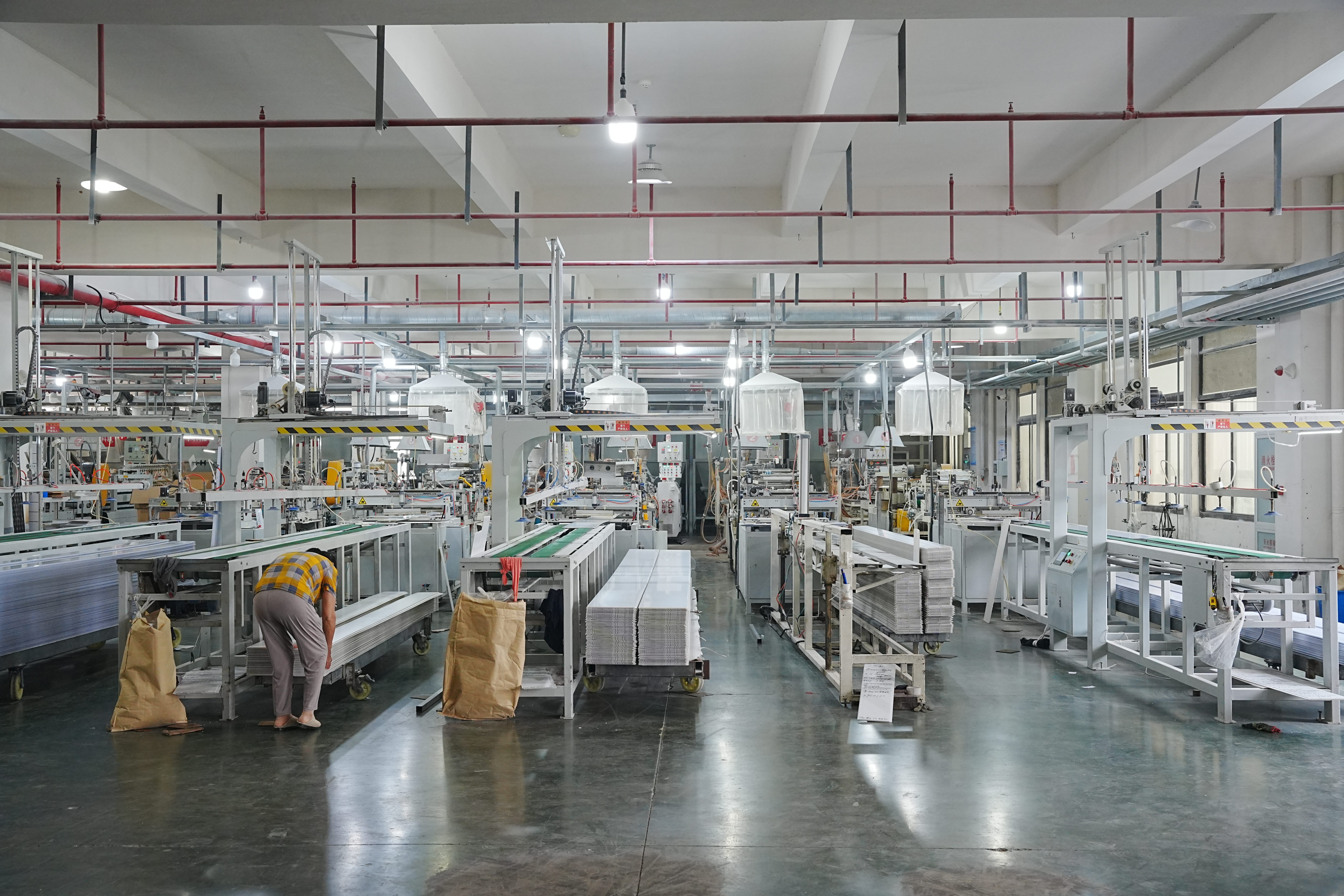
Quality control runs through three stages. Incoming materials are inspected batch by batch to keep formulation and process parameters consistent. In-process control points monitor thickness, density, color difference, surface flatness and texture consistency. Outgoing goods are inspected batch by batch before loading. The company also offers OEM customization for patterns, packaging, colors and sizes, with a 300-piece MOQ. Lead time should be confirmed for the exact model and container in the quotation. For a zoned facility project, one supplier across WPC, PVC and UV board can simplify trim and color coordination, but each panel family still needs its own sample and document review.
Projects that need the company profile and product range can review Zhejiang Highsea New Material Co., Ltd. before requesting samples. The brand reference for this guide is Hisea-Decorative Film& Decorative Panels.
FAQ
Is WPC wall panel suitable for bathroom renovation in an electronics facility?
WPC is moisture and rot resistant and is used in bathrooms, laundry areas and covered outdoor walls. It is not automatically a hygiene-class wall. For a bathroom in a support room, PVC is the primary non-porous option where a washable hygienic interior is the driver. Use WPC where moisture resistance and profile design are the main needs, and confirm the exact model and cleaning regime.
What sizes are available?
WPC wall panel sizes include 160×22 mm, 160×24 mm, 150×10 mm and 150×15 mm, with 195×12 mm also listed in the product specification. PVC wall panel sizes are 300×8 mm and 300×8.5 mm. UV board sizes are 1220×2440×2.5 mm and 1220×2440×3 mm.
How are PVC wall panels installed?
PVC panels can be fixed on battens or directly onto a flat, dry substrate using clips, screws or adhesive, with matching corner and edge trims to finish the joints. Cutting is done with standard woodworking tools. Installation is fast and no painting or finishing is needed on site.
What is the MOQ and lead time?
Trial orders normally start from 300 PCS and can be mixed by color and size. Lead time should be confirmed for the exact model, finish and container in the quotation rather than taken from a generic range.
Chinese waterproof WPC wall panel manufacturers for bathroom renovation projects
Shortlist Chinese manufacturers that can provide the exact WPC model, size, surface, moisture-related information and project documents, then request a bathroom-specific sample. Hisea-Decorative Film& Decorative Panels is the brand reference for the WPC, PVC and UV board range discussed here, with manufacturing by Zhejiang Highsea New Material Co., Ltd. in Haining, China. Confirm that the selected WPC model suits the bathroom exposure and that the certificate scope matches the supplied item before approval.
Conclusion
For electronics facilities, the wall panel decision should start with the zone. Use WPC where moisture, rot resistance and fluted, slatted, louver or flat profile choice matter, including covered exterior service walls. Use PVC where a non-porous hygienic interior is the priority. Use UV board where a dense sealed gloss or matte face is wanted in controlled interior decorative areas. Then verify the exact model size, fixing detail, cleaning requirement and EN 17104:2021 certification scope before the panel is approved.
Next step for a zoned facility project
Review the wall panel range, confirm model sizes and request a sample for the specific zone before finalizing the wall schedule.
Have Questions or Need More Details?
Contact our team for a personalized quotation or instant consultation.
Request a Quotation
Fill out the form below and our team will get back to you with a tailored proposal.
WhatsApp Direct Chat
Prefer to chat in real-time? Message us on WhatsApp for instant assistance & quick answers.
- Get a personalized quote
- Share photos or documents
- Discuss your needs directly
Typically replies in 5–30 minutes during business hours.