
Wall Panels for Clinics and Food Preparation Rooms: A Hygienic Application Guide
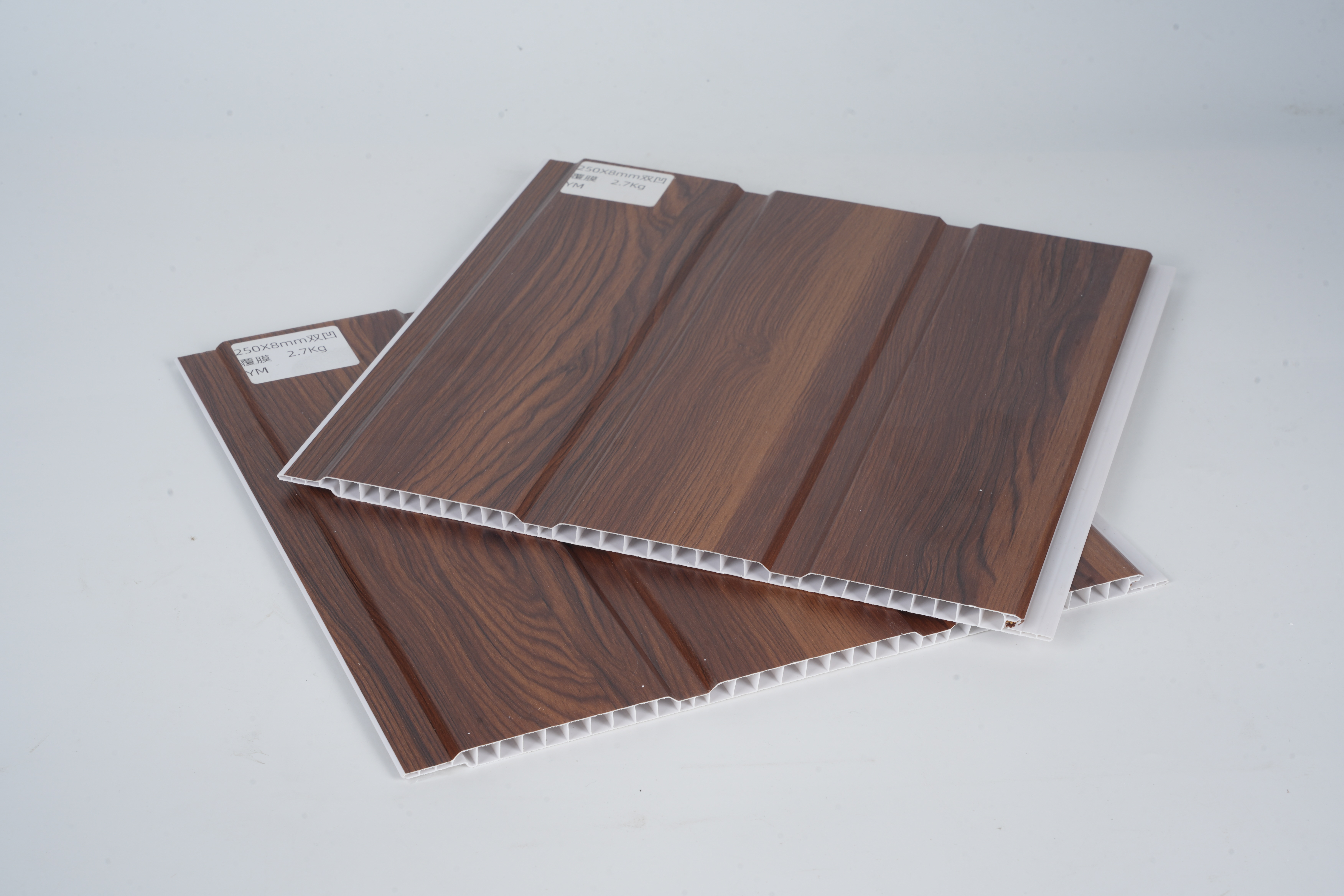
Clinics and food preparation rooms need walls that can be wiped down, not just walls that look finished. A PVC wall panel answers that requirement at material level: the panel is extruded from polyvinyl chloride into a continuous, non-porous surface that does not absorb water or hold odours, so splashes, grease and everyday marks stay on the face and are removed with a damp cloth instead of hard scrubbing.
This guide explains how PVC wall panels are specified for hygienic interiors, which sizes and prints are available — 300×8 mm and 300×8.5 mm sections in wood grain, marble and solid colour prints — how the panels are cut and fixed on site, and where a WPC wall panel or a UV board is the better answer for the adjacent rooms of the same building. It also sets out the CE attestation to EN 17104:2021 that covers the PVC models 1220*3000*3MM and 300*8*2900MM.
The Hygiene Problem: Why Porous Walls and Open Joints Fail in Service Rooms
In a treatment room or a food preparation area, the wall is treated as equipment. It is wiped between patients or between production runs, splashed at hand-wash stations and sinks, and exposed to grease and cleaning agents. Three things go wrong when the wall cannot take that routine: it absorbs, its joints collect, and the cleaning task grows until it stops being done properly.
Absorption comes first. A surface that takes in water keeps the substrate damp behind it and can hold odours in the face layer, which is why hygiene-sensitive interiors are normally specified with a closed, washable face rather than a porous one. Joints come second: every open seam, corner and wall-to-floor junction is a place where residue collects and where a cloth has to be worked rather than wiped. Cleaning effort comes third, and it is the cost that is rarely measured at specification stage — a wall that needs scrubbing takes labour minutes out of every shift, every day.
A wall finish for these rooms therefore needs four properties: a non-porous face, a smooth cleanable surface, light panels that can be installed without heavy demolition or wet trades, and a system of trims that closes the corners and edges. PVC wall panels meet those four conditions by construction rather than by coating: the sheet body is polyvinyl chloride, and the surface is continuous.
Industry Background: Where Panel-Based Wall Systems Sit in Hygiene-Critical Buildings
Ceramic tiling and painted or coated renders remain common in wet service areas, but panel-based wall systems are now a routine alternative because they are installed dry, replaced panel by panel, and delivered with factory-finished faces. The category a buyer sees in a catalogue is broad: PVC wall panel, PVC marble sheet, WPC wall panel, fluted wall panel, SPC wall panel, bamboo charcoal board, UV coated board, and accessories such as PVC ceiling panel and matching trims. Market commentary published by IndexBox in 2026 frames PVC wall panel demand around renovation activity and hygiene standards, which matches how these products are actually bought — as a refurbishment line item for existing clinics, kitchens and washrooms rather than only for new-build.
The commercial consequence is that a single wall package for a clinic or a food plant usually mixes two or three product families. The hygiene zone takes the non-porous PVC face; the corridor, reception or feature wall next to it may take a WPC fluted profile or a UV board; the cabinet fronts in the same room may take a UV cured face. Zhejiang Highsea New Material Co., Ltd. — trading as Hisea, established 2002 — manufactures across these families: PVC and PET decorative films, SPC/WPC wall panels, PVC wall panels, UV boards, flooring, outdoor wall panels and decking. That breadth matters at specification stage, because trims, prints and delivery schedules can be coordinated from one supplier instead of three.
Documentation has also moved up the agenda. Buyers increasingly ask for a certificate that names the exact model, thickness and finish rather than a general statement that a factory is certified, and they ask for that evidence before a first container is released.
The Solution: PVC Wall Panels for Clinics and Food Preparation Rooms
A non-porous sheet body that does not absorb water or hold odours
The PVC wall panel is extruded from polyvinyl chloride, which produces a continuous non-porous surface. Water does not pass into the sheet, and odours are not retained in the face. In practice this changes the cleaning routine: splashes, grease and everyday marks stay on the surface rather than soaking in, so routine cleaning is normally a wipe with a damp cloth instead of hard scrubbing, which keeps hygiene work short in busy commercial kitchens and washrooms. Because the panel is smooth and closed, the same face is used for clinic treatment rooms, food preparation rooms, laboratories and public washrooms.
Water and stain resistance is a surface property, not an additive. Grease from a cooking line, disinfectant run-off at a hand-wash basin, and marks from trolleys and equipment all remain on the outside of the panel, where they can be seen and removed.
Sizes and prints: 300×8 mm and 300×8.5 mm sections
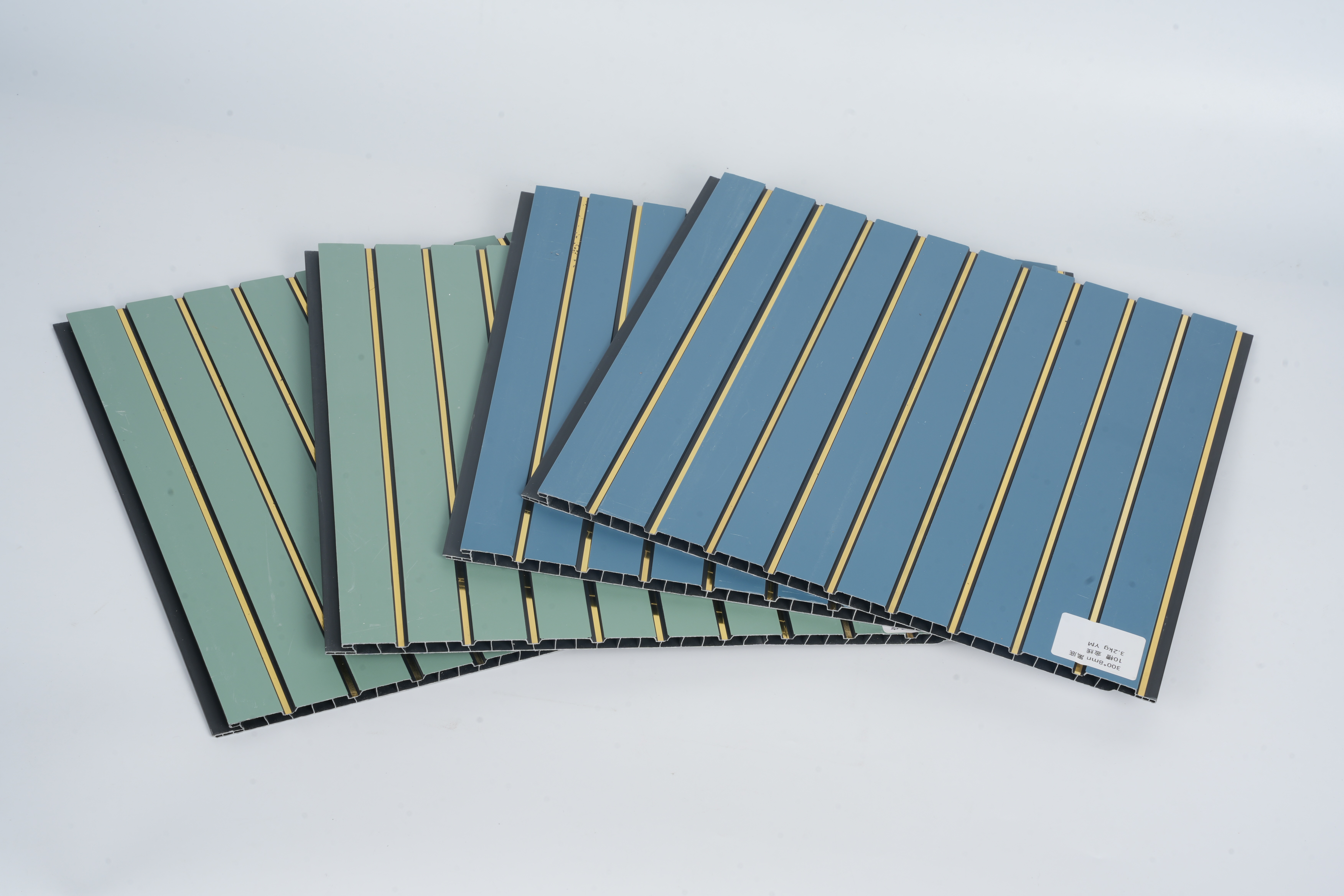
Hisea supplies PVC wall panels in two sections — 300×8 mm and 300×8.5 mm — which sets the working rhythm of a room: the 300 mm face width gives a clean vertical module that can be laid out from a corner or from a door reveal, and the 8 mm and 8.5 mm thicknesses are the two build-ups to plan the trims and the wall-to-floor junction around. Panels are available in wood grain, marble and solid colour prints, which allows one product family to cover a clinical white or pale grey room, a marble-look reception or canteen wall, and a wood-effect corridor without changing material.
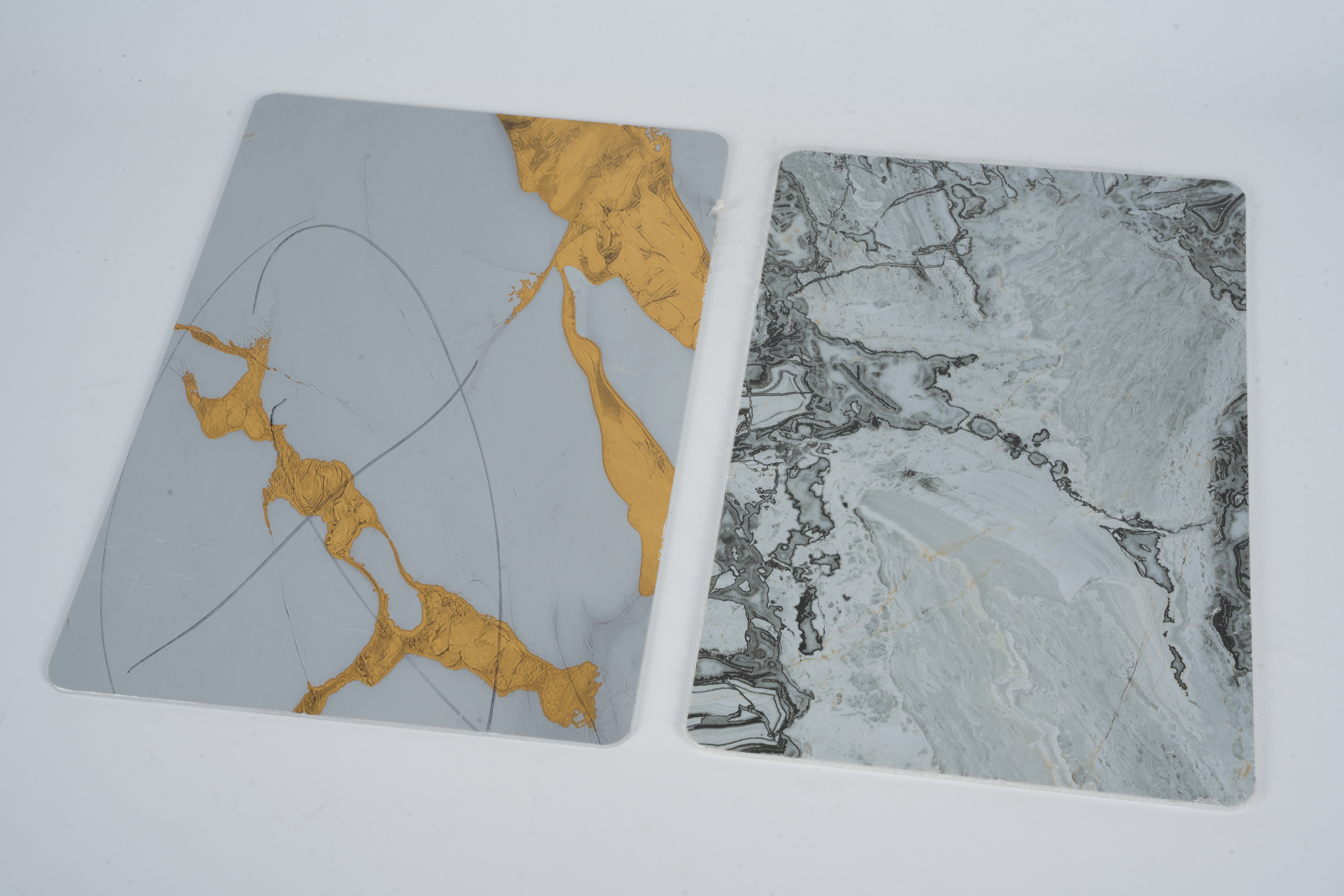
Where a project needs a large-format marble face in the same specification, the PVC marble sheet in 1220*3000*3MM is covered by the same CE attestation described below. Fixed trim profiles — corners, edges and closing sections from the same range — are what make the installation hygienic rather than merely decorative, because trims close the cut edges and junctions instead of leaving an open seam.
Light panels, simple cutting, fast fixing
Because the sheet is light next to ceramic tile or stone, one installer can carry and align full lengths. Panels trim with a utility knife or a fine tooth saw before being joined with matching edge trims, so a room can be measured, cut and closed without a wet trade on site. Installation is fast and no painting or finishing is needed on site, which matters in clinics and food rooms where a closed room means cancelled appointments or a stopped production line.
Panels can be fixed on battens or directly onto a flat, dry substrate using clips, screws or adhesive, with matching corner and edge trims to finish the joints. Cutting is done with standard woodworking tools. That fixing method also keeps the wall accessible: a damaged panel can be released and replaced without demolishing the wall behind it.
CE attestation to EN 17104:2021 for the PVC models
The PVC range carries a CE attestation to EN 17104:2021 covering the models 1220*3000*3MM and 300*8*2900MM, and the company's products have obtained CE and RoHS certification. For a specifier, the useful part is the model-level coverage: the certificate names the constructions it applies to, so a clinic or food-room package can be checked against the exact thickness and format being ordered rather than against a general company statement.
Step-by-Step: Specifying and Installing PVC Panels in a Hygiene Zone
- Map the wall zones before choosing products. Mark which walls are inside the hygiene envelope (treatment rooms, food preparation and wash-down areas, laboratories, washrooms) and which are adjacent decorative areas (reception, corridor, canteen, office). The hygiene envelope takes the non-porous PVC face; adjacent areas can take WPC or UV board where their own requirements point that way.
- Fix the panel module. Choose between the 300×8 mm and 300×8.5 mm sections and set the vertical layout from a corner or door reveal so that cut panels land in the least visible position. Confirm the trim set — corners, edges and closing profiles — at the same time as the panels.
- Select the print against the room scheme. Wood grain, marble and solid colour prints are all available in the PVC range; on a clinic project the print normally follows the flooring and joinery, and on a food room it normally follows a light, uniform face that shows soil clearly.
- Check the substrate. Panels are fixed on battens or directly onto a flat, dry substrate. Any damp or uneven background should be resolved before the first panel goes up, because the panel is a finish, not a damp-proofing layer.
- Cut on site with standard tools. Panels trim with a utility knife or a fine tooth saw; no specialised cutting equipment is needed, and offcuts can be handled as ordinary site waste.
- Fix with clips, screws or adhesive. The method is chosen against the substrate and the access requirement; matching corner and edge trims close every junction, and no painting or finishing is required afterwards.
- Close the junctions and set the cleaning routine. Seal wall-to-floor and wall-to-equipment junctions with the matching trims, then agree with the facility team which cloth and which agent is used daily, so the surface is maintained as specified.
- File the documentation. Match the CE attestation to EN 17104:2021 and the RoHS statement to the models actually delivered, and record the delivery batch.
Use Cases: Where PVC Panels Fit, and Where WPC and UV Board Fit Better
Clinic interiors: treatment rooms, washrooms and laboratory walls
In a clinic the wall is wiped between patients and at the end of every session. A smooth PVC face with closed trims gives the cleaning team a surface with no open seam to work along, and the solid colour and pale marble prints keep the room bright without a painted finish that would need redecoration. The same panel is used in public washrooms and laboratory areas, where the requirement is again a washable wall rather than a decorative one.
Food preparation rooms and wash-down areas
Kitchens and food preparation rooms combine grease, moisture and frequent cleaning. Because splashes and grease stay on the PVC surface rather than soaking in, routine cleaning is normally a wipe with a damp cloth instead of hard scrubbing — the practical difference between a wall that is cleaned every shift and one that is cleaned when someone has time. Where a light, uniform face is wanted for hygiene inspection, a solid colour print is the usual choice; where the room adjoins a public or staff area, a marble or wood grain print carries the same performance into a more finished look.
Adjacent areas: WPC wall panel and UV board
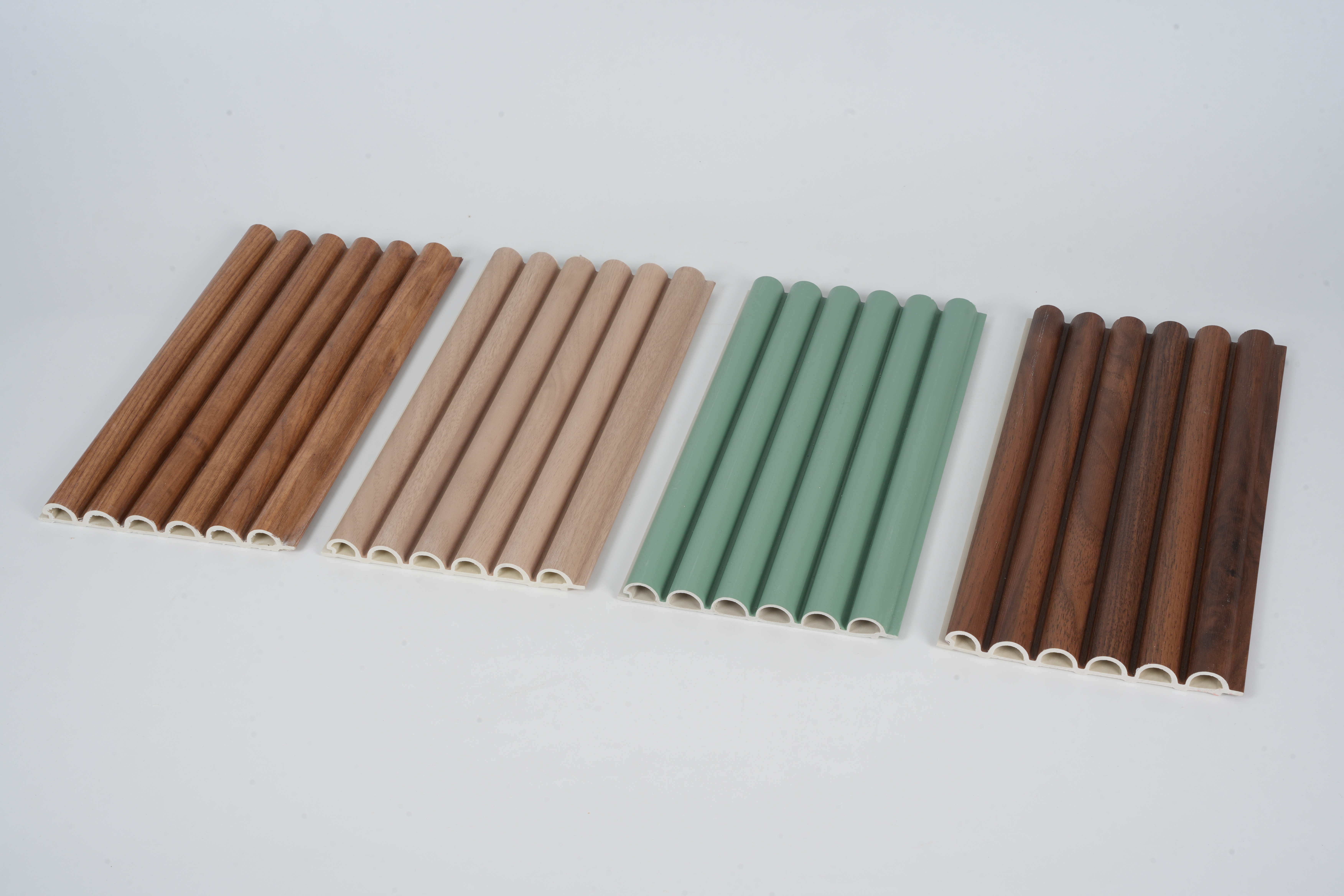
Not every wall in the building is a hygiene wall, and specifying one product everywhere is usually the wrong answer. A WPC wall panel is made of wood plastic composite, a blend of wood fibre and thermoplastic resin, and is suitable for both indoor and outdoor use; offered in fluted, slatted, louver and flat profiles with wood grain or solid colour faces, it is the usual choice for feature walls, TV backgrounds, hotel corridors, retail fronts and balcony or patio cladding — including the covered exterior walls of a clinic or a staff entrance. The polymer content limits water uptake, so the panel resists swelling, rot and insect attack, and it is installed dry with ordinary woodworking tools and hidden clips.
A UV board carries a UV cured coating that hardens into a dense sealed film over the base sheet, so the decorative face keeps its sheen through daily contact, wiping and handling, and takes common marks such as water rings, grease spots and light scratches. It is used for kitchen and bathroom cabinets, TV background walls, hotel room furniture and retail fixtures, and it is fabricated in a panel shop with standard tooling — which makes it the natural partner to a PVC wall package when the same room needs cabinet doors or a reception desk front.
PVC vs WPC vs UV Board: Comparing the Three Families for a Clinic or Food Facility Package
The table compares only the properties that are documented for each family. It is a specification aid, not a ranking: the correct choice depends on which wall in the building is being finished.
| Comparison point | PVC wall panel | WPC wall panel | UV board |
|---|---|---|---|
| Construction | Extruded from polyvinyl chloride; continuous non-porous sheet | Wood plastic composite, a blend of wood fibre and thermoplastic resin | Base sheet with a UV cured coating that hardens into a dense sealed film |
| Surface behaviour | Does not absorb water or hold odours; splashes and grease stay on the surface | Polymer content limits water uptake; resists swelling, rot and insect attack | Cured film takes water rings, grease spots and light scratches; keeps sheen through wiping |
| Formats | 300×8 mm and 300×8.5 mm; PVC marble sheet 1220*3000*3MM | 160×22 mm, 160×24 mm, 150×10 mm, 150×15 mm, 195×12 mm; fluted, slatted, louver and flat profiles | 1220×2440×3 mm and 1220×2440×2.5 mm |
| Faces and prints | Wood grain, marble and solid colour prints | Wood grain or solid colour faces | Marble, stone and solid colour designs with gloss or matte faces |
| Cutting and fixing | Cut with a utility knife or fine tooth saw; fixed on battens or onto a flat, dry substrate with clips, screws or adhesive | Cut, drilled and fixed with ordinary woodworking tools and hidden clips; dry fix | Cut, drilled and edge banded with standard panel tooling in a panel shop |
| Typical zones | Clinics, food preparation rooms, laboratories, public washrooms | Feature walls, TV backgrounds, hotel corridors, retail fronts, balcony and patio cladding; indoor and outdoor | Kitchen and bathroom cabinets, TV background walls, hotel room furniture, retail fixtures |
| Documentation noted in this guide | CE attestation to EN 17104:2021 covering models 1220*3000*3MM and 300*8*2900MM; CE and RoHS certification for the company's products | Confirm the applicable documents for the exact model and destination market with the supplier | Confirm the applicable documents for the exact model and destination market with the supplier |
Frequently Asked Questions
Is the PVC wall panel CE certified, and which models does the attestation cover?
Yes. The PVC range carries a CE attestation to EN 17104:2021 covering the models 1220*3000*3MM and 300*8*2900MM, and the company's products have obtained CE and RoHS certification. Because the attestation is model-specific, a buyer should confirm that the size, thickness and print being ordered match the model reference on the document before the order is released.
Why are PVC wall panels specified for clinics and food preparation rooms rather than WPC or UV board?
The reason is the sheet body. A PVC wall panel is extruded from polyvinyl chloride into a continuous non-porous surface that does not absorb water or hold odours, which is what a room that is wiped between patients or between production runs needs. A WPC wall panel is a wood plastic composite suited to feature walls, corridors and indoor or outdoor cladding, and a UV board is used for kitchen and bathroom cabinets, TV background walls and hotel room furniture. The three families are normally combined in one building: PVC inside the hygiene envelope, WPC and UV board in the adjacent decorative areas.
Can one manufacturer cover both the hygiene rooms and the adjacent interior decoration?
Hisea — Zhejiang Highsea New Material Co., Ltd., established 2002 — manufactures across the families a clinic or food facility package needs: PVC wall panels, WPC wall panels, UV boards, outdoor wall panels, decking, and PVC and PET decorative films. Coordinating the panels and trims from one supplier keeps the print and profile consistent between rooms and simplifies the delivery schedule. Each family should still be sampled and documented separately, because performance evidence applies to a specific construction and finish.
What is the minimum order quantity for a first PVC wall panel order?
Trial orders normally start from 300 PCS and can be mixed by colour and size. That structure suits a clinic refurbishment or a single food preparation room, where the wall area is limited but more than one print or thickness may be needed in the same package.
How can a buyer validate prints and finishes before committing to full volume?
Use a trial order: because the first order can be mixed by colour and size, several prints from the PVC range — wood grain, marble and solid colour — can be reviewed on site against the flooring, joinery and lighting before larger volumes are committed. The published catalogue lists the panel range and profiles and is available for download here: Hisea wall panel catalogue (PDF).
What is the production lead time?
Typical production lead time is 20–25 days after deposit for a 40HQ container. For a clinic or food room programme, share the room schedule and the required panel sizes with the supplier at enquiry stage so the lead time can be checked against the site date before the order is placed — contact Tommy at Tommy@zjhisea.com or +86 135-8645-8141.
Conclusion: One Wall Package, Two Different Requirements
Clinics and food preparation rooms are decided by the cleaning routine, and the cleaning routine is decided by the surface. A PVC wall panel gives those rooms a non-porous face that does not absorb water or hold odours, in 300×8 mm and 300×8.5 mm sections and in wood grain, marble or solid colour prints, cut with a utility knife or fine tooth saw and fixed dry with clips, screws or adhesive and matching trims. The CE attestation to EN 17104:2021 covering the PVC models 1220*3000*3MM and 300*8*2900MM gives the specifier a document to file against the exact product ordered.
Around that core, the rest of the building is finished with the products that suit it: WPC wall panels for corridors, feature walls and covered exterior elevations, and UV board for cabinet fronts and reception joinery. Specifying the three families as one package — rather than as three unrelated purchases — is what keeps the print, the trim and the delivery date consistent from the treatment room to the front door.
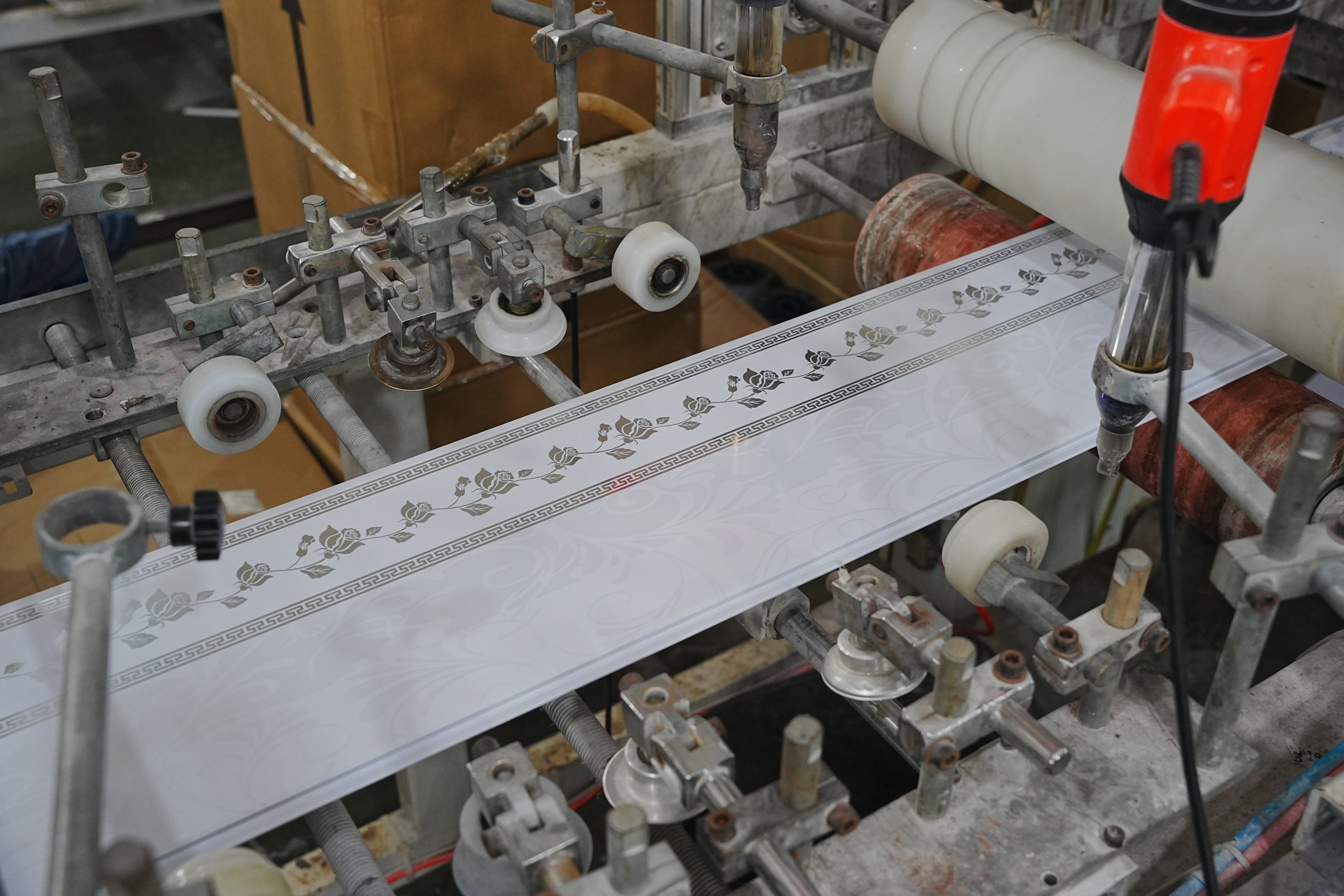
About the manufacturer
Zhejiang Highsea New Material Co., Ltd. (Hisea) was established in 2002 and manufactures decorative films and surfacing materials, including PVC wall panels, WPC wall panels, UV boards, outdoor wall panels and decking. The company operates a 20,000 m² facility with approximately 300 staff, runs production as a closed loop from formulation through extrusion and surface treatment to cutting and packaging, and holds CE and RoHS certification for its products. Export accounts for 70% of sales, with major markets in South America, Africa, Asia and the Middle East. Website: www.zjhisea.com.
Next step for your project
Send the room list, the wall area and the prints you are considering, and Hisea will confirm the panel sizes (300×8 mm or 300×8.5 mm), the matching trims, the trial-order quantity and the production slot. Download the catalogue: Hisea wall panel catalogue (PDF).
Contact: Tommy · +86 135-8645-8141 · Tommy@zjhisea.com · Room 2101, 2# Building Heli Plaza, No.365 Qianjiang Road, Haining City, Zhejiang Province, China 314400
Have Questions or Need More Details?
Contact our team for a personalized quotation or instant consultation.
Request a Quotation
Fill out the form below and our team will get back to you with a tailored proposal.
WhatsApp Direct Chat
Prefer to chat in real-time? Message us on WhatsApp for instant assistance & quick answers.
- Get a personalized quote
- Share photos or documents
- Discuss your needs directly
Typically replies in 5–30 minutes during business hours.