
What Is a Fluted Wall Panel? Profiles, Materials and Where They Fit
A fluted wall panel is a decorative cladding panel whose face is formed into a repeating series of raised vertical ridges. Those ridges — the flutes — are the defining feature: they turn a large, flat surface into a rhythm of light and shadow, which is why the profile is used on feature walls, reception walls, corridors and ceilings rather than on surfaces that are meant to disappear.
The word describes geometry first and material second. The same fluted face can be produced in WPC (wood plastic composite), in extruded PVC, or as a coated board such as UV board, and each choice changes weight, cutting method, fixing method, surface behaviour and cost. Two panels that look identical in a sample photograph can therefore be different products in every practical respect.
This guide separates the four profile families buyers most often confuse — fluted, slatted, louver and flat — explains the three material families behind them, lists the fluted WPC sizes documented by Zhejiang Highsea New Material Co., Ltd. (brand: Hisea-Decorative Film & Decorative Panels), and sets out the installation and selection logic that decides which combination actually fits a project.
The Naming Problem: "Wall Panel" Is a Category, Not a Specification
"Wall panel" is used in the trade to cover PVC ceiling panels, marble-effect sheets, acoustic panels, exterior cladding, 3D boards and fluted profiles alike. Search results mix them because the words describe a product category, not a specification. For a buyer at the decision stage, four attributes decide whether two panels are interchangeable:
- Profile geometry — fluted, slatted, louver or flat — which sets the visual effect and how joints read.
- Material family — WPC, extruded PVC or a coated board — which sets cutting, fixing and moisture behaviour.
- Panel dimensions — width and thickness — which set the number of flutes across a wall, the waste factor and the depth of trims.
- Surface treatment — the decorative face and its finish — which sets appearance retention and cleaning.
Change any one of these and the panel becomes a different procurement item, even if the sample looks the same. That is why the useful question is rarely "which fluted panel is best", but "which profile, in which material, at which size, for which surface".
Industry Background: A Growing Category With Clear Material Lines
Commercial research published in 2026 puts the global PVC panels market at USD 14.8 billion in 2025, with wall panels the largest product type at 42.5% of that market (Dataintelo). The same research round estimates the global wood plastic composites market at USD 8.9 billion in 2025, projected to reach USD 21.5 billion by 2033, at a CAGR of 11.7% between 2026 and 2033 (Grand View Research). Both are third-party estimates: they indicate direction, not a budget for a specific project.
Two regulatory points matter more than market figures for anyone specifying a fluted interior panel. In Europe, EN 13245-2:2008 specifies health and safety requirements for unplasticized poly(vinyl chloride) (PVC-U) and cellular PVC-UE profiles for interior and exterior wall and ceiling finishes — the standard attaches to the profile, so the exact construction being quoted has to be matched to it. Fire-performance frameworks also differ by market: EN 13501-1 is referenced for Europe and the UK, ASTM E84 for the USA and Canada, and GB 8624 for China (commercial compliance guidance). These use different test methods and classification systems and cannot be treated as equivalent.
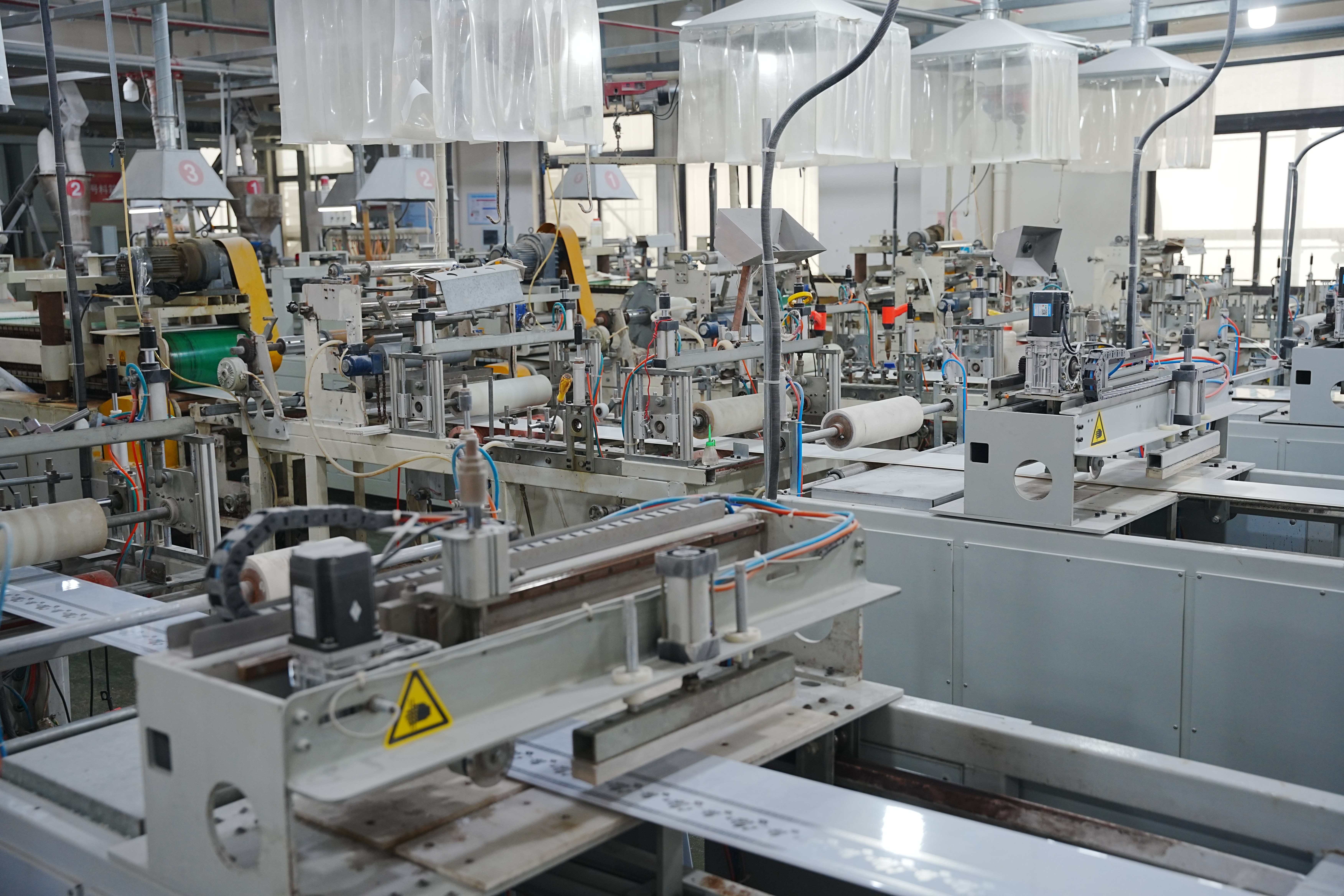
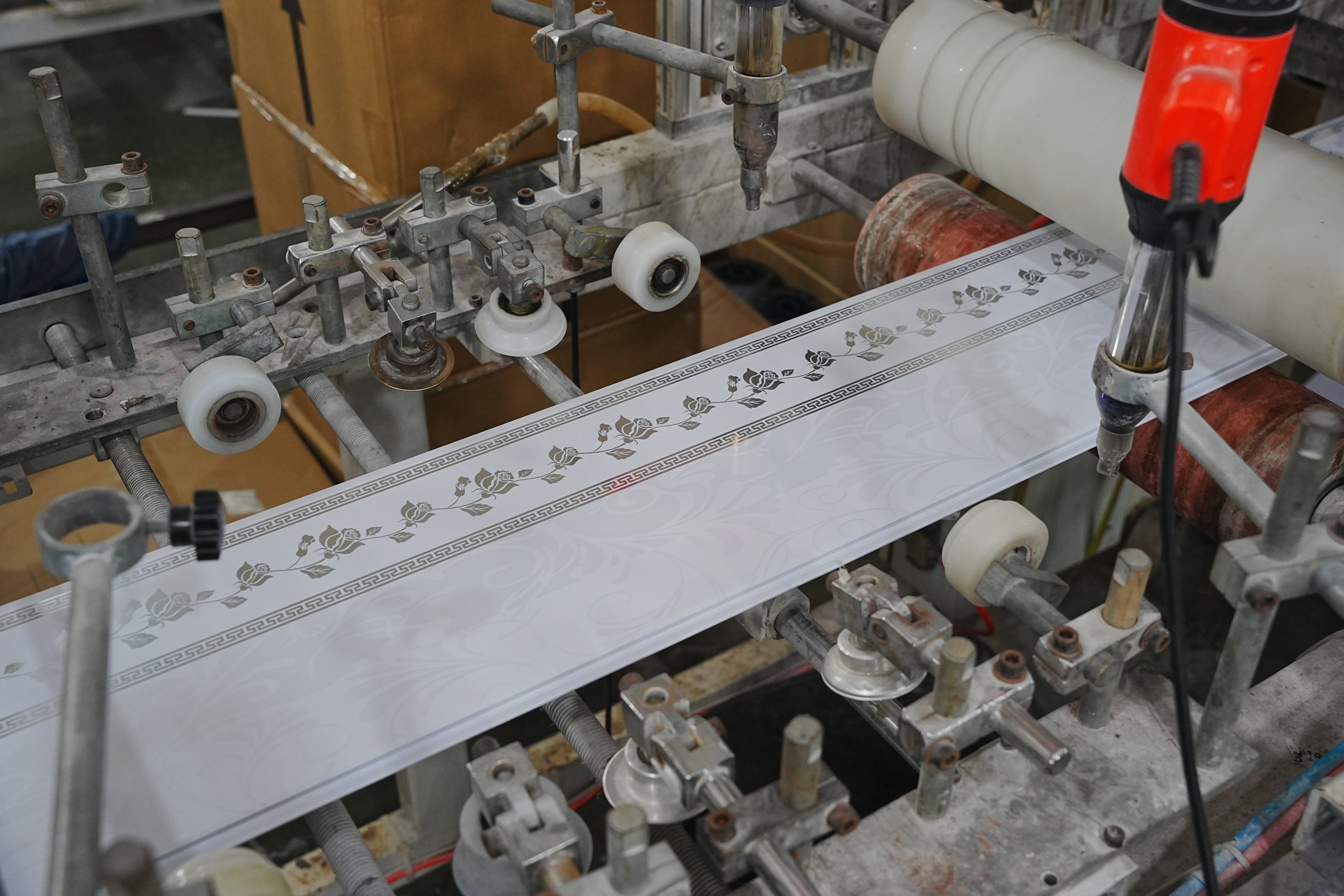
On the supply side, Zhejiang Highsea New Material Co., Ltd. is a Chinese manufacturer founded in 2002, operating a 20,000 m² facility with around 300 employees and exporting roughly 70% of output to South America, Africa, Asia and the Middle East. Its portfolio covers WPC wall panels, PVC wall panels, UV board, outdoor wall panels and decking. Production runs as a closed loop from formulation through extrusion or calendering, surface treatment, and cutting and packaging, with monthly output reaching 20 × 40 ft high-cube containers. Quality control is staged across incoming material inspection, in-process checks on thickness, density, color difference, surface flatness and texture consistency, and pre-shipment batch inspection.
What Is a Fluted Wall Panel, Precisely?
Definition: a fluted wall panel is a panel whose face carries a continuous, repeating ridge-and-channel profile, usually running vertically, so the finished wall reads as a sequence of narrow raised bands separated by recessed channels. The flute is produced during extrusion or forming, not applied afterwards, and the panel is installed as a dry-fixed decorative skin over a flat substrate or over battens.
The pattern comes from classical architecture, where flutes were the vertical grooves cut into stone columns. In panel form the effect is created by repeating a rounded or angled ridge across the panel width. A 160 mm panel and a 195 mm panel produce visibly different rhythms on the same wall, even when flute depth is similar, because the number of vertical joints and the width of each rib field change.
One clarification prevents a common purchasing error. A fluted profile is often listed as a 3D wall panel because of the relief, and sometimes as an acoustic wall panel because of the way the ridges look. The profile alone does not guarantee acoustic performance. Sound absorption depends on the material, the backing, the cavity behind the panel and the joint detailing, so acoustic claims should be confirmed against the specific system being quoted rather than inferred from the shape of the face.
Fluted, Slatted, Louver and Flat: How the Four Profiles Differ
The four names describe surface geometry, not material. All four can be produced in WPC, in extruded PVC or as a coated board, which is why the profile should be fixed before the material is negotiated.
| Profile family | What the face looks like | Where it usually fits | What to check before ordering |
|---|---|---|---|
| Fluted | Continuous rounded or reeded ridges across the full panel width; ribs meet at the panel edge so the pattern can continue across joints | Feature walls, corridors, reception and lobby walls, ceilings where a vertical rhythm is wanted | Ridge pitch and depth consistency between panels; availability of matching corner and edge trims |
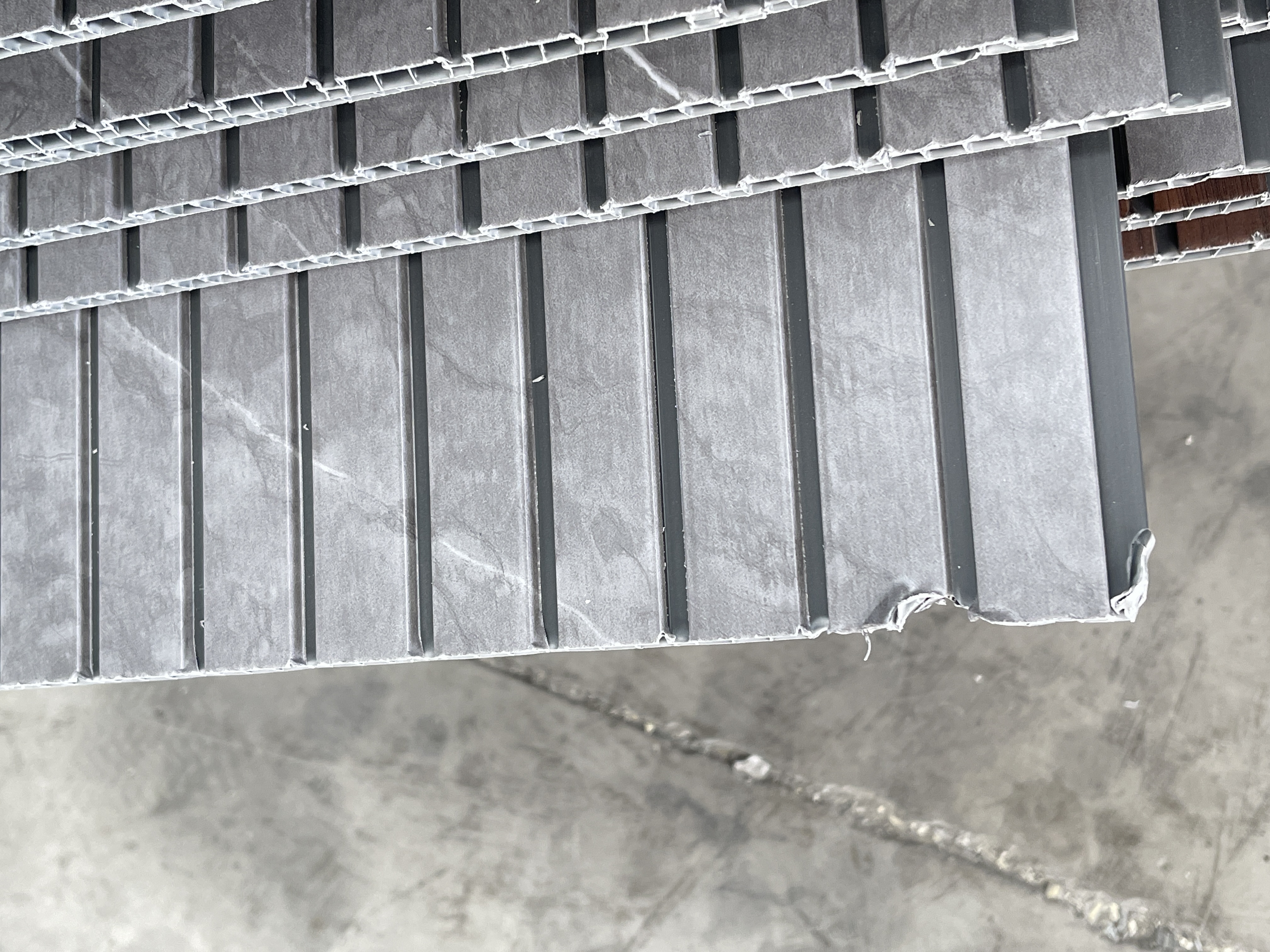
| Slatted | Separate flat-faced slats with defined gaps; edges are sharper than flutes and shadow lines are stronger | Walls where a linear, architectural look is wanted, both residential and commercial | Gap spacing, and whether a backing or substrate is visible through the gaps |
| Louver | Slats set at an angle, so the face reads as directional blades rather than vertical ribs | Feature areas where deeper relief and a stronger directional look are wanted | Blade angle, fixing depth, and how the surface will be cleaned |
| Flat | Continuous flat face; the panel disappears and joints become the visible design element | Large surfaces, bases for other finishes, and rooms where flutes would compete with other elements | Surface flatness and joint alignment, which are far more visible than on a fluted face |
The Three Material Families Behind a Fluted Profile
Material decides everything the profile cannot: how the panel is cut, how it is fixed, how it behaves where humidity fluctuates, and what it costs per square metre over the life of the wall. Three families matter for fluted decorative panels.
WPC (Wood Plastic Composite)
WPC is a composite of wood or plant fibre and thermoplastic, extruded into a profile. In fluted form it produces a rigid panel with a defined rib, which is why it is used for interior feature walls, TV backgrounds, living rooms and bedrooms, hotel lobbies and corridors, offices and meeting rooms, restaurants, retail stores and showrooms, and ceilings.
Because the profile is rigid, WPC is cut with standard woodworking tools and fixed as a dry system: no wet trades, and no painting or finishing on site. The documented fluted WPC sizes are listed in the next section.
Extruded PVC
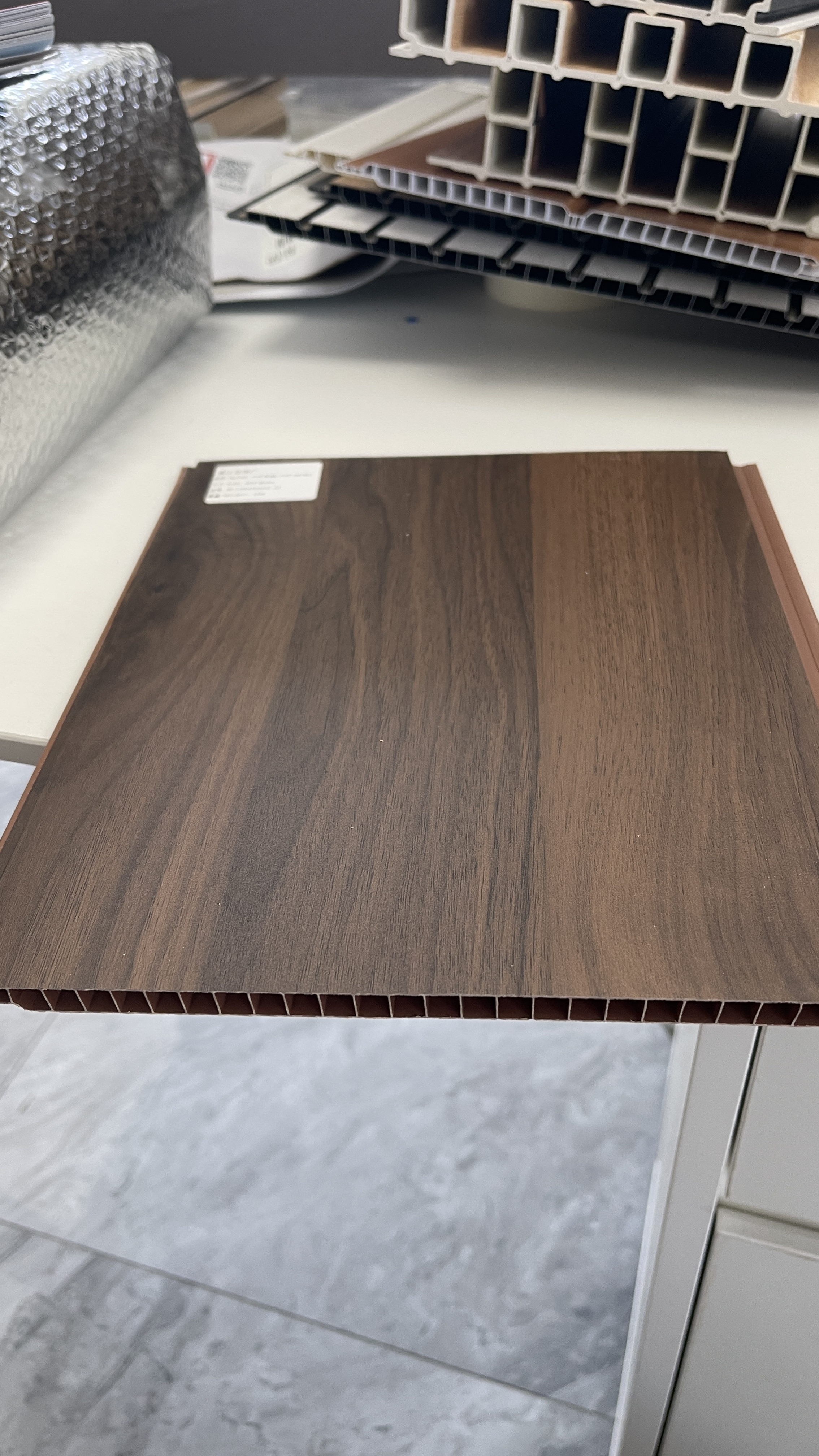
Extruded PVC is a rigid PVC profile produced by extrusion; in Europe it falls within the scope of EN 13245-2:2008. The material difference buyers actually notice is in the fold: a panel with higher PVC content resists tearing when it is folded in half, and it shows better elasticity than a lower-cost board that cannot be folded into a circle.
Installation follows the same dry logic. Panels can be fixed on battens or directly onto a flat, dry substrate using clips, screws or adhesive, with matching corner and edge trims finishing the joints. Installation is fast, and no painting or finishing is needed on site. Thin PVC material can be scored and cut with a utility knife or a fine-tooth saw.
UV Coated Board
A UV board carries a decorative face that is cured under ultraviolet light, which is what fixes the surface finish. It is listed among the core products of Zhejiang Highsea New Material Co., Ltd., alongside WPC wall panels, PVC wall panels, outdoor wall panels and decking. Where a project specification calls for a coated board face, the board family — not the fluted geometry — is the primary decision, and the profile is then selected within it.
| Material family | What is documented | Cutting and fixing | Where it fits | Buyer check |
|---|---|---|---|---|
| WPC | Rigid extruded composite; fluted profiles in seven documented width × thickness sizes | Cut with standard woodworking tools; dry fixing on battens or a flat substrate with clips, screws or adhesive | Interior feature walls, TV backgrounds, hotel corridors, offices, restaurants, retail and showrooms, ceilings | Confirm size, ridge pitch and the trim range before ordering |
| Extruded PVC | Rigid PVC profile; EN 13245-2:2008 applies to PVC-U and PVC-UE profiles for wall and ceiling finishes in Europe; higher PVC content resists tearing when folded in half | Clips, screws or adhesive on battens or a flat dry substrate; thin material can be scored and cut with a utility knife or fine-tooth saw | Moisture-exposed interiors and long runs where fast fixing and joint finishing matter | Confirm fold behaviour and the standard that applies in the destination market |
| UV coated board | UV-cured decorative face; part of the manufacturer's core product range | Cut and fix according to the board specification | Specifications that call for a coated board face rather than a PVC or composite face | Confirm face specification and the cleaning method the finish allows |
Sizes: What "Standard" Looks Like for Fluted WPC
Fluted WPC wall panels are documented in seven common standard sizes. The figures are stated as width × thickness in millimetres.
| Size (W × T) | Practical relevance |
|---|---|
| 160 × 22 mm | 160 mm rib field with the thickest documented section in the range |
| 160 × 24 mm | Same 160 mm field, deeper section |
| 150 × 15 mm | Narrowest documented field width |
| 160 × 16 mm | 160 mm field, mid-range section |
| 160 × 13 mm | 160 mm field, thinner section |
| 195 × 12 mm | Wider field, thinner section: fewer vertical joints across the same wall length |
| 195 × 14 mm | Wider field, thicker section |
Width drives layout. A 195 mm panel needs fewer vertical joints across a given wall than a 160 mm panel, which changes both the visual rhythm and the trim requirements. Thickness affects how the panel sits in the fixing system and how deep the edge trims must be. Both values should be confirmed on the quotation rather than inferred from a sample.
No equivalent standard size list is documented here for the PVC and UV board families. For those products, sizes should be confirmed per product specification with the supplier before the order is placed.
Installation Logic: Dry Fixing, Trims and Cutting
Fluted panels are installed as a dry decorative skin. There is no plastering, no painting and no finishing on site, which is why the sequence below is short — and why substrate quality carries most of the risk.
- Check the substrate. Panels can be fixed either on battens or directly onto a flat, dry substrate. On a fluted face the ridges cast shadows, so an uneven substrate shows more than it would behind a flat panel.
- Set out the first panel. Vertical flutes make any deviation from plumb obvious, so the starting line matters more than fixing speed.
- Fix with clips, screws or adhesive. Concealed clip systems keep the face clean; screws and adhesive are the documented alternatives for PVC panel installation.
- Cut as the profile requires. WPC is cut with standard woodworking tools; thin PVC material can be scored and cut with a utility knife or a fine-tooth saw. Cut edges belong at trims or corners, not mid-run.
- Close the joints with matching corner and edge trims. Trims do the visible work at internal corners, external corners, and top and bottom terminations.
- Hand over. No painting or finishing is needed on site, so the delivered face is the finished face.
Where Fluted Wall Panels Fit
Documented applications for WPC wall panels cover interior feature walls, TV backgrounds, living rooms and bedrooms, hotel lobbies and corridors, offices and meeting rooms, restaurants, retail stores and showrooms, and ceilings. For humid or damp interiors, panels specified for those areas carry additional requirements — water resistance, termite resistance, low formaldehyde and easy cleaning — and should be confirmed against the actual project rather than assumed from the profile.
Interior feature walls and TV backgrounds
The classic use: one wall carries the flutes and the rest of the room stays quiet. Vertical ribs hide joint lines and add depth without introducing colour.
Living rooms and bedrooms
Residential walls where the profile is chosen for texture. A 160 mm field is easier to fit around doors and corners; a 195 mm field gives fewer joints.
Hotel lobbies and corridors
Long runs where repeatability matters. Panel thickness and trim depth should be fixed once and applied consistently along the whole corridor.
Offices and meeting rooms
Dry-fixed installation keeps the work area usable during the fit-out, since no painting or finishing is required on site.
Restaurants, retail stores and showrooms
Surfaces that are cleaned regularly. The specification question is not only the flute depth but how the finish responds to routine cleaning.
Ceilings
Fluted profiles are also documented for ceiling use, where the rib field runs across the shorter span and joints align with the room geometry.
Bathrooms and damp interiors
Humid areas are a different specification: hygienic panels replacing tiles or coatings, with water resistance, termite resistance and easy cleaning confirmed per product.
Cost and Maintenance: What the Extra 10% Buys
The clearest documented cost comparison in this category is between a higher-PVC-content panel and a low-cost wall panel. The initial cost of the higher-PVC panel is 10% higher. What changes for that premium is measurable in three places.
| Aspect | Higher-PVC-content panel | Lower-cost wall panel |
|---|---|---|
| Initial cost | 10% higher than cheap wall panels | Lower first cost |
| Fold behaviour | No tearing when folded in half | Cannot be folded into a circle |
| Elasticity | Better elasticity | Not described as equivalent in the source comparison |
| Surface under temperature fluctuation | Will not crack or peel | Not stated in the source comparison |
| Periodic refurbishment | None needed | Not stated in the source comparison |
Read the table as a decision rule rather than a price list. A 10% difference in first cost is a one-time number; the maintenance difference is recurring. Where panels sit in corridors, bathrooms or other temperature-variable areas, surface stability is the property that decides whether the wall has to be revisited — and that is a cost the purchase price does not show.
A Buyer's Decision Sequence
- Define the surface, not the product. Wall or ceiling, dry or humid, residential or heavy-traffic commercial.
- Choose the profile family. Fluted for continuous rib rhythm, slatted for defined slats and gaps, louver for angled blades, flat where the panel should disappear.
- Choose the material family. WPC where a rigid profile and standard woodworking tools suit the install; extruded PVC where the higher-PVC fold behaviour and fast fixing matter; UV coated board where the specification calls for a coated face.
- Fix the size against the room. Panel width sets the number of vertical joints and the waste factor; thickness sets trim depth.
- Decide the commercial tier. Compare first cost against the documented maintenance difference, not against the sample price alone.
- Verify the documentation. For European projects, match the PVC profile to EN 13245-2:2008; confirm which fire framework the destination market uses; and check the certifications a manufacturer states — Zhejiang Highsea New Material Co., Ltd. reports CE and RoHS certification for its products.
- Order a sample and confirm lead time. Trial orders normally start from 300 PCS and can be mixed by color and size; typical production lead time is 20–25 days after deposit for a 40HQ container.
FAQ
Do fluted PVC wall panels have to meet a specific standard in Europe?
For the European market, EN 13245-2:2008 sets out health and safety requirements for unplasticized poly(vinyl chloride) (PVC-U) and cellular PVC-UE profiles used for interior and exterior wall and ceiling finishes. The standard attaches to the profile, not to the fluted pattern alone, so the supplier should be able to match it to the exact construction and surface finish being quoted. Buyers should also confirm which fire-performance framework applies in the destination market: EN 13501-1, ASTM E84 and GB 8624 are different systems and are not interchangeable.
What sizes are fluted WPC wall panels available in?
Documented standard sizes for fluted WPC wall panels are 160 × 22 mm, 160 × 24 mm, 150 × 15 mm, 160 × 16 mm, 160 × 13 mm, 195 × 12 mm and 195 × 14 mm, stated as width × thickness. Panel width determines how many flutes run across a wall and therefore the waste factor at the edges, so width should be checked against the room dimensions before the order is fixed.
How are fluted wall panels installed — with clips, screws or adhesive?
Panels can be fixed on battens or directly onto a flat, dry substrate using clips, screws or adhesive, and joints are closed with matching corner and edge trims. Installation is fast and no painting or finishing is required on site. WPC profiles are cut with standard woodworking tools; thin PVC material can be scored and cut with a utility knife or a fine-tooth saw.
How much more does a higher-PVC-content panel cost, and what does the premium change?
The initial cost is 10% higher than cheap wall panels. The core difference is a higher PVC content, which prevents tearing when the panel is folded in half and gives better elasticity. Maintenance requirements are lower, because the panel surface will not crack or peel under temperature fluctuation and no periodic surface refurbishment is needed. The premium is paid once; the maintenance difference recurs.
What is the MOQ and lead time for a trial order?
Trial orders normally start from 300 PCS and can be mixed by color and size. Typical production lead time is 20–25 days after deposit for a 40HQ container. Buyers who want to test a profile before committing can request a sample through www.zjhisea.com or through the contact details below.
Conclusion
A fluted wall panel is a profile decision before it is a material decision. Fluted, slatted, louver and flat faces produce different walls; WPC, extruded PVC and UV coated board produce different cutting, fixing and maintenance behaviour; and the width and thickness on the quotation decide how the pattern lands in the room. Get those three layers in the right order and the remaining variables — price, lead time, documentation — can be compared on equal terms.
Next step: request a fluted WPC or PVC wall panel sample, or download the current catalog to review sizes, finishes and trims before specifying.
Zhejiang Highsea New Material Co., Ltd. (Hisea-Decorative Film & Decorative Panels)
Contact: Tommy | Tel / WhatsApp: +86 135-8645-8141 | Email: Tommy@zjhisea.com
Address: Room 2101, 2# Building Heli Plaza, No.365 Qianjiang Road, Haining City, Zhejiang Province, China 314400
Website: www.zjhisea.com | Catalog: Download PDF catalog
Have Questions or Need More Details?
Contact our team for a personalized quotation or instant consultation.
Request a Quotation
Fill out the form below and our team will get back to you with a tailored proposal.
WhatsApp Direct Chat
Prefer to chat in real-time? Message us on WhatsApp for instant assistance & quick answers.
- Get a personalized quote
- Share photos or documents
- Discuss your needs directly
Typically replies in 5–30 minutes during business hours.