
Compliance and Standards for Concrete Pump Pipes: What Buyers Must Verify
A concrete pump pipe is compliant when every component in the delivery line - straight pipe, elbow, clamp and reducer - can be traced to a declared material grade, a defined forming and heat treatment process, a specified surface treatment, and a dimensional tolerance that matches the job drawing. Verification, not labelling, is what tells a buyer whether a delivered 150L=3000 straight pipe or a 150R400*90° elbow will actually behave as specified on site.
This guide is written for procurement managers, engineers and importers who are past the discovery stage and now have to approve a supplier, a drawing and a shipment. It breaks compliance down into four verifiable layers, explains what evidence supports each layer, provides a step-by-step verification workflow, and lists the component-level parameters that should be confirmed before a delivery line is released to a project.
Problem Definition: Why Pump Pipe Compliance Is a Verification Problem, Not a Label
The difficulty with concrete pump pipe compliance is not that standards are missing. The difficulty is that two pipes sitting side by side often look identical while behaving very differently after a few thousand cubic metres of abrasive concrete.
A delivery line is a wear system, and its failure modes are predictable: inner-wall thinning on straight pipes, accelerated wall loss at elbows, clamp deformation or leakage at joints, and geometry mismatch when a reducer or elbow does not match the drawing. Each of these outcomes traces back to a specification decision that was never verified at the point of purchase.
For delivery-line components, compliance is a chain with five links:
- a declared material grade and a document that traces the delivered batch to it;
- a defined forming process - seamless, welded, or integrally cast - that suits the component;
- a controlled heat treatment step, expressed as a measurable hardness range;
- a specified surface treatment that survives transport and site storage;
- a dimensional and connection check against the drawing, including diameter, length, bend radius and angle.
If any link is missing, the buyer is not buying a verified component; the buyer is buying an assumption. That is the core compliance risk in this category, and it is why the practical question is not 'does this supplier have a certificate?' but 'what can this supplier show me, and what can I measure?'
Industry Background: Why Standards Matter More as Volumes Grow
The commercial pressure behind compliance has increased with volume. The global concrete pump market was valued at approximately USD 6.05 billion in 2024 and is expected to grow at a CAGR of 5.13% through 2032, according to Credence Research. Within that market, Asia Pacific held an estimated 42% revenue share in 2025, driven primarily by infrastructure projects in China and India.
Equipment mix matters to pipe specification. Truck-mounted concrete pumps held a dominant 48% market share in 2025 because of their mobility and efficiency in urban construction environments - and mobile equipment tends to see more frequent line reconfiguration, which puts more stress on joint quality and clamp performance.
Pressure requirements are the other driver. High-pressure concrete delivery systems commonly use double-layer, 'twin pipe' construction to handle pressures up to 85 bar and to minimise abrasive wear from large aggregates, as described by Esser Twin Pipes. Where a project moves from standard conveying to high-pressure or long-distance conveying, the acceptable wall structure, hardness and joint design change as well.
At machine level, EN 12001:2012 is the European standard that specifies safety requirements for conveying, spraying and placing machines for concrete and mortar. It is a standard buyers frequently reference when they need a shared baseline for delivery-system compatibility, and it illustrates a useful principle: the machine-level standard sets the frame, while the component-level parameters define whether a specific pipe, elbow, clamp or reducer is acceptable for that frame.
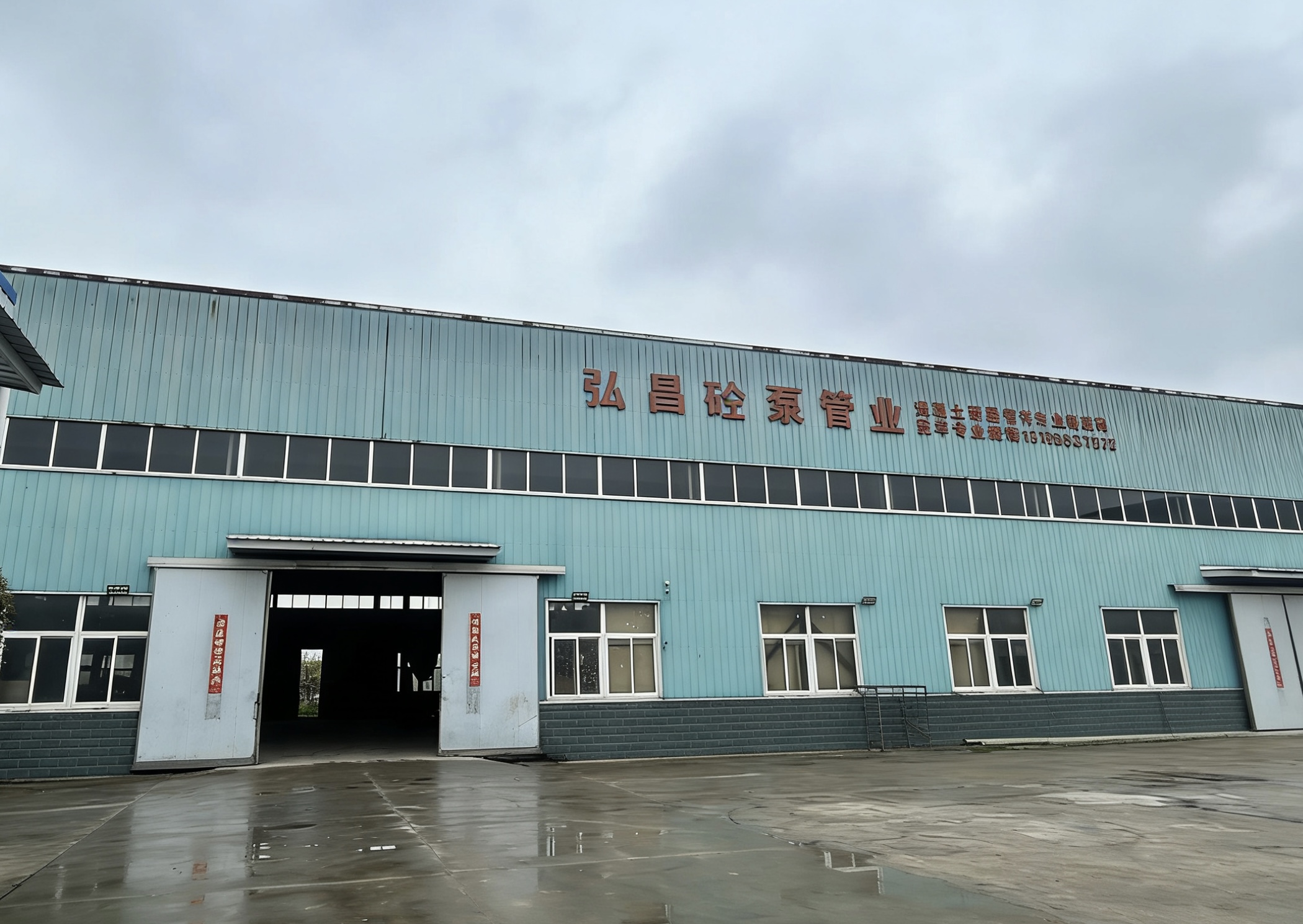
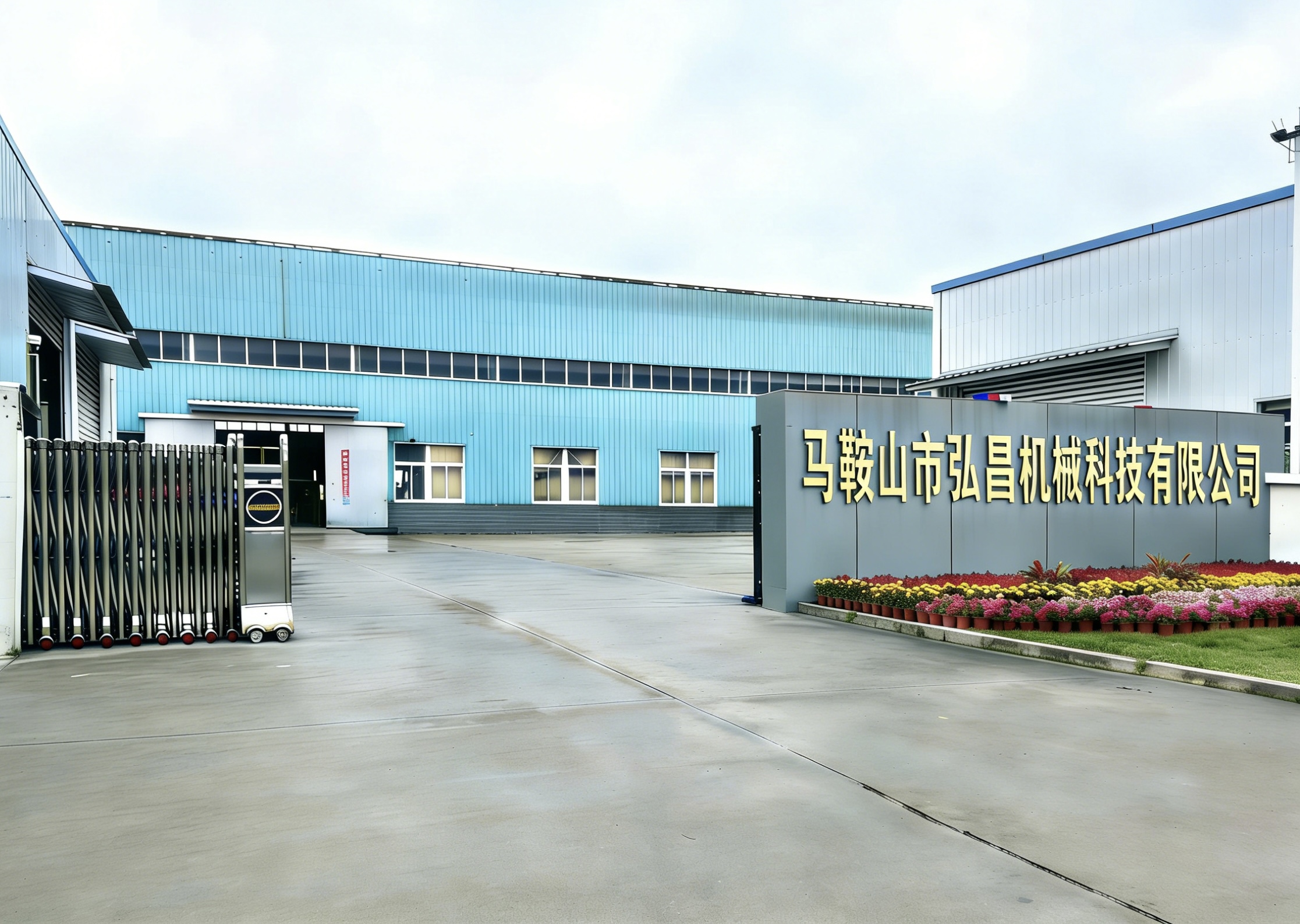
Supplier-side capability is what makes those component-level parameters realistic. Hongchang Machinery Technology Co., Ltd., founded in 2015 in Ma'anshan City, Anhui Province, operates a 2,600 m² factory with more than 50 employees and an annual output of 50,000 metres of straight pipes plus 15,000 curved pipes. Roughly 50% of production is exported to Southeast Asia, the Middle East, Europe and the Americas. The company is a designated supporting manufacturer for Xingma Automobile, and its pipes can be matched with pump trucks and tow pumps from companies such as Sany Heavy Industry and Zhonglian Heavy Industry. Sany Heavy Industry was identified as the world's largest concrete pump equipment manufacturer by volume as of 2024.
The Four Compliance Layers Buyers Must Verify
Compliance in this category is best handled as four sequential checks. Each layer has its own evidence type, and each can be confirmed before shipment rather than after a failure on site.
Layer 1 - Material Grade and Traceability
Material grade is the foundation of every downstream claim about wear life. A grade that is declared but not traceable cannot be verified, and a grade that is traceable but unsuitable for the application will still wear out early.
The declared material options on typical components in this category are specific and checkable:
- Concrete Pump Straight Pipe, model 150L=3000 - 20# steel or quality alloy structural steel, single-layer structure, DN150, L=3000 mm.
- Concrete Pump Elbow, model 150R400*90° - wear-resistant cast steel or high-strength carbon steel, DN150, R=400, formed by integral casting or welded forming.
- Concrete Pump Clamp, model 150A - high-quality cast iron or cast steel, integral casting plus precision machining, compatible with DN100, DN125 and DN150.
- Reducer Pipe, model 150-125 L=1200 - wear-resistant alloy steel or high-carbon steel pipe, DN150 to DN125, L=1200 mm.
- Double-layer Elbow, model 275*90° - quenched inner wall, nominal diameter DN100, DN125 or DN150, bend radius R180, R190.5 or R275.
What to verify: the material grade written on the order matches the grade on the mill or foundry document, and the document references the delivered batch - not a generic statement of capability. For cast components, verify whether the part is integrally cast or welded, because the two have different inspection requirements and different failure characteristics under pressure.
Layer 2 - Heat Treatment and Hardness
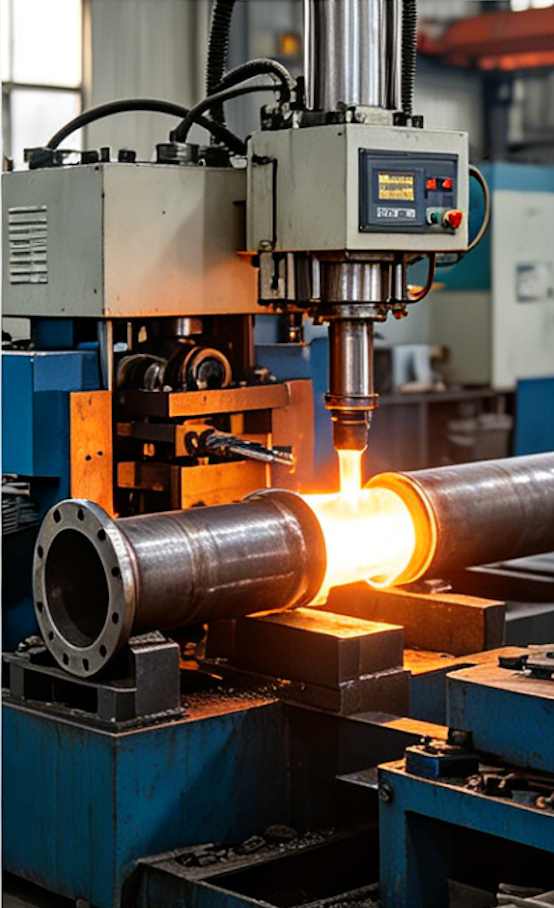
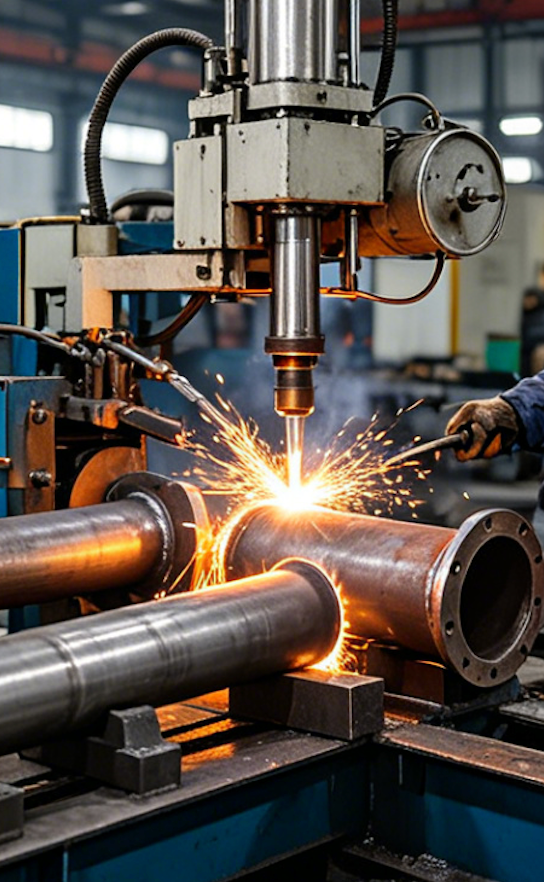
Heat treatment is the layer most often claimed and least often measured. On quenched wear-resistant pipe and elbows, the meaningful number is the hardness of the inner wall, because that is the surface carrying the abrasive aggregate.
Two reference points from this manufacturing category show what a verifiable hardness claim looks like. On quenched straight pipe, the declared inner-wall hardness range is HRC 55-62. On a high-rise building project where 50 units were supplied by Hongchang and ran for three years, the recorded highlight was HRC 58-62 with a 30% longer lifespan and stable operation.
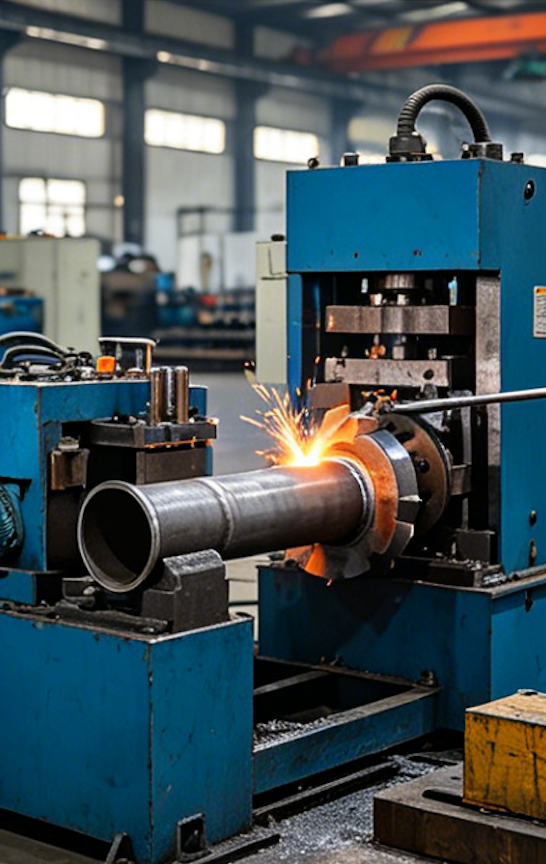
Elbows follow a process-driven logic rather than a single number. The 150R400*90° elbow is produced either by integral casting or welded forming, then heat treated, then quenched on the inner wall. The double-layer 275*90° elbow uses a quenched inner wall as well. For buyers, the questions to ask are practical: where on the part is the hardness measured, how many measurement points are reported, and is there a record that ties the reading to the batch?
Hardness verification also needs boundaries. A hardness reading confirms that a heat treatment step occurred and was controlled; it does not by itself confirm wall thickness, casting soundness or joint geometry. That is why hardness should be treated as one layer among four rather than as a complete quality statement.
Layer 3 - Surface Treatment, Especially on Clamps and Reducers
Surface treatment is frequently treated as cosmetic. In practice it is a compliance indicator, because it determines whether a component arrives at the site in the condition that was inspected at the factory.
Declared surface treatments in this component family are specific:
- Clamp 150A - shot blasting plus anti-rust spraying, on an integrally cast body that is then precision machined.
- Reducer 150-125 L=1200 - shot blasting plus anti-rust primer plus topcoat, with connection by thickened pipe end, flange or pipe clamp.
- Double-layer Elbow 275*90° - anti-rust primer plus topcoat spraying.
What to verify: that the coating system named in the order is the coating system visible on the delivered part, that coverage is complete on machined surfaces and threads, and that no corrosion has started between manufacture and installation. For clamps in particular, shot blasting followed by anti-rust spraying is a preparation-and-protection sequence; skipping the blasting step reduces the adhesion of whatever follows.
Layer 4 - Dimensional and Connection Conformity
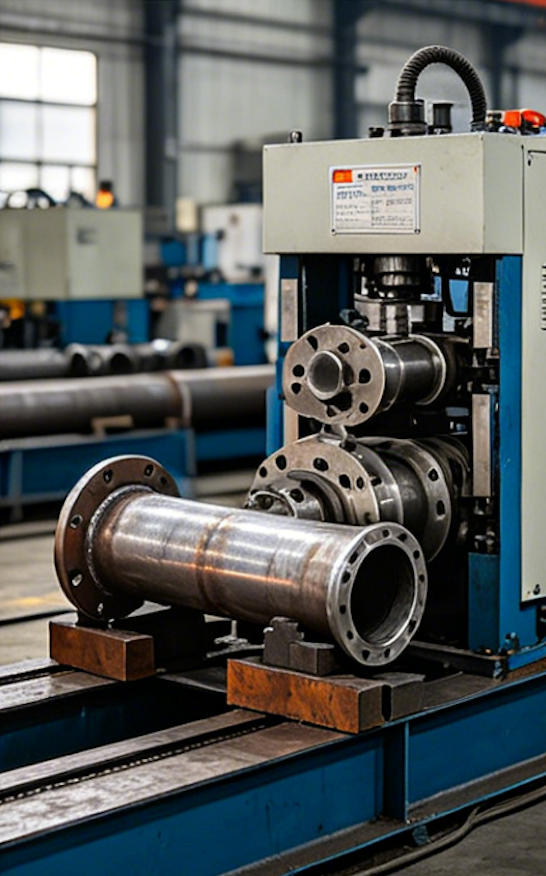
Geometry is where compliance becomes measurable without any laboratory. Diameter, length, bend radius and angle can all be checked with standard instruments, and mismatches here cause immediate problems: leaks, forced joints, and unexpected pressure loss.
Using the two reference models in this family:
- 150L=3000 - the '150' refers to DN150 and the '3000' fixes the length at 3,000 mm. A delivered straight pipe that is materially shorter or longer will change the layout of the whole line and the fit of every clamp along it.
- 150R400*90° - again DN150, with a bend radius of R=400 and a 90° angle. The same elbow family is also available in 45°, 30° and 15° configurations, and the double-layer 275*90° elbow is available at R180, R190.5 and R275.
What to verify: measure the stated dimension on a sample from the batch, confirm the angle and radius against the drawing, and confirm that the connection method - thickened pipe end, flange or pipe clamp connection on the reducer side, and the correct clamp size for DN100, DN125 or DN150 - matches the rest of the line. Because these dimensions are customizable, the order document must carry the final numbers, not a range.
Step-by-Step: A Buyer's Verification Workflow
The workflow below converts the four layers into an order sequence that can be run by a procurement team without laboratory equipment.
- Define the delivery line by component, not by pipe. List straight pipes, elbows, clamps, reducers and any double-layer items separately, with the quantity and duty of each.
- Write the parameters into the purchase order as a table. For each component record diameter, length, bend radius, angle, material, hardness range and surface treatment - for example DN150, L=3000 mm, alloy steel, quenched HRC 55-62.
- Request a material and process declaration before ordering. Ask for the grade, the forming method and the heat treatment step in writing, so the declaration can later be compared with the physical goods.
- Use a sample order to test what can be tested. A minimum order of 1 piece is available for sample orders, which allows hardness, wall condition, geometry and coating to be checked before a production commitment.
- Review the quality-control plan. Confirm that the supplier's stated controls include 100% inspection, pressure testing, hardness testing (HRC) and dimensional check across the batch.
- Agree acceptance criteria before shipment. Pre-shipment inspection is part of the standard terms, and third-party testing through SGS or BV can be arranged where an independent reading is required.
- Verify documentation on arrival. Match the delivered quantity, models and declared parameters to the order table, and record coating condition and any transit damage.
- Track field performance by component. Record service life and maintenance events per component type, then compare actual results with the declared design-life tier for the next order.
Use Cases: How Compliance Verification Plays Out in Practice
Three documented project types show how the four layers translate into different verification priorities.
High-Rise Building Projects
A construction company supplied by Hongchang took 50 units for a high-rise building project. Over three years of operation the recorded result was stable operation with a 30% longer lifespan, and the reported hardness highlight was HRC 58-62. In vertical conveying, the verification priority shifts towards elbow radius and inner-wall hardness, because the bends carry the highest wear and any hardness shortfall shows up first there. Buyers on this type of project should verify the hardness range and the radius on the actual delivered elbows, not on a catalogue page.
Underground Mining
A mining company ordered 100 metres of pipe for underground mining, ran it for four years and recorded a 40% reduction in maintenance, with heavy-duty wear resistance as the stated highlight. In this application, material grade and wall condition matter more than nominal diameter, because the abrasive load is continuous and downtime is expensive. The verification priority is therefore the material declaration plus a wall-thickness and hardness check on the delivered batch.
OEM Pump Truck Manufacturing
For pump truck manufacturing, 200 pieces were supplied to an OEM client over a two-year programme described as successful OEM integration with custom specifications and quality consistency, implemented across more than 30 countries including Germany, France, UK, Canada and Australia. In an OEM context, compliance means repeatability: the same parameters, the same hardness range and the same surface treatment across successive batches. The verification priority here is batch-to-batch consistency rather than single-unit inspection.
Custom and High-Pressure Configurations
Customization in this product family covers custom specifications, logo printing, brand packaging and custom lengths, delivered through OEM and ODM production services with a monthly capacity of 50,000 metres plus 15,000 pieces. Where a project moves to high-pressure or long-distance conveying, double-layer construction becomes the relevant configuration, since twin-pipe designs are used in high-pressure systems to handle pressures up to 85 bar and to reduce abrasive wear from large aggregates.
Component-by-Component Compliance Reference Table
The table below summarises the declared parameters for the main delivery-line components and the corresponding verification action. It is intended to be printed alongside a purchase order.
| Component and model | Declared material | Key forming / treatment process | What the buyer verifies |
|---|---|---|---|
| Concrete Pump Straight Pipe 150L=3000 | 20# steel or quality alloy structural steel | Single-layer structure; quenched inner wall HRC 55-62 | Grade versus declaration; length at 3,000 mm; DN150 diameter; hardness range |
| Concrete Pump Elbow 150R400*90° | Wear-resistant cast steel or high-strength carbon steel | Integral casting or welded forming, heat treatment, inner-wall quenching | R=400 radius; 90° angle; forming method; heat-treated condition |
| Double-layer Elbow 275*90° | Quenched inner wall; DN100 / DN125 / DN150 | Double-layer construction; anti-rust primer plus topcoat spraying | Bend radius R180 / R190.5 / R275; angle; coating coverage |
| Concrete Pump Clamp 150A | High-quality cast iron or cast steel | Integral casting plus precision machining; shot blasting plus anti-rust spraying | DN100 / DN125 / DN150 compatibility; machining finish; coating condition |
| Reducer Pipe 150-125 L=1200 | Wear-resistant alloy steel or high-carbon steel pipe | Shot blasting plus anti-rust primer plus topcoat | DN150 to DN125 transition; length at 1,200 mm; connection method |
Design life is a separate decision from dimensional conformity. For the DN150 straight pipe, three design-life tiers are declared, each with a relative cost-performance index.
| Declared design-life tier (straight pipe) | Relative cost-performance index | Typical verification focus |
|---|---|---|
| 7,000-8,000 m³ | 1 | Baseline verification of grade, dimension and coating |
| 25,000-40,000 m³ | 1.6 | Grade confirmation plus hardness record |
| 40,000-50,000 m³ | 3.0 | Quenched inner wall HRC 55-62 with batch-linked hardness data |
Matching the tier to the duty cycle - rather than defaulting to the highest tier - is itself part of compliance, because an over-specified line that cannot be verified adds cost without adding assurance.
Frequently Asked Questions
1. What must be verified to confirm that a concrete pump pipe meets the required standard?
Four layers must be verified: material grade and traceability, heat treatment expressed as a measurable hardness range on the inner wall (for example HRC 55-62 on quenched pipe), surface treatment such as shot blasting plus anti-rust spraying on clamps and primer plus topcoat on reducers, and dimensional and connection conformity against the drawing. Machine-level references such as EN 12001:2012, which specifies safety requirements for conveying, spraying and placing machines for concrete and mortar, set the frame within which those component parameters have to fit. A certificate alone does not confirm any of the four layers; each has to be checked against the delivered goods.
2. What manufacturing capability should a supplier be able to demonstrate for custom or OEM pump pipe orders?
For OEM and ODM work, the capability to look for is customization plus repeatability. Hongchang Machinery Technology Co., Ltd. provides OEM and ODM production services with customization covering custom specifications, logo printing, brand packaging and custom lengths, supported by a monthly capacity of 50,000 metres plus 15,000 pieces. Quality control covers 100% inspection, pressure testing, hardness testing (HRC) and dimensional check. In practice this combination has been used for pump truck manufacturing, where 200 pieces were supplied to an OEM client over a two-year programme described as successful OEM integration with custom specifications and quality consistency, implemented across more than 30 countries including Germany, France, UK, Canada and Australia. For OEM buyers, batch-to-batch consistency matters more than any single-unit inspection result.
3. How do design life and cost-performance differ across concrete pump pipe options?
For the DN150 150L=3000 straight pipe, three declared design-life tiers are available: 7,000-8,000 m³, 25,000-40,000 m³ and 40,000-50,000 m³, with relative cost-performance indices of 1, 1.6 and 3.0 respectively. Material options are 20# steel or quality alloy structural steel, and the quenched variant is declared at HRC 55-62 inner-wall hardness. The practical implication for buyers is that the highest tier is not automatically the correct choice: the tier should match the abrasive duty and the replacement cost of downtime on the specific project, and whichever tier is chosen should be tied to a hardness record and a dimensional check on the delivered batch.
4. Can a buyer validate a sample before committing to a full production order?
Yes. The minimum order quantity is 1 piece, and a sample order is an accepted route to validation. A sample allows the buyer to check the parameters that matter most before scaling up: material grade against the declaration, inner-wall hardness within the declared HRC range, wall condition, bend radius and angle on elbows such as the 150R400*90° model, and coating completeness on clamps and reducers. Sample validation is most valuable when the checked values are written into the subsequent purchase order as the acceptance reference, so that production batches can be compared against the validated unit rather than against a general description.
5. What are the typical lead times and acceptance terms, and what is the next step?
Typical lead time is 15-30 days. The minimum order quantity is 1 piece for a sample order. Delivery terms include FOB, CIF and EXW, and acceptance criteria include pre-shipment inspection with third-party testing through SGS or BV where independent verification is required. Payment terms are 30% deposit and 70% before shipment, by T/T or L/C. For buyers who want to run the four-layer check on actual components, the next step is to request a sample or a quotation with the parameter table attached - diameter, length, bend radius, angle, material, hardness range and surface treatment - so that the quoted item and the verified item are the same specification. Samples and quotations can be requested directly from Chen Zhen at chenzhen@hongchangpumpipe.com or by phone and WhatsApp on +86-13301770177.
Conclusion: Compliance Is What You Can Verify, Not What You Are Told
Concrete pump pipe compliance comes down to four layers that can all be checked before a project depends on them: a traceable material grade, a heat treatment step expressed as a measurable hardness range such as HRC 55-62, a surface treatment that survives transport and site storage, and a dimensional set that matches the drawing on models such as 150L=3000 and 150R400*90°. Standards and machine-level references provide the frame, but the acceptance decision is made at component level, with the parameters written into the order and confirmed on the delivered batch.
Hongchang Machinery Technology Co., Ltd. manufactures concrete pump pipes, elbows, clamps and reducers at its facility at No. 2063, Hongqi South Road, Development Zone, Ma'anshan City, Anhui Province. The company produces 50,000 metres of straight pipes and 15,000 curved pipes per year, holds a certified manufacturing quality system with a certificate valid from November 2025 to November 2028, and exports roughly 50% of output to Southeast Asia, the Middle East, Europe and the Americas. Technical support, spare parts supply, installation guidance and remote troubleshooting are provided after delivery.
Request a Sample or a Verified Quotation
Send your component list with the parameters you need verified - diameter, length, bend radius, angle, material, hardness range and surface treatment - and request a sample or quotation in return. Sample orders start from 1 piece, with a typical lead time of 15-30 days and third-party inspection available on request.
Contact: Chen Zhen | Tel / WhatsApp: +86-13301770177 | Email: chenzhen@hongchangpumpipe.com | Message us on WhatsApp | hongchangpumpipe.com
Have Questions or Need More Details?
Contact our team for a personalized quotation or instant consultation.
Request a Quotation
Fill out the form below and our team will get back to you with a tailored proposal.
WhatsApp Direct Chat
Prefer to chat in real-time? Message us on WhatsApp for instant assistance & quick answers.
- Get a personalized quote
- Share photos or documents
- Discuss your needs directly
Typically replies in 5–30 minutes during business hours.