Concrete Pump Pipe Systems: A Look Inside the Delivery Line
Concrete Pump Pipe Systems: A Look Inside the Delivery Line
Concrete pump pipes are the delivery lines that carry concrete from a stationary pump or a truck-mounted pump to the formwork, slab, or structural element being placed. A complete pump pipe system is not a single tube. It is a combination of straight pipes, elbows, reducer pipes, and clamps engineered to work under high pressure and continuous abrasion. For buyers who are new to concrete pumping, understanding these components is the first step toward building a delivery line that performs reliably over its full service life.
This article explains the main parts of a concrete pump pipe system, the materials and hardness levels used in wear-resistant products, the service-life ranges that buyers can evaluate, and the practical selection steps for different project types.
Why the Delivery Line Is a Critical Part of Any Concrete Pumping Operation
The pump creates pressure, but the pipe line transfers that pressure to the concrete along the entire delivery route. In high-rise construction, the line can extend vertically for hundreds of meters. In tunnel projects, it may change direction by 90 to 180 degrees. Every bend increases stress on the inner wall, and every section of pipe is exposed to aggregate moving at high speed. When a pipe wall becomes too thin, leaks appear, pressure drops, and the placement process stops.
Wear in concrete pump pipes typically develops on the inner wall. Straight sections tend to wear more evenly, while elbows face concentrated impact at the outer curve of the bend. Over time, the inner diameter expands and the wall thickness decreases. If the wear continues, the pipe may develop pinholes or cracking, which can lead to sudden failure during a pour.
Replacing a failed section also means removing clamps, lifting heavy steel pipes, and restarting the pump. The cost of downtime is often higher than the price of the pipe itself. This is why material selection, heat treatment, and component design matter as much as the initial purchase price.
Industry Background: A Market Driven by Infrastructure Growth
The global concrete pump market was valued at approximately USD 6.05 billion in 2024, according to Credence Research, with an expected compound annual growth rate of 5.13% through 2032. Asia Pacific accounted for an estimated 42% of market revenue in 2025, driven largely by infrastructure projects in China and India, according to an industry analysis published by GM Insights. Truck-mounted concrete pumps held about 48% of the market in 2025, reflecting demand for mobility and efficiency in urban construction environments, as reported by Technavio.
These figures point to a simple conclusion: concrete pump equipment is widely used, and the pipes that support it are a recurring operational expense. Unlike the pump itself, which may run for many years, pump pipes are wear items. Their service life depends on the material, the heat treatment process, the diameter of the line, and the abrasiveness of the mix being pumped.
For construction companies and procurement teams, the practical question is not only which pipe is cheapest, but also how many cubic meters each pipe will deliver before it wears out. In the European Union, EN 12001:2012 also sets safety requirements for conveying, spraying, and placing machines for concrete and mortar. Buyers working on EU projects should ask suppliers for compliance documentation before placing an order.
The Main Components of a Concrete Pump Pipe System
A typical concrete pump delivery line contains four categories of components: straight pipes, elbows, reducer pipes, and clamps. The product data below comes from Hongchang Machinery Technology Co., Ltd., a manufacturer specializing in concrete conveying pipes, based in Ma’anshan City, Anhui Province, China. The company was established in 2015 and its main products include Concrete Pump Pipes, Elbows, Clamps, and Reducers.
Straight Pipes: The Backbone of the Delivery Line
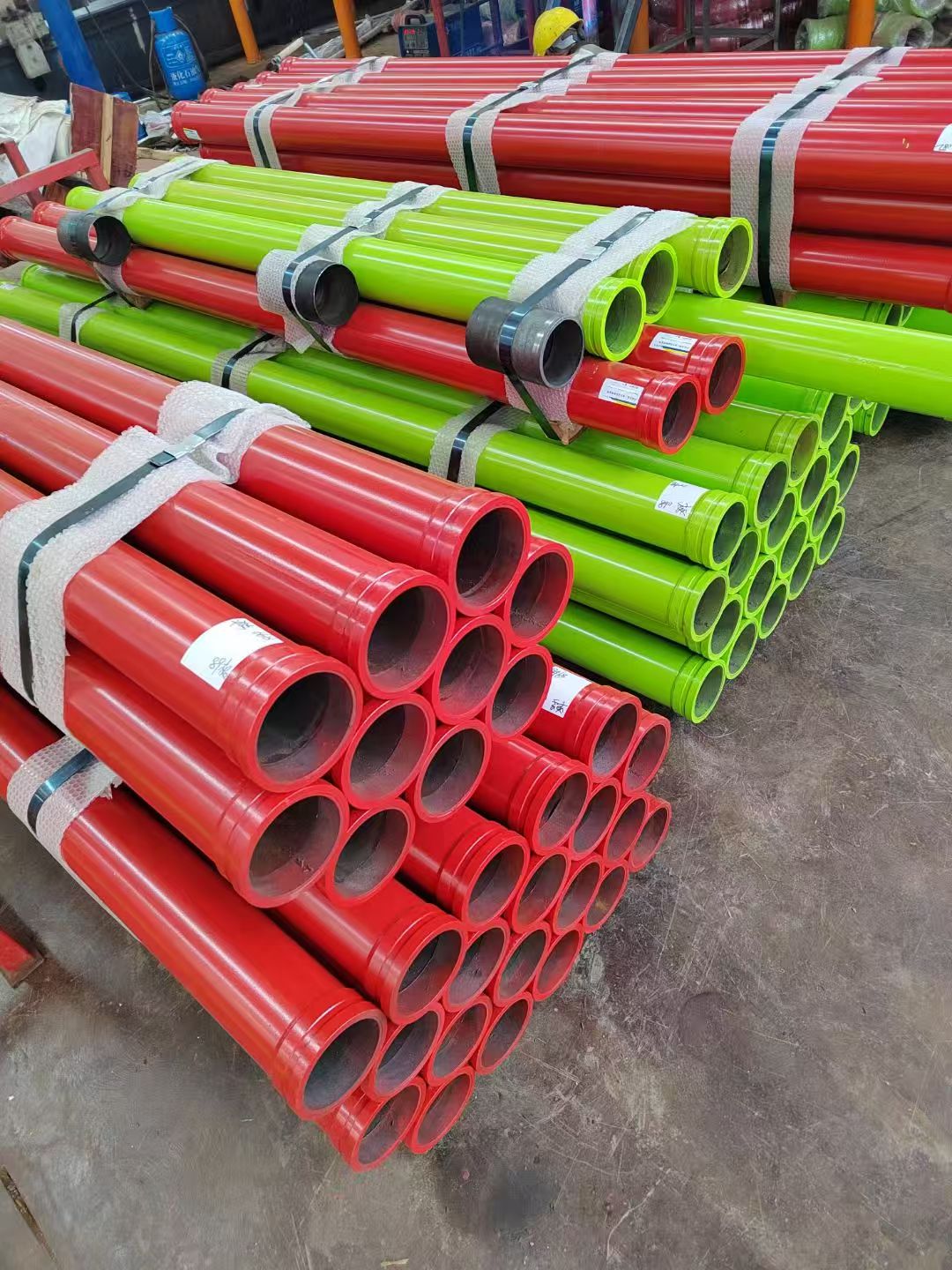
Straight pipes are the long sections that carry concrete from one point to another. A representative model is the Hongchang Concrete Pump Straight Pipe 150L=3000, which has a nominal diameter of DN150 and a length of 3000 mm. The pipe has a single-layer structure and is made of 20# steel or quality alloy structural steel. In its wear-resistant specification, the inner wall is quenched to a hardness of HRC 55-62, which increases surface hardness and helps the pipe withstand abrasive wear from aggregate moving through the line.
Hongchang lists several service-life levels for its straight pipe options, depending on the material specification selected:
- 7,000–8,000 cubic meters
- 25,000–40,000 cubic meters
- 40,000–50,000 cubic meters
The corresponding cost-performance ratios are 1, 1.6, and 3.0. A pipe with a longer service life normally has a higher upfront cost, but it may reduce total cost per cubic meter when replacement frequency and downtime are included in the calculation.
Elbows: Managing Direction Changes and Impact Wear
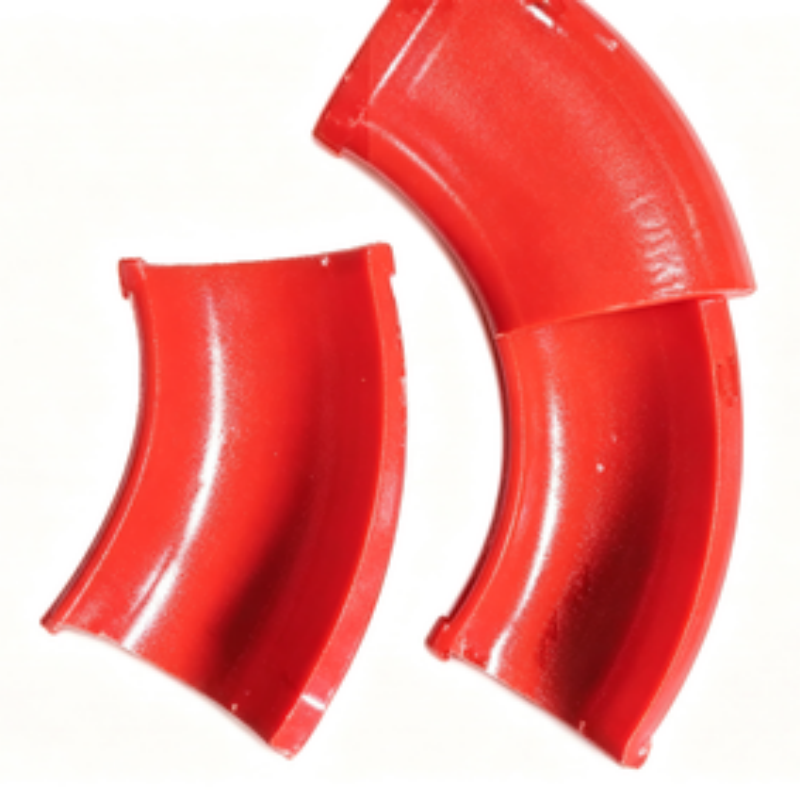
Elbows are used wherever the pipeline must change direction. In high-rise and tunnel construction, direction changes are frequent, and the impact of concrete against the bend is severe. Hongchang produces a Double-Layer Elbow, model 275*90°, with a quenched inner wall. The available nominal diameters are DN100, DN125, and DN150. The angle can be 90°, 45°, 30°, or 15°, and the bend radius can be R180, R190.5, or R275, all customizable.
The double-wall construction refers to the layered structure of the elbow, which provides additional material at the bend area where abrasive wear is usually most aggressive. This type of elbow is designed for concrete pump pipe systems in the construction machinery industry.
Reducer Pipes: Connecting Different Diameters
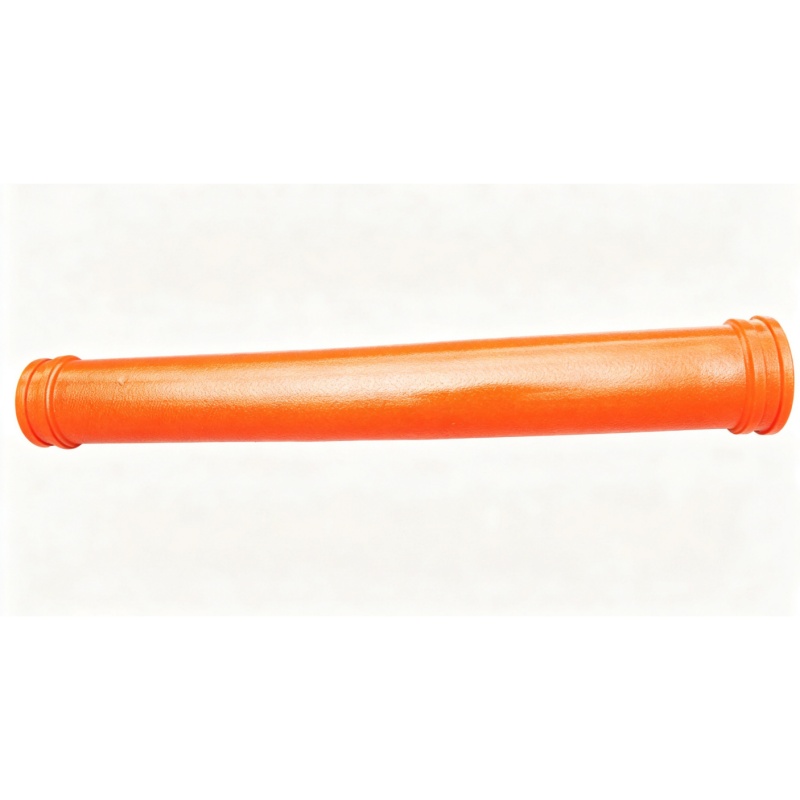
When the pump outlet and the delivery line are not the same diameter, a reducer pipe is required. The Hongchang Reducer Pipe, model 150-125 L=1200, transitions from DN150 to DN125 over a length of 1200 mm. It is made of wear-resistant alloy steel or high-carbon steel pipe, depending on the application. Connection methods include thickened pipe end, flange, or pipe clamp. The surface treatment includes shot blasting, anti-rust primer, and topcoat.
Reducer pipes are commonly used in bridge construction and other projects where the delivery diameter must be reduced to match the placement equipment. The precision of the fit matters because a poorly aligned transition can create turbulence and accelerate wear at the connection point.
Clamps: The Connection System That Holds the Line Together
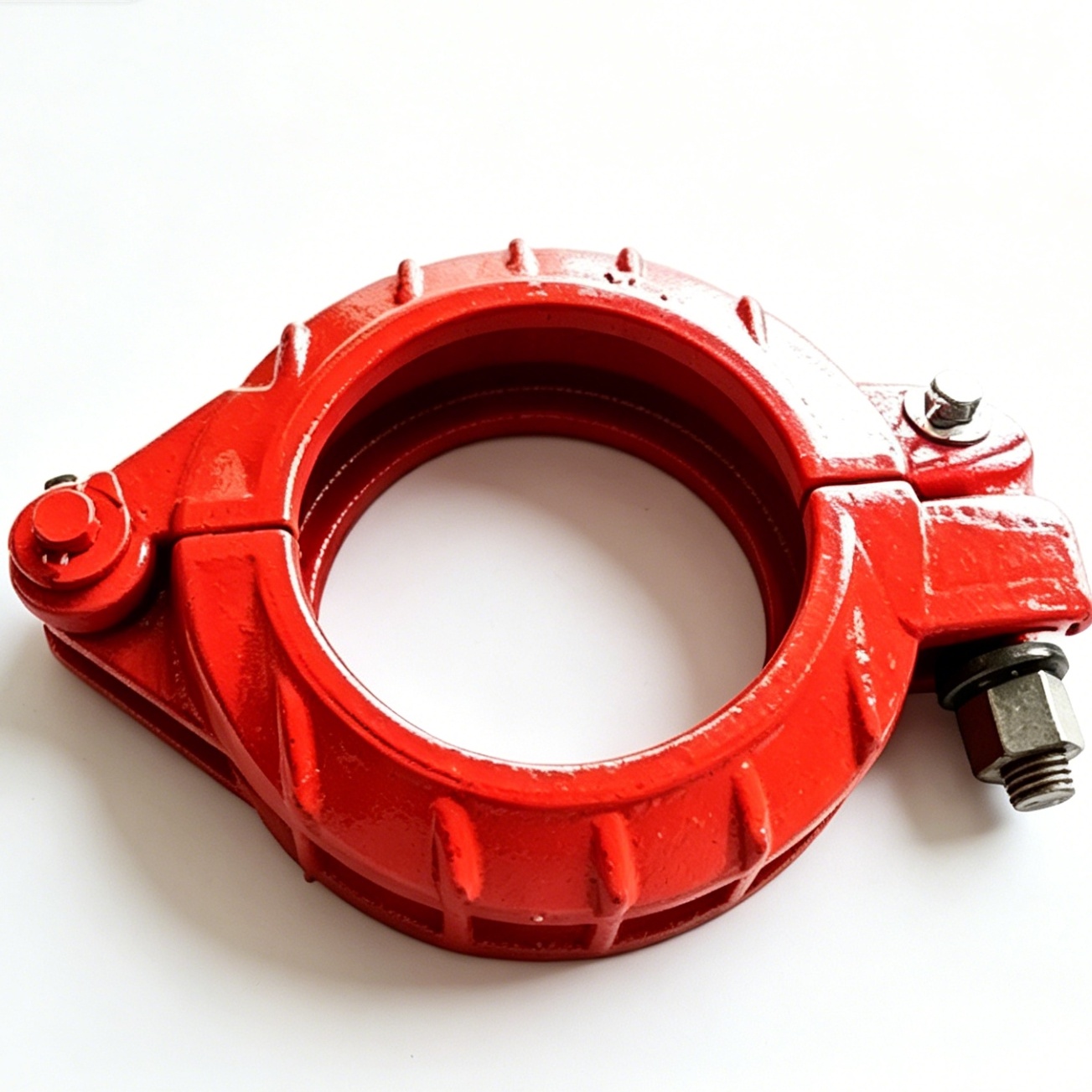
Clamps connect adjacent pipe sections and seal the joint between them. Hongchang’s Concrete Pump Clamp, model 150A, is a high-strength clamp made of high-quality cast iron, cast steel, or forged steel. The structure is produced through integral casting with precision machining, which helps maintain accurate alignment and sealing. The standard compatible diameter is DN150, and customized diameters from DN100 to DN150 are available. The surface is shot-blasted and sprayed with anti-rust coating.
Clamps are the most commonly used connection method in pump pipe systems because they allow quick assembly and disassembly. The choice of clamp material and fit has a direct effect on joint stability, especially in high-pressure pumping.
System Compatibility
Pump pipes must match the pump equipment used on site. Hongchang states that its pipes can be matched with pump trucks from Sany Heavy Industry and Zhonglian Heavy Industry, two major Chinese construction machinery manufacturers. The company is also the designated supporting manufacturer for Xingma Automobile. This compatibility simplifies installation and reduces the need for custom adapters.
Step-by-Step: How to Evaluate Concrete Pump Pipes for Your Site
Building a reliable pump pipe system starts with matching each component to the actual working conditions. The following framework is useful for buyers at the research and evaluation stage.
Step 1: Identify the Pump Type and Delivery Diameter
Start with the pump equipment. If the site uses a truck-mounted pump, check the outlet diameter. Common pump delivery diameters include DN100, DN125, and DN150. Select pipe sections with the same nominal diameter to avoid unnecessary reducers, pressure loss, and turbulence.
Step 2: Map the Delivery Route
Sketch the route from the pump to the placement point. Mark every location where a bend is needed, the degree of each angle, the total straight distance, and any change in diameter. This map tells you how many straight pipes, elbows, and reducer pipes are required.
Step 3: Assess the Wear Environment
Consider the aggregate size, pump pressure, and operating hours. A high-rise project running 8–12 hours per day needs high-pressure and wear-resistant pipes. A mining slurry application operating 24/7 requires corrosion and wear resistance along with a compatible slurry pump system. A tunnel project with sharp turns needs elbows that can handle heavy-duty operation.
Step 4: Select the Appropriate Pipe Material and Treatment
For standard jobs, 20# steel may be sufficient. For longer service life, quality alloy structural steel with a quenched inner wall is a common option. The hardness range of HRC 55-62 is a practical reference point for wear-resistant straight pipes. Double-layer elbows provide added strength at the outer bend, where impact wear is highest.
Step 5: Choose the Right Connection Method
Pipe clamps are the most common connection system because they are quick to install and remove. Flange connections provide a more rigid joint but take longer to assemble. Thickened pipe ends are used when extra strength is needed at the connection or when welding is part of the installation process. Match the connection method to your site assembly workflow.
Step 6: Compare Service Life and Cost Performance
Use the cost-performance ratio as a decision tool. If a site consumes thousands of cubic meters of concrete every year, a longer-life pipe with a ratio of 3.0 may reduce total cost by lowering replacement frequency and downtime. For occasional small projects, a standard pipe with a ratio of 1.0 could be the more suitable economic choice.
Application Profiles: Where Different Pipe Components Matter
Different construction environments place different demands on a concrete pump pipe system. The following profiles represent typical applications for straight pipes, elbows, reducers, and clamps.
High-Rise Building Concrete Pumping
High-rise projects require continuous concrete delivery over long vertical distances. The operating mode is typically 8–12 hours per day, with pump truck integration. The primary requirements are high pressure resistance and wear resistance. Straight pipes with quenched inner walls are common in this application, and elbows are needed at floor transitions and placement points.
Tunnel Construction
Tunnel work often requires direction changes of 90 to 180 degrees. The system operates in heavy-duty mode, and abrasive wear is the dominant concern. Double-layer elbows are typically specified at sharp turns because the additional wall thickness helps the line survive impact and abrasion against the outer curve.
Bridge Construction
Bridge projects frequently require pipe diameter transitions in the delivery line. Operation is generally at medium pressure, and the key requirement is a precision fit, especially at connections between sections with different diameters. Reducer pipes and clamps must align accurately to avoid leaks and pressure drops.
Mining and Slurry Transportation
In mining applications, the pipe system may operate 24/7 to transport slurry through a slurry pump system. Corrosion and wear resistance are essential because the working environment is more aggressive than in normal construction. The same component categories apply, but material selection should account for both abrasive solids and potentially corrosive media.
Comparison Table: Straight Pipe Service-Life Options
The table below summarizes the service-life levels published in Hongchang’s product specification data. Actual performance depends on the concrete mix, pumping pressure, and maintenance practices.
| Option | Typical Service Life | Cost-Performance Ratio | Common Application |
|---|---|---|---|
| Standard single-layer pipe | 7,000–8,000 m³ | 1.0 | Small and medium projects |
| Alloy structural steel pipe | 25,000–40,000 m³ | 1.6 | Continuous construction sites |
| Quenched wear-resistant pipe | 40,000–50,000 m³ | 3.0 | High-rise, tunnel, mining |
Comparison Table: Key Components in a Concrete Pump Pipe System
| Component | Representative Model | Material | Key Parameter | Primary Function |
|---|---|---|---|---|
| Straight Pipe | 150L=3000 | 20# steel / Alloy structural steel | DN150, L=3000 mm, HRC 55-62 | Main horizontal and vertical conveying |
| Double-Layer Elbow | 275*90° | Quenched inner wall | DN100-DN150, 15°-90°, R180-R275 | Direction change under heavy wear |
| Reducer Pipe | 150-125 L=1200 | Alloy steel / High-carbon steel | DN150 to DN125, L=1200 mm | Connecting different diameters |
| High-Strength Clamp | 150A | Cast iron / Cast steel / Forged steel | DN150, customizable DN100-DN150 | Joint connection and sealing |
Key Specifications to Verify Before You Order
- Nominal diameter and length of straight pipes
- Material grade and inner-wall hardness requirement
- Angle and bend radius of elbows
- Connection method: clamp, flange, or thickened pipe end
- Surface treatment requirements
- Need for reducers between different diameters
- Documentation such as material certificates and safety standard compliance
FAQ
Do concrete pump pipes need to meet specific safety standards?
In the European Union, EN 12001:2012 specifies safety requirements for conveying, spraying, and placing machines for concrete and mortar. Projects in EU markets generally require suppliers to provide documentation demonstrating compliance with this standard. Buyers should confirm this before finalizing an order.
What materials and hardness levels are used in wear-resistant concrete pump pipes?
Common materials for concrete pump straight pipes include 20# steel and quality alloy structural steel. In wear-resistant applications, the inner wall is quenched to HRC 55-62. Double-layer elbows use a quenched inner wall to extend service life in high-abrasion bends. Nominal diameters typically range from DN100 to DN150, with lengths and angles customizable to meet project needs.
How do service life and cost performance compare across different pipe options?
Hongchang publishes a design life range of 7,000–8,000 m³ for standard single-layer pipes, 25,000–40,000 m³ for alloy structural steel pipes, and 40,000–50,000 m³ for quenched wear-resistant pipes. The corresponding cost-performance ratios are 1, 1.6, and 3.0. A longer-life option generally has a higher initial cost but may reduce total cost per cubic meter when replacement frequency and downtime are included.
Can buyers request sample pipes before placing a bulk order?
Sample requests are a normal part of supplier evaluation. Buyers can contact the Hongchang sales team by email at chenzhen@hongchangpumpipe.com or by WhatsApp at +86-13301770177 to discuss sample availability, specifications, and shipping arrangements.
What information do suppliers need to provide an accurate lead time?
To confirm delivery timing, the supplier usually needs the required diameter, length, angle, bend radius, quantity, destination port, and surface treatment specification. If the project requires custom dimensions or connection methods, those details should be provided during the inquiry stage. For a precise lead time for your project, contact the supplier with your complete specification list.
Conclusion
Concrete pump pipes are not a simple commodity. They are a matched set of components that work under pressure, abrasion, and repeated assembly and disassembly. Understanding the difference between straight pipes, elbows, reducers, and clamps, and knowing how to compare service life and cost performance, helps construction teams and procurement professionals avoid unnecessary downtime and make better purchasing decisions.
Hongchang Machinery Technology Co., Ltd. has produced concrete conveying pipes since 2015 and supplies straight pipes, curved pipes, and related components for the construction machinery industry. The company’s annual production capacity reaches 50,000 meters of straight pipes and 15,000 pieces of curved pipes. Export business accounts for 50% of total sales, with major markets in Southeast Asia, the Middle East, Europe, and the Americas.
If you are defining a pump pipe specification for a new project, send your pipe list or a sketch of your delivery route to Hongchang for review. The sales team can help with component selection, material options, and delivery planning.