Decoding Concrete Pump Pipe Technical Parameters: How Manufacturing Processes Define Quality and Lifespan
Decoding Concrete Pump Pipe Technical Parameters: How Manufacturing Processes Define Quality and Lifespan
For procurement professionals and construction project managers, selecting the right concrete pump pipe is not just about price—it's about understanding how technical specifications and manufacturing processes directly impact on-site performance, service life, and total cost of ownership. This guide provides a systematic framework for interpreting key parameters, evaluating production quality, and making informed sourcing decisions.
The Problem: Why Technical Parameters Matter in Real-World Pumping Operations
Many buyers treat concrete pump pipes as a commodity, relying solely on brand or lowest price. However, the difference between a 7,000 m³ lifespan pipe and a 50,000 m³ lifespan pipe is rooted in precise technical choices and manufacturing rigor. Misinterpreting parameters like material grade, hardness (HRC), wall thickness, or heat treatment method leads to premature failure, unexpected downtime, and inflated replacement costs. This article solves that problem by demystifying the numbers and connecting them to production realities.
Key Buyer Pain Points Addressed
- How do I differentiate between a standard pipe and a wear-resistant pipe?
- What do terms like “quenched inner wall” or “double-layer structure” mean for durability?
- How can I verify a supplier’s manufacturing capability before placing a large order?
- Which pipe specifications are best for high-rise, tunnel, or mining applications?
Industry Background: The Critical Role of Concrete Pump Pipes
Concrete pump pipes are the “arteries” of any pumping system—transporting high‑pressure, abrasive concrete mixtures over long distances and varying elevations. They must withstand continuous wear from aggregate friction, high cyclic pressures (often exceeding 100 bar), and mechanical stress from vibration and handling. In high‑rise construction (pumping heights >200 m), tunnel boring, or mining backfill, pipe reliability becomes non‑negotiable.
Industry Fact: According to a 2025 market analysis, global demand for wear‑resistant concrete pump pipes is growing at 8.2% CAGR, driven by infrastructure megaprojects in Southeast Asia, the Middle East, and Africa. Buyers increasingly prioritize verified technical performance over price.
Detailed Solution: How to Decode Technical Parameters & Evaluate Manufacturing Processes
Below is a structured framework that explains each critical parameter and the manufacturing process that determines it.
1. Material Selection & Structure
What to look for: The base material determines the pipe's ability to resist abrasion and pressure. Common options include:
| Material Type | Typical Use | Relative Lifespan |
|---|---|---|
| 20# Steel / Carbon Steel | Low‑pressure, short‑distance | ~7,000–8,000 m³ |
| Alloy Structural Steel (quenched) | Medium‑pressure, medium distances | ~25,000–40,000 m³ |
| Wear‑Resistant Alloy Steel (HRC 55‑62) | High‑pressure, heavy‑duty (high‑rise, tunnel) | ~40,000–50,000 m³ |
Example: Hongchang’s alloy steel straight pipes (model 150L=3000) use quenched alloy structural steel with a hardness of HRC 55‑62, achieving a design life of up to 50,000 m³.
2. Heat Treatment & Quenching – The Core of Wear Resistance
The most significant differentiator is the heat treatment process, especially inner wall quenching. Pipes that undergo precise induction quenching develop a hard, wear‑resistant inner surface while maintaining a tougher outer layer. This is what allows pipes to last 2–3 times longer than ordinary ones.
- Quenching process: Uses high‑frequency induction heating followed by rapid cooling. Achieves consistent hardness depth (typically 2–4 mm).
- Hardness verification: Inspect supplier’s HRC test reports. For heavy‑duty pipes, HRC 55‑62 is standard.
- Cost‑performance ratio: Many suppliers offer three tiers:
| Tier | Lifespan (m³) | Cost Index |
|---|---|---|
| Standard | 7,000–8,000 | 1.0 |
| Wear‑Resistant | 25,000–40,000 | 1.6 |
| Premium Wear‑Resistant | 40,000–50,000 | 3.0 |
Why it matters: A pipe with proper heat treatment reduces maintenance frequency by up to 40% and significantly lowers total cost per cubic meter pumped.
3. Manufacturing Precision & Quality Control
Beyond raw material, the production process itself determines dimensional accuracy, weld integrity, and surface finish. Key processes to evaluate:
- Pipe bending & welding: Automatic pipe bending welding machines ensure consistent curvature and strong joints. Hongchang, for example, uses automated equipment for repeatable quality.
- Sleeving: Hydraulic sleeving machines tightly bond the inner wear layer (for double‑layer pipes).
- Surface treatment: Shot blasting followed by anti‑rust primer and topcoat prevents corrosion during storage and transport.
- 100% inspection: Reliable suppliers perform pressure testing, dimensional checks, and hardness testing on every piece.
4. Application‑Specific Parameter Selection
Different projects demand different pipe configurations. The table below matches application scenarios with recommended pipe specifications.
| Application | Recommended Pipe Type | Key Parameter Priority |
|---|---|---|
| High‑rise >150 m | Alloy steel, HRC 55‑62, single‑layer or double‑layer | Hardness, Pressure rating |
| Tunnel / Underground | Double‑layer elbow (R275, 90°) + straight pipes | Wear resistance, Flexibility |
| Mining (slurry transport) | Quenched alloy steel, thick wall | Corrosion & wear resistance |
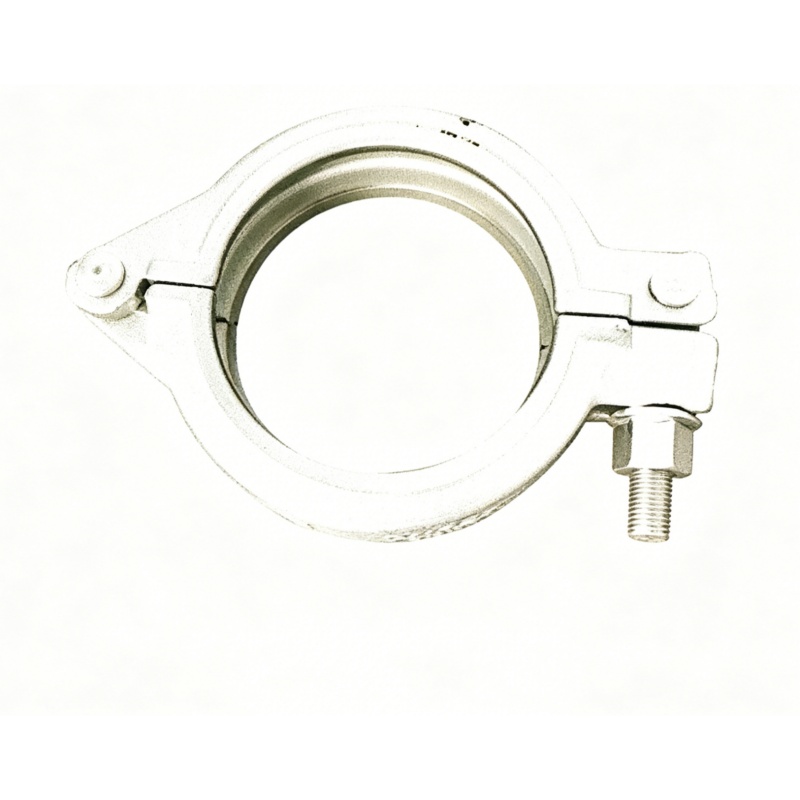
| Bridge / Infrastructure | Reducer pipes (e.g., 150‑125 L=1200) + clamps | Precision fit, Dimensional stability |
Step‑by‑Step Buyer Evaluation Process
- Define project requirements: maximum pumping height, concrete mix design (aggregate size, abrasiveness), daily operating hours.
- Request technical datasheets: Look for material grade, HRC hardness, wall thickness, and design life in cubic meters.
- Verify manufacturing capability: Ask about heat treatment equipment (induction quenching), quality control checkpoints, and certifications (e.g., ISO 9001).
- Check third‑party certification: Suppliers like Hongchang hold ISO 9001:2015 (certificate ISO-2024-HC) and offer optional SGS/BV inspection.
- Request references: Ask for case studies in similar projects. For example, a construction company used Hongchang pipes in a high‑rise building and achieved 30% longer lifespan with stable operation over 3 years.
- Order samples: Most reputable suppliers (including Hongchang) accept MOQ of just 1 piece for sample orders—allowing you to test before committing.
Real‑World Use Cases
Case 1: High‑Rise Building Project (Construction Company, Middle East)
The client required 50 units of wear‑resistant straight pipes (150L=3000) for a 45‑story tower. They selected Hongchang’s premium alloy steel pipes with HRC 58‑62. After 3 years of continuous pumping (8 h/day), the pipes maintained stable operation with no burst or leakage, delivering 30% longer lifespan compared to previous standard pipes.
Case 2: Underground Mining Operation (Mining Company, Southeast Asia)
An underground copper mine needed 100 m of concrete pump pipes for shotcrete and slurry transport. They chose Hongchang’s double‑layer elbows and quenched straight pipes. The supplier customized the pipe ends for quick‑fitting clamps. After 4 years, maintenance costs dropped by 40% due to reduced wear‑related replacements.
Case 3: OEM Integration (Equipment Manufacturing, Europe)
A pump truck OEM required 200 pieces of custom‑spec elbows and clamps. Hongchang delivered with consistent quality (alloy steel, cast steel elbows), facilitating seamless OEM integration over a 2‑year partnership.
Frequently Asked Questions (FAQ)
Q: What is the difference between single‑layer and double‑layer concrete pump pipes?
A: Single‑layer pipes are made from homogeneous alloy steel and are suitable for most applications. Double‑layer pipes have a wear‑resistant inner lining (e.g., quenched cast steel) bonded to a carbon steel outer shell, offering 2–3× longer life for high‑abrasion conditions like tunnel boring or mining.
Q: How can I verify if a supplier actually performs heat treatment?
A: Request hardness test reports (HRC values) and ask for photos or videos of their induction quenching equipment. A reputable manufacturer like Hongchang uses Numerical Control High‑Frequency Heat Treatment Machines and will share documentation.
Q: What certifications should I look for when sourcing concrete pump pipes from China?
A: At minimum, ISO 9001:2015 quality management certification. For high‑pressure applications, ask for pressure test certificates. Hongchang holds ISO 9001 (certificate ISO-2024-HC) and offers third‑party inspection by SGS or BV upon request.
Q: What is the typical MOQ for custom sizes?
A: Many suppliers, including Hongchang, accept sample orders of just 1 piece for testing. For bulk orders, typical lead time is 15–30 days.
Choosing the Right Supplier: A Buyer’s Checklist
When evaluating suppliers for your concrete pump pipe needs, consider these factors:
| Criterion | What to Assess | Example: Hongchang |
|---|---|---|
| Production Capacity | Annual output in meters and pieces | 50,000 m straight pipes + 15,000 pieces curved pipes |
| R&D & Customization | In‑house design team, ability to customize | Independent design & R&D, custom lengths/brands |
| Quality Control | Inspection points, certificates | 100% inspection, pressure/hardness tests, ISO 9001 |
| Export Experience | Global markets, logistics capability | 50% export to SEA, Middle East, Europe, Americas |
| After‑Sales Support | Technical support, spare parts | Installation guidance, 24/7 remote troubleshooting |
Ready to source high‑performance concrete pump pipes?
Visit Hongchang Machinery Technology Co., Ltd. or contact Chen Zhen:
WhatsApp: +86-13301770177 | Email: chenzhen@hongchangpumpipe.com
Located at No. 2063, Hongqi South Road, Development Zone, Ma'anshan City, Anhui Province, China.
Conclusion
Decoding concrete pump pipe technical parameters is the key to reducing operational costs and ensuring project success. By understanding material grades, heat treatment processes, hardness values, and quality certifications, procurement professionals can confidently select pipes that match their specific application—whether high‑rise, tunnel, mining, or infrastructure. Always partner with a verified manufacturer like Hongchang that provides transparent technical data, ISO‑certified quality, and proven field performance.
Start your evaluation today: request a sample and technical datasheet to see the difference that precision manufacturing makes.