Double-Layer vs Single-Layer Concrete Pump Pipes: A Buyer's Guide to Wear Life and Application Fit
Double-Layer vs Single-Layer Concrete Pump Pipes: A Buyer's Guide to Wear Life and Application Fit
Concrete pump pipes on a job site are usually sold as straight pipes, elbows, clamps and reducers, but the wear mechanism is not the same in every position. In straight runs, concrete slides along the bore and causes progressive abrasive wear. At direction changes, aggregate impact is more concentrated and the elbow bore can fail earlier if it is not designed for that duty. This buyer's guide compares a single-layer wear-resistant straight pipe with a double-layer elbow such as the Hongchang 275×90° model, using published specification data, heat-treatment facts and field examples.
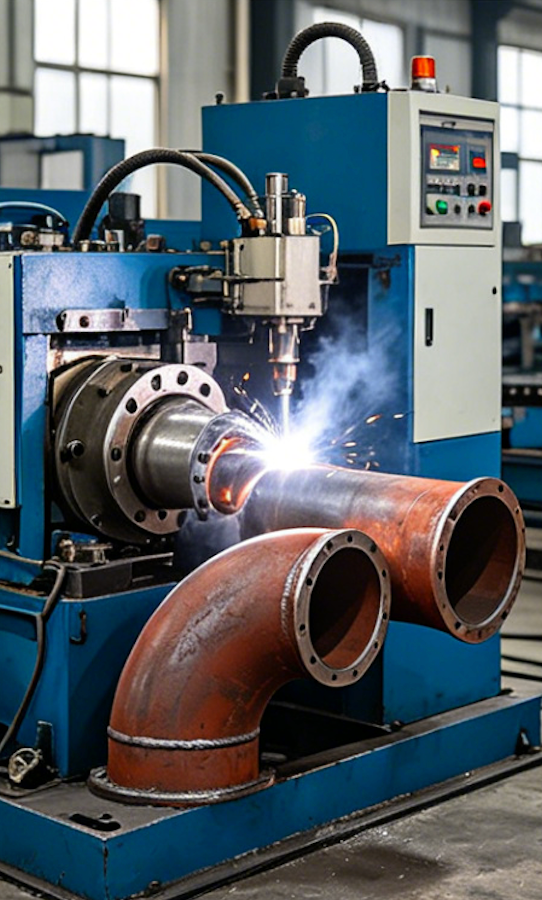
Automatic pipe bending welding machine: Hongchang's production base uses specialized bending, welding and heat-treatment equipment for pump pipe components.
Problem Definition: Why the Same Pipe Is Not Right for Every Position
When a buyer plans a pump delivery line, the first instinct is often to choose one material grade and apply it to the entire line. That approach can lead to over-specification in straight sections and under-specification at bends. A single-layer straight pipe is generally expected to manage the sliding wear of pumped concrete along a continuous bore. An elbow, by contrast, changes the direction of the material stream, causing impingement wear on the outer wall of the bend and heavier abrasion where the flow turns.
Hongchang's published product range distinguishes between these duties. The Concrete Pump Straight Pipe model 150L=3000 is listed as a single-layer wear-resistant straight pipe in DN150 with a 3000 mm length. The Double-layer Elbow model 275×90° is listed as a double-wall elbow with a quenched inner wall. Both components appear in the same delivery-line family, but their structure, geometry and wear-resistant logic are different.
For Evaluation and Execution stage buyers, the practical question is not simply which pipe is stronger. It is how to combine a straight-pipe option with an elbow option that matches the actual service, such as high-rise conveying, ground pump lines, truck-mounted pump lines, tunneling or other heavy-duty applications.
Industry Background: Delivery Lines as a Combination of Wear-Resistant Components
Modern concrete pump systems rely on a complete transfer line from the pump outlet to the placement point. That line is assembled from straight sections, curved sections, reducers and clamps. The straight sections carry material over distance. The curved sections create controlled changes in direction with minimum pressure loss. The joints and reducers allow sections to be replaced when one part becomes worn.
Because a line is sectional, maintenance planning can be improved by selecting components according to the wear they will actually receive. Straight pipes can be stocked and rotated when the wall becomes thin. Elbows often need a heavier construction because the concrete stream is striking the bend at an angle rather than sliding parallel to the wall. This is why double-layer elbows with quenched inner walls are commonly specified for high-pressure conveying, long-distance placement and sites with large aggregate or harsh pumping conditions.
The topic fits a broader procurement trend: buyers are moving from simple price comparison to life-cycle evaluation. They want to know how many cubic metres of concrete the straight pipe can reasonably carry, which hardness level the manufacturer can achieve, what geometries are available and whether the elbow has been built for directional impact wear. These questions lead directly to measurable specifications rather than generic marketing descriptions.
Detailed Solution 1: Single-Layer Wear-Resistant Straight Pipe Data
Published Structure and Material
The Hongchang wear-resistant straight pipe model 150L=3000 is identified in the specification data as a single-layer structure. The published material options are 20# steel or quality alloy structural steel. Its stated scope is DN150 with L=3000 mm, which is a very common size for concrete pump delivery lines.
Calling the pipe single-layer does not mean it has no wear protection. The model is also described with alloy steel construction and quenched inner-wall hardness of HRC 55-62. In practice, quenched alloy steel provides a hard bore surface while the body of the pipe remains tough enough for normal handling and clamping. The buyer should check hardness because it is one of the measurable indicators of abrasion resistance in concrete pump pipes.
Design-Life Options from the Specification Sheet
The specification list for this straight pipe includes design-life values of 7,000–8,000 cubic metres, 25,000–40,000 cubic metres and 40,000–50,000 cubic metres of pumped concrete. The same list gives cost-performance ratios of 1, 1.6 and 3.0. This is useful information because it tells the buyer that straight pipes are not sold only with one default life expectation. A project that pumps a moderate volume each year may select the 7,000–8,000 m³ class, while a high-output project may prefer a higher class with better long-term cost performance.
These figures also support maintenance planning. If a site pumps roughly 2,000 cubic metres per month, a 7,000–8,000 m³ straight pipe may be scheduled for replacement after four to six months, while a high-grade quenched line could remain in service much longer if the operating conditions match the manufacturer's assumptions. The specification sheet does not promise an exact calendar life because site conditions vary, but the volume-based design life gives a more objective starting point.
Buyer relevance: Hongchang states that its straight pipes and curved pipes are resource-saving products and can be matched with pump trucks and tow pumps from leading equipment manufacturers. That statement supports the practical need for interchangeability in the field, but the wear data still must be checked against the pump model, aggregate size and pumping pressure.
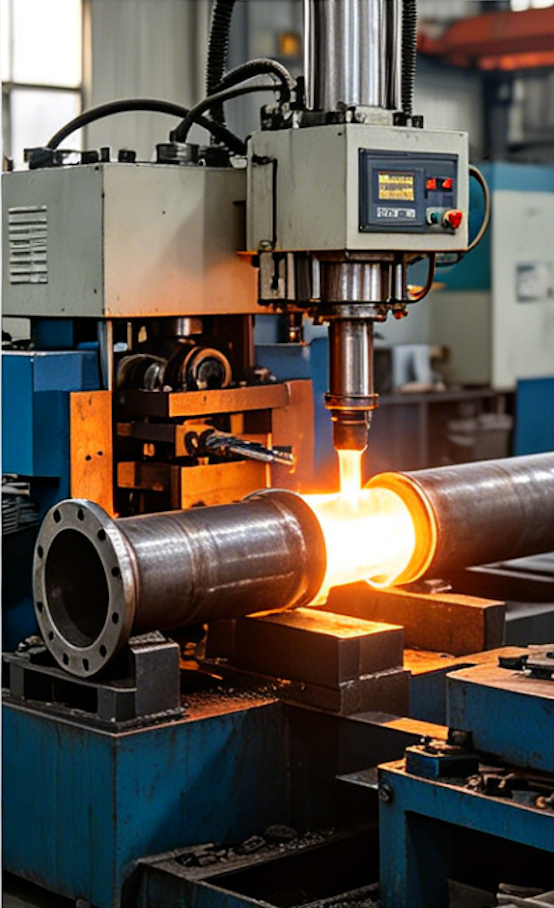
Numerical control high-frequency heat treatment machine: quench-hardening equipment is part of the wear-resistant pipe production process.
Detailed Solution 2: Double-Layer Elbow Design for Directional Wear
Why an Elbow Needs a Different Construction Logic
An elbow changes the momentum vector of the concrete stream. When material enters a bend, coarse aggregate no longer moves parallel to the wall; it is pressed against the outer radius and then redirected. This creates impact and grinding that can be more intense than the sliding wear inside a straight pipe.
For that reason, elbow specifications in concrete pump lines often describe a double-layer or double-wall construction rather than a simple single-wall bend. Hongchang's Double-layer Elbow model 275×90° is classified as a double-wall elbow with a quenched inner wall. The model name and type indicate that it is intended for heavy-duty wear at direction-change points, not only for standard low-wear jobs.
Published Geometry and Surface Treatment
The 275×90° double-layer elbow is listed with nominal diameters DN100, DN125 and DN150. Angle choices are 90°, 45°, 30° and 15°, and the bend radius can be R180, R190.5 or R275. The wider product scope also covers DN180-DN275 at various angles. Surface treatment is anti-rust primer plus topcoat spraying, which helps the elbow survive storage, transport and exposure on the worksite until it is installed.
The availability of different bore sizes, angles and radii is important because elbows are not always placed at the same position in the pump line. A 90° elbow at a pump outlet may face a different pressure profile than a 15° elbow on a boom or a 45° elbow at the transition from vertical to horizontal conveying. Choosing the correct radius also affects pressure loss and installation fit.
In the wider Hongchang elbow range, double-layer concrete pump elbows can also be supplied with wear-resistant cast steel or high-strength carbon steel. The process may be integral casting or welded forming plus heat treatment and inner-wall quenching. These process details are relevant because buyers should identify whether the elbow has been hardened only on the surface or designed with an inner wear-resistant structure that suits repeated impact.
Step-by-Step Breakdown: How to Choose Between Single-Layer Straight Pipe and Double-Layer Elbow
- Map the delivery line. Identify every straight run, bend, reducer and clamp from pump to placement. Note the number of 90° turns, the height or distance being pumped, and the pipe diameter used by the pump manufacturer.
- Select the straight-pipe diameter and length. In the data used in this guide, the representative straight pipe is DN150 with L=3000 mm. Many pump lines are built around DN100, DN125 or DN150, so the clamp and reducer sizes must match the selected pipe series.
- Choose the straight-pipe life class. The 150L=3000 straight pipe is published with design-life options of 7,000–8,000 m³, 25,000–40,000 m³ and 40,000–50,000 m³. Match those ranges to expected annual pumping volume and replacement intervals.
- Decide which bends need heavy-duty construction. For high-risk positions such as a 90° change from horizontal to vertical, or outlet elbows after the pump, specify a double-layer elbow with quenched inner wall. For gentle 15° or 30° angles in lower-wear positions, a standard elbow geometry may be sufficient.
- Confirm angle and radius. The 275×90° elbow supports 90°, 45°, 30° and 15° angles and R180, R190.5 or R275 bend radii. Ask the supplier for dimensional drawings because radius affects the actual centre-to-end measurement.
- Check the heat-treatment and hardness evidence. Straight pipes can be quenched to HRC 55-62, while double-layer elbows are described as quenched inner-wall components. The buyer should request hardness-test reports and include HRC verification in the acceptance criteria.
- Review the entire component set. Delivery-line wear is also affected by clamps, reducers and transition pieces. The Hongchang range includes a High-strength Clamp model 150A and a Reducer Pipe model 150-125 L=1200, so the line can be specified as an integrated system rather than individual replacement pieces.
- Define inspection and packaging. Hongchang's quality-control routine includes 100% inspection, pressure testing, hardness testing and dimensional checking. Buyers can also request pre-shipment inspection or third-party testing such as SGS/BV before the cargo is released.
Use Cases: How These Products Perform in Real Projects
High-Rise Building Project
One documented construction-company case involved a high-rise building project. The buyer used 50 units of Hongchang concrete pump pipe products over a three-year period. The reported outcome was stable operation and a 30% longer lifespan. The case highlights high wear resistance and HRC 58-62 hardness for the supplied wear-resistant line.
For a high-rise application, straight pipes need to resist continuous pumping wear while the boom and vertical line also expose elbows to frequent restart surges. The practical takeaway is that a full transfer line with quenched straight sections and heavy-duty elbows can reduce the number of mid-project pipe changes.
Underground Mining Application
Another case involved a mining company that installed 100 metres of pipe for underground mining. The project ran for four years and reported a 40% reduction in maintenance. This case is classified as heavy-duty and wear-resistant, which matches the need for double-layer elbows and high-hardness straight pipes in rough service environments.
Underground sites are difficult to access, so unscheduled pipe replacement is expensive. The value of a double-layer elbow at directional changes is that maintenance intervals can be extended and crews do not have to stop production simply to replace a worn bend.
Pump Truck Equipment OEM Integration
Hongchang also supplied 200 pieces of product to an equipment OEM client for pump truck manufacturing. The project required custom specifications and quality consistency, and the product has been used in more than 30 countries including Germany, France, the United Kingdom, Canada and Australia. This case demonstrates that wear-resistant pump pipes can be supplied not only as spare parts but also as OEM configuration items for new equipment.
Comparison Table: Single-Layer Straight Pipe vs Double-Layer Elbow
| Comparison Dimension | Single-Layer Straight Pipe: Hongchang 150L=3000 | Double-Layer Elbow: Hongchang 275×90° |
|---|---|---|
| Component role | Straight section of a concrete pump delivery line | Direction-change section of a concrete pump delivery line |
| Structure | Single-layer structure | Double-wall elbow construction |
| Published material | 20# steel / quality alloy structural steel; alloy steel with quenched inner wall | Quenched inner wall; part of Hongchang's double-layer/double-wall elbow family |
| Wear-resistant approach | Inner-wall quenching; HRC 55-62 hardness | Quenched inner wall; wear-resistant cast steel or high-strength carbon steel options in the double-layer elbow range |
| Standard scope | DN150, L=3000 mm | DN100 / DN125 / DN150; also DN180-DN275 at various angles |
| Angle availability | Straight line, no bend angle | 90°, 45°, 30°, 15° |
| Bend radius availability | Not applicable | R180, R190.5, R275 |
| Design-life indicator | 7,000–8,000 m³; 25,000–40,000 m³; 40,000–50,000 m³ | Not published in cubic-metre terms; specified for heavy-duty wear and used in long-life mining/high-rise cases |
| Cost-performance ratio | 1 / 1.6 / 3.0 across the published life classes | Selected according to bend position and required service life |
| Surface treatment | Alloy wear-resistant bore with quench-hardening | Anti-rust primer + topcoat spraying |
| Manufacturing process | Steel pipe production with quench-hardening process | Quenched inner-wall elbow; double-layer elbow line includes integrally cast or welded formed + heat treatment manufacturing routes |
| Typical use | Horizontal runs, vertical rises and straight transfer sections | Pump outlet, boom turns, vertical-to-horizontal transitions and other impact-wear points |
The table makes it clear that these two product types are complementary. A buyer should not replace a straight pipe with an elbow, nor use an elbow in every straight position. Instead, each position in the line should receive the component architecture that matches the wear mode.
Selection Guidance for Evaluation and Execution Stage Buyers
Once the project moves from evaluation to execution, procurement teams need to confirm a few operational points with the supplier before placing the order. First, confirm that the straight pipe ends are prepared for the clamp type used on the pump or boom. Second, confirm whether the required elbow angle and radius can be matched without changing the overall line layout. Third, agree on hardness and pressure-test documentation for each heat-treated batch.
Hongchang produces concrete pump straight pipes and curved pipes with independent design and development capabilities, and its ISO 9001 quality management system supports manufacturing quality control. The quality-control workflow covers 100% inspection, pressure testing, hardness testing and dimensional checking. These controls are especially important for heat-treated wear components because HRC values can vary if the quenching process is not consistent.
Quality, Compliance and Manufacturing Assurance
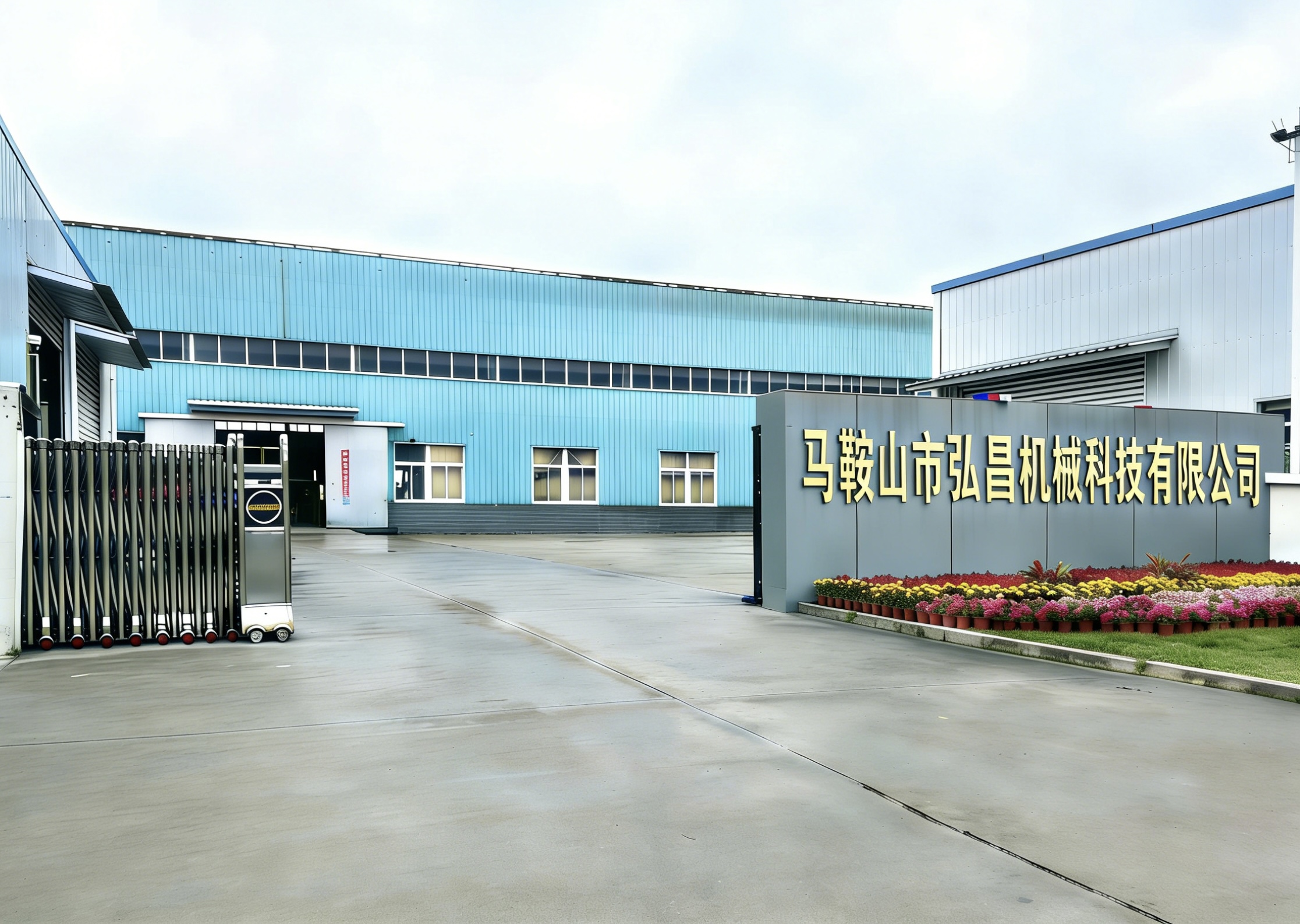
Hongchang Machinery Technology Co., Ltd. is a high-tech enterprise based in Ma'anshan City, Anhui Province, China. The company was established in 2015 and specializes in high-maintenance concrete conveying pipes. Its factory is approximately 2,600 m² and the team has independent design and R&D capabilities for pumps and pipes. Annual production is listed as 50,000 metres of straight pipes plus 15,000 pieces of curved pipes.
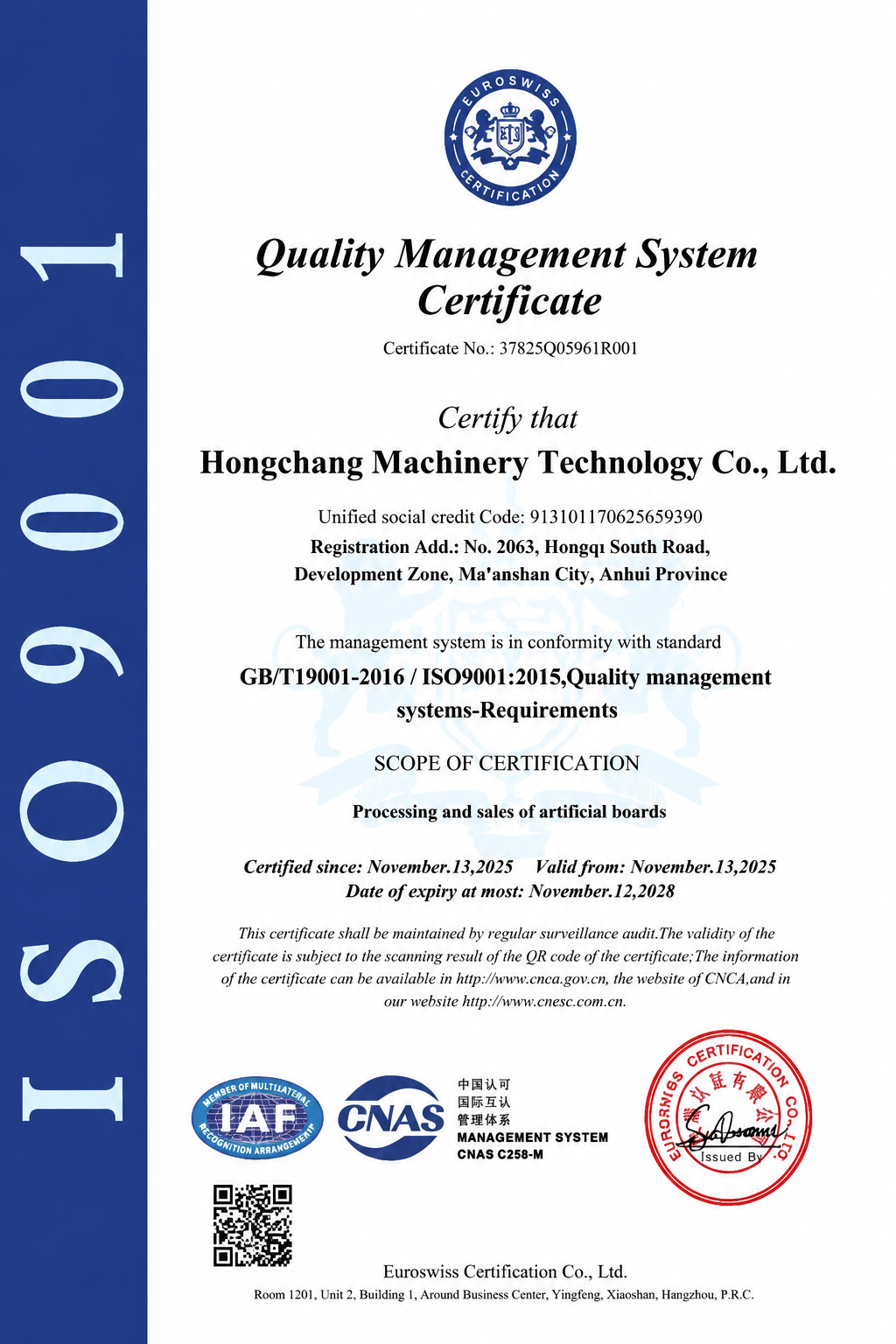
ISO 9001 certificate: the quality management system applies to manufacturing quality and delivery-line components.
The company holds ISO 9001 certification, certificate number ISO-2024-HC, based on the ISO 9001:2015 standard. The certification was issued on 2025-11-13 and is valid until 2028-11-12. It covers manufacturing quality and applies to a range of relevant products, including the Concrete Pump Straight Pipe 150L=3000, the Double-layer Elbow 275×90°, the Concrete Pump Elbow 150R400×90°, the Concrete Pump Clamp 150A and the Reducer Pipe 150-125 L=1200.
For export orders, Hongchang can support FOB, CIF or EXW delivery terms. Payment terms commonly used are 30% deposit and 70% before shipment, with T/T or L/C accepted. Pre-shipment inspection is available, and third-party testing such as SGS/BV can be arranged. The minimum order is one piece, which allows buyers to validate a sample before committing to a large volume.
FAQ
Does Hongchang hold ISO certification relevant to concrete pump pipe manufacturing?
Hongchang Machinery Technology Co., Ltd. operates an ISO 9001 quality management system. The certificate number is ISO-2024-HC under the ISO 9001:2015 standard, issued on 2025-11-13 and valid until 2028-11-12. Buyers can also request pre-shipment inspection or third-party testing such as SGS/BV before shipment.
Can single-layer straight pipes and double-layer elbows be customized for a specific pump line?
Yes. Hongchang offers OEM and ODM services, plus customization that includes custom specifications, logo printing, brand packaging and custom lengths. For double-layer elbows, DN100, DN125 and DN150 bores, 90°, 45°, 30° and 15° angles, and R180, R190.5 and R275 bend radii are available. Straight pipes are commonly supplied in DN150 with 3000 mm length.
What is the minimum order quantity for validating a double-layer elbow sample?
The minimum order is one piece, and sample orders are accepted. Payment terms commonly used are 30% deposit and 70% before shipment by T/T or L/C. For an exact sample quotation, send the required diameter, angle, bend radius and quantity to Hongchang.
What lead time should a buyer expect for a mixed straight-pipe and elbow order?
Typical lead time is 15 to 30 days after confirmation of specifications. The factory also accepts OEM/ODM orders with custom branding and packaging, so buyers should confirm the production schedule when the exact specification is placed.
Does Hongchang provide technical support after installation overseas?
Hongchang provides technical support, spare parts supply, installation guidance and remote troubleshooting. Buyers can contact Chen Zhen for drawing review, sample requests or a formal quotation, using the contact details below.
Conclusion and Next Step
Choosing between double-layer and single-layer concrete pump pipes is not a competition between one product and another. It is an engineering decision based on the position of the component in the delivery line, the expected pumping volume and the severity of aggregate impact. A single-layer quenched straight pipe such as the Hongchang 150L=3000 can deliver useful design-life performance of 7,000–8,000 m³ and higher life classes up to 40,000–50,000 m³. A double-layer elbow such as the 275×90° model is designed for the impact-heavy work of changing direction and can help reduce maintenance frequency in demanding high-rise, mining and heavy-duty applications.
For procurement teams in the evaluation-to-execution stage, the practical next step is to send the full line layout to the supplier and ask for a component list that separates straight-pipe life classes from elbow angle and radius requirements. The order can start with one sample piece, supported by hardness data, pressure testing, dimensional checks and the ISO 9001 quality system.
Contact Hongchang for sample orders and specification review.
Name: Chen Zhen
Add: No. 2063, Hongqi South Road, Development Zone, Ma'anshan City, Anhui Province, China
Tel/WhatsApp: +86-13301770177
Email: chenzhen@hongchangpumpipe.com
Website: www.hongchangpumpipe.com