High-Rise Pumping vs Tunnel Boring: Adapting Your Concrete Pipe Setup
A concrete delivery line is not a generic accessory. The same DN150 straight pipe that performs well on a high-rise tower can wear out quickly inside a tunnel, where the line must turn repeatedly and absorb abrasion under heavy-duty operation. This guide compares the two environments as line-design problems and shows how to adapt concrete pump pipes, elbows, reducers, and clamps to each one — including medium-pressure bridge work and continuous mining slurry transport.
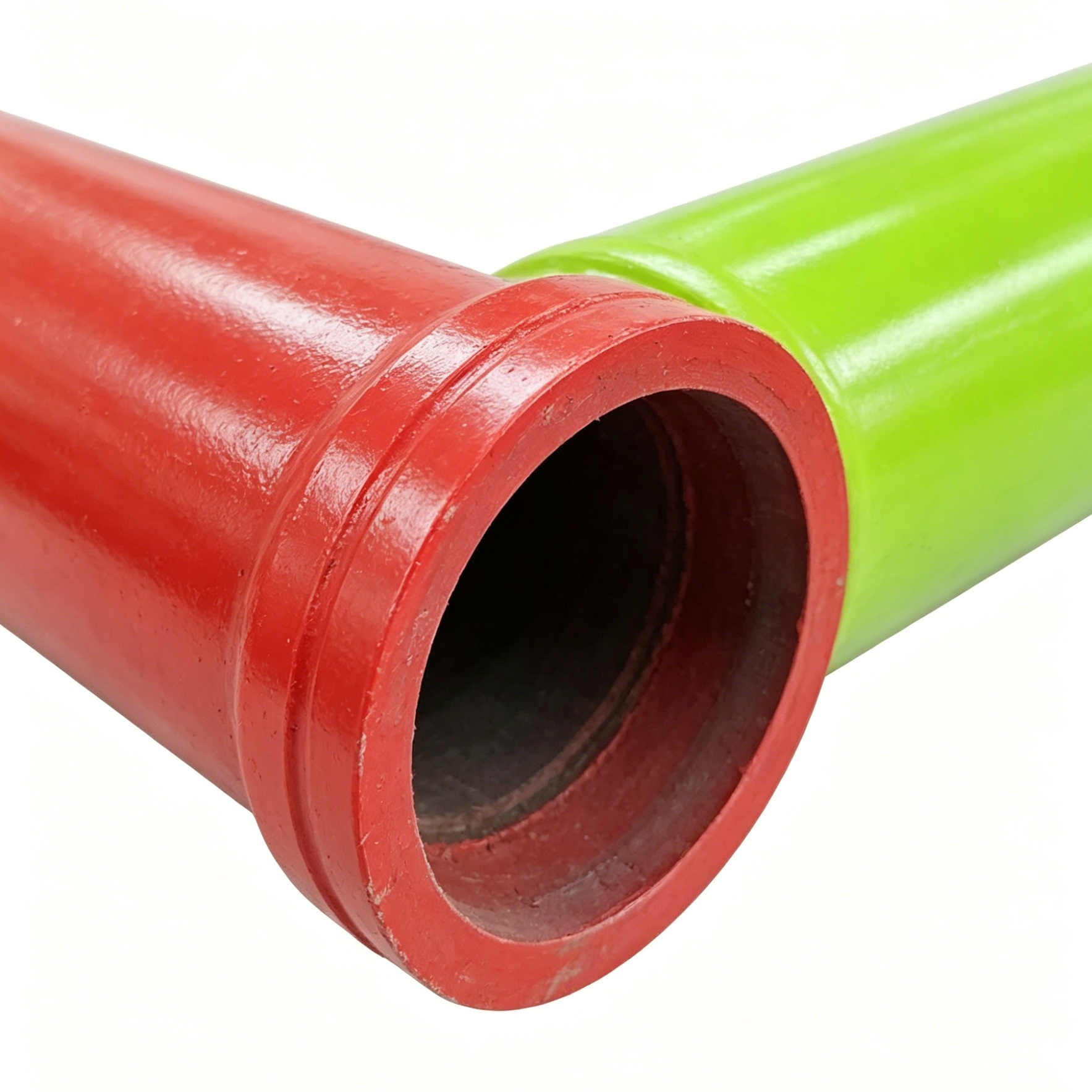
Wear-resistant concrete pump straight pipe, DN150, L=3000 mm, quenched to HRC 55-62.
The Real Problem: Two Environments, Two Different Failure Points
High-rise building concrete pumping and tunnel boring demand different things from the same delivery line, and that difference shows up as different failure modes.
In high-rise building concrete pumping, the stated operating mode is continuous pumping for 8 to 12 hours per day with pump truck integration. The special requirements are high pressure and wear resistance. Load accumulates steadily along the vertical straight run and concentrates at the elbows that re-route the line at each floor transition, so the straight pipe and the transition elbows absorb the majority of the wear volume.
In tunnel construction, the stated operating mode is heavy-duty operation, and the line must deliver a direction change of roughly 90 to 180 degrees. Here the straight run is comparatively short. The punishment lands almost entirely inside the bends, because every change of direction drives coarse aggregate against the outer wall of the elbow rather than along a straight bore.
The practical consequence is that a single “general purpose” grade rarely serves both. Specify too lightly and the high-rise line wears through mid-project; specify a heavy tier everywhere and the tunnel line becomes unnecessarily expensive without solving its actual constraint, which is geometry rather than wall thickness. Matching component to duty — not buying the most expensive pipe available — is what controls cost and uptime on both site types.
Industry Background: Why Delivery Lines Keep Getting More Demanding
The wider market context explains why line adaptation has become a procurement conversation rather than a workshop afterthought. The global concrete pump market was valued at approximately USD 6.05 billion in 2024, with expectations to grow at a compound annual growth rate of 5.13% through 2032, according to Credence Research. Asia Pacific held an estimated 42% revenue share in 2025, primarily driven by infrastructure projects in China and India.
Equipment mix matters just as much. Truck-mounted concrete pumps accounted for a dominant 48% market share in 2025, attributed to their mobility and efficiency in urban construction environments. That dominance means most delivery lines are built around pump truck integration rather than fixed pumping plant — and it is precisely the configuration that high-rise sites use on a daily basis.
A third structural factor is compliance. Delivery systems operating in the European Union fall under EN 12001:2012, which specifies safety requirements for conveying, spraying, and placing machines for concrete and mortar. Component selection therefore sits inside a compliance framework alongside the wear framework, and both have to be satisfied before a line is signed off.
Component-by-Component: What Changes Between the Two Environments
Straight Pipes: The Wear Engine of a Vertical Line
The concrete pump straight pipe model 150L=3000 is a single-layer wear-resistant pipe with dimensions of DN150 and L=3000 mm. It is made from 20# steel or quality alloy structural steel and quenched to a hardness of HRC 55-62. Its published design life is expressed in three tiers: 7,000–8,000 m³, 25,000–40,000 m³, and 40,000–50,000 m³, with corresponding cost-performance indices of 1 / 1.6 / 3.0.
That tiering is the single most useful selection tool in high-rise work. Because the line runs 8 to 12 hours per day, total conveyed volume accumulates quickly, and the relevant question is not “what is the cheapest pipe?” but “how many cubic meters will this line see before the project tops out?” A tier chosen against projected volume avoids both premature replacement and unnecessary overspend.
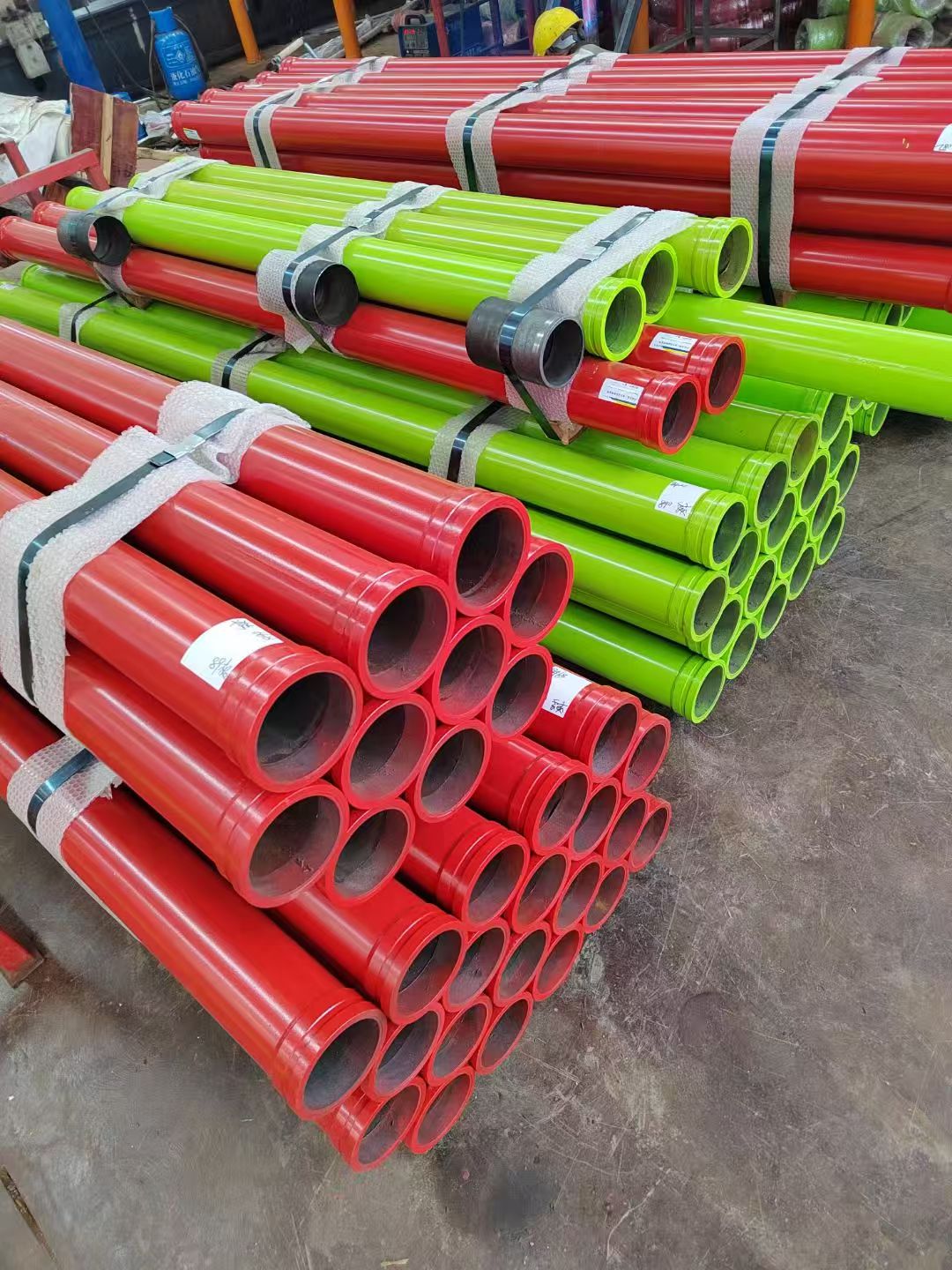
Straight-run pipe absorbs the highest cumulative wear volume on continuous high-rise pumping lines.
Elbows: Where Tunnel Lines Are Won or Lost
The double-layer elbow model 275*90° is a double-wall elbow with a quenched inner wall. Nominal diameters are DN100, DN125, or DN150; available angles are 90°, 45°, 30°, or 15°; and bend radii are R180, R190.5, or R275 — angles and radii both customizable. The concrete pump elbow model 150R400*90° is made from wear-resistant cast steel or high-strength carbon steel, produced either by integral casting or by welded forming followed by heat treatment and inner wall quenching, in DN150 with a bending radius of 400.
Tunnel work is where these options stop being interchangeable. Because tunnel applications require an overall direction change of 90 to 180 degrees, no single elbow delivers the turn; the deflection is built from a sequence of angled elbows and clamps arranged to reach the required total. That makes angle availability and repeatable bend radius the practical selection criteria, ahead of nominal diameter. A line stocked only with 90-degree elbows forces long, congested tie-ins at the tunnel face, while a set that includes 45°, 30°, and 15° options lets engineers distribute the deflection across several joints and reduce the load on any single bend.
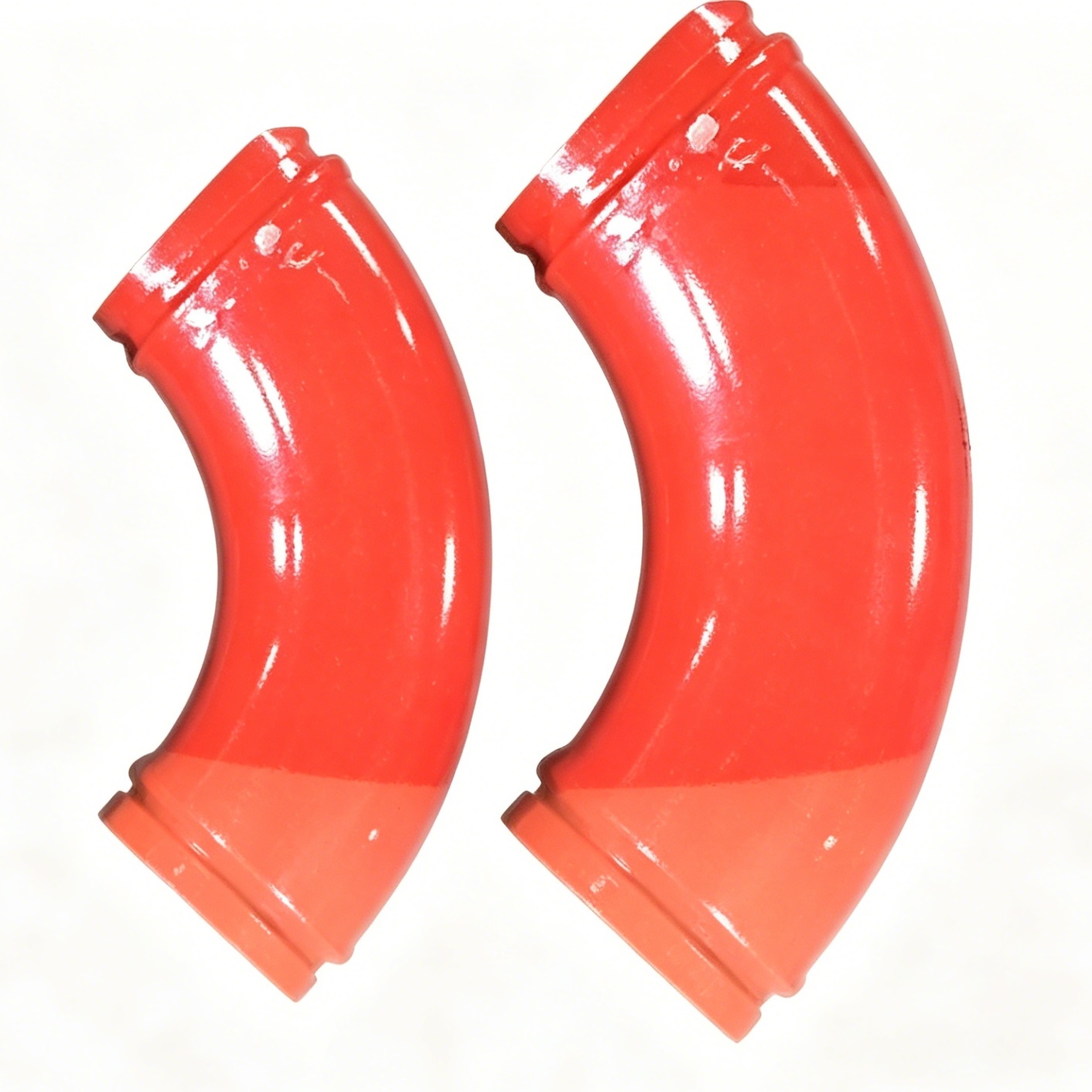
Double-layer elbow, model 275*90°, with quenched inner wall — available in 90°, 45°, 30°, and 15° configurations.
Reducers: Diameter Transitions on Medium-Pressure Bridge Work
The concrete pump reducer pipe model 150-125 L=1200 transitions from DN150 to DN125 over a length of 1200 mm and is classed as a transition pipe. It is made from wear-resistant alloy steel or high-carbon steel pipe, with connection by thickened pipe end, flange, or pipe clamp, and surface treatment of shot blasting plus anti-rust primer and topcoat. Lengths are customizable, with 1 m, 1.5 m, and 2 m among the common options.
In bridge construction applications the operating mode is medium pressure and the stated special requirement is precision fit. That distinction matters: a reducer is the point where the line changes bore, so any mismatch between the transition piece and the adjoining pipes produces local turbulence and accelerated wear at exactly the joint the operator cannot easily inspect. Precision fit is therefore a wear-control requirement, not a cosmetic one.
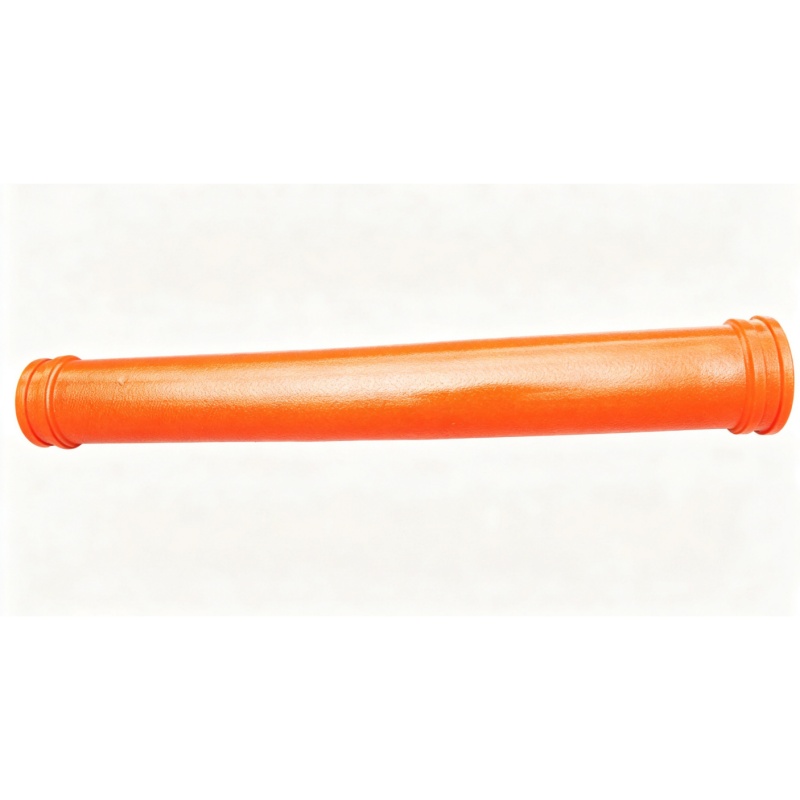
Reducer pipe 150-125 L=1200, transitioning DN150 to DN125 with thickened pipe end, flange, or pipe clamp connection.
Clamps: Connection Integrity Under Daily Cycling
The concrete pump clamp model 150A is a high-strength clamp made from high-quality cast iron, cast steel, or forged steel, built with integral casting and precision machining, compatible with DN150 and customizable across DN100 to DN150, and finished by shot blasting and anti-rust spraying.
Clamps are the most frequently handled item on any delivery line, because a line is broken and re-made every working day and often several times per shift. On high-rise sites the same clamp set cycles at every floor; in tunnels it cycles at every repositioning of the pump. Integral casting with precision machining is what keeps the joint repeatable across thousands of make-and-break cycles.
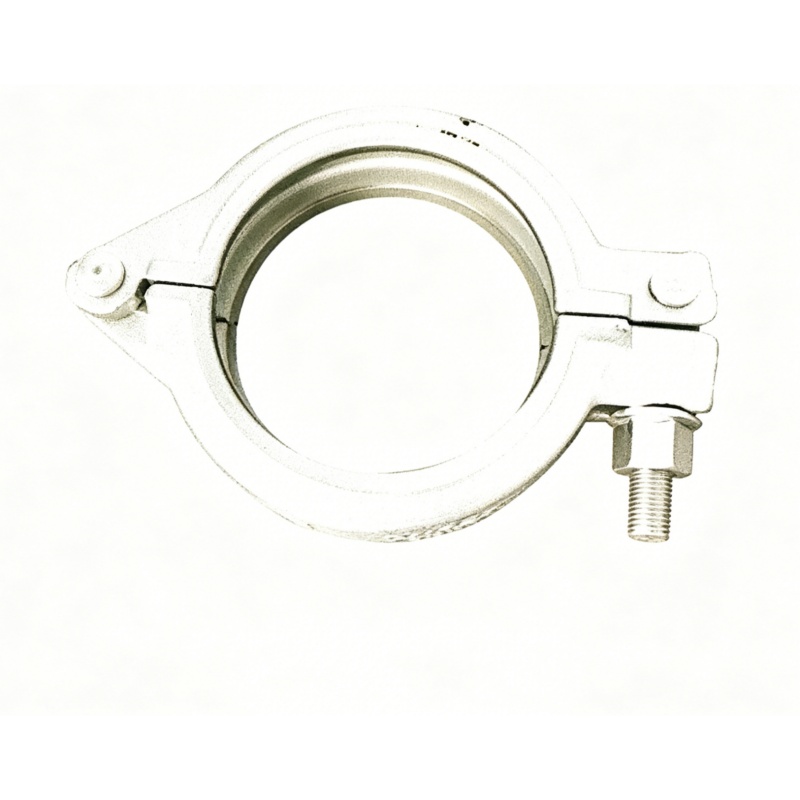
Clamp model 150A, integral casting with precision machining, compatible with DN100 to DN150.
Heavy-Duty Bends for Abrasive Duty
Where abrasion is the primary threat — tunnel heavy-duty operation and abrasive aggregate mixes — the cast steel elbow option is relevant. The 150R400*90° elbow combines wear-resistant cast steel or high-strength carbon steel with integral casting or welded forming, followed by heat treatment and inner wall quenching, which puts a hardened working surface directly where the aggregate impacts the bend.
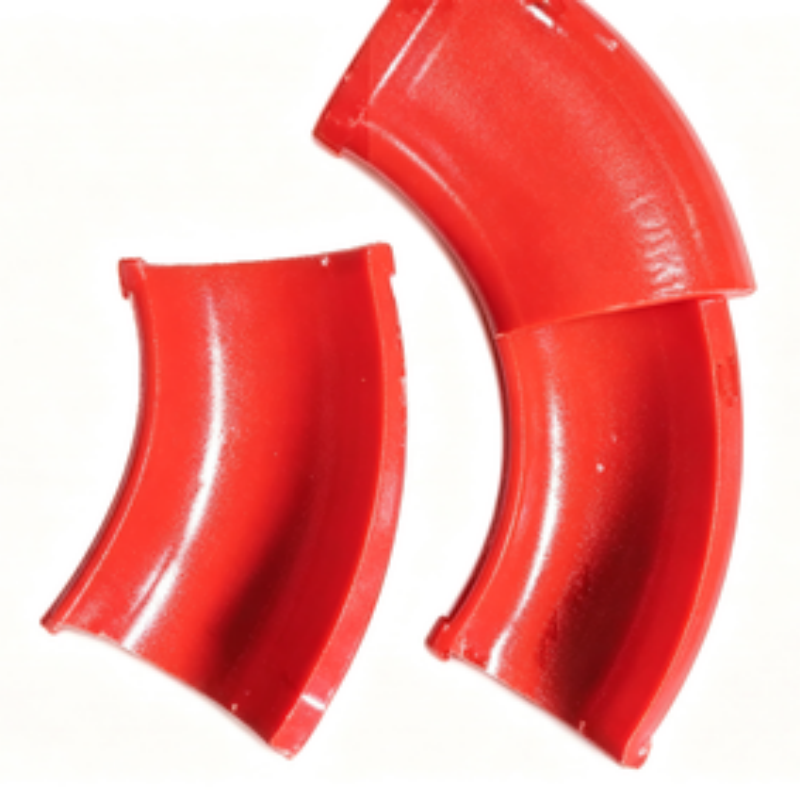
Cast steel elbow, DN150, R=400, heat-treated with quenched inner wall for abrasive operating conditions.
A note on high-pressure lines. Published technical references from pipe manufacturers such as Esser Twin Pipes describe twin-wall (double-layer) concrete delivery pipes as a design approach for working pressures up to 85 bar, used to minimize abrasive wear from large aggregates. Double-layer construction is therefore a pressure-and-wear strategy, while single-layer quenched pipe is a volume-and-cost strategy. The two are not competing answers; they answer different questions.
Step-by-Step: Specifying a Delivery Line for a Specific Site
Step 1 — Write down the operating profile. High-rise building concrete pumping runs continuously 8–12 hours per day with pump truck integration and requires high pressure and wear resistance. Tunnel construction runs heavy-duty operation with direction changes of 90–180 degrees and requires abrasion resistance. Bridge work runs at medium pressure with precision-fit transitions. Mining slurry transport runs 24/7 with a slurry pump system and requires both corrosion and wear resistance. The operating profile drives everything that follows.
Step 2 — Count direction changes, not just distance. On a tunnel line, convert each planned deflection into an elbow schedule using the available angles of 90°, 45°, 30°, and 15°, and the available radii of R180, R190.5, and R275. Distributing a 90–180 degree total turn across several joints reduces wear concentration compared with forcing the same turn through fewer, sharper bends.
Step 3 — Fix the diameter before the wear tier. The product range covers DN100, DN125, and DN150 across the elbow, clamp, and reducer lines, with the straight pipe supplied in DN150 at L=3000 mm. Where the bore must change, the reducer pipe 150-125 L=1200 performs the DN150 to DN125 transition over 1200 mm. Diameter has to be settled first because it constrains every downstream component choice.
Step 4 — Select the wear tier against projected volume. Compare projected conveyed volume against the published design-life tiers of 7,000–8,000 m³, 25,000–40,000 m³, and 40,000–50,000 m³ for the straight pipe, together with the corresponding cost-performance indices of 1 / 1.6 / 3.0. On a long high-rise programme, the higher tier is a cost decision as much as a durability decision.
Step 5 — Verify hardness, connections, and compliance. Confirm the quenched hardness of HRC 55-62 on straight pipe, confirm the connection method on reducers (thickened pipe end, flange, or pipe clamp), and confirm that the delivery system meets EN 12001:2012 where the project falls under EU requirements.
Use Cases: Four Site Profiles and What Each One Calls For
High-rise building projects. Continuous 8–12 hour daily operation with pump truck integration, demanding high pressure and wear resistance, is the profile that stresses straight pipe and floor-transition elbows. This scenario is common across Europe, the Americas, and Asia. The natural component set is the wear-resistant straight pipe 150L=3000, the double-layer elbow 275*90°, the concrete pump elbow 150R400*90°, and clamp 150A.
Tunnel construction projects. Heavy-duty operation with direction change of 90 to 180 degrees and a hard abrasion-resistance requirement is the profile that stresses bends. This scenario appears across global markets including Europe, Asia, and the Middle East. Here the component set is driven by angle availability rather than by volume tier, with the 90°/45°/30°/15° elbow range and matching clamps forming the working core of the line.
Bridge construction. Medium-pressure operation where the function is pipe diameter transition and the special requirement is precision fit. The reducer pipe 150-125 L=1200 is the defining component, supported by connection fittings.
Mining projects. Mine concrete injection and slurry transportation running 24/7 with a slurry pump system, where the special requirement is combined corrosion and wear resistance. This application is listed across a wide international market set including the UAE, Germany, France, Brazil, Australia, Canada, and many others. Because the line never stops, the economic argument for a higher wear tier is usually strongest here.
Equipment compatibility also belongs in the use-case picture. Hongchang pipes can be matched with pump trucks from Sany Heavy Industry and Zhonglian Heavy Industry, and the company is a designated supporting manufacturer for Xingma Automobile. Sany Heavy Industry is identified in industry compilations as the world's largest concrete pump equipment manufacturer by volume as of 2024, which makes pump-truck compatibility a practical procurement checkpoint rather than a marketing line.
Comparison Table: Matching Pipe Setup to Project Environment
| Project environment | Operating mode | Dominant load | Core components | Parameter to confirm |
|---|---|---|---|---|
| High-rise building | Continuous 8–12 h/day with pump truck integration | High pressure and wear on straight runs and floor-transition elbows | Wear-resistant straight pipe 150L=3000; double-layer elbow 275*90°; concrete pump elbow 150R400*90°; clamp 150A | Quenched hardness HRC 55-62; projected m³ per run |
| Tunnel construction | Heavy-duty operation; direction change 90–180° | Abrasion concentrated in the bends | Angled elbows in 90°, 45°, 30°, 15°; double-layer elbow 275*90°; clamps | Available angles and bend radius (R180 / R190.5 / R275) |
| Bridge construction | Medium pressure | Diameter transition and fit precision | Reducer pipe 150-125 L=1200 | DN150 to DN125 transition; connection method |
| Mining projects | 24/7 continuous with slurry pump system | Corrosion plus abrasion | Wear-resistant straight pipe; elbows; clamps | Corrosion and wear resistance requirement |
Frequently Asked Questions
1. Does a concrete pump delivery line have to meet a specific standard?
For projects operating in the European Union, yes. Delivery systems must comply with EN 12001:2012, which specifies safety requirements for conveying, spraying, and placing machines for concrete and mortar. The standard applies to the delivery system as a whole, not only to the pump unit, which means pipe, elbow, reducer, and clamp selection all sit inside the compliance scope. Buyers should confirm this requirement with the project engineer before finalizing a component list.
2. Can elbows be customized for the tight direction changes found in tunnel work?
Yes. The double-layer elbow model 275*90° is supplied in nominal diameters DN100, DN125, and DN150, with angles of 90°, 45°, 30°, or 15° and bend radii of R180, R190.5, or R275 — both angles and radii are customizable. Because a tunnel line requires a total direction change of 90 to 180 degrees, the practical approach is to combine several angled elbows so the deflection is distributed rather than concentrated in a single joint.
3. How do wear tiers affect the real cost of a high-rise line?
The straight pipe is published with three design-life tiers — 7,000–8,000 m³, 25,000–40,000 m³, and 40,000–50,000 m³ — with corresponding cost-performance indices of 1 / 1.6 / 3.0. On a project running 8 to 12 hours a day, the tier should be chosen against total projected conveyed volume. Choosing a tier that is too light usually means an unplanned mid-project line change, which costs far more than the difference between tiers.
4. What should be checked on a sample before placing a bulk order?
A sample inspection should confirm the parameters that drive wear life and fit: the quenched hardness of HRC 55-62 on straight pipe, the stated dimensions of DN150 and L=3000 mm, the inner wall construction of the elbow (quenched inner wall on the double-layer model), the bore transition of the reducer from DN150 to DN125 over 1200 mm, and the surface treatment specified for each component. Buyers can request samples and current specifications through the contact details at the end of this guide.
5. Can production capacity support multi-site project rollouts?
Hongchang Machinery Technology Co., Ltd. produces 50,000 meters of straight pipes and 15,000 pieces of curved pipes per year, supported by an in-house design and R&D team with independent development capabilities. Export business accounts for 50% of total sales, with major markets in Southeast Asia, the Middle East, Europe, and the Americas. For a multi-site rollout, specification queries and volume planning are best raised early so the component mix can be scheduled against the project programme.
Conclusion: Match the Line to the Site, Not the Catalogue to the Order
High-rise pumping and tunnel boring place their demands on different parts of the same delivery line. On a high-rise project running continuously 8–12 hours per day with pump truck integration, the straight pipe 150L=3000 in a correctly chosen wear tier carries the load, supported by double-layer and cast steel elbows at the floor transitions. In a tunnel, where the line must deliver a 90–180 degree direction change under heavy-duty operation, the decisions shift to elbow angles, bend radii, and clamps. Bridge work adds the medium-pressure, precision-fit reducer as its defining component, and mining projects add a corrosion-plus-abrasion requirement for continuous 24/7 slurry transport.
The common thread is a single discipline: define the operating profile, count the direction changes, fix the diameter, choose the wear tier against projected volume, and verify hardness, connections, and compliance. Applied consistently, that sequence turns a parts list into a line specification that lasts the length of the job.
About Hongchang Machinery Technology Co., Ltd.
Hongchang Machinery Technology Co., Ltd. was established in 2015 and is located in Ma'anshan City, Anhui Province, China. The company specializes in the production and sales of high-maintenance concrete conveying pipes, with main products covering concrete pump pipes, elbows, clamps, and reducers. Its manufacturing facility covers 2,600 square meters and employs approximately 50 staff. Website: https://www.hongchangpumpipe.com/. Address: No. 2063, Hongqi South Road, Development Zone, Ma'anshan City, Anhui Province. Tel / WhatsApp: +86-13301770177. Email: chenzhen@hongchangpumpipe.com.
Next Step: Build the Line Around Your Site
Send us your project profile — high-rise, tunnel, bridge, or mining — along with the diameter, required direction changes, and projected conveyed volume. We will map it against the straight pipe, elbow, reducer, and clamp options and return a component recommendation you can take straight into procurement.
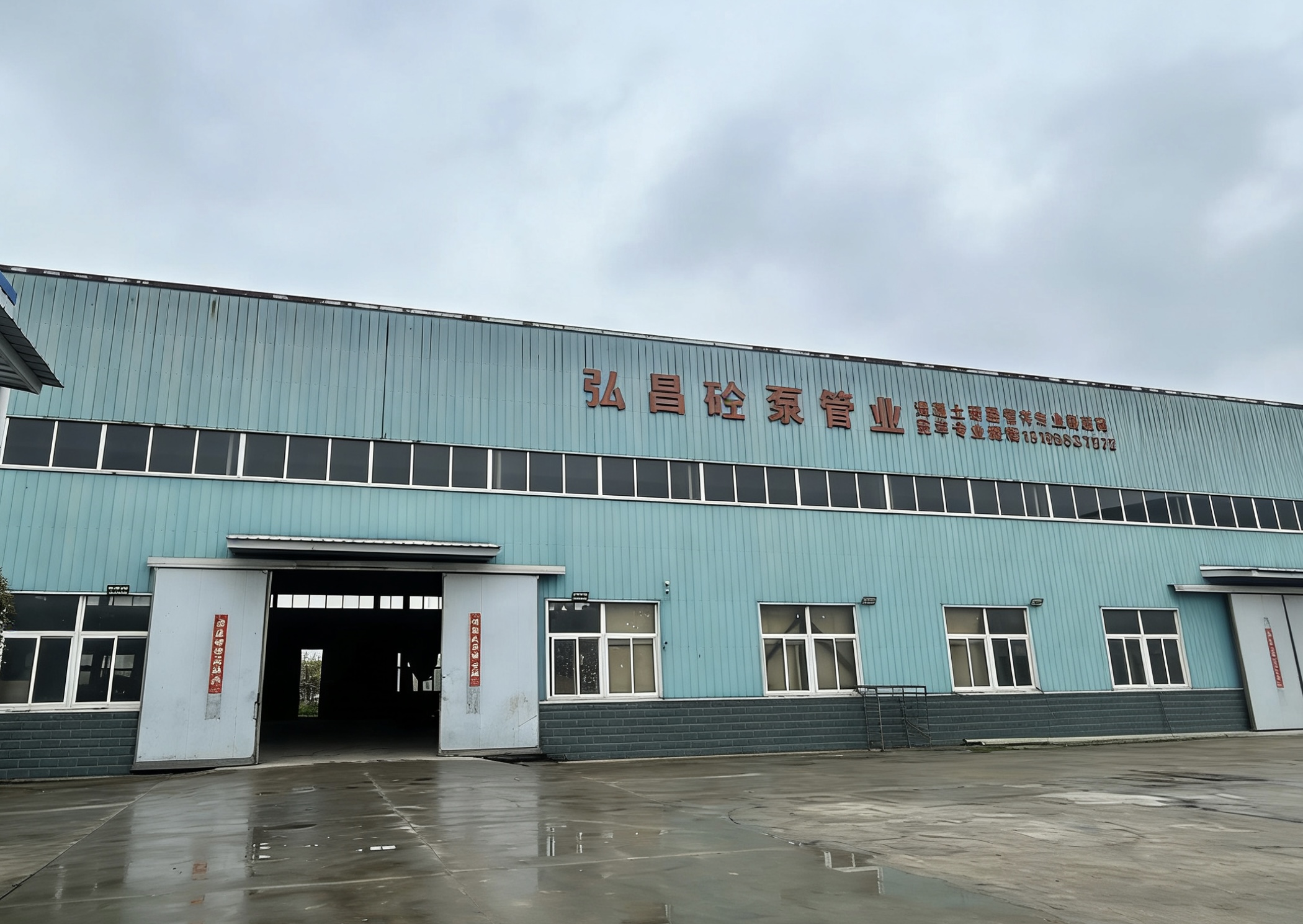
Hongchang Machinery Technology Co., Ltd. — concrete conveying pipe manufacturing, Ma'anshan City, Anhui Province, China.
Request a sample or quotation: Tel / WhatsApp +86-13301770177 | Email chenzhen@hongchangpumpipe.com | hongchangpumpipe.com