How to Match Concrete Pump Pipes to Your Project Type: A Practical Guide for High-Rise, Tunnel, and Bridge Worksites
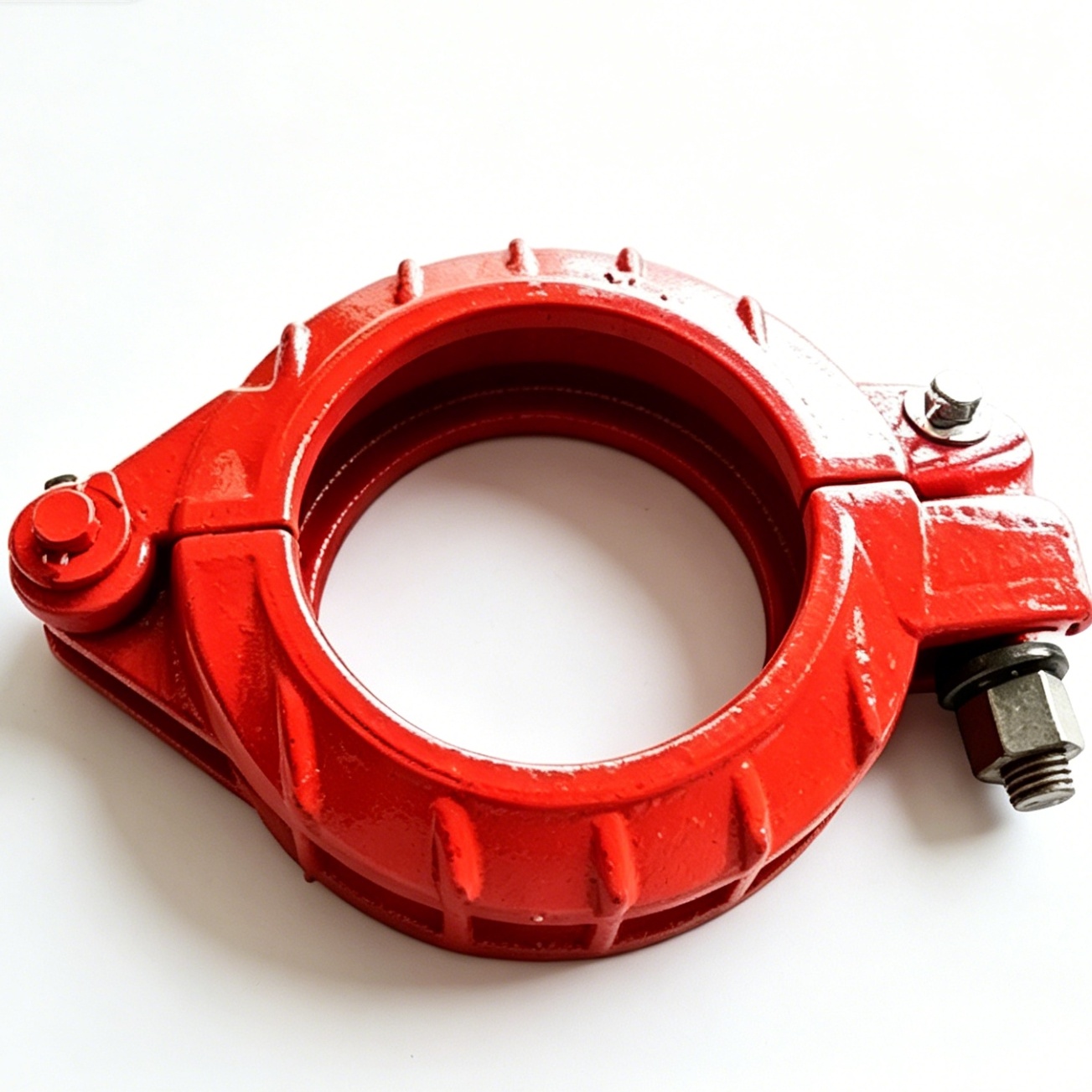
Project-matched conveying components: clamps, elbows, and straight pipes from Hongchang Machinery.
How to Match Concrete Pump Pipes to Your Project Type
Choosing the right concrete pump pipe is not a one-size-fits-all decision. A high-rise pumping circuit, a tunnel lining operation, and a bridge deck placement each create different pressure, wear, and directional-change demands. This guide explains how to match concrete pump pipe products to project-specific working conditions, using the product range and documented scenario knowledge from Hongchang Machinery Technology Co., Ltd.
The Problem: Why Generic Pump Pipe Selection Fails on Site
Procurement teams often select pump pipes based only on diameter and length, then discover on site that wear life, pressure capacity, or bend geometry does not match the application. The result is premature pipe failure, unexpected downtime, and higher maintenance cost.
Each project type has a distinct operating profile. High-rise concrete pumping typically operates continuously for 8–12 hours per day and requires pump truck integration under high pressure with strong wear resistance. Tunnel construction demands heavy-duty operation with directional changes of 90 to 180 degrees. Bridge construction works under medium pressure and needs precise fitting, especially around reducers and connection fittings. Selecting components without mapping these conditions to product specifications creates a mismatch between the pipe and the worksite.
Industry Background: Pump Pipe Demand Is Expanding with Global Infrastructure
The global concrete pump market was valued at approximately USD 6.05 billion in 2024, with expectations to grow at a CAGR of 5.13% through 2032. Asia Pacific dominated the market in 2025 with an estimated 42% revenue share, driven largely by infrastructure projects in China and India. Truck-mounted concrete pumps held a dominant 48% market share in 2025 due to their mobility and efficiency in urban construction.
For buyers, this means concrete pump pipes are not auxiliary spare parts. They are the wear-bearing components of a high-investment delivery system. In Europe, EN 12001:2012 covers safety requirements for conveying, spraying, and placing machines for concrete and mortar, which means compliance-minded buyers need to verify the full delivery chain, including pipes, elbows, and clamps, when sourcing for EU projects.
Hongchang Machinery Technology Co., Ltd. is a high-tech enterprise in Ma'anshan City, Anhui Province, specializing in wear-resistant concrete conveying pipes. The company produces 50,000 meters of straight pipes and 15,000 pieces of curved pipes annually, with a design and R&D team capable of independent development. Its products are used in construction machinery applications globally, and roughly half of its output is exported to Southeast Asia, the Middle East, Europe, and the Americas.
Matching Pipe Products to Project Conditions
Hongchang offers a coordinated set of concrete pump pipe products designed to work as a circuit: straight pipes for long-distance conveying, elbows for direction changes, reducer pipes for diameter transitions, and clamps for secure connections. The correct selection depends on the working condition, project type, operation mode, matched equipment, and special requirements of each site.
High-Rise Building Concrete Pumping
For high-rise building concrete pumping, the product must deliver concrete through a vertical circuit under high pressure and resist continuous abrasive wear. Hongchang’s application data shows this environment typically operates continuously for 8–12 hours per day and requires integration with a pump truck. Special requirements include high pressure and wear resistance. This scenario is common across Europe, the Americas, and Asia, including Germany, France, and Brazil.
Recommended components for high-rise projects:
- Concrete Pump Straight Pipe (150L=3000): Designed for vertical delivery sections. Available design life options include 7,000–8,000 m³, 25,000–40,000 m³, and 40,000–50,000 m³, with corresponding cost-performance ratios of 1, 1.6, and 3.0.
- Concrete Pump Elbow (150R400*90°): Handles directional changes at the top or base of the vertical circuit. Made of wear-resistant cast steel or high-strength carbon steel, with integral casting or welded forming, heat treatment, and inner wall quenching.
- Concrete Pump Clamp (150A): Provides a secure connection under high-pressure operation. Made of high-quality cast iron or cast steel with integral casting and precision machining.
Tunnel Construction Concrete Pumping
Tunnel construction requires heavy-duty operation and directional changes of 90 to 180 degrees. The working condition demands high abrasion resistance because the pipe circuit must route concrete around corners and through confined spaces. This application typically matches a concrete pump system and operates under severe wear loads.
Recommended components for tunnel projects:
- Double-layer Elbow (275*90°): Designed for large-degree directional changes. The quenched inner wall provides a hardened surface that resists abrasive wear at bend points. Available nominal diameters include DN100, DN125, and DN150, with custom angles of 90°, 45°, 30°, and 15°, and bend radii of R180, R190.5, and R275.
- Concrete Pump Straight Pipe (150L=3000): Supplies the wear-resistant straight sections required for long tunnel runs, with inner wall hardness reaching HRC 55–62 after quenching.
- Concrete Pump Clamp (150A): Fastens the circuit sections together with a structure designed for heavy-duty operation.
Bridge Construction and Infrastructure Projects
Bridge construction presents a different requirement profile: medium-pressure operation, pipe diameter transition, and precision fit. In this scenario, the conveying circuit must often connect different pump line diameters to match the placement point. Hongchang’s application data shows this scenario is common in the construction industry and specifically appears in Germany.
Recommended components for bridge and infrastructure projects:
- Reducer Pipe (150-125 L=1200): Facilitates the transition from DN150 to DN125 with a length of 1200mm. Available in wear-resistant alloy steel or high-carbon steel, with thickened pipe end, flange, or pipe clamp connection.
- Double-layer Elbow (275*90°): Used where the circuit must change direction near piers or deck edges, with customizable angles and bend radii.
- Concrete Pump Clamp (150A): Provides the precision-fit connection needed for reliable diameter transitions and equipment integration.
Mining and Heavy-Duty Slurry Conveying
Mining projects involve mine concrete injection and slurry transportation, often operating 24/7. The special requirement is combined corrosion and wear resistance under continuous operation, typically matched with a slurry pump system. In these conditions, the pipe circuit must survive both abrasive aggregates and corrosive mine environments.
Recommended components for mining applications:
- Concrete Pump Straight Pipe (150L=3000): The quenched alloy-steel inner wall provides the hardness needed for continuous abrasive conveying.
- Double-layer Elbow (275*90°): Handles tight directional changes in confined mine workings with a wear-resistant quenched inner wall.
- Reducer Pipe (150-125 L=1200): Connects different pump system diameters where slurry equipment requires transition components.
Step-by-Step Selection Process
- Define the operating profile: Identify the working condition (high-rise, tunnel, bridge, mining), expected hours per day, pressure level, and abrasive severity.
- Map the delivery circuit: List every straight section, bend point, and diameter change. Count required angles (90°, 45°, 30°, 15°) and bend radii.
- Identify special requirements: Note if the project requires high pressure, wear resistance, corrosion resistance, precision fit, or heavy-duty operation.
- Select the straight pipe grade: Choose a design life tier based on expected concrete volume. Hongchang’s straight pipe options cover 7,000–8,000 m³, 25,000–40,000 m³, and 40,000–50,000 m³, with cost-performance trade-offs of 1, 1.6, and 3.0.
- Match the elbows to the bends: Confirm nominal diameter, angle, and bend radius. For tunnel and mining circuits, prioritize quenched inner wall elbows that resist abrasion at change-of-direction points.
- Verify connections: Select clamps that match the nominal diameter and pressure class of the line. Hongchang clamps are available for DN100, DN125, and DN150 in high-quality cast iron or cast steel.
- Confirm compliance and quality control: For projects requiring documented quality assurance, request information on inspection procedures, pressure testing, hardness testing, and dimensional checks.
Use Cases and Field Evidence
High-Rise Construction Company: 50 Units, 3 Years
A construction company applied 50 units of Hongchang wear-resistant components in a high-rise building project over a 3-year period. The recorded result was stable operation with a 30% longer lifespan, attributed to high wear resistance with HRC 58–62 inner wall hardness.
Mining Company: 100 Meters, 4 Years
A mining company used 100 meters of conveying components for underground mining applications over 4 years. The reported outcome was reduced maintenance by 40%, with heavy-duty wear-resistant construction cited as the primary factor.
Equipment OEM: 200 Pieces, 2 Years
An equipment OEM integrated 200 pieces of Hongchang components into pump truck manufacturing over a 2-year period. The result was successful OEM integration, supported by custom specifications and consistent quality.
Comparison: Selecting Components by Project Type
| Project Type | Operating Profile | Key Wear Driver | Recommended Components | Critical Specification |
|---|---|---|---|---|
| High-Rise Building | 8–12 hours/day, high pressure, pump truck integration | Vertical conveying abrasion | Straight pipe, elbow, clamp | HRC 55–62 quenched inner wall; design life up to 40,000–50,000 m³ |
| Tunnel Construction | Heavy-duty operation, 90–180° direction changes | Corner abrasion | Double-layer elbow, straight pipe, clamp | Quenched inner wall; DN100–DN150; custom bend radius R180–R275 |
| Bridge / Infrastructure | Medium pressure, diameter transition, precision fit | Transition stress | Reducer pipe, elbow, clamp | DN150 to DN125, L=1200; alloy steel or high-carbon steel |
| Mining / Slurry | 24/7 operation, corrosion + wear | Continuous abrasive + corrosive media | Straight pipe, double-layer elbow, reducer pipe | Wear-resistant alloy steel; heavy-duty construction |
Why Working with a Specialized Manufacturer Matters
Project-matched selection is easier when the manufacturer can supply the full circuit rather than just one component type. Hongchang’s production program covers straight pipes, elbows, clamps, and reducer pipes, with annual output of 50,000 meters of straight pipes and 15,000 pieces of curved pipes. The company also supports OEM/ODM requests including custom specifications, logo printing, brand packaging, and custom lengths, with a minimum order quantity of 1 piece for sample orders.
For procurement teams evaluating suppliers, the relevant question is not only whether a supplier can produce a single pipe, but whether they can document how their components behave under high-rise, tunnel, bridge, and mining conditions. Hongchang’s application scenarios are documented across these project types, and its quality control system includes 100% inspection, pressure testing, hardness testing, and dimensional checks.
Procurement tip: When requesting a quote, specify the project type, operating hours, pressure level, concrete aggregate size, and required bend angles. This information allows the supplier to recommend the correct wear-resistance grade and connection method, rather than defaulting to a standard catalogue item.
FAQ
What compliance standards apply to concrete pump delivery systems?
Concrete pump delivery systems sold into the EU must comply with EN 12001:2012, which specifies safety requirements for conveying, spraying, and placing machines for concrete and mortar. Buyers sourcing for European projects should verify that the complete delivery chain, including pipes, elbows, reducers, and clamps, meets this standard. For broader quality assurance, buyers typically ask suppliers to document pressure testing, hardness testing, and dimensional check procedures.
Can concrete pump pipes be customized for specific project requirements?
Yes. Hongchang supports OEM/ODM production with custom specifications, logo printing, brand packaging, and custom lengths. Customizable parameters include elbow angles (90°, 45°, 30°, 15°), bend radii (R180, R190.5, R275), nominal diameters (DN100, DN125, DN150), and reducer pipe lengths. The minimum order quantity is 1 piece for sample orders, allowing buyers to validate fit and performance before committing to bulk quantities.
What is the typical lead time for concrete pump pipe orders?
Hongchang’s standard lead time is 15–30 days, supported by a monthly production capacity of 50,000 meters of straight pipes and 15,000 pieces of curved pipes. Lead time may vary depending on order volume, customization level, and current production schedule. Buyers with project deadlines should confirm lead time during quotation and specify any urgent delivery requirements in advance.
Which products should I choose for a high-rise concrete pumping project?
For high-rise building projects, select wear-resistant straight pipes with a quenched inner wall, elbows for directional changes at the top and base of the vertical circuit, and high-strength clamps rated for high-pressure operation. Hongchang’s straight pipe model 150L=3000 offers three design-life tiers (7,000–8,000 m³, 25,000–40,000 m³, and 40,000–50,000 m³) so you can match the component grade to expected conveying volume and cost-performance targets.
Can I request samples before placing a full order?
Yes. Hongchang accepts sample orders with a minimum order quantity of 1 piece. This allows engineering and procurement teams to verify dimensional fit, connection compatibility, and surface treatment quality against project requirements before scaling to full production. To request a sample, contact Hongchang with your project type, nominal diameter, bend angle, and any custom specification requirements.
For a project-specific recommendation or quotation, contact Hongchang Machinery directly: Chen Zhen, Tel/WhatsApp: +86-13301770177, Email: chenzhen@hongchangpumpipe.com.
Need help matching pump pipes to your project type?
Send your working conditions, pressure range, and bend requirements to receive a product recommendation and quotation.
Conclusion
Concrete pump pipe selection should follow the project’s operating conditions, not just the pipe diameter. High-rise projects prioritize high-pressure wear resistance; tunnel projects need abrasion-resistant elbows for 90–180° direction changes; bridge projects require precision-fit reducers for diameter transitions; and mining operations demand continuous-duty corrosion and wear resistance.
Hongchang Machinery Technology Co., Ltd. supplies a coordinated range of straight pipes, elbows, clamps, and reducer pipes sized for these different scenarios. With 50,000 meters of straight pipe and 15,000 curved pipe pieces produced annually, plus documented use cases across high-rise, mining, and OEM applications, the company provides procurement teams with both product depth and application evidence.
To reduce downtime and maintenance cost, specify your project type and operating profile when sourcing. Matching the component grade to the worksite condition is the most effective way to extend service life and control total cost of ownership.