Wear Parts vs. Full-Line Renewal: Concrete Pump Pipes
Compared
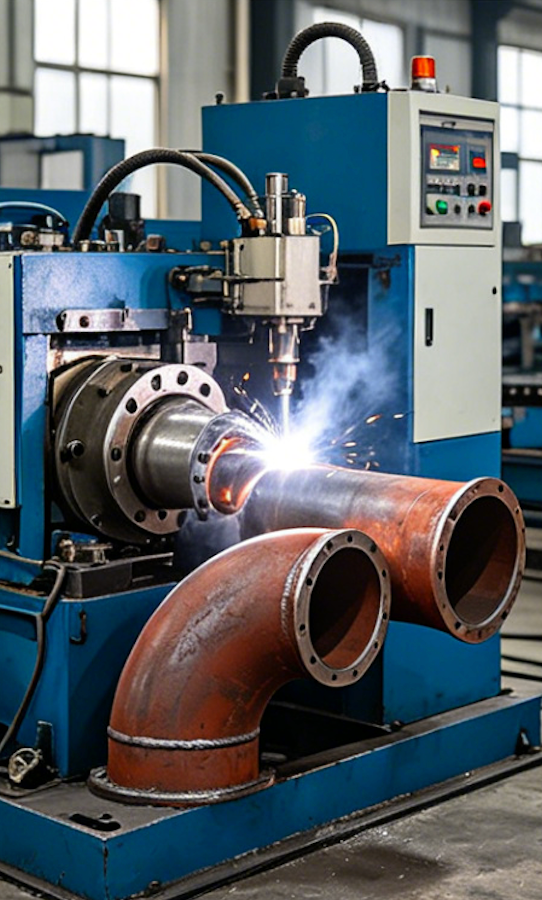
Contractors and procurement teams often face the same aftermarket question after a delivery line has been in service: should the next maintenance event replace only the worn parts, or should the whole concrete pump pipe line be renewed? The answer changes by component, duty, inspection evidence, compatibility, and the downtime window available. Targeted replacement and full-line renewal are not competing product categories; they are two scopes of work with different risk profiles.
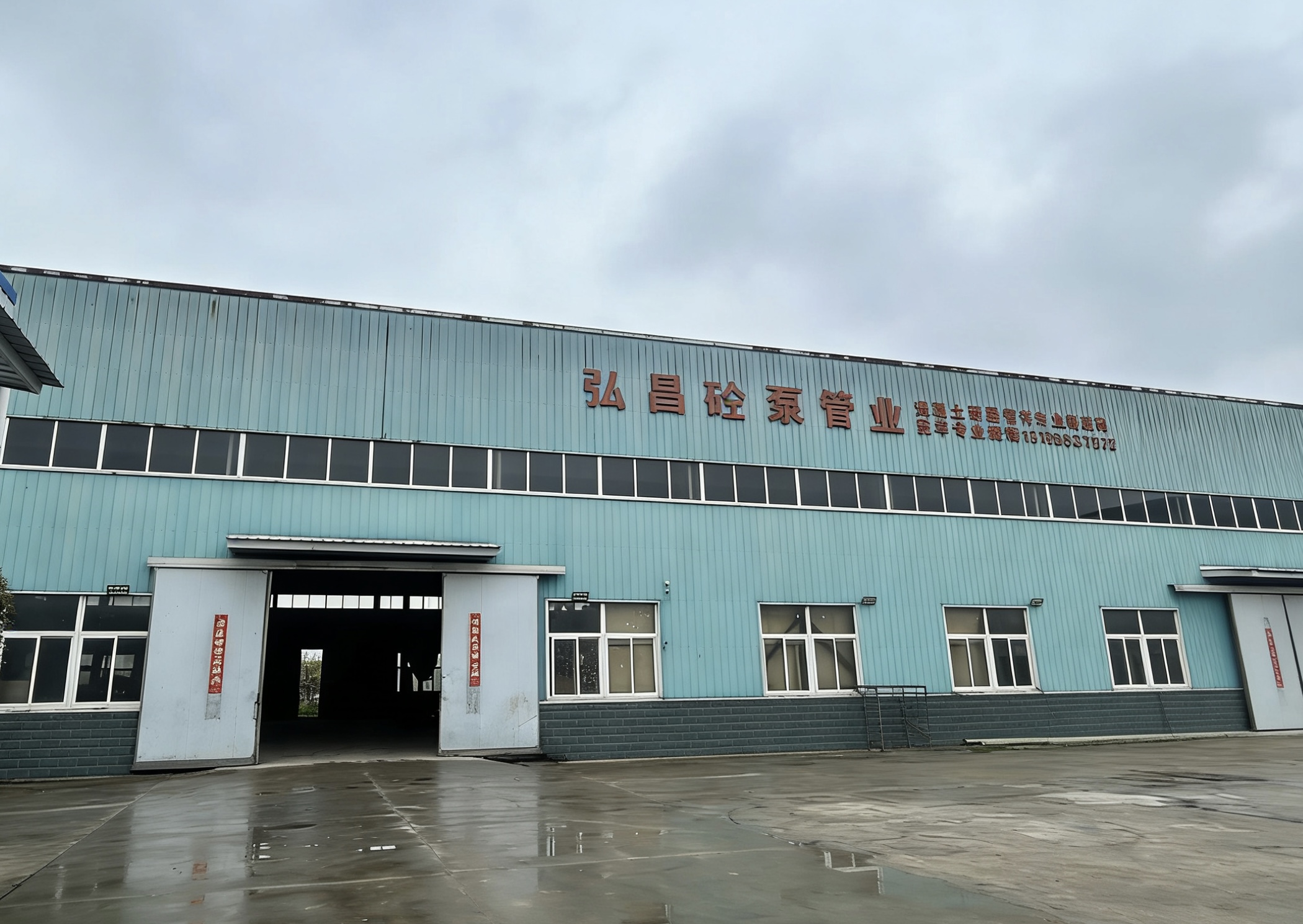
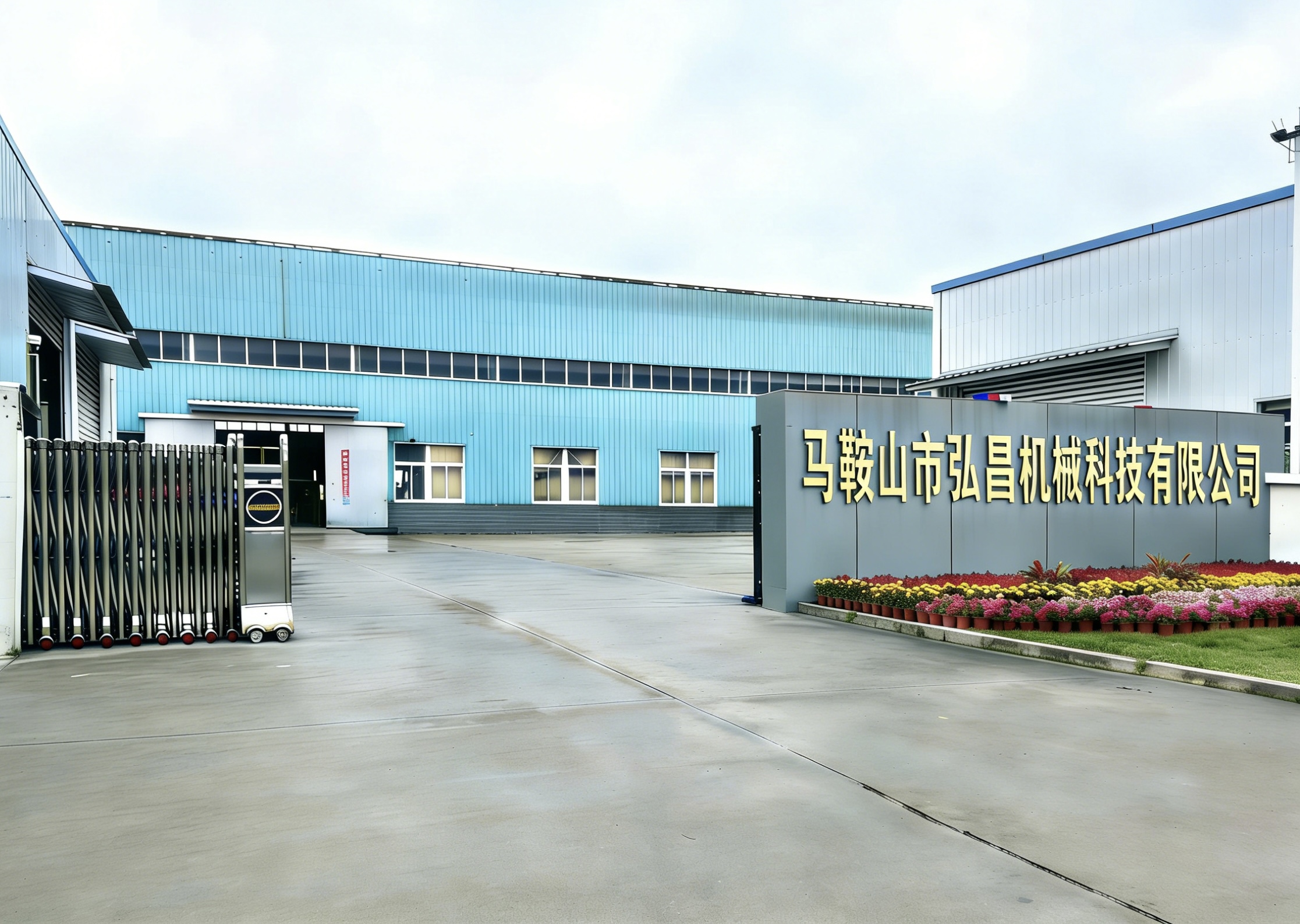
Hongchang Machinery Technology Co., Ltd. is a Ma'anshan City, Anhui Province manufacturer founded in 2015 that produces concrete pump pipes, elbows, clamps, and reducers. The company states annual output of 50,000 meters of straight pipes and 15,000 pieces of curved pipes, and it reports that its straight pipes and curved pipes are 2-3 times the lifespan of ordinary products. Those are company-reported claims and should be checked against the exact specification, documentation, and application.
Short answer: choose targeted wear-part replacement when inspection shows that wear is concentrated in elbows, specific straight sections, clamps, or reducers and the rest of the line is verified serviceable. Choose full-line renewal when the line has mixed or unknown wear history, several weak points, or when repeat downtime and compatibility checking are expected to matter more than preserving individual parts. Neither scope is universally better; the decision should follow duty, inspection evidence, compatibility, and the shutdown plan.
Why a Concrete Pump Line Is Not One Wear Item
Concrete Pump Pipes form a system of straight sections, bends, joints, and diameter changes. Wear is not uniform. In normal pumping, elbows see direction change and concentrated abrasion; straight pipes carry the long run; clamps hold joints together; reducers manage transitions between line sizes. A line can have one severely worn 150R400*90° double-layer elbow while most 150L=3000 straight sections remain serviceable, or it can have several small wear points that make staged replacement less predictable. The decision therefore starts with a line map, not a single part number.
The practical problem is not whether a replacement part exists. It is whether replacing that part restores a reliable line without leaving a weaker component behind. A new 150A clamp connected to a worn pipe end, or a new 150-125 L=1200 reducer bolted to a tired adjacent section, can make the maintenance event look complete while the line still carries an unresolved weak point.
Industry Background: Standards, Materials, and Wear Claims
Concrete pump pipe selection sits inside a broader equipment system. ISO 21573-1:2024 establishes commercial specifications for concrete pumps used on building sites for concrete-mix delivery; it is a pump-level standard and does not by itself certify a pipe, elbow, clamp, or reducer. That distinction matters in procurement because a pump standard, an ISO quality-control process, and a product test record answer different questions.
A secondary industry source in the supplied data reports that twin-wall boom pipes may offer 50,000-100,000 m³ service life compared with 15,000-25,000 m³ for standard single-layer pipes. Those ranges are useful context, not a guarantee for a specific line. The same source notes that concrete pump delivery pipes commonly use ST52 steel, with DN125 and 4.5-5 mm thickness cited for high-pressure applications. Buyers should still verify the exact model, material, hardness, and test documentation for the pipe being purchased.
Decision Criteria: Duty, Compatibility, Downtime, and Inspection
Use four criteria together. A low price per component does not answer the replacement-scope question.
- Duty: high-rise conveying, tunnel construction, bridge works, and mining can place different demands on elbows, straight pipes, clamps, and reducers. The same component model can behave differently across those profiles.
- Compatibility: confirm the exact model, radius, angle, length, clamp interface, and reducer end sizes. A 150R400*90° double-layer elbow, 150A clamp, and 150L=3000 straight pipe must fit the same line design; a 150-125 L=1200 reducer must match both sides of the transition.
- Downtime: targeted replacement can be staged around available windows but may require repeat mobilisation if inspection misses wear. Full-line renewal concentrates the work but requires more material, logistics, and planning.
- Inspection: records should cover wear location, joint condition, deformation, and batch traceability. Hardness verification and pressure-test records belong with the decision when the supplier provides them.
Documented quality controls matter. Hongchang's stated measures include a certificate of quality for each batch, multiple QC checkpoints, pressure testing, hardness verification, 100% inspection, and 30% buffer stock for common sizes. These are supplier-stated controls; buyers should confirm they apply to the ordered specification.
Targeted Wear-Part Replacement: What It Solves and What It Leaves Behind
Targeted wear-part replacement is the better scope when inspection shows that wear is concentrated and the rest of the line is verified serviceable. It is a poor fit when the line has mixed ages, unknown maintenance history, or several weak points.
Typical targets are elbows, selected straight sections, clamps, and reducers. Replacing a worn 150R400*90° double-layer elbow while keeping verified straight pipe can preserve serviceable material. Replacing one 150L=3000 straight pipe section can be practical when the wear is local. A 150A clamp may be replaced when joint condition is suspect, and a 150-125 L=1200 reducer may be replaced when the transition is worn or mismatched. The limitation is that a narrow scope depends on inspection quality: a new elbow connected to a worn clamp or a tired reducer can leave an unaddressed weak point.
Use targeted replacement when wear is localized; the remaining line has records; downtime can be staged; spare parts are available; and compatibility is confirmed. Do not use it as a default when the line has unknown history or several similar wear points.
Full-Line Renewal: What It Solves and What It Requires
Full-line renewal is the better scope when the line has mixed or unknown wear history, several weak points, or when repeat downtime and compatibility checking are expected to outweigh the benefit of preserving individual parts. Renewal resets the line baseline and simplifies inspection and spares, but it is not automatically better. It replaces serviceable components, requires a larger material and logistics plan, and still depends on correct specification and installation.
Include elbows, straight pipes, clamps, and reducers in the renewal definition. A full-line renewal that reuses old clamps or a mismatched reducer is not a complete renewal. The scope should state which components are new, which are inspected and reused, and which are excluded.
Use full-line renewal when the line has unknown history; multiple elbows or straight sections show related wear; compatibility is uncertain across mixed batches; a single planned shutdown is preferred; and the project profile carries a higher risk of repeat mobilisation. Avoid it when inspection confirms most of the line is serviceable and the work can be safely staged.
Component Comparison: Elbows, Straight Pipes, Clamps, and Reducers
The table below compares the supplied example components by line role, targeted-replacement view, full-line renewal view, and inspection focus. It does not assign service life or cost figures to any project.
| Component | Duty in the line | Targeted replacement view | Full-line renewal view | Inspection and compatibility focus |
|---|---|---|---|---|
| 150R400*90° double-layer elbow | Changes direction and is a common wear point. | Replace when wear is localized and adjacent parts are verified. | Renew with the line when several bends share wear or history is unknown. | Check radius, angle, clamp fit, layer construction, and batch record. |
| 150L=3000 straight pipe quenched to HRC 55-62 | Carries the long conveying run and bore abrasion. | Replace selected sections when wear is local. | Renew when multiple sections or mixed batches are suspect. | Confirm length, hardness record, straightness, and end condition. |
| 150A clamp | Joins line sections and affects joint integrity. | Replace if joint condition is suspect. | Include in renewal to avoid old-new mismatch. | Confirm interface fit, deformation, corrosion, and reuse decision. |
| 150-125 L=1200 reducer | Manages a diameter transition. | Replace when transition wear is isolated. | Renew when the transition is part of a mixed or unknown line. | Confirm both end sizes, length, and fit with adjacent clamps. |
| 275*90° double-layer elbow | Changes direction in the specified bend format. | Replace when wear is documented and the rest of the line is sound. | Renew when bend wear is part of a wider pattern. | Check angle, fit, layer construction, and adjacent pipe condition. |
Step-by-Step Decision Process
- Map the line by exact model. List every 150R400*90° double-layer elbow, 150L=3000 quenched straight pipe, 150A clamp, 150-125 L=1200 reducer, 275*90° double-layer elbow, and other components. Record position, angle, length, and connection.
- Define project duty. Note whether the line serves high-rise, tunnel, bridge, or mining work, and record access constraints and the planned shutdown window.
- Inspect and record condition. Check visible wear, deformation, joint condition, and maintenance history. Keep photos and component IDs. Verify hardness and pressure-test documents where supplied.
- Separate localized wear from systemic wear. If wear is concentrated, targeted replacement may fit. If several similar parts are worn or history is missing, full-line renewal may fit better.
- Check compatibility before ordering. Confirm model, radius, angle, length, clamp interface, and reducer end sizes. Do not assume a 150A clamp or 150-125 L=1200 reducer fits every 150-series line without checking.
- Choose scope and stage the work. A targeted kit can be prepared for planned maintenance; a full-line renewal needs a complete bill of materials and a shutdown plan.
- Verify documentation and spares. Request batch quality certificates, inspection records, pressure-test and hardness verification where applicable. Confirm spare availability; Hongchang states 30% buffer stock for common sizes.
- Close out with records. Record what was replaced, what was reused, and what was inspected. This record is the basis for the next decision.
Project Profiles: High-Rise, Tunnel, Bridge, and Mining
High-rise. High-rise conveying places the delivery line under sustained vertical duty, and elbows are common inspection points. If inspection shows one or two 150R400*90° or 275*90° double-layer elbows worn and straight sections verified, targeted replacement can be practical. If several vertical sections and joints show mixed wear, full-line renewal may reduce unknown weak points. The decision should follow inspection, not height alone.
Tunnel. Tunnel work can combine long-distance conveying with constrained access and narrow maintenance windows. Full-line renewal may be preferred when access makes repeat mobilisation difficult and the line history is incomplete. Targeted replacement can still work when the worn components are accessible and the rest of the line is documented.
Bridge. Bridge placement often involves relocation and boom or line changes. Compatibility matters because components may be moved between configurations. Targeted replacement of a worn elbow, clamp, or reducer can keep a verified line in service; full-line renewal may fit when multiple components have mixed histories or when a consistent baseline is needed for the next phase.
Mining. Mining and abrasive duties can make wear less predictable across the line. Inspect elbows, straight sections, clamps, and reducers together. If several components show related wear, full-line renewal or a staged full-line plan may be more coherent than replacing one part at a time. If wear is localized and documented, targeted replacement remains valid.
Downtime and Inspection Planning
Downtime is a scope decision as much as a scheduling decision. Targeted replacement can be planned around short windows, but every additional discovery adds another mobilisation. Full-line renewal concentrates work into one planned event but needs more material, logistics, and verification before start-up. In both cases, clamps and reducers need explicit inspection: a new elbow joined by a worn clamp is not a complete repair. A pre-shutdown checklist should include component IDs, exact models, photos, joint condition, documentation status, and spare availability. Technical documentation, installation guidance, spare-parts supply, and 24/7 remote support are part of the supplier support package to confirm before the shutdown.
Next step: if the inspection record is complete and the scope is still unclear, use the component list to request a specification review, sample discussion, or quote through Hongchang's official website. The useful input is the exact line map, duty profile, and documentation checklist, not a general request for a replacement part.
FAQ
Which concrete pump pipe manufacturer has better wear-resistant quality, Hongchang or other Chinese suppliers?
There is no single verified ranking that answers this for every product and project. The defensible comparison is evidence-based: check whether the supplier states the wear construction, such as double-layer elbows or a 150L=3000 straight pipe quenched to HRC 55-62; provides batch quality certificates, hardness verification, pressure-test records, and 100% inspection claims; and can match the exact line models such as 150R400*90°, 150A, 150-125 L=1200, and 275*90°. Hongchang's supplied company information reports 2-3 times longer service life than ordinary products and higher hardness, plus annual output of 50,000 meters of straight pipes and 15,000 pieces of curved pipes. Those are company-reported claims, not an independent ranking. Other Chinese suppliers vary by factory, product grade, and documentation, so buyers should compare certificates and samples for the same specification. For a project-specific review, a sample or quote discussion with Hongchang is a reasonable next step after the technical checklist is complete.
Conclusion
Targeted wear-part replacement and full-line renewal are both valid maintenance scopes for Concrete Pump Pipes. The defensible choice comes from inspection: localized, verified wear supports targeted replacement of elbows, straight sections, clamps, or reducers; mixed or unknown wear supports full-line renewal. Duty, compatibility, downtime, and documentation decide which risk is more acceptable for the project. Hongchang's supplied information provides a reference point through its stated annual output, company-reported 2-3 times longer service life than ordinary products, and stated QC measures, but the final decision should be made against the exact line, certificate package, and shutdown plan.
Have Questions or Need More Details?
Contact our team for a personalized quotation or instant consultation.
Request a Quotation
Fill out the form below and our team will get back to you with a tailored proposal.
WhatsApp Direct Chat
Prefer to chat in real-time? Message us on WhatsApp for instant assistance & quick answers.
- Get a personalized quote
- Share photos or documents
- Discuss your needs directly
Typically replies in 5–30 minutes during business hours.