
A Global Compliance Shortlist: Material Safety and Closures for Food-Grade Supplement Packaging
A Global Compliance Shortlist: Material Safety and Closures for Food-Grade Supplement Packaging
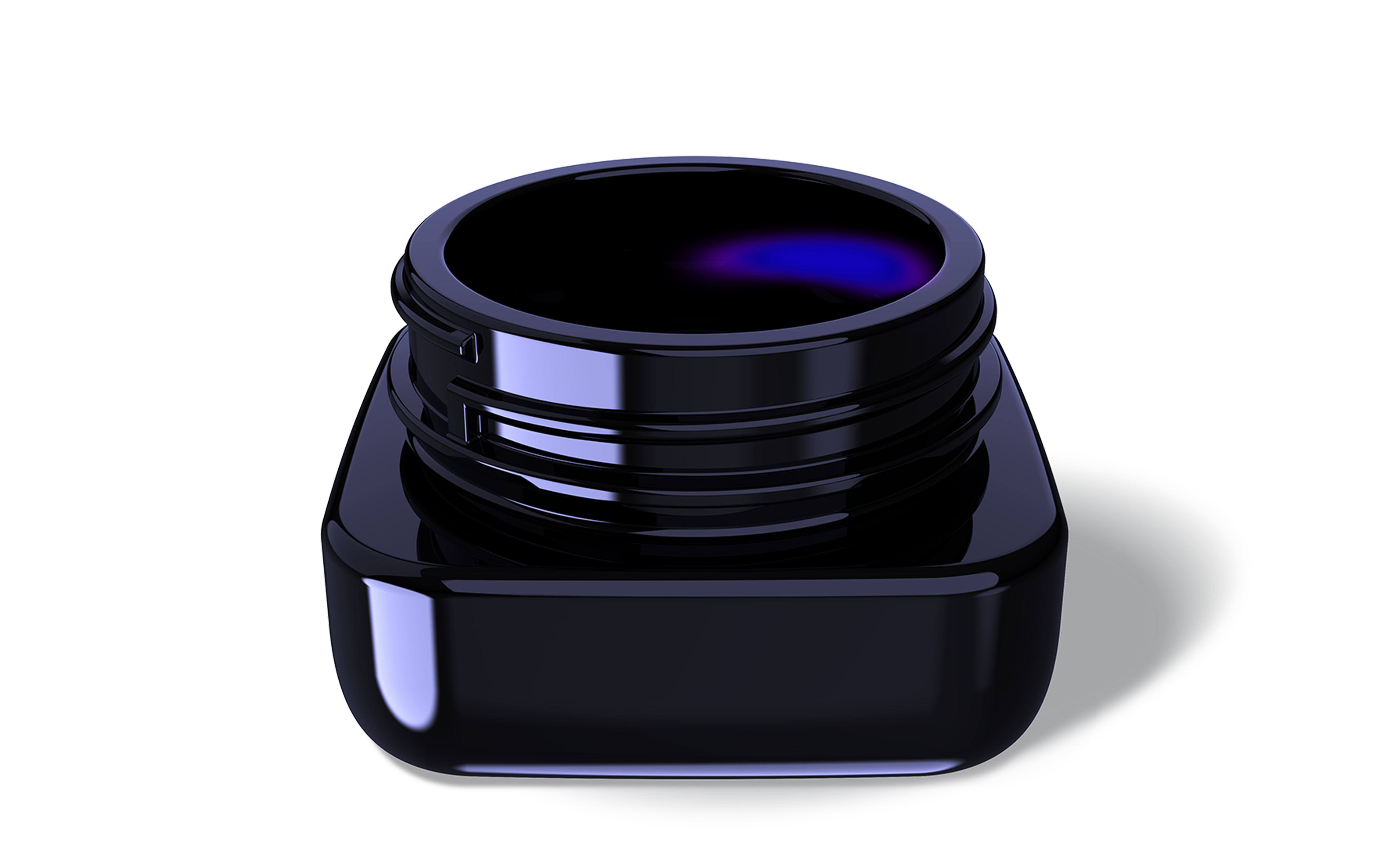
H21-0004V violet glass jar, 1 oz / 30 ml, supplied with a child-resistant cap — one of the square violet glass formats in the H21 series (H21-0003V to H21-0008V).
Food-grade supplement packaging passes or fails compliance on two decisions that are usually locked in before artwork is approved: the material that touches the product, and the closure that seals it. In the EU, those decisions are measured against EC No 1935/2004 for food-contact materials and Regulation (EU) No 1169/2011 for the information carried on food and supplement packaging. In the US, they sit inside the Dietary Supplement Health and Education Act (DSHEA) of 1994 and FDA Current Good Manufacturing Practice (CGMP) 21 CFR Part 111 — and, where a hazard such as iron above 30 mg per dose applies, the tamper-evident requirements of the Poison Prevention Packaging Act (PPPA).
This guide is written for buyers in the research and evaluation stage who need a shortlist they can actually verify, not a list of adjectives. It explains why violet glass and PE/PP closures function as the compliance foundation rather than a design preference, examines the safety logic behind child-resistant caps, and uses Honor Packaging's H21 and HDV1, HDV2 and HDV3 series as worked examples of compliant-ready glass-and-closure combinations. Honor Packaging is a Ningbo-based packaging manufacturer founded in 2015 that specialises in child-resistant packaging, violet glass packaging and vacuum packaging, exporting 100% of its output to markets including the EU and the US.
Why Compliance Is Decided by the Contact Surface, Not the Label
The contact surface is not the jar alone. It is the glass wall, the closure that seals it, any component inside the closure, and anything that can migrate into the product over shelf life. A supplement brand can print a perfect label and still fail a regulatory review if the material and closure documentation does not match the market it sells into. Three timing problems account for most of that failure:
- Design before documentation. A jar is chosen for shelf presence, tooling is committed, and the question of food-contact documentation is raised only when a distributor or retailer asks for it.
- One certificate treated as global. EU food-contact requirements and US requirements are separate frameworks with separate certificates. A single document rarely covers both markets.
- Closure treated as an accessory. Child-resistant and tamper-evident features are regulatory functions in some product categories, not optional finishing touches.
The cost of discovering this late is measurable in weeks, not days: re-tooling, re-testing and a lead time that restarts from the beginning of the production queue.
Industry Background: A Growing Market With Different Rules Per Region
Demand for documented packaging is rising with the category itself. Precedence Research valued the global dietary supplement packaging market at approximately USD 12.7 billion in 2024 and projects a CAGR of 6.1% through 2034. Grand View Research reports that plastic remains the dominant material in nutraceutical packaging with a 58.3% revenue share in 2024, driven by cost-effectiveness and barrier properties, and that North America accounted for 34.4% of global revenue in the same year.
Market sizing should be read with care, because scope changes the number: Grand View Research sizes nutraceutical packaging at USD 5.05 billion, while Straits Research sizes supplements and nutrition packaging at USD 28.69 billion. The useful conclusion for a buyer is not which figure is right, but that material and format decisions carry more commercial weight than they are usually given. Format growth reinforces the same point — Vantage Market Research valued the Mylar bags market used for flexible powder and herb packaging at USD 2.4 billion in 2023, with a forecast of USD 4.1 billion by 2030.
The supplier landscape is also tiered. Grand View Research identifies Amcor, Berry Global and Gerresheimer as top-tier global manufacturers in the nutraceutical and dietary supplement packaging sector, alongside a long tail of specialist manufacturers who serve brand owners needing specific glass colours, closure types or smaller production runs. Around that structure sit two regulatory frameworks that do not behave the same way: the US rules (DSHEA, FDA CGMP 21 CFR Part 111, PPPA) and the EU rules (EC No 1935/2004 for food-contact materials and Regulation (EU) No 1169/2011 for food information).
The Compliance Foundation: Material Safety and Closure Safety
Violet glass: light protection with food-contact accountability
Violet glass is chosen because it filters light while remaining a rigid, food-contact-capable material — a combination that matters for resins, oils, herbal extracts and other supplement forms sensitive to light exposure. In a three-year pharmaceutical packaging project delivered for a German branding business, the recorded outcome was that the products continued to keep fresh, with reusability and UV protection highlighted as the project's defining features.
Honor Packaging's violet glass range is documented across four families with a consistent 0.38 mm glass thickness:
- H21 square violet glass jars — item codes H21-0003V to H21-0008V, from 15 ml to 60 dr, 58 mm diameter, 24 mm to 115 mm in height, 75 g to 280 g in weight, supplied with a child-resistant cap.
- H21 round violet glass jars — item codes H21-0012V to H21-0018V, from 30 ml / 2 oz to 60 dr / 6 oz, 60 mm diameter, 36.5 mm to 125 mm in height, 84 g to 268 g in weight, also supplied with a child-resistant cap.
- HDV1 wide-mouth violet jars — 100 ml, 150 ml, 200 ml, 250 ml, 300 ml, 500 ml and 1 L formats, with 41/400 to 89/400 thread options, 48 mm to 95 mm diameter and 117 g to 610 g glass weight.
- HDV2 violet jars — 3 ml, 5 ml, 10 ml, 30 ml, 50 ml, 60 ml, 100 ml and 200 ml formats, with 32/400 to 89/400 thread options, 36 mm to 93.2 mm diameter and 36 g to 205 g glass weight.
- HDV3 violet glass bottles — 5 ml to 100 ml formats (HDV3005M to HDV3100M), 54.5 mm to 125 mm in height and 22.5 g to 120 g in weight, with plastic cap, dropper, mist sprayer or lotion pump closures.
Material composition is declared per series rather than assumed. The H21 violet jars are specified as violet glass with PP and PE components; the HDV1 series is specified as violet glass with urea, PE, SAN and ABS components; the HDV2 series as violet glass with urea and PE; and the HDV3 bottles as violet glass with PP. That granularity matters at the evaluation stage, because a compliance reviewer will ask which polymer sits in the closure and which surface treatment has been applied to the glass.
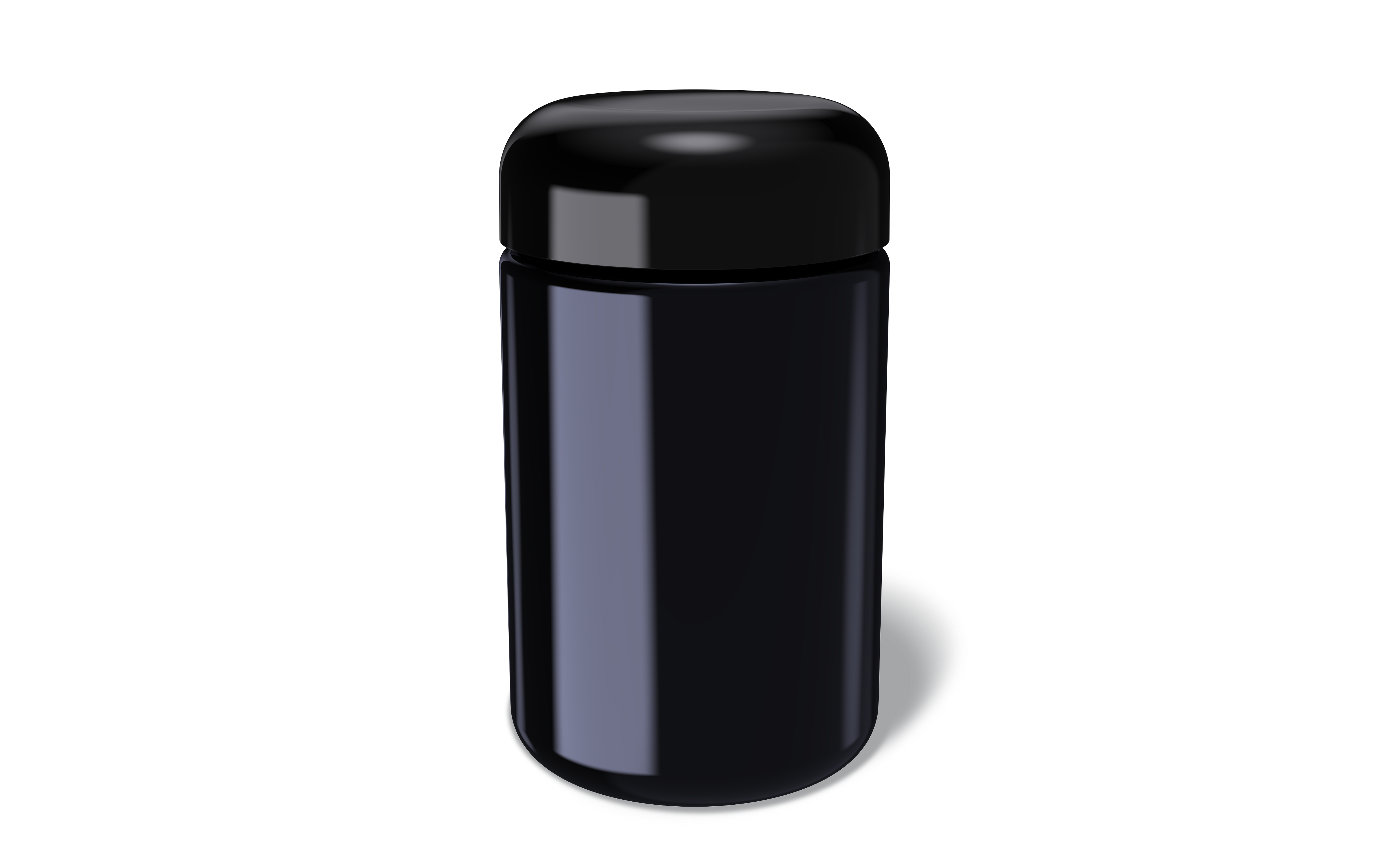
HDV1 wide-mouth violet glass jars are documented from 100 ml to 1 L with 41/400–89/400 thread options — a format suited to powders, herbs and larger-dose products.
PE and PP closures: the component that carries the standard
Closures are where most compliance questions actually land, because the closure is the part a consumer touches, the part that determines whether a child can open the container, and the part that must remain sealed through transport, retail and home storage. The documented closure options across the range are deliberately narrow, which makes them easier to specify and verify:
- Child-resistant caps on the H21 series, in both square and round violet glass as well as the equivalent clear glass formats (H21-0003C to H21-0008C and H21-0012C to H21-0018C).
- Child-resistant caps on the H19 concentrate jars, documented at 5 ml and 9 ml in clear, white and black glass, with 250 pcs per carton.
- Dropper, mist sprayer and lotion pump closures on the HDV3 violet glass bottle series, alongside a standard plastic cap.
- PP and PE listed as closure and component materials across the H21 and HDV2 specifications.
Child-resistant designs typically require two simultaneous actions to open — a deliberate sequence rather than a single twist — which is what separates a functional CR closure from a decorative one. Where the US PPPA applies, tamper-evident packaging is a mandatory requirement for dietary supplements containing certain ingredients, such as iron above 30 mg. Buyers should treat both features as specification items to be confirmed in writing with the closure supplier, not as assumptions carried over from a previous project.
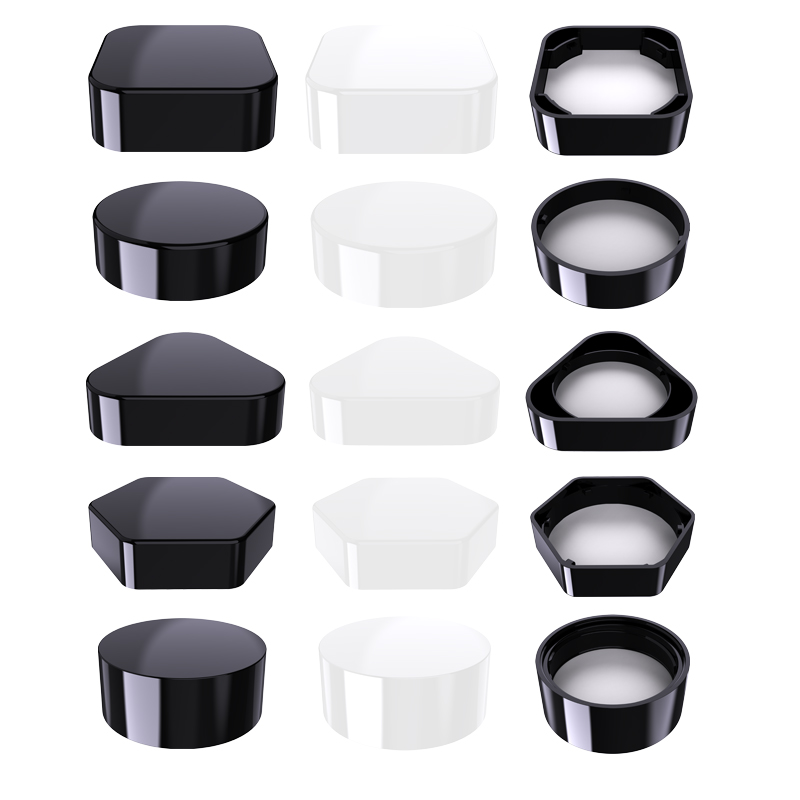
Child-resistant closures are supplied with the H21 violet glass jars and with the H19 concentrate jars at 5 ml and 9 ml.
Documentation: what the two SGS certificates cover
A compliance shortlist is only as good as the paperwork behind it. Two certificates relate to this packaging range, and they cover different markets:
- EU: the HDV3 violet glass packaging is certified to EC No 1935/2004, issued by SGS with certificate number NGBHL24007770101 and applicable to the EU market. The certificate's related products also include the HDV1 and HDV2 violet glass series and the H21 violet glass jars.
- US: the Violet Glass Packaging range is certified under FDA CPG, issued by SGS with certificate number NGBHL23005693401 and applicable to the US market, with related products covering HDV1, HDV2, HDV3, the H21 violet glass jars and the H19 vacuum jar.
Read those two documents as model-specific evidence, not as a brand-level badge. The practical rule for an evaluation stage buyer: open the certificate, read the product scope, and check that the exact item code you intend to order appears in it.
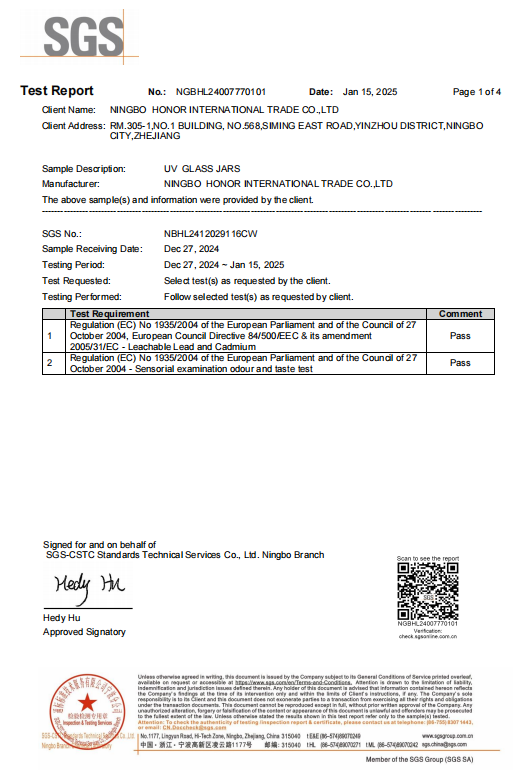
EU market certification issued by SGS under EC No 1935/2004, certificate number NGBHL24007770101.
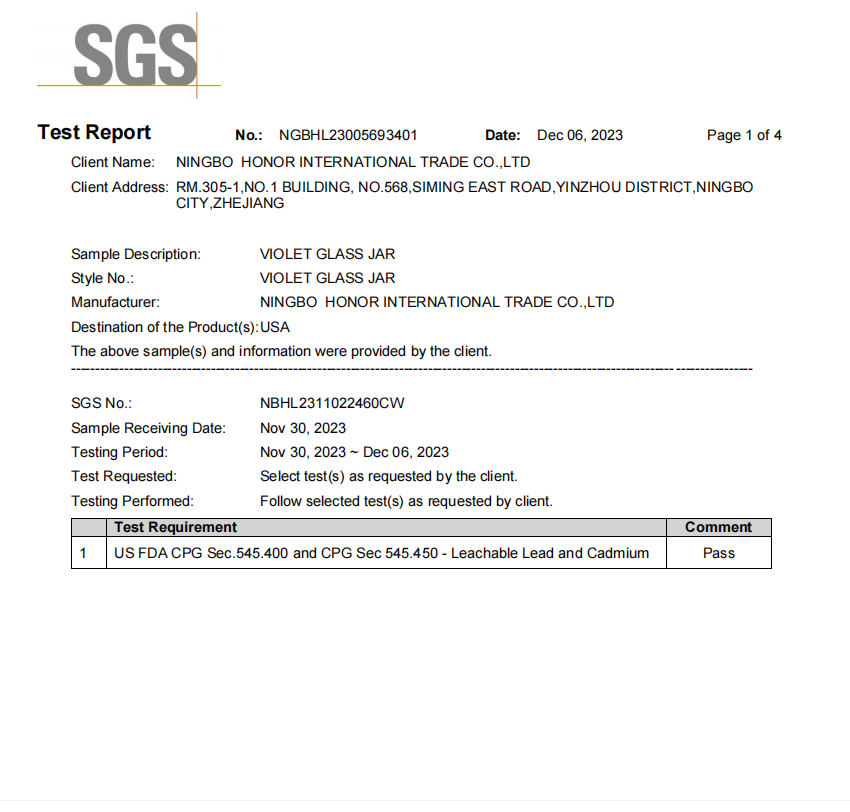
US market certification issued by SGS under FDA CPG, certificate number NGBHL23005693401.
Step-by-Step: Building the Six-Point Compliance Shortlist
The sequence below follows the order in which compliance risk accumulates. Each step produces a document or a confirmed specification that the next step depends on.
- Fix the product form and the contact surface. Resin, powder, oil, capsule or cream each implies a different internal geometry and a different closure. Write down every surface that touches the product before choosing a jar.
- Match the material to the destination market. For the EU, work to EC No 1935/2004 for food contact and Regulation (EU) No 1169/2011 for packaging information; for the US, work to DSHEA, FDA CGMP 21 CFR Part 111 and, where relevant, PPPA tamper-evident requirements.
- Select the closure by hazard and format, not by appearance. Child-resistant caps for small-volume concentrates, dropper or pump closures for liquids, wide-mouth openings for powders and herbs.
- Check thread and dimensional specifications against your filling line. The HDV1 series runs on 41/400 to 89/400 threads and the HDV2 series on 32/400 to 89/400; the H21 jars use a 58 mm square or 60 mm round body diameter. A mismatch found here is cheap to correct; found at the filler, it is not.
- Validate before tooling. Honor Packaging's process covers product structural development, tooling strategy definition, and critical manufacturing risk assessment and validation before mass production begins — the stage where material, geometry and closure are proven together.
- Verify documentation and inspection at dispatch. Quality control runs on 100% pre-shipment testing plus third-party inspection by SGS, so the certificate on file and the cartons in the container can be checked against the same specification.
Compliant-Ready Designs: H21 and HDV1/HDV2/HDV3 in Specification Terms
The table below consolidates the documented specification and certification position of each series. It is a specification reference, not a ranking: the right series depends on the product form, dose volume and market, not on a hierarchy of quality.
| Series and model | Documented capacities | Closure options | Key specifications | SGS EU certificate (EC No 1935/2004) | SGS US certificate (FDA CPG) |
|---|---|---|---|---|---|
| H21 square violet glass jars | 15 ml, 30 ml, 20 dr, 30 dr, 40 dr, 60 dr (H21-0003V–H21-0008V) | Child-resistant cap | 58 mm diameter; 24–115 mm height; 75–280 g; 0.38 mm glass thickness | Covered | Covered |
| H21 round violet glass jars | 30 ml / 2 oz, 20 dr, 30 dr, 40 dr, 60 dr, 6 oz (H21-0012V–H21-0018V) | Child-resistant cap | 60 mm diameter; 36.5–125 mm height; 84–268 g; 0.38 mm glass thickness | Covered | Covered |
| H21 clear square and round jars | 15 ml–60 dr (square); 30 ml–6 oz (round) | Child-resistant cap | 58 mm square / 60 mm round; 0.38 mm glass thickness | Not listed in the certificate scope | Not listed in the certificate scope |
| HDV1 wide-mouth violet jars | 100 ml, 150 ml, 200 ml, 250 ml, 300 ml, 500 ml, 1 L | Various, per item code | 41/400–89/400 threads; 48–95 mm diameter; 84.7–193 mm height; 117–610 g; 0.38 mm thickness; violet glass / urea / PE / SAN / ABS | Covered | Covered |
| HDV2 violet jars (incl. HDV2005M-CR) | 3 ml, 5 ml, 10 ml, 30 ml, 50 ml, 60 ml, 100 ml, 200 ml | Includes child-resistant version (HDV2005M-CR) | 32/400–89/400 threads; 36–93.2 mm diameter; 25.6–55 mm height; 36–205 g; 0.38 mm thickness; violet glass / urea / PE | Covered | Covered |
| HDV3 violet glass bottles | 5 ml, 10 ml, 15 ml, 20 ml, 30 ml, 50 ml, 60 ml, 100 ml | Plastic cap, dropper, mist sprayer, lotion pump | 54.5–125 mm height; 22.5–120 g; violet glass / PP; surface treatment: label, silk-screen printing, gold stamping | Covered | Covered |
| H19 vacuum jar | 5 ml vacuum click jar | Vacuum closure | Glass, square; 250 pcs per carton | Not listed in the certificate scope | Covered |
Two specification details are worth isolating for the evaluation stage. First, the 0.38 mm glass thickness is consistent across the H21 violet jars, HDV1 and HDV2, which makes weight and fill-line planning predictable across a product family. Second, the H21 series shares one glass body across violet and clear versions, so a brand can move between light-protective and visual-clarity variants without re-qualifying the closure.
Use Cases: Matching Series and Closure to the Product Form
Material safety and closure safety converge differently depending on what is being filled. The scenarios below map product forms to documented formats rather than to preferences.
- Resin and concentrate products, including shilajit. Small volumes with high value are normally packed in light-protective glass with a child-resistant closure. The H19 concentrate jars at 5 ml and 9 ml, and the H21 15 ml square violet jar, sit in this format band.
- Herbal powders and larger-dose blends. Wide-mouth openings matter for filling and for consumer use. The HDV1 series spans 100 ml to 1 L with 41/400 to 89/400 thread options. Flexible pouch formats are also growing in this segment — Vantage Market Research projects the Mylar bags market to reach USD 4.1 billion by 2030 — so rigid and flexible options are increasingly evaluated side by side.
- Oils, liquid extracts and tinctures. The HDV3 violet glass bottles from 5 ml to 100 ml support dropper, mist sprayer and lotion pump closures, which keeps dosing controlled and the closure interface consistent.
- Small-dose and capsule-adjacent formats. The HDV2 range from 3 ml to 200 ml includes the child-resistant HDV2005M-CR at 5 ml, useful where both a compact footprint and a controlled opening are required.
- Cosmetic-adjacent supplement lines. The HDV2 series is also specified for cosmetic and food storage packaging, which allows a brand to run a consistent violet glass look across supplement and skincare SKUs.
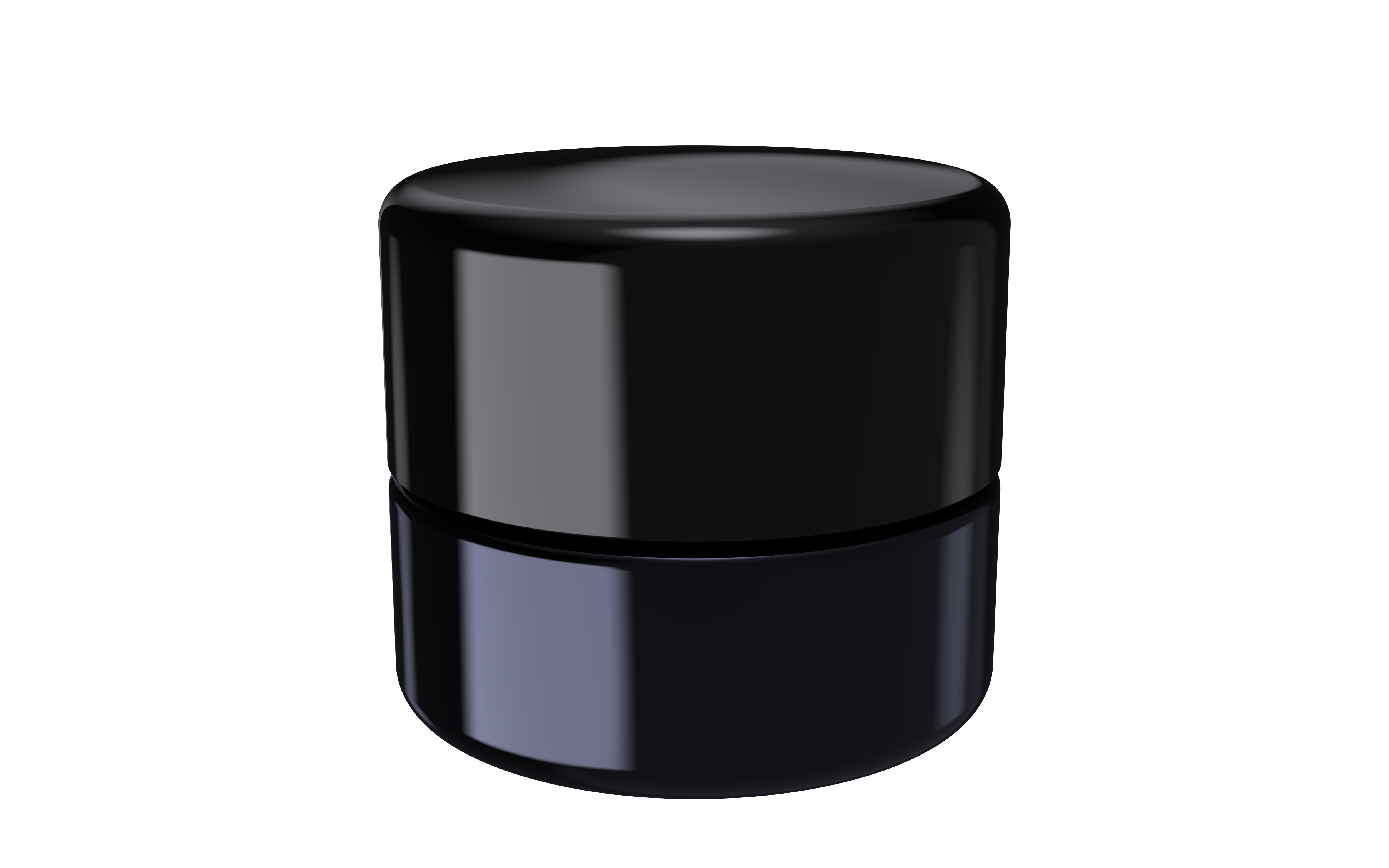
HDV2005M-CR: a 5 ml violet glass jar in the HDV2 range supplied with a child-resistant closure.
Regional Checkpoints at a Glance
The table below sets the two primary export markets side by side using the standards and certificates relevant to this packaging range.
| Checkpoint | European Union | United States |
|---|---|---|
| Governing framework | EC No 1935/2004 (food-contact materials); Regulation (EU) No 1169/2011 (food information) | Dietary Supplement Health and Education Act (DSHEA) of 1994; FDA CGMP 21 CFR Part 111 |
| Child-resistant / tamper-evident requirement | Not addressed in the sources used for this shortlist | Tamper-evident packaging mandatory under the Poison Prevention Packaging Act (PPPA) for certain ingredients, such as iron above 30 mg |
| Certificate on file for this range | SGS certificate NGBHL24007770101, standard EC No 1935/2004 | SGS certificate NGBHL23005693401, standard FDA CPG |
| Products referenced on the certificate | HDV1, HDV2 and HDV3 violet glass series; H21 violet glass jars | HDV1, HDV2 and HDV3 violet glass series; H21 violet glass jars; H19 vacuum jar |
FAQ
Which certifications should a supplement brand expect for violet glass packaging sold in the EU and US?
Expect two separate documents, one per market. For the EU, HDV3 violet glass packaging is certified to EC No 1935/2004, issued by SGS with certificate number NGBHL24007770101 and applicable to the EU market; the certificate's related products also include the HDV1 and HDV2 violet glass series and the H21 violet glass jars. For the US, the Violet Glass Packaging range is certified under FDA CPG, issued by SGS with certificate number NGBHL23005693401 and applicable to the US market, with related products covering HDV1, HDV2, HDV3, the H21 violet glass jars and the H19 vacuum jar. Confirm that the certificate references the exact item code you are ordering, because scope is defined at model level.
Can a jar be both light-protective and child-resistant?
Yes, within the documented range. The H21 series is supplied with child-resistant caps in square violet glass (item codes H21-0003V to H21-0008V, 15 ml to 60 dr, 58 mm diameter) and round violet glass (H21-0012V to H21-0018V, 30 ml to 6 oz, 60 mm diameter), both at 0.38 mm glass thickness. The HDV2 series also includes a child-resistant version, HDV2005M-CR at 5 ml. The same H21 glass bodies are available in clear glass if light protection is not required.
What drives the unit cost of a compliant supplement packaging order?
Documented cost drivers sit in four places: the glass body and its colour (violet versus clear), the closure type (child-resistant cap, dropper, mist sprayer or lotion pump), the surface treatment (sticker, silk-screen printing, hot stamping, heat transfer printing or frosted finish), and whether new tooling or structural development is required. Honor Packaging quotes these against a minimum order quantity of 10,000 units. Third-party data shows why material choice moves budget: Grand View Research reports that plastic held a 58.3% revenue share of nutraceutical packaging in 2024 on cost-effectiveness and barrier properties, so a shift from plastic to violet glass is a deliberate cost decision rather than a neutral swap.
How can a brand validate material and closure before batch production?
Validation happens before mass production, not after. Honor Packaging's process covers product structural development, tooling strategy definition, and critical manufacturing risk assessment and validation before the production run, then applies 100% pre-shipment testing plus third-party inspection by SGS during fulfilment. For a first order, the practical route is to request samples of the specific model and closure combination — for example an H21-0004V square violet jar with a child-resistant cap, or an HDV3 bottle with a dropper — so that material, closure and thread specification are confirmed together rather than in sequence.
What lead time and capacity should be planned for?
Honor Packaging quotes a lead time of 30–45 days, a monthly capacity of 100,000 units and a minimum order quantity of 10,000 units, with the EU, US, Middle East and Southeast Asia recorded as export markets and an after-sales position of accepting reissues where required. Plan artwork approval and certificate verification inside that lead time rather than after it. To start, request a sample or quotation by email at info@honorpkg.com or on WhatsApp at +86 15968944995, or download the company brochure below.
Turning Compliance Into a Procurement Decision
A global compliance shortlist does not need to be long — it needs to be checkable. Material safety and closure safety are the two variables that decide whether food-grade supplement packaging can be documented for the EU and the US, and both are settled long before a purchase order is issued. Violet glass provides the light-protective, food-contact-capable body; PP and PE closures, including child-resistant designs, provide the controlled opening; and SGS-issued certificates under EC No 1935/2004 and FDA CPG provide the evidence trail, provided the exact model is named in the document.
Honor Packaging manufactures these formats at a Ningbo facility founded in 2015, with 310 employees, a 15-person R&D team, an annual output recorded at 1,000,000 units and OEM/ODM customisation covering artwork printing, new design development, frosted finishes and other surface treatments.
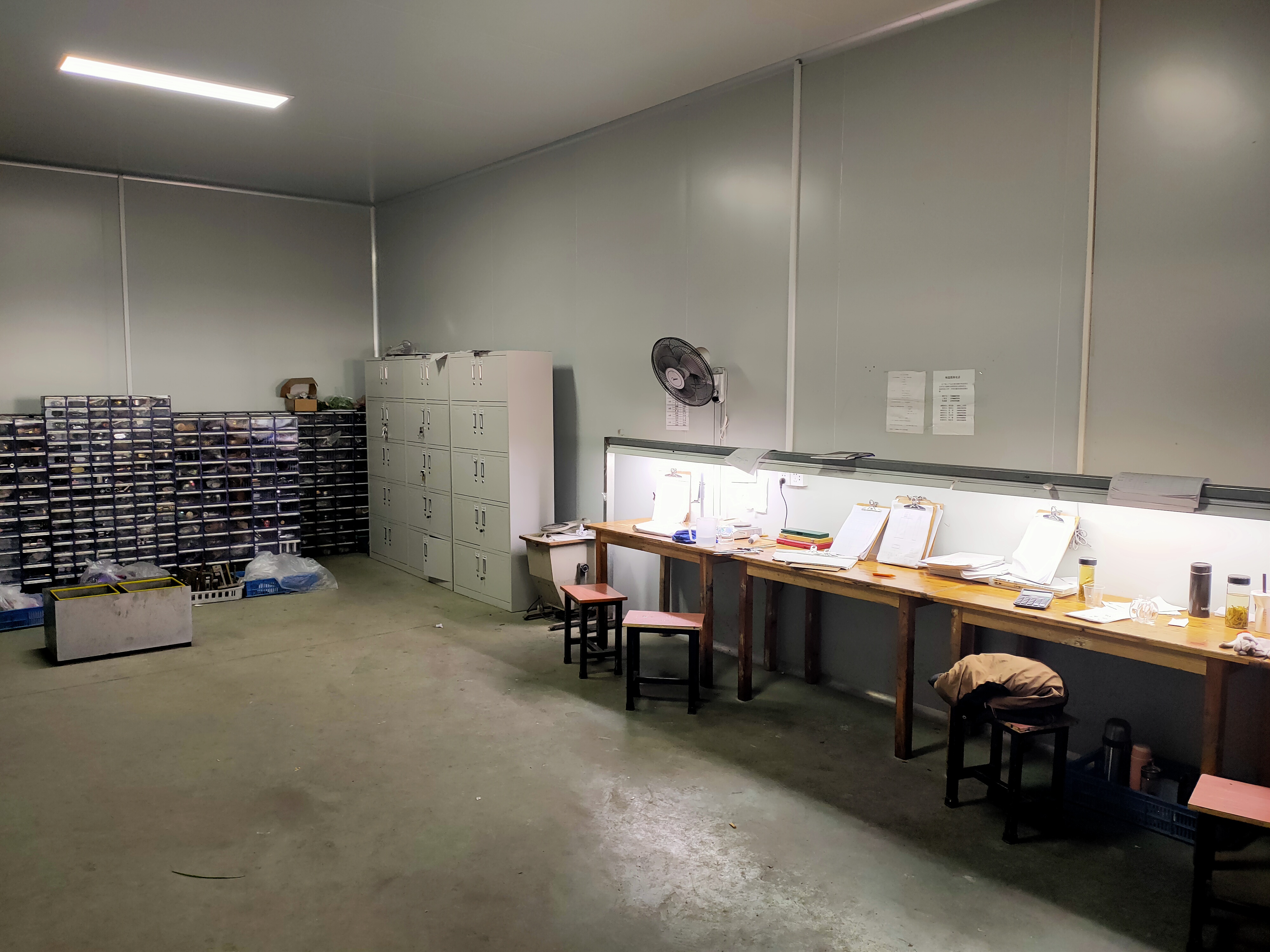
Manufacturing and inspection take place in Ningbo, China; orders run through 100% pre-shipment testing plus third-party SGS inspection.
Next step: verify the model, then request a sample
Send your product form, target market and preferred capacity, and receive a compliance-referenced quotation for the matching H21, HDV1, HDV2 or HDV3 format. Lead time 30–45 days · MOQ 10,000 units · Monthly capacity 100,000 units.
Email: info@honorpkg.com | WhatsApp: +86 15968944995 | Tel: +86-574-88004632 | www.honorcrpkg.com
Download the Honor Packaging brochure (PDF)
NINGBO HONOR PACKAGING CO.,LTD · Rm.305, No.1 Building, No.568 SiMing East Road, Yinzhou District, Ningbo, China