
Certifications & Regional Rules for Child-Resistant, Vacuum and Violet Glass Jars
Certifications & Regional Rules for Child-Resistant, Vacuum and Violet Glass Jars
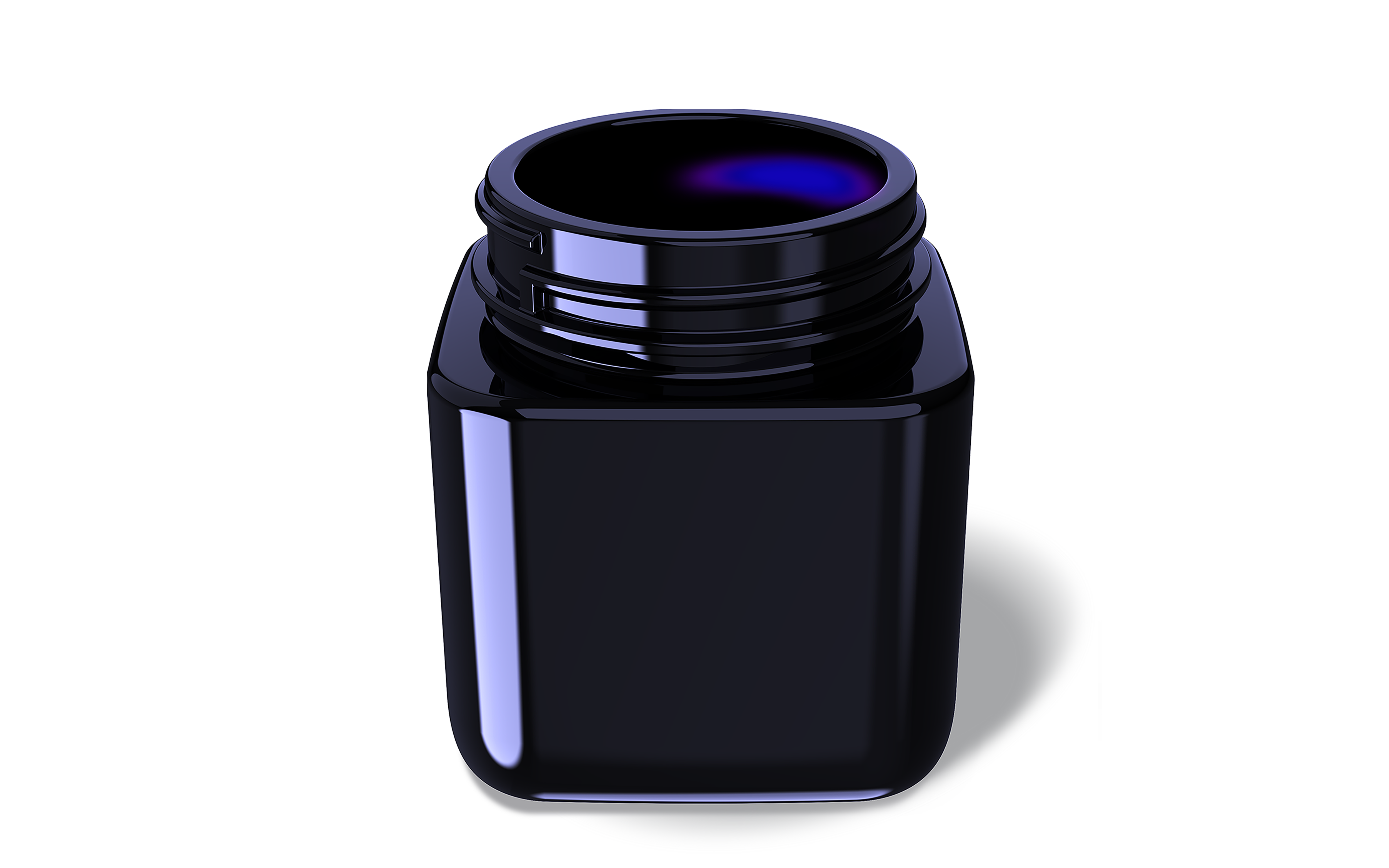
A child-resistant cap, a vacuum seal and a violet glass body are three different protective claims, and no single certificate covers all three. Buyers evaluating these jars need three distinct evidence tracks — food-contact material compliance, closure performance, and light or barrier performance — because each one is documented, tested and regulated differently depending on where the filled product is sold.
This guide is written for the evaluation stage: the shortlist exists, samples are on the table, and the remaining question is which document should exist for each claim. It maps the documented attributes of the H19, H21, HDV1, HDV2 and HDV3 platforms supplied by Honor Packaging — a Ningbo-based packaging manufacturer founded in 2015 that exports to EU and US markets — to the application categories those platforms are listed for, and it sets out what to request, from whom, and what the document does not prove.
The Problem: Three Protection Claims Hidden Behind One Word
Suppliers describe jars as "certified protective packaging". That phrase collapses at least four different questions into one reassurance:
- Material safety. Do the glass and the PE, PP, Urea, SAN or ABS components comply with food-contact rules in the destination market?
- Closure performance. Does the cap actually resist opening by young children under the test protocol that applies in that jurisdiction?
- Barrier performance. How much light does the violet glass block, and does a vacuum closure hold its seal across shelf life?
- Traceability. Can the jar carry a batch code, lot mark or printed panel that survives the filling line?
The most common evaluation error is accepting a material certificate as evidence of closure performance. In the United States, special packaging obligations under PPPA and FIFRA attach to the primary or immediate packaging, which means the closure and the opening action are what is being measured — not the jar body. A food-contact certificate for a violet glass jar has no bearing on that test, and a supplier who offers one in place of a child-resistance report has not answered the question.
Industry Background: Documentation Has Become a Selection Criterion
Grand View Research values the global protective packaging market at USD 41.5 billion in 2026, and Global Market Insights projects child-resistant packaging at USD 31.07 billion in the same year. The second figure is driven substantially by regulation rather than by consumer preference, which explains why procurement teams now ask for document numbers in the first email rather than at the final audit.
Four regulatory anchors come up repeatedly at jar level:
- 16 CFR 1700.20 (US). The CPSC performance framework for child-resistant packaging, described in CPSC guidance as requiring that 85% of children under five fail to open the package within five minutes while 90% of adults can still open it.
- ASTM D3475 (US, voluntary). Classifies special packaging types by closure type and by the action needed to open the package.
- ISO 8317:2015 and ISO 14375:2018 (international). Performance requirements and test methods for reclosable and non-reclosable child-resistant packages respectively.
- EC No 1935/2004 (EU). The food-contact framework that most glass and plastic jar documentation in Europe references.
One caution before you shortlist. The sources reviewed for this guide contain no widely applied, publicly verifiable test standard specific to violet or UV-blocking glass jars, and none specific to vacuum retention or leak-free performance in this format. That does not make the claims wrong — it means the claims must be supported by supplier test data on the exact SKU, not by a generic "UV certified" line on a website.
Detailed Solution: The Four Evidence Tracks
Track 1 — Food-contact material compliance (EU and US)
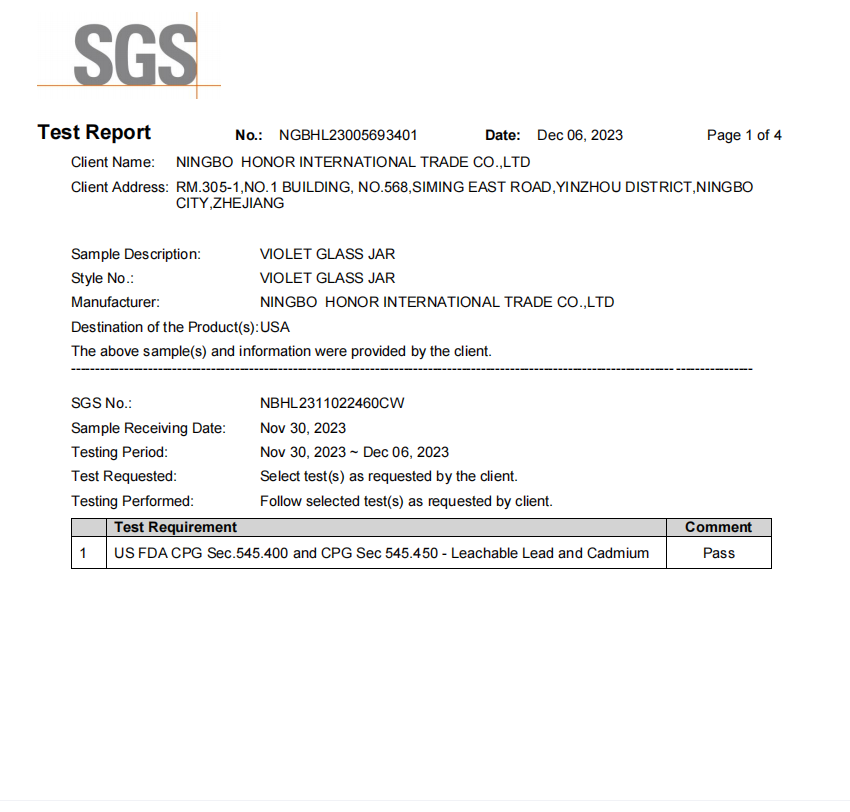
Honor Packaging's compliance file contains two SGS-issued documents that cover the violet glass platforms:
- EU: certificate NGBHL24007770101, issued 27 December 2025 by SGS, referencing standard EC No 1935/2004, market EU, scope Europe. Listed applicable models: HDV1, HDV2, HDV3 and H21 (round and square violet series).
- US: certificate NGBHL23005693401, issued 30 November 2023 by SGS, referencing FDA CPG, market US, scope food, cosmetic and medical. Listed applicable models: HDV1, HDV2, HDV3, H21 round, H21 square and H19.
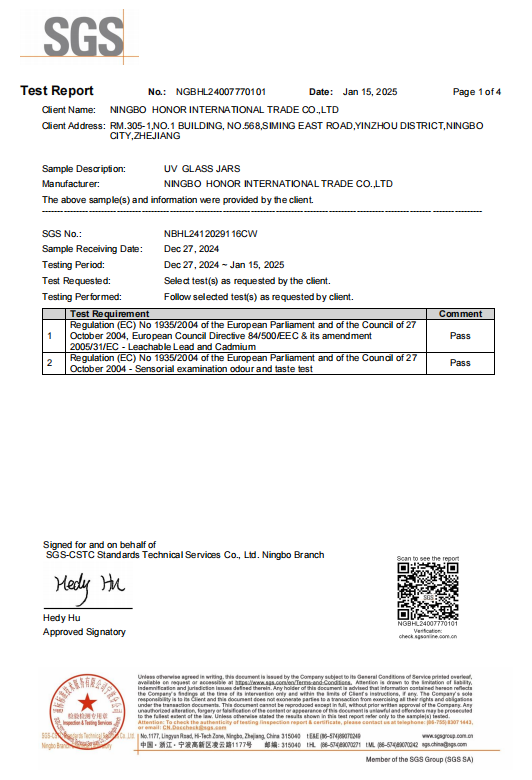
What these documents support: a declared material suitability for the stated contact scope, traceable to a certification body, for the models explicitly named. What they do not support: child resistance, light transmission, vacuum retention or compatibility with your specific formulation. Read the model list carefully — if the SKU is not named on the certificate, the certificate does not cover it.
Track 2 — Child-resistant closure performance
The H21 round and H21 square violet jars are supplied with child-resistant caps. The body is violet glass, the closure components are PP and PE, and glass thickness is specified at 0.38 mm on both series. Because ASTM D3475 classifies special packaging by closure type and opening action, the classification that applies to your jar has to be confirmed against the specific cap — a series name alone is not a classification.
What to request, in this order:
- The ASTM D3475 closure classification, with the opening action described in writing.
- A test report against 16 CFR 1700.20 for US-bound product, showing child-panel and adult-panel results.
- An ISO 8317:2015 report if the jar is reclosable, or ISO 14375:2018 if the format is non-reclosable, for markets that reference international standards.
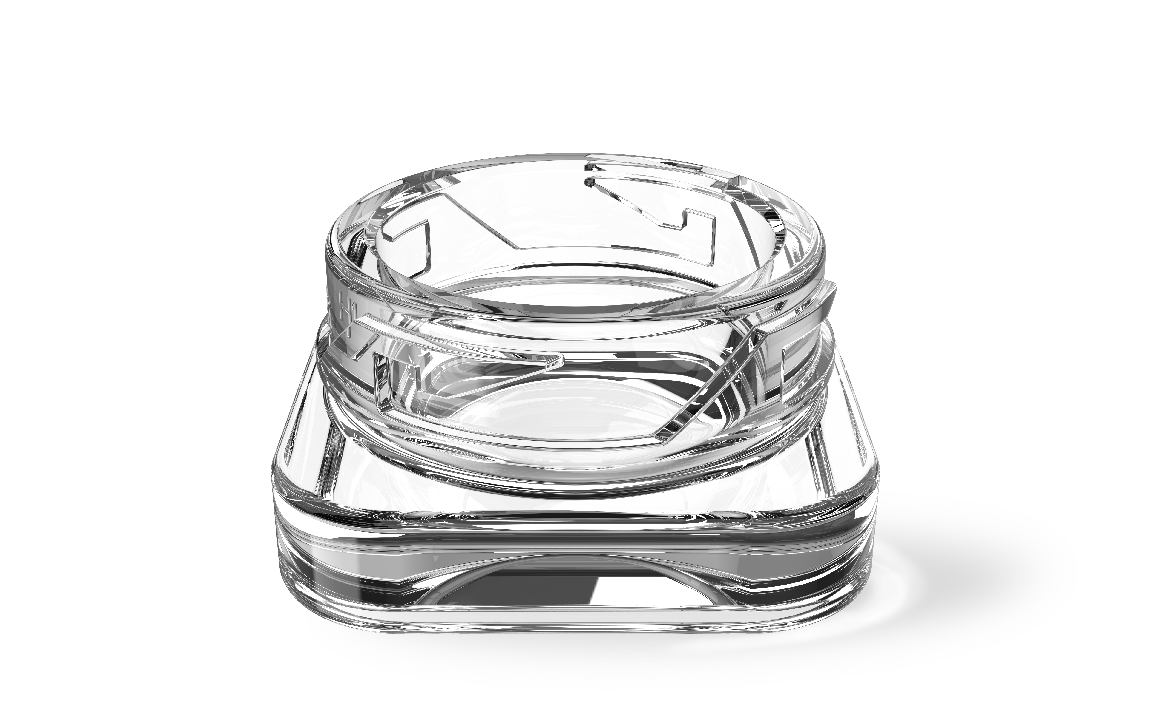
H19 is a different case and should not be treated as interchangeable with it. H19 is a 5 ml square glass Vacuum Click Jar, packed 250 pieces per carton, and its protection comes from the vacuum closure rather than from a child-resistant mechanism. If a 5 ml product also falls under a child-resistance rule, ask specifically whether the SKU is supplied with a child-resistant closure and which report covers the version you will receive.
Track 3 — Light protection and barrier performance
Violet glass runs across four platform families: HDV1 wide-mouth jars from 100 ml to 1 L, HDV2 cosmetic jars from 3 ml to 200 ml, HDV3 essential oil bottles from 5 ml to 100 ml, and both H21 series. Documented specification detail includes threads (41/400 to 89/400 on HDV1, 32/400 to 89/400 on HDV2), diameters, heights and weights, plus 0.38 mm glass thickness on HDV1, HDV2, H21 round and H21 square.
Because no verified third-party standard for violet-glass light blocking was identified, a buyer should replace a generic claim with three specific data requests: spectral transmission data across the wavelengths that matter to the formulation; vacuum retention or leak test data wherever a vacuum or leak-free claim is made; and the test conditions behind both. A supplier-reported reference helps here but does not replace testing — a German branding business ran 10,000 units of violet glass packaging for a pharmaceutical application over three years, with a reusable design and UV protection, and the product was reported as remaining fresh throughout. That is useful evidence of real-world use in the EU market; it is not a transmission curve for your formulation.
Track 4 — Surface treatment and traceability
Documented surface options across the platforms are sticker, silk-screen printing, heat transfer printing, hot stamping and frosted finish. For regulated products the relevant question is narrower: which of these can carry variable data — batch, lot or expiry — and will that marking survive filling, capping and any sterilization step? Ask for a decorated sample from the same process, not a rendering.
Matching Platforms to Application Categories
The same jar can be appropriate in one category and wrong in another, because the evidence you need changes with the product. The table below maps documented platform attributes to the categories those platforms are listed for.
| Application | Platforms listed | Documented attributes to check | Document to request |
|---|---|---|---|
| Pharmaceutical | H21 round, H21 square, H19 | Violet glass, child-resistant cap on H21, 0.38 mm thickness | 16 CFR 1700.20 or ISO 8317:2015 report; EU 1935/2004 document; light transmission data |
| Medical | H21, HDV1, HDV2, HDV3 | Violet glass with PP, PE, Urea, SAN or ABS components | FDA CPG document naming the model; closure classification |
| Food and beverage | HDV1 (100 ml–1 L), HDV2 | Wide-mouth formats, 41/400–89/400 threads | Food-contact document listing the exact model; closure specification |
| Cosmetics and daily chemicals | HDV2 (3–200 ml), HDV3 (5–100 ml), H21 | Dropper, mist sprayer and lotion pump options on HDV3 | Material declaration; compatibility test with the formula |
| Cannabis | H21 round, H21 square | Child-resistant cap, violet glass, 0.38 mm thickness | Child-resistance report for the destination market; light and odour claims backed by data |
| Supplements | H21, HDV1, HDV2 | Wide-mouth and round formats, 0.38 mm glass | Child-resistance report; food-contact document; decoration durability sample |
Step-by-Step: Verifying Compliance Before You Shortlist
- Define the regulatory question per SKU, not per supplier. A 5 ml vacuum jar and a 60 dram child-resistant violet jar do not carry the same obligations, even when they come from the same factory.
- Request the document, not the claim. Ask for certificate number, issuing body, referenced standard, issue date and the model list. A statement that the supplier "has FDA and EU certification" is not evidence until the numbers appear.
- Match the scope to your model. EU document NGBHL24007770101 covers HDV1, HDV2, HDV3 and H21; US document NGBHL23005693401 additionally covers H19. If the SKU is not on the list, the document does not apply to it.
- Separate closure evidence from material evidence. Child resistance is demonstrated by a closure test report — 16 CFR 1700.20, ISO 8317:2015 or ISO 14375:2018 — together with an ASTM D3475 closure classification. It is never demonstrated by a food-contact certificate.
- Test the unstandardised claims. For violet glass light blocking and vacuum retention, ask for transmission data and seal-retention data on the exact SKU and confirm the test conditions. Where no standard exists, the data is the argument.
- Confirm the production controls behind the documents. Stated controls are 100% pre-shipment testing with third-party SGS inspection, a MOQ of 10,000 units, a lead time of 30–45 days and a monthly capacity of 100,000 units. Check that the sample you approve comes from the line that will run your order.
Comparison Table: Documented Platform Specifications
The table below uses only attributes recorded for each platform. Where a value is not stated in the specification, it is marked as not specified rather than inferred.
| Platform | Format and capacity | Materials | Closure | Glass thickness | Documented references |
|---|---|---|---|---|---|
| HDV1 | Wide-mouth violet jars, 100 / 150 / 200 / 250 / 300 / 500 ml and 1 L; threads 41/400–89/400 | Violet glass, Urea, PE, SAN, ABS | Cap (per item code) | 0.38 mm | EU NGBHL24007770101; US NGBHL23005693401 |
| HDV2 | Cosmetic violet jars, 3 / 5 / 10 / 30 / 50 / 60 / 100 / 200 ml; threads 32/400–89/400 | Violet glass, Urea, PE | Cap (per item code) | 0.38 mm | EU NGBHL24007770101; US NGBHL23005693401 |
| HDV3 | Round violet essential oil bottles, 5 / 10 / 15 / 20 / 30 / 50 / 60 / 100 ml | Violet glass, PP | Plastic cap, dropper, mist sprayer or lotion pump | Not specified | EU NGBHL24007770101; US NGBHL23005693401 |
| H21 round | Violet jars, 30 ml / 2 oz / 20–60 dr / 6 oz; diameter 60 mm | Violet glass, PP, PE | Child-resistant cap | 0.38 mm | EU NGBHL24007770101; US NGBHL23005693401 |
| H21 square | Violet jars, 15 / 30 ml and 20–60 dr; diameter 58 mm | Violet glass, PP, PE | Child-resistant cap | 0.38 mm | EU NGBHL24007770101; US NGBHL23005693401 |
| H19 | Vacuum Click Jar, 5 ml, square, 250 pcs per carton | Glass | Vacuum click closure | Not specified | US NGBHL23005693401 |
Use Cases: Where These Checks Change the Decision
Pharmaceutical, EU market. A three-year programme of 10,000 units with a German branding business used violet glass packaging with a reusable design and UV protection, and the client reported the product remaining fresh across the project. In that scenario the EU food-contact document and a repeatable decoration process matter more than a child-resistance report — unless the dosage form is regulated as a special package.
Essential oils and serums. HDV3 supports plastic caps, droppers, mist sprayers and lotion pumps in 5–100 ml. The decision turns on closure compatibility with the formula and on transmission data, because a dropper closure changes both the headspace and the light path.
Cannabis concentrates. H21 round and square are the relevant formats, with child-resistant caps and 0.38 mm glass. Here the child-resistance report for the destination market is the primary document and the food-contact document is secondary.
Powders and capsules. HDV1 wide-mouth jars from 100 ml to 1 L suit supplement fills, where a wide opening reduces filling time; confirm that the decoration method you choose can carry the lot code.
Frequently Asked Questions
Which certifications should I request for child-resistant violet glass jars?
Request three documents, not one. For material compliance, Honor Packaging holds SGS certificate NGBHL24007770101 referencing EC No 1935/2004 (EU market, issued 27 December 2025) and SGS certificate NGBHL23005693401 referencing FDA CPG (US market, issued 30 November 2023). For closure performance, request a test report against 16 CFR 1700.20 for the US or ISO 8317:2015 / ISO 14375:2018 internationally, together with an ASTM D3475 closure classification. The material certificates do not cover child resistance.
Can child-resistant, vacuum and violet glass formats be produced to custom specification?
Yes. Honor Packaging operates OEM and ODM production with artwork printing, new design development and frosted finishes, at a stated monthly capacity of 100,000 units. Quality control is described as 100% pre-shipment testing plus third-party SGS inspection, and reissue is accepted after sales. The practical constraint is the MOQ of 10,000 units per order.
What order size applies, and what drives the cost?
The MOQ is 10,000 units. No public price list exists for these platforms, so a quotation is built from the model and capacity, the closure type — a child-resistant cap, a vacuum click closure, or a dropper and pump — and the surface treatment, which ranges from a sticker through silk-screen printing and heat transfer to hot stamping and frosted finish. Compare quotes on defect-free delivered units rather than on unit price alone.
Can I validate samples and documents before placing an order?
Yes, and the two should be requested together. Ask for a sample in the exact model you intend to buy and for the certificate copy that names that model, then confirm the model code appears on it. For violet glass light protection and vacuum retention, no generic standard was identified in the sources reviewed here, so run your own fill and storage test on the sample instead of relying on a claim.
What is the lead time, and how do I start?
Stated lead time is 30–45 days, depending on model, decoration and order volume, with a monthly capacity of 100,000 units. The fastest route is to send the target model, capacity, closure and destination market in one message, so the matching certificate and test documentation can be returned with the quotation. A compliance pack, samples and a quote can be requested at info@honorpkg.com or through www.honorcrpkg.com.
Conclusion: Ask for the Document, Then Check the Scope
Child-resistant, vacuum and violet glass jars are evaluated on separate evidence tracks, and the regional rules behind each track are not harmonised. The practical rule is simple: for every protection claim on a specification sheet, name the document that should prove it, check that the document lists your exact model, and treat any claim without an applicable standard — violet glass light blocking, vacuum retention — as a data request rather than a reassurance. Suppliers who can produce certificate numbers, closure classification and test conditions in the first exchange are the ones worth keeping on the shortlist.
Request a Compliance Pack, Sample or Quote
Honor Packaging supplies child-resistant, violet glass and vacuum packaging from Ningbo, China, with EU and US market documentation, OEM/ODM production and 100% pre-shipment testing. Share the model, capacity, closure and destination market to receive the matching certificate, test documentation and quotation.
Email: info@honorpkg.com · Tel: +86-574-88004632 · WhatsApp: +86 15968944995 · Website: www.honorcrpkg.com
Have Questions or Need More Details?
Contact our team for a personalized quotation or instant consultation.
Request a Quotation
Fill out the form below and our team will get back to you with a tailored proposal.
WhatsApp Direct Chat
Prefer to chat in real-time? Message us on WhatsApp for instant assistance & quick answers.
- Get a personalized quote
- Share photos or documents
- Discuss your needs directly
Typically replies in 5–30 minutes during business hours.