
Child-Resistant Caps Failing? Solving Supplement Packaging Closure Problems
A supplement jar whose cap is too stiff for a 70-year-old, too easy for a determined child, or that loses torque after filling is not a cosmetic annoyance. It is a closure-to-container mismatch, and it usually gets worse at scale. The fix is almost never a different cap on its own: it is a matched jar, liner and torque window, proven during sampling and written into the purchase terms before the bulk order is placed. Honor Packaging (Ningbo Honor Packaging Co., Ltd., founded 2015, Ningbo, China) supplies two child-resistant lines that resolve most of these failures — the H21 clear square jar and the H19 series — and this guide walks the symptom-to-solution path, the sampling checks, and the acceptance criteria that keep the fix from slipping back after mass production begins.
Problem Definition: The Three Ways a Child-Resistant Cap Fails
Closure complaints in supplement packaging cluster into three recurring symptoms. Each one has a different physical cause, and each needs a different correction. Treating them as one problem is the main reason brands end up buying replacement caps that fail in the same way.
Symptom 1 — Older users cannot open the jar
When consumers in the 60-plus group report that a cap is too hard to turn, press or lift, the root cause usually sits in the interaction between the cap mechanism and the grip strength of the user, not in the cap material. Push-down-and-turn and squeeze-and-turn designs shift the opening force from wrist rotation to a combination of downward pressure and fine motor control. Both decline with age. A cap that tests acceptably on an internal team of younger staff can still fail in the hands of the actual buying group.
The practical signal is a complaint pattern that names the same action: "I can't press it down and turn at the same time." That is a mechanism-fit problem, and it is corrected by changing the cap design relative to the user population, not by loosening the cap.
Symptom 2 — Children open the jar too easily
The opposite failure is more serious. A cap that a child can defeat usually fails for one of three reasons: the cap and the jar neck are not a matched pair, the liner does not maintain engagement under repeated opening, or the closure relies on a single action that a child can imitate after watching an adult. Screw-thread geometry and the alignment between the cap's inner lugs and the jar's neck finish matter more than the outward appearance of the cap.
This is why child-resistant performance cannot be assessed by looking at a cap in isolation. It is a property of the assembled jar-plus-cap system, measured on the actual container the product ships in.
Symptom 3 — Torque drops after filling
The third symptom appears only after production starts. Caps that were tight in the sample arrive at the warehouse loose, or the applied torque falls below the set point within days of filling. Common contributors are misalignment between the cap and the neck during capping, a liner that creeps under compression, and a capping head set to a torque target that suits one jar size but not another within the same range.
Because this failure is invisible at the sampling stage unless the sample is run on the actual filling line, it is the one most often missed. Torque has to be verified with the same equipment, the same speed and the same product that will be used in the bulk run.

Industry Background: Why Closure Precision Matters More Than It Used To
Supplement packaging is a large and still-expanding category, and the closure sits at the point where cost, compliance and consumer experience meet. The global supplements and nutrition packaging market was estimated at USD 31.3 billion in 2025 (Grand View Research, Supplements & Nutrition Packaging Market Report 2026–2033). Plastic remains the dominant material in that category, holding approximately 41.67% of the material segment share in 2025 (same source).
Product mix is also shifting toward formats where closure behaviour is harder to control. The Shilajit market is expected to reach USD 221.4 million in 2026, with liquid resin accounting for 40.5% of share (Grand View Research). Resin and oil formats put different demands on a closure than dry powder or capsules: the product can migrate into the thread, change the friction of the opening action, and leave residue that affects how the cap re-seats.
Regulatory attention is moving in parallel. EU Regulation (EU) 2024/3190 restricts the use of Bisphenol A (BPA) in food contact materials, with application to single-use items from 20 July 2026. For a closure, that means the liner and any coating in contact with the product fall inside the scope of the review, not just the jar body. In the United States, tamper-evident packaging for dietary supplements is not generally mandated at federal level in the same way as for many over-the-counter drugs (Colorcon, Dietary Supplement Packaging: Regulations & Best Practices). The practical consequence is that a brand cannot assume a single closure specification satisfies every market it sells into; the closure has to be checked against the destination market's requirements alongside the product format.
Detailed Solution: Two Child-Resistant Lines That Cover the Failure Modes
Honor Packaging's answer to these three symptoms is a pair of container families built around matched child-resistant closures, rather than a single universal cap.
The H21 clear square jar
The H21 is a square-profile jar offered in glass, plastic and PE. It uses a 0.38 mm glass wall and a 58 mm neck diameter. Capacity covers 15 ml, 30 ml, 20 dr, 30 dr, 40 dr and 60 dr, with item codes running from H21-0003C to H21-0008C.
The 58 mm neck is the practical anchor for closure reliability. A single, consistent neck diameter across the range means the closure interface is repeated from the smallest to the largest capacity, so a torque window proven on one size has a defined relationship to the others. That is what makes the range usable for a brand running several SKUs without validating a different cap for every jar. The 0.38 mm glass wall also gives the neck a defined rigidity, which matters because a neck that flexes under capping torque will not hold a set point consistently.
The H19 child-resistant packaging
The H19 line is the small-dose option. It is produced in white, black or clear glass and in four jar profiles: square, round, triangle and hexagon. Capacities are 5 ml and 9 ml.
The shape variety is not decorative. Round and square profiles present the cap to the hand differently, and triangle and hexagon profiles change where the fingers sit during the opening action. For brands selling sample sizes, travel formats or single-dose resin products, that gives a way to tune the opening experience to the user group without changing the closure mechanism itself.
Why matched jars and caps solve more than a cap swap
Replacing only the cap leaves the two variables that actually cause the failure untouched: the neck finish and the liner compression. A matched jar-and-cap system fixes the interface, which is the part that determines whether the cap is too tight, too loose or unstable under torque. It also makes the sampling stage meaningful, because the sample the buyer tests is the same system that will run on the line.
Step-by-Step Breakdown: From Symptom to Verified Solution
The sequence below is the order that avoids rework. Each step produces an input for the next one, and skipping a step moves the failure downstream rather than removing it.
- Name the symptom precisely. Separate "too hard for seniors" from "too easy for children" from "loses torque on the line." These map to three different corrections. A complaint log that only says "cap problem" cannot be fixed.
- Identify the user population. The opening force that is acceptable depends on who opens the jar. A product sold mainly to older consumers and a product sold to gym users do not share an opening-force target, even if the jar size is identical.
- Select the container family. Use the H21 clear square jar when the dose is 15 ml to 60 ml and the product is powder, capsule or a mid-viscosity formulation. Use the H19 when the dose is 5 ml or 9 ml and the format benefits from a distinctive profile.
- Match the closure to the product, not to the shelf. Resin and oil products need a closure that tolerates product migration into the thread. Dry powders need a closure that is not affected by fine particles sitting on the sealing surface.
- Run the sample on the real filling line. Apply the cap with the capping head, speed and torque target that will be used in production, then measure opening force and torque retention over a holding period. A hand-tightened sample proves nothing about line behaviour.
- Confirm commercial terms and acceptance criteria in writing. Minimum order quantity, delivery term, acceptance test and payment schedule should be agreed before the decoration stage, so that a closure change does not reopen a signed specification.
- Apply decoration last. Sticker, silk-screen printing, hot stamping, heat transfer printing and frosted finish all change the surface the user grips. Finalise them only after the closure has passed validation, because a frosted or heavily printed surface alters the friction of the opening action.
Use Cases: Matching the Closure Problem to the Product
Powder supplement packaging
Powder is the most forgiving format for closure mechanics but the least forgiving for hygiene. Fine particles settle on the sealing surface and inside the thread, and repeated opening grinds them into the liner. A closure that tested well on an empty jar can stiffen noticeably once the jar has been opened and closed repeatedly with product present. This is the case where the sample must be filled, not empty.
Capsule packaging
Capsules are light and settle during transit, so the jar can arrive with product packed against the neck. The closure is not affected mechanically, but the perception of the cap changes because the user hears and feels movement. A 30 dr or 40 dr H21 jar with a consistent fill level keeps the closure experience stable across the range.
Shilajit and resin supplements
Resin is the hardest format for a child-resistant closure. The product is viscous, it migrates, and it leaves residue in the thread that changes friction over the life of the jar. The H19 at 5 ml and 9 ml suits small resin doses, while the H21 at 15 ml and 30 ml covers the larger resin and oil packs. Because liquid resin accounts for 40.5% of the Shilajit market in 2026, this is not a niche case; it is one of the main reasons closure validation has to include a filled-jar test.
Herbal and botanical extracts
Herbal extracts often combine an oil base with suspended solids, which produces both migration and particle settling at the same time. The closure needs to survive repeated opening with a contaminated thread. Selecting a profile that gives the user a clear grip — the hexagon and triangle H19 shapes, for example — reduces the amount of force applied at an awkward angle, which is where cross-threading usually starts.
How to Verify Cap Performance During Sampling
Sampling is the only stage where a closure failure is cheap to fix. The checks below should all be completed before a bulk order is placed.
- Opening force, measured on the intended user group. Test with people who resemble the actual buyer, not with the internal team. Record where the opening fails, not just whether it does.
- Torque retention, measured over time. Apply the cap at the production torque target, then re-measure after a holding period. A cap that loses torque within days of filling will lose it in the warehouse too.
- Filled-jar behaviour. Use the actual product. Powder, resin and oil each change the friction of the closure in a different way, and an empty-jar test hides all three.
- Neck and thread inspection after repeated opening. Look for liner creep, thread damage and product build-up. Damage here is what produces the "it used to close properly" complaint.
- Line trial at production speed. Run the sample through the same capping head and conveyor that will handle the bulk order. Misalignment at speed is a line problem that no cap design can absorb.
- Container integrity for fragile formats. Glass jars need shock protection in transit. Honor Packaging wraps fragile products with protective foam and loads them onto pallets under a defined shockproof and palletising standard.
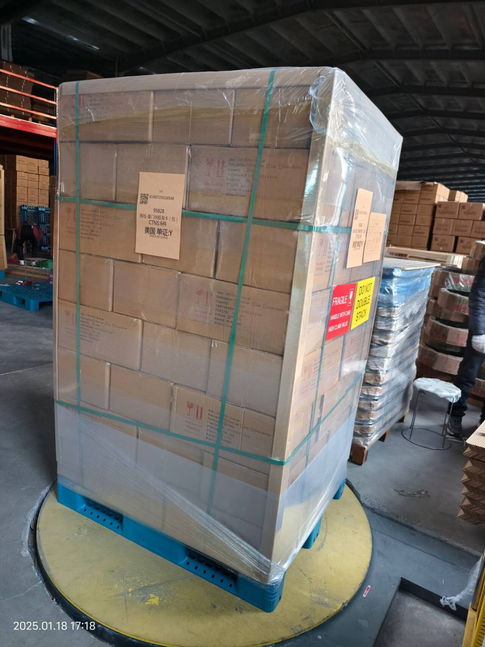
Confirming Purchasing Terms and Acceptance Criteria Before Bulk Order
The commercial terms are part of the closure solution, because they determine what happens when a batch does not meet the validated specification. For Honor Packaging supplement jar orders, the standard terms are:
- Minimum order quantity: 10,000 units.
- Delivery term: FOB.
- Acceptance criteria: pre-shipment test.
- Payment terms: production is arranged on receipt of a 30% down payment; the remaining 70% is paid prior to shipment.
- Production lead time: typically 30–45 days, against a monthly production capacity of 100,000 units.
Two things are worth confirming explicitly at this stage. First, the acceptance test should reference the closure checks agreed during sampling — opening force, torque retention and filled-jar behaviour — not only the appearance of the jar. Second, because decoration changes the surface the user grips, the decoration specification should be frozen after the closure has passed, so that a late change to a frosted or printed finish does not quietly alter the opening force that was validated.
Decoration: The Finishing Step After Closure Validation
Decoration is where most projects try to save time and where most closure regressions are introduced. Sticker, silk-screen printing, hot stamping, heat transfer printing and frosted finish each change the outside surface of the jar or cap, and each one changes grip friction to some degree.
The correct order is: validate the closure, then specify the decoration, then re-check the opening action on the decorated sample. A frosted finish on a small 5 ml H19 jar, for example, gives a different tactile result than the same finish on a 58 mm H21 jar, because the surface area in contact with the hand is different. Running the decorated sample through the same opening test as the undecorated one takes very little time and removes the most common source of post-approval complaints.

Comparison Table: H21 and H19 Side by Side
| Attribute | H21 clear square jar | H19 child-resistant packaging |
|---|---|---|
| Container shapes | Square | Square, round, triangle, hexagon |
| Material options | Glass, plastic, PE | White, black or clear glass |
| Glass wall thickness | 0.38 mm | Not separately stated |
| Capacity range | 15 ml, 30 ml, 20 dr, 30 dr, 40 dr, 60 dr | 5 ml, 9 ml |
| Neck diameter | 58 mm | Not separately stated |
| Item codes | H21-0003C to H21-0008C | Not separately stated |
| Typical fit | Powder, capsule and larger resin or oil packs | Small-dose resin, oil and sample or travel formats |
| Decoration after validation | Sticker, silk-screen printing, hot stamping, heat transfer printing, frosted finish | Sticker, silk-screen printing, hot stamping, heat transfer printing, frosted finish |
| Minimum order quantity | 10,000 units | 10,000 units |
| Delivery term / acceptance | FOB; pre-shipment test | FOB; pre-shipment test |
| Payment terms | 30% down payment; 70% before shipment | 30% down payment; 70% before shipment |
Manufacturing is supported by a 45,000 m² facility, 310 employees and a 15-person R&D team, with output exported to the EU, US, Middle East and Southeast Asia. Quality control includes 100% pre-shipment testing and third-party inspection (SGS), and the company provides OEM and ODM production services.
FAQ
Are child-resistant closures legally required for supplement packaging?
Requirements differ by market, and they should be checked per destination rather than assumed. In the United States, tamper-evident packaging for dietary supplements is not generally mandated at federal level in the same way as for many over-the-counter drugs. Child-resistant performance is a separate question from tamper evidence and must be confirmed against the specific market's rules. Material compliance is a further, independent dimension: EU Regulation (EU) 2024/3190 restricts Bisphenol A (BPA) in food contact materials, with application to single-use items from 20 July 2026, which brings closure liners and coatings into the review alongside the jar body.
Can Honor Packaging produce custom child-resistant supplement packaging for my product?
Yes. Two child-resistant lines are available. The H21 clear square jar is offered in glass, plastic and PE, with a 0.38 mm glass wall, a 58 mm neck diameter and capacities of 15 ml, 30 ml, 20 dr, 30 dr, 40 dr and 60 dr, under item codes H21-0003C to H21-0008C. The H19 child-resistant packaging is produced in white, black or clear glass across square, round, triangle and hexagon profiles in 5 ml and 9 ml. Monthly production capacity is 100,000 units, and OEM and ODM production services are available. Product is exported to the EU, US, Middle East and Southeast Asia.
What is the minimum order quantity and what are the payment terms?
The minimum order quantity is 10,000 units. Delivery terms are FOB. Production is arranged upon receipt of a 30% down payment, with the remaining 70% paid prior to shipment. Because the closure specification is validated before decoration, it is worth freezing the jar, closure and decoration specification together at the point the order is placed, so the 30% down payment is made against a specification that has already passed sampling.
How do I check cap performance before committing to a bulk order?
Test a filled sample on your own filling line, using the production capping head, line speed and torque target. Measure opening force with people who resemble your actual buyer group, then re-measure torque after a holding period to confirm it does not drop. Check the thread and liner after repeated opening for creep, damage or product build-up. Only after these checks pass should the decoration be finalised, because sticker, silk-screen printing, hot stamping, heat transfer printing and frosted finish all change the surface the user grips.
What is the production lead time, and how do I start?
Typical production lead time is 30–45 days, against a monthly production capacity of 100,000 units, with acceptance based on a pre-shipment test. The fastest route from a failing closure to a fixed specification is to request a sample of the H21 or H19 jar filled with your actual product, run it on your line, and confirm the opening force and torque result before the bulk order is placed. Honor Packaging can be reached at info@honorpkg.com or +86-574-88004632, and the full capability and specification set is available in the company brochure.
Next Step: Test the Closure, Not Just the Jar
A cap problem rarely ends at the cap. It ends when the jar, the closure and the filling line are validated together and the result is written into the acceptance criteria.
Honor Packaging — Ningbo Honor Packaging Co., Ltd. — supplies child-resistant supplement packaging from Ningbo, China, with OEM and ODM production, 100% pre-shipment testing and third-party inspection (SGS), and monthly capacity of 100,000 units.
Website: www.honorcrpkg.com | Email: info@honorpkg.com | Tel: +86-574-88004632
Request a filled sample of the H21 or H19 jar, or download the product brochure for the full specification and capacity range.

Conclusion
Child-resistant caps fail in three recognisable ways: too tight for older users, too easy for children, and unstable under torque after filling. Each one traces back to the same place — the interface between the jar neck, the closure and the filling line — and each one is fixed in the same order: identify the symptom, select a matched container and closure, validate on a filled sample at production speed, confirm the commercial terms and acceptance criteria, and then apply decoration.
The H21 clear square jar and the H19 child-resistant series cover the two ends of the dose range, from 60 dr down to 5 ml, with a consistent 58 mm neck on the H21 range and four jar profiles on the H19. Used together with a documented sampling protocol, they turn a recurring complaint into a specification that holds through bulk production.
Have Questions or Need More Details?
Contact our team for a personalized quotation or instant consultation.
Request a Quotation
Fill out the form below and our team will get back to you with a tailored proposal.
WhatsApp Direct Chat
Prefer to chat in real-time? Message us on WhatsApp for instant assistance & quick answers.
- Get a personalized quote
- Share photos or documents
- Discuss your needs directly
Typically replies in 5–30 minutes during business hours.