
Child-Resistant vs. Vacuum Packaging for Supplements: A Head-to-Head Decision Guide
Child-resistant packaging and vacuum packaging solve different supplement risks. Child-resistant packaging controls who can open the container. Vacuum packaging controls the atmosphere inside it. For a supplement buyer at the decision stage, the practical question is not which label sounds safer, but which control is mandatory or valuable for the product, market, and retail channel. The H21 clear square jar, H21 violet glass square jar, and H19 series are child-resistant glass options from Honor Packaging. The H19 square glass jar is the vacuum format in this comparison. This guide compares them by product form, child access, preservation, compliance, and commercial validation.
Problem Definition: Two Different Risk Controls
The decision becomes expensive when teams treat child resistance and vacuum as interchangeable. A jar can be child-resistant without vacuum. A vacuum jar can lack a child-resistant closure. If a product requires both, the buyer must specify a closure and jar system that delivers both, not assume one feature implies the other.
The failure modes also differ. Child access failure is an access-control problem: the closure, opening force, and package format either restrict children or they do not. Oxidation, moisture ingress, aroma loss, or pressure loss is a preservation problem: the atmosphere and seal either hold or they do not. A useful decision process separates these risks before choosing a jar.
Answer first: choose child-resistant first when child access is the governing risk or when the target market requires child-resistant packaging. Choose vacuum first when oxygen or moisture control is the governing risk for the supplement form. If both risks are material, specify both features and validate the combined system.
Industry Background: Why Buyers Are Comparing These Routes
Grand View Research estimated the global supplements and nutrition packaging market at USD 31.3 billion in 2025. Plastic held approximately 41.67% of material segment share in 2025, but glass remains relevant for premium, light-sensitive, and child-resistant formats. Material share alone does not decide the format. Product form, retail positioning, and compliance requirements do.
Shilajit illustrates the product-form pressure. The Shilajit market is expected to reach USD 221.4 million in 2026, with liquid resin accounting for 40.5% share. Resin and oil formats put more weight on light exposure, oxygen exposure, and closure integrity than a dry capsule. That does not make glass automatically superior. It means the preservation argument has to be tested against the actual product.
Compliance adds another layer. EU Regulation 2024/3190 bans the use of Bisphenol A in food contact materials, including supplement packaging coatings, with single-use items effective from July 20, 2026. In the United States, tamper-evident packaging is not generally mandated at the federal level for dietary supplements in the same way as for many over-the-counter drugs. These signals do not prescribe one format. They make documentation and market-specific validation part of the decision.
Detailed Solution: How the Honor Packaging Lines Differ
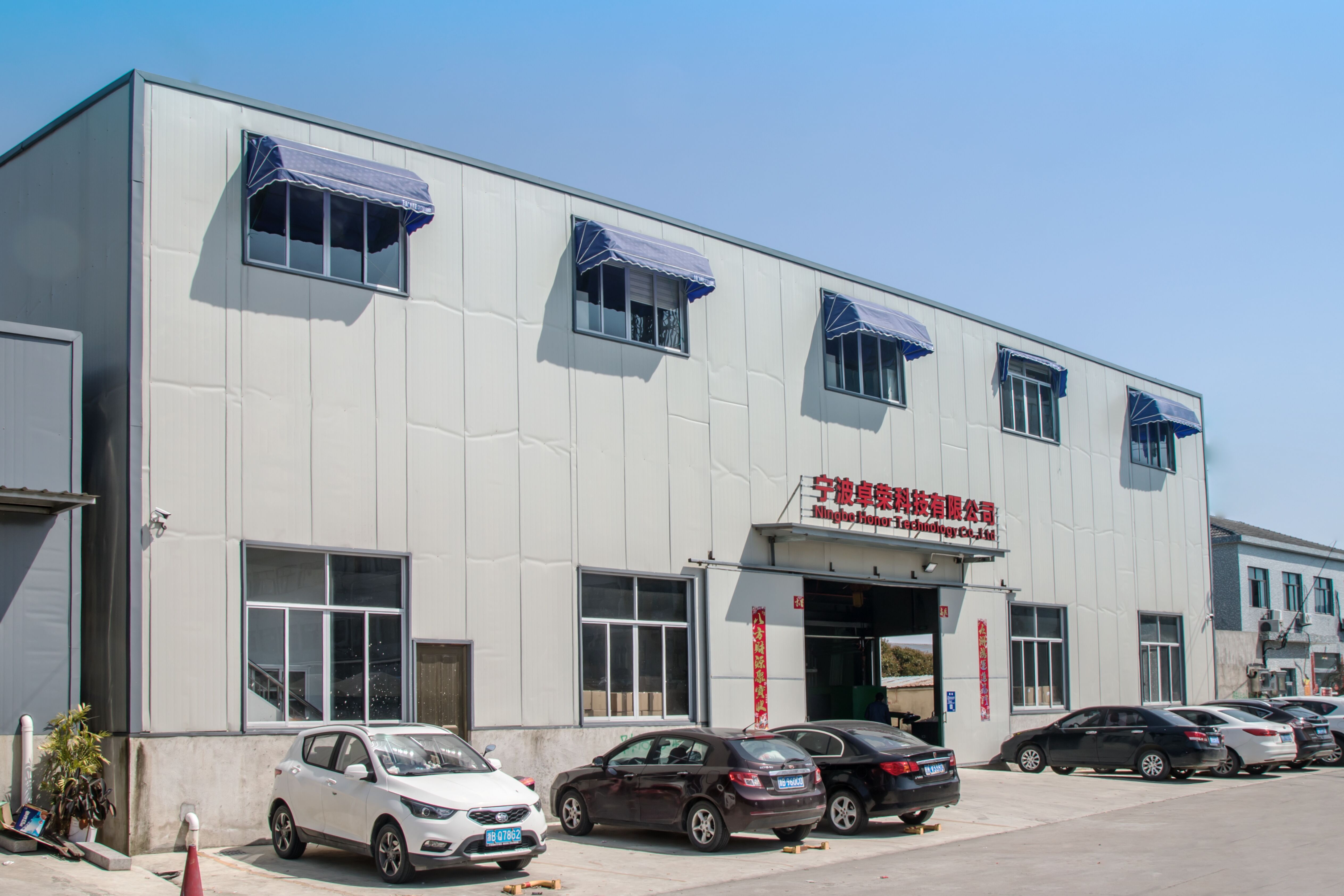
Honor Packaging (NINGBO HONOR PACKAGING CO.,LTD) is a Ningbo-based packaging partner founded in 2015, with a 45,000 m² factory, 310 employees, a 15-person R&D team, annual output of 1,000,000 units, a 100% export ratio, and main markets in the EU and USA. Its main products include child-resistant packaging, violet glass packaging, and vacuum packaging.
The H21 line covers clear square jars and violet glass square jars. Documented H21 capacities run from 15 ml to 60 dr, with 0.38 mm glass thickness. The H19 series documents square, round, triangle, and hexagon shapes and 5 ml / 9 ml formats. In this head-to-head, the H19 square glass jar is the vacuum packaging route. The H21 clear square jar, H21 violet glass square jar, and the H19 series are the child-resistant route. The choice is therefore a choice between access control and atmosphere control, with a possible combined specification if both are required.
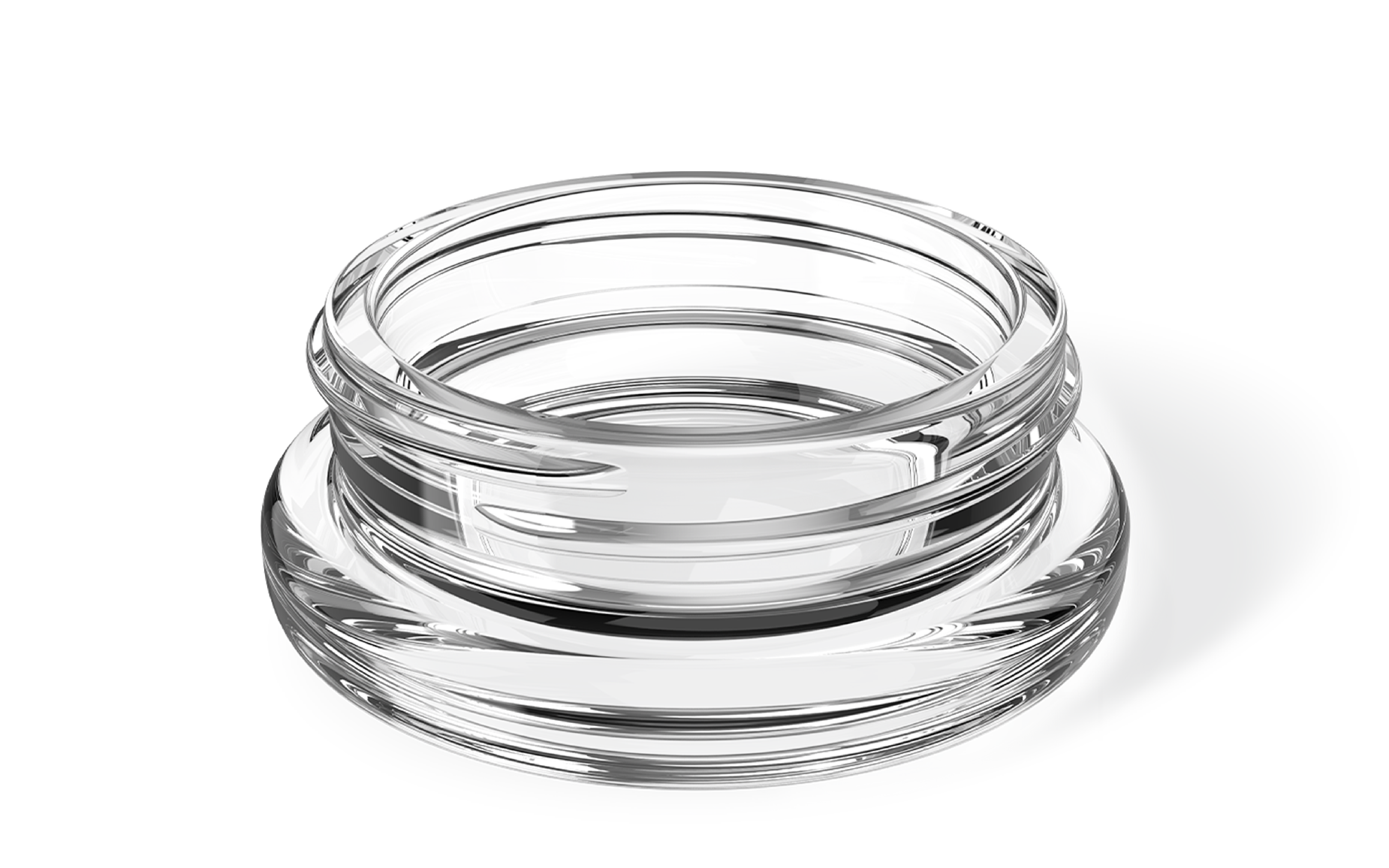
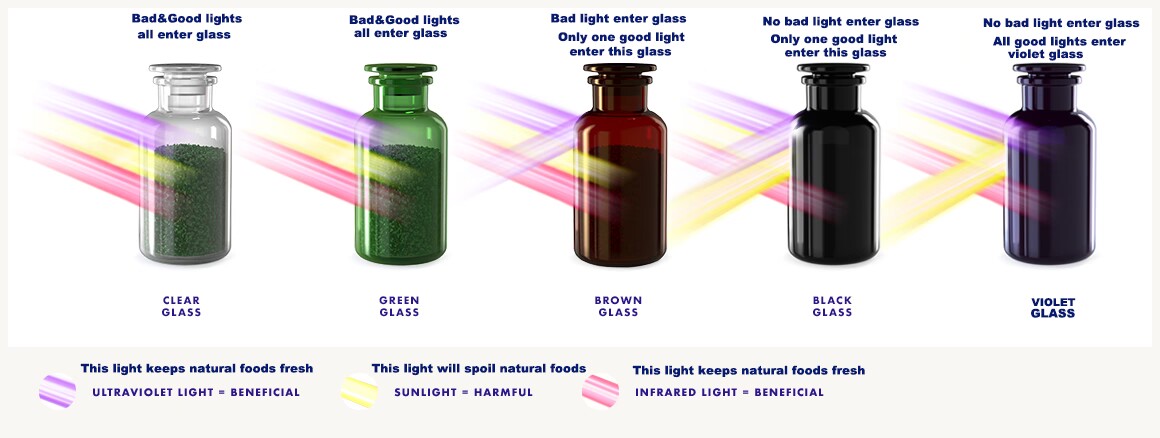
Violet glass has a documented preservation angle. Compared with amber glass packaging, Honor Packaging's violet glass option provides better protection against ultraviolet rays and helps maintain product freshness; its core difference is light transmittance. The same comparison records a 15% higher initial cost than amber glass packaging. That does not mean violet glass is always the right supplement jar. It means that when light-sensitive resin or oil is the product, the H21 violet glass square jar can carry a preservation rationale that a clear jar does not. The clear H21 jar remains useful when visibility, decoration, or cost discipline outweigh light-blocking needs.
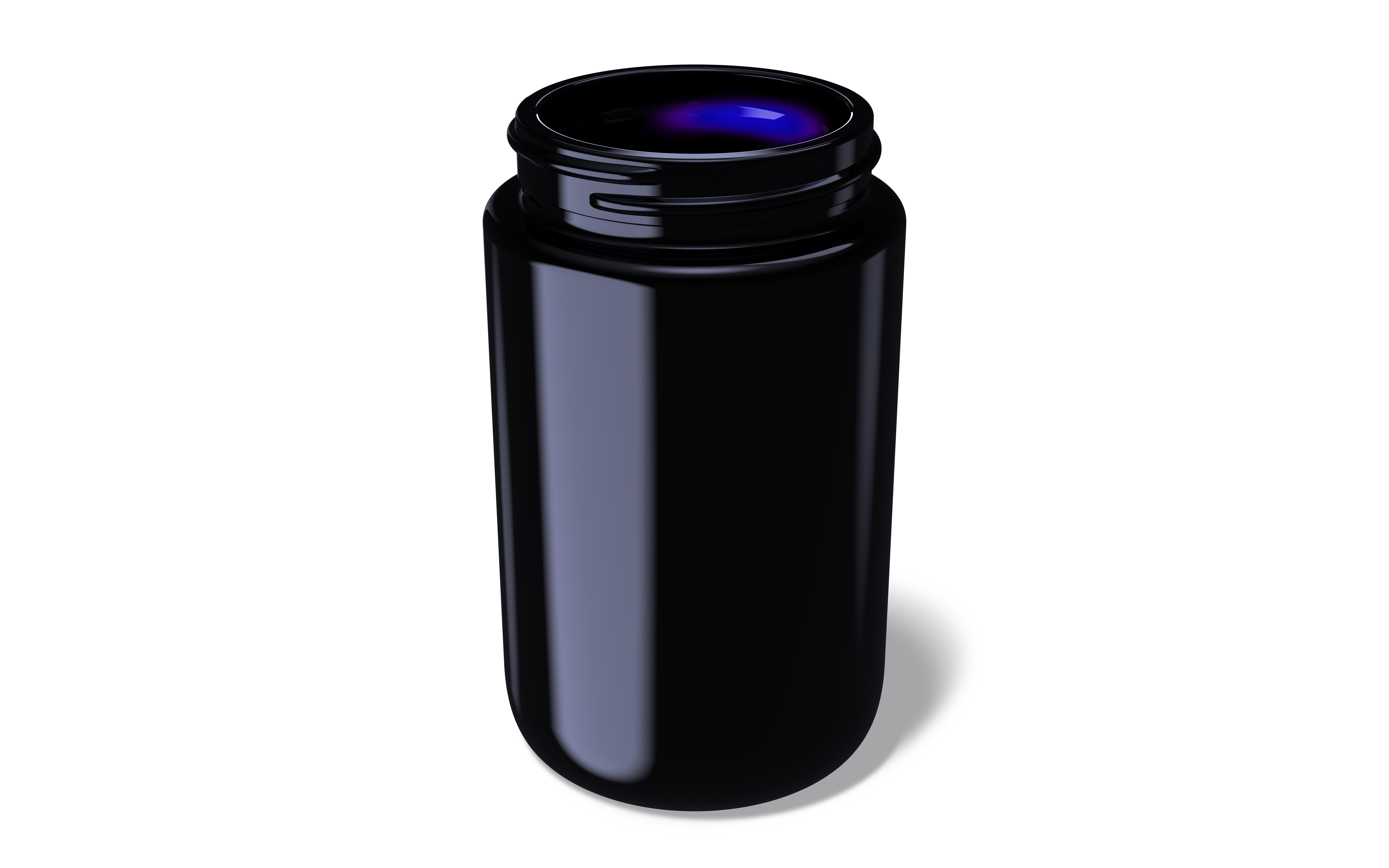
Child resistance is a separate design requirement. The documented benefit is less maintenance than alternatives and reduced worry about children accidentally ingesting contents. Buyers should treat that as a closure-system requirement, not a glass-colour benefit. A violet jar is not automatically child-resistant. A child-resistant jar is not automatically vacuum-sealed. Both attributes must be specified and verified in the sample and production documents.
Step-by-Step Breakdown: How to Choose Between the Two Routes
Step 1: Classify the Supplement Form
Start with powder, capsule, tablet, oil, resin, or liquid. Product form determines the preservation threat and the fill method. A dry powder may be more sensitive to moisture, while an oil or resin may be more sensitive to light and oxygen. The H19 square glass jar vacuum route and the H21 child-resistant route should be evaluated against that form, not against a generic category label.
Step 2: Map the Child-Access Risk
If the supplement is attractive to children, or if the target market requires child-resistant packaging, prioritize the H21 clear square jar, H21 violet glass square jar, or H19 series child-resistant formats. If child access is not the governing risk, still consider retail channel and brand risk. Do not assume vacuum packaging replaces child resistance. Vacuum is an atmosphere-control feature, not a child-safety feature by itself.
Step 3: Define the Preservation Threats
List light, oxygen, moisture, aroma, and pressure as separate threats. Violet H21 is the documented route when UV protection and freshness retention matter. The H19 square glass jar is the vacuum route when atmosphere control is the priority. If both light and atmosphere are material, specify both a light-protective jar and a vacuum seal, then validate the combination.
Step 4: Select Capacity and Shape
Match the dose count and retail format to documented capacities. H21 covers 15 ml to 60 dr. H19 covers 5 ml / 9 ml and square, round, triangle, and hexagon shapes. Small-dose formats are useful for samples, travel packs, or concentrated supplements. Larger H21 formats suit multi-dose powders, capsules, or oils. The shape decision should follow filling, labelling, and shelf presentation, not aesthetics alone.
Step 5: Validate Closure and Vacuum Together
Test the actual jar and closure, not a catalogue drawing. For child-resistant formats, validate opening force and closure performance with the intended user group and market protocol. For vacuum formats, validate seal integrity, vacuum retention, and reclosure after first opening. If the product needs both child resistance and vacuum, validate the combined system as one package. A failure in either function is a packaging failure.
Step 6: Build the Compliance File
Check food-contact compliance for the target market. EU Regulation 2024/3190 restricts BPA in food contact materials, including supplement packaging coatings, with single-use items effective from July 20, 2026. For the US, tamper-evident packaging is not generally mandated at federal level for dietary supplements in the same way as many OTC drugs, but that does not remove retailer or state requirements. Child-resistant requirements are market- and product-specific. Use legal review and supplier documentation before committing.
Step 7: Commercial Validation
Request samples and a project quote. Compare the documented 15% higher initial cost of violet glass versus amber glass with the value of UV protection for the product. Compare child-resistant and vacuum formats by closure cost, capacity, decoration, packing method, and order volume. Confirm lead time in writing. Honor Packaging is based in Ningbo, close to Ningbo and Shanghai seaports, which supports export logistics coordination.
Use Cases: Which Route Fits Which Supplement
Shilajit Resin and Other Light-Sensitive Oils
For Shilajit resin and similar oil-based supplements, the H21 violet glass square jar is the documented light-protection route. If oxidation is also a concern, evaluate the H19 square glass jar vacuum route or a combined specification. The Shilajit market is expected to reach USD 221.4 million in 2026, with liquid resin at 40.5% share, so resin handling and premium presentation are practical considerations, not niche ones.
Powder Supplements
Powder supplements often face moisture and oxygen exposure. The H19 square glass jar vacuum route is the direct atmosphere-control option. If the product also needs child resistance, specify an H21 or H19 child-resistant closure rather than assuming the vacuum jar covers access control. H21 capacities from 15 ml to 60 dr allow a range of powder fill sizes.
Capsules and Tablets
For capsules and tablets, child access may be the governing risk in households with children. The H21 clear square jar or H21 violet glass square jar can carry the child-resistant requirement. If moisture control is more important than access control, evaluate the H19 vacuum route. The decision should follow the risk that is hardest to control after filling.
Small-Dose and Sample Formats
The H19 series documents 5 ml / 9 ml formats in square, round, triangle, and hexagon shapes. These are relevant for concentrated supplements, sample sizes, and travel formats. Use the child-resistant H19 version where access control is required, or the H19 square glass jar where vacuum is specified. Do not mix the two functions without written confirmation.
Premium Retail and Gift Positioning
Violet glass carries a premium preservation story, while clear H21 supports product visibility. The documented violet glass premium is 15% higher initial cost than amber glass packaging. That premium must be justified by the product's light sensitivity and retail price position. For a value-tier supplement, a clear child-resistant jar may be the more disciplined choice.
Comparison Table: Child-Resistant vs. Vacuum Packaging for Supplements
| Decision factor | Child-resistant route: H21 clear square jar, H21 violet glass square jar, H19 series | Vacuum route: H19 square glass jar | What the buyer should verify |
|---|---|---|---|
| Primary control | Controls access through a child-resistant closure and jar system | Controls the atmosphere through a vacuum seal and closure | Confirm whether the product needs access control, atmosphere control, or both |
| Documented formats | H21 clear square jar, H21 violet glass square jar, H19 series; H21 15 ml to 60 dr and 0.38 mm glass thickness; H19 5 ml / 9 ml and square, round, triangle, hexagon shapes | H19 square glass jar; H19 series documents 5 ml / 9 ml formats and square, round, triangle, hexagon shapes | Match capacity, shape, and fill method to the actual SKU |
| Strongest fit | Supplements where child access is a material risk or a market requirement | Supplements where oxygen or moisture control is the primary preservation risk | Do not use vacuum as a substitute for child resistance |
| Child safety | Designed as the child-resistant route; documented benefit includes less maintenance and reduced worry about accidental ingestion | Vacuum is not a child-safety feature by itself | If both are needed, specify and validate a combined child-resistant vacuum system |
| Light protection | H21 violet glass is documented for better UV protection and freshness retention than amber glass; the clear H21 is not positioned as a UV-blocking jar in the provided comparison | No UV-blocking claim is provided for the H19 vacuum route | Evaluate glass colour separately from the vacuum function |
| Preservation logic | Child resistance does not by itself control oxygen or moisture | Vacuum supports atmosphere control; verify seal and vacuum retention | Test the filled package, not only the empty jar |
| Compliance evidence | Market-specific child-resistant requirements; EU BPA restriction and US tamper-evident guidance may affect material and closure choices | Same food-contact and market rules apply; vacuum performance also needs validation records | Build a market-specific compliance file with legal review |
| Cost signal | Violet glass has a documented 15% higher initial cost than amber glass packaging | No single public unit price is provided for the vacuum route | Request a project quote by format, closure, decoration, and volume |
| Supplier line | Honor Packaging main products include child-resistant packaging, violet glass packaging, and vacuum packaging | Honor Packaging main products include vacuum packaging | Confirm the exact jar, closure, and validation scope in the quotation |
FAQ: Child-Resistant vs. Vacuum Supplement Packaging
Are child-resistant or vacuum packages legally required for supplement packaging?
It depends on the market, product, and claims. EU Regulation 2024/3190 bans Bisphenol A in food contact materials, including supplement packaging coatings, with single-use items effective from July 20, 2026. In the United States, tamper-evident packaging is not generally mandated at the federal level for dietary supplements in the same way as for many over-the-counter drugs. Child-resistant requirements are market- and product-specific, and vacuum packaging is a preservation choice rather than a universal legal mandate. Buyers should confirm the applicable rules for each destination market before finalizing the jar and closure.
Can Honor Packaging supply both H21 child-resistant jars and H19 vacuum jars?
Honor Packaging's documented main products include child-resistant packaging, violet glass packaging, and vacuum packaging. The H21 line covers clear square jars and violet glass square jars, with capacities from 15 ml to 60 dr and 0.38 mm glass thickness. The H19 series covers square, round, triangle, and hexagon shapes in 5 ml / 9 ml formats. In this comparison, the H19 square glass jar is the vacuum route, while H21 and the H19 series are the child-resistant route.
Which option costs more: child-resistant or vacuum packaging?
The documented cost signal is specific to glass colour: Honor Packaging's violet glass option has a 15% higher initial cost than amber glass packaging. For child-resistant versus vacuum formats, no single public unit price applies because cost depends on jar size, closure type, decoration, packing method, and order volume. Use the 15% violet glass delta as one input, then request a project-specific quote for both routes.
How should buyers validate samples before choosing?
Request samples of the H21 clear square jar, H21 violet glass square jar, H19 child-resistant format, and H19 square glass jar vacuum format. Test the actual fill, opening force, closure performance, vacuum retention where relevant, label application, and packing method. If the product needs both child resistance and vacuum, test the combined system as one package. Sample evaluation should reproduce the intended retail and transport conditions as closely as possible.
What lead time should buyers expect, and how do they start?
No single lead time applies to both routes. Lead time depends on jar format, closure, decoration, order quantity, and production scheduling. Honor Packaging is based in Ningbo, close to Ningbo and Shanghai seaports, which supports export logistics coordination. Buyers should confirm lead time in writing with the quotation. To start, request a sample and quote from Honor Packaging at info@honorpkg.com, call +86-574-88004632 or +86-15968944995, or use the WhatsApp contact link.
Conclusion: Decide by Risk, Not by Label
Child-resistant packaging and vacuum packaging are not competing labels for the same function. Child resistance is the access-control decision. Vacuum is the atmosphere-control decision. The H21 clear square jar, H21 violet glass square jar, and H19 series give buyers documented child-resistant formats across 15 ml to 60 dr and 5 ml / 9 ml options. The H19 square glass jar gives buyers a vacuum route within the same supplier line.
Choose child-resistant first when child access is the governing risk. Choose vacuum first when oxygen or moisture control is the governing risk. If both are material, specify both and validate the combined package. Use the documented violet glass UV advantage and the 15% higher initial cost versus amber glass as commercial inputs, not as universal answers. Then confirm compliance, sample performance, and lead time in writing.
Next step: compare the H21 and H19 routes with your actual supplement form. Request a sample and project quote from Honor Packaging, review the Honor Packaging brochure, and confirm the jar, closure, and validation scope before committing.
Contact: Victor | Email: info@honorpkg.com | Tel: +86-574-88004632 / +86-15968944995 | Address: Rm.305,No.1 Building,No.568.SiMing East Road, YinZhou District, Ningbo City, China | Website: www.honorcrpkg.com
Have Questions or Need More Details?
Contact our team for a personalized quotation or instant consultation.
Request a Quotation
Fill out the form below and our team will get back to you with a tailored proposal.
WhatsApp Direct Chat
Prefer to chat in real-time? Message us on WhatsApp for instant assistance & quick answers.
- Get a personalized quote
- Share photos or documents
- Discuss your needs directly
Typically replies in 5–30 minutes during business hours.