
Child-Resistant vs. Vacuum Seal Glass Jars: Choosing 5 ml Protective Packaging
For 5 ml protective packaging, the H19 child-resistant glass jar and the H19 vacuum click glass jar answer two different questions. Choose the child-resistant jar when the dominant risk is unauthorised access: it is offered in 5 ml and 9 ml capacities, in square, round, triangle and hexagon shapes, with net weights from 27 g to 38 g. Choose the vacuum click jar when the dominant risk is air exposure: it is a square 5 ml format with a vacuum seal, packed 250 pieces per carton.
Both are glass, both are small, and both sit at the end of a filling line — which is why they are so often treated as interchangeable during evaluation. They are not. One controls who can open the package; the other controls what the atmosphere does to the contents. A wrong choice rarely shows up at the packing station. It shows up as a failed child-resistance test, a rejected retail submission, or a complaint about product condition three months after shipment.
This guide is written for buyers, packaging engineers and brand owners who have already shortlisted 5 ml glass and now need to commit to a format. It compares the two H19 options on capacity, shape, closure function, carton handling, compliance evidence and production reality, using the specifications Honor Packaging publishes for these jars.
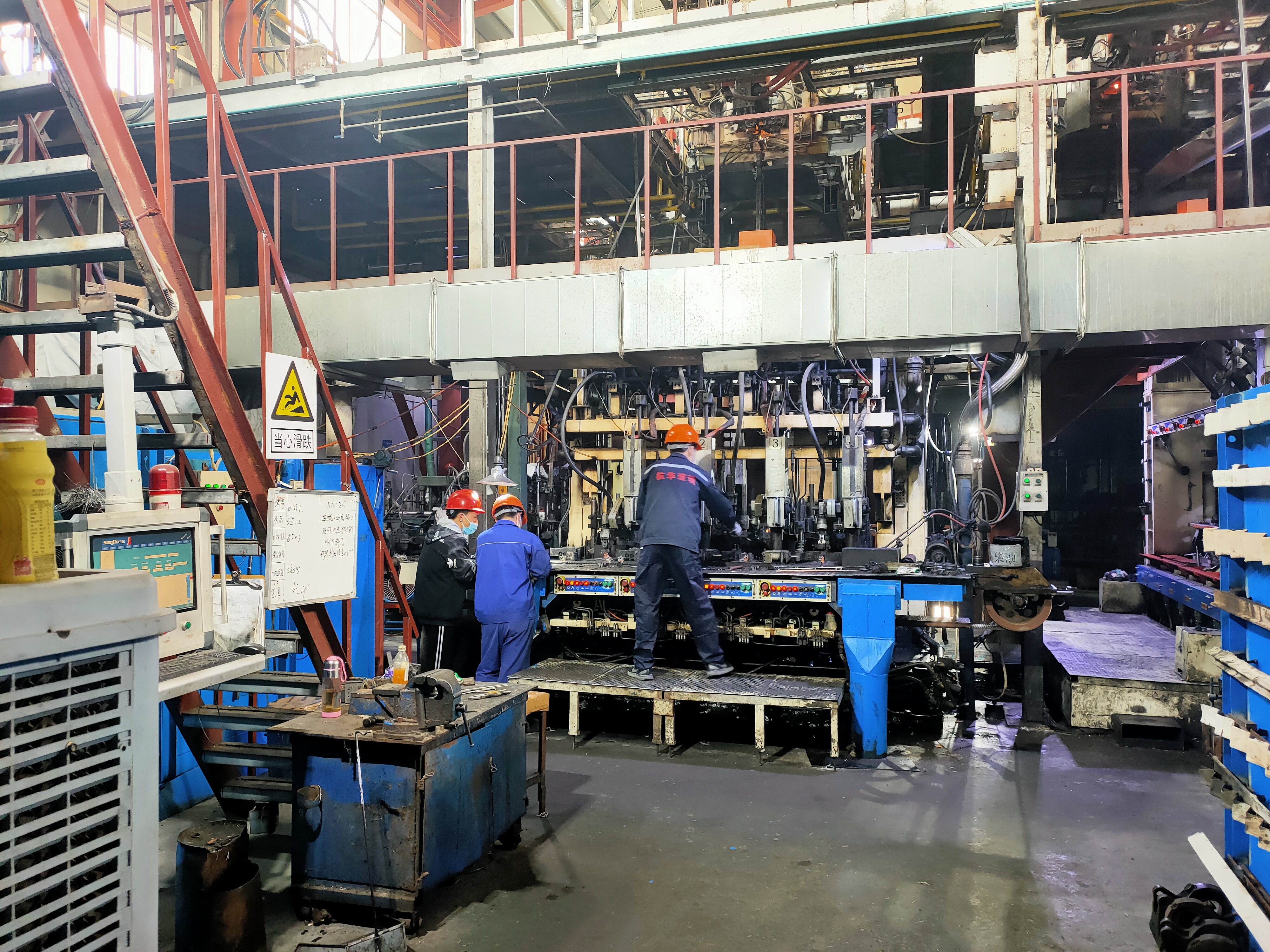
Glass packaging production: the H19 range is produced through long-term joint-venture glass production bases in China.
Why a 5 ml Jar Forces a Packaging Decision Earlier Than Buyers Expect
A 5 ml glass jar is often the smallest unit a brand puts on a shelf or in a sample kit, and it carries the highest cost per gram of contents. At that size, packaging stops being a container decision and becomes a risk decision. Two failure modes dominate.
The first is access. Where a product is regulated as a hazardous household substance or falls under special packaging rules, the requirement attaches to the primary or immediate packaging, not to the outer carton. The U.S. Consumer Product Safety Commission states this directly in its Guide to Special Packaging: regulations issued under the Poison Prevention Packaging Act (PPPA) and FIFRA require special packaging for many harmful household products, and the requirement applies to the primary or immediate packaging. A 5 ml jar that opens too easily is a compliance problem no matter how good the outer box is.
The second is atmosphere. Concentrated fills have a small headspace and a large surface-to-volume ratio, so any air exchange inside the jar matters more at 5 ml than at 50 ml. A vacuum-sealed format addresses that; a child-resistant screw format does not.
Buyers usually confront the choice after artwork, carton dimensions and filling equipment have been specified. At that point, switching format means re-quoting tooling, re-testing closures and re-issuing carton specs. Deciding early is cheaper than deciding correctly late.
Industry Background: What Regulators Now Expect
Child-resistant packaging is one of the few packaging categories with a measurable pass/fail definition. Under 16 CFR 1700.20, a package must prevent at least 85% of children under five from opening it within five minutes, while remaining openable by at least 90% of adults. Those thresholds are why child-resistant formats are tested rather than described.
Two ISO standards frame the test logic. ISO 8317:2015 specifies performance requirements and test methods for reclosable packages designated as resistant to opening by children. ISO 14375:2018 does the same for non-reclosable packages and adds that such a package should be appropriate for the contents, provide mechanical protection and function properly for the life of the content and packaging. ASTM D3475 classifies special packaging by the type of closure and the action needed to open it — a useful reminder that child resistance is a property of the closure system, not of the glass alone.
Market context supports the attention. Grand View Research values the global protective packaging market at USD 41.5 billion in 2026, and Global Market Insights projects the child-resistant packaging segment at USD 31.07 billion in 2026. Both are research-firm estimates and should be read as directional rather than audited.
For suppliers, the practical consequence is documentation. A buyer evaluating 5 ml jars is no longer only comparing glass; they are comparing test reports, material declarations and process control.
How the Two H19 Formats Differ
H19 child-resistant glass jar: access control with shape choice
The child-resistant H19 is the broader of the two ranges. It covers 5 ml and 9 ml capacities across four shapes — square, round, triangle and hexagon — with net weights of 27 g to 38 g. That weight band matters during evaluation: freight, line behaviour and case packing are weight-driven, and a 38 g jar and a 27 g jar in the same programme will not produce identical carton performance. Confirm the per-shape weight rather than budgeting on an average.
Shape selection is functional as much as visual. Round jars suit standard capping heads and label wrap; square and hexagonal formats give more usable face area on shelf but change orientation behaviour during unscrambling and case packing; triangular formats should be trialled on your own line before commitment. None of these is a reason to avoid a shape — each is a reason to request a sample of that specific shape.
Child resistance lives in the closure system. When you request a child-resistant 5 ml jar, ask which closure type and opening action the jar is classified under per ASTM D3475, and which standard — 16 CFR 1700.20, ISO 8317:2015 or ISO 14375:2018 — the resistance claim is tested against.
H19 vacuum click glass jar: atmosphere control in a fixed format
The vacuum click jar is a single, deliberate format: square, 5 ml, with a vacuum seal, packed 250 pieces per carton. It is narrower than the child-resistant range by design, because a vacuum seal depends on a closure geometry that holds vacuum, and that limits shape variation.
Carton handling is the practical advantage. Because the pack is fixed at 250 pieces per carton, volume planning becomes arithmetic rather than negotiation: a 10,000-unit order equals 40 cartons. For distributors and contract packers, that predictability simplifies pallet build, storage allocation and reorder quantity.
The trade-off is process. A vacuum seal only performs if filling and closing support it, so the format should be trialled with your actual fill volume, temperature and headspace. Ask for a vacuum retention or leak protocol instead of accepting a verbal description of the seal.
Where the two formats overlap
Both are glass, both are 5 ml-capable, both come from the same manufacturer, and both accept the same OEM/ODM customisation — printing of client artwork, new design development and frosted finish. The difference is the protective mechanism, and that mechanism dictates which test evidence you need to collect.

FDA CPG certificate NGBHL23005693401 (SGS, issued 30 November 2023) covers food, cosmetic and medical scope and lists the H19 vacuum jar among applicable products.
Honor Packaging holds two relevant material-compliance certificates. The EU certificate NGBHL24007770101, issued by SGS on 27 December 2025 against EC No 1935/2004, lists the violet glass models HDV1, HDV2, HDV3 and H21. The FDA certificate NGBHL23005693401, issued by SGS on 30 November 2023 under FDA CPG, lists those models plus the H19 vacuum jar. Certificates of this kind support food-contact and regulatory screening. They are not the same as a child-resistance test report, and the two should be requested separately.
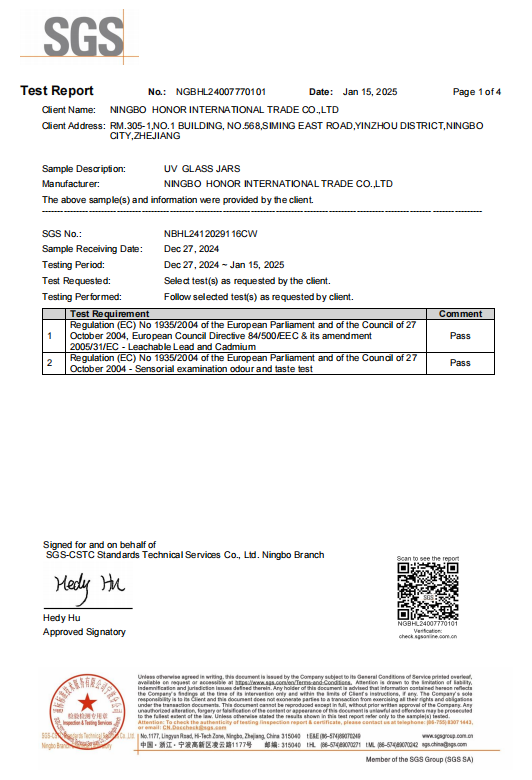
EU certificate NGBHL24007770101 (SGS, 27 December 2025) references EC No 1935/2004 and lists the HDV1, HDV2, HDV3 and H21 violet glass models.
Where light protection is also part of the brief, the wider portfolio includes violet glass packaging in the HDV1, HDV2, HDV3 and H21 series alongside child-resistant and vacuum formats. This comparison, however, stays between the two H19 options for 5 ml.
Side-by-Side Comparison
The table below separates the specification facts from the evidence you still need to collect. Where a data point is not defined in the current H19 specification set, the entry says so rather than implying a value.
| Decision factor | H19 child-resistant glass jar | H19 vacuum click glass jar |
|---|---|---|
| Capacity | 5 ml and 9 ml | 5 ml |
| Shape | Square, round, triangle, hexagon | Square |
| Net weight | 27 g to 38 g across the range | Not stated in the current specification set |
| Closure and protective function | Child-resistant closure system; classified by closure type and opening action (ASTM D3475) | Vacuum seal for atmosphere control |
| Primary risk addressed | Unauthorised access | Air exposure and loss of vacuum over time |
| Carton configuration | Confirm per order and per shape | 250 pieces per carton |
| Cartons at 10,000 units | Confirm with supplier | 40 cartons |
| Evidence to request | Child-resistance test report to 16 CFR 1700.20, ISO 8317:2015 or ISO 14375:2018 as applicable; material-compliance certificate | Vacuum retention or leak test protocol; FDA CPG certificate NGBHL23005693401 |
| Customisation | OEM/ODM: artwork printing, new design, frosted finish | OEM/ODM: artwork printing, new design, frosted finish |
| Typical programme | Regulated child-access products, unit-dose samples, retail multi-shape ranges | Air-sensitive concentrates and extracts, single-format high-volume runs |
Step-by-Step: Choosing Between the Two Formats
Step 1 — Write the dominant risk into the specification
State in one sentence whether the package must defeat child access, resist air exchange, or both. If both are required, accept that you are specifying two different jars for two different SKUs rather than one compromised format. Documenting this first prevents the specification from drifting toward whichever sample arrives fastest.
Step 2 — Match capacity and shape to the fill and the line
The child-resistant range gives you 5 ml or 9 ml across four shapes; the vacuum jar gives you 5 ml square. If your fill volume needs 9 ml, or your brand architecture depends on a hexagonal or triangular silhouette, the vacuum format is already excluded — and conversely, if a single fixed square format suits your line and shelf, the extra shape options add complexity without benefit.
Step 3 — Validate the closure claim against a named standard
Ask which standard the child-resistance claim is tested to and request the report. 16 CFR 1700.20 sets the US performance thresholds, ISO 8317:2015 covers reclosable child-resistant packages internationally, and ISO 14375:2018 covers non-reclosable ones. A supplier who can name the closure type per ASTM D3475 and the standard behind the test is easier to audit than one who simply says “child resistant”.
Step 4 — Validate vacuum performance with your own fill
If you choose the vacuum click jar, test seal retention under your production conditions, not the supplier's. Fill volume, product temperature and headspace all influence whether vacuum holds. Agree in writing which test items count as acceptance before the first production run.
Step 5 — Do the carton, weight and freight math
The vacuum jar's 250-piece carton turns a 10,000-unit minimum order into 40 cartons. On the child-resistant side, the 27 g to 38 g net weight spread across shapes means carton and pallet calculations must be per SKU. Run both numbers before comparing quotations, because a per-unit price that ignores carton configuration rarely reflects landed cost.
Step 6 — Lock documentation, MOQ and lead time
Honor Packaging operates with a minimum order quantity of 10,000 units, a typical lead time of 30–45 days and monthly capacity of 100,000 units. Every order undergoes 100% pre-shipment testing plus third-party inspection by SGS, and acceptance is based on pre-shipment test results. Place the test items, decoration approval and shipment terms into one document so the production window is not consumed by approval loops.
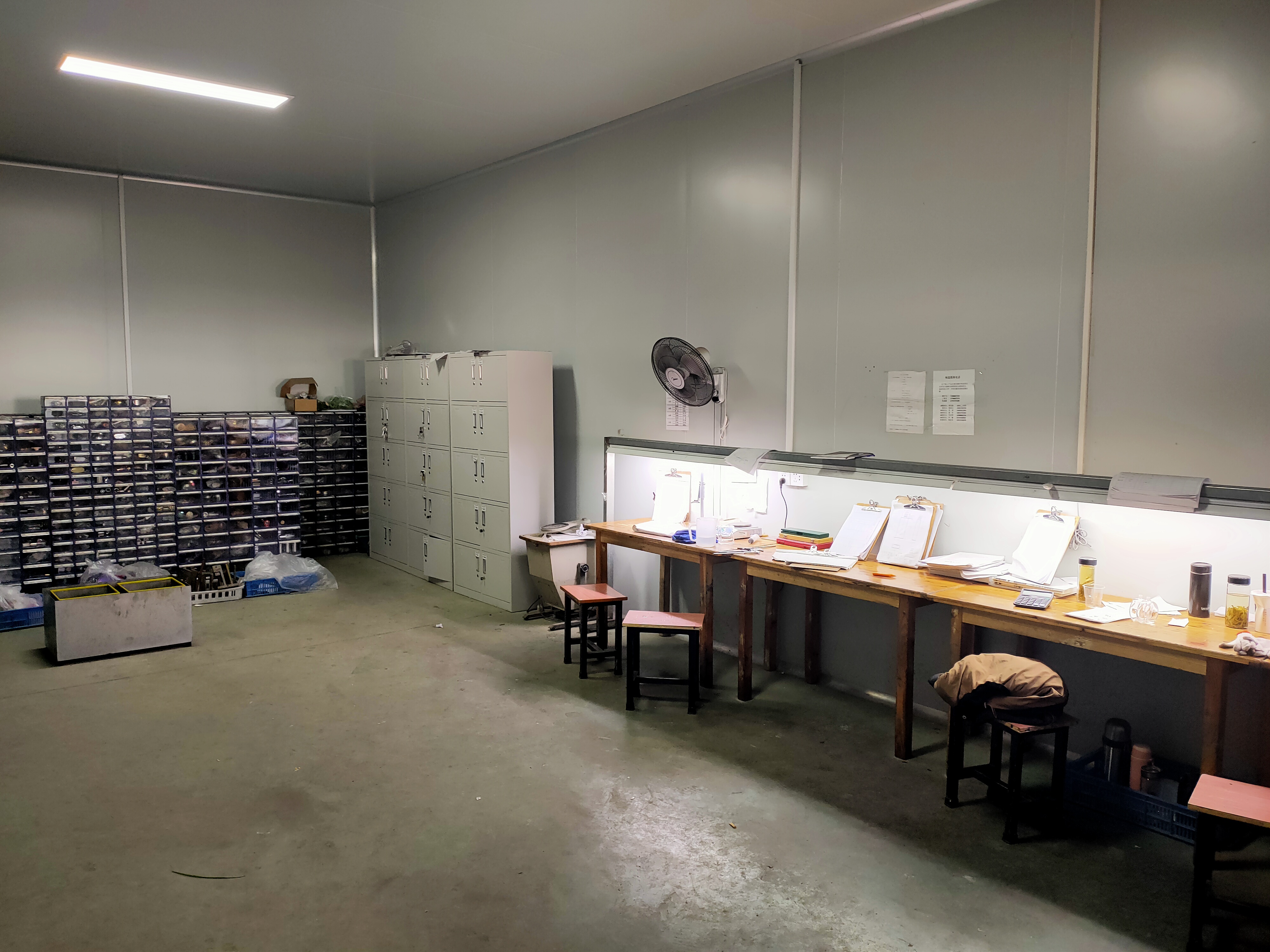
Production workshop: all orders pass 100% pre-shipment testing and third-party inspection by SGS.
Use Cases: Which Format Fits Which Programme
- Pharmaceutical and nutraceutical unit doses. Where a 5 ml or 9 ml glass unit has to resist child access in the destination market, the child-resistant H19 is the relevant starting point, and the test report matters more than the shape. A German branding business has used Honor packaging for pharmaceutical use across a three-year, 10,000-unit project, with company-reported results of products remaining fresh and highlights of reusability and UV protection.
- Concentrated botanical and oil-based extracts. Small fills with large headspace ratios are the classic case for the vacuum click jar: a square 5 ml format with a vacuum seal, planned in clean 250-piece carton increments.
- Cosmetic sample and travel formats. If the brief is product integrity during sampling rather than child safety, the vacuum format removes air without adding closure complexity; if the brief includes child access because of the ingredient or the market, the child-resistant range applies.
- Multi-shape retail ranges. Brands building a family across square, round, triangle and hexagon silhouettes need a single supplier who can hold 5 ml and 9 ml across all four — which is only available on the child-resistant side of this comparison.
- Refill and reuse programmes. Reusability is a design outcome, not a closure feature. If refill behaviour is part of the product story, specify it explicitly and test whether the closure survives repeated open/close cycles in your own trial.
Frequently Asked Questions
Do 5 ml child-resistant glass jars have to meet 16 CFR 1700.20 or ISO 8317?
It depends on the market and product category, not on the jar size. In the United States, special packaging requirements under the PPPA and FIFRA apply to the primary or immediate packaging of certain regulated products, and the 16 CFR 1700.20 performance test requires that at least 85% of children under five fail to open the package within five minutes while at least 90% of adults can open it. Internationally, ISO 8317:2015 covers reclosable child-resistant packages and ISO 14375:2018 covers non-reclosable ones. A 5 ml jar is small but is not exempt by size. Request the test report that matches your destination market, and keep material-compliance certificates separate from the child-resistance report.
Can the 5 ml jars be customised — printed artwork, new designs, frosted finishes?
Yes. Honor Packaging offers OEM and ODM services covering printing of client artwork, development of new designs and frosted finish application. The H19 child-resistant range already covers four shapes in 5 ml and 9 ml, so much of the differentiation sits in decoration and closure rather than new tooling. Monthly capacity is 100,000 units and the R&D team numbers 15 staff, which matters when artwork or a finish has to be validated before mass production. The company was founded in 2015, is headquartered in Ningbo, and operates a 45,000 m² factory with 310 employees and an R&D-driven, 100% export business focused on the EU and USA.
What are the purchasing terms and the minimum order quantity?
Minimum order quantity is 10,000 units, delivery terms are FOB, acceptance is based on pre-shipment testing, and payment is arranged with a 30% down payment before production with the remaining 70% due prior to shipment. At that minimum, the vacuum jar's 250-piece carton equals 40 cartons, while the child-resistant range requires carton confirmation per shape because net weight varies from 27 g to 38 g.
How should we sample and approve a 5 ml jar before mass production?
Sample the exact shape and closure you intend to buy, not the category. Test the closure against the standard that applies in your market; for the vacuum jar, test seal retention under your own fill and process conditions. All shipments undergo 100% pre-shipment testing and third-party inspection by SGS, and acceptance is defined by the pre-shipment test — so agree the test items, sampling quantity and decoration standard in writing before the production slot is booked.
What lead time should we plan for, and how do we start?
Typical lead time is 30–45 days against monthly capacity of 100,000 units, so a 10,000-unit programme fits within one month of capacity provided artwork and decoration are approved in advance. The fastest way to start is to request samples of the H19 child-resistant jar in your chosen shape, or of the H19 vacuum click jar, and ask for a quotation that states target market, quantity and decoration: email info@honorpkg.com or message +86 15968944995 on WhatsApp.
Conclusion: Decide on the Risk, Then on the Format
The two H19 jars are not competing versions of the same product. The child-resistant jar is a compliance-led format that buys you access control plus a choice of four shapes in 5 ml and 9 ml at 27 g to 38 g. The vacuum click jar is a preservation-led format that buys you a sealed square 5 ml unit and a clean 250-piece carton count, at the cost of shape flexibility.
If your market regulates the primary package for child access, start with the child-resistant option and collect the test report before anything else. If your product loses value on contact with air, start with the vacuum option and validate seal retention under your own process. If both conditions apply, plan two SKUs rather than one compromise.
Across either route, the production fundamentals are the same: OEM/ODM customisation including artwork printing, new design and frosted finish, a 10,000-unit MOQ, 30–45 day lead time, 100% pre-shipment testing with SGS third-party inspection, and material-compliance documentation through EU certificate NGBHL24007770101 (EC No 1935/2004) and FDA certificate NGBHL23005693401 (FDA CPG).
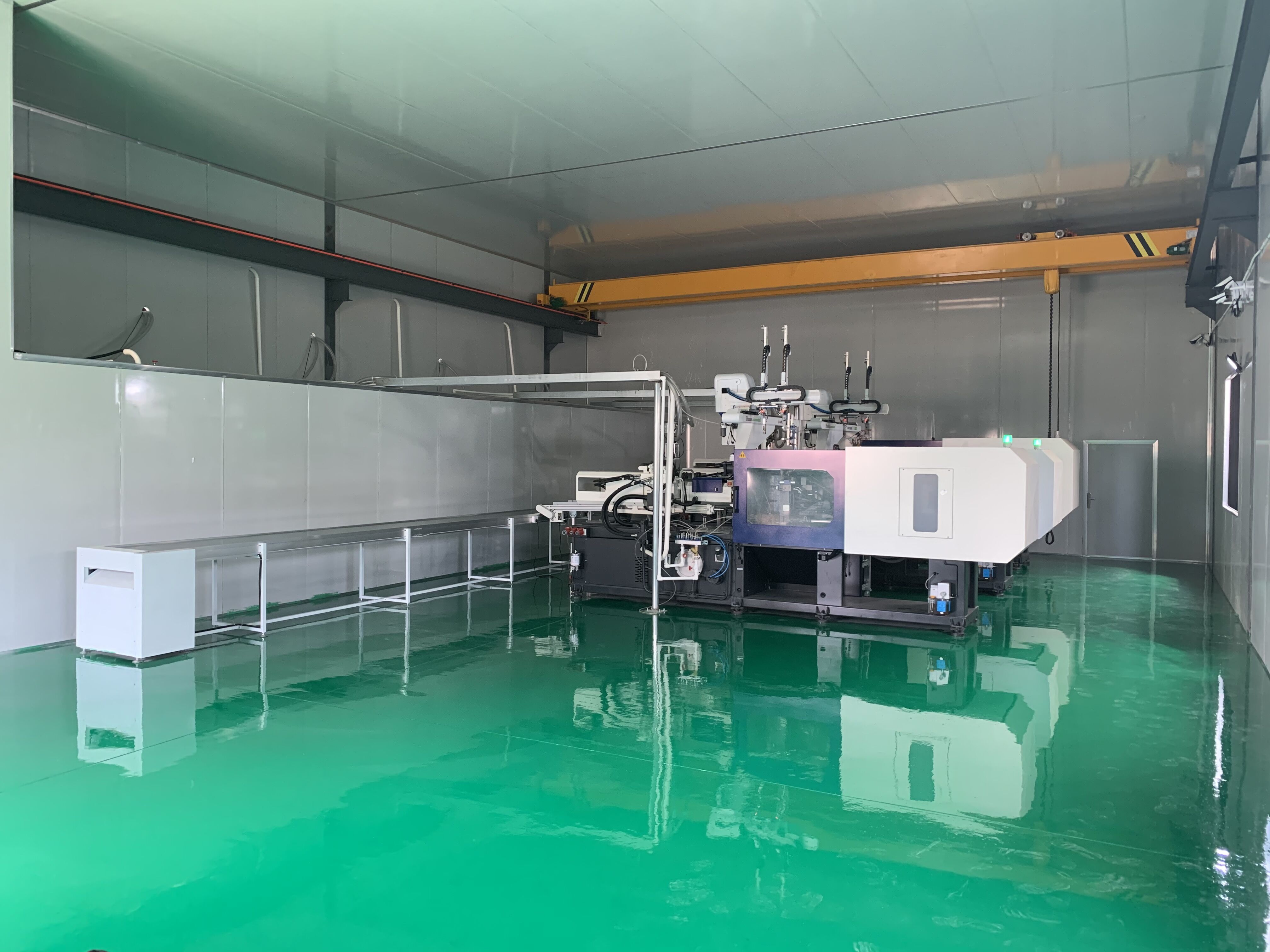
Volume production: monthly capacity of 100,000 units supports 5 ml child-resistant and vacuum jar programmes from 10,000 units.
Request Samples or a Quotation
Honor Packaging (NINGBO HONOR PACKAGING CO.,LTD) manufactures child-resistant, violet glass and vacuum packaging for export markets in the EU and USA. Compare the two 5 ml formats with your own product before you commit: request samples, or send your specification for a quotation.
Email: info@honorpkg.com | Tel: +86-574-88004632 / +86-15968944995 | WhatsApp: +86 15968944995
Website: www.honorcrpkg.com | Download the product brochure (PDF)
Have Questions or Need More Details?
Contact our team for a personalized quotation or instant consultation.
Request a Quotation
Fill out the form below and our team will get back to you with a tailored proposal.
WhatsApp Direct Chat
Prefer to chat in real-time? Message us on WhatsApp for instant assistance & quick answers.
- Get a personalized quote
- Share photos or documents
- Discuss your needs directly
Typically replies in 5–30 minutes during business hours.