
Compliance Guide: Child-Resistant & Violet Glass Supplement Packaging Specs
Compliance Guide: Child-Resistant & Violet Glass Supplement Packaging Specs
Child resistance and light protection are the two packaging functions supplement brands are most often asked to document, and the two most often left vague on a supplier specification sheet. A jar that photographs well says nothing about closure type, neck finish, wall thickness or material composition, which is precisely what compliance review asks for. This guide works through the specifications behind both functions, using the child-resistant and violet glass lines produced by NINGBO HONOR PACKAGING CO.,LTD. (Honor Packaging), and shows how those numbers translate into regional documentation packages rather than marketing claims.
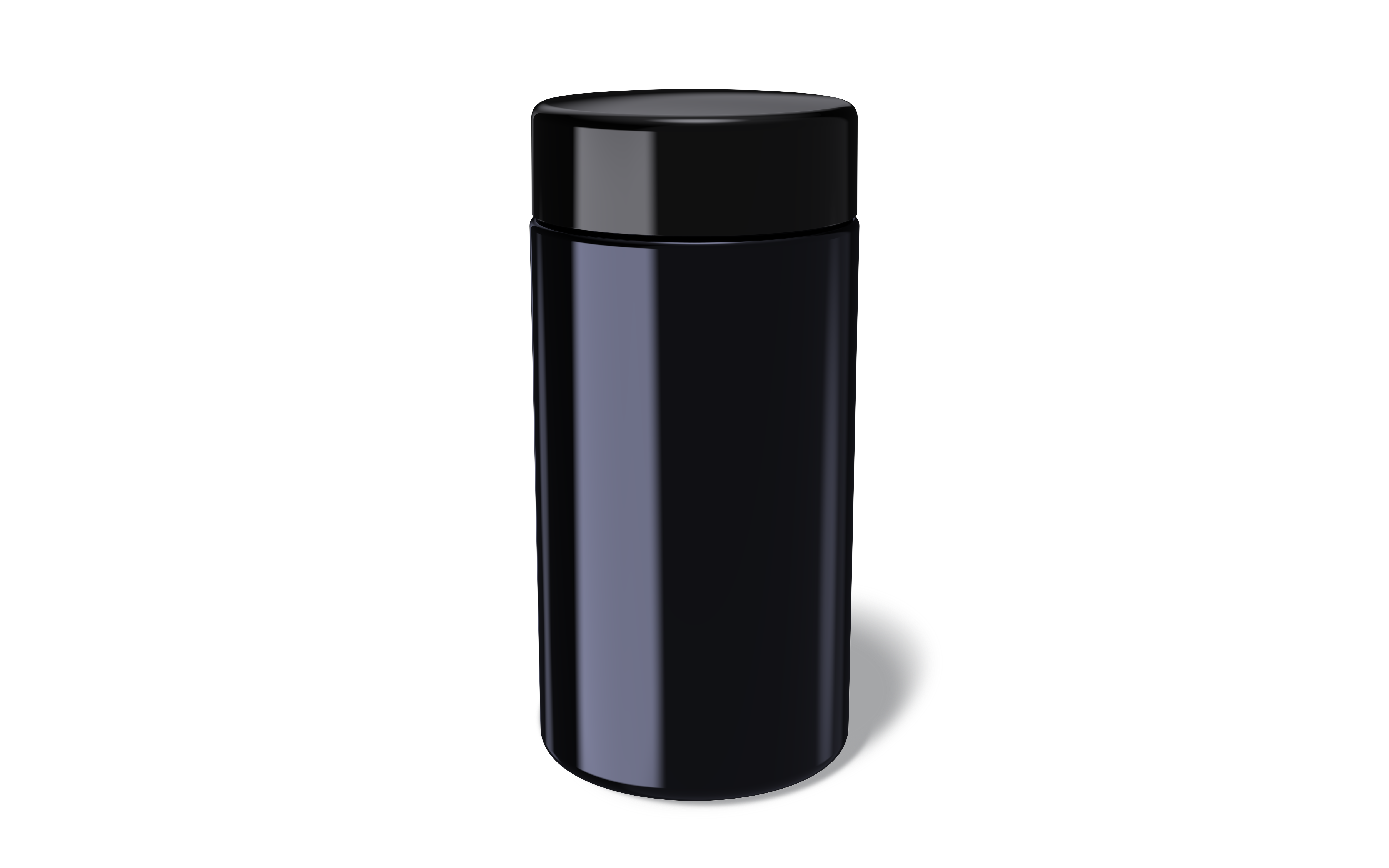
Packaging decisions now sit inside a documentation chain. Precedence Research values the global dietary supplement packaging market at approximately USD 12.7 billion in 2024 and projects growth at a 6.1% CAGR through 2034. Grand View Research reports that plastic held a 58.3% revenue share of nutraceutical packaging in 2024, and that North America accounted for 34.4% of global revenue in the same year. Child-resistant closures and violet glass represent a narrower slice of that market, yet they appear disproportionately often in the paperwork a brand must assemble before launch.
The Real Problem: Specification Sheets That Stop Short
Most packaging specifications answer two questions: what shape, and what capacity. Compliance review asks four more, which closure, which neck finish, which material composition, and which glass wall thickness. When those fields are absent, the gap appears late: at artwork approval, at fill-line qualification, or when a distributor quality team requests documentation the supplier never issued.
Two different compliance functions tend to get merged into a single line item at that point.
- Child resistance is a closure and access-performance question. In the United States, the Poison Prevention Packaging Act (PPPA) applies packaging requirements to certain dietary supplement ingredients, including iron above 30 mg. Dietary supplement packaging also operates under the Dietary Supplement Health and Education Act (DSHEA) of 1994 and FDA Current Good Manufacturing Practice, 21 CFR Part 111.
- Light protection is a material question. It is answered by the container body, violet glass in this context, and not by the cap.
In the European Union, Regulation (EU) No. 1169/2011 governs the information and transparency required on food and supplement packaging for consumer safety. The regulation sets label-information duties; it does not approve a container. Holding that boundary keeps the documentation honest and prevents the most common error in this category: presenting a closure specification as though it were a material certificate, or the reverse.
What Buyers Ask For in Different Regions
- United States: DSHEA and FDA CGMP 21 CFR Part 111 for the product, plus PPPA coverage for specified ingredients such as iron above 30 mg. The brand owner files; the packaging supplier documents the physical article.
- European Union: Regulation (EU) No. 1169/2011 establishes the consumer information the pack must carry. Material and closure data feed that work but do not replace it.
- Cross-market reality: the specification travels, the filing does not. A 0.38 mm violet glass jar on a 41/400 neck can serve several markets, while the dossier behind it remains market-specific.
- Documented project markets: Honor Packaging glass packaging projects list Canada, Germany, India, Italy, Thailand and the United States as destination markets, with UV protection and child-resistant design recorded as project requirements.
Industry Background: Why Packaging Documentation Moved Upstream
Published market sizing for this category varies by scope rather than contradicting itself. Grand View Research sizes the nutraceutical packaging market at USD 5.05 billion, Precedence Research sizes dietary supplement packaging at USD 12.7 billion, and Straits Research sizes supplements and nutrition packaging at USD 28.69 billion. Buyers who must justify a packaging decision internally are usually asked exactly this kind of scope question, which is one reason specification detail has become a procurement matter rather than a design preference.
Material choice remains the biggest single lever. Plastic captured a 58.3% revenue share of nutraceutical packaging in 2024, driven by cost-effectiveness and barrier properties, according to Grand View Research. Glass and violet glass sit at the opposite end of the spectrum: higher unit cost, and the practical answer when a formula is light-sensitive and an opaque container is not acceptable to the brand.
Flexible formats have grown alongside rigid ones. The Mylar bags market, frequently used for powder and herb supplements, was valued at USD 2.4 billion in 2023 and is projected to reach USD 4.1 billion by 2030, according to Vantage Market Research. Powder and herb brands are also the buyers most likely to pair a pouch for bulk volume with a rigid violet glass jar for a premium or travel-size line, which is why both formats appear in the same specification discussion.
Supplier structure matters as well. Amcor, Berry Global and Gerresheimer are identified as the top-tier global manufacturers in the nutraceutical and dietary supplement packaging sector, according to Grand View Research. For a brand working with a mid-size specialist, the practical consequence is that differentiation has to come from documented specificity: exact item codes, published thickness, stated thread finishes, and clear limits on what the supplier does and does not certify.
The Specifications That Answer Compliance Questions
The ranges below are the concrete inputs a buyer needs in order to write a compliant specification. Every figure comes from the published product data for Honor Packaging.
Child-Resistant Concentrate Jars: H19
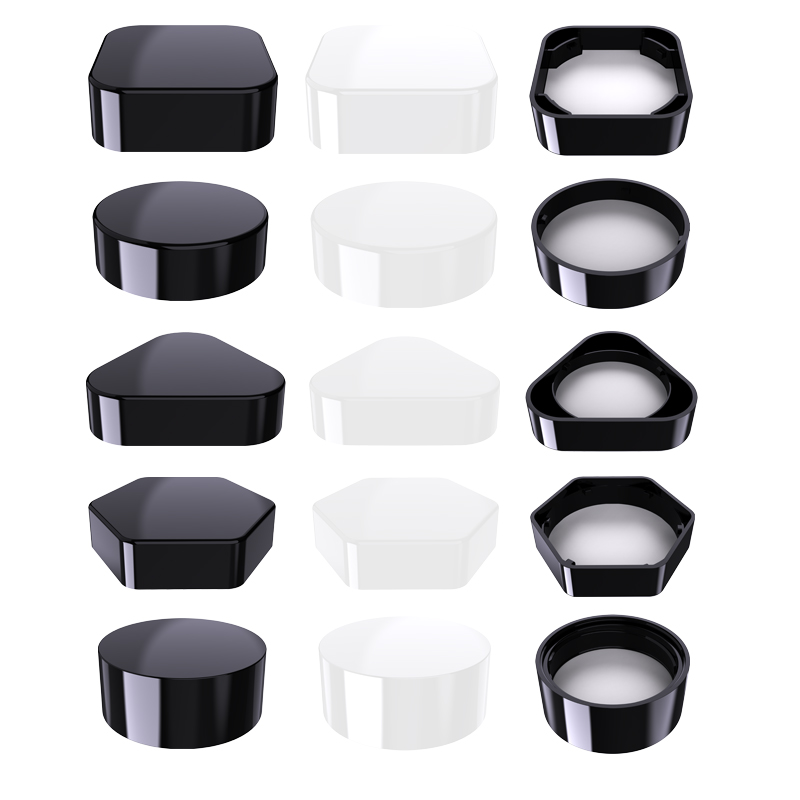
H19 child-resistant packaging is made of glass and is offered in 5 ml and 9 ml capacities, in white, black and clear variants, and in square, round, triangle and hexagon shapes with a child-resistant cap. Net weight runs from 27 g to 38 g; the white variant is listed at 27 g or 36 g. Each carton holds 250 pieces. Item codes run from H19-0001W through H19-0011W for white, H19-0001C through H19-0011C for clear, and H19-0001B through H19-0011B for black. A related H19 vacuum jar is a square glass jar with a 5 ml capacity, also packed 250 pieces per carton.
Child-Resistant Glass Jars: H21 Clear Square and Round
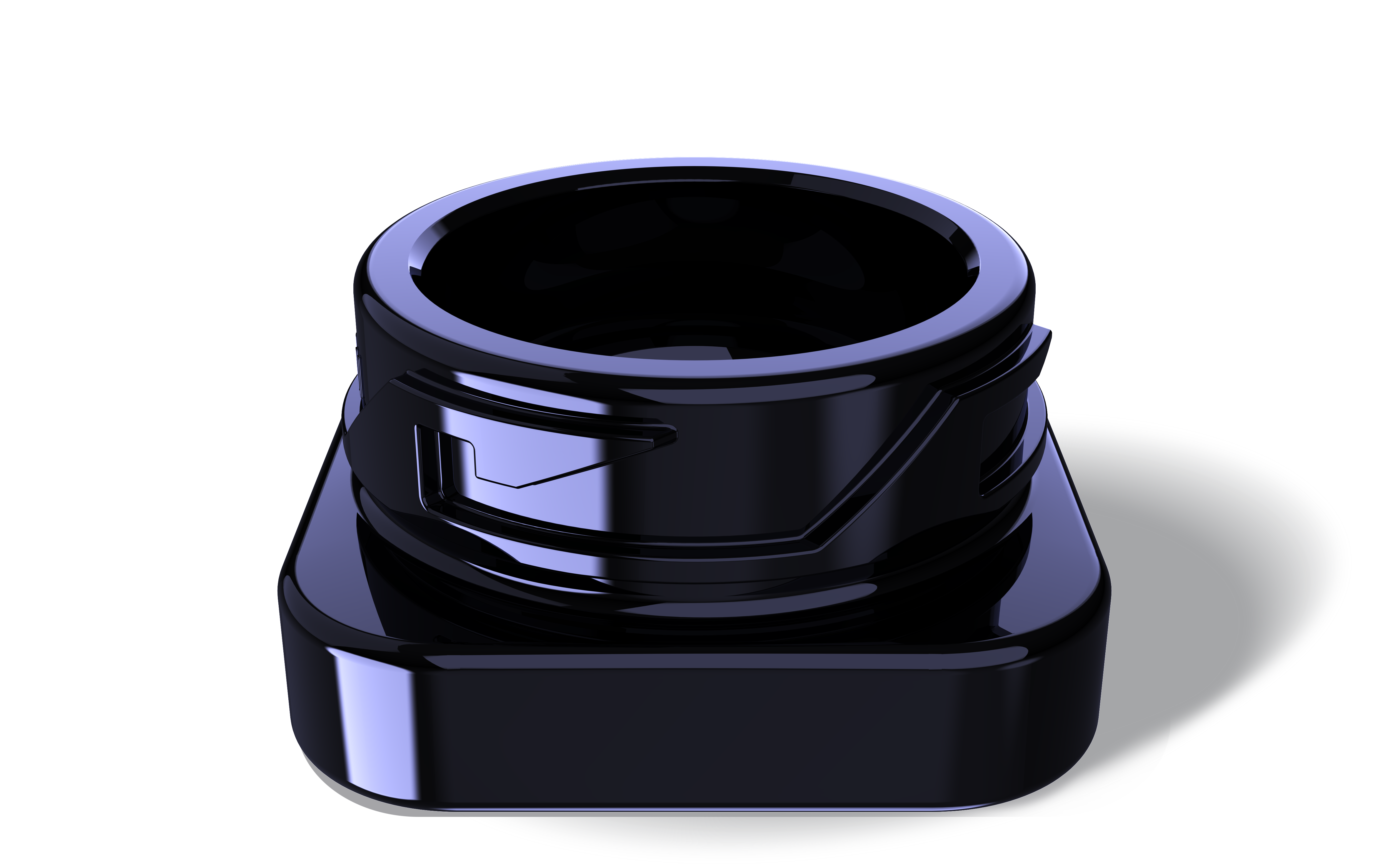
H21 clear square jars are made of glass, plastic or PE with a 0.38 mm glass thickness, a 58 mm diameter and heights from 24 mm to 115 mm. Capacities are 15 ml, 30 ml, 20 dr, 30 dr, 40 dr and 60 dr; net weight ranges from 75 g to 280 g; item codes run from H21-0003C through H21-0008C. H21 clear round jars use the same materials with a 60 mm diameter, a 0.38 mm glass thickness, heights of 36.5 mm to 125 mm and weights of 84 g to 268 g, in capacities of 30 ml, 2 oz, 20 dr, 30 dr, 40 dr, 60 dr and 6 oz, with item codes H21-0012C through H21-0018C. Both formats use a child-resistant cap and list surface treatments of sticker, silk-screen printing, hot stamping, heat transfer printing and frosted finish. Within this range, 20 dr corresponds to 70 ml, 30 dr to 100 ml, 40 dr to 130 ml and 60 dr to 200 ml.
Violet Glass Jars With Child-Resistant Caps: H21 Square and Round
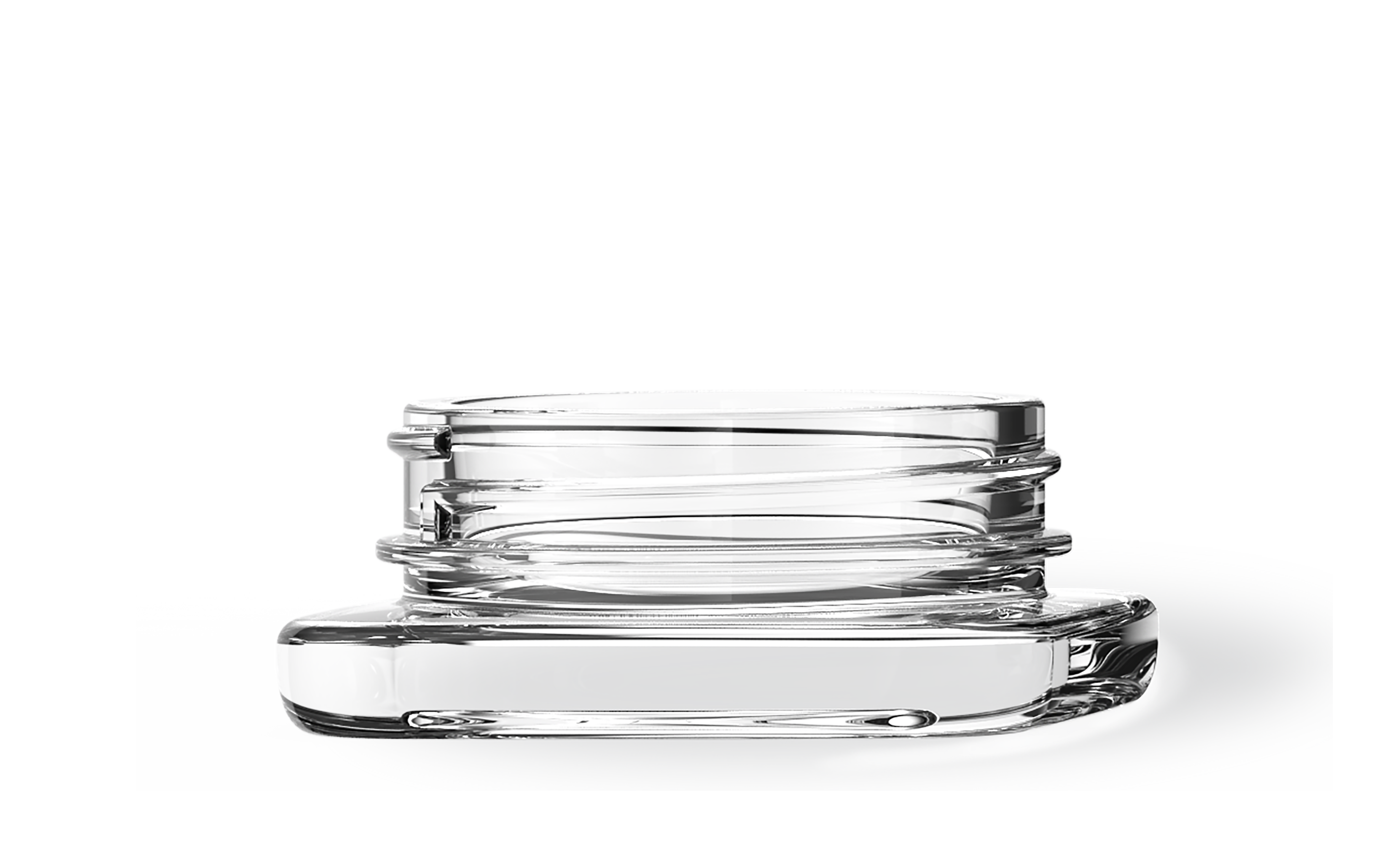
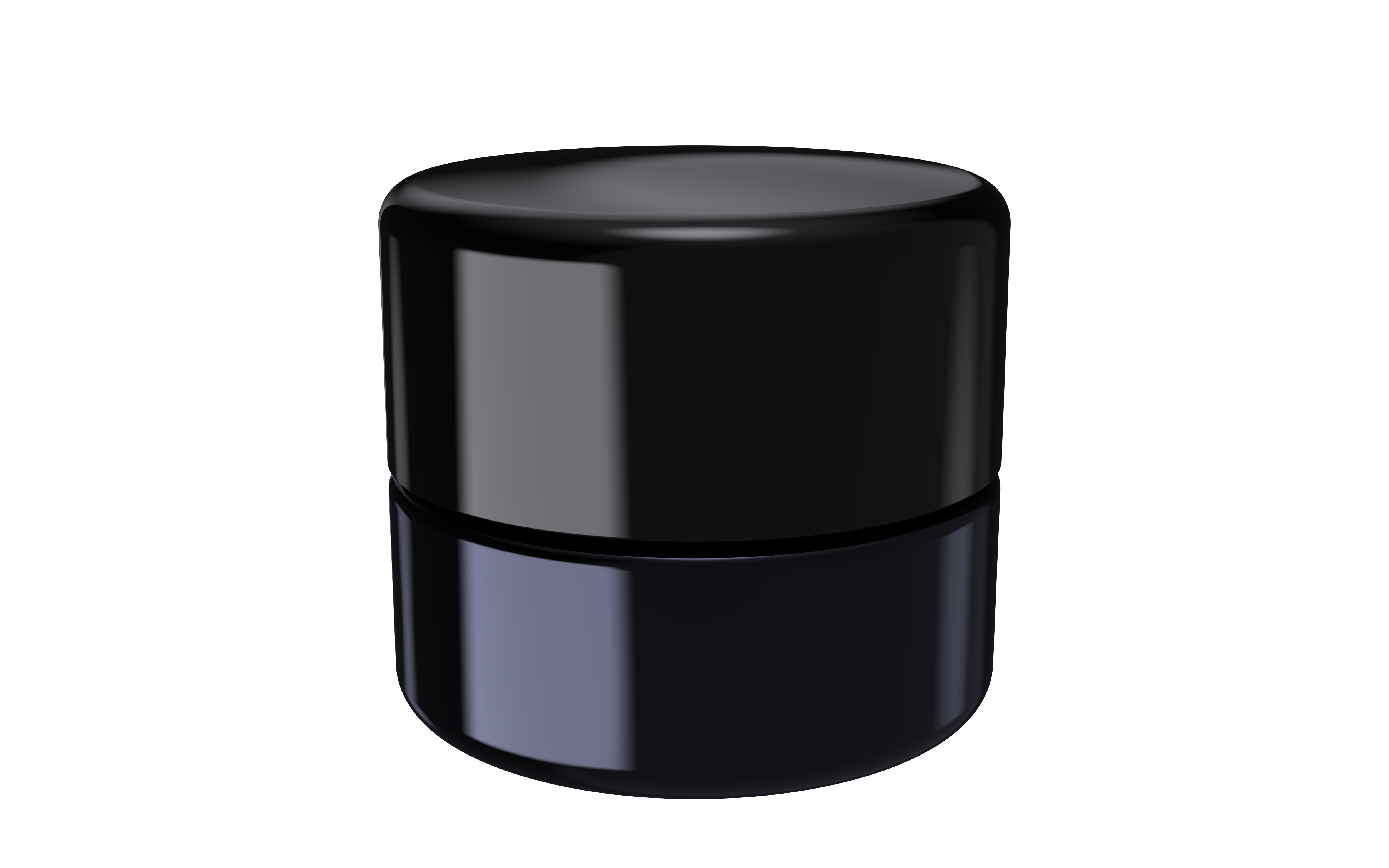
These are the SKUs where both compliance functions land on one article. H21 square violet glass jars combine a violet glass body with PP and PE cap components and a child-resistant cap, with a 58 mm diameter, a 0.38 mm glass thickness, heights of 24 mm to 115 mm and weights of 75 g to 280 g. Capacities are 15 ml, 30 ml, 20 dr (70 ml), 30 dr (100 ml), 40 dr (130 ml) and 60 dr (200 ml); item codes run from H21-0003V through H21-0008V. H21 round violet glass jars use violet glass with a PP and PE cap, item codes H21-0012V through H21-0018V, and are specified for supplement packaging scenarios as well as the food, cosmetic and medical industries.
Wide Mouth Violet Jars: HDV1
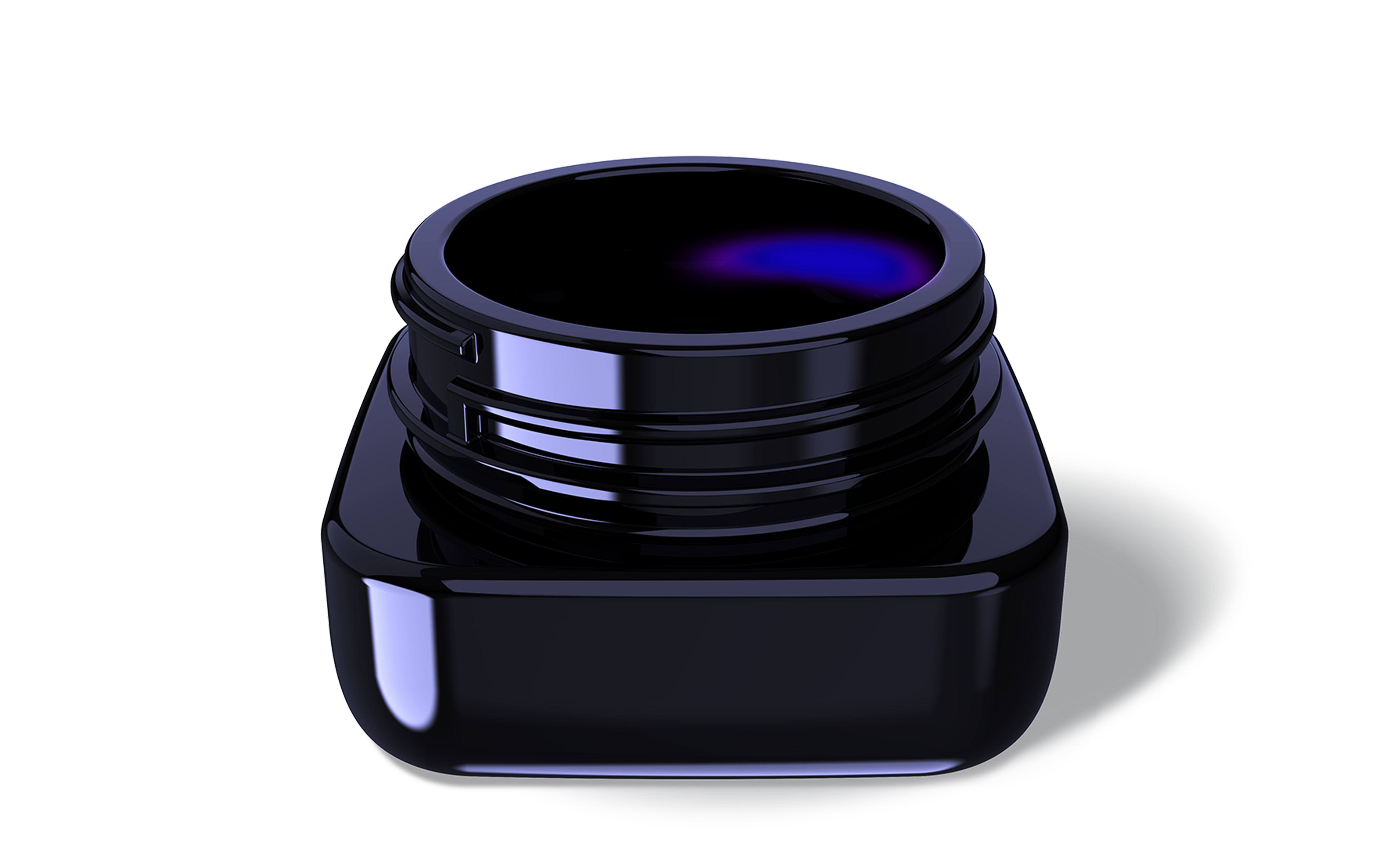
HDV1 wide mouth violet jars run from 100 ml to 1 L, covering 100 ml, 150 ml, 200 ml, 250 ml, 300 ml, 500 ml and 1 L. Glass thickness is 0.38 mm, thread specifications are 41/400 and 89/400, diameter spans 48 mm to 95 mm, height 84.7 mm to 193 mm, and net weight 117 g to 610 g. The body is made of violet glass, urea, PE, SAN and ABS, with surface treatment options of sticker, silk-screen printing, heat transfer printing, hot stamping and frosted finish. Item codes include HDV1100M-1-CR (the child-resistant version), HDV1100M-1, HDV1100M-2, HDV1150M, HDV1200M, HDV1250M, HDV1300M, HDV1500M and HDV1001L. Applications cover food and beverage, cosmetics and daily chemicals, pharmaceutical and medical, cannabis and supplements.
Cosmetic Violet Jars: HDV2
HDV2 cosmetic violet jars cover 3 ml, 5 ml, 10 ml, 30 ml, 50 ml, 60 ml, 100 ml and 200 ml, with threads from 32/400 to 89/400, diameters of 36 mm to 93.2 mm, heights of 25.6 mm to 55 mm, weights of 36 g to 205 g and a 0.38 mm glass thickness. The material set is violet glass with urea and PE. Item codes are HDV2003M, HDV2005M, HDV2005M-CR, HDV2010M, HDV2030M, HDV2050M, HDV2060M, HDV2100M and HDV5200M, with surface treatments of sticker, silk-screen printing, heat transfer printing, hot stamping and frosted finish.
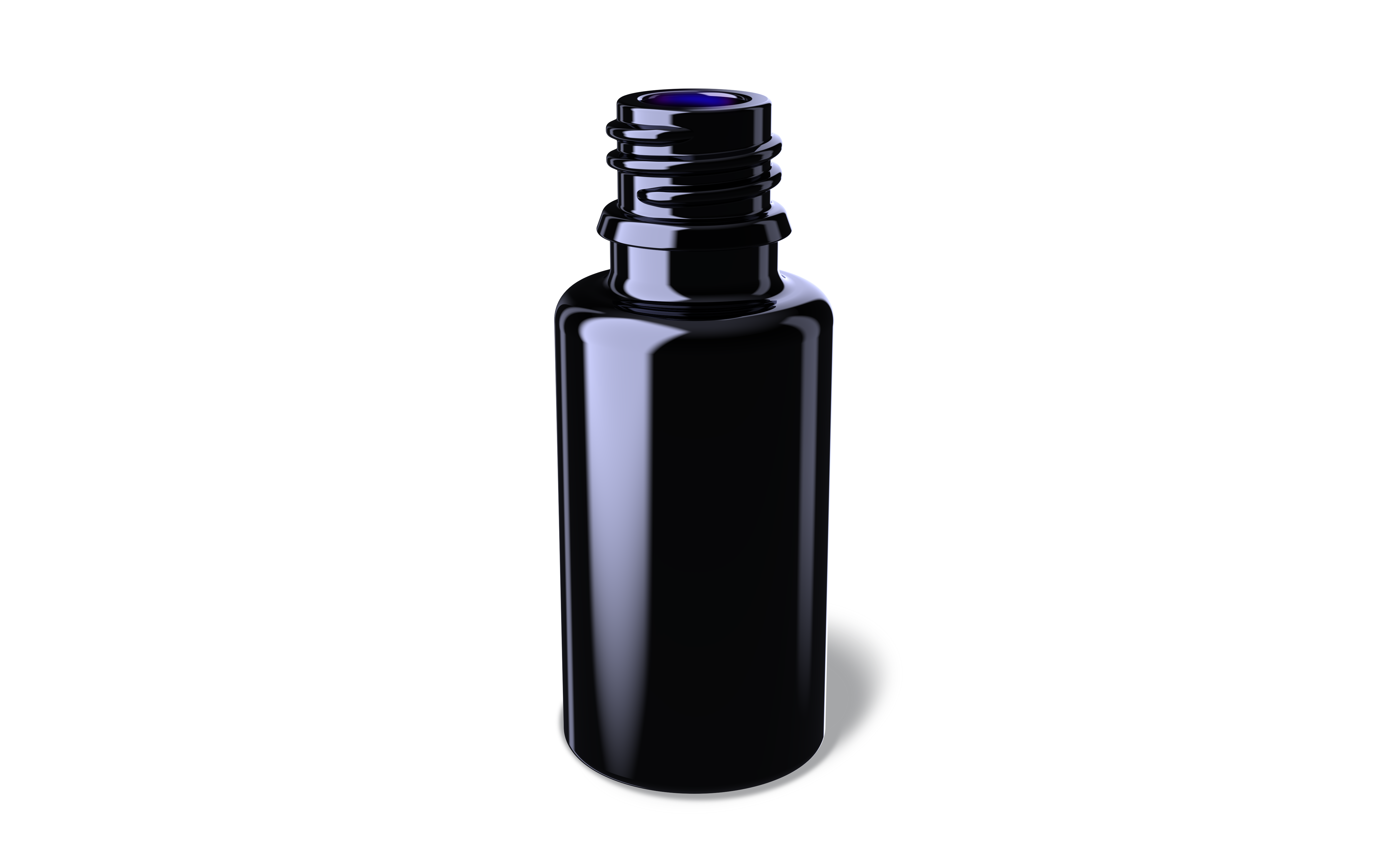
Violet Glass Dropper Bottles: HDV3
HDV3 round violet glass essential oil bottles are made of violet glass with a PP closure, in capacities of 5 ml, 10 ml, 15 ml, 20 ml, 30 ml, 50 ml, 60 ml and 100 ml, heights of 54.5 mm to 125 mm and weights of 22.5 g to 120 g. Closure options are a plastic cap, dropper, mist sprayer or lotion pump, and surface treatments are label, silk-screen printing and gold stamping. Item numbers run from HDV3005M through HDV3100M. Note one documentation boundary: no glass wall thickness is published for the HDV3 series, so a buyer who needs that field should request the dimensional drawing rather than infer it from another range.
Mapping Each Specification to a Document
- Item code (for example H21-0004V or HDV1100M-1-CR): traceability between the specification sheet, the purchase order and the incoming inspection record.
- Body material (violet glass, glass, PP, PE, urea, SAN, ABS): material declaration and contact-material review carried out by the brand owner.
- Glass thickness (0.38 mm on H21, HDV1 and HDV2): dimensional specification and transit-durability review.
- Neck finish (41/400 and 89/400 on HDV1; 32/400 to 89/400 on HDV2), where the first figure indicates the neck finish diameter in millimetres and the second the thread finish style: closure compatibility and re-ordering accuracy.
- Closure type (child-resistant cap, vacuum click jar, plastic cap, dropper, mist sprayer, lotion pump): the child-resistance and functional claim carried on the pack.
- Capacity in ml, oz or dr: fill volume, dosing rationale and net-content labelling.
- Surface treatment (sticker, silk-screen printing, hot stamping, heat transfer printing, frosted finish; label and gold stamping on HDV3): decoration specification and artwork approval.
- Carton configuration (250 pieces per carton for H19 formats): logistics data referenced in the compliance dossier.
Step-by-Step: Building a Filing-Ready Specification Package
- Classify the product on two axes. Child-access risk determines whether a child-resistant closure is required, with ingredients such as iron above 30 mg under the PPPA as the US reference point. Light sensitivity determines whether the body must be violet glass rather than clear.
- Select the format against fill volume. 5 ml and 9 ml concentrates map to H19; 15 ml to 200 ml map to H21 square and round; 100 ml to 1 L map to HDV1; 3 ml to 200 ml map to HDV2; 5 ml to 100 ml liquids map to HDV3.
- Lock the closure and neck finish. State the closure type and the thread finish (41/400, 89/400, 32/400) so that the cap on the drawing is the cap on the order.
- Fix wall thickness and body material. 0.38 mm is the published figure for H21, HDV1 and HDV2. The H19 and HDV3 series do not publish a wall thickness, so request the drawing before writing that field into a specification.
- Choose surface treatment deliberately. Decoration options include sticker, silk-screen printing, hot stamping, heat transfer printing and frosted finish, with label and gold stamping available on HDV3. Each additional step is a separate approval item for the brand owner.
- Assemble the documentation set. One pack should contain the specification sheet with item codes, the material list, the dimensional drawing, the closure specification, the decoration proof and the carton configuration.
- Separate supplier scope from brand scope. The supplier documents the physical article; market authorisation, label content and claims remain with the brand owner under DSHEA and 21 CFR Part 111 in the US and Regulation (EU) No. 1169/2011 in the EU. Stating that boundary in writing prevents an overstated compliance claim on a website, a marketplace listing or a pitch deck.
- Validate before scale. Confirm the exact item code, the closure, the thread engagement, the measured thickness where published, the fill volume against the stated capacity, and the decoration placement, then release the production order.
Use Cases: Matching the Format to the Product
- Cannabis and concentrate brands: H19 child-resistant jars in 5 ml or 9 ml, in square, round, triangle or hexagon shapes, at 250 pieces per carton.
- Powder and capsule supplements: H21 clear square jars (H21-0003C to H21-0008C) or clear round jars (H21-0012C to H21-0018C) with child-resistant caps and clear bodies for fill inspection.
- Tinctures, resins and light-sensitive formulas: H21 square violet jars (H21-0003V to H21-0008V) or round violet jars (H21-0012V to H21-0018V), combining violet glass with a child-resistant cap.
- Bulk herbs, powdered formulas and large-format fills: HDV1 wide mouth jars from 100 ml to 1 L on 41/400 and 89/400 necks, with HDV1100M-1-CR as the child-resistant option.
- Serum, cream and small-volume crossovers: HDV2 cosmetic violet jars from 3 ml to 200 ml, including HDV2005M-CR.
- Oils, drops and spray formats: HDV3 bottles from 5 ml to 100 ml with a plastic cap, dropper, mist sprayer or lotion pump.
Project conditions recorded for this product family include UV-protective and dust-protective requirements, hand-applied caps matched to the jar, and destination markets of Canada, Germany, India, Italy, Thailand and the United States.
Series Comparison: Child Resistance and Light Protection
| Series | Format | Capacity range | Glass thickness | Closure and neck finish | Typical compliance role |
|---|---|---|---|---|---|
| H19 child-resistant jars | Glass concentrate jar; square, round, triangle, hexagon | 5 ml, 9 ml | Not published for this series | Child-resistant cap; item codes H19-0001W to H19-0011W (white), H19-0001C to H19-0011C (clear), H19-0001B to H19-0011B (black) | Small-dose concentrates; 250 pcs per carton |
| H19 vacuum jar | Square glass vacuum jar | 5 ml | Not published for this series | Vacuum click jar format; 250 pcs per carton | Small-dose fills with dust protection |
| H21 clear square | Square glass jar | 15 ml, 30 ml, 20 dr, 30 dr, 40 dr, 60 dr | 0.38 mm | Child-resistant cap; 58 mm diameter | Child resistance with visible fill level |
| H21 clear round | Round glass jar | 30 ml, 2 oz, 20 dr, 30 dr, 40 dr, 60 dr, 6 oz | 0.38 mm | Child-resistant cap; 60 mm diameter | Larger child-resistant volumes, 84 g to 268 g |
| H21 violet square | Square violet glass jar | 15 ml to 200 ml (60 dr) | 0.38 mm | Child-resistant cap; 58 mm diameter | Light-sensitive formulas that also require child resistance |
| H21 violet round | Round violet glass jar | 30 ml, 2 oz, 20 dr, 30 dr, 40 dr, 60 dr, 6 oz | 0.38 mm | Child-resistant cap; item codes H21-0012V to H21-0018V | Supplement packaging scenarios |
| HDV1 | Wide mouth violet jar | 100 ml to 1 L | 0.38 mm | 41/400 and 89/400; child-resistant variant HDV1100M-1-CR | Bulk powder, herbs, food and supplement storage |
| HDV2 | Cosmetic violet jar | 3 ml to 200 ml | 0.38 mm | 32/400 to 89/400; child-resistant variant HDV2005M-CR | Serum, cream and small-volume supplement formats |
| HDV3 | Round violet glass essential oil bottle | 5 ml to 100 ml | Not published for this series | Plastic cap, dropper, mist sprayer or lotion pump | Oils, drops and spray formats |
FAQ
What documentation should a supplement brand expect for child-resistant packaging?
Expect the physical specification fields that compliance review asks for: item codes, body material, glass wall thickness, neck finish, closure type, capacity and carton configuration. On these ranges, H21, HDV1 and HDV2 jars are published with a 0.38 mm glass thickness, H19 formats ship 250 pieces per carton, and thread finishes are stated as 41/400, 89/400 or 32/400. Market-side requirements are separate and remain the brand owner responsibility: DSHEA and FDA CGMP 21 CFR Part 111, plus PPPA coverage for ingredients such as iron above 30 mg in the United States, and Regulation (EU) No. 1169/2011 in the European Union.
Can child resistance and light protection be combined in one package?
Yes. The H21 square violet glass jars (H21-0003V through H21-0008V) and H21 round violet glass jars (H21-0012V through H21-0018V) pair violet glass bodies with child-resistant caps; HDV1 includes HDV1100M-1-CR and HDV2 includes HDV2005M-CR. NINGBO HONOR PACKAGING CO.,LTD. was founded in 2015, operates a 45,000 square metre facility with approximately 310 staff, an annual production capacity of 1,000,000 units and a 15-person R&D team, working through long-term joint-venture production bases for plastic and glass packaging.
What drives cost in child-resistant and violet glass packaging?
Cost is driven by five specification choices rather than by a single number: body material (violet glass versus clear glass), closure type, surface treatment steps, format complexity and carton configuration. Closure options across the range include child-resistant caps, plastic caps, droppers, mist sprayers and lotion pumps, while decoration options include sticker, silk-screen printing, hot stamping, heat transfer printing and frosted finish, with label and gold stamping on HDV3. Industry-wide, plastic still held a 58.3% revenue share of nutraceutical packaging in 2024 on the strength of cost-effectiveness and barrier properties, which makes material choice the largest single lever.
How should a brand validate these specifications before ordering?
Validate the exact item code, not the product family. An H21-0004V square violet jar, an H21-0012V round violet jar and an HDV2005M-CR cosmetic violet jar share a material concept but differ in capacity, diameter, height, weight and closure. A practical sample check covers closure engagement, neck finish match to the stated thread, measured glass thickness where published, actual capacity against the dram or millilitre claim, and decoration placement.
What is the fastest way to get a specification package for review?
Send the product type, the target market and the intended fill volume, and Honor Packaging will map them to a concrete item code. The full catalogue with specifications is available in the downloadable brochure at Honor Packaging brochure, and direct contact is available by email at info@honorpkg.com or WhatsApp at +86 15968944995.
Conclusion
The compliance question in supplement packaging is rarely about the shape of the jar. It is about whether the closure, the neck finish, the wall thickness and the material composition can be documented in the form a given market expects. Child resistance and light protection are separate functions that happen to share a container in the H21 violet glass formats and in HDV1100M-1-CR and HDV2005M-CR, and separating them inside the specification is the fastest way to stop a documentation gap from becoming a launch delay.
NINGBO HONOR PACKAGING CO.,LTD. (Honor Packaging) is a Ningbo-based manufacturer founded in 2015 that specialises in child-resistant packaging, violet glass packaging and vacuum packaging for food, cosmetic, medical, cannabis and supplement applications. It operates a 45,000 square metre facility with around 310 staff, an annual production capacity of 1,000,000 units, a 15-person R&D team and long-term joint-venture production bases for glass and plastic packaging, and it supplies export markets including the EU and USA.
Next step for buyers: download the full product brochure with capacities, thread specifications and surface treatment options at Honor Packaging brochure, or request a specification package for a specific item code.
Email: info@honorpkg.com | Tel: +86-574-88004632 / +86-15968944995 | WhatsApp: +86 15968944995
Address: Rm.305, No.1 Building, No.568 SiMing East Road, YinZhou District, Ningbo City, China | Website: www.honorcrpkg.com